
Minnesota
Minnesota Knife Laws (2026): Switchblades, Schools, and Intent
Independently fact-checked against primary sources (last audited September 24, 2026). · 5 primary sources cited on this page. How we verify our legal content
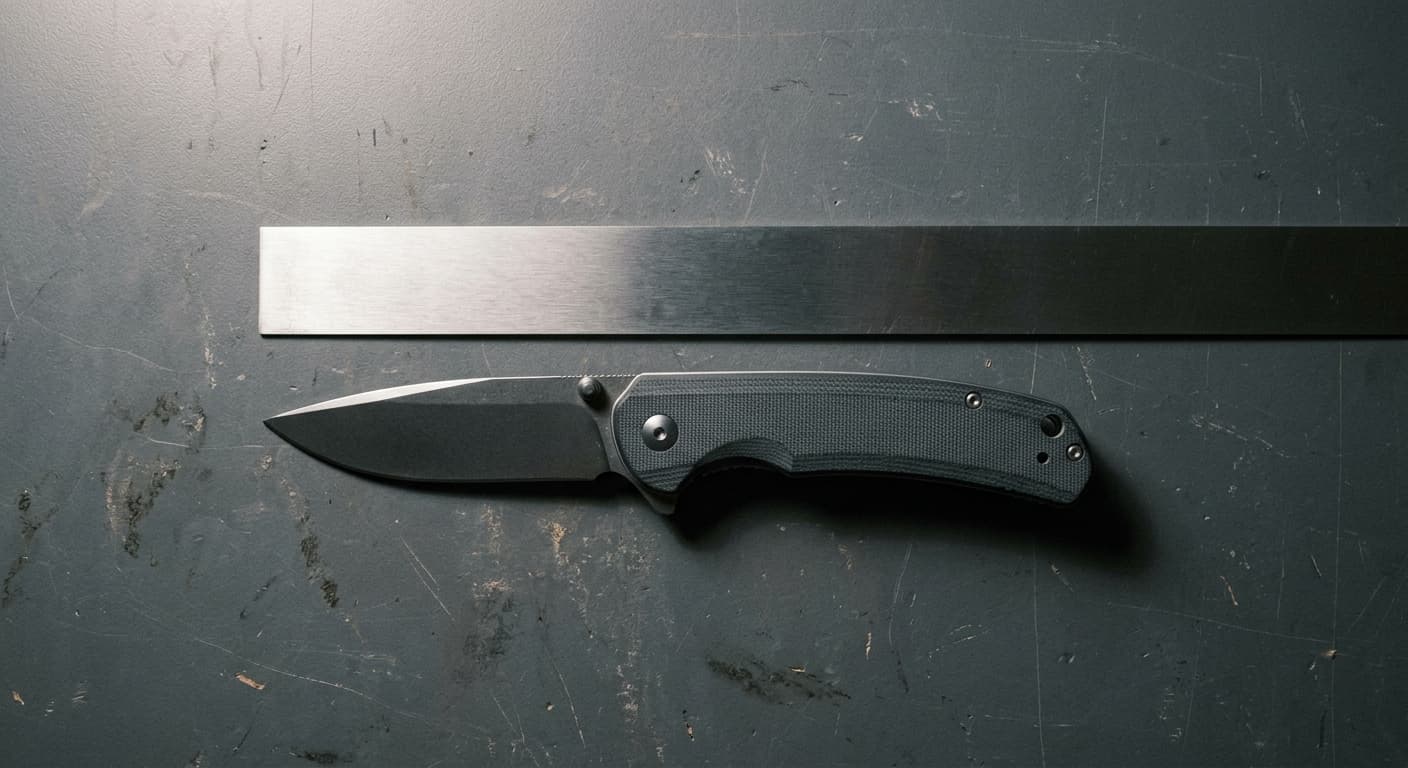
Minnesota's general knife law is narrow. Minn. Stat. § 609.66 flatly bans possessing a switchblade knife, but chapter 609, the state's general weapons-offense chapter, names no dirk, dagger, bowie knife, or stiletto, and it has no general concealed-carry crime for knives at all. Under state law, an ordinary knife becomes illegal to possess only when carried for an unlawful purpose, or when carried on school property or in a courthouse or certain state buildings, where a functional "dangerous weapon" definition reaches it. A separate, older statute, Minn. Stat. § 625.16, can still put a person who goes armed with a dirk or dagger before a court: it is not a carrying crime, but a neighbor's complaint can require sureties for keeping the peace. Minnesota preempts local firearms regulation only, so a city or county may still add its own knife restriction beyond what state law requires.
Jurisdiction scope: This page covers Minnesota state law only, principally Minn. Stat. §§ 609.66, 609.02, and 471.633. It does not cover Minnesota's firearms-permit statutes in detail, or local municipal ordinances.
Can you carry a knife openly or concealed in Minnesota?
For an ordinary knife, yes under state law, in most circumstances. Chapter 609, Minnesota's general weapons-offense chapter, has no statute that bans open or concealed carry of a dirk, dagger, bowie knife, stiletto, or any other named knife type, and none of those terms, or a general "concealed weapon" carry offense, appear there. The switchblade ban discussed below is a possession ban that does not depend on how the knife is carried, and the "unlawful purpose" offense discussed below turns on intent, not on whether the knife is visible. Minnesota preempts local firearms regulation only, so a city or county may still impose its own knife carry restriction. One older statute matters here too: Minn. Stat. § 625.16, discussed further below, can require a person who goes armed with a dirk or dagger without reasonable cause to fear an assault to post sureties for keeping the peace, on another person's complaint. It is not a criminal carrying offense, but it is the one in-force Minnesota statute actually headed "Carrying Dangerous Weapons" and naming dirk and dagger.
The switchblade ban: possession, not just sale
Minn. Stat. § 609.66, subdivision 1(a)(4) makes it a crime to "manufacture, transfer, or possess metal knuckles or a switch blade knife opening automatically." This is a full possession ban, not merely a restriction on manufacturing or selling: possessing a switchblade knife, on its own, satisfies the statute regardless of purpose or where it is carried. Subdivision 2 exempts museums, art collectors, and "other lawful purposes of public exhibition" from this and the other bans in the section.
The intent-based catch-all: what actually reaches an ordinary knife
Minn. Stat. § 609.66, subdivision 1(a)(5) makes it a crime to possess "any other dangerous article or substance for the purpose of being used unlawfully as a weapon against another." This clause is Minnesota's functional stand-in for the type-based and length-based knife statutes other states use: an ordinary pocketknife, hunting knife, or kitchen knife is not independently illegal to carry, but carrying one for the purpose of using it unlawfully against another person satisfies this offense. The state must prove that unlawful purpose; bare possession, without it, is not covered by this clause.
Going armed without cause: an older sureties-for-the-peace statute
Minn. Stat. § 625.16, headed "Carrying Dangerous Weapons," sits in the criminal-procedure chapter rather than chapter 609, and it is not a criminal carrying offense. It provides: "Whoever shall go armed with a dirk, dagger, sword, pistol, or other offensive and dangerous weapon, without reasonable cause to fear an assault or other injury or violence to person, family, or property, may, on complaint of any other person having reasonable cause to fear an injury or breach of the peace, be required to find sureties for keeping the peace, for a term not exceeding six months." A neighbor or other person with reasonable cause to fear injury can bring a complaint, and a court can require the armed person to post sureties for up to six months; there is no fine or imprisonment for the going-armed conduct itself, only the sureties requirement, and a right of appeal. But the rest of the peace-bond chapter gives that requirement teeth: under Minn. Stat. § 625.13, a person who does not find the sureties the court orders may be committed until security is given, and under Minn. Stat. § 625.08, a court may also order that person to pay the costs of the proceeding, with commitment continuing until those costs are paid or the person is otherwise legally discharged. The statute is in force and unamended, and it is the one Minnesota law actually titled around carrying a dagger.
Penalty structure under section 609.66, subdivision 1
A violation of subdivision 1, whether the switchblade ban or the unlawful-purpose clause, is punished on a two-tier scale set by subdivision 1(b). If the act was committed in a public housing zone, school zone, or park zone (each defined by cross-reference to Minn. Stat. § 152.01), the offense is punishable by up to 364 days' imprisonment, a fine of up to $3,000, or both. Otherwise, including on residential premises within one of those zones if the person was there lawfully as an owner, tenant, or invitee, the offense is punishable by up to 90 days' imprisonment, a fine of up to $1,000, or both.
School property: a felony built on a functional definition
Minn. Stat. § 609.66, subdivision 1d makes it a felony, punishable by up to 5 years' imprisonment, a fine of up to $10,000, or both, to possess, store, or keep a "dangerous weapon" while knowingly on school property. "Dangerous weapon" for this purpose is defined by cross-reference to Minn. Stat. § 609.02, subdivision 6, which reads: "any firearm, whether loaded or unloaded, or any device designed as a weapon and capable of producing death or great bodily harm, any combustible or flammable liquid or other device or instrumentality that, in the manner it is used or intended to be used, is calculated or likely to produce death or great bodily harm, or any fire that is used to produce death or great bodily harm." This is a functional test, not an enumerated list of knife types, meaning whether a particular knife qualifies turns on whether it is designed as a weapon capable of producing death or great bodily harm, or on how it was used or intended to be used at the time.
"School property" is defined broadly to include a school building and its grounds, a licensed child care center during program hours, a school bus in use for school transportation, and areas under a school's temporary exclusive control with posted notice. The subdivision exempts active licensed peace officers, on-duty military personnel, people lawfully carrying a pistol under permit while placing or retrieving it from a vehicle, firearm safety courses on school property, a ceremonial color guard, a gun or knife show held on school property, and possession with the school principal's or child care director's written permission, among other listed exceptions. A permit holder who carries a firearm on school property in violation of this subdivision commits only a misdemeanor under paragraph (d), a separate and lighter provision than the general felony.
Courthouses and the Capitol Area
The same functional "dangerous weapon" definition drives a separate felony under Minn. Stat. § 609.66, subdivision 1g: possessing a dangerous weapon, ammunition, or explosives within any courthouse complex, or in a state building within the Capitol Area (other than the National Guard Armory), is punishable by up to 5 years' imprisonment, a fine of up to $10,000, or both. Exceptions apply to on-duty licensed peace officers and military personnel, permit holders who notify the sheriff or commissioner of public safety, people displaying a weapon as demonstrative evidence at a trial or hearing under advance safety guidelines, and people who obtain express consent from the county sheriff or the commissioner of public safety.
Does Minnesota preempt local knife ordinances?
Only for firearms, not knives. Minn. Stat. § 471.633 provides that "the legislature preempts all authority of a home rule charter or statutory city including a city of the first class, county, town, municipal corporation, or other governmental subdivision ... to regulate firearms, ammunition, or their respective components," subject to narrow exceptions for regulating the discharge of firearms and adopting regulations identical to state law. Its text names firearms, ammunition, and their components only; it does not mention knives. Minn. Stat. § 471.634 only carves school districts out of section 471.633, and nothing else in that chapter's local-government block touches weapons. Minnesota preempts local firearms regulation only, so a city or county may adopt its own knife ordinance.
Federal law: what it does and does not reach
Federal law does not ban an individual from owning or carrying a switchblade. The Federal Switchblade Act, 15 U.S.C. §§ 1241 to 1245, instead restricts interstate commerce in switchblade knives, barring their manufacture for, or introduction, transport, and sale in, interstate commerce, and, in 15 U.S.C. § 1245, makes it a federal offense to knowingly possess, manufacture, sell, or import a ballistic knife in or affecting interstate commerce or within federal territorial jurisdiction. Sections 1242 and 1243 do not apply to certain knives and people, listed as exemptions in 15 U.S.C. § 1244. A 2009 amendment, § 1244(5), exempts any knife with a spring, detent, or other closure-bias mechanism that requires hand, wrist, or arm exertion on the blade itself to overcome the bias and assist opening, the carve-out that keeps modern assisted-opening folding knives legal in interstate commerce. A separate exemption, § 1244(4), covers a person with only one arm possessing or carrying a switchblade with a blade three inches or less. Neither exemption changes what Minnesota's own § 609.66 independently bans for a switchblade; state law governs possession within Minnesota on its own terms.
Disclaimer: This article provides general legal information about Minnesota's knife laws as of September 2026. It is not legal advice. Consult a lawyer licensed in Minnesota for advice about a specific situation. Because Minnesota's firearms preemption statute does not reach knives, local ordinances can add restrictions beyond the statewide rules described here.
For a state-by-state comparison, see knife laws by state. Minnesota's self-defense statutes are covered separately on the Minnesota self-defense laws page.
Statutes cited reflect their in-force version as of 2026-09-18. Last updated: 2026-09-18.
Frequently Asked Questions
Is it legal to carry a knife concealed in Minnesota?
For an ordinary knife, yes under state law. Chapter 609, Minnesota's general weapons-offense chapter, has no general statute banning concealed carry of a dirk, dagger, bowie knife, or stiletto, and no such offense appears there. Carrying an ordinary knife becomes illegal only if it is possessed for the purpose of being used unlawfully against another person, under Minn. Stat. 609.66, subdivision 1(a)(5), or if a switchblade is involved. Separately, Minn. Stat. 625.16 can require a person who goes armed with a dirk or dagger without reasonable cause to fear an assault to post sureties for keeping the peace, on another person's complaint; that is not a criminal offense. A city or county may still add its own restriction, since Minnesota preempts local firearms regulation only.
Are switchblades illegal in Minnesota?
Yes. Minn. Stat. 609.66, subdivision 1(a)(4) bans manufacturing, transferring, or possessing 'metal knuckles or a switch blade knife opening automatically,' a full possession ban that applies regardless of intent or how the knife is carried, subject to an exception for museums, collectors, and lawful public exhibition.
What size knife is illegal to carry in Minnesota?
Minnesota's general knife statute does not use a blade-length threshold. The switchblade ban turns on the opening mechanism, not length. The catch-all offense in subdivision 1(a)(5) turns on whether the article was possessed for the purpose of unlawful use against another person, regardless of size.
Can you carry a knife on Minnesota school property?
Possessing, storing, or keeping a 'dangerous weapon' while knowingly on school property is a felony under Minn. Stat. 609.66, subdivision 1d, punishable by up to 5 years and/or a $10,000 fine. 'Dangerous weapon' is defined functionally in Minn. Stat. 609.02, subdivision 6, as a device designed as a weapon and capable of producing death or great bodily harm, or one that, as used or intended to be used, is calculated or likely to produce death or great bodily harm, so whether a specific knife qualifies depends on those facts rather than a fixed list.
Does Minnesota preempt local knife ordinances?
No, not for knives. Minn. Stat. 471.633 preempts local firearms regulation by name; its text does not mention knives, so a city or county may adopt its own knife ordinance.
Updates
Independently fact-checked against the cited primary sources
Independently fact-checked against the cited primary sources
The Law Behind This Article
This article rests on the statutory provisions below, held in our own legal record and retrieved from the official source. Tap a section to read the operative text.
Minnesota Statutes, Chapter 609: CRIMINAL CODE
§ 609.66DANGEROUS WEAPONSIn forcecited in 2 of our articles
Subdivision 1. Misdemeanor and gross misdemeanor crimes. (a) Whoever does any of the following is guilty of a crime and may be sentenced as provided in paragraph (b): (1) recklessly handles or uses a gun or other dangerous weapon or explosive so as to endanger the safety of another; or (2) intentionally points a gun of any kind, capable of injuring or killing a human being and whether loaded or unloaded, at or toward another; or (3) manufactures or sells for any unlawful purpose any weapon known as a slungshot or sand club; or (4) manufactures, transfers, or possesses metal knuckles or a switch blade knife opening automatically; or (5) possesses any other dangerous article or substance for the purpose of being used unlawfully as a weapon against another; or (6) outside of a municipality and without the parent's or guardian's consent, furnishes a child under 14 years of age, or as a parent or guardian permits the child to handle or use, outside of the parent's or guardian's presence, a firearm or airgun of any kind, or any ammunition or explosive.
Official text (excerpt) · last checked 2026-09-24 · Read the full text in our law library · Verify at revisor.mn.gov
Cited in 95 court opinions in our collectionLatest citing opinion in our collection: 2026
Opinions citing this section in our collection:
- State v. Vang (Supreme Court of Minnesota 2014, 847 N.W.2d 248)“…ttempting to commit the offense of drive-by shooting under Minn. Stat. § 609.66 , subd. le; and (5) appellant’s conduct…”
- State v. Cole (Supreme Court of Minnesota 1996, 542 N.W.2d 43)“…eing and whether loaded or unloaded, at or toward another.” Minn.Stat. § 609.66, subd. 1(1) and (2) (1994). The…”
- State v. Richardson (Supreme Court of Minnesota 2003, 670 N.W.2d 267)“…m in a manner that endangered the safety of another person. Minn.Stat. § 609.66, subd. 1a(2) (2002). Reckless discharge…”
Identified automatically from the court opinions citing this section — not a ranking of which case controls.
Also relied on in: Minnesota Pepper Spray and Stun Gun Laws (2026)
§ 609.02DEFINITIONSIn forcecited in 10 of our articles
Subdivision 1. Crime. "Crime" means conduct which is prohibited by statute and for which the actor may be sentenced to imprisonment, with or without a fine. Subd. 2. Felony. "Felony" means a crime for which a sentence of imprisonment for one year or more may be imposed. Subd. 2a. [Repealed, 1999 c 194 s 11] Subd. 3. Misdemeanor. "Misdemeanor" means a crime for which a sentence of not more than 90 days or a fine of not more than $1,000, or both, may be imposed. Subd. 4. Gross misdemeanor. "Gross misdemeanor" means any crime which is not a felony or misdemeanor. The maximum fine which may be imposed for a gross misdemeanor is $3,000. Subd. 4a. Petty misdemeanor. "Petty misdemeanor" means a petty offense which is prohibited by statute, which does not constitute a crime and for which a sentence of a fine of not more than $300 may be imposed. Subd. 5. Conviction. "Conviction" means any of the following accepted and recorded by the court: (1) a plea of guilty; or (2) a verdict of guilty by a jury or a finding of guilty by the court. Subd. 6. Dangerous weapon.
Official text (excerpt) · last checked 2026-07-29 · Read the full text in our law library · Verify at revisor.mn.gov
Cited in 539 court opinions in our collectionLatest citing opinion in our collection: 2026
Opinions citing this section in our collection:
- State v. Stewart (Court of Appeals of Minnesota 2019, 923 N.W.2d 668)“…he intentionally inflicted great bodily harm upon B.G.D. Minn. Stat. §§ 609.02 , subd. 10(2), .221, subd. 1 (2014). S…”
- State v. Fleck (Supreme Court of Minnesota 2012, 810 N.W.2d 303)“…itted two forms of assault to the jurors: (1) assault-fear, Minn.Stat. § 609.02, subd. 10(1) (2010) (prohibiting an act…”
- State v. Vance (Supreme Court of Minnesota 2007, 734 N.W.2d 650)“…iction of or attempt to inflict bodily harm upon another. Minn.Stat. § 609.02, subd. 10 (2004). 4 The statute furthe…”
Identified automatically from the court opinions citing this section — not a ranking of which case controls.
Also relied on in: Minnesota Hit and Run Laws: Penalties and What to Do, Minnesota Window Tint Laws (2026): Legal VLT Limits, Minnesota Recording Laws (2026): One-Party Consent Rules
Minnesota Statutes, Chapter 625: PRESERVATION OF PUBLIC PEACE
§ 625.16CARRYING DANGEROUS WEAPONSIn force
Whoever shall go armed with a dirk, dagger, sword, pistol, or other offensive and dangerous weapon, without reasonable cause to fear an assault or other injury or violence to person, family, or property, may, on complaint of any other person having reasonable cause to fear an injury or breach of the peace, be required to find sureties for keeping the peace, for a term not exceeding six months, with the right of appealing as before provided.
Official text (excerpt) · last checked 2026-07-29 · Read the full text in our law library · Verify at revisor.mn.gov
Cited in 1 court opinions in our collectionLatest citing opinion in our collection: 1969
Opinions citing this section in our collection:
- United States v. Charles Edward Benner (Court of Appeals for the Ninth Circuit 1969, 417 F.2d 421)“…Stat.Ann. § 28.424 (1963)), C.L.1948, § 750.227; Minnesota (Minn.Stat.Ann. § 625.16 (1964)); Missouri (Ann.Mo.Stat., § 564.…”
Identified automatically from the court opinions citing this section — not a ranking of which case controls.
§ 625.08COSTSIn force
When no order respecting the costs is made by the judge, they shall be allowed and paid in the same manner as costs in criminal prosecutions. In all cases where a person is required to give security to keep the peace, or for good behavior, the judge may further order the costs of prosecution, or any part of them, to be paid by the person, who shall stand committed until the costs are paid or the person is otherwise legally discharged.
Official text (excerpt) · last checked 2026-07-29 · Read the full text in our law library · Verify at revisor.mn.gov
§ 625.13DISCHARGE ON GIVING SECURITYIn force
Any person committed for not finding sureties, or refusing to recognize as required by the court, may be discharged by any judge on giving the required security.
Official text (excerpt) · last checked 2026-07-29 · Read the full text in our law library · Verify at revisor.mn.gov
Minnesota Statutes, Chapter 471: MUNICIPAL RIGHTS, POWERS, DUTIES
§ 471.633FIREARMSIn force
The legislature preempts all authority of a home rule charter or statutory city including a city of the first class, county, town, municipal corporation, or other governmental subdivision, or any of their instrumentalities, to regulate firearms, ammunition, or their respective components to the complete exclusion of any order, ordinance or regulation by them except that: (a) a governmental subdivision may regulate the discharge of firearms; and (b) a governmental subdivision may adopt regulations identical to state law. Local regulation inconsistent with this section is void.
Official text (excerpt) · last checked 2026-07-29 · Read the full text in our law library · Verify at revisor.mn.gov
Cited in 5 court opinions in our collectionLatest citing opinion in our collection: 2022
Opinions citing this section in our collection:
- Lilly v. City of Minneapolis (Court of Appeals of Minnesota 1995, 527 N.W.2d 107)“…y limit the power of a home rule charter city. See, e.g., Minn.Stat. § 471.633 (1992) (providing that the "legislature…”
- State v. Eide (Court of Appeals of Minnesota 2017, 898 N.W.2d 290)“…Local regulation inconsistent with this section is void. Minn. Stat. § 471.633 . The legislature has specifically au…”
- Perkins v. City of St. Paul (District Court, D. Minnesota 1997, 982 F. Supp. 652)“…ed by the City. The State of Minnesota subsequently enaétéd Minn.Stat. § 471.633, which preempted local regulation of re…”
Identified automatically from the court opinions citing this section — not a ranking of which case controls.
§ 471.634DEFINITIONIn force
For purposes of section 471.633, the terms "municipal corporation" and "governmental subdivision," or instrumentality thereof, do not include school districts and other entities composed exclusively of school districts when school boards or school administrators are regulating school grounds, school facilities, school transportation services, school programs, or the conduct of students at any activities conducted under the direct or indirect supervision or control of the school board or administration.
Official text (excerpt) · last checked 2026-07-29 · Read the full text in our law library · Verify at revisor.mn.gov
Cited in 1 court opinions in our collectionLatest citing opinion in our collection: 2017
Opinions citing this section in our collection:
- State v. Eide (Court of Appeals of Minnesota 2017, 898 N.W.2d 290)“…016), but it is not for purposes of section 471.633. See Minn. Stat. § 471.634 (2016) (expressly excluding school dis…”
Identified automatically from the court opinions citing this section — not a ranking of which case controls.
Minnesota Statutes, Chapter 152: DRUGS; CONTROLLED SUBSTANCES
§ 152.01DEFINITIONSIn force
Subdivision 1. Words, terms, and phrases. Unless the language or context clearly indicates that a different meaning is intended, the following words, terms, and phrases, for the purposes of this chapter, shall be given the meanings subjoined to them. Subd. 2. Drug. The term "drug" includes all medicines and preparations recognized in the United States Pharmacopoeia or National Formulary and any substance or mixture of substances intended to be used for the cure, mitigation, or prevention of disease of either humans or other animals. Subd. 3. MS 1967 [Repealed, 1969 c 933 s 22] Subd. 3. Administer. "Administer" means to deliver by, or pursuant to the lawful order of a practitioner a single dose of a controlled substance to a patient or research subject by injection, inhalation, ingestion, or by any other immediate means. Subd. 3a. Cocaine.
Official text (excerpt) · last checked 2026-07-29 · Read the full text in our law library · Verify at revisor.mn.gov
Cited in 95 court opinions in our collectionLatest citing opinion in our collection: 2026
Opinions citing this section in our collection:
- State v. Porte (Court of Appeals of Minnesota 2013, 832 N.W.2d 303)“…gree and second-degree controlled-substance offenses. See Minn.Stat. §§ 152.01, subd. 15a(3) (2010), 152.021, subd. 1(…”
- State v. Hanson (Supreme Court of Minnesota 2011, 800 N.W.2d 618)“…ossess with intent to perform an act listed in clause (1).” Minn.Stat. § 152.01, subd. 15a (2010). Evidence tending to…”
- State v. Peck (Supreme Court of Minnesota 2009, 773 N.W.2d 768)“…17 grams of bong water did not constitute a "mixture" under Minn.Stat. § 152.01, subd. 9a (2008). The district court gr…”
Identified automatically from the court opinions citing this section — not a ranking of which case controls.
United States Code Title 15
§ 1241DefinitionsIn forcecited in 52 of our articles
As used in this chapter— The term “interstate commerce” means commerce between any State, Territory, possession of the United States, or the District of Columbia, and any place outside thereof. The term “switchblade knife” means any knife having a blade which opens automatically— by hand pressure applied to a button or other device in the handle of the knife, or by operation of inertia, gravity, or both.
Official text (excerpt) · last checked 2026-07-28 · Read the full text in our law library · Verify at uscode.house.gov
Cited in 15 court opinions in our collectionLatest citing opinion in our collection: 2014
Opinions citing this section in our collection:
- Stewart A. Taylor, D/B/A Taylor Cutlery Mfg. Co. v. United States of America (Court of Appeals for the Sixth Circuit 1988, 848 F.2d 715)“…Service, are not switchblade knives within the meaning of 15 U.S.C. § 1241 (b) and 19 C.F.R. § 1295 (a)(1). The d…”
- Crowley Cutlery Company v. United States of America and Commissioner of Customs of the United States Customs Service (Court of Appeals for the Seventh Circuit 1988, 849 F.2d 273)“…Illinois for a declaration that the Switchblade Knife Act, 15 U.S.C. §§ 1241 et seq., which forbids th…”
- Edna Fall, as Administratrix of the Estate of Phillip Fall, Deceased v. Esso Standard Oil Company (Court of Appeals for the Fifth Circuit 1962, 297 F.2d 411)“…25 S.Ct. 158 , 49 L.Ed. 363 . Section 1 of the Act, 15 U.S.C.A. § 1241 (b), defines the term “switchblade knif…”
Identified automatically from the court opinions citing this section — not a ranking of which case controls.
Also relied on in: Knife Laws by State (2026): Carry Rules, Blade Limits, Penalties, Alabama Knife Laws (2026): What Is Legal to Carry, Alaska Knife Laws (2026): Concealed Carry Rules Explained
§ 1244ExceptionsIn forcecited in 52 of our articles
Sections 1242 and 1243 of this title shall not apply to— any common carrier or contract carrier, with respect to any switchblade knife shipped, transported, or delivered for shipment in interstate commerce in the ordinary course of business; the manufacture, sale, transportation, distribution, possession, or introduction into interstate commerce, of switchblade knives pursuant to contract with the Armed Forces; the Armed Forces or any member or employee thereof acting in the performance of his duty; the possession, and transportation upon his person, of any switchblade knife with a blade three inches or less in length by any individual who has only one arm; or a knife that contains a spring, detent, or other mechanism designed to create a bias toward closure of the blade and that requires exertion applied to the blade by hand, wrist, or arm to overcome the bias toward closure to assist in opening the knife.
Official text (excerpt) · last checked 2026-07-28 · Read the full text in our law library · Verify at uscode.house.gov
Also relied on in: Arizona Knife Laws (2026): Carry Rules and Preemption, Arkansas Knife Laws (2026): Intent-Based Carry Rules, California Knife Laws (2026): Four Blade-Length Rules
§ 1245Ballistic knivesIn forcecited in 50 of our articles
Whoever in or affecting interstate commerce, within any Territory or possession of the United States, within Indian country (as defined in section 1151 of title 18), or within the special maritime and territorial jurisdiction of the United States (as defined in section 7 of title 18), knowingly possesses, manufactures, sells, or imports a ballistic knife shall be fined as provided in title 18, or imprisoned not more than ten years, or both. Whoever possesses or uses a ballistic knife in the commission of a Federal crime of violence shall be fined as provided in title 18, or imprisoned not less than five years and not more than ten years, or both. The exceptions provided in paragraphs (1), (2), and (3) of section 1244 of this title with respect to switchblade knives shall apply to ballistic knives under subsection (a) of this section. As used in this section, the term “ballistic knife” means a knife with a detachable blade that is propelled by a spring-operated mechanism.
Official text (excerpt) · last checked 2026-07-28 · Read the full text in our law library · Verify at uscode.house.gov
Cited in 2 court opinions in our collectionLatest citing opinion in our collection: 2008
Opinions citing this section in our collection:
- ALCANTAR (Board of Immigration Appeals 1994, 20 I. & N. Dec. 801)“…ed by an adult, would be felony and crime of violence); cf. 15 U.S.C. § 1245(b) (1988) (use of ballistic knife in co…”
- United States v. Polizzi (District Court, E.D. New York 2008, 549 F. Supp. 2d 308)“…8 Trust in l’estraint of import trade 3 months 15 U.S.C. § 1245 (b) Possession/use of a ballistic knife…”
Identified automatically from the court opinions citing this section — not a ranking of which case controls.
Also relied on in: Colorado Knife Laws (2026): Concealed Carry and Exceptions, Connecticut Knife Laws (2026): Open and Concealed Carry, Delaware Knife Laws (2026): Carry, Switchblades, and Bans
Search our full record of US law — 2.1 million sections, every state + federal →
Sources and References
- Minn. Stat. 609.66 - Dangerous weapons: switchblade possession ban, unlawful-purpose catch-all, school property, courthouse/Capitol Area, penalty tiers(revisor.mn.gov).gov
- Minn. Stat. 609.02, subdivision 6 - 'Dangerous weapon' defined (functional test)(revisor.mn.gov).gov
- Minn. Stat. 471.633 - Firearms local preemption (firearms, ammunition, and components only)(revisor.mn.gov).gov
- Minn. Stat. 471.634 - Definition clarifying school districts are excluded from 471.633's 'governmental subdivision'(revisor.mn.gov).gov
- Minn. Stat. 625.16 - Carrying Dangerous Weapons (names dirk and dagger; sureties-for-the-peace mechanism on a private citizen's complaint, not a criminal carry offense)(revisor.mn.gov).gov
- 15 U.S.C. 1241-1245 - Federal Switchblade Act, interstate commerce and ballistic-knife scope(law.cornell.edu)
- 15 U.S.C. 1244 - exceptions, including the 2009 assisted-opening carve-out and the one-arm exception(law.cornell.edu)