
Wyoming
Wyoming Security Camera Laws: Rules for Homes and Businesses
Independently fact-checked against primary sources (last audited August 15, 2026). · Reviewed by the RecordingLaw editorial team. · Law checked current as of August 15, 2026. · 3 primary sources cited on this page. How we verify our legal content
Wyoming has no single statute governing security camera placement. Video-only cameras are legal wherever subjects lack a reasonable expectation of privacy, but cameras with audio recording must follow the one-party consent rule under Wyo. Stat. Ann. Section 7-3-702. Cameras in bathrooms and locker rooms are prohibited.
Wyoming does not have a single comprehensive statute governing security camera use. Instead, the legality of security cameras is determined by a combination of the state's wiretapping law (Wyo. Stat. Ann. Section 7-3-702), the voyeurism statute (Wyo. Stat. Ann. Section 6-4-304), property rights principles, and federal regulations for certain contexts. Video-only security cameras are broadly permitted, while cameras with audio recording capabilities trigger additional legal requirements.
This guide covers every aspect of security camera law in Wyoming, including residential cameras, business surveillance, workplace monitoring, doorbell cameras, audio recording restrictions, HOA and landlord rules, and privacy limitations.
Legal Framework for Security Cameras
Video-Only Cameras
Video-only security cameras do not fall under Wyoming's wiretapping statute because the law specifically addresses the interception of wire, oral, and electronic communications. Silent video captures images, not communications. The primary constraint on video-only cameras is the reasonable expectation of privacy. Under Wyo. Stat. Ann. Section 6-4-304, it is illegal to view or record someone in a location where they have a reasonable expectation of privacy.
Cameras with Audio Recording
Security cameras that record audio must comply with the one-party consent rule under Wyo. Stat. Ann. Section 7-3-702. Because security cameras often record continuously without a participant present, options for lawful audio recording include posting visible signage, disabling audio, or using audio only when you are personally present.
Summary
| Camera Type | Legal? | Key Requirement |
|---|---|---|
| Video-only in public area | Yes | No expectation of privacy |
| Video-only on your property (exterior) | Yes | Avoid capturing neighbors' private areas |
| Video-only in your home (interior) | Yes | Cannot record guests in private areas |
| Video with audio (you are present) | Yes | One-party consent satisfied |
| Video with audio (no one present) | Caution | Post notice or disable audio |
| Camera in bathroom/locker room | No | Violates Wyo. Stat. Section 6-4-304 |
| Hidden camera in someone else's property | No | Violates privacy laws |
Residential Security Cameras
Exterior Cameras
Wyoming homeowners can install security cameras on their property. Common placements include front porches, driveways, backyards, fences, and windows pointing outward. Best practices: point cameras at your own property, minimize capturing neighbors' spaces, and adjust angles if neighbors raise concerns.
Interior Cameras
You can install cameras inside your own home for monitoring entrances, checking on pets, documenting unauthorized entry, and monitoring service personnel. Limitations: no cameras in guest bathrooms or bedrooms where guests are staying, and rental guests (Airbnb) have heightened privacy expectations.
Doorbell Cameras
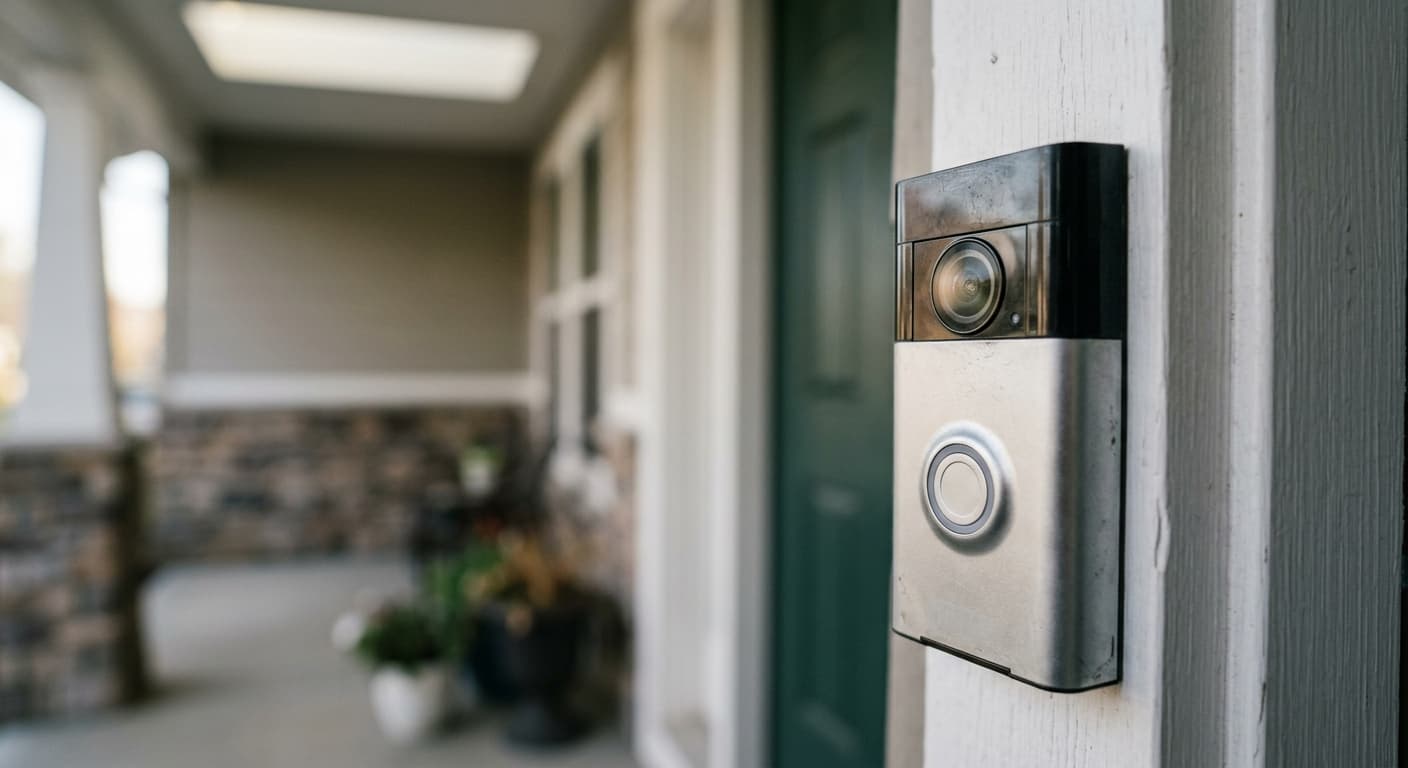
Doorbell cameras (Ring, Nest, etc.) are legal in Wyoming. They capture the area outside your door, which is typically public-facing. Audio recording features should be considered in light of the wiretapping statute. Many devices display visible indicators of recording.
Wyoming Rural Considerations
Wyoming's rural character means many homeowners have large properties with outbuildings, barns, and remote areas. Security cameras on ranch and farm properties face the same legal framework as urban homes. Cameras monitoring equipment, livestock areas, and access roads are generally lawful when pointed at your own property.
Business Security Cameras
Retail and Commercial Establishments
Wyoming businesses can use security cameras extensively for loss prevention, safety, and operations. Appropriate locations include sales floors, cash registers, entrances, parking lots, storage rooms, and hallways. Posting visible signs about surveillance is recommended.
Restricted Areas
Businesses cannot install cameras in restrooms, fitting rooms, lactation rooms, medical areas, or employee locker rooms. Recording in these areas can violate Wyo. Stat. Ann. Section 6-4-304.
Tourism and Hospitality
Wyoming's tourism industry (driven by Yellowstone, Grand Teton, and other attractions) creates specific considerations. Hotels, lodges, and vacation rentals must not install cameras in guest rooms, bathrooms, or other private guest areas. Common area cameras (lobbies, parking lots, pools) are acceptable with notice.
Workplace Security Cameras

Employers can use video surveillance in common work areas for security and safety. Permitted locations include production areas, retail floors, lobbies, parking lots, and building perimeters. Cameras are prohibited in bathrooms, locker rooms, and changing areas. If cameras include audio, the wiretapping statute applies.
Neighbor Disputes
Security camera disputes between neighbors in Wyoming can be resolved through direct communication, HOA complaints (if applicable), civil lawsuits for invasion of privacy, or criminal complaints for voyeuristic conduct. To prevent disputes, inform neighbors before installing cameras, use privacy masking features, and focus cameras on your own property.
HOA and Landlord Rules
HOA Restrictions
Wyoming HOAs can adopt rules governing camera placement, including requiring architectural approval, restricting camera visibility, and prohibiting cameras facing common areas.
Landlord and Tenant Considerations
Landlords can install cameras in common areas but not inside rental units. Tenants can install interior cameras and doorbell cameras subject to lease restrictions. Landlords cannot use cameras to monitor individual tenant behavior.
Security Camera Footage and Law Enforcement
You are not required to provide security camera footage to police without a warrant. Police can obtain a warrant or subpoena to compel production. Voluntarily sharing footage to assist investigations is lawful but optional.
Security Camera Footage as Evidence
Security camera footage is commonly used as evidence in Wyoming courts for burglary and property crimes, personal injury cases, domestic disputes, insurance claims, and traffic accidents. Standard authentication and relevance requirements apply.
More Wyoming Recording Laws
Audio Recording | Video Recording | Voyeurism and Hidden Cameras | Workplace Recording | Recording Police | Phone Call Recording | Security Cameras | Recording in Public | Landlord-Tenant Recording | Dashcam Laws | School Recording | Medical Recording
Back to Wyoming Recording Laws
More Wyoming Recording Topics
See Also
- Wyoming Surveillance Camera Laws covers home, HOA, neighbor, workplace, and landlord camera rules in Wyoming.
More Wyoming Laws
Frequently Asked Questions
Do I need permission to install security cameras on my property in Wyoming?
No. Wyoming homeowners can install security cameras on their own property without permission. HOA rules may require architectural approval. Cameras should not be aimed at areas where neighbors have a reasonable expectation of privacy.
Can security cameras record audio in Wyoming?
Security cameras with audio must comply with the one-party consent rule under Wyo. Stat. Ann. Section 7-3-702. If you are not present during recorded conversations, posting clear notice of audio recording or disabling audio is recommended.
Is it legal for businesses to use security cameras in Wyoming?
Yes. Businesses can use security cameras in sales areas, lobbies, parking lots, and common areas. Cameras cannot be installed in restrooms, fitting rooms, or locker rooms. Posting signs about surveillance is recommended.
Can my neighbor point a security camera at my property in Wyoming?
Your neighbor can point cameras at their own property, which may incidentally capture portions of yours. A camera deliberately aimed at your windows, backyard, or private areas could constitute invasion of privacy. Try direct communication first, then consult an attorney.
Do I have to give security camera footage to the police in Wyoming?
You are not required to provide footage voluntarily. Police can obtain a warrant or subpoena to compel production. Voluntarily sharing footage is lawful but not mandatory.
Updates
Independently fact-checked against the cited primary sources; governing law re-checked for recent changes
Governing law re-checked for recent changes
Governing law re-checked for recent changes
Reviewed and approved by an editor
The Law Behind This Article
This article rests on the statutory provisions below, held in our own legal record and retrieved from the official source. Tap a section to read the operative text.
Wyoming Statutes, Title 6 - Crimes and Offenses - Chapter 4: Offenses Against Morals, Decency and Family - Article 3: Obscenity
§ 6-4-304Voyeurism; penalties.In forcecited in 11 of our articles
(a) Except as otherwise provided in this section, a person is guilty of a misdemeanor punishable by imprisonment for not more than six (6) months, a fine of not more than seven hundred fifty dollars ($750.00), or both, if he, without the consent of the person being viewed, commits the crime of voyeurism by looking or viewing in a clandestine, surreptitious, prying or secretive nature into or within an area where the person being viewed has a reasonable expectation of privacy, including, but not limited to: (i) Restrooms; (ii) Baths; (iii) Showers; (iv) Dressing or fitting rooms; (v) Bedrooms; or (vi) Under the clothing being worn by another person, regardless of whether the person is in a place where the person has a reasonable expectation of privacy.
Official text (excerpt) · last checked 2026-08-31 · Read the full text in our law library · Verify at wyoleg.gov
Cited in 5 court opinions in our collectionLatest citing opinion in our collection: 2026
In the courts (editorial summary, independently checked):In Kobielusz (2024) the Wyoming Supreme Court held the looking element of felony voyeurism under 6-4-304(b)(i) is satisfied by knowingly or intentionally capturing an image, so the State need not prove the defendant viewed the recording. Rabuck (2006) said the statute did not narrow the indecent liberties statute.
Opinions citing this section in our collection:
- Shaun Thomas Kobielusz v. The State of Wyoming (Wyoming Supreme Court 2024, 541 P.3d 1101)✓Kobielusz hid spy cameras disguised as digital clocks in the bathrooms of the home he shared with his wife and daughters; the court held felony voyeurism under subsection (b)(i) requires only knowingly capturing an image, not proof that he later looked at the videos.
- State, Office of the Attorney General, Division of Criminal Investigation v. Thomason (Wyoming Supreme Court 2008, 197 P.3d 144)“…6-2-315(a)iv), 6-2-3l16(a)Gii) and (iv), 6-4-303(b)(iv) or W.S. 6-4-304(b) if the victim was a minor, or an ait…”
- Howard v. Aspen Way Enterprises, Inc. (Wyoming Supreme Court 2017, 406 P.3d 1271)“…tute a clearly unwarranted invasion of personal privacy”); Wyo. Stat. Ann. § 6-4-304 (a)' (LexisNexis 2017) (criminalizing t…”
Identified automatically from the court opinions citing this section — not a ranking of which case controls.
Also relied on in: Wyoming Surveillance Camera Laws (2026 Guide), Wyoming Smart Glasses Recording Laws 2025, Wyoming Landlord-Tenant Recording Laws: Rights and Rules
Wyoming Statutes, Title 7 - Criminal Procedure - Chapter 3: Fugitives and Prevention of Crime - Article 7: Communication Interception
§ 7-3-702Prohibition against interception or disclosure of wire, oral or electronic communications; exceptions; penalties.In forcecited in 18 of our articles
(a) Except as provided in subsection (b) of this section, no person shall intentionally: (i) Intercept, attempt to intercept, or procure any other person to intercept or attempt to intercept any wire, oral or electronic communication; (ii) Use, attempt to use, or procure any other person to use or attempt to use any electronic, mechanical or other device to intercept any oral communication when: (A) Such device is affixed to, or otherwise transmits a signal through, a wire, cable or other like connection used in wire communication; or (B) Such device transmits communications by radio or interferes with the transmission of such communication.
Official text (excerpt) · last checked 2026-08-31 · Read the full text in our law library · Verify at wyoleg.gov
Cited in 1 court opinions in our collectionLatest citing opinion in our collection: 2015
Opinions citing this section in our collection:
- Serna v. Bureau of Land Management Worland Field Office (Court of Appeals for the Tenth Circuit 2015, 614 F. App'x 384)“…nic communications except under certain circumstances. See Wyo. Stat. Ann. § 7-3-702(a). As relevant here, the statute cont…”
Identified automatically from the court opinions citing this section — not a ranking of which case controls.
Also relied on in: Wyoming Video Recording Laws: Privacy Rules and Consent, Wyoming Voyeurism Laws: Hidden Cameras and Privacy Violations, Wyoming Audio Recording Laws: One-Party Consent Guide
Search our full record of US law — 2.1 million sections, every state + federal →
Sources and References
- Wyo. Stat. Ann. Section 7-3-702 - Interception of Communications(law.justia.com)
- Wyo. Stat. Ann. Section 6-4-304 - Voyeurism(wyoleg.gov).gov
- Wyoming Legislature - Title 7(wyoleg.gov).gov
- FTC - Using Consumer Reports for Employment(ftc.gov).gov