
Wyoming
Wyoming Landlord-Tenant Recording Laws: Rights and Rules
Independently fact-checked against primary sources (last audited August 15, 2026). · Reviewed by the RecordingLaw editorial team. · Law checked current as of August 15, 2026. · 3 primary sources cited on this page. How we verify our legal content

Under Wyoming's one-party consent law, Wyo. Stat. Ann. Section 7-3-702, any landlord or tenant who participates in a conversation may record it without the other party's knowledge. A landlord, however, cannot place hidden cameras or audio devices inside a tenant's rental unit, where the tenant holds a reasonable expectation of privacy.
Recording interactions between landlords and tenants in Wyoming is governed by the state's one-party consent wiretapping law, Wyo. Stat. Ann. Section 7-3-702, alongside property rights principles and privacy protections. Both landlords and tenants have recording rights when participating in conversations, but each faces limitations regarding surveillance of the other party's private spaces.
This guide covers every aspect of landlord-tenant recording in Wyoming, including tenant recording rights, landlord surveillance powers, security camera rules, audio recording, using recordings as evidence, and privacy boundaries.
Tenant Recording Rights
Recording Conversations with Your Landlord
Under Wyoming's one-party consent law, tenants can record conversations with their landlord without permission:
- In-person conversations about rent, repairs, or lease terms
- Phone calls regarding maintenance or complaints
- Meetings about lease renewals or termination
- Walk-through inspections where you are present
- Conversations with property managers or maintenance staff
Why Tenants Record Landlords
- Documenting repair promises. Preserving verbal commitments to fix problems.
- Preserving evidence of harassment. Recording threats, illegal entry, or retaliatory behavior.
- Recording security deposit discussions. Documenting property condition at move-in and move-out.
- Documenting lease violations by the landlord. Proving failure to maintain habitable conditions.
- Protecting against unlawful eviction. Recording threats of illegal self-help eviction.
Tenant Security Camera Rights
Inside the unit: You can place cameras in your own living areas, use nanny cameras, and install pet cameras. Do not place cameras where guests have a privacy expectation.
At your entrance: Doorbell cameras at your unit's entrance are generally permitted. Check your lease for exterior modification restrictions.
Limitations: You generally cannot install cameras in common areas without landlord permission. Avoid cameras that capture other tenants' private spaces.
Landlord Recording and Surveillance Rights
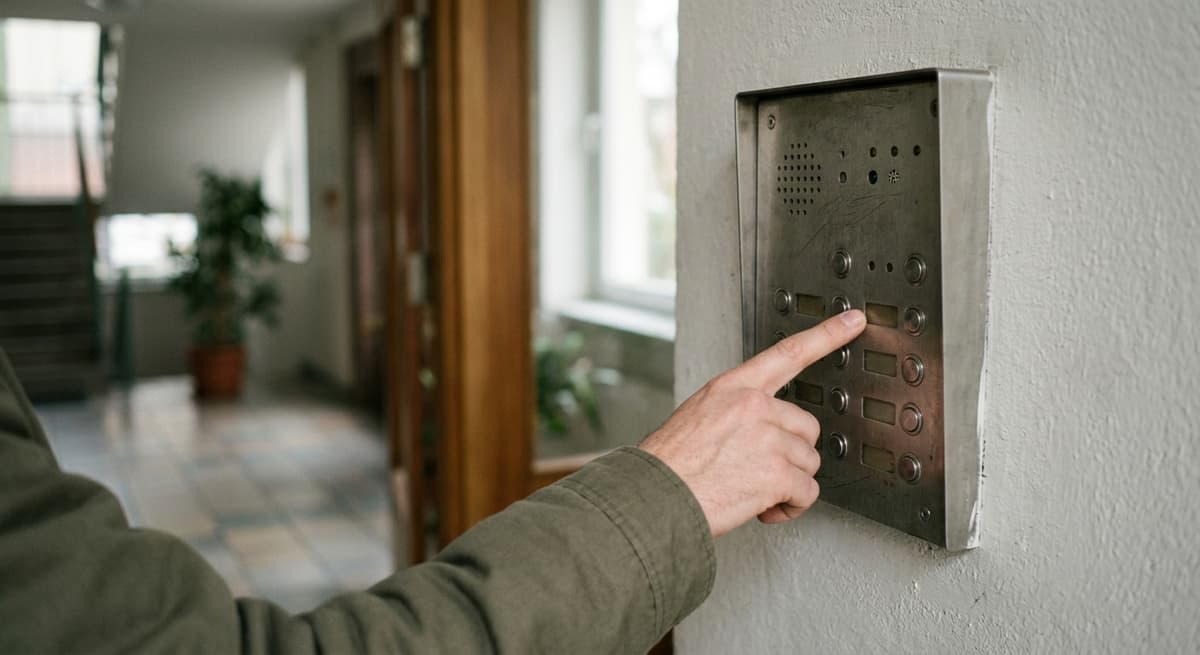
Security Cameras in Common Areas
| Location | Camera Permitted? | Notes |
|---|---|---|
| Building entrances and lobbies | Yes | Security |
| Parking lots and garages | Yes | Vehicle safety |
| Hallways and stairwells | Yes | Common area monitoring |
| Laundry rooms | Yes | Shared facility |
| Exterior perimeter | Yes | Property protection |
| Inside individual rental units | No | Tenant's private space |
| Unit bathrooms | No | Criminal violation |
| Individual patios (exclusive use) | Caution | May be tenant's private space |
Audio Recording Restrictions
Landlords should disable audio on common area cameras, post signage about recording, or limit audio to areas where they are personally present. Hidden audio devices to eavesdrop on tenants violate the wiretapping statute.
Restrictions on Landlord Recording
Landlords cannot install cameras inside rental units, use cameras to monitor tenant behavior, record private conversations, or use cameras for retaliation after disputes.
Recording During Landlord Entry

Tenant Rights During Entry
When a landlord enters your unit, you can record the entire visit to document proper notice, stated reasons vs. actual conduct, property condition, and whether the entry was within scope.
Landlord Rights During Entry
Landlords can record during property entries they participate in, documenting property condition during inspections, damage, conversations about repairs, and move-in/move-out conditions.
Recording as Evidence in Landlord-Tenant Disputes
Types of Disputes
Recordings are valuable in security deposit disputes (move-in and move-out condition documentation), repair and habitability disputes, eviction proceedings, and harassment claims.
Admissibility in Wyoming Courts
Recordings made under one-party consent are generally admissible, including in small claims proceedings. To maximize admissibility: record complete conversations, preserve originals without editing, document dates and participants, and maintain backups.
Small Claims Court
Many Wyoming landlord-tenant disputes are resolved in circuit court or through the justice of the peace system. Recordings are frequently presented for security deposit claims, repair costs, lease violations, and property damage.
Privacy Boundaries
Tenant Privacy Rights
Tenants have a reasonable expectation of privacy inside their unit. Landlords cannot monitor the interior, conduct audio surveillance, or use smart home devices for surveillance purposes.
Outdoor Spaces
- Shared yards: Lower privacy expectation; cameras acceptable
- Individual patios (exclusive use): Higher privacy expectation
- Parking spaces: Lower expectation; cameras acceptable
Specific Scenarios
Recording Maintenance Workers
You can record maintenance visits to document work performed, quality, comments about property, and whether workers stayed within relevant areas.
Recording During Move-In and Move-Out
Both parties benefit from recording video during transitions. Walk through every room, document existing damage, include date references, and create comprehensive records for deposit purposes.
Recording Noise Complaints
You can record noise from within your own unit, document dates and times, and record conversations with your landlord about the issue as evidence.
More Wyoming Recording Laws
Audio Recording | Video Recording | Voyeurism and Hidden Cameras | Workplace Recording | Recording Police | Phone Call Recording | Security Cameras | Recording in Public | Landlord-Tenant Recording | Dashcam Laws | School Recording | Medical Recording
Back to Wyoming Recording Laws
More Wyoming Recording Topics
More Wyoming Laws
Frequently Asked Questions
Can I record my landlord in Wyoming without telling them?
Yes. Under Wyoming's one-party consent law (Wyo. Stat. Ann. Section 7-3-702), you can record any conversation you participate in with your landlord without their knowledge. This applies to in-person meetings, phone calls, and property inspections.
Can my landlord put security cameras inside my apartment in Wyoming?
No. Your rental unit is your private home with a reasonable expectation of privacy. A landlord cannot install cameras inside your unit. Doing so could violate the voyeurism statute (Wyo. Stat. Ann. Section 6-4-304) and the wiretapping statute if audio is captured.
Can I install a Ring doorbell at my rental in Wyoming?
Generally yes. Tenants can install doorbell cameras at their entrance. Check your lease for restrictions on exterior modifications. The camera should capture the area immediately outside your door. Be prepared to remove it upon move-out if required.
Can I use a recording of my landlord as evidence in court?
Yes. Recordings made under one-party consent are generally admissible in Wyoming courts. They are commonly used in security deposit disputes, repair cases, eviction proceedings, and harassment claims. Preserve the original and be prepared to authenticate it.
Can my landlord record in hallways and common areas?
Yes. Landlords can install security cameras in common areas like lobbies, hallways, parking lots, and laundry rooms. These are shared spaces with a lower privacy expectation. Audio recording should be disabled or accompanied by notice.
Updates
Independently fact-checked against the cited primary sources; governing law re-checked for recent changes
Governing law re-checked for recent changes
Governing law re-checked for recent changes
Reviewed and approved by an editor
The Law Behind This Article
This article rests on the statutory provisions below, held in our own legal record and retrieved from the official source. Tap a section to read the operative text.
Wyoming Statutes, Title 7 - Criminal Procedure - Chapter 3: Fugitives and Prevention of Crime - Article 7: Communication Interception
§ 7-3-702Prohibition against interception or disclosure of wire, oral or electronic communications; exceptions; penalties.In forcecited in 18 of our articles
(a) Except as provided in subsection (b) of this section, no person shall intentionally: (i) Intercept, attempt to intercept, or procure any other person to intercept or attempt to intercept any wire, oral or electronic communication; (ii) Use, attempt to use, or procure any other person to use or attempt to use any electronic, mechanical or other device to intercept any oral communication when: (A) Such device is affixed to, or otherwise transmits a signal through, a wire, cable or other like connection used in wire communication; or (B) Such device transmits communications by radio or interferes with the transmission of such communication.
Official text (excerpt) · last checked 2026-08-31 · Read the full text in our law library · Verify at wyoleg.gov
Cited in 1 court opinions in our collectionLatest citing opinion in our collection: 2015
Opinions citing this section in our collection:
- Serna v. Bureau of Land Management Worland Field Office (Court of Appeals for the Tenth Circuit 2015, 614 F. App'x 384)“…nic communications except under certain circumstances. See Wyo. Stat. Ann. § 7-3-702(a). As relevant here, the statute cont…”
Identified automatically from the court opinions citing this section — not a ranking of which case controls.
Also relied on in: Wyoming Security Camera Laws: Rules for Homes and Businesses, Wyoming Video Recording Laws: Privacy Rules and Consent, Wyoming Voyeurism Laws: Hidden Cameras and Privacy Violations
§ 7-3-710Recovery of civil damages for violations; good faith defense.In forcecited in 9 of our articles
(a) Subject to W.S. 7-3-702(b)(ii), any person whose wire, oral or electronic communication is intercepted, disclosed or used in violation of this act may recover damages against any person who intercepts, discloses, uses or procures any other person to intercept, disclose or use the communications as follows: (i) Actual damages but not less than one thousand dollars ($1,000.00) a day for each day of violation; (ii) Punitive damages; and (iii) Reasonable attorney's fees and other litigation costs reasonably incurred. (b) A good faith reliance on a court order constitutes a complete defense to any civil or criminal action brought under this act.
Official text (excerpt) · last checked 2026-07-30 · Read the full text in our law library · Verify at wyoleg.gov
Also relied on in: Wyoming Audio Recording Laws: One-Party Consent Guide, Wyoming Phone Call Recording Laws: Rules and Consent Guide, Wyoming Workplace Recording Laws: Employee and Employer Rights
Wyoming Statutes, Title 6 - Crimes and Offenses - Chapter 4: Offenses Against Morals, Decency and Family - Article 3: Obscenity
§ 6-4-304Voyeurism; penalties.In forcecited in 11 of our articles
(a) Except as otherwise provided in this section, a person is guilty of a misdemeanor punishable by imprisonment for not more than six (6) months, a fine of not more than seven hundred fifty dollars ($750.00), or both, if he, without the consent of the person being viewed, commits the crime of voyeurism by looking or viewing in a clandestine, surreptitious, prying or secretive nature into or within an area where the person being viewed has a reasonable expectation of privacy, including, but not limited to: (i) Restrooms; (ii) Baths; (iii) Showers; (iv) Dressing or fitting rooms; (v) Bedrooms; or (vi) Under the clothing being worn by another person, regardless of whether the person is in a place where the person has a reasonable expectation of privacy.
Official text (excerpt) · last checked 2026-08-31 · Read the full text in our law library · Verify at wyoleg.gov
Cited in 5 court opinions in our collectionLatest citing opinion in our collection: 2026
In the courts (editorial summary, independently checked):In Kobielusz (2024) the Wyoming Supreme Court held the looking element of felony voyeurism under 6-4-304(b)(i) is satisfied by knowingly or intentionally capturing an image, so the State need not prove the defendant viewed the recording. Rabuck (2006) said the statute did not narrow the indecent liberties statute.
Opinions citing this section in our collection:
- Shaun Thomas Kobielusz v. The State of Wyoming (Wyoming Supreme Court 2024, 541 P.3d 1101)✓Kobielusz hid spy cameras disguised as digital clocks in the bathrooms of the home he shared with his wife and daughters; the court held felony voyeurism under subsection (b)(i) requires only knowingly capturing an image, not proof that he later looked at the videos.
- State, Office of the Attorney General, Division of Criminal Investigation v. Thomason (Wyoming Supreme Court 2008, 197 P.3d 144)“…6-2-315(a)iv), 6-2-3l16(a)Gii) and (iv), 6-4-303(b)(iv) or W.S. 6-4-304(b) if the victim was a minor, or an ait…”
- Howard v. Aspen Way Enterprises, Inc. (Wyoming Supreme Court 2017, 406 P.3d 1271)“…tute a clearly unwarranted invasion of personal privacy”); Wyo. Stat. Ann. § 6-4-304 (a)' (LexisNexis 2017) (criminalizing t…”
Identified automatically from the court opinions citing this section — not a ranking of which case controls.
Also relied on in: Wyoming Surveillance Camera Laws (2026 Guide), Wyoming Smart Glasses Recording Laws 2025, Wyoming Laws on Recording in Public: What You Can and Cannot Do
Search our full record of US law — 2.1 million sections, every state + federal →
Sources and References
- Wyo. Stat. Ann. Section 7-3-702 - Interception of Communications(law.justia.com)
- Wyo. Stat. Ann. Section 6-4-304 - Voyeurism(wyoleg.gov).gov
- Wyo. Stat. Ann. Section 7-3-710 - Civil Liability(law.justia.com)
- HUD - Tenant Rights(hud.gov).gov
- Wyoming Legislature - Title 7(wyoleg.gov).gov