
Louisiana
Louisiana Laws on Recording Police: Your Rights and the Buffer Zone Law
Independently fact-checked against primary sources (last audited August 15, 2026). · Reviewed by the RecordingLaw editorial team. · Law checked current as of August 7, 2026. · 7 primary sources cited on this page. How we verify our legal content
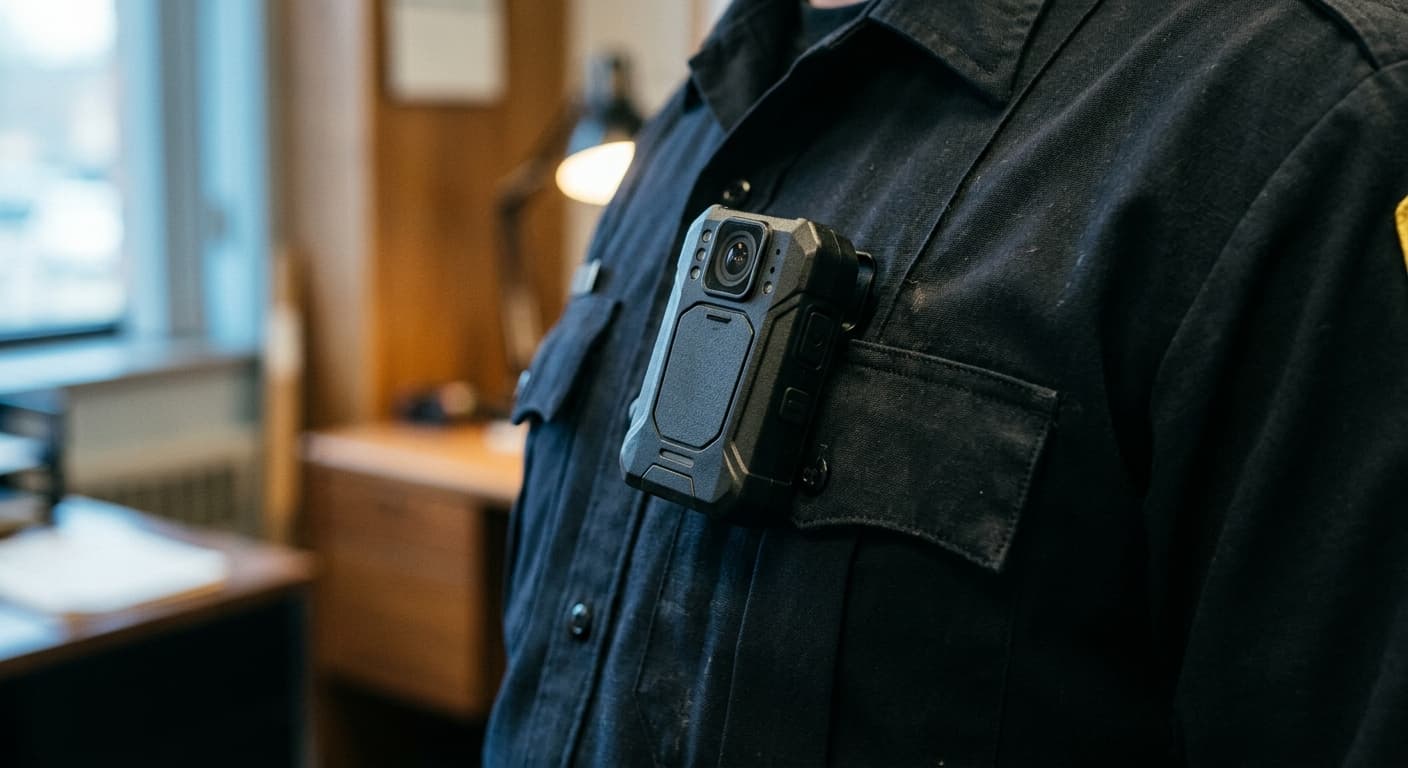
Louisiana residents have a First Amendment right to record police officers performing their duties in public. Louisiana's one-party consent law (La. R.S. 15:1303) permits audio recording of any conversation you participate in with officers. A 2024 buffer zone law requiring a 25-foot retreat was blocked by a federal court in January 2025 and remains unenforceable.
Recording police officers in Louisiana is a constitutionally protected activity. The First Amendment to the U.S. Constitution, as interpreted by federal courts including the Fifth Circuit Court of Appeals that covers Louisiana, protects your right to film, photograph, and audio record law enforcement officers performing their duties in public spaces.
This guide covers the full scope of your rights when recording police in Louisiana, the current status of the controversial 2024 buffer zone law, practical guidelines for safe recording, and what to do if an officer attempts to stop you from filming.
Your Constitutional Right to Record Police
First Amendment Foundation
The right to record police officers performing their duties in public is rooted in the First Amendment to the U.S. Constitution. While the First Amendment does not explicitly mention recording, federal courts have consistently held that the right to gather information about government officials, including through audio and video recording, is a protected form of expression and press activity.
The U.S. Department of Justice has affirmed this position in guidance documents, stating that recording police activity in public is a form of protected speech. The DOJ has intervened in multiple cases to assert that individuals have a First Amendment right to record officers in the public discharge of their duties.
Fifth Circuit Court Recognition
The U.S. Court of Appeals for the Fifth Circuit, which has jurisdiction over Louisiana, Texas, and Mississippi, has explicitly recognized the right to record police. In Turner v. Driver, 848 F.3d 678 (5th Cir. 2017), the Fifth Circuit held that the First Amendment protects the right to record police officers performing their duties in public, subject to reasonable time, place, and manner restrictions. The court found this right was not yet clearly established as of Turner's own 2015 arrest, so the officers involved in that specific case received qualified immunity, but the panel declared the right clearly established going forward for future cases. The Fifth Circuit joined the weight of federal appellate authority recognizing a First Amendment right to record law enforcement officers performing their official duties in public.
Other federal circuit courts that have explicitly recognized this right include the First, Third, Fifth, Seventh, Ninth, Tenth, and Eleventh Circuits. No federal circuit court has held that citizens lack this right.
Louisiana's One-Party Consent and Police Recording
Audio Recording of Police
Louisiana's one-party consent statute La. R.S. 15:1303 provides additional legal protection for recording police. As a one-party consent state, you can audio record any conversation you are participating in, including conversations with police officers during a traffic stop, arrest, or other interaction.
Even when you are not directly conversing with officers, the First Amendment independently protects your right to video record police in public. The one-party consent rule becomes particularly relevant when:
- You are the subject of a police encounter (traffic stop, questioning, arrest)
- An officer is speaking directly to you
- You are a bystander who engages verbally with officers at the scene
Video Recording of Police
Video recording of police in public does not require any consent under Louisiana law. There is no general prohibition on filming in public spaces, and police officers performing duties in public have no reasonable expectation of privacy regarding their official actions.
You can video record:
- Traffic stops (your own or others')
- Arrests and detentions
- Police searches
- Officers directing traffic or managing crowds
- Police responses to incidents in public
- Interactions between officers and other members of the public
The 2024 Police Buffer Zone Law
What the Law Said
In 2024, the Louisiana Legislature enacted La. R.S. 14:109 (2024 La. Act 259 / HB 173), making it a misdemeanor to intentionally remain within 25 feet of a law enforcement officer who is lawfully engaged in the execution of their duties, after being ordered to move back. The law carried penalties of up to $500 in fines and 60 days in jail.
The legislation was promoted as a safety measure to protect officers during volatile encounters. Critics argued it was designed to prevent bystander recording of police activities and would create a chilling effect on First Amendment rights.
Federal Court Blocks the Law (January 2025)
In January 2025, in Deep South Today, d/b/a Verite News, et al. v. Murrill, No. 3:24-cv-00591 (M.D. La. Jan. 31, 2025), U.S. District Judge John W. deGravelles blocked enforcement of the buffer zone law. The plaintiffs included Deep South Today (Verite News), TEGNA Inc., Scripps Media Inc., Nexstar Media Inc., Gray Local Media, Inc., and Gannett Co. The court issued a preliminary injunction, finding that the law was likely unconstitutional on multiple grounds:
- Fourteenth Amendment (Due Process). The court found the statute "unconstitutionally vague" because it lacked clear standards for when an officer could issue a retreat order. The law allowed officers to order anyone to move back at any time during the execution of their duties, without defining what circumstances justified such an order. This vagueness "allows for arbitrary and discriminatory enforcement."
- First Amendment. The court found the law likely impaired First Amendment rights to gather news and document government activity. A 25-foot distance requirement would render many recordings meaningless, as modern smartphones cannot capture clear audio or video detail from that distance.
Current Status (2025-2026)
As of early 2025, Louisiana appealed the ruling to the Fifth Circuit Court of Appeals. The law remains unenforceable while the appeal is pending. The preliminary injunction prevents any law enforcement agency in Louisiana from enforcing the 25-foot buffer zone requirement.
Until the Fifth Circuit issues its ruling, you have the right to record police from any lawful vantage point in Louisiana, subject only to existing laws against obstruction and interference.
Practical Guidelines for Recording Police
What You CAN Do
- Record from any public sidewalk, street, or other public area. You do not need to be a minimum distance away, as long as you are not physically interfering with police operations.
- Record openly or discreetly. You have no obligation to announce that you are recording.
- Livestream your recording. Live broadcasting to social media platforms provides an additional layer of protection because the footage cannot be deleted by seizing your device.
- Continue recording even if ordered to stop (unless you are physically interfering with police operations). An officer cannot lawfully order you to stop recording simply because they do not want to be filmed.
- Refuse to hand over your device. Police generally need a warrant to seize your phone or camera. The Supreme Court's decision in Riley v. California (2014) held that police need a warrant to search a cell phone, even incident to arrest.
What You CANNOT Do
- Physically interfere with police operations. Getting in an officer's way, blocking their path, or otherwise obstructing their ability to perform their duties is illegal.
- Trespass to get a better angle. Your recording right does not override property rights. Entering private property without permission to record police is trespassing.
- Incite others to interfere. Encouraging bystanders to obstruct police while you record could result in charges.
- Resist arrest. If an officer unlawfully arrests you for recording, comply with the arrest and challenge it later through legal channels. Resisting arrest creates additional criminal exposure.
During a Traffic Stop
If you are stopped by police while driving in Louisiana:
- You have the right to record the entire encounter, including audio.
- Place your phone in a dashboard mount or holder where it can capture video without requiring you to hold it.
- Keep your hands visible and inform the officer if you need to reach for anything.
- Do not make sudden movements toward your phone, as this could be misinterpreted.
- Passengers also have the right to record the traffic stop.
As a Bystander
If you witness a police encounter and want to record:
- Maintain a reasonable distance that does not interfere with police activity.
- Stand on a public sidewalk or other public area.
- Do not cross police tape or barricades.
- If an officer asks you to move, ask calmly whether you are being ordered to move and why. Comply if given a lawful order, but note the interaction for potential legal challenge.
- Consider livestreaming so the footage is preserved even if your device is seized.
If Police Try to Stop You From Recording
Know Your Rights
If a police officer tells you to stop recording in Louisiana:
- Stay calm and polite. De-escalation protects your safety.
- State clearly: "I am exercising my First Amendment right to record."
- Do not physically resist if the officer attempts to take your phone.
- Remember the officer's badge number, name, and patrol car number.
- File a complaint with the officer's department afterward.
- Contact an attorney if your device was seized, recordings were deleted, or you were arrested for recording.
Illegal Seizure or Deletion of Recordings
If a police officer seizes your device or deletes your recordings without a warrant:
- This likely violates the Fourth Amendment (unreasonable seizure)
- This likely violates the First Amendment (suppression of protected expression)
- You may have a civil rights claim under 42 U.S.C. 1983 against the officer and potentially the department
- You may be entitled to damages, including compensatory damages for the value of the lost recordings and potential punitive damages
Recording Government Meetings and Officials
Open Meetings Law
Louisiana's Open Meetings Law (La. R.S. 42:11-28) guarantees the public's right to attend and record government meetings. The law explicitly states that all proceedings in a public meeting may be video or tape recorded, filmed, or broadcast live.
This applies to:
- City council and parish council meetings
- School board meetings
- State legislative committee hearings
- Public hearings by any government body
- Law enforcement oversight and civilian review board meetings
Certain public bodies in parishes and municipalities with populations exceeding specific thresholds are even required to broadcast their meetings live.
Recording Other Government Officials
Beyond police officers, you can record interactions with any government official you are speaking with under Louisiana's one-party consent law. This includes:
- DCFS (Department of Children and Family Services) workers
- Building inspectors and code enforcement officers
- Probation and parole officers (during your meetings with them)
- DMV and government office employees
- Public school administrators
Body Camera and Dashcam Footage
Accessing Police Body Camera Footage
Louisiana addresses public access to law enforcement body camera footage under La. R.S. 44:3(A)(8). Body-worn camera recordings are generally public records unless the custodian determines a specific recording would violate an individual's reasonable expectation of privacy, in which case disclosure requires a court order under R.S. 44:35. Beyond that court-order process, certain individuals may have additional access rights:
- Family members of individuals depicted in the footage
- Attorneys representing parties involved in the recorded incident
- Individuals depicted in the recording (subject to certain exceptions)
The process for requesting body camera footage typically involves a formal written request to the law enforcement agency. If access is denied, a court order may be sought.
Police Dashcam Recordings
Police vehicle dashcam recordings are generally subject to the same public records framework as body camera footage. Louisiana's Public Records Law (La. R.S. 44:1-41) provides a framework for requesting government records, though specific exemptions may apply to recordings that are part of ongoing criminal investigations.
More Louisiana Recording Laws
Audio Recording | Video Recording | Voyeurism & Hidden Cameras | Workplace Recording | Recording Police | Phone Call Recording | Security Cameras | Recording in Public | Landlord-Tenant | Dashcam Laws | Schools | Medical Recording
Back to Louisiana Recording Laws
More Louisiana Recording Topics
More Louisiana Laws
Frequently Asked Questions
Can I record police officers in Louisiana?
Yes. The First Amendment protects your right to record law enforcement officers performing their duties in public. Louisiana's one-party consent law also permits you to audio record any conversation you participate in with police officers.
Is the Louisiana 25-foot police buffer zone law in effect?
No. The 2024 buffer zone law was blocked by a federal court in January 2025. U.S. District Judge John deGravelles found it unconstitutionally vague and likely harmful to First Amendment rights. The law remains unenforceable while Louisiana's appeal to the Fifth Circuit is pending.
Can police take my phone for recording them in Louisiana?
Police generally need a warrant to seize your phone or camera. The Supreme Court's Riley v. California decision requires a warrant to search cell phones. If an officer seizes your device without a warrant, this likely violates the Fourth Amendment and you may have a civil rights claim under 42 U.S.C. 1983.
Can I be arrested for recording police in Louisiana?
You should not be arrested solely for recording police in public. However, officers may attempt to use obstruction or interference charges. If you are arrested for recording, comply with the arrest and challenge it later through legal channels. Do not physically resist.
How do I get police body camera footage in Louisiana?
Body-worn camera footage in Louisiana is generally a public record under La. R.S. 44:3(A)(8), unless the custodian determines a specific recording violates someone's reasonable expectation of privacy, in which case it can only be disclosed by court order under R.S. 44:35. Family members, attorneys, and individuals depicted in the footage can request access through a formal written request to the law enforcement agency.
Updates
Corrected the Turner v. Driver case summary, which had the qualified-immunity holding backwards, and fixed the 2024 police buffer-zone law's statute citation (La. R.S. 14:109, not 14:108.4) along with two broken citation links.
Independently fact-checked against the cited primary sources
Corrected the body-worn camera public-records citation from La. R.S. 44:3(A)(4)(b) (the arrest-report provision) to the actual body-camera provision at 44:3(A)(8), and clarified that recordings are generally public unless a privacy-violation determination requires a court order.
Governing law re-checked for recent changes
Reviewed and approved by an editor
The Law Behind This Article
This article rests on the statutory provisions below, held in our own legal record and retrieved from the official source. Tap a section to read the operative text.
Louisiana Revised Statutes
§ 15:1303Interception and disclosure of wire, electronic, or oral communicationsIn forcecited in 36 of our articles
A. Except as otherwise specifically provided in this Chapter, it shall be unlawful for any person to: (1) Willfully intercept, endeavor to intercept, or procure any other person to intercept or endeavor to intercept, any wire, electronic or oral communication; (2) Willfully use, endeavor to use, or procure any other person to use or endeavor to use, any electronic, mechanical, or other device to intercept any oral communication when: (a) Such device is affixed to, or otherwise transmits a signal through, a wire, cable, or other like connection used in wire or electronic communication; or (b) Such device transmits communications by radio or interferes with the transmission of such communication; (3) Willfully disclose, or endeavor to disclose, to any other person the contents of any wire, electronic, or oral communication, knowing or having reason to know that the information was obtained through the interception of a wire, electronic, or oral communication in violation of this Subsection; or (4) Willfully use, or endeavor to use, the contents of any wire, electronic, or oral communication, knowing or having reason to know that the information was obtained through the…
Official text (excerpt) · last checked 2026-08-31 · Read the full text in our law library · Verify at legis.la.gov
Cited in 25 court opinions in our collectionLatest citing opinion in our collection: 2020
In the courts (editorial summary, independently checked):Louisiana courts apply the consent exception in La. R.S. 15:1303. Smith v. Smith (2005) held a parent may consent for a child where he has a good faith, reasonable basis that it serves the child’s best interest, placing the recording within 15:1303(C)(4). Keller v. Aymond (1998) held willfulness is not required for civil liability.
Opinions citing this section in our collection:
- Smith v. Smith (Louisiana Court of Appeal 2005, 923 So. 2d 732)✓A father secretly taped his daughter's calls with her mother in his own home during a custody fight; the court applied vicarious consent and held his good faith, objectively reasonable belief that taping served the child's best interest fell within La. R.S. 15:1303(C)(4).
- Johnson v. Aymond (Louisiana Court of Appeal 1998, 709 So. 2d 1072)✓A newspaper printed excerpts of a phone conversation a defendant had allegedly taped and handed out at a press conference; the court held those allegations, accepted as true, state a cause of action under the literal language of La. R.S. 15:1303(A)(4), and reversed the dismissal.
- Keller v. Aymond (Louisiana Court of Appeal 1998, 722 So. 2d 1224)✓A newspaper published excerpts of private calls taped by another and handed out at a press conference; the court held criminal willfulness under section 1303 is not needed for civil damages, and that fact issues over the paper's reason to know barred summary judgment under 1303.
Identified automatically from the court opinions citing this section — not a ranking of which case controls.
Also relied on in: Louisiana HB 410: Recording-Notice Bill Heads to the Governor (2026), Louisiana HB 475: Disclosure Required Before AI-Recorded Medical Visits, Louisiana Smart Glasses Recording Laws (2026)
§ 14:109Approaching a peace officer lawfully engaged in law enforcement dutiesIn force
A. No person shall knowingly or intentionally approach within twenty-five feet of a peace officer who is lawfully engaged in the execution of his official duties after the peace officer has ordered the person to stop approaching or to retreat. B. For the purposes of this Section, "peace officer" shall include all individuals as defined in R.S. 14:112.4(B) and R.S. 40:2402. C. It shall be an affirmative defense to this crime if the defendant can establish that the lawful order or command was neither received nor understood by the defendant nor capable of being received or understood under the conditions and circumstances that existed at the time of the issuance of the order. D. Whoever violates the provisions of this Section shall be fined not more than five hundred dollars, imprisoned for not more than sixty days, or both.
Official text (excerpt) · last checked 2026-07-29 · Read the full text in our law library · Verify at legis.la.gov
Cited in 1 court opinions in our collectionLatest citing opinion in our collection: 1972
Opinions citing this section in our collection:
- State v. Woodfox (Supreme Court of Louisiana 1972, 263 La. 935)“…Woodfox, appeals from his conviction of aggravated escape (La.R.S. 14:109), for which he was sentenced to fourtee…”
Identified automatically from the court opinions citing this section — not a ranking of which case controls.
§ 42:11Short titleIn forcecited in 8 of our articles
This Chapter shall be known and may be cited as the "Open Meetings Law". NOTE: Former R.S. 42:11 was redesignated as R.S. 42:26 by Acts 2010, No. 861, §23.
Official text (excerpt) · last checked 2026-07-29 · Read the full text in our law library · Verify at legis.la.gov
Cited in 31 court opinions in our collectionLatest citing opinion in our collection: 2024
Opinions citing this section in our collection:
- Louisiana High School Athletics Ass'n v. State (Supreme Court of Louisiana 2013, 107 So. 3d 583)“…(l)(b)(v), because it is subject to the Open Meetings Law, La. R.S. 42:11 et seq., 8 and is partially funded by…”
- Deep South Center for Environmental Justice, Vayla New Orleans, Justice and Beyond, 350 New Orleans, Sierra Club, Mr. Theodore Quant and Ms. Renate Heurich v. the Council of the City of New Orleans, the Utility, Cable, Telecommunications and Technology Committee of the New Orleans City Council, Jason R. Williams, Stacy Head, Susan G. Guidry, Latoya Cantrell, Nadine M. Ramsey, Jared C. Brossett, and James A. Gray, II (Louisiana Court of Appeal 2020)“…leans East due to the violations of the Open Meetings Law, La. R.S. 42:11, et seq. that occurred at the Council’s…”
- Midyett v. Midyett (Louisiana Court of Appeal 1999, 744 So. 2d 669)“…7:1287(C) and (F); La. R.S. 37:2666(B); La. R.S. 40:2010.9; La. R.S. 42:11(C); Joyner v. Wear, 27,631 (La.App.2d…”
Identified automatically from the court opinions citing this section — not a ranking of which case controls.
Also relied on in: Louisiana Recording Laws (2026): One-Party Consent Rules, Louisiana Laws on Recording in Public: Rights, Limits, and Exceptions, Louisiana School Recording Laws: Student and Parent Rights
§ 44:1General definitionsIn forcecited in 5 of our articles
A.(1) As used in this Chapter, the phrase "public body" means any branch, department, office, agency, board, commission, district, governing authority, political subdivision, or any committee, subcommittee, advisory board, or task force thereof, any other instrumentality of state, parish, or municipal government, including a public or quasi-public nonprofit corporation designated as an entity to perform a governmental or proprietary function, or an affiliate of a housing authority.
Official text (excerpt) · last checked 2026-07-29 · Read the full text in our law library · Verify at legis.la.gov
Cited in 222 court opinions in our collectionLatest citing opinion in our collection: 2026
Opinions citing this section in our collection:
- Landis v. Moreau (Supreme Court of Louisiana 2001, 779 So. 2d 691)“…and his co-defendants, pursuant to the Public Records Act, La. R.S. 44:1, et seq. In response to plaintiff's req…”
- Capital City Press v. Metro. Council (Supreme Court of Louisiana 1997, 696 So. 2d 562)“…ion or writ of mandamus pursuant to the Public Records Law, La. R.S. 44:1, et seq., seeking access to the names…”
- In Re Matter Under Investigation (Supreme Court of Louisiana 2009, 15 So. 3d 972)“…the return of copies would violate the Public Records Act, La. R.S. 44:1, et seq. The Orleans Parish Criminal…”
Identified automatically from the court opinions citing this section — not a ranking of which case controls.
Also relied on in: Louisiana Police Bodycam Laws (2026): Retention & Records
§ 44:3Records of prosecutive, investigative, and law enforcement agencies and communications districtsIn forcecited in 10 of our articles
A. Nothing in this Chapter shall be construed to require disclosures of records, or the information contained therein, held by the offices of the attorney general, district attorneys, sheriffs, police departments, Department of Public Safety and Corrections, Department of Wildlife and Fisheries, marshals, investigators, public health investigators, correctional agencies, communications districts, intelligence agencies, Council on Peace Officer Standards and Training, Louisiana Commission on Law Enforcement and Administration of Criminal Justice, or publicly owned water districts of the state, which records are: (1) Records pertaining to pending criminal litigation or any criminal litigation which can be reasonably anticipated, until such litigation has been finally adjudicated or otherwise settled, except as otherwise provided in Subsection F of this Section; or (2) Records containing the identity of a confidential source of information or records which would tend to reveal the identity of a confidential source of information; or (3) Records containing security procedures, investigative training information or aids, investigative techniques, investigative technical equipment or…
Official text (excerpt) · last checked 2026-09-07 · Read the full text in our law library · Verify at legis.la.gov
Cited in 104 court opinions in our collectionLatest citing opinion in our collection: 2025
In the courts (editorial summary, independently checked):In Re Matter Under Investigation (2009) held La. R.S. 44:3(A)(1)'s criminal-litigation exception is temporary and that whether litigation is reasonably anticipated must be decided case by case at a contradictory hearing on objective factors; Cormier (1989) held initial officer reports under 44:3(A)(4)(a) are public records.
Opinions citing this section in our collection:
- In Re Matter Under Investigation (Supreme Court of Louisiana 2009, 15 So. 3d 972)✓News organizations sought the Attorney General's file on deaths at a New Orleans hospital after Hurricane Katrina; the court held section 44:3(A)(1) exempts records pertaining to reasonably anticipated criminal litigation and remanded for a hearing on objective factors.
- Cormier v. PUBLIC RECORDS REQUEST OF GIULIO (Supreme Court of Louisiana 1989, 553 So. 2d 806)✓A requester sought a sheriff's initial police reports in several cases; the court held section 44:3(A)(4)(a) makes the investigating officer's initial report a public record, ordered the reports produced, and required an evidentiary hearing on the withheld misconduct letters.
- Innocence Project New Orleans v. New Orleans Police Department (Louisiana Court of Appeal 2013, 2013 La.App. 4 Cir. 0921)✓A nonprofit sought NOPD files on an arrest whose conviction became final in 1993; the court treated the section 44:3(A)(4)(a) exemption as temporal, ending once no further litigation is forthcoming, and upheld fees and a penalty against the custodian who ignored the request.
Identified automatically from the court opinions citing this section — not a ranking of which case controls.
Also relied on in: Louisiana Video Recording Laws: Surveillance Rules and Privacy Limits, How to Get a Police Report in Louisiana (2026 Guide), Louisiana Public Records Law: Deadlines, Fees, and How to File a Request
United States Code Title 42
§ 1983Civil action for deprivation of rightsIn forcecited in 50 of our articles
Every person who, under color of any statute, ordinance, regulation, custom, or usage, of any State or Territory or the District of Columbia, subjects, or causes to be subjected, any citizen of the United States or other person within the jurisdiction thereof to the deprivation of any rights, privileges, or immunities secured by the Constitution and laws, shall be liable to the party injured in an action at law, suit in equity, or other proper proceeding for redress, except that in any action brought against a judicial officer for an act or omission taken in such officer’s judicial capacity, injunctive relief shall not be granted unless a declaratory decree was violated or declaratory relief was unavailable. For the purposes of this section, any Act of Congress applicable exclusively to the District of Columbia shall be considered to be a statute of the District of Columbia.
Official text (excerpt) · last checked 2026-07-28 · Read the full text in our law library · Verify at uscode.house.gov
Cited in 282,365 court opinions in our collectionLatest citing opinion in our collection: 2026
Opinions citing this section in our collection:
- Ashcroft v. Iqbal (Supreme Court of the United States 2009, 556 U.S. 662)“…its brought against state officials under Rev. Stat. §1979, 42 U. S. C. §1983.” Hartman, 547 U. S., at 254, n. 2. Cf.…”
- Celotex Corp. v. Catrett, Administratrix of the Estate of Catrett (Supreme Court of the United States 1986, 477 U.S. 317)“…policeman as she left. Petitioner brought an action under 42 U. S. C. § 1983 claiming that the refusal of service a…”
- Monell v. New York City Dept. of Social Servs. (Supreme Court of the United States 1978, 436 U.S. 658)“…decided less than two decades ago. Focusing new light on 42 U. S. C. § 1983 , that decision widened access to the f…”
Identified automatically from the court opinions citing this section — not a ranking of which case controls.
Also relied on in: Alabama Laws on Recording Police: Your Rights and Limits, Alaska Laws on Recording Police: Your Rights and Limits (2026), Arkansas Laws on Recording Police: Your Rights and Limits (2026)
Search our full record of US law — 2.1 million sections, every state + federal →
Sources and References
- First Amendment(constitution.congress.gov).gov
- La. R.S. 15:1303(legis.la.gov).gov
- Louisiana Open Meetings Law(legis.la.gov).gov
- La. R.S. 44:3 - Body Camera Provisions(legis.la.gov).gov
- 42 U.S.C. 1983(law.cornell.edu)
- Louisiana Public Records Law(legis.la.gov).gov
- RCFP Buffer Zone Ruling(rcfp.org)
- DOJ Statement on Recording Police(justice.gov).gov
- Turner v. Driver, 848 F.3d 678 (5th Cir. 2017)(casetext.com)
- La. R.S. 14:109 - Police Buffer Zone (2024 La. Act 259 / HB 173)(legis.la.gov).gov