
Washington
Washington Security Camera Laws: Rules for Home and Business Surveillance (2026)
Independently fact-checked against primary sources (last audited August 22, 2026). · Reviewed by the RecordingLaw editorial team. · Law checked current as of August 22, 2026. · 7 primary sources cited on this page. How we verify our legal content
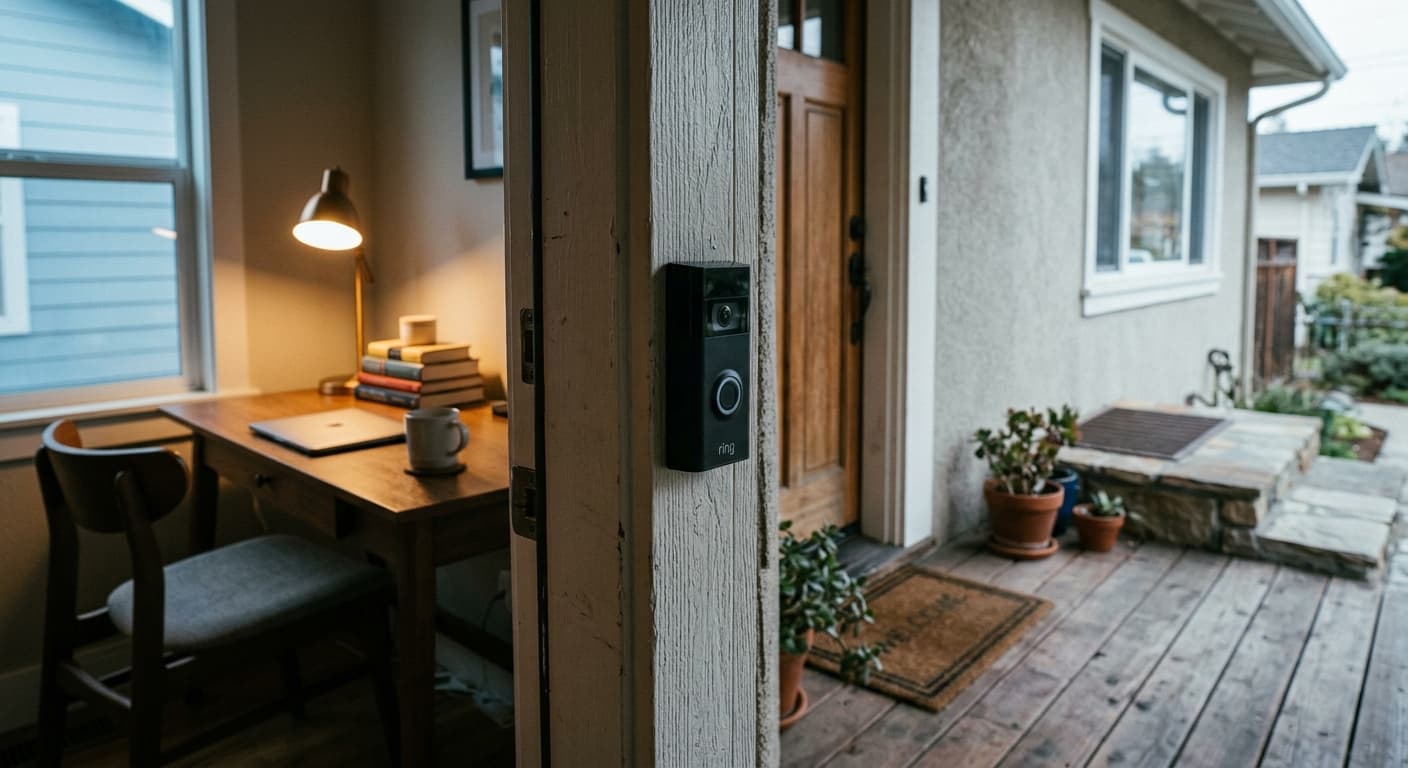
In Washington, silent video security cameras are broadly permitted on homes and businesses without consent. Any camera that records audio triggers the all-party consent requirement under RCW 9.73.030. Pointing a camera into areas where others have a reasonable expectation of privacy can constitute voyeurism under RCW 9A.44.115.
Security cameras are increasingly common in Washington homes and businesses, but their use is governed by a layered set of state and local laws. The core rule comes from Washington's Privacy Act: silent video surveillance is broadly permitted, but the moment a security camera records audio of a private conversation, the two-party consent requirement under RCW 9.73.030 applies. Additional rules govern camera placement, voyeurism, biometric data collection, and landlord-tenant relationships.
This guide covers the legal framework for security camera use in Washington for both residential and commercial settings.
The Audio-Video Distinction for Security Cameras
Why Audio Changes Everything
Washington's Privacy Act under RCW 9.73.030 targets the recording of private communications and conversations, not visual observation. This creates a critical distinction for security camera systems:
- Silent video cameras: Not covered by RCW 9.73.030. You can operate silent video cameras without obtaining consent from the people being recorded.
- Cameras with audio recording: The all-party consent requirement applies. If your security camera records audio of a private conversation, you must obtain consent from all parties or face criminal and civil liability.
Common Devices Affected
Many modern security devices include audio recording by default:
| Device | Audio by Default? | Consent Required? |
|---|---|---|
| Basic CCTV camera (no mic) | No | No (for video) |
| Ring/Nest doorbell camera | Yes | Yes (for audio) |
| Wi-Fi security cameras with mic | Yes | Yes (for audio) |
| Baby monitors with audio | Yes | Context-dependent |
| Smart home speakers with camera | Yes | Yes (for audio) |
| Trail/wildlife cameras | Usually no | No (if silent) |
If you use a security camera with audio capabilities, either disable the audio recording feature or provide adequate notice and obtain consent.
Home Security Camera Laws
Your Property, Your Cameras
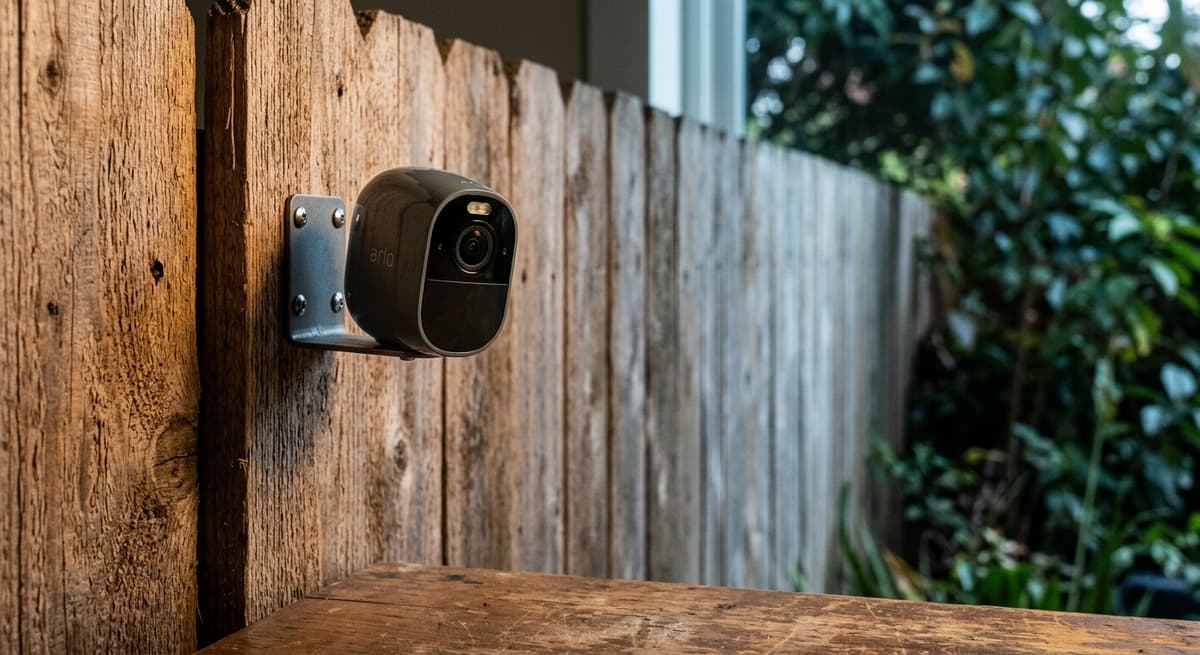
Washington homeowners have broad rights to install security cameras on their own property. You may place cameras:
- On the exterior of your home (doors, garage, driveway, yard)
- Inside your home in common areas
- On fences, poles, or structures you own
- Aimed at your own property boundaries
Restrictions on Home Security Cameras
Even on your own property, certain restrictions apply:
Audio recording: If your cameras record audio, you must comply with RCW 9.73.030. The safest approach is to post visible signage such as "Audio and video surveillance in use" and disable audio recording for cameras that monitor areas where visitors have private conversations.
Neighbor privacy: You cannot aim security cameras at areas where your neighbors have a reasonable expectation of privacy. Pointing a camera directly into a neighbor's bedroom window, bathroom, or enclosed yard could constitute an invasion of privacy or voyeurism under RCW 9A.44.115.
HOA and local rules: Some homeowner associations and local ordinances impose additional restrictions on camera placement, size, or visibility. Check your HOA covenants and local codes before installing cameras.
Smart Doorbell Cameras
Smart doorbell cameras like Ring, Nest Hello, and similar devices are extremely popular but present unique legal issues in Washington:
- Two-way audio: Most smart doorbells have a two-way audio feature that records conversations with visitors. This triggers RCW 9.73.030.
- Continuous audio recording: Some devices continuously record ambient audio, which may capture private conversations on your porch or at your door.
- Notification features: Some doorbells display a message like "Audio and video recording in progress" on the device screen. This may help establish implied consent from visitors who see the notice and continue the conversation.
- Best practice: Post a visible sign near your doorbell indicating that audio and video recording is in use. Consider disabling continuous audio recording and using audio only during active doorbell interactions.
Business Security Camera Laws
General Requirements
Washington businesses may install security cameras to protect their premises, inventory, and employees. The following guidelines apply:
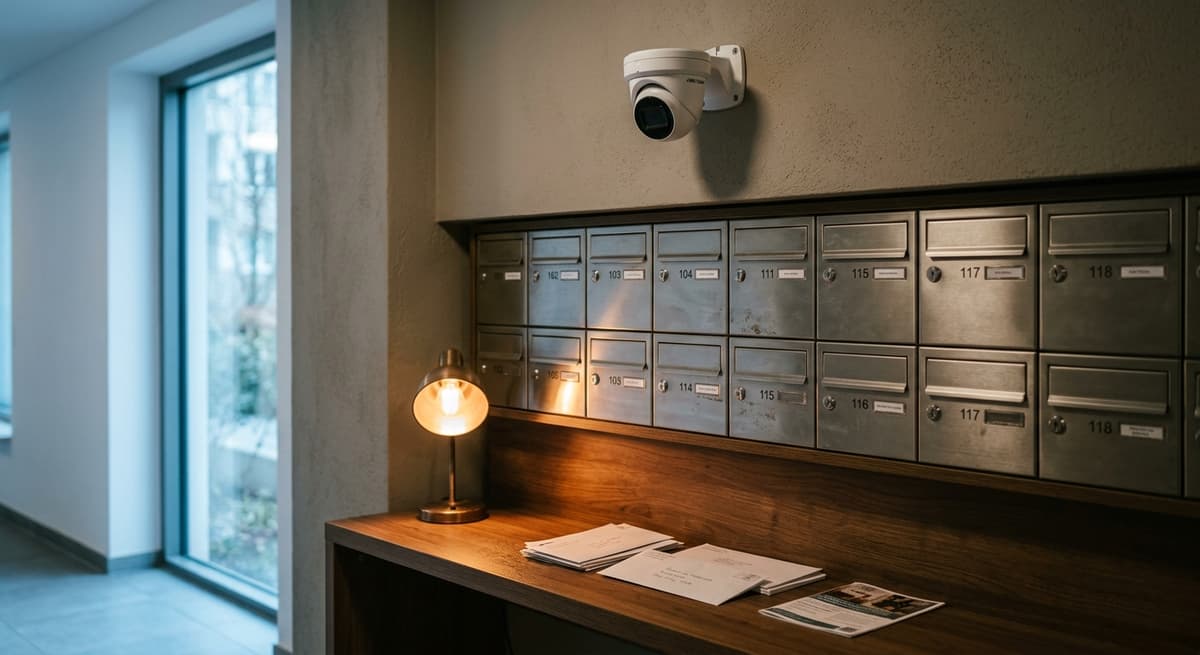
Common areas: Silent video surveillance in lobbies, hallways, sales floors, parking lots, and other common areas is generally permissible. Posting signage notifying customers and employees that surveillance is in use is a best practice.
Audio recording: Any business security camera that records audio of conversations must comply with RCW 9.73.030. Businesses should either disable audio recording on their security cameras or provide conspicuous notice and obtain consent.
Prohibited locations: Cameras may not be placed in locations where people have a reasonable expectation of privacy:
- Restrooms and bathrooms
- Locker rooms and changing areas
- Fitting rooms in retail stores
- Private offices (if used for confidential conversations)
- Break rooms that function as private spaces
- Nursing/lactation rooms
Placing cameras in these areas may constitute voyeurism under RCW 9A.44.115, a Class C felony.
Employee Notification
Employers who use security cameras in the workplace should:
- Inform employees in writing about camera locations and monitoring practices
- Include surveillance policies in the employee handbook
- Have employees acknowledge the surveillance policy in writing
- Identify camera locations that are visible to employees
- Explain the purpose of the surveillance (theft prevention, safety, etc.)
Retail and Customer-Facing Businesses
Retail stores, restaurants, and other customer-facing businesses should:
- Post visible signage at entrances and in monitored areas notifying customers that video surveillance is in use
- Avoid audio recording in areas where customers have private conversations, unless all-party consent is obtained
- Secure stored footage to prevent unauthorized access to customer images
- Establish retention policies for how long surveillance footage is kept
- Train staff on proper camera operation and privacy compliance
The Building Owner Exception
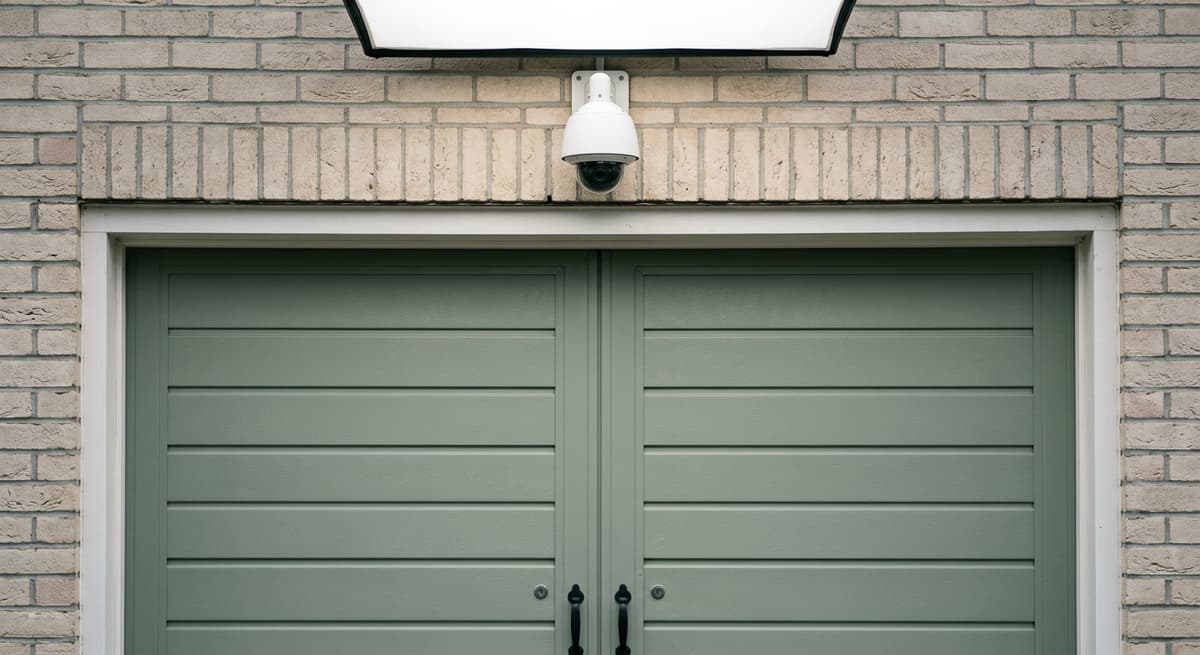
Under RCW 9.73.110, building owners (or persons entitled to use and possession of a building) may intercept, record, or disclose communications within the building without consent, but only when the persons being recorded are engaged in a criminal act at the time, such as unlawful entry or trespassing.
How This Exception Works
This narrow exception allows building owners to use security cameras with audio capability to record persons committing crimes on the premises without first obtaining consent. Common applications include:
- Recording a burglary in progress
- Capturing audio of trespassers
- Documenting criminal damage to property
Limits of the Exception
The building owner exception does not authorize:
- Recording all conversations on the property
- Audio recording of employees' private conversations
- Recording customers' private discussions
- General surveillance of lawful activities on the premises
The persons being recorded must be committing a criminal act related to their presence in the building at the time of the recording.
Facial Recognition and Biometric Privacy
RCW 19.375: Biometric Identifiers
Washington's biometric privacy law, RCW 19.375, imposes requirements on security systems that use facial recognition or other biometric identification technology.
Under this statute:
- Commercial entities may not enroll a person's biometric identifier in a database for a commercial purpose without first providing notice, obtaining consent, or providing a mechanism to prevent that use -- any one of the three satisfies the statute
- "Biometric identifier" includes facial geometry data generated by facial recognition systems, iris scans, and fingerprints
- The law applies when video footage is processed by facial recognition algorithms to identify individuals
Impact on Security Systems
Businesses that use security cameras equipped with facial recognition must:
- Satisfy at least one of three compliance paths under RCW 19.375.020: provide conspicuous notice before capturing biometric data, obtain affirmative consent before enrolling facial data in a database, or provide a mechanism letting people opt out of the biometric use
- Limit data use to the stated commercial purpose
- Protect stored biometric data with reasonable security measures
The Washington Attorney General has exclusive enforcement authority under the Consumer Protection Act (RCW 19.375.030); there is no private right of action for individuals.
Residential Facial Recognition
Homeowners using security cameras with facial recognition features (such as those built into some Ring and Nest cameras) should be aware that these features may trigger RCW 19.375 if the data is shared with or processed by commercial entities.
Footage Storage and Data Security
Retention Periods
Washington does not mandate a specific retention period for security camera footage in most contexts. However, best practices include:
- Home cameras: Retain footage for 30 to 90 days, depending on storage capacity
- Business cameras: Retain footage for 30 to 90 days, or longer if required by industry regulations
- Incident-related footage: Preserve any footage related to a crime, accident, or legal dispute until the matter is resolved
Data Security Requirements
While Washington does not have a specific law governing security camera footage storage, the state's data breach notification law (RCW 19.255.010) may apply if security footage containing personal information is compromised. Businesses should:
- Encrypt stored footage to prevent unauthorized access
- Limit access to authorized personnel only
- Use secure cloud storage with strong authentication
- Delete footage when the retention period expires
Security Cameras and Public Records
Government Security Cameras
Security camera footage maintained by Washington government agencies is subject to the Public Records Act (RCW 42.56). Members of the public may request access to government surveillance footage, subject to exemptions for:
- Personal privacy
- Ongoing law enforcement investigations
- Security system vulnerabilities
Private Security Camera Footage
Private security camera footage is not subject to the Public Records Act. However, law enforcement may request or subpoena private footage as part of a criminal investigation, and courts may order its production in civil litigation.
Local Ordinances
Several Washington cities have enacted local rules affecting security cameras:
- Seattle: The city has passed ordinances regulating government use of surveillance technology, including security cameras. The Seattle Surveillance Ordinance requires city departments to obtain city council approval before acquiring or using surveillance equipment.
- Tacoma: Similar municipal oversight measures apply to government surveillance.
- Local HOA rules: Many communities have HOA covenants that regulate the placement and appearance of exterior cameras.
Check local ordinances and HOA rules before installing security cameras.
More Washington Recording Laws
Audio Recording | Video Recording | Voyeurism & Hidden Cameras | Workplace Recording | Recording Police | Phone Call Recording | Security Cameras | Recording in Public | Landlord-Tenant | Dashcam Laws | Schools | Medical Recording
Back to Washington Recording Laws
More Washington Recording Topics
See Also
- Washington Surveillance Camera Laws covers home, HOA, neighbor, workplace, and landlord camera rules in Washington.
More Washington Laws
Frequently Asked Questions
Do I need permission to install security cameras on my property in Washington?
You do not need permission to install silent video security cameras on your own property. However, if your cameras record audio of conversations, you must comply with Washington's two-party consent law (RCW 9.73.030). You also cannot aim cameras at areas where neighbors have a reasonable expectation of privacy, such as bedroom or bathroom windows.
Are Ring doorbell cameras legal in Washington?
Ring doorbell cameras are legal, but the audio recording feature triggers Washington's all-party consent requirement under RCW 9.73.030. To comply, post visible signage indicating audio and video recording is in use, and consider disabling continuous audio recording. The video-only function does not require consent.
Can my employer put security cameras in the office in Washington?
Yes, employers may install silent video cameras in common work areas such as hallways, lobbies, and sales floors. Cameras with audio require all-party consent. Cameras are prohibited in restrooms, locker rooms, changing areas, and other spaces where employees have a reasonable expectation of privacy. Employers should notify employees about surveillance in writing.
Can security cameras use facial recognition in Washington?
Security cameras may use facial recognition, but Washington's biometric privacy law (RCW 19.375) requires commercial entities to provide notice, obtain consent, or offer an opt-out mechanism before enrolling facial geometry data in a database for commercial purposes -- any one of the three is sufficient. Enforcement is by the Washington Attorney General only; there is no private right of action.
How long should I keep security camera footage in Washington?
Washington does not mandate a specific retention period for most private security camera footage. Best practices suggest retaining footage for 30 to 90 days. Any footage related to a crime, accident, or legal dispute should be preserved until the matter is fully resolved. Businesses should establish and follow a written retention policy.
Updates
Corrected Washington's biometric privacy law description: notice, consent, and an opt-out mechanism are three alternative ways to comply (not all required), and enforcement is by the state Attorney General only, with no private right of action.
Independently fact-checked against the cited primary sources; governing law re-checked for recent changes
Governing law re-checked for recent changes
Reviewed and approved by an editor
The Law Behind This Article
This article rests on the statutory provisions below, held in our own legal record and retrieved from the official source. Tap a section to read the operative text.
Revised Code of Washington
§ 9.73.030Intercepting, recording, or divulging private communication—Consent required—Exceptions.In forcecited in 41 of our articles
(1) Except as otherwise provided in this chapter, it shall be unlawful for any individual, partnership, corporation, association, or the state of Washington, its agencies, and political subdivisions to intercept, or record any: (a) Private communication transmitted by telephone, telegraph, radio, or other device between two or more individuals between points within or without the state by any device electronic or otherwise designed to record and/or transmit said communication regardless how such device is powered or actuated, without first obtaining the consent of all the participants in the communication; (b) Private conversation, by any device electronic or otherwise designed to record or transmit such conversation regardless how the device is powered or actuated without first obtaining the consent of all the persons engaged in the conversation.
Official text (excerpt) · last checked 2026-08-31 · Read the full text in our law library · Verify at app.leg.wa.gov
Cited in 221 court opinions in our collectionLatest citing opinion in our collection: 2026
In the courts (editorial summary, independently checked):Washington courts have policed what counts as a private communication under Sec. 9.73.030: State v. Gunwall (1986) concluded a pen register intercept comes within a private communication transmitted by telephone, while State v. Riley (1993) held a line trap that reveals only the calling number does not record one.
Opinions citing this section in our collection:
- State v. Salinas (Washington Supreme Court 1992, 119 Wash. 2d 192)“…alties for divulging a telegram or opening a sealed letter. RCW 9.73.030-.070, making it unlawful to intercept,…”
- State v. Gunwall (Washington Supreme Court 1986, 106 Wash. 2d 54)✓Everett police pulled a suspected cocaine dealer's toll records and put a pen register on her line without valid legal process; the court held a pen register intercept is a private communication transmitted by telephone, installable only under the eavesdropping statutes.
- State v. Brown (Washington Supreme Court 1997, 132 Wash. 2d 529)✓Palm Springs officers secretly recorded a Washington murder suspect's statements after his arrest; the court treated RCW 9.73.090, not 9.73.030, as the provision reaching recordings of arrested persons, and held the Privacy Act did not require suppressing that recording.
Identified automatically from the court opinions citing this section — not a ranking of which case controls.
Also relied on in: US Recording Laws by State (2026): All 50 States Explained, Washington Recording Laws (2026): All-Party Consent Rules, Federal Wiretap Act and ECPA: The Complete Guide (2026)
§ 19.255.010Personal information—Notice of security breaches.In forcecited in 5 of our articles
(1) Any person or business that conducts business in this state and that owns or licenses data that includes personal information shall disclose any breach of the security of the system to any resident of this state whose personal information was, or is reasonably believed to have been, acquired by an unauthorized person and the personal information was not secured. Notice is not required if the breach of the security of the system is not reasonably likely to subject consumers to a risk of harm. The breach of secured personal information must be disclosed if the information acquired and accessed is not secured during a security breach or if the confidential process, encryption key, or other means to decipher the secured information was acquired by an unauthorized person. (2) Any person or business that maintains or possesses data that may include personal information that the person or business does not own or license shall notify the owner or licensee of the information of any breach of the security of the data immediately following discovery, if the personal information was, or is reasonably believed to have been, acquired by an unauthorized person.
Official text (excerpt) · last checked 2026-08-28 · Read the full text in our law library · Verify at app.leg.wa.gov
Cited in 5 court opinions in our collectionLatest citing opinion in our collection: 2024
In the courts (editorial summary, independently checked):Guy v. Convergent Outsourcing (2023) held RCW 19.255.010(2) reaches only a business that maintains data it does not own or license, and that a subsection (1) claim needs a Washington resident plaintiff. Krefting v. Kaye-Smith (2023) applied the 30-day notice window in subsection (8) without deciding whether it creates a tort duty.
Opinions citing this section in our collection:
- Sarah Nunley v. Chelan-Douglas Health District (Court of Appeals of Washington 2024)✓After hackers took patient records from a health district, the court reversed dismissal of a negligence suit and cited the breach notification statute's notice duty and damages remedy as evidence of Washington policy supporting a common law duty to safeguard personal data.
- In re Sony Gaming Networks & Customer Data Security Breach Litigation (District Court, S.D. California 2014, 996 F. Supp. 2d 942)“…sufficient. The court agrees. With respect to a claim under RCW 19.255.010, it is not enough for Mr. Grigsby to ha…”
- In re Premera Blue Cross Customer Data Security Breach Litigation (District Court, D. Oregon 2016, 198 F. Supp. 3d 1183)“…(2) violation of the Washington Data Breach Disclosure Law, RCW § 19.255.010; 3 (3) negligence; 4 (4) breach of ex…”
Identified automatically from the court opinions citing this section — not a ranking of which case controls.
Also relied on in: Washington Data Breach Notification Laws: Reporting Rules & Timelines (2026), Data Breach Notification Deadlines by Country (2026 Comparison Table), Washington Data Privacy Laws: My Health My Data Act & More (2026)
§ 19.375.020Enrollment, disclosure, and retention of biometric identifiers.In forcecited in 9 of our articles
(1) A person may not enroll a biometric identifier in a database for a commercial purpose, without first providing notice, obtaining consent, or providing a mechanism to prevent the subsequent use of a biometric identifier for a commercial purpose. (2) Notice is a disclosure, that is not considered affirmative consent, that is given through a procedure reasonably designed to be readily available to affected individuals. The exact notice and type of consent required to achieve compliance with subsection (1) of this section is context-dependent.
Official text (excerpt) · last checked 2026-08-28 · Read the full text in our law library · Verify at app.leg.wa.gov
Also relied on in: Washington Smart Glasses Recording Laws (2026), Washington Biometric Privacy Laws: Collection, Consent & Penalties (2026), Washington Employee Monitoring Laws: Biometric Privacy, Social Media, and Surveillance (2026)
§ 19.375.030Application of consumer protection act.In forcecited in 3 of our articles
(1) The legislature finds that the practices covered by this chapter are matters vitally affecting the public interest for the purpose of applying the consumer protection act, chapter 19.86 RCW. A violation of this chapter is not reasonable in relation to the development and preservation of business and is an unfair or deceptive act in trade or commerce and an unfair method of competition for the purpose of applying the consumer protection act, chapter 19.86 RCW. (2) This chapter may be enforced solely by the attorney general under the consumer protection act, chapter 19.86 RCW.
Official text (excerpt) · last checked 2026-07-29 · Read the full text in our law library · Verify at app.leg.wa.gov
§ 9.73.080Penalties.In forcecited in 16 of our articles
(1) Except as otherwise provided in this chapter, any person who violates RCW 9.73.030 is guilty of a gross misdemeanor. (2) Any person who knowingly alters, erases, or wrongfully discloses any recording in violation of RCW 9.73.090(1)(c) is guilty of a gross misdemeanor.
Official text (excerpt) · last checked 2026-07-29 · Read the full text in our law library · Verify at app.leg.wa.gov
Cited in 13 court opinions in our collectionLatest citing opinion in our collection: 2023
Opinions citing this section in our collection:
- State v. Wanrow (Washington Supreme Court 1977, 88 Wash. 2d 221)“…9.73.090, which opens with a waiver of RCW 9.73.030 through RCW 9.73.080, [9] i.e., the recording is not unlaw…”
- State v. Williams (Washington Supreme Court 1980, 94 Wash. 2d 531)✓ATF agents recorded a suspect's conversations with an informant and undercover agents with only one party's consent. The court assumed without deciding that the RCW 9.73.080 criminal penalty may not reach federal agents, but held the tapes were still inadmissible in state court.
- State v. Clark (Washington Supreme Court 2007, 916 P.2d 384)“…Violation of RCW 9.73.030 constitutes a gross misdemeanor, RCW 9.73.080, and may also result in civil liability…”
Identified automatically from the court opinions citing this section — not a ranking of which case controls.
Also relied on in: Washington Audio Recording Laws: Two-Party Consent Rules and Penalties (2026), Washington Dashcam Laws: Mounting Rules, Audio Recording, and Evidence (2026), Washington Phone Call Recording Laws: Consent Rules and Exceptions (2026)
§ 9.73.110Intercepting, recording, or disclosing private communications—Not unlawful for building owner—Conditions.In forcecited in 6 of our articles
It shall not be unlawful for the owner or person entitled to use and possession of a building, as defined in RCW 9A.04.110(5), or the agent of such person, to intercept, record, or disclose communications or conversations which occur within such building if the persons engaged in such communication or conversation are engaged in a criminal act at the time of such communication or conversation by virtue of unlawful entry or remaining unlawfully in such building.
Official text (excerpt) · last checked 2026-07-29 · Read the full text in our law library · Verify at app.leg.wa.gov
Also relied on in: Washington Landlord-Tenant Recording and Surveillance Laws (2026), Washington Video Recording Laws: Filming, Surveillance, and Consent Rules (2026), Washington Surveillance Camera Laws (2026 Guide)
Search our full record of US law — 2.1 million sections, every state + federal →
Sources and References
- RCW 9.73.030 - Intercepting, Recording, or Divulging Private Communications(app.leg.wa.gov).gov
- RCW 9A.44.115 - Voyeurism(app.leg.wa.gov).gov
- RCW 9.73.110 - Building Owner Exception(app.leg.wa.gov).gov
- RCW 19.375 - Biometric Identifiers(app.leg.wa.gov).gov
- RCW 9.73.080 - Criminal Penalties(app.leg.wa.gov).gov
- RCW 42.56 - Public Records Act(app.leg.wa.gov).gov
- RCW 19.255.010 - Data Breach Notification(app.leg.wa.gov).gov