
Washington
Washington Video Recording Laws: Filming, Surveillance, and Consent Rules (2026)
Independently fact-checked against primary sources (last audited August 22, 2026). · Reviewed by the RecordingLaw editorial team. · Law checked current as of August 22, 2026. · 8 primary sources cited on this page. How we verify our legal content
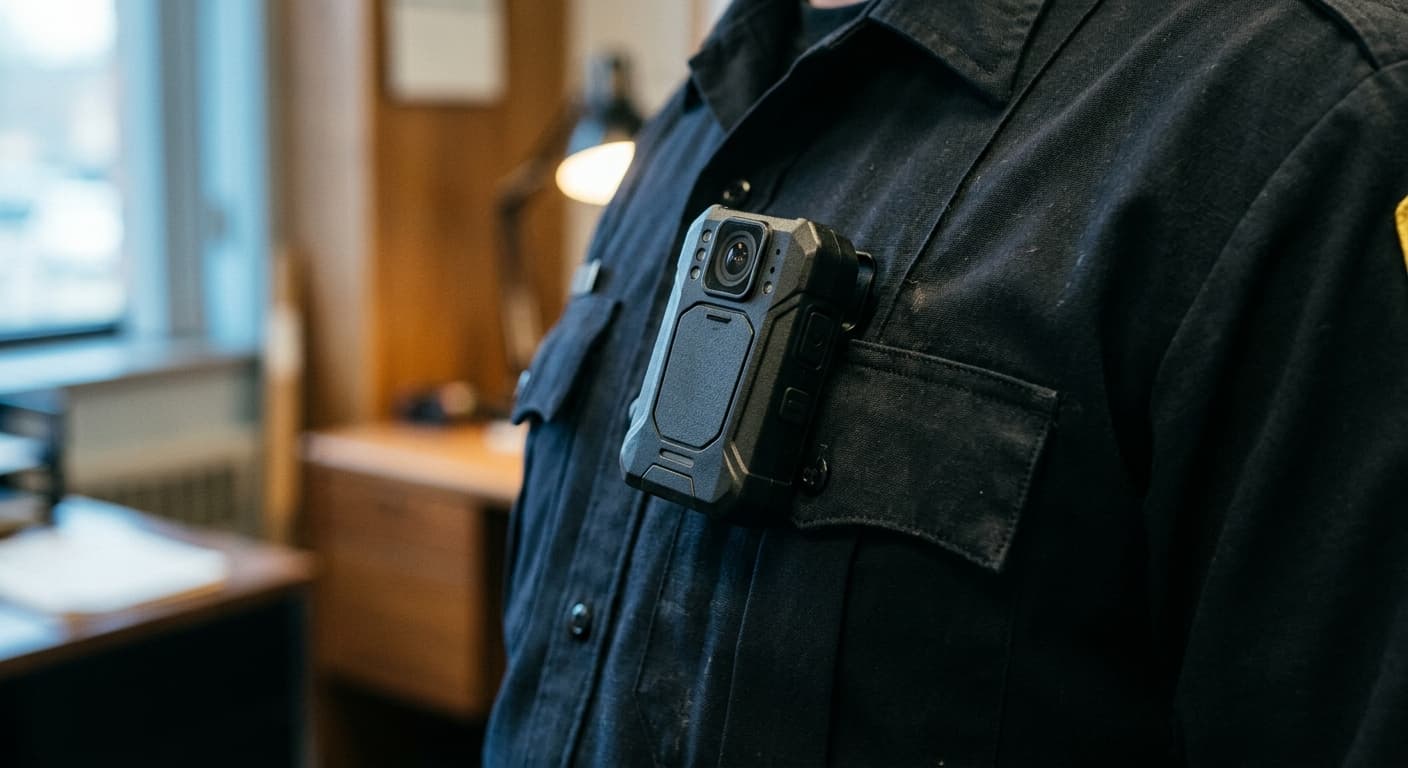
In Washington, silent video recording in public spaces is broadly legal, but capturing audio of a private conversation on video triggers the all-party consent requirement under RCW 9.73.030. Recording in places where people have a reasonable expectation of privacy is prohibited under the voyeurism statute, RCW 9A.44.115.
Washington's video recording laws operate under a framework that distinguishes between silent video and video that captures audio. While RCW 9.73.030 primarily targets the interception and recording of private communications, the moment a video recording captures audio of a private conversation, the full two-party consent requirement applies. Separate statutes address voyeurism, hidden cameras, and biometric data collection through video systems.
Understanding these overlapping rules is essential for anyone who uses video cameras, security systems, body cameras, or recording-capable devices in Washington.
The Audio-Video Distinction
Why It Matters
Washington's Privacy Act under Chapter 9.73 RCW focuses on the recording of private communications and conversations. Video recording, by itself, does not necessarily involve a "communication" under the statute. This creates an important distinction:
- Silent video (no audio): Generally not covered by RCW 9.73.030. You can film in public spaces without triggering the Privacy Act, as long as no audio of private conversations is captured.
- Video with audio: The moment audio recording captures a private conversation, the all-party consent requirement under RCW 9.73.030 applies in full.
This distinction means that a security camera recording silent video in a retail store does not require consent under the Privacy Act. However, if that same camera records audio of customers' private conversations, it violates the statute unless consent is obtained.
Practical Application
| Scenario | Audio Captured? | Consent Required Under RCW 9.73.030? |
|---|---|---|
| Silent security camera in a store | No | No |
| Security camera with audio in a store | Yes | Yes |
| Filming a public event with a phone | Ambient sounds only | Generally no |
| Recording a private conversation on video | Yes | Yes |
| Body camera with audio activated | Yes | Yes (unless law enforcement exception applies) |
Video Recording in Public Spaces
General Rules
Recording video in public spaces in Washington is generally permitted. The First Amendment protects the right to photograph and film in areas where there is no reasonable expectation of privacy. This includes:
- Public streets, sidewalks, and parks
- Government buildings open to the public
- Retail stores and businesses open to the public (with the property owner's permission)
- Public events, protests, and demonstrations
- Public meetings under the Open Public Meetings Act (RCW 42.30)
Limits on Public Recording
While public video recording is broadly permitted, several restrictions apply:
- Audio capture: If your video records a private conversation between identifiable individuals, the all-party consent requirement may apply even in a public setting, depending on whether the participants had a reasonable expectation of privacy.
- Private property: Property owners can prohibit recording on their premises. You may be asked to stop recording and leave.
- Interference with others: Recording cannot constitute harassment, stalking, or interference with law enforcement duties.
- Restricted areas: Some public buildings have areas where recording is prohibited for security reasons.
Video Surveillance Laws
Home Video Surveillance
Washington residents may install video surveillance cameras on their own property. Key rules:
- Your own property: You may record video on property you own or control without restriction, as long as cameras do not point into areas where others have a reasonable expectation of privacy (such as a neighbor's bathroom window).
- Audio recording: If your home security camera records audio of conversations with visitors, delivery workers, or neighbors, the all-party consent requirement under RCW 9.73.030 applies. Smart doorbells with audio capability trigger this requirement.
- Notice: Posting a sign such as "This property is under video surveillance" is a best practice that may help establish implied consent in some situations, though it may not fully satisfy the statutory requirement for audio recording.
Business Video Surveillance
Businesses in Washington may use video surveillance to protect their premises, inventory, and employees. Requirements include:
- Common areas: Silent video surveillance in common areas such as lobbies, hallways, and sales floors is generally permissible.
- Audio recording: Any audio capture requires compliance with RCW 9.73.030.
- Employee areas: Video surveillance in employee break rooms, locker rooms, or restrooms is prohibited. These are areas where employees have a reasonable expectation of privacy.
- Notice to employees: Employers should notify employees about video surveillance in the workplace. While not specifically required by the Privacy Act for silent video, providing notice is a best practice that reduces legal risk.
- Customer notice: Posting visible signage about video surveillance is recommended.
The Building Owner Exception
Under RCW 9.73.110, building owners may intercept, record, or disclose communications that occur within their building without consent, but only when the persons being recorded are engaged in a criminal act at the time, such as unlawful entry. This exception is narrow and does not authorize recording all conversations on the property.
Washington Voyeurism Laws
Voyeurism in the First Degree
Under RCW 9A.44.115, voyeurism in the first degree occurs when a person knowingly views, photographs, or films another person without that person's knowledge and consent while the person being recorded is:
- In a place where they have a reasonable expectation of privacy
- The viewing, photographing, or filming is done for the purpose of arousing or gratifying the sexual desire of any person
Voyeurism in the first degree is a Class C felony in Washington, punishable by:
| Element | Penalty |
|---|---|
| Maximum prison sentence | 5 years |
| Maximum fine | $10,000 |
| Sex offender registration | Required |
Voyeurism in the Second Degree
Voyeurism in the second degree under RCW 9A.44.115 involves intentionally photographing or filming the intimate areas of another person without their knowledge and consent, with intent to distribute or disseminate the images. This offense is a gross misdemeanor, punishable by up to 364 days in jail and a $5,000 fine.
What Constitutes a "Reasonable Expectation of Privacy"
Courts evaluate whether a person has a reasonable expectation of privacy based on the circumstances. Locations where people generally have such an expectation include:
- Private residences (bedrooms, bathrooms, living spaces)
- Hotel rooms
- Restrooms and public bathrooms
- Changing rooms and fitting rooms
- Locker rooms
- Medical examination rooms
- Any enclosed space where a person would reasonably expect to be free from observation
Public spaces such as streets, parks, and stores open to the public generally do not create a reasonable expectation of privacy for visible activities.
Hidden Camera Laws
The Prohibition on Hidden Cameras
Washington law prohibits placing hidden cameras in locations where people have a reasonable expectation of privacy. This prohibition arises from both the voyeurism statute (RCW 9A.44.115) and the Privacy Act (RCW 9.73.030).
Specifically prohibited activities include:
- Installing hidden cameras in bathrooms, restrooms, or showers
- Placing cameras in bedrooms or hotel rooms without the occupant's knowledge
- Hiding cameras in changing rooms or fitting rooms
- Using cameras to film under clothing (upskirt or downblouse recording)
- Installing cameras that record private spaces of neighbors or tenants
Penalties for Hidden Camera Violations
The penalties depend on the specific offense:
- Voyeurism in the first degree: Class C felony, up to 5 years prison, $10,000 fine, sex offender registration
- Voyeurism in the second degree: Gross misdemeanor, up to 364 days jail, $5,000 fine
- Privacy Act violation (recording audio without consent): Gross misdemeanor, up to 364 days jail, $5,000 fine
- Civil liability: Victims may recover actual damages or liquidated damages under RCW 9.73.060, plus attorney fees
Facial Recognition and Biometric Privacy
RCW 19.375: Washington's Biometric Privacy Law
Washington's biometric privacy law, RCW 19.375, imposes additional requirements when video systems use facial recognition or other biometric identification technology. Under this statute:
- Commercial entities may not enroll a person's biometric identifier in a database for a commercial purpose without first providing notice and obtaining consent.
- "Biometric identifier" includes retina or iris scans, fingerprints, voiceprints, and facial geometry data generated by facial recognition technology.
- The statute does not apply to photographs or video recordings themselves, but it does apply when those images are processed to extract biometric identifiers.
Enforcement
The Washington Attorney General has exclusive enforcement authority over RCW 19.375. Affected individuals can also pursue private actions. Violations can result in injunctive relief and damages.
Practical Implications for Video Surveillance
Businesses that use video surveillance systems equipped with facial recognition technology must:
- Provide notice to individuals before their biometric data is captured
- Obtain consent before enrolling facial geometry data in a commercial database
- Limit use of biometric data to the stated purpose
- Secure biometric data against unauthorized access
This means a retail store using facial recognition cameras to identify shoplifters must provide notice and obtain consent before enrolling individuals' facial data, which significantly limits the practical utility of such systems for that purpose.
Drone Video Recording
FAA and State Rules
Drone video recording in Washington is governed by both federal aviation regulations and state law:
- The Federal Aviation Administration (FAA) regulates drone operations under 14 CFR Part 107. Operators must register their drones and follow flight rules, including altitude limits and line-of-sight requirements.
- Silent drone video in public airspace is generally permitted under the First Amendment.
- Drone video with audio that captures private conversations on the ground may trigger RCW 9.73.030.
- Drone surveillance of private property where residents have a reasonable expectation of privacy may violate voyeurism and trespass laws.
Local Ordinances
Several Washington municipalities have enacted local ordinances restricting drone use. Check local rules before flying drones for surveillance or recording purposes.
Recording Public Meetings on Video
Under Washington's Open Public Meetings Act (RCW 42.30), public agencies are encouraged to record their meetings and make recordings available online. Under RCW 42.30.220, agencies are encouraged to make audio or video recordings of all regular meetings available for at least six months.
Members of the public have the right to record open public meetings. A public body cannot prohibit recording of a meeting that is open to the public.
Criminal Penalties for Video Recording Violations
| Offense | Classification | Maximum Sentence | Maximum Fine |
|---|---|---|---|
| Voyeurism 1st degree | Class C Felony | 5 years prison | $10,000 |
| Voyeurism 2nd degree | Gross Misdemeanor | 364 days jail | $5,000 |
| Audio recording without consent | Gross Misdemeanor | 364 days jail | $5,000 |
| Disclosing illegal recording | Gross Misdemeanor | 364 days jail | $5,000 |
Civil Remedies
Victims of illegal video recording in Washington have multiple avenues for civil recovery:
- Privacy Act damages under RCW 9.73.060: Actual damages or $100/day (capped at $1,000), plus attorney fees
- Tort claims: Invasion of privacy, intentional infliction of emotional distress, and negligence claims may be available
- Biometric privacy claims under RCW 19.375 for unauthorized use of facial recognition data
- Restraining orders: Courts may issue orders prohibiting further recording
More Washington Recording Laws
Audio Recording | Video Recording | Voyeurism & Hidden Cameras | Workplace Recording | Recording Police | Phone Call Recording | Security Cameras | Recording in Public | Landlord-Tenant | Dashcam Laws | Schools | Medical Recording
Back to Washington Recording Laws
More Washington Recording Topics
More Washington Laws
Frequently Asked Questions
Is it legal to record video in public in Washington?
Yes, silent video recording in public spaces is generally legal in Washington. The First Amendment protects your right to film in areas where there is no reasonable expectation of privacy. However, if your video captures audio of a private conversation, the all-party consent requirement under RCW 9.73.030 applies. Property owners may also prohibit recording on their premises.
Do I need consent to record video with audio in Washington?
Yes. Whenever video recording captures audio of a private conversation, you must obtain consent from all parties under RCW 9.73.030. This applies to security cameras with microphones, body cameras, smart doorbells, and any other device that records both video and audio. Silent video recording does not trigger the consent requirement.
What are the penalties for voyeurism in Washington?
Voyeurism in the first degree is a Class C felony punishable by up to five years in prison and a $10,000 fine, and it requires sex offender registration. Voyeurism in the second degree is a gross misdemeanor punishable by up to 364 days in jail and a $5,000 fine. Both offenses are defined under RCW 9A.44.115.
Can I install security cameras on my property in Washington?
Yes. You may install video surveillance cameras on your own property. Cameras should not be pointed at areas where others have a reasonable expectation of privacy, such as a neighbor's bathroom. If cameras record audio of conversations, the all-party consent requirement under RCW 9.73.030 applies. Posting a sign notifying visitors of surveillance is a recommended best practice.
Does Washington regulate facial recognition in video surveillance?
Yes. Washington's biometric privacy law (RCW 19.375) requires commercial entities to provide notice and obtain consent before enrolling a person's facial geometry data in a database for a commercial purpose. This applies to video surveillance systems equipped with facial recognition technology. The Washington Attorney General has enforcement authority, and individuals can pursue private actions.
Updates
Independently fact-checked against the cited primary sources; governing law re-checked for recent changes
Governing law re-checked for recent changes
Governing law re-checked for recent changes
Reviewed and approved by an editor
The Law Behind This Article
This article rests on the statutory provisions below, held in our own legal record and retrieved from the official source. Tap a section to read the operative text.
Revised Code of Washington
§ 9.73.030Intercepting, recording, or divulging private communication—Consent required—Exceptions.In forcecited in 41 of our articles
(1) Except as otherwise provided in this chapter, it shall be unlawful for any individual, partnership, corporation, association, or the state of Washington, its agencies, and political subdivisions to intercept, or record any: (a) Private communication transmitted by telephone, telegraph, radio, or other device between two or more individuals between points within or without the state by any device electronic or otherwise designed to record and/or transmit said communication regardless how such device is powered or actuated, without first obtaining the consent of all the participants in the communication; (b) Private conversation, by any device electronic or otherwise designed to record or transmit such conversation regardless how the device is powered or actuated without first obtaining the consent of all the persons engaged in the conversation.
Official text (excerpt) · last checked 2026-08-31 · Read the full text in our law library · Verify at app.leg.wa.gov
Cited in 221 court opinions in our collectionLatest citing opinion in our collection: 2026
In the courts (editorial summary, independently checked):Washington courts have policed what counts as a private communication under Sec. 9.73.030: State v. Gunwall (1986) concluded a pen register intercept comes within a private communication transmitted by telephone, while State v. Riley (1993) held a line trap that reveals only the calling number does not record one.
Opinions citing this section in our collection:
- State v. Salinas (Washington Supreme Court 1992, 119 Wash. 2d 192)“…alties for divulging a telegram or opening a sealed letter. RCW 9.73.030-.070, making it unlawful to intercept,…”
- State v. Gunwall (Washington Supreme Court 1986, 106 Wash. 2d 54)✓Everett police pulled a suspected cocaine dealer's toll records and put a pen register on her line without valid legal process; the court held a pen register intercept is a private communication transmitted by telephone, installable only under the eavesdropping statutes.
- State v. Brown (Washington Supreme Court 1997, 132 Wash. 2d 529)✓Palm Springs officers secretly recorded a Washington murder suspect's statements after his arrest; the court treated RCW 9.73.090, not 9.73.030, as the provision reaching recordings of arrested persons, and held the Privacy Act did not require suppressing that recording.
Identified automatically from the court opinions citing this section — not a ranking of which case controls.
Also relied on in: US Recording Laws by State (2026): All 50 States Explained, Washington Recording Laws (2026): All-Party Consent Rules, Federal Wiretap Act and ECPA: The Complete Guide (2026)
§ 42.30.220Recording or online streaming by agency encouraged.In forcecited in 2 of our articles
(1) Public agencies are encouraged to make an audio or video recording of, or to provide an online streaming option for, all regular meetings of its governing body, and to make recordings of these meetings available online for a minimum of six months. (2) This section does not alter a local government's recordkeeping requirements under chapter 42.56 RCW.
Official text (excerpt) · last checked 2026-07-29 · Read the full text in our law library · Verify at app.leg.wa.gov
Also relied on in: Washington Laws on Recording in Public: What Is Legal and What Is Not (2026)
§ 9.73.060Violating right of privacy—Civil action—Liability for damages.In forcecited in 14 of our articles
Any person who, directly or by means of a detective agency or any other agent, violates the provisions of this chapter shall be subject to legal action for damages, to be brought by any other person claiming that a violation of this statute has injured his or her business, his or her person, or his or her reputation. A person so injured shall be entitled to actual damages, including mental pain and suffering endured by him or her on account of violation of the provisions of this chapter, or liquidated damages computed at the rate of one hundred dollars a day for each day of violation, not to exceed one thousand dollars, and a reasonable attorney's fee and other costs of litigation.
Official text (excerpt) · last checked 2026-07-29 · Read the full text in our law library · Verify at app.leg.wa.gov
Cited in 36 court opinions in our collectionLatest citing opinion in our collection: 2025
In the courts (editorial summary, independently checked):Washington courts read RCW 9.73.060 as supplying civil damages only for conduct chapter 9.73 prohibits. Kearney v. Kearney (1999) held RCW 9.73.050 creates no civil liability for filing illegally recorded material. Dillon v. Seattle Deposition Reporters, LLC (2014) reversed summary judgment on secretly transcribed calls.
Opinions citing this section in our collection:
- State v. Wanrow (Washington Supreme Court 1977, 88 Wash. 2d 221)“…case under RCW 9.73.050; there is no civil liability under RCW 9.73.060; and, there is no criminal liability un…”
- Kearney v. Kearney (Court of Appeals of Washington 1999, 95 Wash. App. 405)✓A father sued a guardian ad litem, an evaluator and an attorney under RCW 9.73.060 for filing transcripts of calls with his children that his estranged wife taped; the court held the act creates liability only for recording or intercepting, not filing, and affirmed dismissal.
- Dillon v. Seattle Deposition Reporters, LLC (Court of Appeals of Washington 2014, 179 Wash. App. 41)“…act is a gross misdemeanor and is also actionable in tort. RCW 9.73.060, .080. “We engage in a four-pronged ana…”
Identified automatically from the court opinions citing this section — not a ranking of which case controls.
Also relied on in: Washington Audio Recording Laws: Two-Party Consent Rules and Penalties (2026), Washington Dashcam Laws: Mounting Rules, Audio Recording, and Evidence (2026), Washington Landlord-Tenant Recording and Surveillance Laws (2026)
§ 9.73.080Penalties.In forcecited in 16 of our articles
(1) Except as otherwise provided in this chapter, any person who violates RCW 9.73.030 is guilty of a gross misdemeanor. (2) Any person who knowingly alters, erases, or wrongfully discloses any recording in violation of RCW 9.73.090(1)(c) is guilty of a gross misdemeanor.
Official text (excerpt) · last checked 2026-07-29 · Read the full text in our law library · Verify at app.leg.wa.gov
Cited in 13 court opinions in our collectionLatest citing opinion in our collection: 2023
Opinions citing this section in our collection:
- State v. Wanrow (Washington Supreme Court 1977, 88 Wash. 2d 221)“…9.73.090, which opens with a waiver of RCW 9.73.030 through RCW 9.73.080, [9] i.e., the recording is not unlaw…”
- State v. Williams (Washington Supreme Court 1980, 94 Wash. 2d 531)✓ATF agents recorded a suspect's conversations with an informant and undercover agents with only one party's consent. The court assumed without deciding that the RCW 9.73.080 criminal penalty may not reach federal agents, but held the tapes were still inadmissible in state court.
- State v. Clark (Washington Supreme Court 2007, 916 P.2d 384)“…Violation of RCW 9.73.030 constitutes a gross misdemeanor, RCW 9.73.080, and may also result in civil liability…”
Identified automatically from the court opinions citing this section — not a ranking of which case controls.
Also relied on in: Washington Phone Call Recording Laws: Consent Rules and Exceptions (2026), Washington Security Camera Laws: Rules for Home and Business Surveillance (2026), Washington Workplace Recording Laws: Employee Rights and Employer Rules (2026)
§ 9.73.110Intercepting, recording, or disclosing private communications—Not unlawful for building owner—Conditions.In forcecited in 6 of our articles
It shall not be unlawful for the owner or person entitled to use and possession of a building, as defined in RCW 9A.04.110(5), or the agent of such person, to intercept, record, or disclose communications or conversations which occur within such building if the persons engaged in such communication or conversation are engaged in a criminal act at the time of such communication or conversation by virtue of unlawful entry or remaining unlawfully in such building.
Official text (excerpt) · last checked 2026-07-29 · Read the full text in our law library · Verify at app.leg.wa.gov
Also relied on in: Washington Surveillance Camera Laws (2026 Guide), Washington Ring Doorbell Laws: What You Need to Know in 2026
Search our full record of US law — 2.1 million sections, every state + federal →
Sources and References
- RCW 9.73.030 - Intercepting, Recording, or Divulging Private Communications(app.leg.wa.gov).gov
- RCW 9A.44.115 - Voyeurism(app.leg.wa.gov).gov
- RCW 9.73.060 - Civil Damages for Privacy Violations(app.leg.wa.gov).gov
- RCW 9.73.080 - Criminal Penalties(app.leg.wa.gov).gov
- RCW 9.73.110 - Building Owner Exception(app.leg.wa.gov).gov
- RCW 19.375 - Biometric Identifiers(app.leg.wa.gov).gov
- RCW 42.30 - Open Public Meetings Act(app.leg.wa.gov).gov
- 14 CFR Part 107 - Small Unmanned Aircraft Systems(ecfr.gov).gov