
Washington
Washington School Recording Laws: Students, Teachers, and Campus Rules (2026)
Independently fact-checked against primary sources (last audited August 22, 2026). · Reviewed by the RecordingLaw editorial team. · Law checked current as of August 22, 2026. · 8 primary sources cited on this page. How we verify our legal content
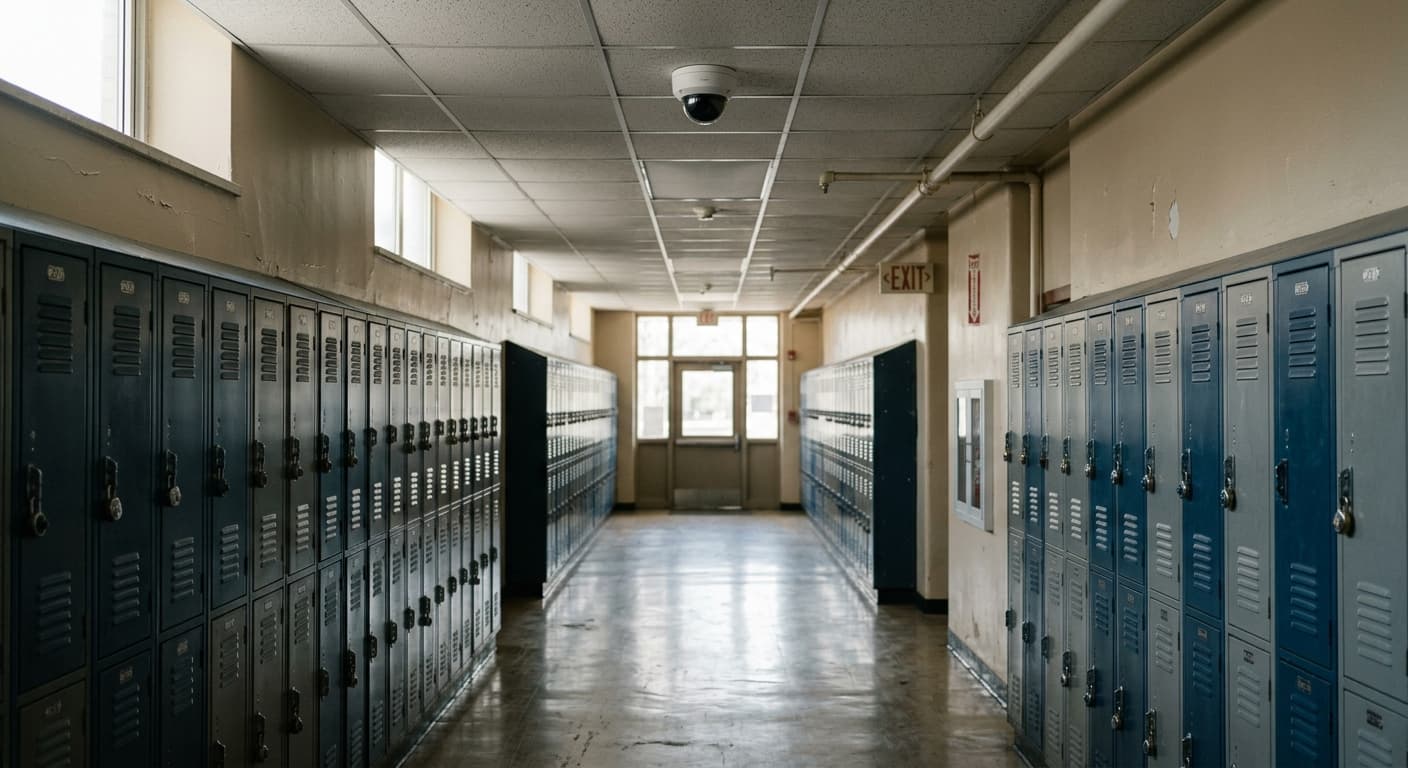
Washington's all-party consent law, RCW 9.73.030, applies on school campuses, requiring students, teachers, and parents to obtain consent from every party before recording private conversations. FERPA separately protects student education records from unauthorized disclosure in recordings.
Recording in Washington schools involves a complex intersection of state privacy law, federal education privacy protections, and school district policies. Washington's two-party consent law under RCW 9.73.030 applies on school campuses just as it does everywhere else in the state. Students, teachers, administrators, and parents must all obtain consent from every party before recording private conversations.
This guide covers the recording rules that apply to students, teachers, parents, and school administrators in Washington.
The Two-Party Consent Rule on Campus
How RCW 9.73.030 Applies to Schools
Washington's Privacy Act does not contain a school-specific exception. RCW 9.73.030 applies equally on school campuses, meaning:
- Students cannot secretly record teachers, administrators, or classmates during private conversations
- Teachers cannot secretly record students or colleagues
- Parents cannot secretly record meetings with school staff
- Administrators cannot secretly record conversations with staff, parents, or students
The consent requirement applies to any recording of a private conversation. Public announcements, assemblies, and other non-private school events are generally not covered.
What Counts as Private on a School Campus?
Whether a conversation is "private" depends on the same factors courts apply in other settings:
- A one-on-one conversation between a teacher and student in a closed office is private
- A parent-teacher conference behind closed doors is private
- A disciplinary meeting in the principal's office is private
- A classroom lecture delivered to an entire class of students is generally not private
- An assembly speech to the whole school is not private
- A hallway conversation in a crowded area may or may not be private depending on the circumstances
Student Recording Rights and Restrictions
Can Students Record in Class?
Whether a student can record a classroom lecture or discussion depends on the nature of the recording and the school's policies:
Classroom lectures: A teacher delivering a lecture to a class of students may not have a reasonable expectation of privacy, as the information is being shared with all students present. Some courts in other jurisdictions have found that classroom lectures are not "private" communications. However, Washington courts have not specifically addressed this question.
Class discussions: When students participate in classroom discussions, the analysis becomes more complicated. Individual student comments may be considered private, particularly if they involve personal information.
Best practice: Students should ask the teacher for permission before recording any class activity. Even if the recording might be legally permissible, many school districts have policies that require teacher consent.
School District Policies
Most Washington school districts have adopted policies governing student use of recording devices on campus. Common provisions include:
- Prohibition on recording without permission: Many districts require students to obtain permission from a teacher or administrator before recording any school activity.
- Cell phone restrictions: Districts may restrict or prohibit cell phone use during class time, effectively preventing recording.
- Consequences for violations: Students who violate recording policies may face disciplinary action, including confiscation of the device, detention, suspension, or expulsion.
Students and parents should review their school district's student handbook and acceptable use policies for specific rules about recording devices.
Student Privacy Protections
Students have privacy rights that limit what others can record on campus:
- FERPA protections: The Family Educational Rights and Privacy Act (FERPA) protects student education records. Recordings that capture other students' grades, disciplinary information, disability status, or other protected information may implicate FERPA.
- Special education confidentiality: Recordings that reveal a student's participation in special education services may violate FERPA and the Individuals with Disabilities Education Act (IDEA).
- Minors' privacy: Washington courts may apply heightened privacy protections to recordings involving minor students.
Teacher and Staff Recording Rules
Can Teachers Record Students?
Teachers and school staff are subject to the same two-party consent rules as everyone else in Washington. Specific considerations include:
- Recording lectures for absent students: A teacher who records their own lecture (where they are the primary speaker) may not need additional consent if the lecture is not a "private communication." However, if students participate in class discussion, their contributions are captured without consent.
- Recording student behavior: A teacher cannot secretly record a student's private conversations, even to document behavioral problems. Alternative documentation methods include written incident reports and witness statements.
- Recording parent conferences: Teachers cannot secretly record parent-teacher conferences. If recording is desired, all parties must consent.
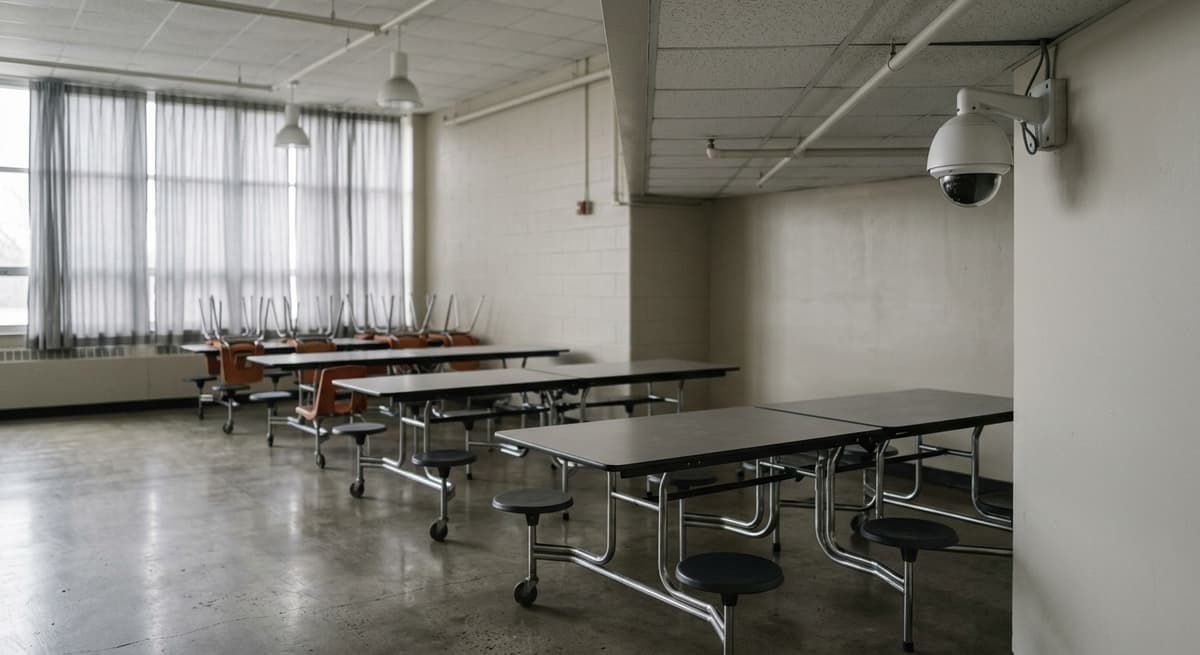
Security Cameras in Schools
School districts may install video surveillance systems in schools for safety and security purposes. Key rules:
Permitted locations:
- Hallways and corridors
- Cafeterias and common areas
- Parking lots and exterior grounds
- Building entrances and exits
- Gymnasiums (during non-changing times)
- Libraries and media centers
Prohibited locations:
- Restrooms and bathrooms (violates voyeurism laws under RCW 9A.44.115)
- Locker rooms and changing areas
- Counseling offices where private conversations occur
- Nurse's offices where students may be in a state of undress
Audio recording: School security cameras that capture audio of private conversations between students, teachers, or parents must comply with RCW 9.73.030. Most school districts use silent video surveillance to avoid consent issues.
Recording IEP Meetings
Federal IDEA Protections
The Individuals with Disabilities Education Act (IDEA) gives parents important rights regarding their child's education, including participation in IEP (Individualized Education Program) meetings. The question of whether parents can record IEP meetings involves both federal and state law.
Federal Guidance
The U.S. Department of Education has stated that IDEA does not specifically address recording of IEP meetings. The Department has indicated that recording decisions should be made at the state and local level. Federal guidance suggests that if a parent's disability (such as a learning disability) requires recording to ensure meaningful participation, the school should accommodate the request.
Washington Law and IEP Recording
In Washington, recording an IEP meeting is subject to RCW 9.73.030. This means:
- A parent must announce the recording and obtain consent from all meeting participants
- The school cannot unilaterally prohibit recording if the parent provides proper notice and the recording is necessary for the parent to participate meaningfully
- If the parent records, the school may also record the meeting
- All parties must be informed of the recording before it begins
Best Practices for IEP Meeting Recording
Parents who wish to record IEP meetings should:
- Provide advance written notice to the school district, ideally at least 24 to 48 hours before the meeting
- State the reason for recording (e.g., to review the discussion later, to share with an advocate, for accommodation purposes)
- Announce the recording at the start of the meeting
- Obtain consent from all participants, or ensure the announcement is clear enough that continuing the meeting constitutes implied consent
- Keep the recording secure and do not share it publicly, as it may contain other students' protected information
Recording School Disciplinary Proceedings
Student Discipline Meetings
When a student faces disciplinary action, meetings between the student, parents, and school administrators are private and subject to the all-party consent requirement. Key points:
- Students and parents may request to record disciplinary hearings, but must announce the recording and obtain consent
- Schools may record disciplinary meetings with proper disclosure
- Recordings of disciplinary proceedings may become part of the student's education record and are subject to FERPA protections
Expulsion Hearings
Washington provides specific procedural protections for students facing long-term suspension or expulsion under RCW 28A.600.015. While the statute does not specifically address recording, the due process protections it provides may support a parent's request to record the hearing for review purposes.
School Resource Officers and Recording
Interactions with SROs
School Resource Officers (SROs) are law enforcement officers assigned to schools. Interactions between SROs and students involve both school recording rules and law enforcement recording rules:
- SRO body cameras: If the SRO is a uniformed officer with a body camera, RCW 10.109 governs body-worn camera audio recording during law enforcement activities. RCW 9.73.090(1)(c) is limited to vehicle-mounted (in-car) camera audio and does not cover body cameras.
- Custodial interrogations: If an SRO conducts a custodial interrogation of a student suspected of a felony, the Uniform Electronic Recordation Act (RCW 10.122) requires electronic recording of the interrogation. For juvenile suspects, recording is required regardless of the offense level.
- Student recording of SROs: Students have the same First Amendment right to record law enforcement officers as any other person, though school disciplinary policies regarding device use may apply.
Cyberbullying and Unauthorized Recording
Washington's Harassment, Intimidation, and Bullying Law
Washington's HIB law (RCW 28A.600.477) requires school districts to adopt policies prohibiting harassment, intimidation, and bullying. Unauthorized recording of students can constitute bullying or harassment when it is used to:
- Humiliate or embarrass another student
- Share private or embarrassing recordings on social media
- Create a hostile or intimidating school environment
- Target a student based on protected characteristics
Cyber Harassment
Under RCW 9A.90.120, using electronic communications (including recorded material) to harass, intimidate, or threaten a student may constitute cyber harassment. This offense is a gross misdemeanor on a first offense, escalating to a Class C felony if the offender has a prior harassment conviction, threatens to kill, targets a criminal justice participant or election official, or violates a protective order.
Nonconsensual Image Sharing
Under RCW 9A.86.010, sharing intimate images of another person without consent is a criminal offense. When students are involved, additional penalties may apply, and mandatory reporting obligations may be triggered.
Penalties for Illegal Recording in Schools
| Offense | Classification | Maximum Penalty |
|---|---|---|
| Recording private conversation without consent (RCW 9.73.080) | Gross Misdemeanor | 364 days jail, $5,000 fine |
| Voyeurism in the first degree (RCW 9A.44.115) | Class C Felony | 5 years prison, $10,000 fine |
| Voyeurism in the second degree | Gross Misdemeanor | 364 days jail, $5,000 fine |
| Cyber harassment (RCW 9A.90.120) | Gross Misdemeanor / Class C Felony | Up to 5 years prison |
Students who are minors may face juvenile court proceedings rather than adult criminal charges, but the offenses remain serious.
More Washington Recording Topics
- Washington Audio Recording
- Washington Video Recording
- Washington Medical Recording
- Washington Workplace Recording
- Washington Police Recording
- Washington Phone Calls Recording
- Washington Security Cameras Recording
- Washington Voyeurism Recording
- Washington Landlord Tenant Recording
- Washington Dashcam Recording
- Washington Public Recording Recording
- Washington Biometric Privacy Laws
- Surveillance Camera Laws
More Washington Recording Laws
- AI Meeting Recording
- Federal Recording Laws
- Washington Deepfake Laws: AI Images, Voice Cloning & Penalties (2026)
- Washington Sexting Laws: Legal Consequences and Penalties
- Washington Restraining Order Laws (2026): How to Get a Protection Order
More Washington Laws
Frequently Asked Questions
Can students record their teachers in Washington?
Students cannot secretly record private conversations with teachers. Washington's two-party consent law (RCW 9.73.030) requires consent from all parties. Recording a classroom lecture may be permissible since lectures are typically not private, but most school districts have policies requiring teacher permission. Students should always ask before recording.
Can parents record IEP meetings in Washington?
Yes, but parents must comply with Washington's all-party consent requirement. Provide advance written notice to the school, announce the recording at the start of the meeting, and ensure all participants are aware. If recording is needed as an accommodation for a parent's disability, the school should make reasonable accommodations under IDEA.
Can schools put cameras in classrooms in Washington?
Schools may install silent video cameras in classrooms for safety purposes, though this is uncommon and may face pushback from teachers and parents. Cameras with audio recording capability require all-party consent under RCW 9.73.030. Cameras are strictly prohibited in restrooms, locker rooms, and changing areas.
Can a teacher record a parent-teacher conference in Washington?
Only with the consent of all parties. The teacher must announce the recording before it begins and obtain consent from the parent or parents attending. Secret recording of a parent-teacher conference violates RCW 9.73.030 and is a gross misdemeanor. Both the teacher and the parent must agree to any recording.
What happens if a student shares a secret recording of another student?
The student could face school discipline under the district's HIB (harassment, intimidation, and bullying) policy, potential criminal charges under the Privacy Act (RCW 9.73.080) for the recording itself, and additional charges if the recording constitutes cyber harassment (RCW 9A.90.120) or involves intimate images (RCW 9A.86.010).
Updates
Updated the cyberstalking citation to the current cyber harassment statute (RCW 9A.90.120) with its real felony triggers, and corrected which statute governs school resource officers' body-camera audio.
Independently fact-checked against the cited primary sources; governing law re-checked for recent changes
Governing law re-checked for recent changes
Governing law re-checked for recent changes
Reviewed and approved by an editor
The Law Behind This Article
This article rests on the statutory provisions below, held in our own legal record and retrieved from the official source. Tap a section to read the operative text.
Revised Code of Washington
§ 9.73.030Intercepting, recording, or divulging private communication—Consent required—Exceptions.In forcecited in 41 of our articles
(1) Except as otherwise provided in this chapter, it shall be unlawful for any individual, partnership, corporation, association, or the state of Washington, its agencies, and political subdivisions to intercept, or record any: (a) Private communication transmitted by telephone, telegraph, radio, or other device between two or more individuals between points within or without the state by any device electronic or otherwise designed to record and/or transmit said communication regardless how such device is powered or actuated, without first obtaining the consent of all the participants in the communication; (b) Private conversation, by any device electronic or otherwise designed to record or transmit such conversation regardless how the device is powered or actuated without first obtaining the consent of all the persons engaged in the conversation.
Official text (excerpt) · last checked 2026-08-31 · Read the full text in our law library · Verify at app.leg.wa.gov
Cited in 221 court opinions in our collectionLatest citing opinion in our collection: 2026
In the courts (editorial summary, independently checked):Washington courts have policed what counts as a private communication under Sec. 9.73.030: State v. Gunwall (1986) concluded a pen register intercept comes within a private communication transmitted by telephone, while State v. Riley (1993) held a line trap that reveals only the calling number does not record one.
Opinions citing this section in our collection:
- State v. Salinas (Washington Supreme Court 1992, 119 Wash. 2d 192)“…alties for divulging a telegram or opening a sealed letter. RCW 9.73.030-.070, making it unlawful to intercept,…”
- State v. Gunwall (Washington Supreme Court 1986, 106 Wash. 2d 54)✓Everett police pulled a suspected cocaine dealer's toll records and put a pen register on her line without valid legal process; the court held a pen register intercept is a private communication transmitted by telephone, installable only under the eavesdropping statutes.
- State v. Brown (Washington Supreme Court 1997, 132 Wash. 2d 529)✓Palm Springs officers secretly recorded a Washington murder suspect's statements after his arrest; the court treated RCW 9.73.090, not 9.73.030, as the provision reaching recordings of arrested persons, and held the Privacy Act did not require suppressing that recording.
Identified automatically from the court opinions citing this section — not a ranking of which case controls.
Also relied on in: US Recording Laws by State (2026): All 50 States Explained, Washington Recording Laws (2026): All-Party Consent Rules, Federal Wiretap Act and ECPA: The Complete Guide (2026)
§ 9.73.080Penalties.In forcecited in 16 of our articles
(1) Except as otherwise provided in this chapter, any person who violates RCW 9.73.030 is guilty of a gross misdemeanor. (2) Any person who knowingly alters, erases, or wrongfully discloses any recording in violation of RCW 9.73.090(1)(c) is guilty of a gross misdemeanor.
Official text (excerpt) · last checked 2026-07-29 · Read the full text in our law library · Verify at app.leg.wa.gov
Cited in 13 court opinions in our collectionLatest citing opinion in our collection: 2023
Opinions citing this section in our collection:
- State v. Wanrow (Washington Supreme Court 1977, 88 Wash. 2d 221)“…9.73.090, which opens with a waiver of RCW 9.73.030 through RCW 9.73.080, [9] i.e., the recording is not unlaw…”
- State v. Williams (Washington Supreme Court 1980, 94 Wash. 2d 531)✓ATF agents recorded a suspect's conversations with an informant and undercover agents with only one party's consent. The court assumed without deciding that the RCW 9.73.080 criminal penalty may not reach federal agents, but held the tapes were still inadmissible in state court.
- State v. Clark (Washington Supreme Court 2007, 916 P.2d 384)“…Violation of RCW 9.73.030 constitutes a gross misdemeanor, RCW 9.73.080, and may also result in civil liability…”
Identified automatically from the court opinions citing this section — not a ranking of which case controls.
Also relied on in: Washington Audio Recording Laws: Two-Party Consent Rules and Penalties (2026), Washington Dashcam Laws: Mounting Rules, Audio Recording, and Evidence (2026), Washington Phone Call Recording Laws: Consent Rules and Exceptions (2026)
§ 9.73.090Certain emergency response personnel exempted from RCW 9.73.030 through 9.73.080—Standards—Court authorizations—Admissibility.In forcecited in 6 of our articles
(1) The provisions of RCW 9.73.030 through 9.73.080 shall not apply to police, fire, emergency medical service, emergency communication center, and poison center personnel in the following instances: (a) Recording incoming telephone calls to police and fire stations, licensed emergency medical service providers, emergency communication centers, and poison centers; (b) Video and/or sound recordings may be made of arrested persons by police officers responsible for making arrests or holding persons in custody before their first appearance in court.
Official text (excerpt) · last checked 2026-07-29 · Read the full text in our law library · Verify at app.leg.wa.gov
Cited in 99 court opinions in our collectionLatest citing opinion in our collection: 2025
Opinions citing this section in our collection:
- State v. Salinas (Washington Supreme Court 1992, 119 Wash. 2d 192)“…all participants in the communication, was passed in 1967. RCW 9.73.090 was enacted in 1970, and allowed police…”
- State v. Brown (Washington Supreme Court 1997, 132 Wash. 2d 529)“…133 Recording of Appellant’s Custodial Statements and RCW 9.73.090 (7) Whether Appellant’s statement…”
- State v. Wanrow (Washington Supreme Court 1977, 88 Wash. 2d 221)“…mergency telephone call, on the basis that RCW 9.73.050 and RCW 9.73.090 which authorize the recording of such a…”
Identified automatically from the court opinions citing this section — not a ranking of which case controls.
Also relied on in: Washington Laws on Recording Police: Your Rights and Legal Limits (2026), Washington AI Meeting Recording Laws (2026)
Search our full record of US law — 2.1 million sections, every state + federal →
Sources and References
- RCW 9.73.030 - Intercepting, Recording, or Divulging Private Communications(app.leg.wa.gov).gov
- RCW 9A.44.115 - Voyeurism(app.leg.wa.gov).gov
- RCW 28A.600.477 - Harassment, Intimidation, and Bullying(app.leg.wa.gov).gov
- RCW 28A.600.015 - Student Discipline(app.leg.wa.gov).gov
- RCW 9A.90.120 - Cyber Harassment(app.leg.wa.gov).gov
- FERPA - Family Educational Rights and Privacy Act(ed.gov).gov
- IDEA - Individuals with Disabilities Education Act(sites.ed.gov).gov
- RCW 10.122 - Custodial Interrogation Recording(app.leg.wa.gov).gov