
Montana
Montana Landlord-Tenant Recording Laws: Camera Rules, Privacy Rights, and Disputes (2026)
Independently fact-checked against primary sources (last audited August 22, 2026). · Reviewed by the RecordingLaw editorial team. · Law checked current as of August 22, 2026. · 10 primary sources cited on this page. How we verify our legal content
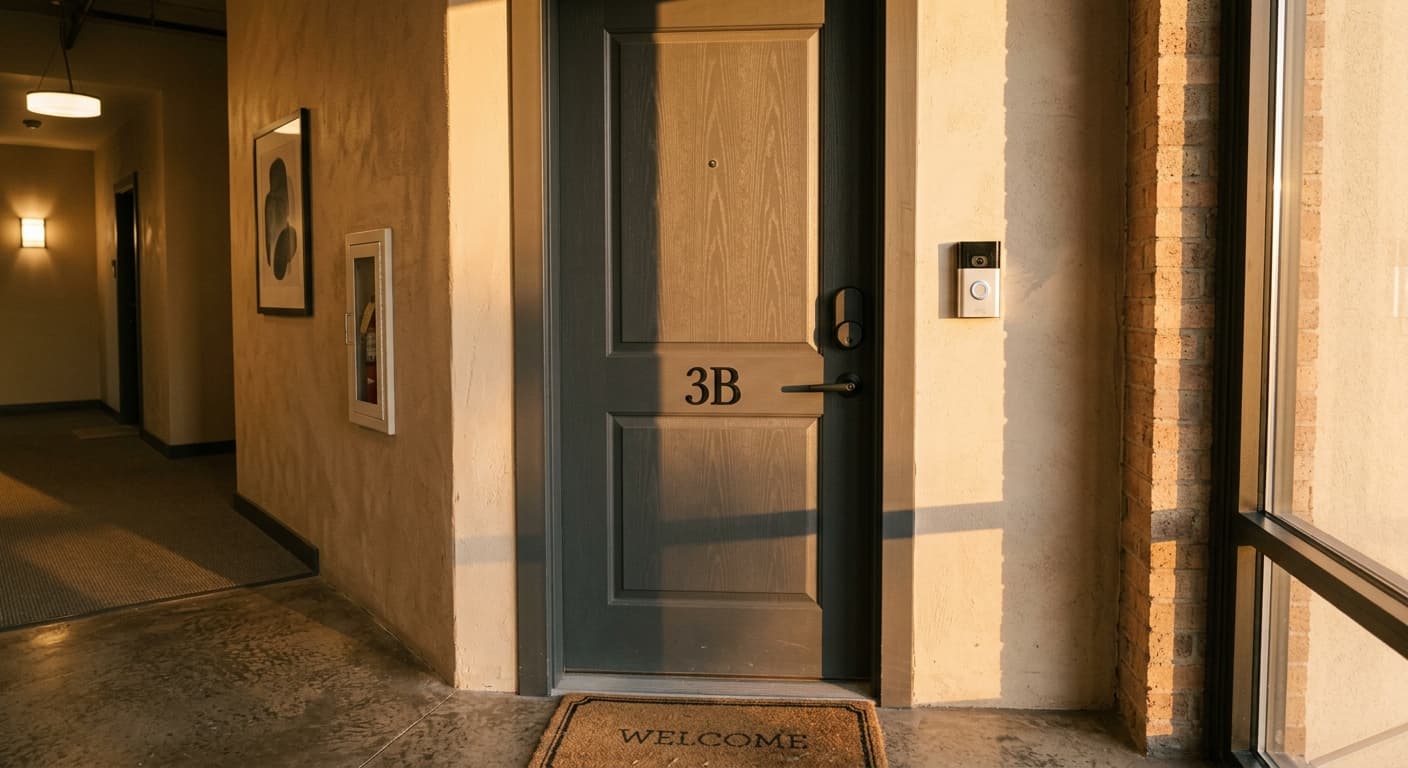
Montana law requires all parties to have knowledge before any audio recording takes place, and landlords face criminal liability under MCA 45-5-223 for placing hidden cameras inside a rental unit. Either party may record conversations with the other by providing a clear warning under MCA 45-8-213.
Recording and surveillance in Montana rental properties involves a careful balance between a landlord's property rights and a tenant's privacy rights. Montana law provides strong protections for tenant privacy through multiple legal frameworks: the privacy in communications statute (MCA 45-8-213), the surreptitious visual observation statute (MCA 45-5-223), the state constitution's right to privacy (Article II, Section 10), and the Montana Residential Landlord and Tenant Act (MCA Title 70, Chapter 24).
This guide covers where landlords can and cannot place cameras, tenant recording rights, how to handle disputes, and the legal remedies available when privacy rights are violated.
Landlord Security Camera Rules
Where Landlords May Place Cameras
Montana landlords may install security cameras in common areas of multi-unit rental properties:
- Building entrances and exits: Front doors, back doors, and fire exits
- Parking lots and garages: Areas shared by multiple tenants
- Lobbies and hallways: Common areas accessible to all tenants
- Laundry rooms: Shared facilities
- Mailbox areas: Where package theft is a concern
- Building exteriors: Cameras covering the perimeter of the property
Where Landlords May Not Place Cameras
Landlords are prohibited from placing cameras in the following locations:
- Inside individual rental units: Any camera inside a tenant's apartment, house, or room violates MCA 45-5-223
- Private patios and balconies: Areas exclusively assigned to individual tenants carry a reasonable expectation of privacy
- Windows of rental units: Cameras aimed to look through tenant windows violate both the surreptitious observation statute and the constitutional right to privacy
- Bathrooms and changing areas: Whether shared or private, these areas carry the strongest privacy protections
- Exclusively assigned storage units: MCA 45-5-223 applies only to a "place of residence," so it does not clearly reach a separate storage unit; a landlord who installs a camera there may still face liability under lease terms, general invasion-of-privacy tort principles, and the landlord's limited statutory right of access (MCA 70-24-312)
Audio-Enabled Cameras in Common Areas
If a landlord installs cameras with audio capability in common areas:
- The all-party knowledge requirement of MCA 45-8-213 applies
- Visible signage warning of audio and video recording should be posted at entry points and near camera locations
- The signage can satisfy the warning exception under MCA 45-8-213(2)(a)(iii)
- Many landlords choose to use video-only cameras (no microphones) to avoid triggering the audio consent requirement
Notice to Tenants
Montana does not have a specific statute requiring landlords to notify tenants of security camera locations. However, best practices and legal prudence recommend:
- Disclosing camera locations in the lease agreement
- Posting visible signage near all cameras
- Notifying tenants in writing when new cameras are installed
- Maintaining a record of tenant notifications
Transparency reduces the risk of civil liability and demonstrates good faith compliance with Montana's privacy protections.
Hidden Cameras in Rental Units
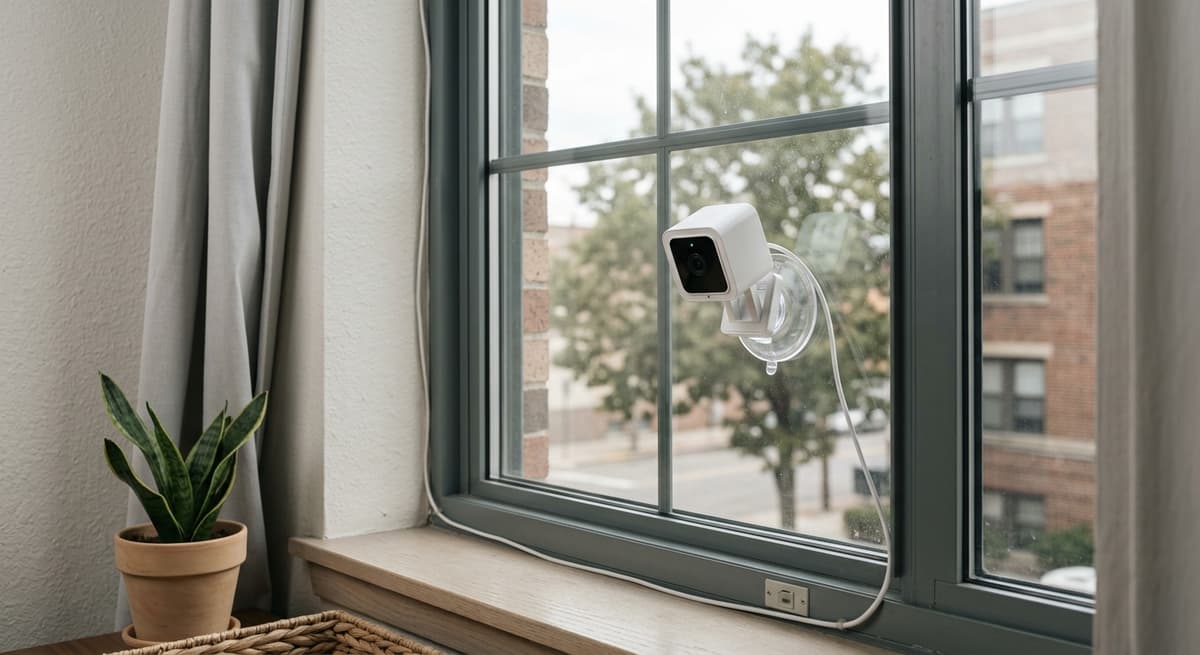
A landlord who installs a hidden camera inside a tenant's unit commits a serious criminal offense.
Criminal Liability
Under MCA 45-5-223 (surreptitious visual observation): A landlord who secretly photographs, films, or observes a tenant in their unit commits a misdemeanor punishable by up to 6 months in jail and a $500 fine.
Under MCA 45-8-213 (privacy in communications): If the hidden camera captures audio, the landlord also violates the communications statute. Violations of MCA 45-8-213(1)(c) are misdemeanors carrying up to 6 months in jail and a $500 fine; the statute does not escalate repeat recording violations to felonies.
What to Do If You Discover a Hidden Camera
If a tenant discovers a hidden camera in their rental unit:
- Do not remove or disturb the camera (preserve evidence)
- Document the location with photographs from your own device
- Contact law enforcement immediately to file a criminal report
- Contact an attorney to discuss civil remedies
- Notify the landlord in writing of the discovery (unless the landlord is the suspected perpetrator)
- Consider your safety and whether temporary relocation is necessary
Tenant Remedies
A tenant who discovers a hidden camera may pursue:
- Criminal charges against the landlord under MCA 45-5-223 and potentially MCA 45-8-213
- Invasion of privacy civil claims
- Constitutional privacy claims under Article II, Section 10 of the Montana Constitution
- Lease termination based on the landlord's breach of the implied warranty of habitability and quiet enjoyment
- Intentional infliction of emotional distress claims
- Relocation costs recovery through civil litigation
Tenant Security Camera Rights
Inside the Rental Unit
Tenants generally have the right to install security cameras inside their own rental unit, subject to lease terms:
- Interior cameras for personal security are typically permissible
- Cameras should be powered without making permanent modifications to the electrical system (unless the lease permits it)
- Tenants should check their lease for provisions addressing modifications to the property
- Cameras should not be aimed to capture common areas or other tenants' units
Exterior Cameras and Doorbells
Tenants may wish to install video doorbells or cameras at their unit's entrance:
- Check the lease for provisions about exterior modifications
- Seek landlord permission before drilling holes or running wires on the exterior
- Wireless, battery-operated devices (like Ring doorbells) may require less modification and fewer permissions
- Cameras should be aimed at the tenant's own doorway and immediate entry area, not at neighboring units
Audio Considerations
If a tenant's camera captures audio in common areas:
- The all-party knowledge requirement of MCA 45-8-213 applies
- Posting a small sign near the camera satisfies the warning exception
- Disabling the microphone eliminates the audio consent concern
Recording Landlord-Tenant Conversations
Tenant Recording Rights
Tenants may record conversations with their landlord under Montana's warning exception:
- Provide a clear warning at the start of the conversation: "I want to let you know I am recording this conversation."
- The landlord does not need to consent; they only need to receive the warning
- If the landlord objects, they may end the conversation, but you are not required to stop recording after providing the warning
- Recorded conversations can be useful for documenting lease disputes, maintenance requests, and other interactions
Landlord Recording Rights
Landlords have the same recording rights:
- A landlord may record a conversation with a tenant after providing a clear warning
- Automated recording of phone calls with tenants requires a warning message
- Landlords should document their recording practices as part of their business procedures
Recording Inspections and Walkthroughs
During property inspections, move-in/move-out walkthroughs, and maintenance visits:
- Either party may record the inspection after providing a warning
- Recording inspections creates a documented record of the property's condition
- If the landlord sends a maintenance worker, the tenant should provide the warning to the worker as well
- Video recording of the property's condition (without capturing private conversations) is generally permissible for both parties
Montana Residential Landlord and Tenant Act
The Montana Residential Landlord and Tenant Act (MCA Title 70, Chapter 24) establishes the rights and obligations of landlords and tenants, including provisions relevant to privacy and access.
Landlord Right of Access
Under MCA 70-24-312, a landlord may enter a tenant's dwelling unit under specific circumstances:
- With the tenant's consent
- In case of emergency
- To make necessary or agreed repairs, alterations, or improvements
- To show the unit to prospective tenants, buyers, or contractors
Montana law (MCA 70-24-312) requires the landlord to provide at least 24 hours' notice before entering for non-emergency purposes; this is a statutory minimum, not merely a customary practice. A landlord who enters a tenant's unit without proper authorization may be liable for trespass and privacy violations.
Abuse of Access as Surveillance
If a landlord uses the right of access to conduct surveillance or install recording devices, this exceeds the scope of the statutory right and may constitute:
- A violation of MCA 45-5-223 if recording devices are installed
- A violation of MCA 45-8-213 if audio recording devices are installed
- A breach of the implied covenant of quiet enjoyment under landlord-tenant law
- An invasion of privacy under Montana common law and the state constitution
Recording During Eviction Proceedings
Eviction disputes sometimes involve recording by either party.
Tenant Rights During Eviction
- Tenants may record conversations with landlords about eviction after providing a warning
- Tenants may record the service of eviction notices by providing a warning to the person serving the notice
- In court proceedings, recording rules are governed by court rules and the presiding judge's orders
Landlord Rights During Eviction
- Landlords may record move-out inspections and property condition assessments after providing a warning to the tenant
- Security camera footage of common areas may be used as evidence in eviction proceedings
- Footage must have been obtained lawfully (with proper notice) to be admissible
The WDEA Connection for Property Managers
Property managers employed by landlords in Montana are protected by the Wrongful Discharge from Employment Act (MCA 39-2-901 through 39-2-915). If a property manager reports a landlord's illegal surveillance activities and is fired as a result, the WDEA's public policy exception may protect them from retaliation.
More Montana Recording Laws
Audio Recording | Video Recording | Voyeurism & Hidden Cameras | Workplace Recording | Recording Police | Phone Call Recording | Security Cameras | Recording in Public | Landlord-Tenant | Dashcam Laws | Schools | Medical Recording
Back to Montana Recording Laws
More Montana Recording Topics
More Montana Laws
Frequently Asked Questions
Can my landlord put cameras inside my apartment in Montana?
No. A landlord who installs cameras inside a tenant's rental unit violates MCA 45-5-223 (surreptitious visual observation). If the camera captures audio, it also violates MCA 45-8-213. This is a criminal offense punishable by up to 6 months in jail and a $500 fine for a first offense. Tenants who discover hidden cameras should contact law enforcement immediately.
Can my landlord put security cameras in the hallway outside my apartment?
Generally, yes. Landlords may install security cameras in common areas of multi-unit properties, including hallways, lobbies, and parking areas. However, cameras should not be positioned to see inside individual units. If the cameras capture audio, signage must be posted to satisfy MCA 45-8-213's warning requirement.
Can I record a conversation with my landlord in Montana?
Yes, as long as you provide a clear warning at the start of the conversation. Under Montana's warning exception (MCA 45-8-213(2)(a)(iii)), you do not need your landlord's consent. Simply announce that the conversation is being recorded. The landlord may choose to end the conversation but cannot prevent you from recording after the warning is given.
Can I install a Ring doorbell at my apartment in Montana?
This depends on your lease terms. Many leases prohibit exterior modifications without landlord approval. Wireless, battery-operated doorbells that do not require drilling or permanent installation may be more acceptable. Check with your landlord before installing. If approved, aim the camera at your own doorway, and consider posting a small sign if the device records audio.
What should I do if I find a hidden camera in my rental unit?
Do not disturb the camera. Document its location with photographs from your own device. Contact law enforcement immediately to file a criminal report. Then contact an attorney to discuss civil remedies, which may include invasion of privacy claims, constitutional privacy claims, lease termination, and recovery of emotional distress damages and relocation costs.
Updates
Narrowed an overstated claim about hidden cameras in tenant storage units, corrected the 24-hour landlord entry notice from 'customary' to the actual statutory minimum, and corrected 'verbal warning' to 'clear warning' since Montana's statute does not require the warning to be spoken.
Independently fact-checked against the cited primary sources; governing law re-checked for recent changes
Corrected the Montana warning-exception pinpoint citation from the nonexistent MCA 45-8-213(2)(c) to the correct MCA 45-8-213(2)(a)(iii).
Governing law re-checked for recent changes
Reviewed and approved by an editor
The Law Behind This Article
This article rests on the statutory provisions below, held in our own legal record and retrieved from the official source. Tap a section to read the operative text.
Montana Code Annotated, Title 45
§ 45-5-223Surreptitious Visual Observation Or Recordation -- Place Of Residence -- Public Place -- ExceptionsIn forcecited in 9 of our articles
45-5-223. Surreptitious visual observation or recordation -- place of residence -- public place -- exceptions. (1) A person commits the offense of surreptitious visual observation or recordation in a place of residence if the person purposely or knowingly hides, waits, or otherwise loiters in person or by means of a remote electronic device within or in the vicinity of a private dwelling house, apartment, or other place of residence for the purpose of: (a) watching, gazing at, or looking upon any occupant in the residence in a surreptitious manner without the occupant's knowledge; or (b) by means of an electronic device, surreptitiously observing or recording the visual image of any occupant in the residence without the occupant's knowledge. (2) A person commits the offense of surreptitious visual observation or recordation in public if the person purposely or knowingly observes or records a visual image of the sexual or intimate parts of another person in a public place without the other person's knowledge when the victim has a reasonable expectation of privacy.
Official text (excerpt) · last checked 2026-08-31 · Read the full text in our law library · Verify at mca.legmt.gov
Cited in 1 court opinions in our collectionLatest citing opinion in our collection: 2026
Opinions citing this section in our collection:
- United States v. Watkins (Court of Appeals for the Tenth Circuit 2026)“…nn. § 609.746;1 Miss. Code Ann. § 97-29-61;2 MPC § 250.12;1 Mont. Code Ann. 45-5-223;3 Neb. Rev. Stat. § 28-311.08; Nev. Rev…”
Identified automatically from the court opinions citing this section — not a ranking of which case controls.
Also relied on in: Montana Video Recording Laws: Consent Rules, Surveillance, and Penalties (2026), Montana Recording Laws (2026): Announcement Exception and Penalties, Montana Laws on Recording in Public: First Amendment Rights and Limitations (2026)
§ 45-8-213Privacy In CommunicationsIn forcecited in 23 of our articles
45-8-213. Privacy in communications. (1) Except as provided in 69-6-104, a person commits the offense of violating privacy in communications if the person knowingly or purposely: (a) with the purpose to terrify, intimidate, threaten, harass, or injure, communicates with a person by electronic communication and threatens to inflict injury or physical harm to the person or property of the person or makes repeated use of obscene, lewd, or profane language or repeated lewd or lascivious suggestions; (b) uses an electronic communication to attempt to extort money or any other thing of value from a person or to disturb by repeated communications the peace, quiet, or right of privacy of a person at the place where the communications are received; (c) records or causes to be recorded a conversation by use of a hidden electronic or mechanical device that reproduces a human conversation without the knowledge of all parties to the conversation; (d) with the purpose to terrify, intimidate, threaten, harass, or injure or to obtain money or other valuable consideration, publishes, distributes, or discloses real or digitally fabricated printed or electronic photographs, pictures, images, or…
Official text (excerpt) · last checked 2026-08-31 · Read the full text in our law library · Verify at mca.legmt.gov
Cited in 23 court opinions in our collectionLatest citing opinion in our collection: 2025
In the courts (editorial summary, independently checked):State v. Dugan (2013) struck the statute's prima facie intent clause as overbroad. State v. Brown (1988) noted the statute still bars recording without all participants' permission and rejected an overbreadth attack on its public-official exception. State v. DuBray (2003) found no violation where the defendant knew of the recording.
Opinions citing this section in our collection:
- State v. Smith (Montana Supreme Court 2004, 322 Mont. 206)✓A man who phoned threats to kill his estranged wife's boyfriend argued he should have been charged under section 45-8-213(1)(a) instead of assault with a weapon. The court held the two statutes punish different conduct, so the charge was within prosecutorial discretion.
- State v. Dugan (Montana Supreme Court 2013, 369 Mont. 39)“…rbroad, the Court today strikes the prima facie language in § 45-8-213, MCA. However, a narrow application would be…”
- In re C.S. (Montana Supreme Court 1984, 210 Mont. 144)“…n of privacy in communication, a misdemeanor as provided in Section 45-8-213, MCA. The facts underlying the offense were…”
Identified automatically from the court opinions citing this section — not a ranking of which case controls.
Also relied on in: Montana Security Camera Laws: Home, Business, and Surveillance Rules (2026), Montana Voyeurism Laws: Hidden Cameras, Peeping, and Penalties (2026), Montana Smart Glasses Recording Laws (MCA 45-8-213)
Montana Code Annotated, Title 70
§ 70-24-312Access To Premises By LandlordIn force
70-24-312. Access to premises by landlord. (1) A tenant may not unreasonably withhold consent to the landlord or the landlord's agent to enter into the dwelling unit in order to inspect the premises, make necessary or agreed repairs, decorations, alterations, or improvements, supply necessary or agreed services, or exhibit the dwelling unit to prospective or actual purchasers, mortgagees, tenants, workers, or contractors. (2) A landlord may enter the dwelling unit without consent of the tenant in the case of an emergency. (3) (a) A landlord may not abuse the right of access or use it to harass the tenant. Except in the case of an emergency or unless it is impracticable to do so, the landlord shall give the tenant at least 24 hours' notice of the intent to enter and may enter only at reasonable times. (b) For the purposes of this subsection (3), in addition to the provisions of 70-24-108, a tenant has notice of the intent to enter if the landlord conspicuously posts the landlord's intent to enter on the main entry door of the dwelling unit.
Official text (excerpt) · last checked 2026-07-29 · Read the full text in our law library · Verify at mca.legmt.gov
Search our full record of US law — 2.1 million sections, every state + federal →
Sources and References
- Montana Code Annotated 45-8-213 - Privacy in Communications(leg.mt.gov).gov
- Montana Code Annotated 45-5-223 - Surreptitious Visual Observation or Recordation(leg.mt.gov).gov
- Montana Constitution Article II, Section 10 - Right of Privacy(leg.mt.gov).gov
- Montana Residential Landlord and Tenant Act - MCA Title 70, Chapter 24(leg.mt.gov).gov
- Montana Code Annotated 70-24-312 - Landlord Right of Access(leg.mt.gov).gov
- Montana Code Annotated 45-8-213 - Privacy in Communications(mca.legmt.gov).gov
- Montana Code Annotated 45-5-223 - Surreptitious Visual Observation or Recordation(mca.legmt.gov).gov
- Montana Constitution Article II, Section 10 - Right of Privacy(mca.legmt.gov).gov
- Montana Residential Landlord and Tenant Act - MCA Title 70, Chapter 24(mca.legmt.gov).gov
- Montana Code Annotated 70-24-312 - Landlord Right of Access(mca.legmt.gov).gov