
Bankruptcy in Illinois (2026): Exemptions & Means Test
Illinois bankruptcy: opted out of federal exemptions, the new $50,000 homestead under 735 ILCS 5/12-901 (2026), vehicle and wildcard amounts, means test.
7 min read
598 articles · page 2 of 10
Illinois bankruptcy: opted out of federal exemptions, the new $50,000 homestead under 735 ILCS 5/12-901 (2026), vehicle and wildcard amounts, means test.

Indiana bankruptcy: opted out of federal exemptions, the $22,750 homestead under IC 34-55-10-2 (indexed every six years), and current means-test income figures.

Iowa bankruptcy: opted out of federal exemptions, an unlimited homestead under Iowa Code 561 (acreage limits), the $7,000 vehicle exemption, and the means test.

Kansas opted out of federal exemptions. Its homestead has no dollar cap and is limited only by acreage, the vehicle exemption is $20,000, and see the means test income.
Kentucky lets filers choose state or federal exemptions. The state homestead is only $5,000 and the vehicle exemption is $2,500, so many filers pick the larger federal set.

Louisiana opted out of federal exemptions. The homestead protects $35,000 in value, the vehicle exemption is $7,500, and see the 2026 means test income figures.

Maine opted out of federal exemptions. The homestead protects up to $94,300 of equity, more for older or disabled filers, plus the 2026 means test income figures.

Maryland opted out of federal bankruptcy exemptions. Learn the $31,575 homestead cap, the $6,000 wildcard used to protect a vehicle, and the 2026 means test income.

Massachusetts lets filers choose state or federal exemptions. The declared homestead protects up to $1,000,000, the automatic homestead is $125,000, plus the means test.

Michigan bankruptcy guide: choose state or federal exemptions, an inflation-adjusted homestead up to $51,150 under MCL 600.5451, plus 2026 means-test income.
Minnesota bankruptcy guide: choose state or federal exemptions, a high $540,000 homestead under Minn. Stat. 510.02, plus 2026 means-test income.
Mississippi bankruptcy guide: the state opted out of federal exemptions, a fixed $75,000 homestead under Miss. Code 85-3-21, plus 2026 means-test income.
Missouri bankruptcy guide: the state opted out of federal exemptions, a fixed $15,000 homestead under RSMo 513.475, plus the April 2026 means-test income.
Montana bankruptcy guide: the state opted out of federal exemptions, a $425,827 (2026) indexed homestead under MCA 70-32-104, plus the April 2026 means test.
Nebraska bankruptcy guide: the state opted out of federal exemptions, a $120,000 homestead under Neb. Rev. Stat. 40-101, plus the April 2026 means test.
Nevada bankruptcy: the state opted out of federal exemptions, a $605,000 homestead (NRS 115.010), a $15,000 vehicle, the 2026 means test, and where to file.
New Hampshire bankruptcy: choose state or federal exemptions, a homestead raised to $400,000 (RSA 480:1, eff. Jan. 1, 2026), the 2026 means test, and filing.
New Jersey bankruptcy: choose state or federal exemptions, no state homestead so filers use the federal $31,575 homestead, the 2026 means test, and filing.
New Mexico bankruptcy guide: filers may choose federal or state exemptions, the homestead is $150,000, plus the April 2026 means-test median income.
New York bankruptcy guide: filers may choose federal or state exemptions, the homestead is tiered by county up to $204,825, plus the 2026 means test.
North Carolina bankruptcy guide: the state opted out of federal exemptions, the homestead is $35,000, plus the April 2026 means-test median income.
North Dakota opted out of federal exemptions. Its homestead protects up to $150,000 of equity, an alternative exemption covers a vehicle, and see the means test income.
Ohio opted out of federal exemptions. The inflation-indexed homestead protects up to $125,000, the vehicle exemption is $3,225, and see the 2026 means test income.
Oklahoma opted out of federal exemptions. The homestead has no dollar cap and is limited only by acreage, the vehicle exemption is $7,500, and see the means test income.
Oregon lets bankruptcy filers choose state or federal exemptions. Compare the $150,000 state homestead, the $10,000 vehicle exemption, and the 2026 means test income.
Pennsylvania bankruptcy guide: choose state or federal exemptions. PA has no state homestead, so home equity is protected by the federal $31,575 homestead.
Rhode Island lets filers choose state or federal exemptions. The state homestead protects up to $500,000 of equity, the vehicle exemption is $12,000, plus the means test.
South Carolina opted out of federal exemptions. The inflation-indexed homestead is about $80,125, the vehicle exemption is about $8,000, and see the means test income.
South Dakota opted out of federal exemptions. Its homestead has no dollar cap and is limited only by acreage, and a personal-property allowance covers a vehicle.
Tennessee opted out of federal exemptions. See the $35,000 homestead ($52,500 for joint owners), the $10,000 personal-property wildcard, and the means test.
Texas lets filers choose state or federal exemptions. The state homestead is unlimited in value but limited by acreage, plus a large personal-property allowance and the means test.
Utah opted out of federal exemptions. Its homestead is inflation-indexed to about $53,700, the vehicle exemption is $3,000, and see the 2026 means test income.
Vermont lets filers choose state or federal exemptions. The state homestead protects up to $125,000 of equity, the vehicle exemption is $2,500, plus the means test.
Virginia opted out of federal exemptions: a $50,000 homestead claimed by homestead deed under Va. Code 34-4, vehicle exemption, plus the 2026 means-test income.
Washington filers choose state or federal exemptions: a homestead of the greater of $125,000 or the county median price (RCW 6.13.030), plus 2026 means test.
West Virginia filers choose state or federal exemptions: a $35,000 homestead under W. Va. Code 38-10-4, vehicle and wildcard exemptions, plus 2026 means test.
Wisconsin bankruptcy guide: choose state or federal exemptions, a $75,000 homestead under Wis. Stat. 815.20, vehicle limits, plus 2026 means-test income.
Wyoming bankruptcy guide: opted out of federal exemptions, a $100,000 homestead per person under Wyo. Stat. 1-20-101, plus 2026 means-test income.
Learn how Chapter 7 and Chapter 13 bankruptcy work, then find your state's exemptions, opt-out status, and Chapter 7 means test income figures for all 50 states.
Bard PowerPort lawsuits allege the implanted catheter can fracture or migrate. Covers the fracture allegations, federal MDL 3081, and the first bellwether's defense verdict.
What is a broken bone settlement worth? Illustrative ranges from simple fractures to surgical repair, what raises value, and how fault and caps apply.

California's anti-paparazzi law, Civil Code Section 1708.8, lets you sue over a drone flown into your airspace to record a private moment.

California employee monitoring laws explained: the social media password law, Labor Code 435 restroom camera ban, CPRA employee rights, and Hernandez v.
California motorcycle accident law: the 2-year deadline to sue, pure comparative fault, the universal helmet law, legal lane splitting, and 30/60/15 insurance.

California runs two camera systems: point-carrying red light tickets and a civil, points-free speed pilot in six cities. Know which one applies to you.
California wrongful death claims: the 2-year deadline to file, who can sue under CCP 377.60, survival actions, what damages are allowed, and the 2026 sunset.
The Camp Lejeune Justice Act filing window closed August 10, 2024. Learn the law, the water-contamination history, and the status of filed claims, June 2026.

Federal law sets a hard floor on paycheck deductions. Learn what an employer can and cannot deduct, and the two states where equipment holds are partly legal.

Canada's Copyright Act requires human skill and judgment for protection. How AI-generated works, AI training, and software are treated under Canadian law.

Compare car accident laws in all 50 states and DC: at-fault vs. no-fault, negligence rules, minimum insurance limits, and filing deadlines.
Compare castle doctrine in all 50 states and DC, including protected places, presumptions, triggers, exceptions, and official sources.
A free cease and desist letter template and sample, plus what it needs to say, how it differs from a court order, and how to send it.
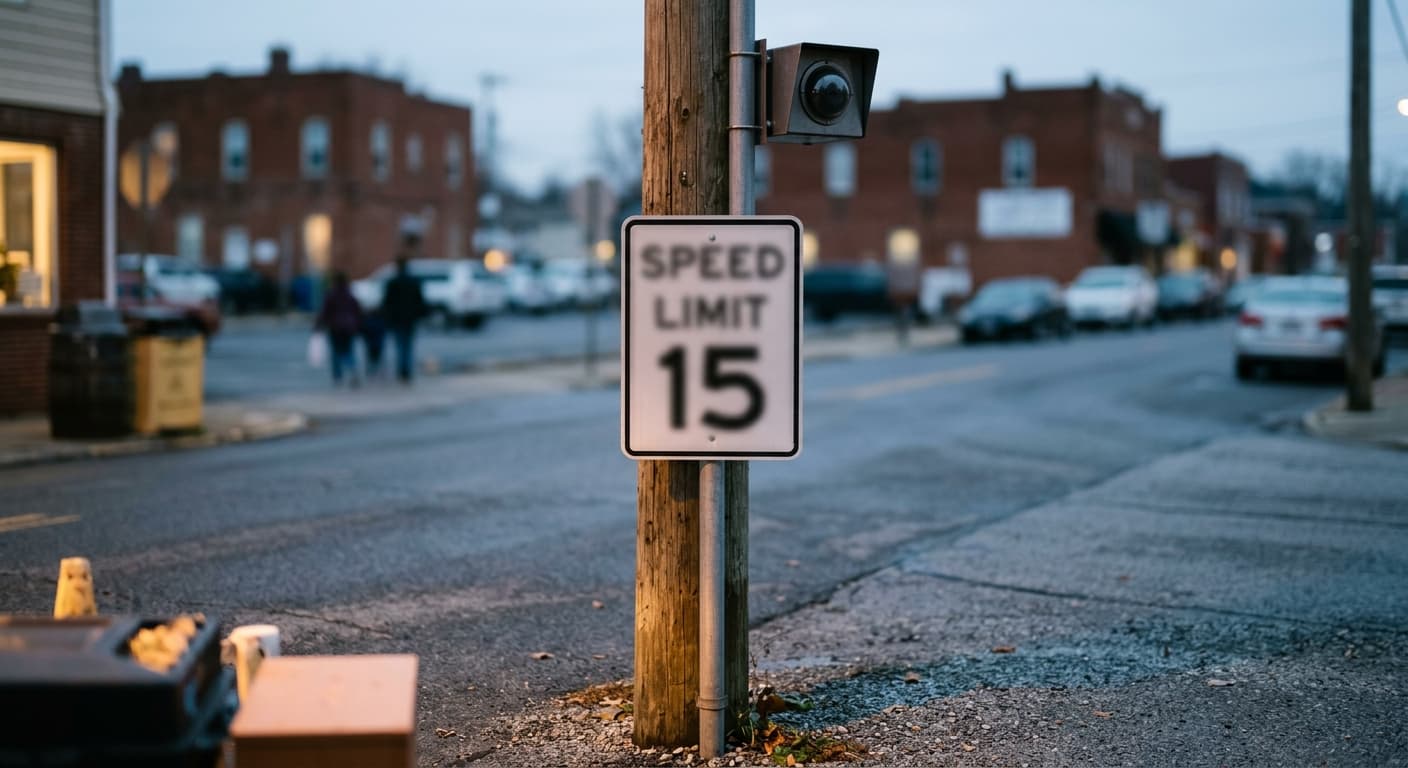
Chicago's red-light and speed camera program explained: current fines, the 30-day warning period, the 21-day contest window, and what unpaid tickets can do.

Compare child custody laws across all 50 states and DC: best-interests factors, legal vs. physical custody, joint-custody presumptions, and UCCJEA jurisdiction rules.

How child identity theft happens, the FTC's warning signs, how to check if your child has a credit file, and the free Protected Consumer Freeze.

State-by-state guide to children's online privacy laws beyond COPPA, covering California AADC, Utah SB 152, Texas HB 18, Florida HB 3, and age verification requirements.

China can protect AI-assisted works when the user shows meaningful creative input, as in Li v. Liu (2023). How training data and software are treated.

CIPA, Cal. Penal Code 630 et seq., requires all-party consent to record. See the penalties, the website-tracking litigation wave, and the Otter.ai case.
Colorado has no drone-specific privacy statute, so a claim relies on trespass, nuisance, and the 1937 airspace-ownership law, Colo. Rev. Stat. Section 41-1-107.

Colorado employee monitoring laws: why SB 26-189 is an AI hiring law, not a monitoring notice law, plus the social media password law and surveillance limits.