
Louisiana
Louisiana Windshield Mounting Laws (2026 Guide)
Independently fact-checked against primary sources (last audited August 17, 2026). · Reviewed by the RecordingLaw editorial team. · Law checked current as of August 17, 2026. · 8 primary sources cited on this page. How we verify our legal content
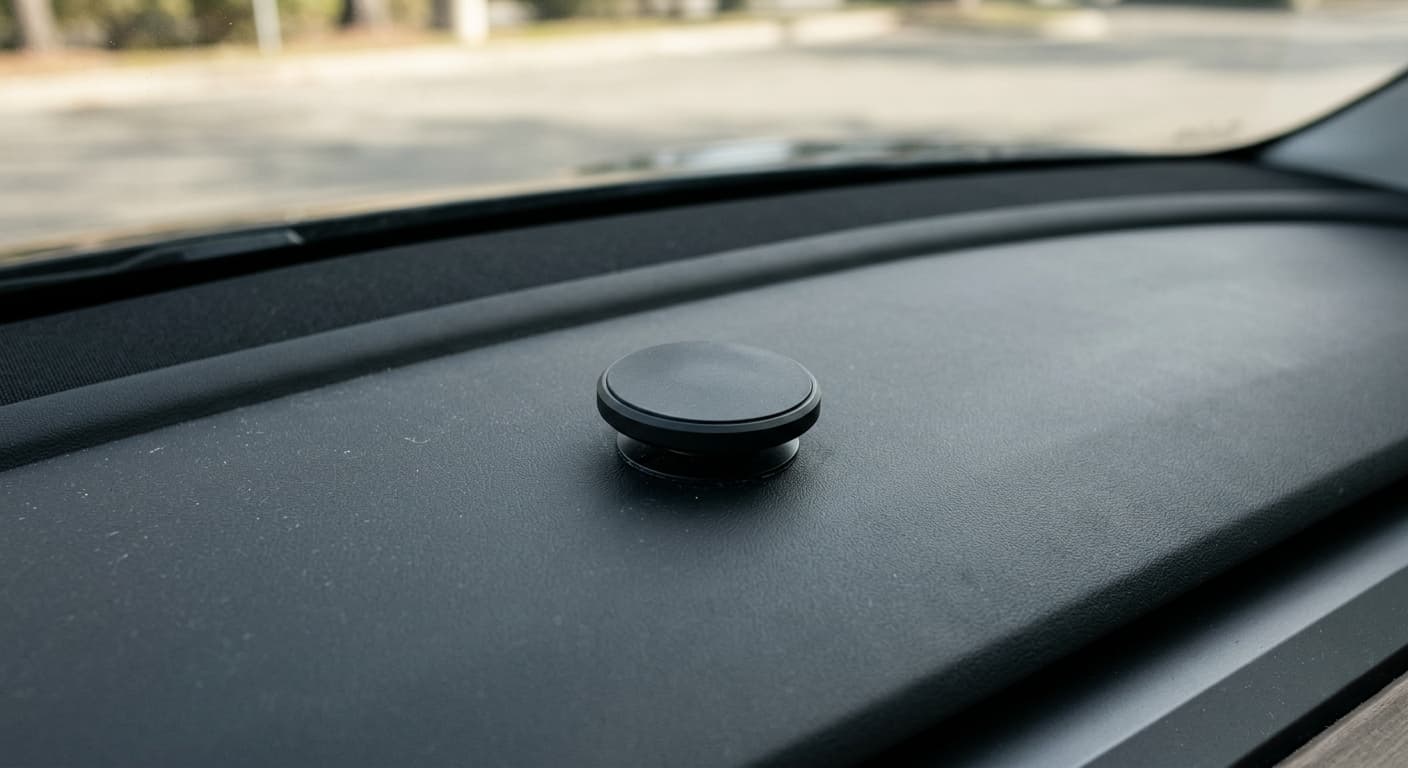
Louisiana prohibits placing any object on the front windshield or front side windows that obstructs the driver's clear view under La. R.S. 32:361.1. No exemption exists for GPS units, dashcams, or phone mounts. Drivers must use a dashboard, vent clip, or console mount instead.
Louisiana takes a strict approach to windshield visibility. Under La. R.S. 32:361.1, drivers cannot place any object or material on the front windshield or front side windows that blocks or reduces the driver's clear view of the road. Unlike some states that carve out specific exceptions for GPS devices, dashcams, or phone mounts, Louisiana's statute contains no such exemption.
This guide covers the full scope of Louisiana's windshield mounting restrictions, window tint limits (including the 2025 change to front side window tint), the new hands-free driving law, penalties, exemptions, and practical steps for staying compliant.
What Louisiana Law Says About Windshield Obstructions
The primary statute governing windshield visibility in Louisiana is La. R.S. 32:361.1, titled "View outward or inward through windshield or windows; obscuring prohibited."
The law states that no person may operate a motor vehicle with any object or material placed on or affixed to the front windshield or front side windows of the vehicle so as to obstruct or reduce the driver's clear view through the front windshield or front side windows. It further prohibits placing or affixing any transparent material to the front windshield or front side windows if the material alters the color or reduces the light transmission.
This language is broad. It covers physical objects (suction cup mounts, stickers, hanging items) and applied materials (tint film, coatings) alike.
Items That Are Prohibited
Based on the statute's plain language, the following items are prohibited when they obstruct the driver's clear view through the front windshield or front side windows:
- GPS devices mounted on the windshield with suction cups
- Dashcams attached to the windshield in the driver's line of sight
- Phone mounts affixed to the windshield
- Decorative stickers or decals on the windshield
- Hanging objects from the rearview mirror (when they obstruct the view)
- Any tint film on the windshield beyond the permitted strip area
Items That Are Allowed
La. R.S. 32:361.1(C) lists exactly four situations the section does not apply to. A separate statute, La. R.S. 32:282(C), carries its own exception for required paperwork. The first four rows below come from 32:361.1(C); the last row does not:
| Permitted Item | Conditions |
|---|---|
| Sun screening device (window tint film) | Front side windows and side windows behind the driver at 25% light transmission or more; rearmost windows at 12% or more; no more than 20% luminous reflectance |
| Transparent tint strip on windshield | Non-red, non-amber color; limited to the top five inches of the windshield |
| Adjustable sun visor | Must be nontransparent and mounted forward of the side windows; cannot be attached to the glass |
| Law enforcement vehicle equipment | Applies to publicly owned law enforcement vehicles, including Department of Wildlife and Fisheries enforcement vehicles |
| Certificates or papers required by law | Not a 32:361.1(C) exception. Permitted instead under La. R.S. 32:282(C), which allows a certificate or other paper required to be displayed by law or by regulation of the secretary of public safety |
A separate statute, La. R.S. 32:282, adds that no person may drive any vehicle with nontransparent material on the windshield, side wings, side or rear windows, other than a certificate or paper required by law or permitted by the secretary of public safety.
No GPS or Dashcam Exemption
Some states (such as California and Minnesota) specifically allow GPS units or other electronic devices to be mounted on the windshield in designated areas. Louisiana does not.
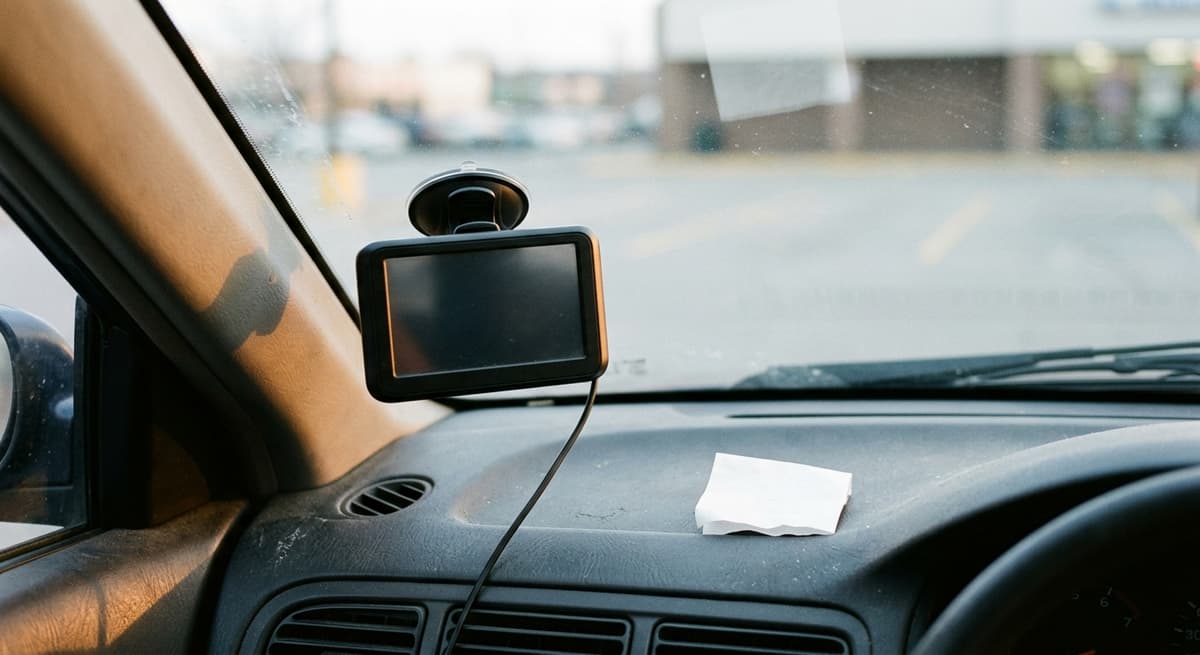
La. R.S. 32:361.1 does not mention GPS devices, dashcams, navigation systems, or any electronic device. There is no carve-out, no designated mounting zone, and no size limitation that would permit these devices on the windshield.
For drivers who rely on GPS navigation or want to use a dashcam, the safest legal option is to mount the device on the dashboard, on a vent clip, or in another location that does not involve the windshield or front side windows.
Dashcam Considerations
Dashcams are legal to own and operate in Louisiana. There is no state law prohibiting the use of a dashcam. The restriction applies only to where it is mounted. A dashcam placed on the dashboard or behind the rearview mirror (in a position that does not obstruct the driver's view) is generally acceptable.
La. R.S. 40:2552 addresses the use of motor vehicle dash cameras in a law enforcement context, confirming that dashboard-mounted camera systems are recognized and regulated under Louisiana law. For civilian use, the key rule remains: do not obstruct the windshield.
Louisiana Window Tint Requirements
La. R.S. 32:361.1 also regulates sun screening devices (window tint film). The 2025 legislative session brought a significant change to front side window tint limits through Act 143.
Current Tint Limits (Effective August 1, 2025)
| Window Location | Minimum Light Transmission (VLT) | Maximum Reflectance |
|---|---|---|
| Front windshield | No tint allowed (except top 5-inch strip) | 20% luminous reflectance |
| Front side windows (driver and passenger) | 25% VLT | 20% luminous reflectance |
| Rear side windows | 25% VLT | 20% luminous reflectance |
| Rear window | 12% VLT | 20% luminous reflectance |
What Act 143 of 2025 Changed
Before August 1, 2025, front side windows required at least 40% light transmission. Act 143 (House Bill 119), sponsored by Rep. Daryl Deshotel, lowered this to 25% VLT. The change brought front side windows in line with the existing 25% requirement for rear side windows.
The rear window limit of 12% VLT and the 20% maximum luminous reflectance remain unchanged.
Penalties for Tint Violations
Tint violations under La. R.S. 32:361.1 carry the following fines:
| Offense | Maximum Fine |
|---|---|
| First offense | $150 |
| Second offense | $250 |
| Third or subsequent offense | $350 |
Sellers, installers, manufacturers, or distributors of noncompliant sun screening devices face steeper penalties: $1,000 for a first offense, $2,000 for a second offense, and prohibition from doing business for a third or subsequent offense.
Vehicles Manufactured Before 1994
La. R.S. 32:361.1(H) through (J) address older vehicles, and the net effect is that almost every vehicle on the road is covered. Subsection H applies the section to all vehicles manufactured on or after January 1, 1994, and Subsection J extends it, on and after January 1, 1994, to any other vehicle not covered by Subsection H or I. A pre-1994 vehicle is not exempt simply because of its age.
Subsection I is the only grandfather clause. A vehicle whose windows were tinted on or before December 31, 1993 in compliance with the law then in effect is exempt, provided the owner, operator, or licensee obtains a certificate confirming the tinting was done before January 1, 1994. The Office of Motor Vehicles sets the rules and the form for that proof. The certificate must be present in the vehicle at all times it is being operated and produced on demand by a law enforcement officer.
Medical Exemptions for Window Tint
Louisiana provides a medical exemption process under La. R.S. 32:361.2 for drivers or vehicle owners who need darker tint due to a medical condition.
How to Qualify
To obtain a medical exemption, the registered owner (or a spouse or family member who operates the vehicle) needs an affidavit signed by a licensed Louisiana optometrist or physician, including ophthalmologists and dermatologists. The affidavit must state that the person has a physical or medical condition involving the effects of the sun that makes darker window tint medically necessary.
Requirements for the Exemption
- The affidavit must reference World Health Organization ICD-recognized conditions
- For photophobia cases, the provider must explain why sunglasses alone are not sufficient and confirm that the tint will not impair nighttime driving
- The applicant must sign a notarized release authorizing disclosure of medical records
- A criminal background check is required; applicants with convictions for violent crimes or drug offenses are ineligible
- Louisiana State Police review each application on a case-by-case basis
- Most exemptions are reviewed every three years, except for light-sensitive porphyria (valid for the duration of vehicle ownership)
- A copy of the affidavit must remain in the vehicle at all times
- A decal from the Department of Public Safety must be displayed on the vehicle
Windshield Tint Under Medical Exemption
Even with a medical exemption, tint generally cannot be applied to the windshield beyond the top six inches. An exception exists for patients with light-sensitive porphyria, who may be authorized for additional windshield tinting.
Louisiana's Hands-Free Driving Law (Act 288 of 2025)
Effective August 1, 2025, Louisiana's hands-free law (La. R.S. 32:59) prohibits drivers from using any wireless telecommunications device while operating a motor vehicle on a public road or highway, unless the vehicle is lawfully stationary.
This law directly affects how drivers interact with GPS and phone devices while driving, making it an essential companion to the windshield mounting rules.
What the Law Prohibits
Under La. R.S. 32:59, drivers cannot:
- Hold or physically support a cell phone or wireless device while driving
- Make or receive phone calls without a hands-free accessory
- Send or read text messages
- Access social media
- View videos
- Manually enter data into the device
A "wireless telecommunications device" includes cellular phones, text-messaging devices, PDAs, and portable electronic devices used for writing, sending, or reading text or data. It does not include permanently installed vehicle components, hands-free accessories, CB radios, FCC-licensed amateur radios, or push-to-talk devices.
What Is Still Allowed
The law provides several exemptions:
- Using a hands-free accessory (speakerphone, Bluetooth earpiece, vehicle audio system) for calls
- Viewing GPS navigation data on a hands-free global positioning system
- Reporting traffic collisions, medical emergencies, or road hazards
- Calling 911
- Using a device while the vehicle is lawfully stationary (parked or at a red light)
- Transit or for-hire operators communicating via a device affixed to the vehicle
- Emergency vehicle operators acting in an official capacity
Penalties and Enforcement Timeline
Law enforcement issued only written warnings for violations occurring before January 1, 2026. Since that date, officers have been issuing citations with fines.
| Location | Offense Type | Fine |
|---|---|---|
| School zone or construction zone | Primary offense | $250 (reducible to $100 with community service) |
| All other locations | Secondary offense | $100 (reducible to $50 with community service) |
| Any location with crash involvement | Either type | Fine is doubled |
Community service is limited to 15 hours maximum and may be ordered in lieu of the full fine amount.
Officers may not search a vehicle or seize a device based solely on a violation of this law.
How Windshield and Hands-Free Laws Work Together
The combination of La. R.S. 32:361.1 (windshield obstruction) and La. R.S. 32:59 (hands-free) creates a specific framework for Louisiana drivers:
- You cannot mount a phone or GPS on your windshield (La. R.S. 32:361.1 prohibits windshield obstructions).
- You cannot hold your phone or GPS while driving (La. R.S. 32:59 requires hands-free operation).
- You can view GPS navigation on a hands-free device that is not mounted on the windshield.
The practical solution is a dashboard mount, vent clip mount, or console mount that keeps the device within view but off the windshield and out of your hands.
Penalties for Windshield Obstruction Violations
La. R.S. 32:361.1(E) sets the fine for a driver who violates the section. The figures are ceilings, not fixed amounts, and the statute leaves the actual amount to the court:
| Offense | Maximum Fine |
|---|---|
| First offense | $150 |
| Second offense | $250 |
| Third or subsequent offense | $350 |
Court costs are added on top of the base fine and vary by parish. In practice, total costs for a first offense typically run between $150 and $200 including court fees.
A separate statute, La. R.S. 32:282 (obstruction to driver's view or driving mechanism), reinforces the windshield rules. Under that provision, no person may drive with nontransparent material on the windshield, side wings, side or rear windows, other than certificates or papers required by law.
Other Louisiana Driving Laws to Know
Louisiana has several related statutes that affect how drivers equip and operate their vehicles:
- Louisiana Recording Laws cover consent requirements for dashcam audio recording. Louisiana is a one-party consent state.
- Louisiana Car Seat Laws require child safety seats for children based on age and size.
- Louisiana Hit and Run Laws outline the penalties for leaving the scene of an accident.
- Louisiana Lemon Law protects buyers of defective new vehicles.
Summary of Key Louisiana Statutes
| Statute | Subject | Key Requirement |
|---|---|---|
| La. R.S. 32:361.1 | Windshield obstruction and window tint | No objects obstructing view; minimum 25% VLT on front side windows |
| La. R.S. 32:361.2 | Medical tint exemption | Physician affidavit required; state police review |
| La. R.S. 32:282 | Obstruction to driver's view | No nontransparent material on windshield except required certificates |
| La. R.S. 32:361 | Safety glass | Vehicles must use approved safety glass types |
| La. R.S. 32:59 | Hands-free driving | No handheld wireless device use while driving |
Frequently Asked Questions
Can I mount a GPS or phone on my windshield in Louisiana?
No. La. R.S. 32:361.1 prohibits placing any object on the front windshield that obstructs or reduces the driver's clear view. Louisiana does not provide an exemption for GPS devices, phone mounts, or navigation systems. The safest legal option is a dashboard mount or vent clip.
Are dashcams legal in Louisiana?
Dashcams are legal to own and use in Louisiana. However, they cannot be mounted on the windshield in a position that obstructs the driver's view under La. R.S. 32:361.1. Mount the dashcam on your dashboard or behind the rearview mirror to stay compliant.
What is the darkest legal window tint in Louisiana?
As of August 1, 2025, front side windows require at least 25% light transmission (25% VLT). Rear side windows also require 25% VLT. The rear window requires at least 12% VLT. No tint is allowed on the windshield except a non-red, non-amber transparent strip on the top five inches. Maximum luminous reflectance is 20% for all windows.
Can I hold my phone while driving in Louisiana?
No. Under La. R.S. 32:59 (effective August 1, 2025), drivers cannot hold or physically support a wireless device while driving on any public road. Hands-free use is permitted, including speakerphone, Bluetooth, and hands-free GPS navigation. Fines range from $100 to $250, and citations have been issued since January 1, 2026.
How do I get a medical exemption for darker window tint in Louisiana?
Under La. R.S. 32:361.2, you need a signed affidavit from a licensed Louisiana optometrist or physician stating you have a medical condition related to sun sensitivity. The application requires a notarized release, a background check, and review by Louisiana State Police. If approved, a decal is issued for the vehicle and a copy of the affidavit must be kept in the vehicle at all times.
Updates
Corrected the penalties and exceptions sections: the statutory fines under La. R.S. 32:361.1(E) are maximums rather than set amounts, the unsupported "nonmoving violation" label was removed, required certificates and papers are now attributed to La. R.S. 32:282(C) instead of 32:361.1(C), and the pre-1994 vehicle rules were restated to match subsections H through J.
Independently fact-checked against the cited primary sources; governing law re-checked for recent changes
Governing law re-checked for recent changes
Reviewed and approved by an editor
The Law Behind This Article
This article rests on the statutory provisions below, held in our own legal record and retrieved from the official source. Tap a section to read the operative text.
Louisiana Revised Statutes
§ 32:361.1View outward or inward through windshield or windows; obscuring prohibitedIn forcecited in 5 of our articles
A. As used in this Section and regulations applicable thereto, the following terms shall have the following meanings, unless the context of use clearly indicates otherwise: (1) "Distributor" means any person or company who markets, delivers, or distributes any sun screening device for motor vehicles in Louisiana. (2) "Installer" means any person or company who affixes, places, fastens, or secures any sun screening device to any windshield or window of a motor vehicle in Louisiana. (3) "Light transmission" means the ratio of the amount of total light to pass through the product or material, including any glazing material, to the amount of total light falling on the product or material and the glazing. (4) "Luminous reflectance" means the ratio of the amount of total light that is reflected outward by the product or material to the amount of total light falling on the product or material. (5) "Manufacturer" means a person who engages in the manufacture or assembly of a vehicle sun screening device, or who fabricates, laminates, or tempers a safety glazing material, incorporating, during the manufacturing process, the capacity to reflect or reduce the transmission of light.
Official text (excerpt) · last checked 2026-09-07 · Read the full text in our law library · Verify at legis.la.gov
Cited in 11 court opinions in our collectionLatest citing opinion in our collection: 2025
In the courts (editorial summary, independently checked):State v. Dillon (1996) rejected commerce clause and privacy challenges to section 32:361.1 and held the observed tint violation gave reasonable cause to stop. State v. Hunt (2009) held an officer had reasonable suspicion at the stop inception from tint so dark he could not see the driver's silhouette, measured only afterward.
Opinions citing this section in our collection:
- State v. Dillon (Louisiana Court of Appeal 1996, 670 So. 2d 278)“…hey noted the vehicle's windows were tinted in violation of La.R.S. 32:361.1. After stopping the vehicle, the office…”
- Regis v. Department of Police (Louisiana Court of Appeal 2013, 115 So. 3d 638)“…isciplinary letter to Sgt. Regis, finding that she violated La. R.S. 32:361.1(B) 1 by operating her personal vehicle…”
- State v. Hunt (Supreme Court of Louisiana 2009, 25 So. 3d 746)✓An officer stopped a car whose side windows were so dark he could not see the driver's silhouette, later measuring 5 percent light transmission; the court held he had reasonable suspicion of a tint violation under the statute and vacated the suppression order.
Identified automatically from the court opinions citing this section — not a ranking of which case controls.
Also relied on in: Louisiana Window Tint Laws (2026): Legal VLT Limits, Window Tint Laws by State (2026): Legal VLT Limits
§ 32:282Obstruction to driver's view or driving mechanismIn forcecited in 2 of our articles
A. No person shall drive a vehicle when it is so loaded, or when there are in the front seat such a number of persons, exceeding three, as to obstruct the view of the driver to the front sides or rear of the vehicle or as to interfere with the driver's control over the driving mechanism of the vehicle. B. No passenger in a vehicle shall ride in such a position as to interfere with the view of the driver to the front, sides or rear of the vehicle or to interfere with his control over the driving mechanism of the vehicle. C. No person shall drive any vehicle with any nontransparent material upon the windshield, side wings, side or rear windows, other than a certificate or other paper required to be so displayed by law, or permitted by regulation of the secretary of public safety.
Official text (excerpt) · last checked 2026-07-29 · Read the full text in our law library · Verify at legis.la.gov
§ 32:361.2Medical exemptionIn forcecited in 4 of our articles
A.(1) The provisions of R.S. 32:361.1 do not apply to a motor vehicle registered in this state where the registered owner, spouse or family member operating or authorized to operate the motor vehicle has an affidavit signed by an optometrist or physician, including but not limited to an ophthalmologist or dermatologist licensed to practice in this state stating that such person has a physical or medical condition involving the effects of the sun that makes it necessary to equip the motor vehicle with sun screening material which would be of a light transmission or luminous reflectance in violation of R.S. 32:361.1. A copy of the affidavit shall be kept in the motor vehicle at all times. (2) The affidavit, prepared by the office of state police, shall list the World Health Organization International Classification of Disease ICD-9-CM recognized conditions that would qualify an individual for a medical exemption under this Section.
Official text (excerpt) · last checked 2026-07-29 · Read the full text in our law library · Verify at legis.la.gov
Cross-referenced in the statute itself: § 32:361.1
§ 32:59Use of wireless telecommunications device prohibited; exceptionsIn forcecited in 2 of our articles
A. Unless otherwise provided in this Subsection, all terms used in this Section shall have the same meaning as defined in R.S. 32:1. As used in this Section, the following terms shall apply: (1) "Autonomous vehicle" means a vehicle that is equipped with autonomous technology as defined in R.S. 32:1, which is licensed to operate on the public roads and highways of this state and shall meet all applicable financial responsibility requirements. (2) "Hands-free wireless telephone" means a wireless telecommunications device that has an internal feature or function, or is equipped with an attachment or addition, whether or not permanently part of such device, by which a user engages in a conversation without the use of either hand. The term "hands-free wireless telephone" as defined in this Paragraph shall not preclude the use of either hand to activate, deactivate, or initiate a function of the device.
Official text (excerpt) · last checked 2026-07-29 · Read the full text in our law library · Verify at legis.la.gov
Cited in 1 court opinions in our collectionLatest citing opinion in our collection: 2025
Opinions citing this section in our collection:
- Cangelosi (District Court, E.D. Louisiana 2025)“…983, challenging the constitutionality of recently enacted La. R.S. 32:59 and seeking injunctive and declaratory…”
Identified automatically from the court opinions citing this section — not a ranking of which case controls.
§ 40:2552Use of motor vehicle dash camerasIn forcecited in 2 of our articles
No later than January 1, 2022, any law enforcement motor vehicle that is equipped with a dash camera that has the technology to automatically record upon the activation of the motor vehicle's police emergency lights shall utilize that technology.
Official text (excerpt) · last checked 2026-07-29 · Read the full text in our law library · Verify at legis.la.gov
Search our full record of US law — 2.1 million sections, every state + federal →
Sources and References
- La. R.S. 32:361.1 - View outward or inward through windshield or windows; obscuring prohibited(legis.la.gov).gov
- La. R.S. 32:361.2 - Medical exemption for sun screening devices(legis.la.gov).gov
- La. R.S. 32:59 - Wireless telecommunications device use while driving(legis.la.gov).gov
- Act 288 of 2025 (HB 519) - Hands-free driving law enrolled text(legis.la.gov).gov
- Act 143 of 2025 (HB 119) - Window tint amendment(legis.la.gov).gov
- La. R.S. 32:282 - Obstruction to drivers view or driving mechanism(legis.la.gov).gov
- Louisiana Highway Safety Commission - Traffic Safety Laws(lahighwaysafety.org).gov
- Louisiana State Legislature - Title 32 Table of Contents(legis.la.gov).gov