
North Carolina
North Carolina Windshield Mounting Laws (2026 Guide)
Independently fact-checked against primary sources (last audited August 17, 2026). · Reviewed by the RecordingLaw editorial team. · Law checked current as of August 17, 2026. · 10 primary sources cited on this page. How we verify our legal content
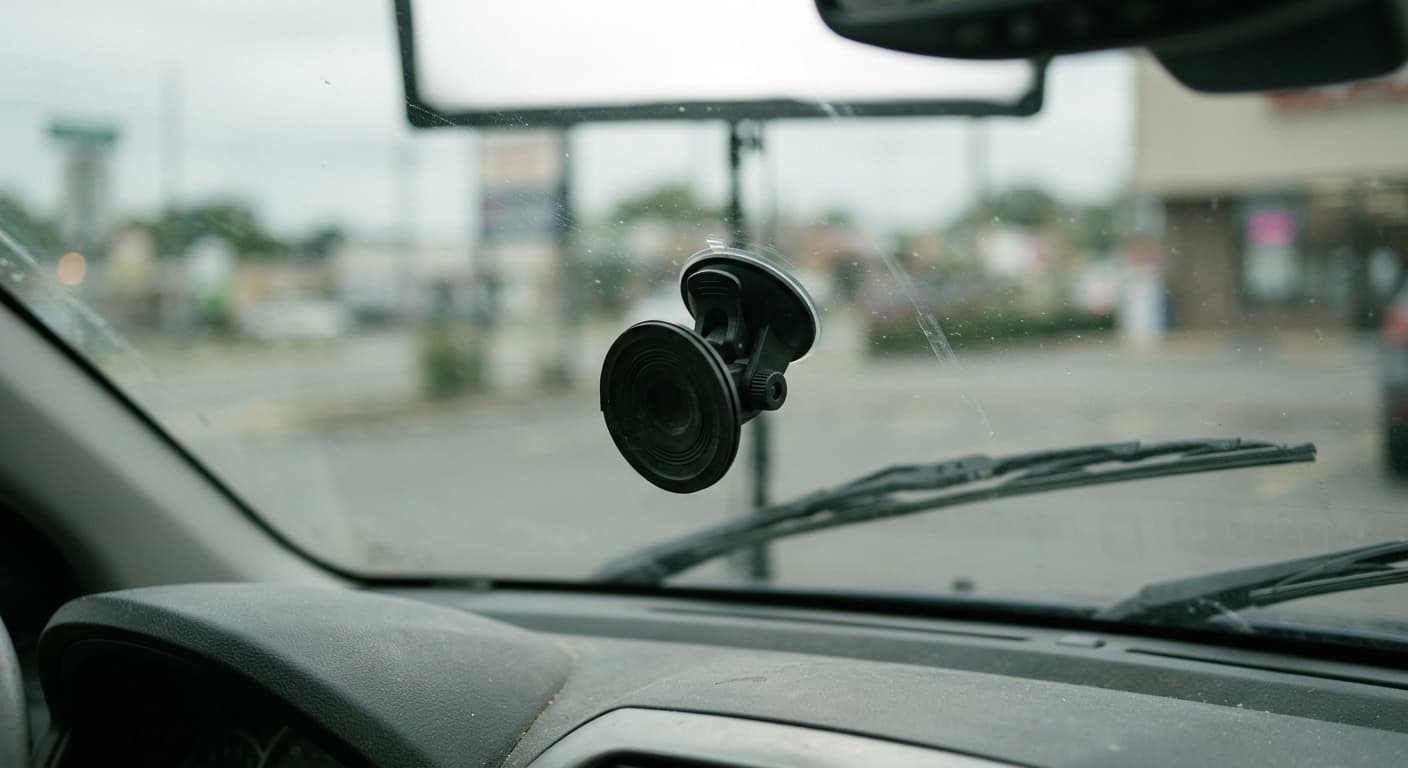
North Carolina has no statute that directly regulates dashcams, GPS units, or phone mounts placed on the windshield. G.S. 20-127 covers only windshield wipers and window tinting, not device placement. G.S. 20-136.1 explicitly exempts GPS and navigation displays from the state's screen-viewing prohibition. Mount devices behind the rearview mirror or in a lower corner to minimize any risk of blocking your view.
North Carolina does not have a general ban on nontransparent materials, such as signs or posters, on vehicle windshields under G.S. 20-127 -- that statute regulates only windshield wipers and window tinting. Mounting a GPS unit, dash camera, or phone holder on the windshield falls outside G.S. 20-127's scope entirely, though device placement should still avoid blocking the driver's line of sight as a practical matter.
Understanding these rules matters whether you use a GPS navigator, a dash camera, a phone mount for navigation, or a toll transponder. Here is a breakdown of every relevant North Carolina statute, what you can and cannot mount on your windshield, and the penalties for noncompliance.
The Primary Windshield Law: G.S. 20-127
North Carolina General Statute 20-127 is the central law governing vehicle windows and windshields. The statute covers windshield wipers (subsection (a)) and window tinting restrictions (subsections (b) through (g)); it does not contain a general ban on signs, posters, or other objects placed on the windshield.
What G.S. 20-127 Actually Regulates
G.S. 20-127 does not contain a general ban on signs, posters, or other nontransparent material on the windshield. Its only two subjects are windshield wipers (subsection (a)) and window tinting restrictions (subsections (b) through (g)), including where tint may be applied, how dark and reflective it may be, the medical exception process, and the roll-down-window requirement during a traffic stop.
What This Means for Mounted Devices
Because G.S. 20-127 does not regulate device placement at all, it provides no direct rule for a GPS unit, phone holder, or dashcam mounted on the windshield. North Carolina law does not contain an explicit ban on windshield-mounted electronic devices the way some states do.
As a practical matter, mount any device so it does not block your view of the road, traffic signals, or intersections ahead.
Vehicle Inspections: No Windshield Sticker
North Carolina no longer issues windshield inspection stickers. Under G.S. 20-183.4D(b), a mechanic who passes a vehicle must issue an electronic inspection authorization "at the place designated by the Division," and the former sticker subsections, G.S. 20-183.4D(c) and (d), were repealed by S.L. 2007-503, s. 6, effective October 1, 2008. Nothing is required to be affixed to the windshield after an inspection.
Windshield Tinting Rules Under G.S. 20-127
North Carolina has specific tinting restrictions that affect visibility through the windshield.
What Is Allowed
The windshield may be tinted only along the top. The tinting cannot extend more than five inches below the top of the windshield or below the AS1 line (a manufacturer marking on the glass), whichever measurement is longer.
An untinted clear film that does not obstruct vision but reduces or eliminates ultraviolet radiation may be applied to the entire windshield surface. This means UV-protective clear film is legal statewide.
What Is Prohibited
Any tinting that extends below the permitted area is a violation. The tinting restrictions apply to windshields without exception, even for vehicle types that receive exemptions for side and rear windows.
December 2025 Changes (S.L. 2025-47)
Effective December 1, 2025, North Carolina eliminated the separate window tint inspection during safety inspections. The $10 tint inspection fee was also removed. However, the tinting standards themselves remain unchanged. Law enforcement can still cite drivers for illegal tint during traffic stops.
A new requirement took effect at the same time: drivers with tinted windows must roll down the window on whichever side a law enforcement officer approaches during a traffic stop.
GPS and Navigation Device Rules: G.S. 20-136.1
North Carolina General Statute 20-136.1 addresses television, computer, and video screens in motor vehicles. This statute works alongside G.S. 20-127 and provides important exemptions for navigation and safety devices.
The General Prohibition
The law makes it illegal to drive while viewing any television, computer, or video player that is located in the vehicle at any point forward of the back of the driver's seat and visible to the driver while operating the vehicle.
Exempted Devices
G.S. 20-136.1 explicitly exempts the following from the video screen prohibition:
- Global positioning systems (GPS) and turn-by-turn navigation displays or similar navigation devices
- Factory-installed or aftermarket GPS units and wireless communications devices used to transmit or receive data as part of a digital dispatch system
- Equipment displaying audio system information, functions, or controls
- Displays showing weather, traffic, and safety information
- Vehicle safety or equipment information displays
- Image displays that enhance the driver's view in any direction, inside or outside the vehicle (such as backup cameras)
What This Means for Drivers
GPS units and turn-by-turn navigation displays are exempted by name under G.S. 20-136.1. The section never mentions dash cameras, but its prohibition reaches only a television, computer, or video player that the driver is viewing, which a recording-only dash cam is not. You can use a GPS unit mounted on your windshield or dashboard without violating the screen-viewing prohibition, as long as the device does not materially obstruct your view of the road. (That is a safe-driving practice and a matter of officer discretion; no North Carolina statute sets a device-obstruction standard.)
However, watching video content, streaming movies, or video chatting on any screen visible to the driver remains illegal while driving.
Dash Camera Mounting Guidelines
North Carolina does not have a statute specifically addressing dash cameras. Dash cams are legal to use, and the state's one-party consent law (G.S. 15A-287) means the driver can record audio in the vehicle without notifying passengers.
Best Practices for Dash Cam Placement
Because no North Carolina statute directly governs device placement, mount your dash camera in a location that minimizes windshield obstruction as a matter of safe practice:
- Behind the rearview mirror is the most conservative position, as it occupies space already blocked by the mirror
- Lower corners of the windshield are another option, though the passenger-side lower corner is preferable since the driver-side corner is closer to the driver's sightline
- Dashboard mounting avoids the windshield entirely and eliminates any obstruction concern
Avoid mounting a dash cam directly in front of the driver or in the center of the windshield where it could block visibility at intersections or when checking traffic signals.
Phone Mounts and Windshield Use
Mounting a smartphone on the windshield for navigation falls into a legal gray area in North Carolina.
What the Law Currently Says
G.S. 20-136.1 exempts GPS and navigation displays from the screen-viewing ban. A smartphone displaying a navigation app falls under this exemption. G.S. 20-127 itself governs wipers and window tinting (films and materials applied to the glass), not mounting hardware, so no North Carolina statute squarely addresses the mount itself.
Texting While Driving Ban (G.S. 20-137.4A)
North Carolina law prohibits all drivers from manually entering text or email messages or reading texts and emails on a mobile phone while operating a vehicle. Violations are infractions punishable by a $100 fine plus court costs. No driver's license points or insurance surcharge applies.
The texting ban does not apply to GPS use or to reading names or numbers stored in the device. It also does not apply when the vehicle is lawfully parked or stopped.
Under-18 Phone Restrictions (G.S. 20-137.3)
Drivers under 18 are prohibited from using a mobile phone or any associated technology while the vehicle is in motion. Violations are infractions carrying a $25 fine. The only exceptions under G.S. 20-137.3(d) are for emergency communications and for contacting the driver's parent, legal guardian, or spouse; there is no exception for navigation or GPS use.
School Bus Operator Restrictions (G.S. 20-137.4)
School bus operators cannot use a mobile phone while the bus is in motion. Violations are a Class 2 misdemeanor with a minimum $100 fine.
No Hands-Free Law (As of March 2026)
North Carolina does not have a hands-free driving law. Senate Bill 526, the "Hands Free NC Act," was introduced in March 2025 but was never enacted by the General Assembly. A spokesperson for House Speaker Destin Hall confirmed the bill "was never enacted by the General Assembly and is not in effect."
This means North Carolina drivers can still hold a phone while driving for purposes other than texting, though this does not override the obligation to maintain clear visibility through the windshield.
Toll Transponder Mounting
The NC Quick Pass toll transponder is designed for windshield mounting. According to the North Carolina Turnpike Authority, transponders should be placed on the windshield near the rearview mirror, approximately four inches from the roof line and at least four inches away from any electronic devices such as rain or speed sensors.
No North Carolina statute restricts objects mounted on the windshield, so nothing in G.S. 20-127 stands in the way of a windshield-mounted transponder; that section reaches only windshield wipers and window tinting. Sticker-style transponders should not be moved once installed, as repositioning can damage both the transponder and the windshield.
Penalties for Windshield Violations
Windshield Wipers and Tinting Are the Only G.S. 20-127 Offenses
G.S. 20-127 does not create a "nontransparent material on windshield" offense. Its only violations are for windshield wiper noncompliance and illegal window tinting, covered below.
Illegal Window Tinting
Violating the window tinting provisions of G.S. 20-127 is a Class 3 misdemeanor, a criminal offense, not a civil infraction. If you remove the illegal tint within 15 days and obtain proper certification, this serves as a valid defense against the charge.
Viewing Video While Driving
Violating G.S. 20-136.1 by watching video content on a forward-facing screen is an infraction, not a misdemeanor. G.S. 20-136.1 contains no penalty provision of its own, and it sits in Part 9 of Article 3 of Chapter 20. G.S. 20-176(a) provides that a violation of a provision of Part 9, 10, 10A, or 11 of that Article "is an infraction unless the violation is specifically declared by law to be a misdemeanor or felony," and G.S. 20-136.1 makes no such declaration. Under G.S. 20-176(b), an infraction under this Article carries a penalty of not more than $100 unless a specific penalty is provided by law.
Texting While Driving
Violations of G.S. 20-137.4A are infractions with a $100 fine plus court costs. No insurance points are assessed.
| Violation | Statute | Classification | Fine |
|---|---|---|---|
| Illegal window tinting | G.S. 20-127(b)-(d) | Class 3 misdemeanor | Set by the court; not a fixed civil fine |
| Viewing video while driving | G.S. 20-136.1 | Infraction (per G.S. 20-176(a)) | Up to $100 (G.S. 20-176(b)) |
| Texting while driving | G.S. 20-137.4A | Infraction | $100 + court costs |
| Under-18 phone use | G.S. 20-137.3 | Infraction | $25 |
| School bus operator phone use | G.S. 20-137.4 | Class 2 misdemeanor | Minimum $100 |
How to Stay Compliant in North Carolina
Following these guidelines will help you avoid citations related to windshield-mounted devices:
-
Position devices to minimize obstruction. Mount GPS units, dash cameras, and phone holders behind the rearview mirror or on the dashboard rather than in the center of the windshield.
-
Keep the driver's sightline clear. No device should block your view of the road, traffic signals, or intersections.
-
Use navigation apps, not video. Phones mounted on the windshield should display only GPS navigation, not video content or social media.
-
Follow the texting ban. Do not type messages or read texts while driving, regardless of where your phone is mounted.
-
Comply with tinting rules. Windshield tint is limited to the top five inches or above the AS1 line.
-
Expect no inspection sticker. North Carolina records a passed inspection electronically under G.S. 20-183.4D(b); there is nothing to display on the windshield.
-
Roll down tinted windows during traffic stops. As of December 2025, this is a legal requirement.
More North Carolina Laws
Frequently Asked Questions
Can I mount a GPS on my windshield in North Carolina?
Yes, but with conditions. North Carolina G.S. 20-136.1 explicitly exempts GPS and navigation devices from the prohibition on viewing screens while driving. G.S. 20-127 does not regulate device placement on the windshield at all; it covers only windshield wipers and window tinting. Mount your GPS behind the rearview mirror or in a lower corner to minimize obstruction and reduce the risk of a citation.
Are dash cameras legal on windshields in North Carolina?
Yes. North Carolina has no statute specifically banning dash cameras. G.S. 20-136.1 does not name dash cameras, but its prohibition reaches only a television, computer, or video player that the driver is viewing while driving, which a recording-only dash cam is not. Mount the camera behind the rearview mirror or in a lower corner of the windshield to avoid obstructing your view; no North Carolina statute directly regulates the mounting itself.
Does North Carolina have a hands-free driving law?
No. As of March 2026, North Carolina does not have a hands-free driving law. Senate Bill 526, the Hands Free NC Act, was introduced in March 2025 but was never enacted by the General Assembly. The state does ban texting while driving under G.S. 20-137.4A, and drivers under 18 cannot use mobile phones at all while driving under G.S. 20-137.3.
What are the penalties for windshield obstruction in North Carolina?
North Carolina does not have a windshield-obstruction infraction tied to G.S. 20-127; the statute covers only windshield wipers and window tinting. Illegal window tinting under G.S. 20-127 is a Class 3 misdemeanor, a criminal offense, not a civil infraction. Watching video on a forward-facing screen while driving violates G.S. 20-136.1, but that is an infraction rather than a misdemeanor: the section declares no penalty of its own, so the default rule in G.S. 20-176(a) applies.
Can I use my phone as a GPS while driving in North Carolina?
Yes, you can use your phone for GPS navigation while driving. G.S. 20-136.1 exempts navigation displays from the screen-viewing ban, and the texting law (G.S. 20-137.4A) does not apply to GPS use. However, you cannot type text messages, read emails, or watch video on the phone while the vehicle is in motion. Drivers under 18 face additional restrictions under G.S. 20-137.3, which bars nearly all mobile-phone and related-technology use while driving with no navigation exception; its only exceptions are emergency communications and contacting a parent, legal guardian, or spouse.
Updates
Corrected the penalty for viewing video while driving under G.S. 20-136.1 from a Class 2 misdemeanor to an infraction, removed a misattributed quotation from the toll transponder section, replaced the obsolete windshield inspection sticker guidance with North Carolina's current electronic inspection authorization, and clarified that G.S. 20-136.1 does not name dash cameras.
Rewrote the opening summary paragraph and a second echoing paragraph that both incorrectly said G.S. 20-127 permits windshield-mounted devices "provided" they do not obstruct the driver's view; G.S. 20-127 covers only windshield wipers and window tinting and does not regulate device placement, as the article's own body and FAQ already correctly explain.
Independently fact-checked against the cited primary sources; governing law re-checked for recent changes
Removed a fabricated 'sign, poster, or nontransparent material' windshield-obstruction ban that G.S. 20-127 does not contain (the statute covers only windshield wipers and window tinting); corrected illegal window tinting from a '$50 infraction' to its real classification, a Class 3 misdemeanor; and corrected the under-18 mobile-phone exceptions to emergency communications and parent/guardian/spouse contact only (no GPS/navigation exception exists under G.S. 20-137.3).
Fixed the article intro, which still claimed North Carolina 'prohibits placing nontransparent materials on vehicle windshields' -- directly contradicting the corrected body sections below it, which accurately state G.S. 20-127 contains no such general ban and regulates only windshield wipers and window tinting.
Governing law re-checked for recent changes
Reviewed and approved by an editor
The Law Behind This Article
This article rests on the statutory provisions below, held in our own legal record and retrieved from the official source. Tap a section to read the operative text.
North Carolina General Statutes, Chapter 20: Motor Vehicles.
§ 20-136.1Location of television, computer, or video players, monitors, and screensIn force
No person shall drive any motor vehicle upon a public street or highway or public vehicular area while viewing any television, computer, or video player which is located in the motor vehicle at any point forward of the back of the driver's seat, and which is visible to the driver while operating the motor vehicle. This section does not apply to the use of global positioning systems; turn-by-turn navigation displays or similar navigation devices; factory-installed or aftermarket global positioning systems or wireless communications devices used to transmit or receive data as part of a digital dispatch system; equipment that displays audio system information, functions, or controls, or weather, traffic, and safety information; vehicle safety or equipment information; or image displays that enhance the driver's view in any direction, inside or outside of the vehicle. The provisions of this section shall not apply to law enforcement or emergency personnel while in the performance of their official duties, or to the operator of a vehicle that is lawfully parked or stopped.
Official text (excerpt) · last checked 2026-09-08 · Read the full text in our law library · Verify at ncleg.gov
Cited in 1 court opinions in our collectionLatest citing opinion in our collection: 2022
Opinions citing this section in our collection:
- Graham v. Lambert (Court of Appeals of North Carolina 2022)“…Our General Assembly recognized as much by enacting N.C. Gen. Stat. § 20-136.1, which prohibits private citizens from…”
Identified automatically from the court opinions citing this section — not a ranking of which case controls.
§ 20-127Windows and windshield wipersIn forcecited in 3 of our articles
(a) Windshield Wipers. - A vehicle that is operated on a highway and has a windshield shall have a windshield wiper to clear rain or other substances from the windshield in front of the driver of the vehicle and the windshield wiper shall be in good working order. If a vehicle has more than one windshield wiper to clear substances from the windshield, all the windshield wipers shall be in good working order. (b) Window Tinting Restrictions. - A window of a vehicle that is operated on a highway or a public vehicular area shall comply with this subsection. The windshield of the vehicle may be tinted only along the top of the windshield and the tinting may not extend more than five inches below the top of the windshield or below the AS1 line of the windshield, whichever measurement is longer. Provided, however, an untinted clear film which does not obstruct vision but which reduces or eliminates ultraviolet radiation from entering a vehicle may be applied to the windshield. Any other window of the vehicle may be tinted in accordance with the following restrictions: (1) The total light transmission of the tinted window shall be at least thirty-five percent (35%).
Official text (excerpt) · last checked 2026-09-01 · Read the full text in our law library · Verify at ncleg.gov
Cited in 3 court opinions in our collectionLatest citing opinion in our collection: 2011
Opinions citing this section in our collection:
- State v. Schiffer (Court of Appeals of North Carolina 1999, 132 N.C. App. 22)“…than permitted under North Carolina law. See N.C. Gen. Stat. § 20-127 (b) (Cum. Supp. 1997) (containing this…”
- State v. Veazey (Court of Appeals of North Carolina 2008, 191 N.C. App. 181)“…nside rearview mirror and a driver’s-side outside mirror); N.C. Gen. Stat. § 20-127 (a)-(b) (2007) (vehicle must have a win…”
- State v. Williams (Court of Appeals of North Carolina 2011, 215 N.C. App. 1)“…ey rode had tinted windows in violation of state law, see N.C. Gen.Stat. § 20-127(b), (d) (2009), and cited Perez for the…”
Identified automatically from the court opinions citing this section — not a ranking of which case controls.
Also relied on in: North Carolina Dashcam Laws: Mounting, Recording, and Evidence Rules, North Carolina Window Tint Laws (2026): Legal VLT Limits
§ 20-137.4AUnlawful use of mobile telephone for text messaging or emailIn force
(a) Offense. - It shall be unlawful for any person to operate a vehicle on a public street or highway or public vehicular area while using a mobile telephone to: (1) Manually enter multiple letters or text in the device as a means of communicating with another person; or (2) Read any email or text message transmitted to the device or stored within the device, provided that this prohibition shall not apply to any name or number stored in the device nor to any caller identification information. (a1) Motor Carrier Offense. - It shall be unlawful for any person to operate a commercial motor vehicle subject to Part 390 or 392 of Title 49 of the Code of Federal Regulations on a public street or highway or public vehicular area while using a mobile telephone or other electronic device in violation of those Parts. Nothing in this subsection shall be construed to prohibit the use of hands-free technology. (b) Exceptions. - The provisions of this section shall not apply to: (1) The operator of a vehicle that is lawfully parked or stopped.
Official text (excerpt) · last checked 2026-07-29 · Read the full text in our law library · Verify at ncleg.gov
§ 20-137.3Unlawful use of a mobile phone by persons under 18 years of ageIn force
(a) Definitions. - The following definitions apply in this section: (1) Additional technology. - Any technology that provides access to digital media including, but not limited to, a camera, music, the internet, or games. The term does not include email or text messaging. (2) Mobile telephone. - A device used by subscribers and other users of wireless telephone service to access the service. The term includes: (i) a device with which a user engages in a call using at least one hand, and (ii) a device that has an internal feature or function, or that is equipped with an attachment or addition, whether or not permanently part of the mobile telephone, by which a user engages in a call without the use of either hand, whether or not the use of either hand is necessary to activate, deactivate, or initiate a function of such telephone. (3) Wireless telephone service. - A service that is a two-way real-time voice telecommunications service that is interconnected to a public switched telephone network and is provided by a commercial mobile radio service, as such term is defined by 47 C.F.R. § 20.3. (b) Offense.
Official text (excerpt) · last checked 2026-07-29 · Read the full text in our law library · Verify at ncleg.gov
§ 20-137.4Unlawful use of a mobile phoneIn force
(a) Definitions. - For purposes of this section, the following terms shall mean: (1) Additional technology. - As defined in G.S. 20-137.3(a)(1). (2) Emergency situation. - Circumstances such as medical concerns, unsafe road conditions, matters of public safety, or mechanical problems that create a risk of harm for the operator or passengers of a school bus. (3) Mobile telephone. - As defined in G.S. 20-137.3(a)(2). (4) School bus. - As defined in G.S. 20-4.01(27)n. The term also includes any school activity bus as defined in G.S. 20-4.01(27)m. and any vehicle transporting public, private, or parochial school students for compensation. (b) Offense. - Except as otherwise provided in this section, no person shall operate a school bus on a public street or highway or public vehicular area while using a mobile telephone or any additional technology associated with a mobile telephone while the school bus is in motion. This prohibition shall not apply to the use of a mobile telephone or additional technology associated with a mobile telephone in a stationary school bus. (c) Seizure.
Official text (excerpt) · last checked 2026-07-29 · Read the full text in our law library · Verify at ncleg.gov
Cited in 2 court opinions in our collectionLatest citing opinion in our collection: 2020
Opinions citing this section in our collection:
- State v. Dalton (Court of Appeals of North Carolina 2020)“…any caller identification information. N.C. Gen. Stat. § 20-137.4A(a)(1)-(2) (2019). However, the General…”
- King v. Town of Chapel Hill (Supreme Court of North Carolina 2014, 367 N.C. 400)“…7.4(b) (2013). The most recent amendments, codified at N.C.G.S. § 20-137.4A, broadly prohibit text messaging whil…”
Identified automatically from the court opinions citing this section — not a ranking of which case controls.
§ 20-176Penalty for misdemeanor or infractionIn force
(a) Violation of a provision of Part 9, 10, 10A, or 11 of this Article is an infraction unless the violation is specifically declared by law to be a misdemeanor or felony. Except as otherwise provided in subsection (a1) of this section, violation of the remaining Parts of this Article is a misdemeanor unless the violation is specifically declared by law to be an infraction or a felony. (a1) A person who does any of the following is responsible for an infraction: (1) Fails to carry the registration card in the vehicle, in violation of G.S. 20-57(c). (2) Repealed by Session Laws 2016-90, s. 12(b), effective December 1, 2016, and applicable to registration cards issued on or after that date. (3) Fails to notify the Division of an address change for a vehicle registration card within 60 days after the change occurs, in violation of G.S. 20-67. (4) Operates a motor vehicle in violation of G.S. 20-146.2. (b) Unless a specific penalty is otherwise provided by law, a person found responsible for an infraction contained in this Article may be ordered to pay a penalty of not more than one hundred dollars ($100.00).
Official text (excerpt) · last checked 2026-07-29 · Read the full text in our law library · Verify at ncleg.gov
Cited in 26 court opinions in our collectionLatest citing opinion in our collection: 2024
Opinions citing this section in our collection:
- State v. Spencer (Supreme Court of North Carolina 1970, 276 N.C. 535)“…unishment for a violation of G.S. 20-174.1 is controlled by G.S. 20-176 (b) as interpreted and applied in…”
- State v. Rumfelt (Supreme Court of North Carolina 1955, 241 N.C. 375)“…y in the Superior Court charges a violation of G.S. 20-162. G.S. 20-176(a) provides that “it shall be unlawful…”
- State v. Zimmerman (Court of Appeals of North Carolina 1970, 7 N.C. App. 522)“…ve-quoted language upon the penalty otherwise authorized by G.S. 20-176 (b) and G.S. 20-180. This latter sectio…”
Identified automatically from the court opinions citing this section — not a ranking of which case controls.
Search our full record of US law — 2.1 million sections, every state + federal →
Sources and References
- G.S. 20-127: Windows and windshield wipers(ncleg.gov).gov
- G.S. 20-136.1: Location of television, computer, or video players(ncleg.net).gov
- G.S. 20-137.4A: Unlawful use of mobile telephone for text messaging(ncleg.net).gov
- G.S. 20-137.3: Unlawful use of mobile phone by persons under 18(ncleg.net).gov
- G.S. 20-137.4: Unlawful use of mobile phone (school buses)(ncleg.gov).gov
- G.S. 20-176: Penalty for misdemeanor or infraction(ncleg.net).gov
- 19A NCAC 03D .0524: Inspection sticker placement(law.cornell.edu)
- NC Quick Pass transponder installation instructions(ncquickpass.com).gov
- NCDOT: Window Tinting(ncdot.gov).gov
- S.L. 2025-47: Window tint inspection changes(ncleg.gov).gov
- Senate Bill 526: Hands Free NC Act (not enacted)(ncleg.gov).gov
- PolitiFact: NC did not ban cellphone use in cars(politifact.com)
- G.S. 20-183.4D: Procedure when a vehicle is inspected (electronic inspection authorization; sticker subsections (c)-(d) repealed effective October 1, 2008)(ncleg.gov)