
Maine
Maine Windshield Mounting Laws (2026 Guide)
Independently fact-checked against primary sources (last audited August 17, 2026). · Reviewed by the RecordingLaw editorial team. · Law checked current as of August 17, 2026. · 10 primary sources cited on this page. How we verify our legal content
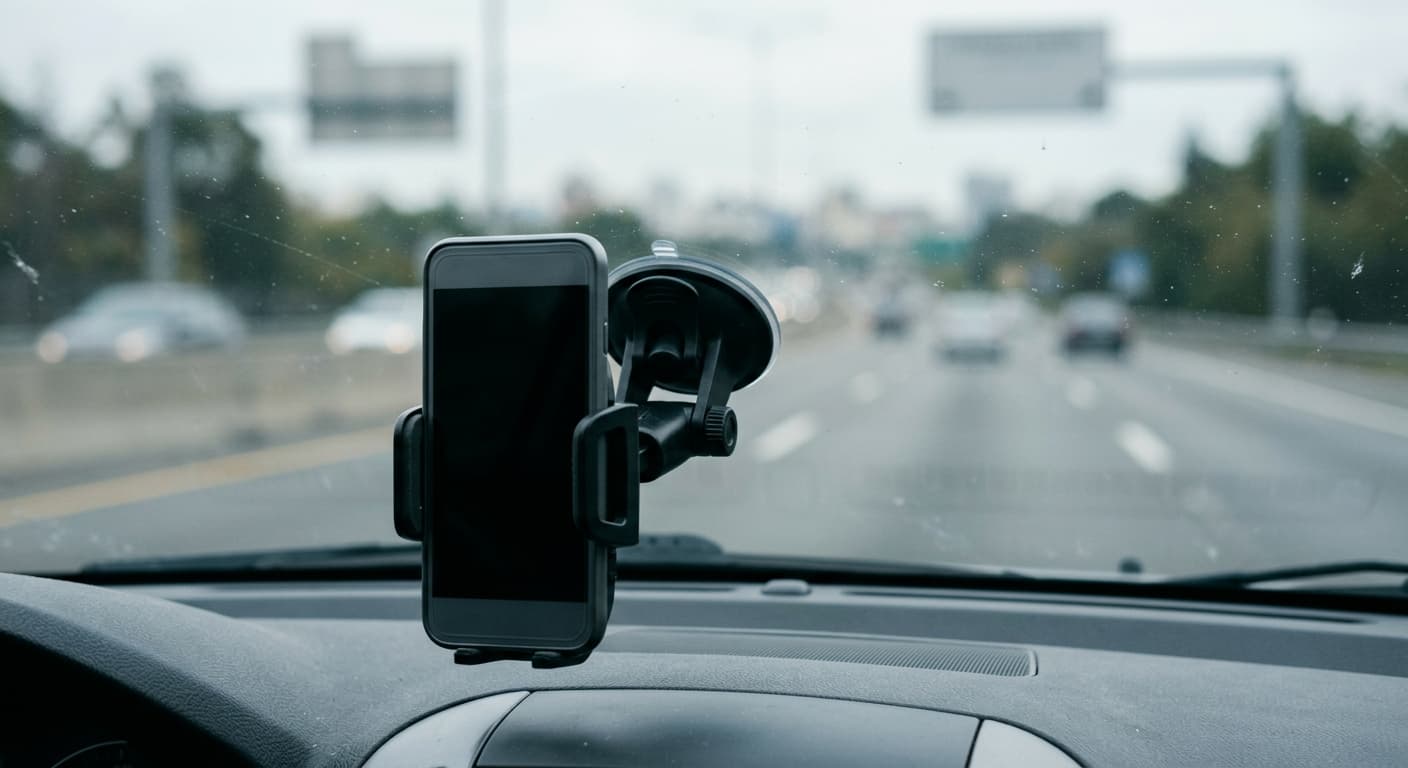
Maine permits dashcams, GPS units, and phone mounts on the windshield under 29-A MRSA 2082, which applies a functional obstruction standard rather than a blanket ban. A device is legal as long as it does not block the driver's clear view; behind the rearview mirror is the most secure placement.
Maine takes a practical approach to windshield mounting restrictions. Rather than banning all devices from the windshield, the state applies a functional obstruction test. If a mounted device does not block the driver's clear view of the road, it is permitted. This framework is found primarily in 29-A MRSA Section 2082, which governs window obstructions, and 29-A MRSA Section 2121, which establishes the hands-free device rules for drivers.
Understanding how these two statutes work together is essential for anyone who uses a GPS, phone mount, or dashcam in their vehicle in Maine.
Maine Windshield Obstruction Law: 29-A MRSA 2082
Title 29-A, Section 2082 is the primary statute governing what can and cannot be placed on a vehicle's windshield in Maine. The law addresses several categories of potential obstructions.
Signs, Posters, and Opaque Materials
A person may not operate a vehicle with a sign, poster, opaque or semitransparent material or substance on the front windshield, side wing, or side or rear window that obstructs the operator's clear view of the way or an intersecting way.
The key phrase here is "that obstructs the operator's clear view." Maine does not automatically prohibit all materials on the windshield. Instead, the law targets materials that actually block the driver's line of sight.
Hanging and Mounted Objects
A person may not operate a motor vehicle with an object placed or hung in or on the vehicle, other than the required or provided equipment of the vehicle, in a manner that obstructs or interferes with the view of the operator through the windshield or prevents the operator from having a clear and full view of the road and conditions of traffic.
This subsection specifically exempts "required or provided equipment of the vehicle." Factory-installed rearview mirrors, toll transponders, and similar items fall under this exception.
Sticker Placement Rules
Maine limits the number and placement of windshield stickers:
- A motor vehicle may display no more than one sticker on its windshield for parking or entry identification
- Non-inspection stickers must be placed within 4 inches of the bottom edge of the windshield
- If an inspection sticker occupies the lower left corner, other stickers must be positioned to its right
- Emergency Management Agency vehicles and those performing emergency services may display identifying windshield stickers bearing agency names or emblems
Inspection stickers are placed in the lower left-hand corner of the windshield or in the center behind the rearview mirror, as specified in 29-A MRSA 1758.
Snow and Ice on the Vehicle
Section 2082 does not contain a snow-or-ice-specific windshield clause; the statute has only seven subsections, covering signs and materials, hanging objects, sticker placement, and passenger or load obstructions. A windshield caked with snow or ice that blocks the driver's view falls under the general obstruction language in subsection 1 rather than a separate snow-and-ice provision.
A different statute, 29-A MRSA 2093, separately requires drivers of vehicles under 10,000 pounds to take reasonable measures to prevent snow or ice from falling off the vehicle onto the road or other vehicles. That provision addresses snow or ice leaving your vehicle and endangering others, not snow blocking your own view, and it only carries a penalty when the violation causes damage or injury: up to $50 for a first violation and $150 to $250 for a subsequent violation.
Passenger and Load Obstructions
Drivers may not operate a vehicle when cargo or more than three front-seat passengers obstruct their visibility or impair vehicle control.
GPS, Phone Mounts, and Dashcam Rules
Maine does not have a specific statute that addresses GPS devices, phone mounts, or dashcams by name. These devices are governed by the general obstruction standard in 29-A MRSA 2082.
What This Means in Practice
A GPS unit, smartphone mount, or dashcam mounted on the windshield is legal in Maine as long as it does not obstruct the driver's clear view of the road and traffic conditions. Maine follows the legal principle that what is not expressly forbidden is permitted.
Here are the practical guidelines:
- GPS devices: Legal on the windshield if they do not block the driver's forward view. Dashboard mounting is the safest option.
- Phone mounts: Legal if mounted in a position that preserves the driver's full field of vision. Suction cup mounts on the lower portion of the windshield or dashboard mounts are common choices.
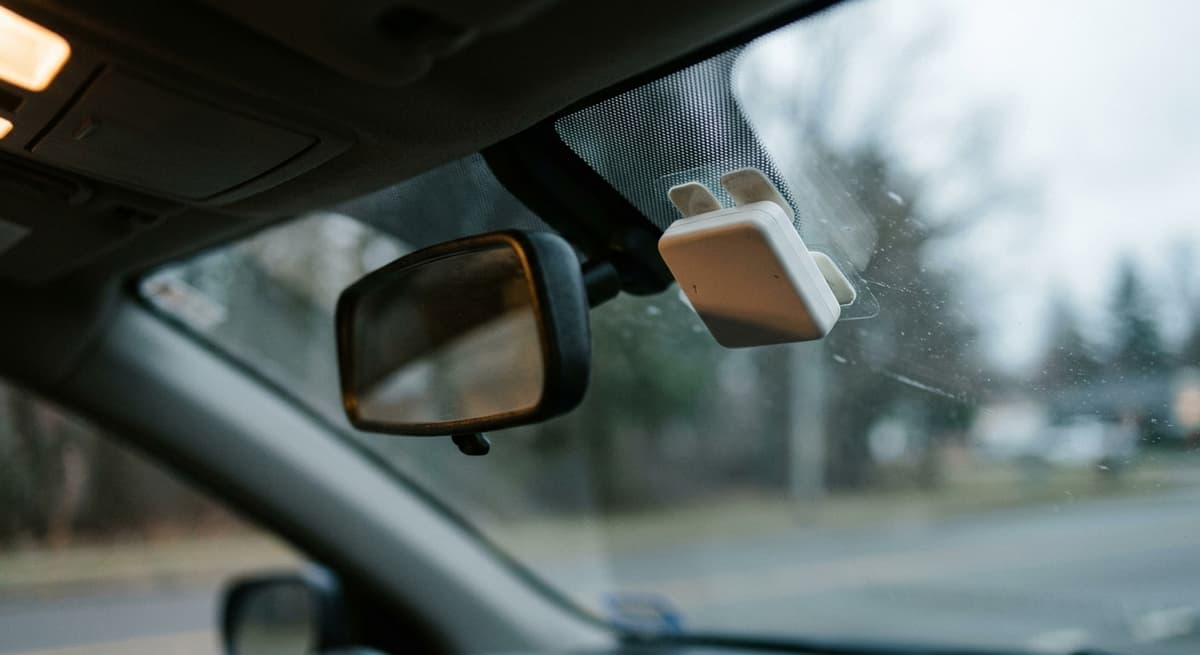
- Dashcams: Legal as long as placement does not obstruct the driver's clear view. Behind the rearview mirror is the most common and legally secure position.
Unlike states such as California or Minnesota, Maine does not specify a required mounting zone (such as a 5-inch or 7-inch square). The only test is whether the device causes an actual obstruction.
Best Practices for Mounting Devices
| Device | Recommended Placement | Legal Standard |
|---|---|---|
| GPS unit | Dashboard or lower windshield | Must not obstruct clear view |
| Phone mount | Dashboard, vent, or lower windshield | Must not obstruct clear view |
| Dashcam | Behind rearview mirror or dashboard | Must not obstruct clear view |
| Toll transponder | Near rearview mirror | Treated as vehicle equipment |
| Radar detector | Dashboard | Must not obstruct clear view |
Maine Hands-Free Driving Law: 29-A MRSA 2121
Maine's hands-free driving law took effect on September 19, 2019, after Governor Janet Mills signed LD 165 into law on June 29, 2019. The law is codified in 29-A MRSA Section 2121 and fundamentally changed how drivers may interact with mobile devices.
What Is Prohibited
The statute prohibits operating a motor vehicle on public ways while "using, manipulating, talking into or otherwise interacting with a handheld electronic device or mobile telephone." This prohibition applies even when the vehicle is temporarily stopped at a traffic light, stop sign, or in traffic.
Drivers may not:
- Hold a phone to their ear while driving
- Scroll through apps or messages
- Type or read text messages (also prohibited under 29-A MRSA 2119)
- Watch videos or browse the internet
- Manually enter a GPS address while the vehicle is in motion
The Single-Touch Rule for Mounted Devices
Maine's hands-free law includes a specific provision for mounted devices. A driver who is at least 18 years old and does not hold a learner's permit or intermediate license may use a hand to activate or deactivate a feature or function of a mobile telephone or handheld electronic device if:
- The device is in hands-free mode
- The device is mounted or affixed to the vehicle in a location that does not interfere with the operator's view of the road
- The feature or function activated requires only a single swipe, tap, or push of the operator's finger
"Hands-free mode" is defined as the manner of use of a mobile telephone or handheld electronic device without use of either hand by employing an internal feature of, or an attachment to, the telephone or device.
This means you may tap once to accept a call through a Bluetooth connection, switch a song on a streaming app, or dismiss a notification, but you may not scroll, type, or perform multi-step interactions.
How This Connects to Windshield Mounting
The hands-free law and the windshield obstruction law work together. To legally use a phone while driving in Maine, the device must be:
- In hands-free mode
- Mounted in a way that does not obstruct the driver's view (per 29-A MRSA 2082)
- Operated with no more than a single touch
A phone mounted on the windshield in a position that blocks the driver's view would violate both Section 2082 (obstruction) and potentially Section 2121 (improper mounting location for hands-free use).
Exemptions
Maine's windshield and device laws include several exemptions:
Windshield Obstruction Exemptions (29-A MRSA 2082)
- Required or provided equipment of the vehicle (rearview mirrors, factory components)
- Inspection stickers placed per 29-A MRSA 1758
- One parking or entry identification sticker (within 4 inches of the bottom edge)
- Emergency Management Agency vehicle identification
Hands-Free Law Exemptions (29-A MRSA 2121)
- Emergency calls: A driver who is not on a learner's permit may contact law enforcement or emergency services during situations with an immediate threat to health or well-being
- Commercial drivers: Those employed as commercial or school bus drivers may use devices within the scope of their employment as permitted under Federal Motor Carrier Safety Administration regulations
- Vehicle operating equipment: Handheld controllers used to operate plows or other equipment attached to the vehicle are exempt as required vehicle equipment
- Parked vehicles: Drivers who have safely and completely pulled off the roadway may use handheld devices
Who Cannot Use Hands-Free Mode While Driving
- Learner's permit holders: 29-A MRSA 1304 bans all use of handheld electronic devices and mobile phones, including hands-free mode
- Drivers under 18 with intermediate licenses: 29-A MRSA 1311 prohibits all mobile device use while operating a vehicle
Penalties
Maine imposes different penalties depending on the type of violation.
Handheld Device Violations (29-A MRSA 2121)
| Offense | Fine |
|---|---|
| First offense | $50 |
| Second or subsequent offense | $250 |
Fines are deposited into the Supplemental Transportation Fund. These are traffic infractions, not criminal offenses.
Text Messaging Violations (29-A MRSA 2119)
Texting while driving carries significantly harsher penalties:
| Offense | Fine | License Suspension |
|---|---|---|
| First offense | $250 minimum | None |
| Second offense (within 3 years) | $500 minimum | 30 days |
| Third offense (within 3 years) | $500 minimum | 60 days |
| Fourth or subsequent (within 3 years) | $500 minimum | 90 days |
The Secretary of State may suspend licenses for repeat texting violations without a hearing.
Windshield Obstruction Violations (29-A MRSA 2082)
General windshield obstruction violations under Section 2082 are traffic infractions. Separately, a driver who fails to clear snow or ice that then falls off the vehicle and causes damage or injury can be fined under 29-A MRSA 2093: up to $50 for a first violation and $150 to $250 for a subsequent violation.
Distracted Driving (29-A MRSA 2118)
If a windshield-mounted device or handheld device use contributes to a traffic infraction or reportable accident, the driver may also face a charge under 29-A MRSA 2118 for failure to maintain control of a motor vehicle while distracted. This charge is in addition to any device or obstruction citation.
Window Tinting Rules
While not directly about mounted devices, Maine's window tinting rules under 29-A MRSA 1916 affect overall windshield visibility and work alongside the obstruction standard.
- Front windshield: No aftermarket tinting is permitted below the AS-1 line (or the top 5 inches if no AS-1 line is marked)
- Side windows (front doors): Must allow at least 35% light transmittance
- Side windows (behind driver) and rear window: May be tinted darker than 35% only if the vehicle is equipped with 2 outside rear view mirrors, one on each side, adjusted so the operator has a clear view of the highway behind the vehicle
- Reflective materials: Prohibited on all windows
- Medical exemptions: Available through the State Police Chief for qualifying conditions
- Violation penalty: Minimum $100 forfeiture
Vehicles with aftermarket tinting must carry a light transmittance certificate and present it during inspection.
Recent Legislative Activity
Maine's core windshield obstruction statute (29-A MRSA 2082) was last amended in 2013. The hands-free driving law (29-A MRSA 2121) took effect in September 2019 and has been amended once since enactment, by PL 2019, c. 579, section 2.
During the 131st Legislature (2023-2024), LD 145 proposed increasing handheld device fines from $50/$250 to $500/$1,000 and adding license suspension for a third offense. The Transportation Committee voted Ought Not to Pass at its March 22, 2023 work session and reported the bill out with that recommendation on April 13, 2023. The bill received its final Ought Not to Pass disposition under Joint Rule 310 on April 18, 2023.
No changes to the windshield obstruction or hands-free device statutes were enacted during the 132nd Legislature (2025-2026) as of March 2026.
More Maine Laws
Frequently Asked Questions
Can I mount a GPS or phone on my windshield in Maine?
Yes. Maine does not impose a blanket ban on windshield-mounted devices. Under 29-A MRSA 2082, any device mounted on the windshield is legal as long as it does not obstruct the driver's clear view of the road and traffic conditions. The safest placements are on the dashboard or the lower portion of the windshield.
What is the single-touch rule for mounted devices in Maine?
Under 29-A MRSA 2121, drivers 18 and older may use one finger to perform a single swipe, tap, or push on a mounted device that is in hands-free mode. The device must be affixed to the vehicle in a position that does not block the driver's view. Multi-step interactions such as typing or scrolling are not permitted while driving.
What is the fine for using a handheld phone while driving in Maine?
A first offense under Maine's hands-free law (29-A MRSA 2121) carries a $50 fine. A second or subsequent offense carries a fine of $250. Texting while driving under 29-A MRSA 2119 has steeper penalties starting at $250 for a first offense, with license suspensions for repeat violations within three years.
Are dashcams legal on windshields in Maine?
Yes. Maine does not have a specific dashcam statute. A dashcam is treated like any other mounted device under 29-A MRSA 2082 and is permitted as long as it does not obstruct the driver's clear view. The most common and legally secure placement is behind the rearview mirror.
Can teen drivers use hands-free devices in Maine?
No. Learner's permit holders are banned from all mobile device use under 29-A MRSA 1304, including hands-free mode. Drivers under 18 with intermediate licenses face the same restriction under 29-A MRSA 1311. Only drivers 18 and older without permit or intermediate license restrictions may use devices in hands-free mode.
Updates
Corrected the handheld-device fine description (no three-year lookback applies), noted that the hands-free law has been amended once since 2019, updated the LD 145 committee history to the official dates, added the two-mirror condition to the rear-window tint rules, removed a certificate exemption that belongs to the tint statute rather than the obstruction statute, and repointed two statute links to the correct sections.
Removed an invented windshield-obstruction fine for snow and ice (there is no such clause in 29-A MRSA 2082) and cited the real, differently-scoped snow/ice statute instead, and corrected a misattributed bill number for the 2023 fine-increase proposal (LD 145, not LD 224).
Independently fact-checked against the cited primary sources; governing law re-checked for recent changes
Governing law re-checked for recent changes
Reviewed and approved by an editor
The Law Behind This Article
This article rests on the statutory provisions below, held in our own legal record and retrieved from the official source. Tap a section to read the operative text.
Maine Revised Statutes, Title 29-A: MOTOR VEHICLES AND TRAFFIC, Chapter 19: OPERATION
§ 2082WindowsIn forcecited in 2 of our articles
1. Obstructions. A person may not operate a vehicle with a sign, poster, opaque or semitransparent material or substance on the front windshield, side wing or side or rear window that obstructs the operator's clear view of the way or an intersecting way. 2. Objects. A person may not operate a motor vehicle with an object placed or hung in or on the vehicle, other than the required or provided equipment of the vehicle, in a manner that obstructs or interferes with the view of the operator through the windshield or prevents the operator from having a clear and full view of the road and conditions of traffic. 3. Parking or identification stickers. A motor vehicle may display no more than one sticker on its windshield for parking or entry identification. 4. Location of inspection stickers. No portion of a sticker other than an inspection sticker may be more than 4 inches from the bottom edge of the windshield. If the inspection sticker is located in the lower left hand corner of the windshield, the other sticker must be located to the right of it. 5. Exception.
Official text (excerpt) · last checked 2026-09-07 · Read the full text in our law library · Verify at legislature.maine.gov
Also relied on in: Maine Dashcam Laws: Mounting Rules, Audio Recording, and Evidence (2026)
§ 2121Use of mobile telephones and handheld electronic devices while operating motor vehicles prohibitedIn force
1. Prohibition. A person may not operate a motor vehicle on a public way while using, manipulating, talking into or otherwise interacting with a handheld electronic device or mobile telephone, including but not limited to the use of a handheld electronic device or mobile telephone while the vehicle is temporarily stationary because of traffic, a traffic light or a stop sign, unless: A. The person, other than a person who is operating with a learner's permit issued pursuant to section 1304, is using a mobile telephone or handheld electronic device in order to communicate with law enforcement or emergency services personnel under emergency circumstances. For the purposes of this paragraph, "emergency circumstances" means circumstances in which there is an immediate threat to the health or well-being of any person; [PL 2019, c. 486, §10 (NEW).] B. The person is using a mobile telephone or handheld electronic device in hands-free mode as permitted under subsection 2; or [PL 2019, c. 486, §10 (NEW).] C.
Official text (excerpt) · last checked 2026-07-30 · Read the full text in our law library · Verify at legislature.maine.gov
§ 2118Failure to maintain control of a motor vehicleIn force
1. Definitions. As used in this section, unless the context otherwise indicates, the following terms have the following meanings. A. "Operation of a motor vehicle while distracted" means the operation of a motor vehicle by a person who, while operating the vehicle, is engaged in an activity: (1) That is not necessary to the operation of the vehicle; and (2) That actually impairs, or would reasonably be expected to impair, the ability of the person to safely operate the vehicle. [RR 2009, c. 1, §18 (RAL).] 2. Failure to maintain control of a motor vehicle. A person commits the traffic infraction of failure to maintain control of a motor vehicle if the person: A. Commits either a traffic infraction under this Title or commits the crime of driving to endanger under section 2413 and, at the time the traffic infraction or crime occurred, the person was engaged in the operation of a motor vehicle while distracted; or [RR 2009, c. 1, §1 (RAL).] B.
Official text (excerpt) · last checked 2026-07-30 · Read the full text in our law library · Verify at legislature.maine.gov
Cited in 5 court opinions in our collectionLatest citing opinion in our collection: 2020
Opinions citing this section in our collection:
- State v. Palmer (Supreme Judicial Court of Maine 2017, 169 A.3d 425)“…action of “failure to maintain control of a motor vehicle,” 29-A M.R.S. § 2118(2)(B) (2016), and committed the civil v…”
- State of Maine v. Thomas E. Palmer (Supreme Judicial Court of Maine 2017, 169 A.3d 425)“…of “failure to maintain control of a motor vehicle,” 29-A M.R.S. § 2118(2)(B) (2016), and committed the civi…”
- State v. Rupert (Supreme Judicial Court of Maine 2017, 169 A.3d 423)“…and failing to maintain control of a motor vehicle, see 29-A M.R.S. § 2118 (2016). [¶ 3] Rupert contested the al…”
Identified automatically from the court opinions citing this section — not a ranking of which case controls.
§ 2119Text messaging while operating motor vehicle; prohibitionIn force
1. Definitions. 2. Prohibition. A person may not operate a motor vehicle on a public way while engaging in text messaging, including but not limited to when the motor vehicle is temporarily stationary because of traffic, a traffic light or a stop sign. A person may engage in text messaging while in the operator's seat of a motor vehicle if the person has pulled the motor vehicle over to the side of, or off, a public way and has halted in a location where the motor vehicle can safely remain stationary. Nothing in this section prohibits a person employed as a commercial driver or a school bus driver from using a handheld electronic device or mobile telephone within the scope of the person's employment as permitted under Federal Motor Carrier Safety Administration regulations. 3. Penalties. The following penalties apply to a violation of this section. A. A person who violates this section commits a traffic infraction for which a fine of not less than $250 may be adjudged. [PL 2013, c. 188, §1 (NEW).] B.
Official text (excerpt) · last checked 2026-07-30 · Read the full text in our law library · Verify at legislature.maine.gov
Maine Revised Statutes, Title 29-A: MOTOR VEHICLES AND TRAFFIC, Chapter 15: INSPECTION AND REPAIR
§ 1758Issuance of sticker; placement on vehicleIn force
1. Windshield placement. If a motor vehicle meets the inspection standard, an official inspection sticker must be placed in the lower left-hand corner of the windshield or in the center of the windshield in back of the rearview mirror. 2. Without windshield. If the vehicle is not normally equipped with a windshield, the certificate of inspection must be kept with the registration certificate of the vehicle. This subsection does not apply to motorcycles. 3. Motorcycles; proof of inspection. If a motorcycle meets the inspection standard, upon payment of applicable inspection fees pursuant to section 1751, subsection 3-A a valid certificate of inspection and an official inspection sticker for the motorcycle must be issued. The certificate of inspection must be kept with the registration certificate of the motorcycle and the official inspection sticker must be affixed to the rear of the motorcycle on the registration plate. A. [PL 2011, c. 167, §2 (RP); PL 2011, c. 167, §3, 7 (AFF).] B. [PL 2011, c. 167, §2 (RP); PL 2011, c. 167, §3, 7 (AFF).] The official inspection sticker must be located so that it is completely and clearly visible from the rear of the motorcycle.
Official text (excerpt) · last checked 2026-07-30 · Read the full text in our law library · Verify at legislature.maine.gov
Maine Revised Statutes, Title 29-A: MOTOR VEHICLES AND TRAFFIC, Chapter 17: EQUIPMENT
§ 1916Reflective and tinted glassIn forcecited in 3 of our articles
1. Windows to be unobscured. A person may not operate a motor vehicle required to be registered in this State and an inspection mechanic may not issue a certificate of inspection for a motor vehicle, if: A. A window is composed of, covered by or treated with any material that is reflective; [PL 1993, c. 683, Pt. A, §2 (NEW); PL 1993, c. 683, Pt. B, §5 (AFF).] B. The front windshield is composed of, covered by or treated with a material that reduces the light transmittance through the window more than the original installation window or an original replacement window; [PL 1993, c. 683, Pt. A, §2 (NEW); PL 1993, c. 683, Pt. B, §5 (AFF).] C. A side window or rear window is composed of, covered by or treated with a material that allows a light transmittance of less than 35% net of glass and material; or [PL 2007, c. 186, §1 (AMD).] D. A front windshield, front door window or window at either end of a rear passenger seat does not contain 2-way glass that provides the occupants with a clear view of the road and a person outside the vehicle with a clear view of the occupants and the interior of the vehicle. [PL 1993, c. 683, Pt. A, §2 (NEW); PL 1993, c. 683, Pt. B, §5 (AFF).] 2.
Official text (excerpt) · last checked 2026-09-01 · Read the full text in our law library · Verify at legislature.maine.gov
Also relied on in: Maine Window Tint Laws (2026): Legal VLT Limits
§ 1915WindowsIn force
1. Safety glass. A motor vehicle must be equipped with safety glass wherever glass is used in partitions, doors, windows or windshields. "Safety glass" means a product composed of glass or of other materials, manufactured, fabricated or treated to prevent shattering and flying of broken glass. The Commissioner of Public Safety may maintain a list of the approved types of glass. Replacements of glass partitions, doors, windows or windshields must be made with safety glass. 2. Window repairs. When a window, other than the windshield, is broken, the operator may repair the window by temporarily replacing it with an opaque substance until there is a reasonable opportunity for replacement.
Official text (excerpt) · last checked 2026-07-30 · Read the full text in our law library · Verify at legislature.maine.gov
Search our full record of US law — 2.1 million sections, every state + federal →
Sources and References
- Maine 29-A MRSA Section 2082 - Windows(legislature.maine.gov).gov
- Maine 29-A MRSA Section 2121 - Use of Mobile Telephones and Handheld Electronic Devices(legislature.maine.gov).gov
- Maine 29-A MRSA Section 2119 - Text Messaging While Operating Motor Vehicle(legislature.maine.gov).gov
- Maine 29-A MRSA Section 2118 - Failure to Maintain Control of a Motor Vehicle(legislature.maine.gov).gov
- Maine 29-A MRSA Section 1916 - Reflective and Tinted Glass(legislature.maine.gov).gov
- Maine 29-A MRSA Section 1915 - Windows (Safety Glass)(legislature.maine.gov).gov
- Maine 29-A MRSA Section 1758 - Inspection Sticker Placement(legislature.maine.gov).gov
- Maine Distracted Driving Laws - Legislature Law Library(legislature.maine.gov).gov
- LD 165 - An Act To Prohibit the Use of Handheld Phones and Devices While Driving(legislature.maine.gov).gov
- Maine Bureau of Highway Safety - Distracted Driving(maine.gov).gov
- Maine 29-A MRSA Section 1304 - Learner Permit Restrictions(legislature.maine.gov)
- Maine 29-A MRSA Section 1311 - Intermediate License Restrictions(legislature.maine.gov)
- LD 145 (131st Legislature) - Bill Status and Committee Disposition(legislature.maine.gov)