
Minnesota
Minnesota Car Seat Laws: Requirements and Guidelines
Independently fact-checked against primary sources (last audited August 20, 2026). · Reviewed by the RecordingLaw editorial team. · Law checked current as of August 20, 2026. · 1 primary source cited on this page. How we verify our legal content
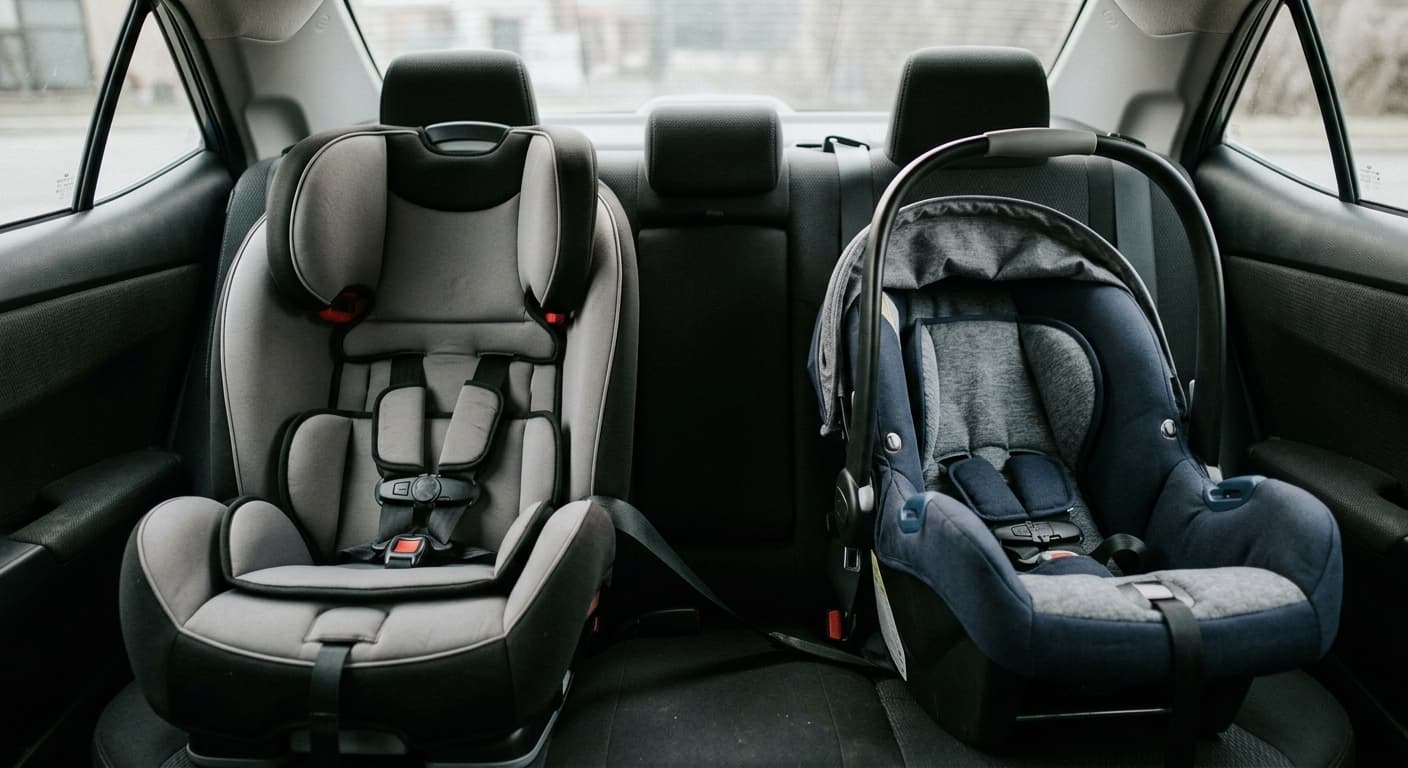
Minnesota requires a child younger than 2 years old to ride rear-facing until the child reaches the seat manufacturer's weight or height limit. A child who is at least 2 and has exceeded that limit moves to a forward-facing seat, then to a booster at age 4, and may use a seat belt alone from age 9. The statute sets no pound thresholds of its own.
What Are the Height and Weight Requirements for Car Seats in Minnesota?
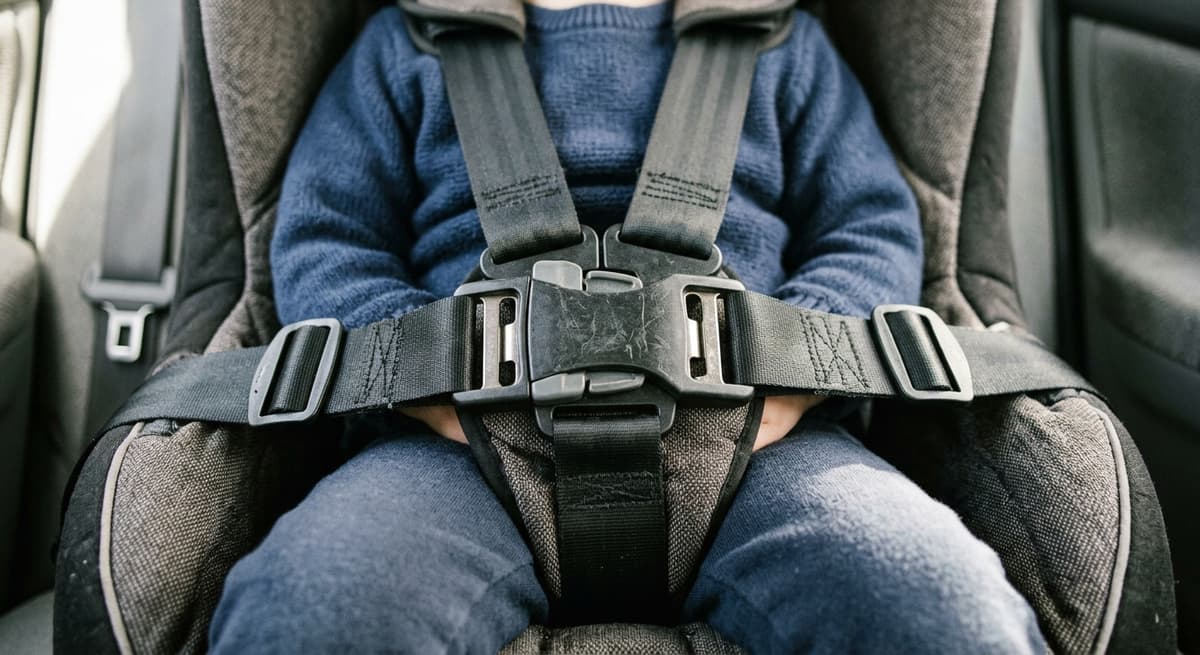
Minnesota law requires a child younger than 2 years old to ride in a rear-facing seat with an internal harness until the child reaches the weight or height limit set by the seat's manufacturer. The statute sets no pound figure of its own.
A child who is at least 2 years old and has exceeded the rear-facing weight or height limit moves to a forward-facing seat with an internal harness, again until the manufacturer's limit is reached.
A child who is at least 4 years old and has exceeded the forward-facing limit rides in a booster seat with a safety belt, until age 9 or until the booster's limits are exceeded.
The National Highway Traffic Safety Administration recommends children should remain in the back seat until they are 13 years old.
What Are the Rear Facing Car Seat Laws in Minnesota?
Minnesota law requires a child younger than 2 years old to be secured in a rear-facing seat with an internal harness, until the child reaches the weight or height limit of that seat as set by its manufacturer. In addition, the Minnesota Department of Public Safety recommends children should stay rear-facing for as long as possible until they reach the seat's maximum weight and height limits. Typically, this usually happens when the infant's head is within 1 inch of the top of the seat.
Most experts agree that a minimum of 2 years in rear-facing seats is the best practice. However, seats such as convertibles can support weights of up to 40 pounds allowing children to remain rear-facing for as long as 4 years, depending on their growth rate. You can switch from infant-only seats to convertible seats when your child weighs 20 pounds and is one year old. This way, your child can remain rear-facing for longer. The seat should always be secured in the back seat according to the manufacturer's instructions.
What Are the Forward Facing Car Seat Laws in Minnesota?
Under Minn. Stat. 169.685, a child moves to a forward-facing seat with an internal harness once the child is at least 2 years old and has exceeded the rear-facing seat's weight or height limit. The statute defers to the manufacturer's limits rather than naming a pound figure. A five-point harness should be used to secure the child in the seat. The straps should snugly fit above the child's collarbone to prevent excessive movement of the child in case of a car crash. Parents should use this type of seat until the child has outgrown the manufacturer's set limits.
Some seats can take weights of up to 65 pounds, resulting in some children using the seat until age 7. Also, a child is considered to have outgrown the forward-facing position when his or her ears are at the same level as the top of the seat, and when shoulders are higher than the top harness slots.
What Are the Booster Seat Regulations in Minnesota?
By law, a child who is at least 4 years old and has exceeded the forward-facing seat's weight or height limit must ride in a booster seat secured with a safety belt. A child may use a seat belt alone from age 9, or earlier if they have outgrown the booster's limits. A booster seat raises a child so that adult seat belts can fit correctly. A correct fit means the lap portion of the belt lies low and snug across the upper thighs while the shoulder portion should snugly go across the chest area. If your child is a bit tall and the car does not have a headrest, use a high back booster to avoid potential neck injuries.
Booster seats should be fastened with lap-shoulder belts (lap-only belts are not recommended) and be secured in the rear of the car. Use a booster seat until your child exceeds the manufacturer's weight (up to 80 pounds) and height requirements or until he or she is big enough to fit in seat belts. Parents are encouraged to make a judgment based on height. This is because a height of 4'9" or more is suitable for safety belts. Also, if your child can sit comfortably on the normal car seat with feet touching the floor without slouching, then he or she is ready to wear a safety belt.
What Are the Requirements For a Child to Use the Front Seat in Minnesota?
Minnesota law requires a child younger than 13 years old to ride in the rear seat of a motor vehicle when one is available, properly restrained in a child passenger restraint system, booster seat, or safety belt. This is in line with most experts who insist the back seat is generally safer and does not have adult airbags installed. Airbags are designed to deploy with a huge amount of force, so putting a child in front of one can be lethal.
What is the Penalty for a Car Seat Violation in Minnesota?
A violation of Minnesota's child passenger restraint law is a petty misdemeanor punishable by a fine of up to $50 (Minn. Stat. 169.685, subd. 5). The court may waive or reduce the fine if the driver shows proof that a compliant child passenger restraint system was purchased or obtained within 14 days of the violation.
Is it Illegal to Leave a Child Inside a Car in Minnesota?
The state has no laws regarding leaving children unsupervised inside a car. Although it is not recommended to leave your child alone in a vehicle for any length of time.
Is it Illegal to Smoke in a Car With a Child Present in Minnesota?
It is not illegal to smoke inside a private vehicle, regardless of whether child passengers are present. We do not recommend that you smoke inside your vehicle with children present.
Are Car Seats Required in Taxis or Emergency Vehicles in Minnesota?
Children being transported in an emergency vehicle and those riding with a peace officer on duty are exempted from wearing child restraint systems. Also exempted are children riding in commercial vehicles such as taxis or cars for hire (this excludes leased, rented, or borrowed cars).
In case of a disability, medical or physical issue, children have to be certified by a physician as having a condition that makes it unsuitable to use child restraint devices.
What is the Law on Replacing Car Seats in Minnesota?
The Minnesota Department of Public Safety advises parents not to use child-safety seats that have been involved in accidents.
More Minnesota Laws
Frequently Asked Questions
What Are the Height and Weight Requirements for Car Seats in Minnesota?
Minnesota law requires a child younger than 2 years old to ride in a rear-facing seat with an internal harness until the child reaches the weight or height limit set by the seat's manufacturer. The statute sets no pound figure of its own. A child who is at least 2 years old and has exceeded the rear-facing weight or height limit moves to a forward-facing seat with an internal harness, again until the manufacturer's limit is reached. A child who is at least 4 years old and has exceeded the forward-facing limit rides in a booster seat with a safety belt, until age 9 or until the booster's limits are exceeded.
What Are the Rear Facing Car Seat Laws in Minnesota?
Minnesota law requires a child younger than 2 years old to be secured in a rear-facing seat with an internal harness, until the child reaches the weight or height limit of that seat as set by its manufacturer. In addition, the Minnesota Department of Public Safety recommends children should stay rear-facing for as long as possible until they reach the seat's maximum weight and height limits. Typically, this usually happens when the infant's head is within 1 inch of the top of the seat.
What Are the Forward Facing Car Seat Laws in Minnesota?
Under Minn. Stat. 169.685, a child moves to a forward-facing seat with an internal harness once the child is at least 2 years old and has exceeded the rear-facing seat's weight or height limit. The statute defers to the manufacturer's limits rather than naming a pound figure. A five-point harness should be used to secure the child in the seat. The straps should snugly fit above the child's collarbone to prevent excessive movement of the child in case of a car crash. Parents should use this type of seat until the child has outgrown the manufacturer's set limits.
What Are the Booster Seat Regulations in Minnesota?
By law, a child who is at least 4 years old and has exceeded the forward-facing seat's weight or height limit must ride in a booster seat secured with a safety belt. A child may use a seat belt alone from age 9, or earlier if they have outgrown the booster's limits. A booster seat raises a child so that adult seat belts can fit correctly. A correct fit means the lap portion of the belt lies low and snug across the upper thighs while the shoulder portion should snugly go across the chest area. If your child is a bit tall and the car does not have a headrest, use a high back booster to avoid potential neck injuries.
What Are the Requirements For a Child to Use the Front Seat in Minnesota?
Minnesota law requires a child younger than 13 years old to ride in the rear seat of a motor vehicle when one is available, properly restrained in a child passenger restraint system, booster seat, or safety belt. This is in line with most experts who insist the back seat is generally safer and does not have adult airbags installed. Airbags are designed to deploy with a huge amount of force, so putting a child in front of one can be lethal.
Is it Illegal to Leave a Child Inside a Car in Minnesota?
The state has no laws regarding leaving children unsupervised inside a car. Although it is not recommended to leave your child alone in a vehicle for any length of time.
Is it Illegal to Smoke in a Car With a Child Present in Minnesota?
It is not illegal to smoke inside a private vehicle, regardless of whether child passengers are present. We do not recommend that you smoke inside your vehicle with children present.
Are Car Seats Required in Taxis or Emergency Vehicles in Minnesota?
Children being transported in an emergency vehicle and those riding with a peace officer on duty are exempted from wearing child restraint systems. Also exempted are children riding in commercial vehicles such as taxis or cars for hire (this excludes leased, rented, or borrowed cars). In case of a disability, medical or physical issue, children have to be certified by a physician as having a condition that makes it unsuitable to use child restraint devices.
Updates
Added a penalties section disclosing that a Minnesota child-restraint violation carries a fine of up to $50, waivable with proof of purchasing a compliant seat within 14 days, which the page never stated.
Independently fact-checked against the cited primary sources; governing law re-checked for recent changes
Stated Minnesota's actual rear-seat requirement for children under 13 (Subd. 4a(a)(5)) instead of claiming no front-seat law exists, and corrected the booster-exit FAQ to the statute's age-9 threshold (no height figure) matching the rest of the page.
Governing law re-checked for recent changes
Reviewed and approved by an editor
The Law Behind This Article
This article rests on the statutory provisions below, held in our own legal record and retrieved from the official source. Tap a section to read the operative text.
Minnesota Statutes, Chapter 169: TRAFFIC REGULATIONS
§ 169.685SEAT BELT; PASSENGER RESTRAINT SYSTEM FOR CHILDRENIn force
Subdivision 1. Requirement; exemptions. After January 1, 1964, all new motor vehicles, not exempt from Minnesota license fees, other than a bus, school bus, motorcycle, motorized bicycle, farm tractor, road tractor, and truck, sold or offered for sale or registered in Minnesota shall be equipped to permit the installation of seat belts in the front seat thereof. Subd. 2. Required after registration. Within 30 days after the registration of such motor vehicle, it shall be equipped with seat belts installed for use in the left front and right front seats thereof. Subd. 3. Standards. The specifications and requirements for seat belts or seat belt assemblies shall conform with the minimum standards for seat belts or seat belt assemblies heretofore adopted by the Society of Automotive Engineers and in effect on January 1, 1963. Subd. 3a. Definitions. (a) For purposes of this section, the following terms have the meanings given. (b) "Booster seat" means a child passenger restraint system that meets applicable federal motor vehicle safety standards and is designed to provide belt-positioning that elevates a child to be properly seated with a safety belt.
Official text (excerpt) · last checked 2026-07-29 · Read the full text in our law library · Verify at revisor.mn.gov
Cited in 33 court opinions in our collectionLatest citing opinion in our collection: 2014
Opinions citing this section in our collection:
- Olson v. Ford Motor Co. (Supreme Court of Minnesota 1997, 558 N.W.2d 491)“…e court in this ease. I do so because the plain language of Minn.Stat. § 169.685, subd. 4 (1996), unambiguously preclude…”
- State v. Stone (Supreme Court of Minnesota 1997, 572 N.W.2d 725)“…and 8. Failure to have child in a child restraint seat (Minn.Stat. § 169.685, subd. 5 (1996)). The respondents sti…”
- Mutual Service Casualty Insurance Co. v. League of Minnesota Cities Insurance Trust (Supreme Court of Minnesota 2003, 659 N.W.2d 755)“…The manufacturer moved for summary judgment, arguing that Minn.Stat. § 169.685, subd. 4 (1996), known as the “seat bel…”
Identified automatically from the court opinions citing this section — not a ranking of which case controls.
Search our full record of US law — 2.1 million sections, every state + federal →