
Vermont
Vermont Knife Laws (2026): 2025 Switchblade Repeal, Carry
Independently fact-checked against primary sources (last audited September 24, 2026). · 10 primary sources cited on this page. How we verify our legal content
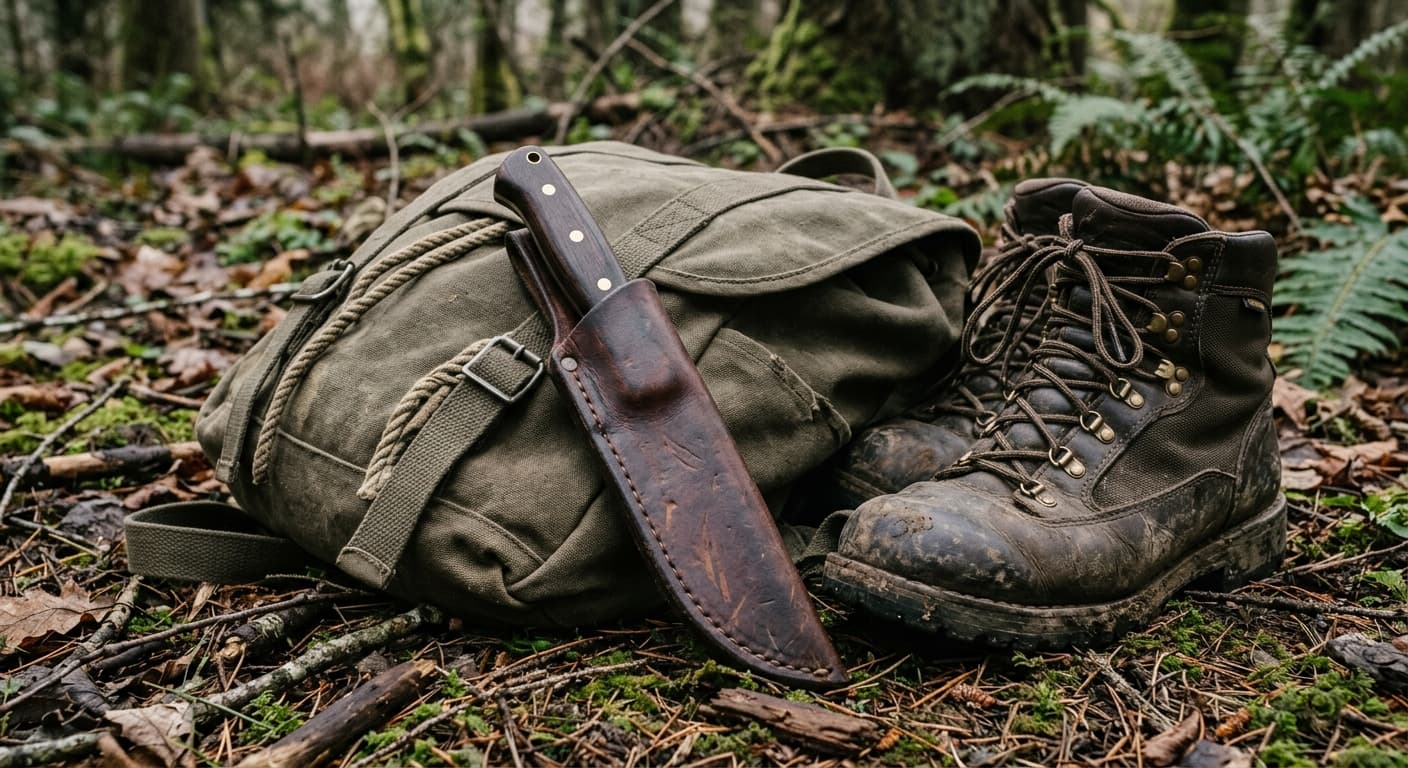
Vermont has no blade-length limit or knife-type ban for general carry. A 2025 law repealed the state's old switchblade-specific ban, and the state's main weapons-carry offense requires intent to injure another person as an element, so simply carrying a knife, open or concealed, is not itself a crime. A second, narrower carry offense reaches a knife carried while committing a felony, with no intent-to-injure element required.
Jurisdiction scope: This page covers Vermont state law only, principally 13 V.S.A. §§ 4003, 4004, 4005, 4007, 4008, 4013, and 4016, and 24 V.S.A. §§ 2291 and 2295. It does not cover Vermont's firearm-specific carry statutes beyond what overlaps with the general "dangerous or deadly weapon" definition used in these sections.
Can you carry a knife openly or concealed in Vermont?
Yes, for an ordinary knife carried for a lawful purpose, without a separate intent requirement, outside three narrower carve-outs described below: carrying while committing a felony, carrying in a school building or on a school bus, and carrying in a courthouse without authorization. Vermont has no general statute banning the mere carrying, open or concealed, of a knife. The state's core carrying-weapons offense, 13 V.S.A. § 4003, provides: "A person who carries a dangerous or deadly weapon with the intent to injure another shall be imprisoned for not more than two years or fined not more than $2,000.00, or both. It shall be a felony punishable by not more than 10 years of imprisonment or a fine of $25,000.00, or both, if the person intends to injure multiple persons." Intent to injure another person is an element of the offense, not an afterthought; a person carrying a knife for an ordinary lawful purpose, with no intent to injure anyone, does not violate this section regardless of the knife's type or blade length.
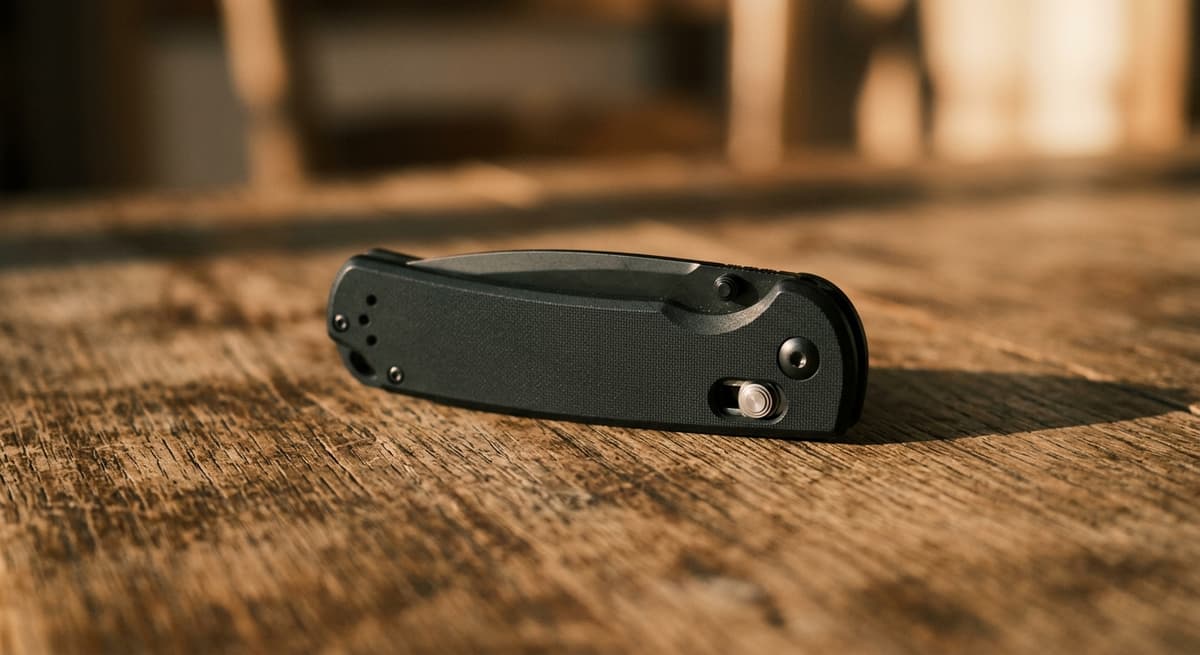
A second, separate offense in the same chapter, 13 V.S.A. § 4005(a), has no intent-to-injure element at all: "Except as otherwise provided in 18 V.S.A. § 4253, a person who carries a dangerous or deadly weapon, openly or concealed, while committing a felony shall be imprisoned not more than five years or fined not more than $500.00, or both." This section reaches open or concealed carry of a knife whenever the carrying accompanies a felony, with a higher maximum prison term than § 4003's base offense. Subsection (b)(1) limits one consequence, the bail-eligibility "violent act" designation, to a violation involving a firearm specifically; that designation does not attach to a knife carried under this section.
The 2025 switchblade repeal
Vermont's knife-specific carry law had a narrower history before 2025. 13 V.S.A. § 4013 had, since 1959, banned possessing, selling, or offering for sale a switchblade knife with a blade of three inches or more in length. Act 64 (enacted via S.109), effective June 12, 2025, removed that switchblade language from § 4013 entirely. The current text of § 4013 provides only: "A person who possesses, sells, or offers for sale a weapon commonly known as a 'zip' gun shall be imprisoned not more than 90 days or fined not more than $100.00, or both." No knife of any kind is mentioned. The section's own amendment history lists "2025, No. 64, § 8, eff. June 12, 2025" alongside its earlier 1959 and 1981 amendments. Since the repeal, no other Vermont statute replaces the former blade-length threshold with any general knife restriction; Vermont currently has no statewide blade-length limit or named-knife-type ban.
Act 64 did not stop at repealing the provision going forward. Section 9 of the act addresses everyone already convicted under the old law: "The court shall order the expungement of criminal history records of convictions of 13 V.S.A. § 4013 for possessing, selling, or offering for sale a switchblade knife that occurred prior to July 1, 2025. The process and effect for expungement of these records shall be as provided for in 13 V.S.A. § 7606 and shall be completed by the court and all entities subject to the order not later than July 1, 2026." For a person with an old Vermont switchblade conviction, this expungement, due to be complete by that date, is the most concrete consequence of the 2025 repeal.
Schools
13 V.S.A. § 4004 imposes two distinct rules. Subsection (a) bans knowingly possessing a firearm or a "dangerous or deadly weapon" while within a school building or on a school bus, with no intent requirement; a first offense carries up to one year's imprisonment or a $1,000 fine, and a second or subsequent offense up to three years or $5,000. Subsection (b) reaches further, to any school property, but only when the person possesses the firearm or dangerous or deadly weapon "with the intent to injure another person," carrying a heavier range: up to three years or $1,000 for a first offense, and up to five years or $5,000 for a second or subsequent offense. Section 4004(d)(3) defines "dangerous or deadly weapon" by cross-reference to § 4016, described below, which reaches an ordinary knife. Subsection (c) exempts a law enforcement officer engaged in duties and possession or use authorized by the school board, superintendent, or principal for specific occasions or instructional purposes.
Courthouses
13 V.S.A. § 4016 separately restricts weapons in a courthouse. Its own definitions section, 4016(a)(2), defines "dangerous or deadly weapon" broadly as "any firearm, or other weapon, device, instrument, material, or substance, whether animate or inanimate, that in the manner it is used or is intended to be used is known to be capable of producing death or serious bodily injury," a definition that reaches an ordinary knife depending on how it is used or intended to be used. Subsection (b) makes it an offense, punishable by up to one year's imprisonment or a $500 fine, for a person to carry or possess a firearm in a courthouse without court authorization, or to knowingly carry or possess another dangerous or deadly weapon there. Subsection (d) goes further for a courthouse the Court Administrator has certified as a "secured building" (one with controlled access points, metal screening, and locked storage for checked firearms): no dangerous or deadly weapon is allowed there at all, with no authorization exception stated in the text.
Minors
Vermont sets no minimum age for a minor to carry or possess a knife. Its child-specific possession statute, 13 V.S.A. § 4008, provides: "A child under the age of 16 years shall not, without the consent of his or her parents or guardian, have in his or her possession or control a pistol or revolver constructed or designed for the use of gunpowder or other explosive substance with leaden ball or shot." That text is scoped to a pistol or revolver and does not mention a knife or any other weapon, so it creates no age-based restriction on a minor's own carrying or possession of a knife. A separate statute, 13 V.S.A. § 4007, restricts a different act by a different person: it bars anyone other than a parent or guardian from selling or furnishing "a firearm or other dangerous weapon or ammunition for firearms" to a minor under 16, punishable by a fine of not less than $10 nor more than $50, with an exemption for an instructor or teacher furnishing firearms to pupils for instruction and drill. That "or other dangerous weapon" phrase is not limited to firearms on its face, so furnishing a knife to a minor under 16 may fall within it, but the statute regulates the furnishing adult's conduct, not the minor's own carrying.
No statewide preemption reaching knives
Vermont has a municipal weapons-preemption statute, but it does not reach knives. 24 V.S.A. § 2295, titled "Authority of municipal and county governments to regulate firearms, ammunition, hunting, fishing, and trapping," provides: "Except as otherwise provided by law, no town, city, or incorporated village, by ordinance, resolution, or other enactment, shall directly regulate hunting, fishing, and trapping or the possession, ownership, transportation, transfer, sale, purchase, carrying, licensing, or registration of traps, firearms, ammunition, or components of firearms or ammunition. This section shall not limit the powers conferred upon a town, city, or incorporated village under subdivision 2291(8) of this title." That preserved power, 24 V.S.A. § 2291(8), lets a municipality "regulate or prohibit the use or discharge, but not possession, of firearms" within its borders; it does not extend to knives either. Neither statute's list mentions a knife anywhere, so a Vermont town, city, or incorporated village is not preempted by either one from adopting its own knife-specific ordinance.
Federal law: what it does and does not reach
Federal law does not ban an individual from owning or carrying a switchblade. The Federal Switchblade Act, 15 U.S.C. §§ 1241 to 1245, restricts interstate commerce in switchblade knives and, in 15 U.S.C. § 1245, makes it a federal offense to knowingly possess, manufacture, sell, or import a ballistic knife in or affecting interstate commerce or within federal territorial jurisdiction; the operative offense sections, §§ 1242 and 1243, do not apply to certain knives and people, listed as exemptions in 15 U.S.C. § 1244. A 2009 amendment, § 1244(5), exempts a knife with a spring, detent, or other closure-bias mechanism that requires hand, wrist, or arm exertion on the blade itself to overcome the bias and assist opening, the carve-out that keeps modern assisted-opening folding knives legal in interstate commerce. A separate exemption, § 1244(4), covers a person with only one arm possessing or carrying a switchblade with a blade three inches or less.
Disclaimer: This article provides general legal information about Vermont knife law as of September 2026. It is not legal advice. Consult a lawyer licensed in Vermont for advice about a specific situation.
For a state-by-state comparison, see knife laws by state. Vermont's self-defense statutes are covered separately on the Vermont self-defense laws page.
Statutes cited reflect their in-force version as of 2026-09-18. Last updated: 2026-09-18.
Frequently Asked Questions
Is it legal to carry a switchblade in Vermont?
Yes. Act 64 (2025), effective June 12, 2025, repealed the switchblade-knife language that had been part of 13 V.S.A. § 4013 since 1959. The current statute covers only 'zip guns.' Ordinary carry of a switchblade, without intent to injure another person or a felony in progress, is not an offense under any current Vermont statute.
Does Vermont have a blade-length limit for knives?
No. The former three-inches-or-more threshold under 13 V.S.A. § 4013 was removed by the 2025 repeal, and no other Vermont statute sets a blade-length limit for general carry.
What happened to old Vermont switchblade convictions after the 2025 repeal?
Act 64 orders them expunged. Section 9 of the act requires the court to expunge any conviction under the old 13 V.S.A. § 4013 switchblade provision from before July 1, 2025, using the process in 13 V.S.A. § 7606, with completion required by all courts and entities subject to the order no later than July 1, 2026.
Can you carry a knife concealed in Vermont?
Yes, for an ordinary lawful purpose. Vermont's carrying-weapons statute, 13 V.S.A. § 4003, requires intent to injure another person as an element; carrying a knife, open or concealed, without that intent is not an offense. A separate statute, § 4005, does reach carrying a knife, openly or concealed, while committing a felony, with no intent-to-injure element.
Is there a minimum age to carry a knife in Vermont?
No age floor applies to a minor's own carrying or possession of a knife. Vermont's child-specific weapons-possession statute, 13 V.S.A. § 4008, is limited to a pistol or revolver and does not mention a knife. A different rule applies to someone else furnishing a knife to a minor: 13 V.S.A. § 4007 fines anyone other than a parent or guardian $10 to $50 for selling or furnishing 'a firearm or other dangerous weapon' to a minor under 16, wording not limited to firearms on its face.
Does Vermont preempt local knife ordinances?
No. Vermont's municipal weapons-preemption statute, 24 V.S.A. § 2295, and the related power-preserving statute, § 2291(8), are scoped to firearms, ammunition, hunting, fishing, and trapping; neither text mentions knives, so a town, city, or incorporated village is not barred by either statute from adopting its own knife ordinance.
Updates
Independently fact-checked against the cited primary sources
Independently fact-checked against the cited primary sources
The Law Behind This Article
This article rests on the statutory provisions below, held in our own legal record and retrieved from the official source. Tap a section to read the operative text.
Vermont Statutes Annotated, Title 13: Crimes and Criminal Procedure, Chapter 85: Weapons, Subchapter: GENERALLY
§ 4003Carrying dangerous weaponsIn forcecited in 3 of our articles
A person who carries a dangerous or deadly weapon with the intent to injure another shall be imprisoned for not more than two years or fined not more than $2,000.00, or both. It shall be a felony punishable by not more than 10 years of imprisonment or a fine of $25,000.00, or both, if the person intends to injure multiple persons. (Amended 2017, No. 135 (Adj. Sess.), § 1, eff. May 21, 2018.)
Official text (excerpt) · last checked 2026-09-24 · Read the full text in our law library · Verify at legislature.vermont.gov
Cited in 3 court opinions in our collectionLatest citing opinion in our collection: 2021
Opinions citing this section in our collection:
- Cook v. Nelson (Supreme Court of Vermont 1998, 167 Vt. 505)“…stifiably issued him a citation charging him with violating 13 V.S.A. § 4003 (carrying a firearm into a state instit…”
- Vermont v. Brunner (Supreme Court of Vermont 2014, 196 Vt. 571)“…ent and broader provision regulating dangerous weapons. See 13 V.S.A. § 4003. ¶ 9. Finally, defendant argues…”
- State v. Christopher D. Hale (Supreme Court of Vermont 2021, 256 A.3d 595)“…V.S.A. § 4016(a)(2), “with the intent to injure another.” 13 V.S.A. § 4003. ¶ 27. For all practical purp…”
Identified automatically from the court opinions citing this section — not a ranking of which case controls.
Also relied on in: Knife Laws by State (2026): Carry Rules, Blade Limits, Penalties, Vermont Pepper Spray and Stun Gun Laws (2026)
§ 4013Zip gunsIn forcecited in 2 of our articles
A person who possesses, sells, or offers for sale a weapon commonly known as a “zip” gun shall be imprisoned not more than 90 days or fined not more than $100.00, or both. (Added 1959, No. 151, eff. May 5, 1959; amended 1981, No. 223 (Adj. Sess.), § 23; 2025, No. 64, § 8, eff. June 12, 2025.)
Official text (excerpt) · last checked 2026-08-01 · Read the full text in our law library · Verify at legislature.vermont.gov
§ 4005While committing a felonyIn forcecited in 2 of our articles
(a) Except as otherwise provided in 18 V.S.A. § 4253, a person who carries a dangerous or deadly weapon, openly or concealed, while committing a felony shall be imprisoned not more than five years or fined not more than $500.00, or both. (b)(1) Carrying a firearm while committing a felony in violation of this section may be considered a violent act for the purposes of determining whether a person is eligible for bail under section 7553a of this title. (2) An offense that is a felony rather than a misdemeanor solely because of the monetary value of the property involved shall not be considered a violent act under this subsection. (Amended 1967, No. 296 (Adj. Sess.), § 1, eff. March 20, 1968; 2011, No. 121 (Adj. Sess.), § 4, eff. May 9, 2012; 2023, No. 23, § 8, eff. May 30, 2023.)
Official text (excerpt) · last checked 2026-08-01 · Read the full text in our law library · Verify at legislature.vermont.gov
Cited in 8 court opinions in our collectionLatest citing opinion in our collection: 2021
Opinions citing this section in our collection:
- State v. Kerr (Supreme Court of Vermont 1983, 143 Vt. 597)“…ndgun) while committing a felony, against the strictures of 13 V.S.A. § 4005. He instituted a timely appeal to this…”
- State v. Smith (Supreme Court of Vermont 1984, 145 Vt. 121)“…and of carrying a weapon openly while committing a felony, 13 V.S.A. § 4005. He appeals from the judgment of the Di…”
- State v. Audette (Supreme Court of Vermont 1988, 149 Vt. 218)“…t, possession of a deadly weapon while committing a felony, 13 V.S.A. § 4005, is not a crime having its roots in the…”
Identified automatically from the court opinions citing this section — not a ranking of which case controls.
§ 4004Possession of dangerous or deadly weapon in a school bus or school building or on school propertyIn forcecited in 2 of our articles
(a) No person shall knowingly possess a firearm or a dangerous or deadly weapon while within a school building or on a school bus. A person who violates this section shall, for the first offense, be imprisoned for not more than one year or fined not more than $1,000.00, or both, and for a second or subsequent offense shall be imprisoned for not more than three years or fined not more than $5,000.00, or both. (b) No person shall knowingly possess a firearm or a dangerous or deadly weapon on any school property with the intent to injure another person. A person who violates this section shall, for the first offense, be imprisoned for not more than three years or fined not more than $1,000.00, or both, and for a second or subsequent offense shall be imprisoned for not more than five years or fined not more than $5,000.00, or both. (c) This section shall not apply to: (1) A law enforcement officer while engaged in law enforcement duties.
Official text (excerpt) · last checked 2026-08-01 · Read the full text in our law library · Verify at legislature.vermont.gov
Cited in 2 court opinions in our collectionLatest citing opinion in our collection: 2021
Opinions citing this section in our collection:
- State v. Christopher D. Hale (Supreme Court of Vermont 2021, 256 A.3d 595)“…n terms possession without use or intended use. See, e.g., 13 V.S.A. § 4004(a) (prohibiting knowing possession of…”
- State v. Max Misch (Supreme Court of Vermont 2021, 2021 VT 10)“…to have, numerous firearms-related restrictions. See e.g., 13 V.S.A. § 4004 (prohibiting possession of firearms wit…”
Identified automatically from the court opinions citing this section — not a ranking of which case controls.
§ 4016Weapons in courtIn forcecited in 2 of our articles
(a) As used in this section: (1) “Courthouse” means a building or any portion of a building designated by the Supreme Court of Vermont as a courthouse. (2) “Dangerous or deadly weapon” means any firearm, or other weapon, device, instrument, material, or substance, whether animate or inanimate, that in the manner it is used or is intended to be used is known to be capable of producing death or serious bodily injury. (3) “Firearm” means any weapon, whether loaded or unloaded, that will expel a projectile by the action of an explosive and includes any weapon commonly referred to as a pistol, revolver, rifle, gun, machine gun, or shotgun. (4) “Law enforcement officer” means a person certified by the Vermont Criminal Justice Council as having satisfactorily completed the approved training programs required to meet the minimum training standards applicable to that person pursuant to 20 V.S.A. § 2358. (5) “Secured building” means a building with controlled points of public access, metal screening devices at each point of public access, and locked compartments, accessible only to security personnel, for storage of checked firearms.
Official text (excerpt) · last checked 2026-08-01 · Read the full text in our law library · Verify at legislature.vermont.gov
Cited in 4 court opinions in our collectionLatest citing opinion in our collection: 2026
Opinions citing this section in our collection:
- Benson v. Muscari (Supreme Court of Vermont 2001, 172 Vt. 1)“…arrying of deadly or dangerous weapons in a courthouse. See 13 V.S.A. § 4016(a)(2). These definitions are unhelpful…”
- Vermont v. Brunner (Supreme Court of Vermont 2014, 196 Vt. 571)“…achine gun or shotgun” does not render a statute ambiguous. 13 V.S.A. § 4016(a)(3). ¶ 19. Finally, we do not…”
- State v. Christopher D. Hale (Supreme Court of Vermont 2021, 256 A.3d 595)“…y “dangerous or deadly weapon[s],” including firearms, see 13 V.S.A. § 4016(a)(2), “with the intent to injure anot…”
Identified automatically from the court opinions citing this section — not a ranking of which case controls.
§ 4008Possession of firearms by childrenIn force
A child under the age of 16 years shall not, without the consent of his or her parents or guardian, have in his or her possession or control a pistol or revolver constructed or designed for the use of gunpowder or other explosive substance with leaden ball or shot. A child who violates a provision of this section shall be deemed a delinquent child under the provisions of 33 V.S.A. chapter 52.
Official text (excerpt) · last checked 2026-08-01 · Read the full text in our law library · Verify at legislature.vermont.gov
§ 4007Furnishing firearms to childrenIn force
A person, firm, or corporation, other than a parent or guardian, who sells or furnishes to a minor under the age of 16 years a firearm or other dangerous weapon or ammunition for firearms shall be fined not more than $50.00 nor less than $10.00. This section shall not apply to an instructor or teacher who furnishes firearms to pupils for instruction and drill.
Official text (excerpt) · last checked 2026-08-01 · Read the full text in our law library · Verify at legislature.vermont.gov
Vermont Statutes Annotated, Title 24: Municipal and County Government, Chapter 61: Regulatory Provisions; Police Power of Municipalities, Subchapter: MISCELLANEOUS REGULATORY POWERS
§ 2295Authority of municipal and county governments to regulate firearms, ammunition, hunting, fishing, and trappingIn forcecited in 2 of our articles
Except as otherwise provided by law, no town, city, or incorporated village, by ordinance, resolution, or other enactment, shall directly regulate hunting, fishing, and trapping or the possession, ownership, transportation, transfer, sale, purchase, carrying, licensing, or registration of traps, firearms, ammunition, or components of firearms or ammunition. This section shall not limit the powers conferred upon a town, city, or incorporated village under subdivision 2291(8) of this title. The provisions of this section shall supersede any inconsistent provisions of a municipal charter. (Added 1987, No. 178 (Adj. Sess.), eff. May 9, 1988.)
Official text (excerpt) · last checked 2026-08-01 · Read the full text in our law library · Verify at legislature.vermont.gov
Cited in 4 court opinions in our collectionLatest citing opinion in our collection: 2012
Opinions citing this section in our collection:
- Hunters, Anglers & Trappers Ass'n of Vermont, Inc. v. Winooski Valley Park District (Supreme Court of Vermont 2006, 181 Vt. 12)“…by the phrase “[ejxcept as othenoise authorized by law.” 24 V.S.A. § 2295 (emphasis added). By its own terms, the…”
- City of Montpelier v. Barnett, Sanborn and Natural Resources Board (Supreme Court of Vermont 2012, 191 Vt. 441)“…against hunting under § 5201(a) despite the prohibition of 24 V.S.A. § 2295. 2006 VT 82 , ¶¶ 9-13. That holding…”
- Vt. Hunters, Anglers v. Winooski Valley Park Dist. (Vermont Superior Court 2003)“…t no municipality shall “directly regulate hunting . . . .” 24 V.S.A. § 2295. The question here posed is whether tha…”
Identified automatically from the court opinions citing this section — not a ranking of which case controls.
§ 2291Enumeration of powersIn forcecited in 2 of our articles
For the purpose of promoting the public health, safety, welfare, and convenience, a town, city, or incorporated village shall have the following powers: (1) To set off portions of public highways of the municipality for sidewalks and bicycle paths and to regulate their installation and use. (2) To provide for the removal of snow and ice from sidewalks by the owner, occupant, or person having charge of abutting property. (3) To provide for the location, protection, maintenance, and removal of trees, plants, and shrubs and buildings or other structures on or above public highways, sidewalks, or other property of the municipality. (4) To regulate the operation and use of vehicles of every kind including the power to erect traffic signs and signals, to regulate the speed of vehicles subject to 23 V.S.A. chapter 13, subchapter 12, to implement traffic-calming devices, to regulate or exclude the parking of all vehicles, and to provide for waiver of the right of appearance and arraignment in court by persons charged with parking violations by payment of specified fines within a stated period of time.
Official text (excerpt) · last checked 2026-08-01 · Read the full text in our law library · Verify at legislature.vermont.gov
Cited in 22 court opinions in our collectionLatest citing opinion in our collection: 2026
Opinions citing this section in our collection:
- Champlain Valley Exposition, Inc. v. Village of Essex Junction (Supreme Court of Vermont 1973, 131 Vt. 449)“…admission tax ordinance to be properly enacted pursuant to 24 V.S.A. § 2291(11); however, it also adjudged Champlai…”
- SBC Enterprises, Inc. v. City of South Burlington Liquor Control Commission (Supreme Court of Vermont 1996, 166 Vt. 79)“…nance valid because the City Council lacked authority under 24 V.S.A. § 2291(11) to enact the ordinance. “[A] munici…”
- State v. Sanguinetti (Supreme Court of Vermont 1982, 141 Vt. 349)“…nd direct that signs . . . be . . . taken down,” and third, 24 V.S.A. § 2291(7), which it felt to be independent aut…”
Identified automatically from the court opinions citing this section — not a ranking of which case controls.
Also relied on in: Vermont E-Scooter Laws: Sidewalk, Helmet & Age Rules (2026)
Vermont Statutes Annotated, Title 13: Crimes and Criminal Procedure, Chapter 230: Expungement and Sealing of Criminal History Records
§ 7606Effect of expungementIn forcecited in 3 of our articles
(a) Order and notice. Upon finding that the requirements for expungement have been met, the court shall issue an order that shall include provisions that its effect is to annul the record of the arrest, conviction, and sentence and that such person shall be treated in all respects as if the person had never been arrested, convicted, or sentenced for the offense. The court shall provide notice of the expungement to the respondent, Vermont Crime Information Center (VCIC), the arresting agency, the Restitution Unit of the Vermont Center for Crime Victim Services, and any other entity that may have a record related to the order to expunge. The VCIC shall provide notice of the expungement to the Federal Bureau of Investigation’s National Crime Information Center. (b) Effect. (1) Upon entry of an expungement order, the order shall be legally effective immediately and the person whose record is expunged shall be treated in all respects as if the person had never been arrested, convicted, or sentenced for the offense.
Official text (excerpt) · last checked 2026-08-01 · Read the full text in our law library · Verify at legislature.vermont.gov
Cited in 5 court opinions in our collectionLatest citing opinion in our collection: 2026
Opinions citing this section in our collection:
- In re Joseph Bruyette (Supreme Court of Vermont 2022, 274 A.3d 844)“…and alleges that the declaratory ruling is in violation of 13 V.S.A. § 7606, Vermont’s expungement statute. The Sta…”
- Hartley Auto Sales v. State (Vermont Superior Court 2020)“…viction can be still be relied upon in this proceeding. See 13 V.S.A. § 7606(b)(a) (person for whom offense is expun…”
- Rivard v. Windham County States Attorney (Vermont Superior Court 2026)“…s directly related to contact with the system. Pursuant to 13 V.S.A. § 7606(a), when a trial court finds that the b…”
Identified automatically from the court opinions citing this section — not a ranking of which case controls.
Also relied on in: Vermont Expungement Laws: Sealing and Clearing Your Criminal Record (2026), Vermont Background Check Laws (2026 Guide)
Vermont Statutes Annotated, Title 18: Health, Chapter 84: Possession and Control of Regulated Drugs, Subchapter: MISCELLANEOUS
§ 4253Use of a firearm while selling or dispensing a drugIn force
(a) A person who uses a firearm during and in relation to selling or dispensing a regulated drug in violation of subdivision 4230(b)(3), 4231(b)(3), 4232(b)(3), 4233(b)(3), 4234(b)(3), 4234a(b)(3), 4235(c)(3), or 4235a(b)(3) of this title shall be imprisoned not more than three years or fined not more than $5,000.00, or both, in addition to the penalty for the underlying crime. (b) A person who uses a firearm during and in relation to trafficking a regulated drug in violation of subsection 4230(c), 4231(c), 4233(c), or 4234a(c) of this title shall be imprisoned not more than five years or fined not more than $10,000.00, or both, in addition to the penalty for the underlying crime. (c) For purposes of this section, “use of a firearm” includes: (1) using a firearm while selling or trafficking a regulated drug; and (2) the exchange of firearms for drugs, and this section shall apply to the person who trades a firearm for a drug and the person who trades a drug for a firearm. (d) Conduct constituting the offense of using a firearm while selling or trafficking a regulated drug shall be considered a violent act for the purposes of determining bail. (Added 2011, No. 121 (Adj.
Official text (excerpt) · last checked 2026-08-01 · Read the full text in our law library · Verify at legislature.vermont.gov
United States Code Title 15
§ 1241DefinitionsIn forcecited in 52 of our articles
As used in this chapter— The term “interstate commerce” means commerce between any State, Territory, possession of the United States, or the District of Columbia, and any place outside thereof. The term “switchblade knife” means any knife having a blade which opens automatically— by hand pressure applied to a button or other device in the handle of the knife, or by operation of inertia, gravity, or both.
Official text (excerpt) · last checked 2026-07-28 · Read the full text in our law library · Verify at uscode.house.gov
Cited in 15 court opinions in our collectionLatest citing opinion in our collection: 2014
Opinions citing this section in our collection:
- Stewart A. Taylor, D/B/A Taylor Cutlery Mfg. Co. v. United States of America (Court of Appeals for the Sixth Circuit 1988, 848 F.2d 715)“…Service, are not switchblade knives within the meaning of 15 U.S.C. § 1241 (b) and 19 C.F.R. § 1295 (a)(1). The d…”
- Crowley Cutlery Company v. United States of America and Commissioner of Customs of the United States Customs Service (Court of Appeals for the Seventh Circuit 1988, 849 F.2d 273)“…Illinois for a declaration that the Switchblade Knife Act, 15 U.S.C. §§ 1241 et seq., which forbids th…”
- Edna Fall, as Administratrix of the Estate of Phillip Fall, Deceased v. Esso Standard Oil Company (Court of Appeals for the Fifth Circuit 1962, 297 F.2d 411)“…25 S.Ct. 158 , 49 L.Ed. 363 . Section 1 of the Act, 15 U.S.C.A. § 1241 (b), defines the term “switchblade knif…”
Identified automatically from the court opinions citing this section — not a ranking of which case controls.
Also relied on in: Alabama Knife Laws (2026): What Is Legal to Carry, Alaska Knife Laws (2026): Concealed Carry Rules Explained, Arizona Knife Laws (2026): Carry Rules and Preemption
§ 1244ExceptionsIn forcecited in 52 of our articles
Sections 1242 and 1243 of this title shall not apply to— any common carrier or contract carrier, with respect to any switchblade knife shipped, transported, or delivered for shipment in interstate commerce in the ordinary course of business; the manufacture, sale, transportation, distribution, possession, or introduction into interstate commerce, of switchblade knives pursuant to contract with the Armed Forces; the Armed Forces or any member or employee thereof acting in the performance of his duty; the possession, and transportation upon his person, of any switchblade knife with a blade three inches or less in length by any individual who has only one arm; or a knife that contains a spring, detent, or other mechanism designed to create a bias toward closure of the blade and that requires exertion applied to the blade by hand, wrist, or arm to overcome the bias toward closure to assist in opening the knife.
Official text (excerpt) · last checked 2026-07-28 · Read the full text in our law library · Verify at uscode.house.gov
Also relied on in: Arkansas Knife Laws (2026): Intent-Based Carry Rules, California Knife Laws (2026): Four Blade-Length Rules, Colorado Knife Laws (2026): Concealed Carry and Exceptions
§ 1245Ballistic knivesIn forcecited in 50 of our articles
Whoever in or affecting interstate commerce, within any Territory or possession of the United States, within Indian country (as defined in section 1151 of title 18), or within the special maritime and territorial jurisdiction of the United States (as defined in section 7 of title 18), knowingly possesses, manufactures, sells, or imports a ballistic knife shall be fined as provided in title 18, or imprisoned not more than ten years, or both. Whoever possesses or uses a ballistic knife in the commission of a Federal crime of violence shall be fined as provided in title 18, or imprisoned not less than five years and not more than ten years, or both. The exceptions provided in paragraphs (1), (2), and (3) of section 1244 of this title with respect to switchblade knives shall apply to ballistic knives under subsection (a) of this section. As used in this section, the term “ballistic knife” means a knife with a detachable blade that is propelled by a spring-operated mechanism.
Official text (excerpt) · last checked 2026-07-28 · Read the full text in our law library · Verify at uscode.house.gov
Cited in 2 court opinions in our collectionLatest citing opinion in our collection: 2008
Opinions citing this section in our collection:
- ALCANTAR (Board of Immigration Appeals 1994, 20 I. & N. Dec. 801)“…ed by an adult, would be felony and crime of violence); cf. 15 U.S.C. § 1245(b) (1988) (use of ballistic knife in co…”
- United States v. Polizzi (District Court, E.D. New York 2008, 549 F. Supp. 2d 308)“…8 Trust in l’estraint of import trade 3 months 15 U.S.C. § 1245 (b) Possession/use of a ballistic knife…”
Identified automatically from the court opinions citing this section — not a ranking of which case controls.
Also relied on in: Connecticut Knife Laws (2026): Open and Concealed Carry, Delaware Knife Laws (2026): Carry, Switchblades, and Bans, D.C. Knife Laws (2026): Possession and Carry Rules
Search our full record of US law — 2.1 million sections, every state + federal →
Sources and References
- 13 V.S.A. § 4003 - Carrying dangerous weapons(legislature.vermont.gov).gov
- 13 V.S.A. § 4004 - Possession of dangerous or deadly weapon in a school bus or school building or on school property(legislature.vermont.gov).gov
- 13 V.S.A. § 4005 - While committing a felony(legislature.vermont.gov).gov
- 13 V.S.A. § 4007 - Furnishing firearms to children(legislature.vermont.gov).gov
- 13 V.S.A. § 4008 - Possession of firearms by children(legislature.vermont.gov).gov
- 13 V.S.A. § 4013 - Zip guns (former switchblade-knife provision, repealed by 2025 Act 64)(legislature.vermont.gov).gov
- 13 V.S.A. § 4016 - Weapons in court(legislature.vermont.gov).gov
- Vermont Act 64 (2025) as enacted - Sec. 8 (switchblade repeal) and Sec. 9 (expungement of prior convictions)(legislature.vermont.gov).gov
- 24 V.S.A. § 2291 - Enumeration of powers (subdivision (8), firearm discharge)(legislature.vermont.gov).gov
- 24 V.S.A. § 2295 - Authority of municipal and county governments to regulate firearms, ammunition, hunting, fishing, and trapping(legislature.vermont.gov).gov
- 15 U.S.C. §§ 1241-1245 - Federal Switchblade Act, interstate commerce and ballistic-knife scope(law.cornell.edu)
- 15 U.S.C. § 1244 - exceptions, including the 2009 assisted-opening carve-out and the one-arm exception(law.cornell.edu)