
Utah
Utah Knife Laws (2026): Carry, Schools, Preemption
Independently fact-checked against primary sources (last audited September 18, 2026). · 20 primary sources cited on this page. How we verify our legal content
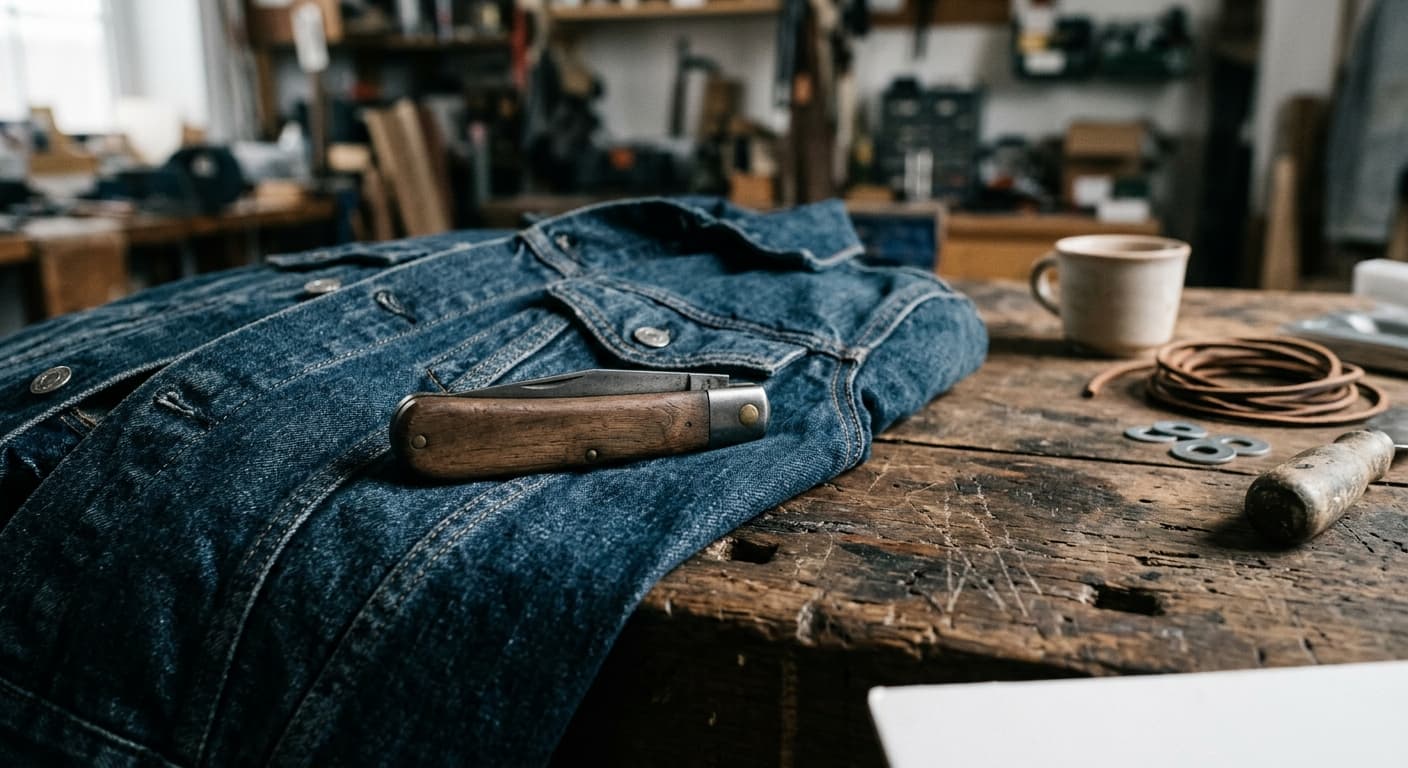
Utah has no general statute restricting open or concealed carry of an ordinary knife by an adult, and no statewide blade-length limit. Most of Utah's knife-related offenses are location-specific, such as schools and airports, or status-specific, such as carrying while a minor, while intoxicated, or while legally barred from possessing weapons, but several further offenses reach a knife anywhere in the state regardless of location, and every one of them turns on a functional, litigated definition of "dangerous weapon" rather than on a knife being named by type.
Jurisdiction scope: This page covers Utah state law only, principally Utah Code §§ 76-1-101.5, 76-11-101, 76-11-201, 76-11-205, 76-11-205.5, 76-11-206, 76-11-207, 76-11-208, 76-11-211, 76-11-214, 76-11-216, 76-11-217, 76-11-218, 76-11-302, 76-11-305, 76-11-306, 76-11-307, 76-11-308, 17-60-502, 10-8-47.5, and 17B-1-103. It does not cover Utah's firearm-specific carry-permit statutes in Title 53 in detail, since those govern firearms rather than knives.
Is it legal to carry a knife in Utah?
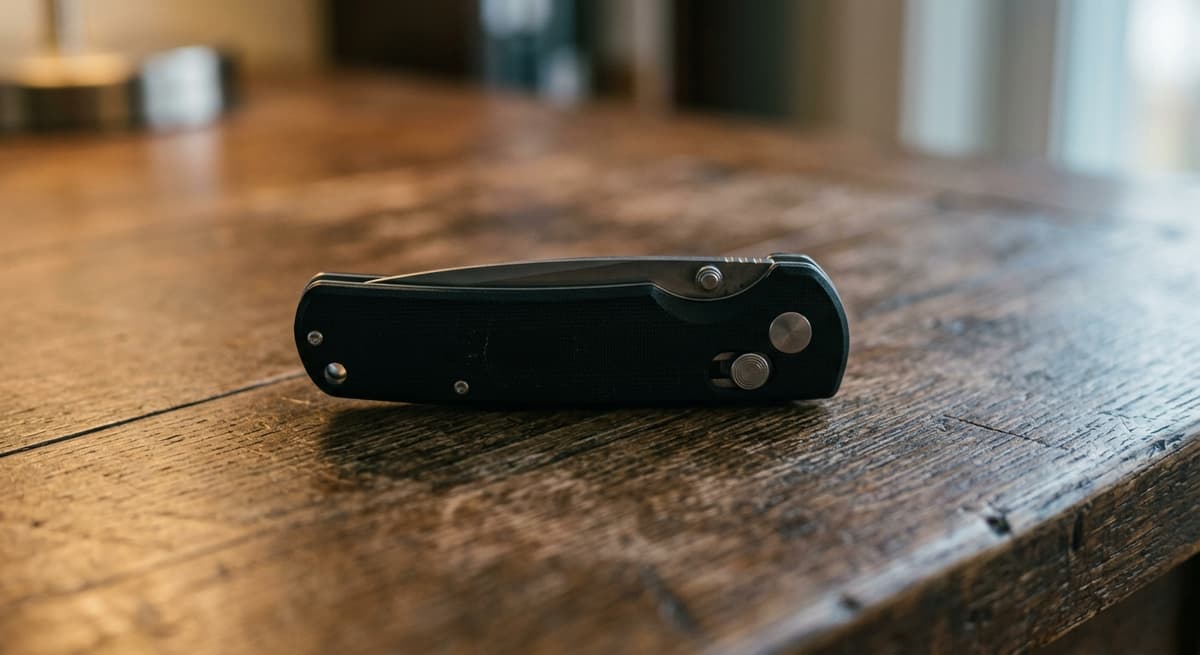
Yes, for an adult with no disqualifying status, in most settings. Utah has no general statewide statute restricting the open or concealed carry of an ordinary knife. The state's weapons offenses in Title 76, Chapter 11 are built around the term "dangerous weapon." Title 76's general definitions section, § 76-1-101.5, opens "Unless otherwise provided, as used in this title," and Chapter 11 does otherwise provide: every offense on this page recites that "Terms defined in Sections 76-1-101.5, 76-11-101, and 76-11-201 apply to this section," and § 76-11-101(3) is the controlling weapons-chapter definition. It defines "dangerous weapon" as a firearm or "an object that in the manner of its use or intended use is capable of causing death or serious bodily injury," and supplies a six-factor test for a non-firearm object: the location and circumstances of its use or possession, the primary purpose for which it was made, the character of any wound produced, the manner of its unlawful use, whether it posed a potential imminent threat to public safety, and its lawful uses. Whether an ordinary knife qualifies is therefore a fact question resolved case by case, not a threshold that is automatically met. Most of the offenses that can reach a knife are tied to a specific location, such as a school or airport, or a specific status, such as being a minor, being intoxicated, or being a restricted person; two further offenses, described below, reach a knife anywhere in the state with no location or status element at all.
Schools, daycare, and higher education
Section 76-11-205 makes it an offense to carry a dangerous weapon on or about the premises of a public or private elementary or secondary school, or on the grounds of a private one, whether the weapon is carried openly or concealed. A violation is a class B misdemeanor if the weapon is not a firearm, which covers a knife, or a class A misdemeanor if it is a firearm. Subsection (4) lists several exemptions, including an individual with a concealed carry permit who is 21 or older carrying the weapon concealed, an actor on their own residence or real property, possession approved by the school administrator, and a weapon carried in a vehicle lawfully under the actor's control other than a school vehicle. The concealed-permit exemption's "unless" clause does not withdraw the exemption while the permit holder is responding to an active threat; it does the opposite, lifting the concealed-manner requirement itself so the same exemption still applies if the weapon becomes visible while the person is lawfully responding to an active threat under §§ 76-2-402, 76-2-405, or 76-2-407.
Institutions of higher education are treated differently. Section 76-11-205.5 restricts only openly carrying a dangerous weapon at a college or university, defined as carrying it visible to ordinary observation, and makes a violation a class C misdemeanor, subject to similar exemptions. Because this section reaches only open carry, concealed carry of a knife on a Utah higher-education campus is not restricted by this particular statute.
Section 76-11-206 imposes the same structure at a daycare, defined as a preschool or child care center: carrying a dangerous weapon on or about daycare premises, open or concealed, is a class B misdemeanor for a non-firearm and a class A misdemeanor for a firearm, with exemptions that include any concealed carry permit holder (not limited to age 21, unlike the school exemption) and an actor on their own property.
General offenses that reach a knife anywhere in the state
Unlike the location- and status-based rules elsewhere on this page, several offenses in Chapter 11 have no location element and apply to any adult anywhere in Utah. Two are carry/possession offenses. Section 76-11-207(2) makes it an offense to threaten with or use a dangerous weapon in a fight or quarrel: "An actor commits threatening with or using a dangerous weapon in a fight or quarrel if the actor, in the presence of two or more individuals: (a) unlawfully draws or exhibits a dangerous weapon in an angry and threatening manner; or (b) unlawfully uses a dangerous weapon in a fight or quarrel." A violation is a class A misdemeanor. The statute includes a safe harbor at subsection (5)(a): "possession of a dangerous weapon, whether visible or concealed, without additional threatening behavior" does not violate the section, so ordinary open or concealed carry of a knife, without more, is not itself the offense.
Section 76-11-208(2) separately makes it an offense to possess a dangerous weapon "with the intent to use the dangerous weapon to commit a criminal offense," also a class A misdemeanor. Neither of these two sections is tied to a school, an airport, a minor, or intoxication; both apply the same § 76-11-101(3) dangerous-weapon definition described above to an ordinary knife carried anywhere in the state, if the fact-specific elements of drawing it threateningly in a fight or possessing it with criminal intent are met.
A separate, smaller group of statewide offenses reaches the sale side of a knife transaction rather than carrying one. Section 76-11-216(2) makes it an offense to knowingly solicit, persuade, encourage, or entice a sale, transfer, or provision of a dangerous weapon known to be unlawful, or to knowingly provide materially false information to deceive someone about the lawfulness of such a transaction; a violation is a class A misdemeanor for a non-firearm dangerous weapon under subsection (3)(a). Sections 76-11-307 and 76-11-308 separately make it an offense to sell, transfer, or otherwise provide a dangerous weapon to someone the seller knows is a category I or category II restricted person, respectively (the restricted-person categories are described below); for a non-firearm, § 76-11-307(3)(b) is a third-degree felony and § 76-11-308(3)(b) is a class A misdemeanor, but only if the seller also knew the recipient intended to use the weapon unlawfully. None of these three sale-related offenses is tied to a location either.
Airports and other statewide restrictions
Section 76-11-218 makes it an offense to possess a dangerous weapon within the secure area of an airport, established under subsection (5), even for a concealed firearm permit holder. Intentional or knowing possession is a class A misdemeanor; reckless or criminally negligent possession is an infraction, and a first infraction offense may draw only a written warning under subsection (6). The airport authority, county, or municipality regulating the airport may not charge a different offense, assess a civil penalty, or enact its own regulation covering this conduct.
Two further restrictions apply statewide rather than to a single location. Section 76-11-211 makes a minor's possession of a dangerous weapon a class B misdemeanor for a first offense and a class A misdemeanor for each subsequent offense, escalating to a third-degree felony only when the weapon is a handgun, short-barreled rifle or shotgun, fully automatic weapon, or machinegun attachment; because a knife is not on that felony-tier list, a minor's knife possession stays at the misdemeanor tier. Subsections (4) and (5) exempt a minor who possesses a dangerous weapon with parental or guardian permission, subject to additional conditions for a minor under 14. A separate statute reaches the parent or guardian's own inaction: § 76-11-214(2) makes it an offense for a parent or guardian who knows a minor is in possession of a dangerous weapon in violation of § 76-11-211 and fails to make reasonable efforts to remove it from the minor's possession, a class B misdemeanor under subsection (3). Separately, § 76-11-217 makes it a class B misdemeanor to carry a dangerous weapon that is readily accessible for immediate use while under the influence of alcohol (measured by blood or breath concentration) or a controlled substance, with an exemption for an actor in their own residence or a residence where they have consent. Two further exemptions are not interchangeable: subsection (4)(c) exempts lawful use of a substance under Utah's medical cannabis program with no additional condition, while subsection (4)(d)(iii)'s safe-handling condition, that after taking the substance the actor either is not a danger to the actor or another individual or is capable of safely handling a dangerous weapon (meeting either prong is enough), applies only to a lawfully prescribed controlled substance, not to medical cannabis.
Restricted persons: the most serious knife exposure in Utah law
Utah Code Chapter 11, Part 3 bars certain people from possessing any dangerous weapon at all, including a knife, and this is the highest-stakes knife rule in the state. Section 76-11-305(2) makes it an offense for a category I restricted person who intentionally or knowingly "purchases, transfers, uses, carries, or otherwise possesses a dangerous weapon," and subsection (3)(a) sets the penalty: "A violation of Subsection (2) is a third degree felony if the dangerous weapon is not a firearm." Category I restricted person status is defined in § 76-11-302, and a qualifying violent-felony conviction is only the first of six independent grounds: being on probation or parole for any felony (not only a violent one), being on parole from secure care, a 10-year window after a juvenile adjudication for an offense that would have been a violent felony if committed by an adult, being unlawfully present in the United States, and being on probation for a conviction of simple possession of a Schedule I or II controlled substance, a controlled substance analog, or a substance listed in § 58-37-109. A reader whose only prior conviction is a non-violent felony, but who is still on probation or parole for it, is still a category I restricted person under this section, and the same third-degree-felony knife rule reaches them.
Section 76-11-306 applies the same structure to a category II restricted person, a broader category that includes people with certain drug-related convictions or subject to specified protective orders, among other grounds. A category II restricted person's possession of a non-firearm dangerous weapon is a class A misdemeanor under subsection (3)(a); possession of a firearm is a third-degree felony. Both sections carry an affirmative defense for a person who already lawfully possessed the weapon before becoming restricted and transfers it within a set window, and a narrow exception for archery equipment used for lawful hunting or target shooting. Neither section requires any particular location: a restricted person's ordinary pocket knife, carried anywhere in Utah, is enough.
Statewide preemption at every level of local government
Utah reserves knife regulation to the state at three tiers of local government, but the three statutes are not identically worded. Section 17-60-502(2) provides that "the authority to regulate a knife is reserved to the state except where the Legislature specifically delegates responsibility to a county," and subsection (3)(a) bars a county from enacting or enforcing an ordinance or regulation pertaining to a knife unless specifically authorized by the Legislature or, subject to subsection (3)(b), by a county ordinance carrying a criminal penalty no more restrictive, and no greater in penalty, than the state's own. Section 10-8-47.5 applies word-for-word identical language to a municipality, substituting only "municipality" for "county."
Section 17B-1-103(7), governing special districts, is shorter and does not track the county/municipal text. Subsection (b) reserves the authority to regulate a knife to the state "except where the Legislature specifically delegates responsibility to a special district," and subsection (c) provides: "Unless specifically authorized by the Legislature by statute, a special district may not adopt or enforce a regulation or rule pertaining to a knife." There is no criminal-penalty carve-out comparable to the county and municipal statutes' subsection (3)(b), because a special district issues regulations and rules rather than criminal ordinances with their own penalty scale. Together, the three statutes mean no Utah city, county, or special district may adopt a knife ordinance of its own, though the county and municipal statutes leave room for a narrow, no-more-restrictive local criminal ordinance that the special-district statute does not.
Federal law: what it does and does not reach
Federal law does not ban an individual from owning or carrying a switchblade. The Federal Switchblade Act, 15 U.S.C. §§ 1241 to 1245, restricts interstate commerce in switchblade knives and, in 15 U.S.C. § 1245 makes it a federal offense to knowingly possess, manufacture, sell, or import a ballistic knife in or affecting interstate commerce or within federal territorial jurisdiction; the operative offense sections, §§ 1242 and 1243, do not apply to certain knives and people, listed as exemptions in 15 U.S.C. § 1244. A 2009 amendment, § 1244(5), exempts a knife with a spring, detent, or other closure-bias mechanism that requires hand, wrist, or arm exertion on the blade itself to overcome the bias and assist opening, the carve-out that keeps modern assisted-opening folding knives legal in interstate commerce. A separate exemption, § 1244(4), covers a person with only one arm possessing or carrying a switchblade with a blade three inches or less.
Disclaimer: This article provides general legal information about Utah knife law as of September 2026. It is not legal advice. Consult a lawyer licensed in Utah for advice about a specific situation.
For a state-by-state comparison, see knife laws by state. Utah's self-defense statutes are covered separately on the Utah self-defense laws page.
Statutes cited reflect their in-force version as of 2026-09-18. Last updated: 2026-09-18.
Frequently Asked Questions
Does Utah have a blade-length limit for knives?
No. Utah Code § 76-11-101(3), the definition every weapons offense in Chapter 11 incorporates, defines 'dangerous weapon' functionally, by a six-factor test tied to how an object is used or intended to be used, with no length threshold, and no Utah statute sets a blade-length limit for general carry.
Can you carry a knife concealed at a Utah college?
Yes, as far as § 76-11-205.5 is concerned. That statute restricts only openly carrying a dangerous weapon at an institution of higher education; it does not reach concealed carry, unlike the separate K-12 school statute, § 76-11-205, which restricts both open and concealed carry.
Can Utah cities or counties pass their own knife ordinances?
Generally no. Utah Code §§ 17-60-502 (counties), 10-8-47.5 (municipalities), and 17B-1-103(7) (special districts) each reserve knife regulation to the state, barring a local ordinance unless the Legislature specifically delegates that authority; the county and municipal statutes additionally allow a narrow local criminal ordinance no more restrictive than state law, an allowance the special-district statute does not contain.
Is it a felony for a minor to carry a knife in Utah?
No. Under § 76-11-211, a minor's possession of a dangerous weapon is a class B misdemeanor for a first offense and a class A misdemeanor for later offenses; the statute escalates to a third-degree felony only for a handgun, short-barreled rifle or shotgun, fully automatic weapon, or machinegun attachment, not for a knife. A separate statute, § 76-11-214, makes it a class B misdemeanor for a parent or legal guardian who knows the minor is in non-exempt possession of a dangerous weapon and fails to make reasonable efforts to remove it.
Can a felon carry a knife in Utah?
Generally no, if the prior conviction makes the person a category I or category II restricted person under Utah Code Chapter 11, Part 3. Category I restricted person status, defined in § 76-11-302, is not limited to a violent felony conviction; it also covers anyone currently on probation or parole for any felony, among other grounds. Section 76-11-305 makes a category I restricted person's possession of a non-firearm dangerous weapon, including an ordinary knife, a third-degree felony; § 76-11-306 makes the same conduct a class A misdemeanor for a category II restricted person. Neither offense requires a specific location.
Updates
Corrected our description of Utah's prescription-drug exemption to the weapon-while-intoxicated offense: the statute requires only that the person is not a danger or is capable of safely handling the weapon, not both.
Independently fact-checked against the cited primary sources
The Law Behind This Article
This article rests on the statutory provisions below, held in our own legal record and retrieved from the official source. Tap a section to read the operative text.
Utah Code, Title 76: Criminal Offenses
§ 76-11-305Category I restricted person participating in prohibited dangerous weapon conduct.In forcecited in 2 of our articles
(1) Terms defined in Sections 76-1-101.5, 76-11-101, and 76-11-301 apply to this section. (2) An actor commits category I restricted person participating in prohibited dangerous weapon conduct if the actor: (a) is a category I restricted person; and (b) intentionally or knowingly: (i) agrees, consents, offers, or arranges to: (A) purchase a dangerous weapon; (B) transfer a dangerous weapon; (C) use a dangerous weapon; or (D) carry or otherwise possess a dangerous weapon; or (ii) purchases, transfers, uses, carries, or otherwise possesses a dangerous weapon. (3) (a) A violation of Subsection (2) is a third degree felony if the dangerous weapon is not a firearm. (b) A violation of Subsection (2) is a second degree felony if the dangerous weapon is a firearm. (4) For purposes of this section, using a dangerous weapon includes using an antique firearm for an activity regulated under Title 23A, Wildlife Resources Act.
Official text (excerpt) · last checked 2026-09-24 · Read the full text in our law library · Verify at le.utah.gov
Cited in 1 court opinions in our collectionLatest citing opinion in our collection: 2026
Opinions citing this section in our collection:
- State v. Perez (Court of Appeals of Utah 2026, 2026 UT App 57)“…rwise possess “a dangerous weapon” that “is not a firearm.” Utah Code § 76-11-305(2)(a), (2)(b)(ii), (3)(a). 3 A dangerou…”
Identified automatically from the court opinions citing this section — not a ranking of which case controls.
Also relied on in: Utah Pepper Spray and Stun Gun Laws (2026)
§ 76-11-101Definitions.In forcecited in 3 of our articles
As used in this chapter: (1) (a) "Antique firearm" means: (i) any firearm, including any firearm with a matchlock, flintlock, percussion cap, or similar type of ignition system, manufactured in or before 1898; (ii) a firearm that is a replica of any firearm described in this Subsection (1)(a), if the replica: (A) is not designed or redesigned for using rimfire or conventional centerfire fixed ammunition; or (B) uses rimfire or centerfire fixed ammunition that is no longer manufactured in the United States and is not readily available in ordinary channels of commercial trade; or (iii) (A) that is a muzzle loading rifle, shotgun, or pistol; and (B) is designed to use black powder, or a black powder substitute, and cannot use fixed ammunition. (b) "Antique firearm" does not include: (i) a weapon that incorporates a firearm frame or receiver; (ii) a firearm that is converted into a muzzle loading weapon; or (iii) a muzzle loading weapon that can be readily converted to fire fixed ammunition by replacing the: (A) barrel; (B) bolt; (C) breechblock; or (D) any combination of Subsection (1)(b)(iii)(A), (B), or (C).
Official text (excerpt) · last checked 2026-07-29 · Read the full text in our law library · Verify at le.utah.gov
Cited in 1 court opinions in our collectionLatest citing opinion in our collection: 2026
Opinions citing this section in our collection:
- State v. Perez (Court of Appeals of Utah 2026, 2026 UT App 57)“…rcumstances in which the object was used or possessed.” See Utah Code § 76-11-101(3)(b)(i). Had factor 1 been included in…”
Identified automatically from the court opinions citing this section — not a ranking of which case controls.
Also relied on in: Pepper Spray and Stun Gun Laws by State (2026)
§ 76-11-306Category II restricted person participating in prohibited dangerous weapon conduct.In force
(1) Terms defined in Sections 76-1-101.5, 76-11-101, and 76-11-301 apply to this section. (2) An actor commits category II restricted person participating in prohibited dangerous weapon conduct if the actor: (a) is a category II restricted person; and (b) intentionally or knowingly: (i) purchases a dangerous weapon; (ii) transfers a dangerous weapon; (iii) uses a dangerous weapon; or (iv) carries or otherwise possesses a dangerous weapon. (3) (a) A violation of Subsection (2) is a class A misdemeanor if the dangerous weapon is not a firearm. (b) A violation of Subsection (2) is a third degree felony if the dangerous weapon is a firearm. (4) For purposes of this section using a dangerous weapon includes using an antique firearm for an activity regulated under Title 23A, Wildlife Resources Act.
Official text (excerpt) · last checked 2026-07-29 · Read the full text in our law library · Verify at le.utah.gov
§ 76-11-302Category I restricted person established.In force
Except as provided in Section 76-11-304, Exceptions, limitations, and exclusions to restricted person categories, an individual is categorized as a category I restricted person and subject to the restrictions and penalties described in Section 76-11-305: (1) if the individual has been convicted of a violent felony; (2) if the individual is on probation or parole for a felony; (3) if the individual is on parole from secure care; (4) for 10 years after the day on which the individual was adjudicated for an offense which if committed by an adult would have been a violent felony; (5) if the individual is an alien who is illegally or unlawfully in the United States, including an alien who has: (a) submitted an asylum application in accordance with 8 U.S.C. Sec. 1158 and is waiting for a disposition on the application; or (b) submitted a temporary protected status application in accordance with 8 U.S.C. Sec.
Official text (excerpt) · last checked 2026-07-29 · Read the full text in our law library · Verify at le.utah.gov
§ 76-11-207Threatening with or using a dangerous weapon in a fight or quarrel.In forcecited in 2 of our articles
(1) Terms defined in Sections 76-1-101.5, 76-11-101, and 76-11-201 apply to this section. (2) An actor commits threatening with or using a dangerous weapon in a fight or quarrel if the actor, in the presence of two or more individuals: (a) unlawfully draws or exhibits a dangerous weapon in an angry and threatening manner; or (b) unlawfully uses a dangerous weapon in a fight or quarrel. (3) A violation of Subsection (2) is a class A misdemeanor. (4) This section does not apply to: (a) an individual who, reasonably believing the action to be necessary in compliance with Section 76-2-402, with purpose to prevent another's use of unlawful force: (i) threatens the use of a dangerous weapon; or (ii) draws or exhibits a dangerous weapon; or (b) an individual exempted from certain weapons laws as described in Subsections 53-5a-108(1)(a) through (f) acting in performance of the individual's duties.
Official text (excerpt) · last checked 2026-07-29 · Read the full text in our law library · Verify at le.utah.gov
§ 76-11-208Possession of a dangerous weapon with criminal intent.In forcecited in 2 of our articles
(1) Terms defined in Sections 76-1-101.5, 76-11-101, and 76-11-201 apply to this section. (2) An actor commits possession of a dangerous weapon with criminal intent if the actor possesses a dangerous weapon with the intent to use the dangerous weapon to commit a criminal offense. (3) A violation of Subsection (2) is a class A misdemeanor.
Official text (excerpt) · last checked 2026-07-29 · Read the full text in our law library · Verify at le.utah.gov
§ 76-11-205Carrying a dangerous weapon at an elementary school or secondary school.In forcecited in 2 of our articles
(1) (a) As used in this section, "on or about school premises" means: (i) in a public or private elementary school or secondary school; or (ii) on the grounds of a private elementary school or secondary school. (b) Terms defined in Sections 76-1-101.5, 76-11-101, and 76-11-201 apply to this section. (2) An actor commits carrying a dangerous weapon at an elementary school or secondary school if the actor: (a) is not an individual listed in Subsection (4); (b) carries a dangerous weapon on or about school premises; and (c) knows or reasonably believes that the actor is on or about school premises at the time the actor carries the dangerous weapon. (3) (a) A violation of Subsection (2) is a class B misdemeanor if the dangerous weapon carried by the actor is not a firearm. (b) A violation of Subsection (2) is a class A misdemeanor if the dangerous weapon carried by the actor is a firearm.
Official text (excerpt) · last checked 2026-07-29 · Read the full text in our law library · Verify at le.utah.gov
§ 76-11-205.5Openly carrying a dangerous weapon at an institution of higher education.In forcecited in 2 of our articles
(1) (a) As used in this section: (i) "Institution of higher education" means the same as that term is defined in Section 53H-1-101. (ii) "On or about school premises" means: (A) in an institution of higher education; or (B) on the grounds of a an institution of higher education. (b) Terms defined in Sections 76-1-101.5, 76-11-101, and 76-11-201 apply to this section. (2) An actor commits openly carrying a dangerous weapon at an institution of higher education if: (a) the actor intentionally carries a dangerous weapon on or about school premises; (b) the actor intentionally carries the dangerous weapon in a manner that the dangerous weapon is visible to the ordinary observation of a reasonable person; (c) the dangerous weapon is not covered, hidden, or secreted in a way that would make the dangerous weapon's presence unobservable to the ordinary observation of a reasonable person; and (d) the actor knows, or reasonably believes, that the actor is on or about school premises at the time the actor carries the dangerous weapon. (3) A violation of Subsection (2) is a class (C) misdemeanor.
Official text (excerpt) · last checked 2026-07-29 · Read the full text in our law library · Verify at le.utah.gov
§ 76-11-206Carrying a dangerous weapon at a daycare.In forcecited in 2 of our articles
(1) (a) As used in this section: (i) "Daycare" means a preschool or child care center. (ii) "On or about daycare premises" means: (A) inside the building where a daycare is being held, if the entire building is being used for the operation of the daycare; or (B) if only a portion of a building is being used to operate a daycare, in the room or rooms where the daycare operation is being held. (b) Terms defined in Sections 76-1-101.5, 76-11-101, and 76-11-201 apply to this section. (2) An actor commits carrying a dangerous weapon at a daycare if the actor: (a) is not an individual listed in Subsection (4); (b) carries a dangerous weapon on or about daycare premises; and (c) has reasonable cause to believe that the actor is on or about daycare premises at the time the actor carried the dangerous weapon. (3) (a) A violation of Subsection (2) is a class B misdemeanor if the dangerous weapon carried by the actor is not a firearm. (b) A violation of Subsection (2) is a class A misdemeanor if the dangerous weapon carried by the actor is a firearm.
Official text (excerpt) · last checked 2026-07-29 · Read the full text in our law library · Verify at le.utah.gov
§ 76-11-211Possession of a dangerous weapon by a minor.In forcecited in 2 of our articles
(1) (a) As used in this section, "responsible adult" means an individual: (i) who is 18 years old or older; and (ii) who may lawfully possess a dangerous weapon. (b) Terms defined in Sections 76-1-101.5, 76-11-101, and 76-11-201 apply to this section. (2) An actor commits possession of a dangerous weapon by a minor if the actor: (a) is a minor; and (b) possesses a dangerous weapon. (3) (a) Except as provided in Subsection (3)(b), a violation of Subsection (2) is: (i) a class B misdemeanor for a first offense; and (ii) a class A misdemeanor for each subsequent offense. (b) A violation of Subsection (2) is a third degree felony if the dangerous weapon is: (i) a handgun; (ii) a short barreled rifle; (iii) a short barreled shotgun; (iv) a fully automatic weapon; or (v) a machinegun firearm attachment.
Official text (excerpt) · last checked 2026-07-29 · Read the full text in our law library · Verify at le.utah.gov
§ 76-11-214Parent or guardian knowing a minor is in possession of a dangerous weapon.In forcecited in 2 of our articles
(1) Terms defined in Sections 76-1-101.5, 76-11-101, and 76-11-201 apply to this section. (2) An actor is guilty of parent or guardian knowing a minor is in possession of a dangerous weapon if: (a) the actor knows a minor is in possession of a dangerous weapon in violation of Section 76-11-211, Possession of a dangerous weapon by a minor; (b) the minor is the actor's biological or adopted child or the actor is the legal guardian of the minor; and (c) the actor fails to make reasonable efforts to remove the dangerous weapon from the minor's possession. (3) A violation of Subsection (2) is a class B misdemeanor.
Official text (excerpt) · last checked 2026-07-29 · Read the full text in our law library · Verify at le.utah.gov
§ 76-11-216Prohibited conduct in the sale of a dangerous weapon.In forcecited in 2 of our articles
(1) (a) As used in this section, "materially false information" means information that portrays an illegal dangerous weapon transaction as legal or a legal dangerous weapon transaction as illegal. (b) Terms defined in Sections 76-1-101.5, 76-11-101, and 76-11-201 apply to this section. (2) An actor commits prohibited conduct in the sale of a dangerous weapon if the actor: (a) (i) knowingly solicits, persuades, encourages, or entices a person to sell, transfer, or otherwise provide a dangerous weapon to the actor or another individual; and (ii) knows that the sale, transfer, or providing of the dangerous weapon to the actor or other individual would be a violation of state or federal law; or (b) (i) provides information that the actor knows is materially false information to a person; and (ii) knowingly provides the materially false information to the person with intent to deceive the person about the lawfulness of a sale, transfer, or providing of a dangerous weapon to the actor or another individual. (3) (a) A violation of Subsection (2) is a class A misdemeanor if the dangerous weapon sold, transferred, or provided is not a firearm.
Official text (excerpt) · last checked 2026-07-29 · Read the full text in our law library · Verify at le.utah.gov
§ 76-11-217Carrying a dangerous weapon while under the influence of alcohol or drugs.In forcecited in 2 of our articles
(1) Terms defined in Sections 76-1-101.5, 76-11-101, and 76-11-201 apply to this section. (2) An actor commits carrying a dangerous weapon while under the influence of alcohol or drugs if the actor: (a) carries a dangerous weapon that is readily accessible by the actor for immediate use; and (b) is under the influence of: (i) alcohol as determined by the actor's blood or breath alcohol concentration in accordance with Subsections 41-6a-502(1)(a) through (c); or (ii) a controlled substance as defined in Section 58-37-101. (3) A violation of Subsection (2) is a class B misdemeanor.
Official text (excerpt) · last checked 2026-07-29 · Read the full text in our law library · Verify at le.utah.gov
§ 76-11-218Possession of a dangerous weapon in an airport secure area -- Reporting requirements.In forcecited in 2 of our articles
(1) (a) As used in this section: (i) "Airport authority" has the same meaning as defined in Section 72-10-102. (ii) "Explosive" is the same as defined for "explosive, chemical, or incendiary device" in Section 76-15-210. (iii) "Law enforcement officer" means the same as that term is defined in Section 53-13-103. (b) Terms defined in Sections 76-1-101.5, 76-11-101, and 76-11-201 apply to this section. (2) Except as provided in Subsection (4), an actor commits possession of a dangerous weapon in an airport secure area if the actor, including an actor with a concealed firearm permit issued under Title 53, Chapter 5a, Part 3, Concealed Firearm Permits: (a) intentionally or knowingly possesses a dangerous weapon within the secure area of an airport established under Subsection (5); or (b) recklessly or with criminal negligence possesses a dangerous weapon within the secure area of an airport established under Subsection (5). (3) (a) A violation of Subsection (2)(a) is a class A misdemeanor. (b) Subject to Subsection (6), a violation of Subsection (2)(b) is an infraction.
Official text (excerpt) · last checked 2026-07-29 · Read the full text in our law library · Verify at le.utah.gov
§ 76-11-307Selling a dangerous weapon to a category I restricted person.In force
(1) Terms defined in Sections 76-1-101.5, 76-11-101, and 76-11-301 apply to this section. (2) An actor commits selling a dangerous weapon to a category I restricted person if the actor: (a) sells, transfers, or otherwise provides a dangerous weapon to an individual who is a category I restricted person; and (b) knows the individual that the actor has sold, transferred, or provided the dangerous weapon to is a category I restricted person. (3) (a) A violation of Subsection (2) is a second degree felony if the dangerous weapon sold, transferred, or provided is a firearm. (b) A violation of Subsection (2) is a third degree felony if the dangerous weapon sold, transferred, or provided is not a firearm and the actor knew that the recipient intended to use the dangerous weapon for an unlawful purpose.
Official text (excerpt) · last checked 2026-07-29 · Read the full text in our law library · Verify at le.utah.gov
§ 76-11-308Selling a dangerous weapon to a category II restricted person.In force
(1) Terms defined in Sections 76-1-101.5, 76-11-101, and 76-11-301 apply to this section. (2) An actor commits selling a dangerous weapon to a category II restricted person if the actor: (a) sells, transfers, or otherwise provides a dangerous weapon to an individual who is a category II restricted person; and (b) knows the individual that the actor has sold, transferred, or provided the dangerous weapon to is a category II restricted person. (3) (a) A violation of Subsection (2) is a third degree felony if the dangerous weapon sold, transferred, or provided is a firearm. (b) A violation of Subsection (2) is a class A misdemeanor if the dangerous weapon sold, transferred, or provided is not a firearm and the actor knew that the recipient intended to use the dangerous weapon for an unlawful purpose.
Official text (excerpt) · last checked 2026-07-29 · Read the full text in our law library · Verify at le.utah.gov
§ 76-1-101.5Definitions.In force
Unless otherwise provided, as used in this title: (1) "Act" means a voluntary bodily movement and includes speech. (2) "Actor" means a person whose criminal responsibility is in issue in a criminal action. (3) "Affinity" means a relationship by marriage. (4) "Bodily injury" means physical pain, illness, or any impairment of physical condition. (5) "Conduct" means an act or omission. (6) "Consanguinity" means a relationship by blood to the first or second degree, including an individual's parent, grandparent, sibling, child, aunt, uncle, niece, or nephew. (7) "Dangerous weapon" means: (a) any item capable of causing death or serious bodily injury; or (b) a facsimile or representation of the item, if: (i) the actor's use or apparent intended use of the item leads the victim to reasonably believe the item is likely to cause death or serious bodily injury; or (ii) the actor represents to the victim verbally or in any other manner that the actor is in control of such an item.
Official text (excerpt) · last checked 2026-07-29 · Read the full text in our law library · Verify at le.utah.gov
Cited in 6 court opinions in our collectionLatest citing opinion in our collection: 2025
Opinions citing this section in our collection:
- State v. Ames (Court of Appeals of Utah 2024, 546 P.3d 356)“…ily injury,” followed by “bodily injury.” See id.; see also Utah Code § 76-1-101.5(4), (17)–(18). But the hierarchical rel…”
- State v. Hernandez (Court of Appeals of Utah 2025, 2025 UT App 90)“…he item is likely to cause death or serious bodily injury.” Utah Code § 76-1-101.5(7); see also id. § 76-5-103(1)(b). 2…”
- State v. McDonald (Court of Appeals of Utah 2025, 2025 UT App 172)“…ily member or organ, or . . . a substantial risk of death,” Utah Code § 76-1-101.5(17) 8—is less than a certain result of…”
Identified automatically from the court opinions citing this section — not a ranking of which case controls.
§ 76-11-201Definitions.In forcecited in 2 of our articles
As used in this part: (1) "Class D road" means the same as that term is defined in Section 72-3-105. (2) "Enter" means intrusion of the entire body. (3) "Fully automatic weapon" means a firearm that fires, is designed to fire, or can be readily restored to fire, automatically more than one shot without manual reloading by a single function of the trigger. (4) "Highway" means the same as that term is defined in Section 72-1-102. (5) "House of worship" means a church, temple, synagogue, mosque, or other building set apart primarily for the purpose of worship in which religious services are held and the main body of which is kept for that use and not put to any other use inconsistent with the building's primary purpose. (6) "Machinegun firearm attachment" means any part or combination of parts added to a semiautomatic firearm that allows the firearm to fire as a fully automatic weapon. (7) (a) "Readily accessible for immediate use" means that a firearm or other dangerous weapon is carried on an individual's person or within such close proximity and in such a manner that it can be retrieved and used as readily as if carried on the individual's person.
Official text (excerpt) · last checked 2026-07-29 · Read the full text in our law library · Verify at le.utah.gov
Utah Code, Title 17: Counties
§ 17-60-502Knives regulated by state.In forcecited in 2 of our articles
(1) As used in this section, "knife" means a cutting instrument that includes a sharpened or pointed blade. (2) The authority to regulate a knife is reserved to the state except where the Legislature specifically delegates responsibility to a county. (3) (a) Unless specifically authorized by the Legislature or, subject to Subsection (3)(b), a county ordinance with a criminal penalty, a county may not enact or enforce an ordinance or a regulation pertaining to a knife. (b) A county may not enact an ordinance with a criminal penalty pertaining to a knife that is: (i) more restrictive than a state criminal penalty pertaining to a knife; or (ii) has a greater criminal penalty than a state penalty pertaining to a knife.
Official text (excerpt) · last checked 2026-07-29 · Read the full text in our law library · Verify at le.utah.gov
Also relied on in: Knife Laws by State (2026): Carry Rules, Blade Limits, Penalties
Utah Code, Title 10: Utah Municipal Code
§ 10-8-47.5Knives regulated by state.In force
(1) As used in this section, "knife" means a cutting instrument that includes a sharpened or pointed blade. (2) The authority to regulate a knife is reserved to the state except where the Legislature specifically delegates responsibility to a municipality. (3) (a) Unless specifically authorized by the Legislature or, subject to Subsection (3)(b), a municipal ordinance with a criminal penalty, a municipality may not enact or enforce an ordinance or a regulation pertaining to a knife. (b) A municipality may not enact an ordinance with a criminal penalty pertaining to a knife that is: (i) more restrictive than a state criminal penalty pertaining to a knife; or (ii) has a greater criminal penalty than a state penalty pertaining to a knife.
Official text (excerpt) · last checked 2026-07-29 · Read the full text in our law library · Verify at le.utah.gov
Utah Code, Title 17B: Limited Purpose Local Government Entities - Special Districts
§ 17B-1-103Special district status and powers -- Registration as a limited purpose entity.In force
(1) A special district: (a) is: (i) a body corporate and politic with perpetual succession; (ii) a quasi-municipal corporation; (iii) a political subdivision of the state; and (iv) separate and distinct from and independent of any other political subdivision of the state; and (b) may sue and be sued. (2) A special district may: (a) acquire, by any lawful means, or lease any real property, personal property, or a groundwater right necessary or convenient to the full exercise of the district's powers; (b) acquire, by any lawful means, any interest in real property, personal property, or a groundwater right necessary or convenient to the full exercise of the district's powers; (c) subject to Subsection (8), transfer an interest in or dispose of any property or interest described in Subsections (2)(a) and (b); (d) acquire or construct works, facilities, and improvements necessary or convenient to the full exercise of the district's powers, and operate, control, maintain, and use those works, facilities, and improvements; (e) borrow money and incur indebtedness for any lawful district purpose; (f) issue bonds, including refunding bonds: (i) for any lawful district…
Official text (excerpt) · last checked 2026-07-29 · Read the full text in our law library · Verify at le.utah.gov
Cited in 5 court opinions in our collectionLatest citing opinion in our collection: 2019
Opinions citing this section in our collection:
- Metro Water v. SHCH Alaska (Utah Supreme Court 2019, 2019 UT 62)“…3d 465. 9 R & R Indus. Park, 2008 UT 80, ¶ 23. 10 UTAH CODE §§ 17B-1-103(2)(q), -103(2)(t), -301(2)(i), and…”
- Metropolitan Water District of Salt Lake & Sandy v. Questar Gas Co. (Court of Appeals of Utah 2015, 798 Utah Adv. Rep. 16)“…tah Code section 17B-1-301(2)(i)] (…continued) the state.” Utah Code Ann. § 17B-1-103(1)(a) (LexisNexis Supp. 2014). 2014…”
- GeoMetWatch Corp. v. Utah State Univ. Research Found. (Utah Supreme Court 2018, 428 P.3d 1064)“…al service districts) are a “quasi- municipal corporation.” UTAH CODE §§ 17B-1-103(1), 17D-1-103(1). In 1935, we recognize…”
Identified automatically from the court opinions citing this section — not a ranking of which case controls.
United States Code Title 15
§ 1241DefinitionsIn forcecited in 52 of our articles
As used in this chapter— The term “interstate commerce” means commerce between any State, Territory, possession of the United States, or the District of Columbia, and any place outside thereof. The term “switchblade knife” means any knife having a blade which opens automatically— by hand pressure applied to a button or other device in the handle of the knife, or by operation of inertia, gravity, or both.
Official text (excerpt) · last checked 2026-07-28 · Read the full text in our law library · Verify at uscode.house.gov
Cited in 15 court opinions in our collectionLatest citing opinion in our collection: 2014
Opinions citing this section in our collection:
- Stewart A. Taylor, D/B/A Taylor Cutlery Mfg. Co. v. United States of America (Court of Appeals for the Sixth Circuit 1988, 848 F.2d 715)“…Service, are not switchblade knives within the meaning of 15 U.S.C. § 1241 (b) and 19 C.F.R. § 1295 (a)(1). The d…”
- Crowley Cutlery Company v. United States of America and Commissioner of Customs of the United States Customs Service (Court of Appeals for the Seventh Circuit 1988, 849 F.2d 273)“…Illinois for a declaration that the Switchblade Knife Act, 15 U.S.C. §§ 1241 et seq., which forbids th…”
- Edna Fall, as Administratrix of the Estate of Phillip Fall, Deceased v. Esso Standard Oil Company (Court of Appeals for the Fifth Circuit 1962, 297 F.2d 411)“…25 S.Ct. 158 , 49 L.Ed. 363 . Section 1 of the Act, 15 U.S.C.A. § 1241 (b), defines the term “switchblade knif…”
Identified automatically from the court opinions citing this section — not a ranking of which case controls.
Also relied on in: Alabama Knife Laws (2026): What Is Legal to Carry, Alaska Knife Laws (2026): Concealed Carry Rules Explained, Arizona Knife Laws (2026): Carry Rules and Preemption
§ 1244ExceptionsIn forcecited in 52 of our articles
Sections 1242 and 1243 of this title shall not apply to— any common carrier or contract carrier, with respect to any switchblade knife shipped, transported, or delivered for shipment in interstate commerce in the ordinary course of business; the manufacture, sale, transportation, distribution, possession, or introduction into interstate commerce, of switchblade knives pursuant to contract with the Armed Forces; the Armed Forces or any member or employee thereof acting in the performance of his duty; the possession, and transportation upon his person, of any switchblade knife with a blade three inches or less in length by any individual who has only one arm; or a knife that contains a spring, detent, or other mechanism designed to create a bias toward closure of the blade and that requires exertion applied to the blade by hand, wrist, or arm to overcome the bias toward closure to assist in opening the knife.
Official text (excerpt) · last checked 2026-07-28 · Read the full text in our law library · Verify at uscode.house.gov
Also relied on in: Arkansas Knife Laws (2026): Intent-Based Carry Rules, California Knife Laws (2026): Four Blade-Length Rules, Colorado Knife Laws (2026): Concealed Carry and Exceptions
§ 1245Ballistic knivesIn forcecited in 50 of our articles
Whoever in or affecting interstate commerce, within any Territory or possession of the United States, within Indian country (as defined in section 1151 of title 18), or within the special maritime and territorial jurisdiction of the United States (as defined in section 7 of title 18), knowingly possesses, manufactures, sells, or imports a ballistic knife shall be fined as provided in title 18, or imprisoned not more than ten years, or both. Whoever possesses or uses a ballistic knife in the commission of a Federal crime of violence shall be fined as provided in title 18, or imprisoned not less than five years and not more than ten years, or both. The exceptions provided in paragraphs (1), (2), and (3) of section 1244 of this title with respect to switchblade knives shall apply to ballistic knives under subsection (a) of this section. As used in this section, the term “ballistic knife” means a knife with a detachable blade that is propelled by a spring-operated mechanism.
Official text (excerpt) · last checked 2026-07-28 · Read the full text in our law library · Verify at uscode.house.gov
Cited in 2 court opinions in our collectionLatest citing opinion in our collection: 2008
Opinions citing this section in our collection:
- ALCANTAR (Board of Immigration Appeals 1994, 20 I. & N. Dec. 801)“…ed by an adult, would be felony and crime of violence); cf. 15 U.S.C. § 1245(b) (1988) (use of ballistic knife in co…”
- United States v. Polizzi (District Court, E.D. New York 2008, 549 F. Supp. 2d 308)“…8 Trust in l’estraint of import trade 3 months 15 U.S.C. § 1245 (b) Possession/use of a ballistic knife…”
Identified automatically from the court opinions citing this section — not a ranking of which case controls.
Also relied on in: Connecticut Knife Laws (2026): Open and Concealed Carry, Delaware Knife Laws (2026): Carry, Switchblades, and Bans, D.C. Knife Laws (2026): Possession and Carry Rules
Search our full record of US law — 2.1 million sections, every state + federal →
Sources and References
- Utah Code § 76-1-101.5 - General title definitions ('unless otherwise provided')(le.utah.gov).gov
- Utah Code § 76-11-101 - Weapons-chapter definitions (controlling 'dangerous weapon' definition)(le.utah.gov).gov
- Utah Code § 76-11-205 - Carrying a dangerous weapon at an elementary school or secondary school(le.utah.gov).gov
- Utah Code § 76-11-205.5 - Openly carrying a dangerous weapon at an institution of higher education(le.utah.gov).gov
- Utah Code § 76-11-206 - Carrying a dangerous weapon at a daycare(le.utah.gov).gov
- Utah Code § 76-11-207 - Threatening with or using a dangerous weapon in a fight or quarrel(le.utah.gov).gov
- Utah Code § 76-11-208 - Possession of a dangerous weapon with criminal intent(le.utah.gov).gov
- Utah Code § 76-11-211 - Possession of a dangerous weapon by a minor(le.utah.gov).gov
- Utah Code § 76-11-214 - Parent or guardian knowing a minor is in possession of a dangerous weapon(le.utah.gov).gov
- Utah Code § 76-11-216 - Prohibited conduct in the sale of a dangerous weapon(le.utah.gov).gov
- Utah Code § 76-11-217 - Carrying a dangerous weapon while under the influence of alcohol or drugs(le.utah.gov).gov
- Utah Code § 76-11-218 - Possession of a dangerous weapon in an airport secure area(le.utah.gov).gov
- Utah Code § 76-11-302 - Category I restricted person established(le.utah.gov).gov
- Utah Code § 76-11-305 - Category I restricted person participating in prohibited dangerous weapon conduct(le.utah.gov).gov
- Utah Code § 76-11-306 - Category II restricted person participating in prohibited dangerous weapon conduct(le.utah.gov).gov
- Utah Code § 76-11-307 - Selling a dangerous weapon to a category I restricted person(le.utah.gov).gov
- Utah Code § 76-11-308 - Selling a dangerous weapon to a category II restricted person(le.utah.gov).gov
- Utah Code § 17-60-502 - Knives regulated by state (counties)(le.utah.gov).gov
- Utah Code § 10-8-47.5 - Knives regulated by state (municipalities)(le.utah.gov).gov
- Utah Code § 17B-1-103 - Special district status and powers (knife regulation, subsection 7)(le.utah.gov).gov
- 15 U.S.C. §§ 1241-1245 - Federal Switchblade Act, interstate commerce and ballistic-knife scope(law.cornell.edu)
- 15 U.S.C. § 1244 - exceptions, including the 2009 assisted-opening carve-out and the one-arm exception(law.cornell.edu)