
Texas
Texas Knife Laws (2026): Carry, Location-Restricted Knives
Independently fact-checked against primary sources (last audited September 24, 2026). · 11 primary sources cited on this page. How we verify our legal content
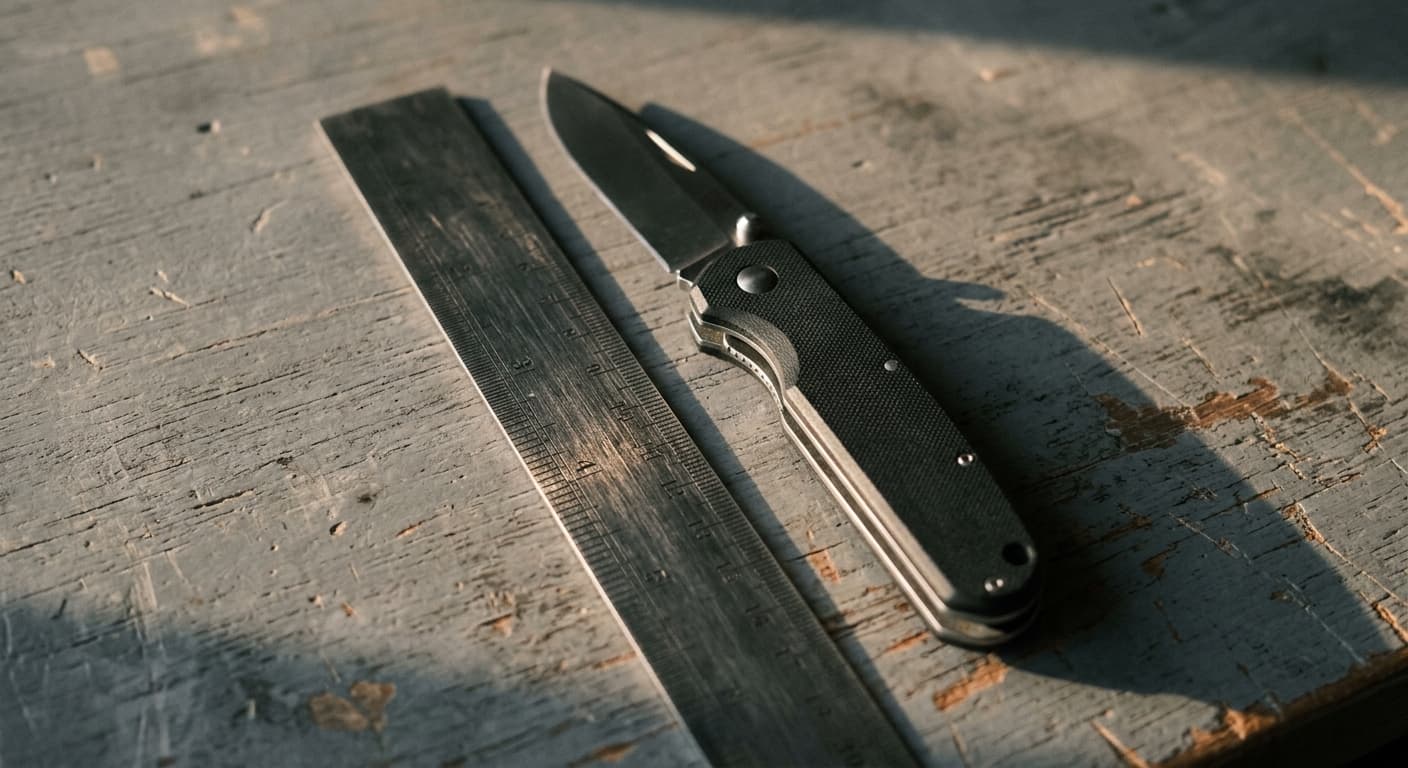
Texas has no statewide blade-length limit and no general restriction on carrying an ordinary knife, open or concealed, for an adult. A 2017 law replaced the state's old named "illegal knives" list with a single blade-length threshold that applies only to specific restricted places and to carry by a minor, not to general adult carry.
Jurisdiction scope: This page covers Texas state law only, principally Tex. Penal Code §§ 46.01, 46.02, 46.03, 46.05, 46.06, 46.11, and 46.15, and Tex. Loc. Gov't Code §§ 229.001 and 236.001-.002. It does not cover the handgun-license statutes in Government Code Chapter 411 in detail, since those govern firearms rather than knives.
Is it legal to carry a knife in Texas?
Yes, for an adult. Texas Penal Code Chapter 46 has no general statute restricting the open or concealed carry of a knife of any length or type. The chapter's carry offense for weapons, § 46.02(a), reaches only "a handgun," and while § 46.02 was expanded by a separate subsection to reach location-restricted knives, that expansion is scoped narrowly to minors, described below. An adult 18 or older may carry an ordinary knife, or a knife with a blade over 5.5 inches, openly or concealed, anywhere in Texas outside the specific restricted places listed in § 46.03.
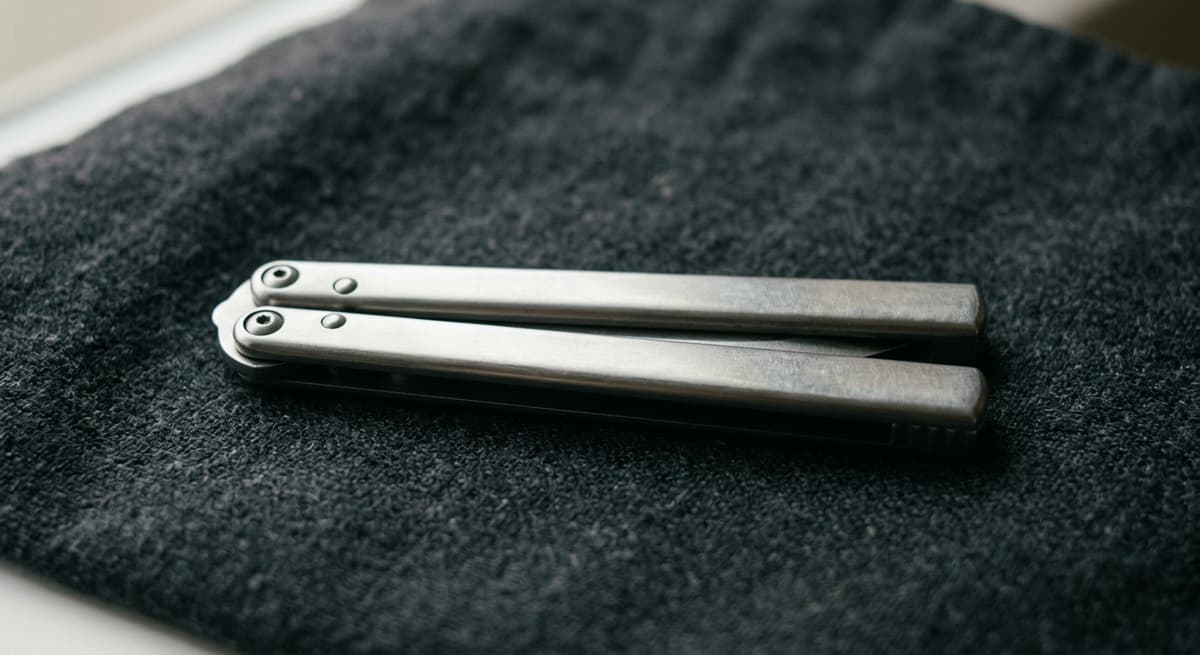
Texas Penal Code § 46.01(7) defines "knife" as "any bladed hand instrument that is capable of inflicting serious bodily injury or death by cutting or stabbing a person with the instrument," a definition with no blade-length qualifier. A second, narrower definition matters for the carry rules that do exist: § 46.01(6) defines "location-restricted knife" as "a knife with a blade over five and one-half inches." This threshold does not create a general carry limit; it only determines which knives are swept into the specific restricted-place and minors' rules described below.
The only age-based knife-carry offense, and a separate rule on selling to a minor
Section 46.02(a-4) makes it an offense for a person to carry a location-restricted knife if the person is younger than 18 years of age, unless the person is on their own premises or premises under their control, is inside of or directly en route to a motor vehicle or watercraft that the person owns or controls, or is under the direct supervision of a parent or legal guardian. An ordinary knife with a blade of 5.5 inches or less falls outside this subsection entirely regardless of the carrier's age, since it is not a "location-restricted knife" by definition.
A second, separate statute reaches the other side of that transaction. Section 46.06(a)(2) makes it an offense to "intentionally or knowingly sell, rent, lease, or give or offer to sell, rent, lease, or give to any child younger than 18 years of age any firearm, club, or location-restricted knife." Unlike § 46.02(a-4)'s Class C carry offense, a violation of § 46.06(a)(2) is a Class A misdemeanor under § 46.06(d), a higher grade than the carry offense itself (the state-jail-felony bump in § 46.06(d)(1) applies only if the weapon transferred is a handgun, not a knife). Section 46.06(c) supplies an affirmative defense if the transfer was to a minor whose parent or legal custodian gave written permission for the sale, or effective consent for a non-sale transfer.
Where a location-restricted knife can't go
Section 46.03(a) prohibits possessing or going with a firearm, a location-restricted knife, a club, or a § 46.05 prohibited weapon in 14 specific places: the premises of a school or postsecondary educational institution, on any grounds or building owned by and under the control of the school or institution and on which a school- or institution-sponsored activity is being conducted, or in the school's or institution's passenger transportation vehicle (unless carried pursuant to written regulations or written authorization of the school or institution, or, for a postsecondary institution only, by a licensed concealed handgun holder carrying no other listed weapon); a polling place on election day or during early voting; the premises of a court or court offices, unless pursuant to written regulations or written authorization of the court; a racetrack; a secured area of an airport; within 1,000 feet of a place the Texas Department of Criminal Justice has designated for an execution, on a day a death sentence is set to be carried out there, after the person has received notice of the restriction; the premises of a business that derives 51% or more of its income from on-premises alcoholic beverage sales; the premises of a high school, collegiate, or professional sporting or interscholastic event, unless the person is a participant and a firearm, location-restricted knife, club, or § 46.05 prohibited weapon is used in the event; a correctional facility; a civil commitment facility; a licensed hospital or nursing facility, unless the person has written authorization of the hospital or nursing facility administration; a mental hospital, unless the person has written authorization of the mental hospital administration; an amusement park as statutorily defined; and the room where an open meeting of a governmental entity subject to the Texas Open Meetings Act is held, with notice. "Premises" for this section is narrowed by subsection (c)(4) to a building or a portion of a building, excluding a driveway, sidewalk, or parking area. Written school or institution authorization is not the only exception that can apply to a location-restricted knife: the court exception, the sporting-event participant exception, and the hospital/nursing-facility and mental-hospital written-authorization exceptions are all weapon-neutral and can excuse carrying a knife the same as any other listed item. Only the postsecondary concealed-handgun exception is handgun-specific; it excludes anyone also carrying a knife or other listed weapon. A separate, narrower carve-out outside § 46.03 itself, § 46.15(e), provides that the minors' offense in § 46.02(a-4) (not § 46.03) does not apply to an individual carrying a location-restricted knife used in a historical demonstration or in a ceremony in which the knife is significant to the performance of the ceremony.

The penalty for a location-restricted-knife violation is notably lighter than for a firearm violation of the same section, but it is not a clean two-tier rule. Section 46.03(g) makes an offense under the section generally a felony of the third degree "except as provided by Subsections (g-1) and (g-2)." Subsection (g-1) provides that if the weapon is a location-restricted knife, the offense is a Class C misdemeanor, "except that the offense is a felony of the third degree if the offense is committed under Subsection (a)(1)," the school and postsecondary-institution provision. Subsection (g-2) separately makes an offense committed under subsection (a)(8), (a)(10), (a)(11), or (a)(13), the sporting-event, civil-commitment-facility, hospital-or-nursing-facility, and amusement-park places, a Class A misdemeanor, with no weapon-type qualifier. Neither subsection states which one controls when a location-restricted knife is the weapon at one of those four places, so the statute leaves that overlap unresolved on its face. A location-restricted knife carried into a courthouse or polling place, where only (g-1) applies, is ordinarily a Class C misdemeanor; the same knife carried onto school grounds is a felony of the third degree. Section 46.11 raises that penalty by one category, for this and every other Chapter 46 offense except § 46.03(a)(1) itself, if the offense is committed within 300 feet of a school or on premises where an official school function or a University Interscholastic League event is taking place and the actor knew it. So a Class C knife offense under (g-1), and the minors' Class C offense under § 46.02(a-4), can both become Class B misdemeanors inside a weapon-free school zone.
How Texas knife law changed in 2017 (and why older answers are wrong)
Before September 1, 2017, Texas Penal Code § 46.01(6) defined "illegal knife" to include not only a knife with a blade over five and one-half inches, but also a hand instrument designed to cut or stab by being thrown, a dagger (including a dirk, stiletto, or poniard), a bowie knife, a sword, or a spear. That definition fed directly into the general carrying-weapons offense at the old § 46.02(a), which named "a handgun, illegal knife, or club," so an adult carrying one of those named knife types committed an offense regardless of where it was carried, subject to the section's own premises and vehicle exceptions.
House Bill 1935 (2017), effective September 1, 2017, did not repeal a possession ban in § 46.05. It amended the § 46.01(6) definition itself: deleting the thrown-instrument, dagger, bowie-knife, sword, and spear items, renaming the term from "illegal knife" to "location-restricted knife," and leaving only the blade-length threshold, "a knife with a blade over five and one-half inches." The same act amended § 46.02(a) to strike "illegal knife" from the general carry offense entirely and added the current § 46.02(a-4), confining the location-restricted-knife carry offense to a person younger than 18. The practical result: a knife type that had triggered an offense under the old law is legal for an adult to carry today unless it also has a blade over 5.5 inches and is carried into one of the specific places listed in § 46.03.
The switchblade followed a different, earlier path with a different mechanism. Texas Penal Code § 46.05(a) listed a switchblade knife among the state's "prohibited weapons," alongside items such as explosive weapons and armor-piercing ammunition, until House Bill 1862 (2013), effective September 1, 2013, removed it from that list, four years before HB 1935 and unrelated to the § 46.01(6)/§ 46.02 history above. The current text of § 46.05(a) covers only an explosive weapon or machine gun (unless properly registered), armor-piercing ammunition, a chemical dispensing device, a zip gun, a tire deflation device, and an improvised explosive device; no knife type has appeared in it since 2013, and none of the pre-2017 named knife-type list survives anywhere in Chapter 46. Many search results and older articles describing Texas knife law still repeat the pre-2017 named list, misattribute the switchblade repeal to 2017, or describe an inch-based general carry limit that does not exist in the current code; none of that reflects current law.
Local ordinances: Texas preempts the field for both cities and counties
Texas Local Government Code § 229.001, part of a subchapter titled "Regulation of Firearms, Knives, and Explosives" within the chapter governing municipal regulatory authority, bars a municipality from adopting or enforcing a regulation that relates to "the transfer, possession, wearing, carrying, ownership, storage, transportation, licensing, or registration of firearms, air guns, archery equipment, knives, ammunition, or firearm or air gun supplies or accessories," or to commerce in those items; § 229.001(e)(4) defines "knife" for this section by cross-reference to Penal Code § 46.01. Subsection (a-1) makes any municipal ordinance, resolution, rule, or policy that violates the section void, and subsection (f) lets the attorney general sue to enjoin a violating municipality. The statute's carve-outs for what a municipality may still regulate, such as an air gun, archery equipment, or firearm at a public park or public meeting under subsection (b)(5), do not include knives.

A parallel chapter, Tex. Loc. Gov't Code ch. 236 ("County Regulation of Firearms, Archery Equipment, Knives, Ammunition, Firearm Supplies, and Sport Shooting Ranges"), extends the same preemption to counties. Section 236.001(1-a) defines "knife" by the same cross-reference to Penal Code § 46.01, and § 236.002(a) bars a county from adopting or enforcing a regulation that relates to "the transfer, possession, wearing, carrying, ownership, storage, transportation, licensing, or registration of firearms, air guns, archery equipment, knives, ammunition, or firearm or air gun supplies or accessories," or to commerce in those items, language that tracks § 229.001 almost word for word. A violating county order is void under § 236.002(b), and the attorney general may sue to enjoin it under § 236.002(f). Section 236.002(c) lists five things this preemption does not affect a county's authority to do: requiring a resident or public employee to be armed, regulating firearm or air gun discharge, regulating handgun-license carry, regulating a county employee's carrying in the course of duty, and (c)(4) adopting or enforcing "a generally applicable land use regulation, fire code, or business regulation," subject to subsection (d), which claws that fifth carve-out back only for a regulation that effectively restricts the manufacture, sale, purchase, transfer, or display of firearms, firearm accessories, or ammunition. The first four carve-outs are firearm- or air-gun-specific and reach no knife; the fifth, (c)(4), is weapon-neutral, so nothing in chapter 236 stops a county from applying an ordinary land-use, fire-code, or business regulation to a knife retailer the same as any other business. Between the two chapters, neither a Texas municipality nor a Texas county has authority to impose its own knife-specific carry, possession, or sale restriction.
Federal law: what it does and does not reach
Federal law does not ban an individual from owning or carrying a switchblade. The Federal Switchblade Act, 15 U.S.C. §§ 1241 to 1245, restricts interstate commerce in switchblade knives and, in 15 U.S.C. § 1245, makes it a federal offense to knowingly possess, manufacture, sell, or import a ballistic knife in or affecting interstate commerce or within federal territorial jurisdiction; the operative offense sections, §§ 1242 and 1243, do not apply to certain knives and people, listed as exemptions in 15 U.S.C. § 1244. A 2009 amendment, § 1244(5), exempts a knife with a spring, detent, or other closure-bias mechanism that requires hand, wrist, or arm exertion on the blade itself to overcome the bias and assist opening, the carve-out that keeps modern assisted-opening folding knives legal in interstate commerce. A separate exemption, § 1244(4), covers a person with only one arm possessing or carrying a switchblade with a blade three inches or less.
Disclaimer: This article provides general legal information about Texas knife law as of September 2026. It is not legal advice. Consult a lawyer licensed in Texas for advice about a specific situation.
For a state-by-state comparison, see knife laws by state. Texas's self-defense statutes are covered separately on the Texas self-defense laws page.
Statutes cited reflect their in-force version as of 2026-09-18. Last updated: 2026-09-18.
Frequently Asked Questions
Is a switchblade legal in Texas?
Yes. Tex. Penal Code § 46.05(a) listed a switchblade knife as a 'prohibited weapon' until House Bill 1862 (2013) removed it from that list, effective September 1, 2013. Current law has no blade-opening-mechanism restriction; a switchblade is treated the same as any other knife, subject only to the blade-length rules for minors and restricted places described above.
What is the longest knife you can legally carry in Texas?
There is no statewide length limit on general adult carry. The 5.5-inch 'location-restricted knife' threshold in § 46.01(6) matters only inside the specific places listed in § 46.03 (schools, courts, airports, and similar) and for carry by a person under 18 under § 46.02(a-4).
Can a minor carry a pocketknife in Texas?
Yes, if the blade is 5.5 inches or less, since § 46.02(a-4) applies only to a 'location-restricted knife' with a blade over that length; a violation of (a-4) is a Class C misdemeanor under § 46.02(d). A minor may also carry a location-restricted knife on their own premises, inside or en route to their own vehicle or watercraft, or under a parent's or legal guardian's direct supervision, or if the knife is used in a historical demonstration or a ceremony where it is significant to the ceremony under § 46.15(e).
Is it illegal to sell or give a knife to a minor in Texas?
Yes, if the knife is a location-restricted knife (blade over 5.5 inches). Tex. Penal Code § 46.06(a)(2) makes it an offense to sell, rent, lease, or give, or offer to sell, rent, lease, or give, a location-restricted knife to a child younger than 18. This is a Class A misdemeanor under § 46.06(d), higher than the Class C carry offense in § 46.02(a-4), unless the transfer falls under § 46.06(c)'s affirmative defense for a parent's or legal custodian's written permission or effective consent.
Does a Texas city or county have its own knife ordinance?
No. Neither a municipality nor a county can lawfully adopt one. Tex. Loc. Gov't Code § 229.001 voids a municipal ordinance that regulates the possession, carrying, ownership, or transfer of knives, and the parallel Tex. Loc. Gov't Code § 236.002 voids a county order that does the same. Most of each statute's carve-outs, for parks, meetings, discharge, and similar settings, apply to firearms and air guns rather than knives; the one exception is each statute's carve-out for a generally applicable land-use, fire-code, or business regulation, which is weapon-neutral and can still reach a knife retailer like any other business.
Updates
Independently fact-checked against the cited primary sources
Independently fact-checked against the cited primary sources
The Law Behind This Article
This article rests on the statutory provisions below, held in our own legal record and retrieved from the official source. Tap a section to read the operative text.
Texas Penal Code
§ 46.02UNLAWFUL CARRYING WEAPONSIn forcecited in 2 of our articles
(a) A person commits an offense if the person: (1) intentionally, knowingly, or recklessly carries on or about his or her person a handgun; (2) at the time of the offense: (A) is younger than 21 years of age; or (B) has been convicted of an offense under Section 22.01(a)(1), 22.05, 22.07, or 42.01(a)(7) or (8) committed in the five-year period preceding the date the instant offense was committed; and (3) is not: (A) on the person's own premises or premises under the person's control; or (B) inside of or directly en route to a motor vehicle or watercraft that is owned by the person or under the person's control.
Official text (excerpt) · last checked 2026-09-24 · Read the full text in our law library · Verify at statutes.capitol.texas.gov
Cited in 163 court opinions in our collectionLatest citing opinion in our collection: 2026
Opinions citing this section in our collection:
- Birch v. State (Texas Court of Appeals, 4th District (San Antonio) 1997, 948 S.W.2d 880)“…iction for unlawfully carrying a handgun. See Tex. Penal Code Ann. § 46.02 (a) (Vernon 1994). Appellant James W. B…”
- Moosani v. State (Court of Criminal Appeals of Texas 1995, 914 S.W.2d 569)“…ly taken into custody for carrying a weapon in violation of Texas Penal Code § 46.02. He was tried and convicted, with punis…”
- Coleman v. State (Texas Court of Appeals, 5th District (Dallas) 1990, 790 S.W.2d 369)“…appeals from a conviction for unlawfully carrying a weapon. Tex.Penal Code Ann. § 46.02 (Vernon 1989). The trial court found Co…”
Identified automatically from the court opinions citing this section — not a ranking of which case controls.
Also relied on in: Texas Pepper Spray and Stun Gun Laws (2026)
§ 46.03PLACES WEAPONS PROHIBITEDIn forcecited in 2 of our articles
(a) A person commits an offense if the person intentionally, knowingly, or recklessly possesses or goes with a firearm, location-restricted knife, club, or prohibited weapon listed in Section 46.05(a): (1) on the premises of a school or postsecondary educational institution, on any grounds or building owned by and under the control of a school or postsecondary educational institution and on which an activity sponsored by the school or institution is being conducted, or in a passenger transportation vehicle of a school or postsecondary educational institution, whether the school or postsecondary educational institution is public or private, unless: (A) pursuant to written regulations or written authorization of the school or institution; or (B) the person possesses or goes with a concealed handgun that the person is licensed to carry under Subchapter H, Chapter 411, Government Code, and no other weapon to which this section applies, on the premises of a postsecondary educational institution, on any grounds or building owned by and under the control of the institution and on which an activity sponsored by the institution is being conducted, or in a passenger transportation…
Official text (excerpt) · last checked 2026-07-28 · Read the full text in our law library · Verify at statutes.capitol.texas.gov
Cited in 41 court opinions in our collectionLatest citing opinion in our collection: 2026
Opinions citing this section in our collection:
- Moosani v. State (Court of Criminal Appeals of Texas 1995, 914 S.W.2d 569)“…offense, is at home or on premises under his control. See Tex.Penal Code § 46.03(a)(2) (1992). Clearly, appellant has…”
- Matocha v. State (Texas Court of Appeals, 6th District (Texarkana) 1994, 890 S.W.2d 144)“…defensive theory of traveling. This defense is governed by Tex. Penal Code Ann. § 46.03 [1] , which states: "The provisions of…”
- Bohn v. State (Texas Court of Appeals, 5th District (Dallas) 1983, 651 S.W.2d 274)“…form, and the weapon is in plain view. Compare Tex.Penal Code Ann. §§ 46.03(2) & 46.03(5) (Vernon Supp.1982-1983)…”
Identified automatically from the court opinions citing this section — not a ranking of which case controls.
§ 46.01DEFINITIONSIn forcecited in 2 of our articles
In this chapter: (1) "Club" means an instrument that is specially designed, made, or adapted for the purpose of inflicting serious bodily injury or death by striking a person with the instrument, and includes but is not limited to the following: (A) blackjack; (B) nightstick; (C) mace; (D) tomahawk. (2) "Explosive weapon" means any explosive or incendiary bomb, grenade, rocket, or mine, that is designed, made, or adapted for the purpose of inflicting serious bodily injury, death, or substantial property damage, or for the principal purpose of causing such a loud report as to cause undue public alarm or terror, and includes a device designed, made, or adapted for delivery or shooting an explosive weapon. (3) "Firearm" means any device designed, made, or adapted to expel a projectile through a barrel by using the energy generated by an explosion or burning substance or any device readily convertible to that use.
Official text (excerpt) · last checked 2026-07-28 · Read the full text in our law library · Verify at statutes.capitol.texas.gov
Cited in 95 court opinions in our collectionLatest citing opinion in our collection: 2024
Opinions citing this section in our collection:
- Walker v. State (Texas Court of Appeals, 14th District (Houston) 2007, 222 S.W.3d 707)“…CHALLENGE Appellant contends in his fifth issue that Texas Penal Code section 46.01 is unconstitutionally vague. However, a…”
- Lewis v. State (Court of Appeals of Texas 1993, 852 S.W.2d 667)“…it has an overall length of less than twenty-six inches.” Tex.Penal Code Ann. § 46.01(10) (Vernon 1989). Neither section ment…”
- Ford v. State (Court of Appeals of Texas 1993, 868 S.W.2d 875)“…altered, it has an overall length of less than 26 inches.” TexPenal Code Ann. § 46.01(10) (Vernon 1989). Section 46.06 makes…”
Identified automatically from the court opinions citing this section — not a ranking of which case controls.
§ 46.06UNLAWFUL TRANSFER OF CERTAIN WEAPONSIn force
(a) A person commits an offense if the person: (1) sells, rents, leases, loans, or gives a handgun to any person knowing that the person to whom the handgun is to be delivered intends to use it unlawfully or in the commission of an unlawful act; (2) intentionally or knowingly sells, rents, leases, or gives or offers to sell, rent, lease, or give to any child younger than 18 years of age any firearm, club, or location-restricted knife; (3) intentionally, knowingly, or recklessly sells a firearm or ammunition for a firearm to any person who is intoxicated; (4) knowingly sells a firearm or ammunition for a firearm to any person who has been convicted of a felony before the fifth anniversary of the later of the following dates: (A) the person's release from confinement following conviction of the felony; or (B) the person's release from supervision under community supervision, parole, or mandatory supervision following conviction of the felony; (5) sells, rents, leases, loans, or gives a handgun to any person knowing that an active protective order is directed to the person to whom the handgun is to be delivered; (6) knowingly purchases, rents, leases, or receives as a loan or…
Official text (excerpt) · last checked 2026-07-28 · Read the full text in our law library · Verify at statutes.capitol.texas.gov
Cited in 20 court opinions in our collectionLatest citing opinion in our collection: 2024
Opinions citing this section in our collection:
- Lewis v. State (Court of Appeals of Texas 1993, 852 S.W.2d 667)“…th the felony offense of possession of a prohibited weapon. Tex.Penal Code Ann. § 46.06(a)(3) (Vernon Supp.1993). The appellant…”
- Ford v. State (Court of Appeals of Texas 1993, 868 S.W.2d 875)“…el firearm has “little or no lawful use.” Id., TexPenal Code Ann. § 46.06 (Vernon 1989). Appellant’s first…”
- Tyra v. State (Court of Criminal Appeals of Texas 1995, 897 S.W.2d 796)“…ble in a prosecution for possession of an illegal firearm, Tex. Penal Code Ann. § 46.06 . Narron was convicted of possession of…”
Identified automatically from the court opinions citing this section — not a ranking of which case controls.
§ 46.15NONAPPLICABILITYIn force
(a) Sections 46.02 and 46.03 do not apply to: (1) peace officers or special investigators under Article 2A.002, Code of Criminal Procedure, and neither section prohibits a peace officer or special investigator from carrying a weapon in this state, including in an establishment in this state serving the public, regardless of whether the peace officer or special investigator is engaged in the actual discharge of the officer's or investigator's duties while carrying the weapon; (2) parole officers, and neither section prohibits an officer from carrying a weapon in this state if the officer is: (A) engaged in the actual discharge of the officer's duties while carrying the weapon; and (B) in compliance with policies and procedures adopted by the Texas Department of Criminal Justice regarding the possession of a weapon by an officer while on duty; (3) community supervision and corrections department officers appointed or employed under Section 76.004, Government Code, and neither section prohibits an officer from carrying a weapon in this state if the officer is: (A) engaged in the actual discharge of the officer's duties while carrying the weapon; and (B) authorized to carry a…
Official text (excerpt) · last checked 2026-07-28 · Read the full text in our law library · Verify at statutes.capitol.texas.gov
Cited in 19 court opinions in our collectionLatest citing opinion in our collection: 2026
Opinions citing this section in our collection:
- Marquis Andre Plummer v. State (Texas Court of Appeals, 1st District (Houston) 2012, 426 S.W.3d 122)“…investigator’s duties while carrying the weapon[.] Tex. Penal Code Ann. § 46.15 (a)(1) (Vernon 2011) (emphasis added).…”
- Untitled Texas Attorney General Opinion: KP-0501 (Texas Attorney General Reports 2025)“…ict Attorney and Assistant District Attorneys under Texas Penal Code § 46.15(a)(6) and (a)(7) (RQ-0598-KP)…”
- Redmond v. State (Court of Appeals of Texas 2016, 499 S.W.3d 32)“…est an instruction under the'non-applicability provision in Texas Penal Code section 46.15(b)(7). See Tex. Penal Code Ann. § 46…”
Identified automatically from the court opinions citing this section — not a ranking of which case controls.
§ 46.11PENALTY IF OFFENSE COMMITTED WITHIN WEAPON-FREE SCHOOL ZONEIn forcecited in 2 of our articles
(a) Except as provided by Subsection (b), the punishment prescribed for an offense under this chapter is increased to the punishment prescribed for the next highest category of offense if it is shown beyond a reasonable doubt on the trial of the offense that the actor committed the offense in a place that the actor knew was: (1) within 300 feet of the premises of a school; or (2) on premises where: (A) an official school function is taking place; or (B) an event sponsored or sanctioned by the University Interscholastic League is taking place. (b) This section does not apply to an offense under Section 46.03(a)(1). (c) In this section: (1) "Premises" has the meaning assigned by Section 481.134, Health and Safety Code. (2) "School" means a private or public elementary or secondary school.
Official text (excerpt) · last checked 2026-07-28 · Read the full text in our law library · Verify at statutes.capitol.texas.gov
Cited in 16 court opinions in our collectionLatest citing opinion in our collection: 2020
Opinions citing this section in our collection:
- Thomas v. State (Court of Appeals of Texas 1991, 801 S.W.2d 540)“…nt. Appellant was subsequently indicted and convicted under Tex.Penal Code Ann. § 46.11(a), of carrying a deadly weapon in a pe…”
- Crain v. State (Court of Criminal Appeals of Texas 2010, 315 S.W.3d 43)“…We grant review based on both considerations. . See Texas Penal Code § 46.11. . Crain, — S.W.3d at —. .…”
- Linnell v. State (Court of Criminal Appeals of Texas 1996, 935 S.W.2d 426)“…t of possession of a deadly weapon in a penal institution, Tex. Penal Code Ann. § 46.11 (now § 46.10), and assessed punishment…”
Identified automatically from the court opinions citing this section — not a ranking of which case controls.
§ 46.05PROHIBITED WEAPONSIn forcecited in 2 of our articles
(a) A person commits an offense if the person intentionally or knowingly possesses, manufactures, transports, repairs, or sells: (1) any of the following items, unless the item is registered in the National Firearms Registration and Transfer Record maintained by the Bureau of Alcohol, Tobacco, Firearms and Explosives or otherwise not subject to that registration requirement or unless the item is classified as a curio or relic by the United States Department of Justice: (A) an explosive weapon; or (B) a machine gun; (2) armor-piercing ammunition; (3) a chemical dispensing device; (4) a zip gun; (5) a tire deflation device; or (6) an improvised explosive device. (b) It is a defense to prosecution under this section that the actor's conduct was incidental to the performance of official duty by the armed forces or national guard, a governmental law enforcement agency, or a correctional facility. (c) Repealed by Acts 2015, 84th Leg., R.S., Ch. 69 , Sec. 2, eff. September 1, 2015.
Official text (excerpt) · last checked 2026-07-28 · Read the full text in our law library · Verify at statutes.capitol.texas.gov
Cited in 61 court opinions in our collectionLatest citing opinion in our collection: 2019
Opinions citing this section in our collection:
- Ex Parte Jimenez (Court of Criminal Appeals of Texas 2012, 361 S.W.3d 679)“…pplicant was charged with unlawful possession of a firearm, Texas Penal Code Section 46.05 provided the following: § 46.05Unlaw…”
- Steels v. State (Court of Appeals of Texas 1993, 858 S.W.2d 636)“…ement provision in this situation. Appellant asserts that Tex.Penal Code Ann. § 46.05 is a special enhancement provision of T…”
- State v. Rodney A. Ortiz (Texas Court of Appeals, 13th District 2009)“…him, and placed him in Officer Garcia's squad car. See Tex. Penal Code Ann. § 46.05 (Vernon Supp. 2008). (1) During the…”
Identified automatically from the court opinions citing this section — not a ranking of which case controls.
Texas Local Government Code
§ 229.001FIREARMS; AIR GUNS; ARCHERY EQUIPMENT; KNIVES; EXPLOSIVESIn forcecited in 3 of our articles
(a) Notwithstanding any other law, including Section 43.002 of this code and Chapter 251, Agriculture Code, a municipality may not adopt or enforce regulations that: (1) relate to: (A) the transfer, possession, wearing, carrying, ownership, storage, transportation, licensing, or registration of firearms, air guns, archery equipment, knives, ammunition, or firearm or air gun supplies or accessories; (B) commerce in firearms, air guns, archery equipment, knives, ammunition, or firearm or air gun supplies or accessories; or (C) the discharge of a firearm, air gun, or archery equipment at a sport shooting range; or (2) require an owner of a firearm or archery equipment to obtain liability insurance coverage for damages resulting from negligent or wilful acts involving the use of the firearm or archery equipment. (a-1) An ordinance, resolution, rule, or policy adopted or enforced by a municipality, or an official action, including in any legislative, police power, or proprietary capacity, taken by an employee or agent of a municipality in violation of this section is void.
Official text (excerpt) · last checked 2026-07-28 · Read the full text in our law library · Verify at statutes.capitol.texas.gov
Also relied on in: Knife Laws by State (2026): Carry Rules, Blade Limits, Penalties
§ 236.002FIREARMS; AIR GUNS; ARCHERY EQUIPMENT; SPORT SHOOTING RANGEIn forcecited in 2 of our articles
(a) Notwithstanding any other law, including Chapter 251, Agriculture Code, a county may not adopt or enforce regulations that: (1) relate to: (A) the transfer, possession, wearing, carrying, ownership, storage, transportation, licensing, or registration of firearms, air guns, archery equipment, knives, ammunition, or firearm or air gun supplies or accessories; (B) commerce in firearms, air guns, archery equipment, knives, ammunition, or firearm or air gun supplies or accessories; or (C) the discharge of a firearm, air gun, or archery equipment at a sport shooting range; or (2) require an owner of a firearm or archery equipment to obtain liability insurance coverage for damages resulting from negligent or wilful acts involving the use of the firearm or archery equipment. (b) An ordinance, rule, resolution, or policy adopted or enforced by a county, or an official action, including in any legislative, police power, or proprietary capacity, taken by an employee or agent of a county in violation of this section is void.
Official text (excerpt) · last checked 2026-07-28 · Read the full text in our law library · Verify at statutes.capitol.texas.gov
§ 236.001DEFINITIONSIn force
In this chapter: (1) "Air gun," "ammunition," and "firearm or air gun accessory" have the meanings assigned by Section 229.001. (1-a) "Knife" has the meaning assigned by Section 46.01, Penal Code. (2) "Sport shooting range" has the meaning assigned by Section 250.001. (3) "Archery equipment" has the meaning assigned by Section 229.001.
Official text (excerpt) · last checked 2026-07-28 · Read the full text in our law library · Verify at statutes.capitol.texas.gov
United States Code Title 15
§ 1241DefinitionsIn forcecited in 52 of our articles
As used in this chapter— The term “interstate commerce” means commerce between any State, Territory, possession of the United States, or the District of Columbia, and any place outside thereof. The term “switchblade knife” means any knife having a blade which opens automatically— by hand pressure applied to a button or other device in the handle of the knife, or by operation of inertia, gravity, or both.
Official text (excerpt) · last checked 2026-07-28 · Read the full text in our law library · Verify at uscode.house.gov
Cited in 15 court opinions in our collectionLatest citing opinion in our collection: 2014
Opinions citing this section in our collection:
- Stewart A. Taylor, D/B/A Taylor Cutlery Mfg. Co. v. United States of America (Court of Appeals for the Sixth Circuit 1988, 848 F.2d 715)“…Service, are not switchblade knives within the meaning of 15 U.S.C. § 1241 (b) and 19 C.F.R. § 1295 (a)(1). The d…”
- Crowley Cutlery Company v. United States of America and Commissioner of Customs of the United States Customs Service (Court of Appeals for the Seventh Circuit 1988, 849 F.2d 273)“…Illinois for a declaration that the Switchblade Knife Act, 15 U.S.C. §§ 1241 et seq., which forbids th…”
- Edna Fall, as Administratrix of the Estate of Phillip Fall, Deceased v. Esso Standard Oil Company (Court of Appeals for the Fifth Circuit 1962, 297 F.2d 411)“…25 S.Ct. 158 , 49 L.Ed. 363 . Section 1 of the Act, 15 U.S.C.A. § 1241 (b), defines the term “switchblade knif…”
Identified automatically from the court opinions citing this section — not a ranking of which case controls.
Also relied on in: Alabama Knife Laws (2026): What Is Legal to Carry, Alaska Knife Laws (2026): Concealed Carry Rules Explained, Arizona Knife Laws (2026): Carry Rules and Preemption
§ 1244ExceptionsIn forcecited in 52 of our articles
Sections 1242 and 1243 of this title shall not apply to— any common carrier or contract carrier, with respect to any switchblade knife shipped, transported, or delivered for shipment in interstate commerce in the ordinary course of business; the manufacture, sale, transportation, distribution, possession, or introduction into interstate commerce, of switchblade knives pursuant to contract with the Armed Forces; the Armed Forces or any member or employee thereof acting in the performance of his duty; the possession, and transportation upon his person, of any switchblade knife with a blade three inches or less in length by any individual who has only one arm; or a knife that contains a spring, detent, or other mechanism designed to create a bias toward closure of the blade and that requires exertion applied to the blade by hand, wrist, or arm to overcome the bias toward closure to assist in opening the knife.
Official text (excerpt) · last checked 2026-07-28 · Read the full text in our law library · Verify at uscode.house.gov
Also relied on in: Arkansas Knife Laws (2026): Intent-Based Carry Rules, California Knife Laws (2026): Four Blade-Length Rules, Colorado Knife Laws (2026): Concealed Carry and Exceptions
§ 1245Ballistic knivesIn forcecited in 50 of our articles
Whoever in or affecting interstate commerce, within any Territory or possession of the United States, within Indian country (as defined in section 1151 of title 18), or within the special maritime and territorial jurisdiction of the United States (as defined in section 7 of title 18), knowingly possesses, manufactures, sells, or imports a ballistic knife shall be fined as provided in title 18, or imprisoned not more than ten years, or both. Whoever possesses or uses a ballistic knife in the commission of a Federal crime of violence shall be fined as provided in title 18, or imprisoned not less than five years and not more than ten years, or both. The exceptions provided in paragraphs (1), (2), and (3) of section 1244 of this title with respect to switchblade knives shall apply to ballistic knives under subsection (a) of this section. As used in this section, the term “ballistic knife” means a knife with a detachable blade that is propelled by a spring-operated mechanism.
Official text (excerpt) · last checked 2026-07-28 · Read the full text in our law library · Verify at uscode.house.gov
Cited in 2 court opinions in our collectionLatest citing opinion in our collection: 2008
Opinions citing this section in our collection:
- ALCANTAR (Board of Immigration Appeals 1994, 20 I. & N. Dec. 801)“…ed by an adult, would be felony and crime of violence); cf. 15 U.S.C. § 1245(b) (1988) (use of ballistic knife in co…”
- United States v. Polizzi (District Court, E.D. New York 2008, 549 F. Supp. 2d 308)“…8 Trust in l’estraint of import trade 3 months 15 U.S.C. § 1245 (b) Possession/use of a ballistic knife…”
Identified automatically from the court opinions citing this section — not a ranking of which case controls.
Also relied on in: Connecticut Knife Laws (2026): Open and Concealed Carry, Delaware Knife Laws (2026): Carry, Switchblades, and Bans, D.C. Knife Laws (2026): Possession and Carry Rules
Search our full record of US law — 2.1 million sections, every state + federal →
Sources and References
- Tex. Penal Code § 46.01 - Definitions(tcss.legis.texas.gov).gov
- Tex. Penal Code § 46.02 - Unlawful Carrying Weapons(tcss.legis.texas.gov).gov
- Tex. Penal Code § 46.03 - Places Weapons Prohibited(tcss.legis.texas.gov).gov
- Tex. Penal Code § 46.05 - Prohibited Weapons(tcss.legis.texas.gov).gov
- Tex. Penal Code § 46.06 - Unlawful Transfer of Certain Weapons(tcss.legis.texas.gov).gov
- Tex. Penal Code § 46.11 - Penalty If Offense Committed Within Weapon-Free School Zone(tcss.legis.texas.gov).gov
- Tex. Penal Code § 46.15 - Nonapplicability(tcss.legis.texas.gov).gov
- Tex. Loc. Gov't Code § 229.001 - Firearms; Air Guns; Archery Equipment; Knives; Explosives (municipal preemption)(tcss.legis.texas.gov).gov
- Tex. Loc. Gov't Code ch. 236 (§§ 236.001-.002) - County Regulation of Firearms, Archery Equipment, Knives, Ammunition, Firearm Supplies, and Sport Shooting Ranges (county preemption)(tcss.legis.texas.gov).gov
- Texas House Bill 1935 (2017), Acts 2017, 85th Leg., R.S., ch. 1049 - amended §§ 46.01(6) and 46.02(a) to create the current location-restricted-knife scheme(capitol.texas.gov).gov
- Texas House Bill 1862 (2013), Acts 2013, 83rd Leg., R.S., ch. 960 - removed the switchblade from the § 46.05(a) prohibited-weapons list(capitol.texas.gov).gov
- 15 U.S.C. §§ 1241-1245 - Federal Switchblade Act, interstate commerce and ballistic-knife scope(law.cornell.edu)
- 15 U.S.C. § 1244 - exceptions, including the 2009 assisted-opening carve-out and the one-arm exception(law.cornell.edu)