
Maryland
Maryland Knife Laws (2026): Concealed vs. Open Carry Rules
Independently fact-checked against primary sources (last audited September 24, 2026). · 4 primary sources cited on this page. How we verify our legal content
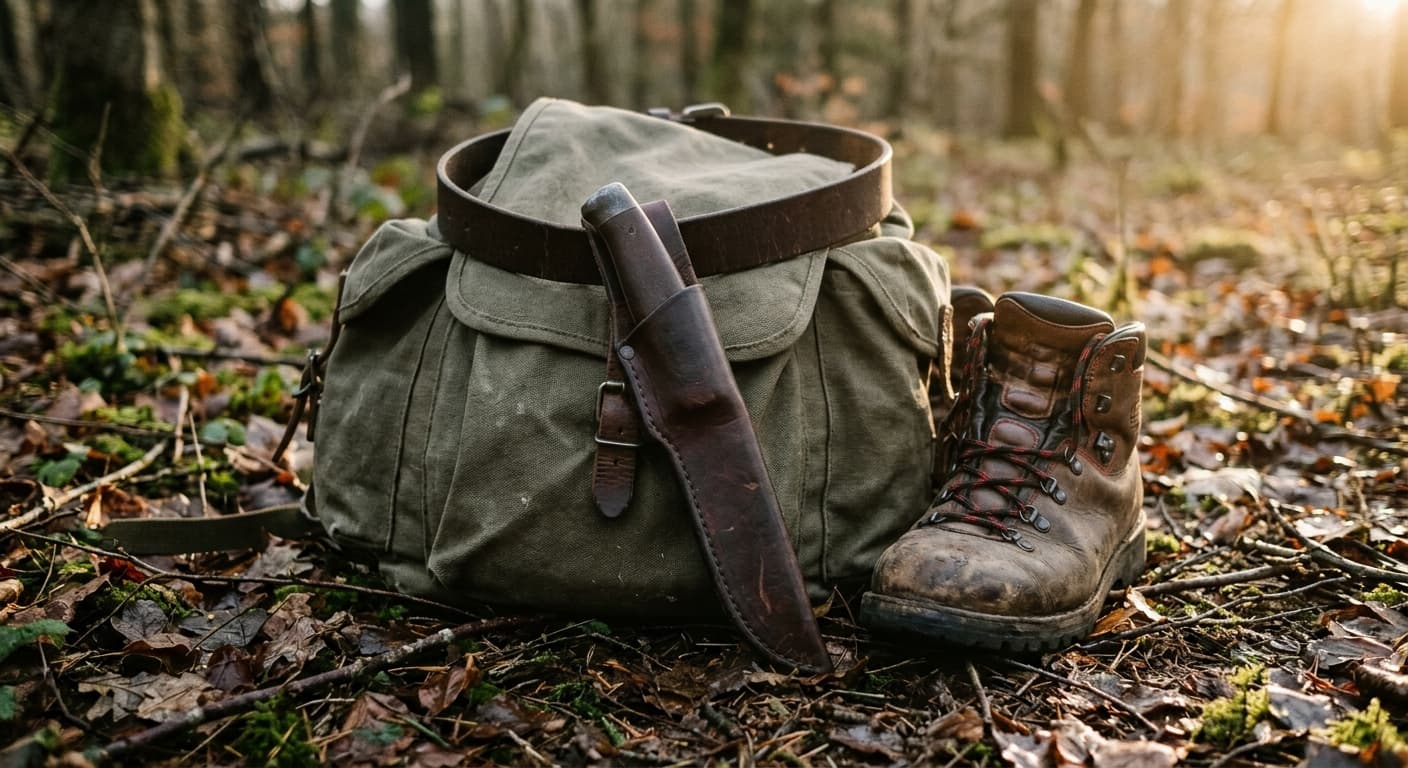
Maryland splits knife carry into two different standards depending on how the knife is carried. Concealing a dirk knife, bowie knife, switchblade knife, or star knife is illegal outright, with no intent element required, while carrying one of those same knives openly is illegal only if done with the intent or purpose of injuring someone unlawfully. Maryland separately bans selling or bartering a switchblade knife statewide, and bans carrying any knife at all on public school property.
Jurisdiction scope: This page covers Maryland state law only, principally Md. Crim. Law §§ 4-101, 4-102, 4-105, and 4-209. It does not cover Maryland's general assault and robbery statutes, which can apply to a knife used as a weapon regardless of how it was carried.
Maryland's weapon definition governs the carry statute
Md. Crim. Law § 4-101(a)(5) provides:
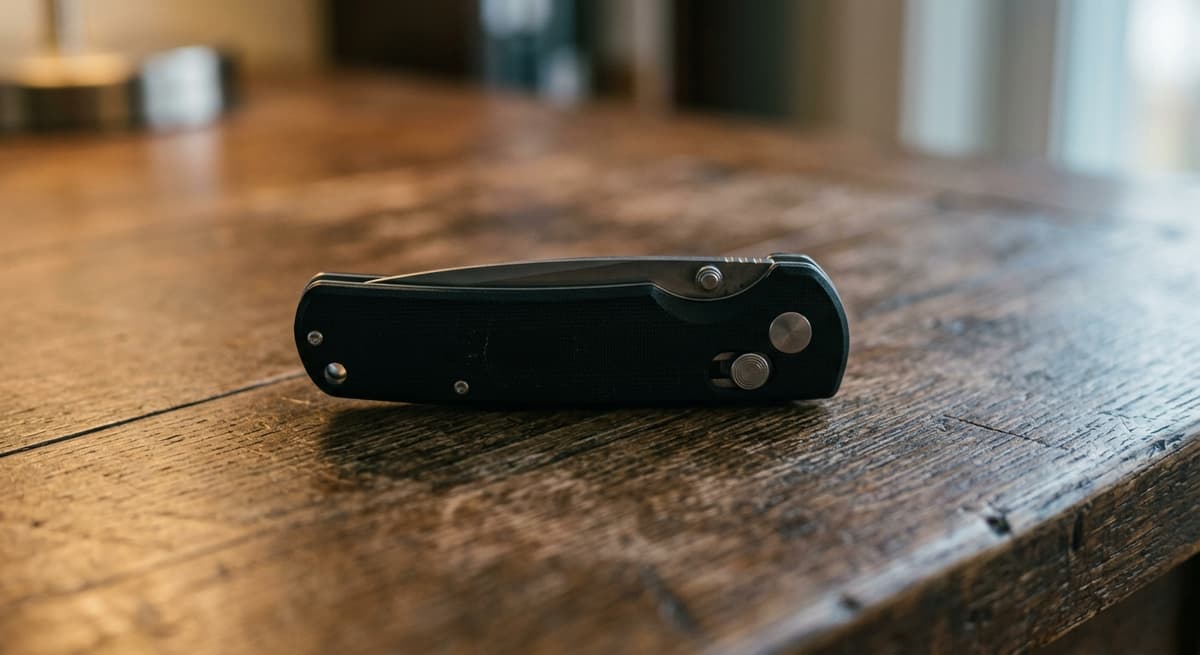
"Weapon" includes a dirk knife, bowie knife, switchblade knife, star knife, sandclub, metal knuckles, razor, and nunchaku. "Weapon" does not include: 1. a handgun; or 2. a penknife without a switchblade.
A "star knife" is separately defined in § 4-101(a)(4) as "a device used as a throwing weapon, consisting of several sharp or pointed blades arrayed as radially disposed arms about a central disk." An ordinary penknife that lacks a switchblade mechanism is expressly excluded from this "weapon" definition. The carrying prohibitions in subsection (c), however, are not written against the defined term "weapon"; they use the separate, undefined phrase "a dangerous weapon of any kind" (concealed carry, paragraph (1)) or "a dangerous weapon, chemical mace, pepper mace, or a tear gas device" (open carry with intent, paragraph (2)), and subsection (a)(5)'s penknife exclusion is not written to control that different phrase. The exclusion sits inside the section's definitions rather than inside subsection (c) itself, so the safest reading is that an ordinary penknife without a switchblade falls outside the carrying prohibition, but that reading rests on a definitional cross-reference rather than on express language in (c).
Concealed carry is banned outright; open carry requires intent to injure
Section 4-101(c) sets two different standards:
(c) (1) A person may not wear or carry a dangerous weapon of any kind concealed on or about the person. (2) A person may not wear or carry a dangerous weapon, chemical mace, pepper mace, or a tear gas device openly with the intent or purpose of injuring an individual in an unlawful manner.
Concealing a dirk knife, bowie knife, switchblade knife, or star knife is illegal under paragraph (1) regardless of intent; the concealment itself is the offense. Carrying one of these same items openly is illegal under paragraph (2) only if done with the intent or purpose of injuring someone unlawfully; openly carrying one of these knives without that intent is not covered by this subsection.
Section 4-101(d) sets the penalty: a violation is a misdemeanor, punishable by up to three years of imprisonment, a fine of up to $1,000, or both. If the evidence shows the weapon was carried, whether concealed or openly, with the deliberate purpose of injuring or killing another, the court is required to impose the highest sentence of imprisonment prescribed.
Exceptions to the carrying ban
Section 4-101(b) exempts several categories of people from the carrying prohibition: a state, county, or municipal officer entitled or required to carry the weapon as official equipment, or a conservator of the peace from Maryland or another state temporarily in Maryland; a railroad special agent; a holder of a Maryland handgun permit; and, most broadly, "an individual who carries the weapon as a reasonable precaution against apprehended danger," subject to a court's judgment of the reasonableness of the carrying and the occasion for it, based on the evidence in the case.
Minors: a nighttime carrying restriction in twelve counties
Section 4-101(c)(3) applies a narrower rule to minors in twelve named counties: Anne Arundel, Baltimore, Caroline, Cecil, Harford, Kent, Montgomery, Prince George's, St. Mary's, Talbot, Washington, and Worcester Counties. In those counties, a minor may not carry a dangerous weapon, whether concealed or not, between one hour after sunset and one hour before sunrise, except while on a bona fide hunting trip, or engaged in or traveling to or from a bona fide trap shoot, sport shooting event, or organized civic or military activity.
Selling a switchblade is separately banned statewide
Md. Crim. Law § 4-105 targets the sale and display of certain knives, not their possession or carry:
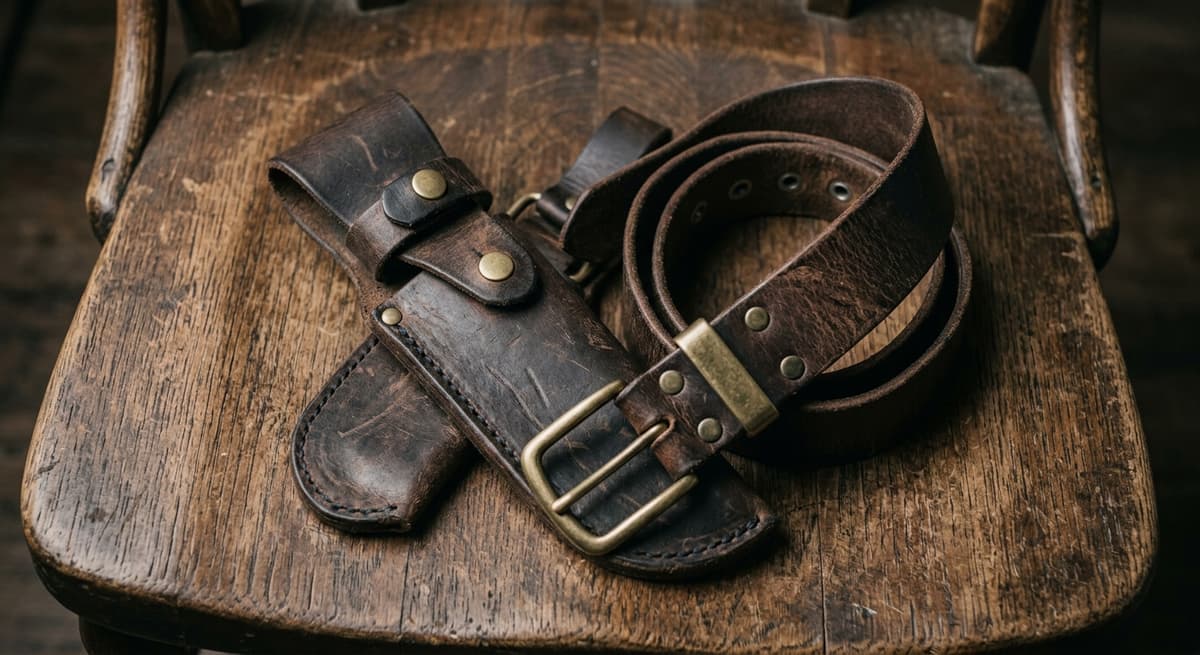
A person may not sell, barter, display, or offer to sell or barter: (1) a knife or a penknife having a blade that opens automatically by hand pressure applied to a button, spring, or other device in the handle of the knife, commonly called a switchblade knife or a switchblade penknife; or (2) a device that is designed to propel a knife from a metal sheath by means of a high-compression ejector spring, commonly called a shooting knife.
A violation is a misdemeanor, punishable by up to 12 months imprisonment and a fine of not less than $50 and not more than $500. This statute reaches the sale, barter, or display of a covered knife; it does not itself criminalize simply owning or carrying one, which is instead governed by § 4-101 above.
School property: no penknife exception
Md. Crim. Law § 4-102(b) provides a flat rule for public schools:
A person may not carry or possess a firearm, knife, or deadly weapon of any kind on public school property.
Unlike § 4-101's carrying statute, which excludes a penknife without a switchblade from its "weapon" definition, § 4-102 names "knife" generically and without that carve-out, so it reaches any knife on public school property, not just the dirk, bowie, switchblade, and star knife categories covered elsewhere. A violation is a misdemeanor, punishable by up to three years imprisonment and/or a $1,000 fine, except that a handgun violation of this section is sentenced under a separate subtitle. The statute exempts on-duty law enforcement officers, certain off-duty or retired officers visiting as a parent, guardian, or visitor while displaying credentials and carrying concealed, security personnel hired by a county board of education, people engaged in organized shooting activity for educational purposes, and people with written principal permission for a historical weapons demonstration.
Does Maryland preempt local knife ordinances?
No. Maryland's local-preemption statute, Md. Crim. Law § 4-209(a), states that the state "preempts the right of a county, municipal corporation, or special taxing district to regulate the purchase, sale, taxation, transfer, manufacture, repair, ownership, possession, and transportation of: (1) a handgun, rifle, or shotgun; and (2) ammunition for and components of a handgun, rifle, or shotgun." By its own text, this preemption is scoped to firearms and their ammunition and components; it does not name knives, so a Maryland county or municipality is not barred by this statute from separately regulating knives. Because knives are not preempted, local ordinances can be stricter than state law, including blade-length limits in some jurisdictions. Check the county or municipal code for where you carry.
Federal law: what it does and does not reach
Federal law does not ban an individual from owning or carrying a switchblade. The Federal Switchblade Act, 15 U.S.C. §§ 1241 to 1245, instead regulates interstate commerce in switchblade knives, barring their manufacture, sale, transport, or introduction into interstate commerce, and, in 15 U.S.C. § 1245, makes it a federal offense to knowingly possess, manufacture, sell, or import a ballistic knife in or affecting interstate commerce or within federal territorial jurisdiction. 15 U.S.C. § 1244 is captioned "Exceptions" and provides that the chapter "shall not apply to" the knives it lists, exempting them from the Act's prohibitions in 15 U.S.C. §§ 1242-1243 rather than changing the switchblade definition in 15 U.S.C. § 1241(b). Since a 2009 amendment, that exemption in § 1244(5) has covered any knife with a spring, detent, or other closure-bias mechanism that requires hand, wrist, or arm exertion to overcome the bias and assist opening, the carve-out that keeps modern assisted-opening folding knives legal in interstate commerce. A separate exception, § 1244(4), lets a person with only one arm possess and carry a switchblade with a blade three inches or less. None of this changes what Maryland allows for ordinary carry; Maryland's own concealed-versus-open-carry distinction above governs that question within the state.
Disclaimer: This article provides general legal information about Maryland's knife laws as of September 2026. It is not legal advice. Consult a lawyer licensed in Maryland for advice about a specific situation. Whether carrying a knife openly meets 4-101's "intent or purpose of injuring an individual in an unlawful manner" standard depends heavily on the specific facts.
For a state-by-state comparison, see knife laws by state. Maryland's self-defense statutes are covered separately on the Maryland self-defense laws page.
Statutes cited reflect their in-force version as of 2026-09-18. Last updated: 2026-09-18.
Frequently Asked Questions
Is it legal to carry a knife in Maryland?
It depends on how it is carried. Concealing a dirk knife, bowie knife, switchblade knife, or star knife is illegal outright under Md. Crim. Law 4-101(c)(1). Carrying one openly is illegal only if done with the intent to injure someone unlawfully. A penknife without a switchblade is excluded from 4-101(a)(5)'s 'weapon' definition, and subsection (c)'s carrying ban is written against the separate, undefined phrase 'a dangerous weapon of any kind' rather than against 'weapon' itself. The exclusion sits in the definitions rather than in (c), so the safest reading is that an ordinary penknife falls outside the carrying prohibition, but that rests on a definitional cross-reference rather than express language in (c).
Are switchblades illegal in Maryland?
A switchblade knife is a 'weapon' under Md. Crim. Law 4-101 and is covered by the concealed-carry ban. Selling, bartering, or displaying a switchblade for sale is separately banned statewide under 4-105, regardless of how it would be carried.
Can you carry a knife on Maryland school property?
No. Md. Crim. Law 4-102(b) bans carrying or possessing a firearm, knife, or deadly weapon of any kind on public school property. Unlike the general carrying statute, this school-property ban does not carve out an ordinary penknife.
Does Maryland preempt local knife ordinances?
No. Maryland's local-preemption statute, Md. Crim. Law 4-209, is scoped to handguns, rifles, and shotguns and their ammunition and components. It does not name knives, so it does not preempt local knife regulation, and a county or municipal ordinance can be stricter than state law, including a local blade-length limit in some jurisdictions.
Updates
Independently fact-checked against the cited primary sources
Independently fact-checked against the cited primary sources
The Law Behind This Article
This article rests on the statutory provisions below, held in our own legal record and retrieved from the official source. Tap a section to read the operative text.
Maryland Code, Criminal Law Article
§ 4-101In forcecited in 3 of our articles
§4–101. (a) (1) In this section the following words have the meanings indicated. (2) “Nunchaku” means a device constructed of two pieces of any substance, including wood, metal, or plastic, connected by any chain, rope, leather, or other flexible material not exceeding 24 inches in length. (3) (i) “Pepper mace” means an aerosol propelled combination of highly disabling irritant pepper-based products. (ii) “Pepper mace” is also known as oleoresin capsicum (o.c.) spray. (4) “Star knife” means a device used as a throwing weapon, consisting of several sharp or pointed blades arrayed as radially disposed arms about a central disk. (5) (i) “Weapon” includes a dirk knife, bowie knife, switchblade knife, star knife, sandclub, metal knuckles, razor, and nunchaku. (ii) “Weapon” does not include: 1. a handgun; or 2. a penknife without a switchblade.
Official text (excerpt) · last checked 2026-09-24 · Read the full text in our law library · Verify at mgaleg.maryland.gov
Cited in 1 court opinions in our collectionLatest citing opinion in our collection: 2022
Opinions citing this section in our collection:
- Vanison v. State (Court of Special Appeals of Maryland 2022)“…tar knife, sandclub, metal knuckles, razor, and nunchaku.” Md. Code Ann., Crim. Law § 4-101(a)(5)(i). “‘Weapon’ does not include:…”
Identified automatically from the court opinions citing this section — not a ranking of which case controls.
Also relied on in: Pepper Spray and Stun Gun Laws by State (2026), Maryland Pepper Spray and Stun Gun Laws (2026)
§ 4-102In forcecited in 2 of our articles
§4–102. (a) This section does not apply to: (1) a law enforcement officer in the regular course of the officer’s duty; (2) an off–duty law enforcement officer or a person who has retired as a law enforcement officer in good standing from a law enforcement agency of the United States, the State, or a local unit in the State who is a parent, guardian, or visitor of a student attending a school located on the public school property, provided that: (i) the officer or retired officer is displaying the officer’s or retired officer’s badge or credential; (ii) the weapon carried or possessed by the officer or retired officer is concealed; and (iii) the officer or retired officer is authorized to carry a concealed handgun in the State; (3) a person hired by a county board of education specifically for the purpose of guarding public school property; (4) a person engaged in organized shooting activity for educational purposes; or (5) a person who, with a written invitation from the school principal, displays or engages in a historical demonstration using a weapon or a replica of a weapon for educational purposes.
Official text (excerpt) · last checked 2026-07-29 · Read the full text in our law library · Verify at mgaleg.maryland.gov
Cited in 2 court opinions in our collectionLatest citing opinion in our collection: 2026
Opinions citing this section in our collection:
- Susannah Kipke v. Wes Moore (Court of Appeals for the Fourth Circuit 2026)“…constitutional and affirm the district court. See Md. Code, Crim. Law §§ 4-102(b), 4- 111(a)(2)(i)–(ii). Judg…”
- Katherine Novotny v. Wes Moore (Court of Appeals for the Fourth Circuit 2026)“…constitutional and affirm the district court. See Md. Code, Crim. Law §§ 4-102(b), 4- 111(a)(2)(i)–(ii). Judg…”
Identified automatically from the court opinions citing this section — not a ranking of which case controls.
§ 4-105In force
§4–105. (a) A person may not sell, barter, display, or offer to sell or barter: (1) a knife or a penknife having a blade that opens automatically by hand pressure applied to a button, spring, or other device in the handle of the knife, commonly called a switchblade knife or a switchblade penknife; or (2) a device that is designed to propel a knife from a metal sheath by means of a high-compression ejector spring, commonly called a shooting knife. (b) A person who violates this section is guilty of a misdemeanor and on conviction is subject to imprisonment not exceeding 12 months or a fine of not less than $50 and not exceeding $500 or both.
Official text (excerpt) · last checked 2026-07-29 · Read the full text in our law library · Verify at mgaleg.maryland.gov
§ 4-209In forcecited in 2 of our articles
§4–209. (a) Except as otherwise provided in this section, the State preempts the right of a county, municipal corporation, or special taxing district to regulate the purchase, sale, taxation, transfer, manufacture, repair, ownership, possession, and transportation of: (1) a handgun, rifle, or shotgun; and (2) ammunition for and components of a handgun, rifle, or shotgun. (b) (1) A county, municipal corporation, or special taxing district may regulate the purchase, sale, transfer, ownership, possession, and transportation of the items listed in subsection (a) of this section: (i) with respect to minors; (ii) with respect to law enforcement officials of the subdivision; and (iii) except as provided in paragraph (2) of this subsection, within 100 yards of or in a park, church, school, public building, and other place of public assembly. (2) A county, municipal corporation, or special taxing district may not prohibit the teaching of or training in firearms safety, or other educational or sporting use of the items listed in subsection (a) of this section.
Official text (excerpt) · last checked 2026-07-29 · Read the full text in our law library · Verify at mgaleg.maryland.gov
Cited in 4 court opinions in our collectionLatest citing opinion in our collection: 2023
Opinions citing this section in our collection:
- Mora v. City of Gaithersburg, Md. (Court of Appeals for the Fourth Circuit 2008, 519 F.3d 216)“…on questions additional to those imposed by state law. See Md. Code Ann., Criminal Law § 4-209(a) (LexisNexis 2002) ("[T]he State pree…”
- Mora v. City of Gaithersburg (District Court, D. Maryland 2006, 462 F. Supp. 2d 675)“…nition for and components of a handgun, rifle, or shotgun.” Md.Code Ann., Crim. Law § 4-209(a). The section provides limited except…”
- Maryland Shall Issue, Inc. v. Montgomery County, Maryland (District Court, D. Maryland 2023)“…ct under | . state law. See Md. Code Ann., Crim. Law § 4-209(b)(1 iii) (LexisNexis 2021) (exempting…”
Identified automatically from the court opinions citing this section — not a ranking of which case controls.
United States Code Title 15
§ 1241DefinitionsIn forcecited in 52 of our articles
As used in this chapter— The term “interstate commerce” means commerce between any State, Territory, possession of the United States, or the District of Columbia, and any place outside thereof. The term “switchblade knife” means any knife having a blade which opens automatically— by hand pressure applied to a button or other device in the handle of the knife, or by operation of inertia, gravity, or both.
Official text (excerpt) · last checked 2026-07-28 · Read the full text in our law library · Verify at uscode.house.gov
Cited in 15 court opinions in our collectionLatest citing opinion in our collection: 2014
Opinions citing this section in our collection:
- Stewart A. Taylor, D/B/A Taylor Cutlery Mfg. Co. v. United States of America (Court of Appeals for the Sixth Circuit 1988, 848 F.2d 715)“…Service, are not switchblade knives within the meaning of 15 U.S.C. § 1241 (b) and 19 C.F.R. § 1295 (a)(1). The d…”
- Crowley Cutlery Company v. United States of America and Commissioner of Customs of the United States Customs Service (Court of Appeals for the Seventh Circuit 1988, 849 F.2d 273)“…Illinois for a declaration that the Switchblade Knife Act, 15 U.S.C. §§ 1241 et seq., which forbids th…”
- Edna Fall, as Administratrix of the Estate of Phillip Fall, Deceased v. Esso Standard Oil Company (Court of Appeals for the Fifth Circuit 1962, 297 F.2d 411)“…25 S.Ct. 158 , 49 L.Ed. 363 . Section 1 of the Act, 15 U.S.C.A. § 1241 (b), defines the term “switchblade knif…”
Identified automatically from the court opinions citing this section — not a ranking of which case controls.
Also relied on in: Knife Laws by State (2026): Carry Rules, Blade Limits, Penalties, Alabama Knife Laws (2026): What Is Legal to Carry, Alaska Knife Laws (2026): Concealed Carry Rules Explained
§ 1244ExceptionsIn forcecited in 52 of our articles
Sections 1242 and 1243 of this title shall not apply to— any common carrier or contract carrier, with respect to any switchblade knife shipped, transported, or delivered for shipment in interstate commerce in the ordinary course of business; the manufacture, sale, transportation, distribution, possession, or introduction into interstate commerce, of switchblade knives pursuant to contract with the Armed Forces; the Armed Forces or any member or employee thereof acting in the performance of his duty; the possession, and transportation upon his person, of any switchblade knife with a blade three inches or less in length by any individual who has only one arm; or a knife that contains a spring, detent, or other mechanism designed to create a bias toward closure of the blade and that requires exertion applied to the blade by hand, wrist, or arm to overcome the bias toward closure to assist in opening the knife.
Official text (excerpt) · last checked 2026-07-28 · Read the full text in our law library · Verify at uscode.house.gov
Also relied on in: Arizona Knife Laws (2026): Carry Rules and Preemption, Arkansas Knife Laws (2026): Intent-Based Carry Rules, California Knife Laws (2026): Four Blade-Length Rules
§ 1245Ballistic knivesIn forcecited in 50 of our articles
Whoever in or affecting interstate commerce, within any Territory or possession of the United States, within Indian country (as defined in section 1151 of title 18), or within the special maritime and territorial jurisdiction of the United States (as defined in section 7 of title 18), knowingly possesses, manufactures, sells, or imports a ballistic knife shall be fined as provided in title 18, or imprisoned not more than ten years, or both. Whoever possesses or uses a ballistic knife in the commission of a Federal crime of violence shall be fined as provided in title 18, or imprisoned not less than five years and not more than ten years, or both. The exceptions provided in paragraphs (1), (2), and (3) of section 1244 of this title with respect to switchblade knives shall apply to ballistic knives under subsection (a) of this section. As used in this section, the term “ballistic knife” means a knife with a detachable blade that is propelled by a spring-operated mechanism.
Official text (excerpt) · last checked 2026-07-28 · Read the full text in our law library · Verify at uscode.house.gov
Cited in 2 court opinions in our collectionLatest citing opinion in our collection: 2008
Opinions citing this section in our collection:
- ALCANTAR (Board of Immigration Appeals 1994, 20 I. & N. Dec. 801)“…ed by an adult, would be felony and crime of violence); cf. 15 U.S.C. § 1245(b) (1988) (use of ballistic knife in co…”
- United States v. Polizzi (District Court, E.D. New York 2008, 549 F. Supp. 2d 308)“…8 Trust in l’estraint of import trade 3 months 15 U.S.C. § 1245 (b) Possession/use of a ballistic knife…”
Identified automatically from the court opinions citing this section — not a ranking of which case controls.
Also relied on in: Colorado Knife Laws (2026): Concealed Carry and Exceptions, Connecticut Knife Laws (2026): Open and Concealed Carry, Delaware Knife Laws (2026): Carry, Switchblades, and Bans
Search our full record of US law — 2.1 million sections, every state + federal →
Sources and References
- Md. Crim. Law 4-101 - Deadly weapons other than firearms (weapon definition, concealed/open carry distinction, minor curfew, penalties)(mgaleg.maryland.gov).gov
- Md. Crim. Law 4-102 - Deadly weapon on public school property, no intent element (no penknife exception)(mgaleg.maryland.gov).gov
- Md. Crim. Law 4-105 - Switchblade knife or switchblade penknife; shooting knife (sale/barter/display ban, ordinary penknife not covered)(mgaleg.maryland.gov).gov
- Md. Crim. Law 4-209 - Regulation of firearms by local governments (preemption, firearms-only)(mgaleg.maryland.gov).gov
- 15 U.S.C. 1241-1245 - Federal Switchblade Act, interstate commerce and importation scope(law.cornell.edu)
- 15 U.S.C. 1244 - exceptions, including the 2009 assisted-opening carve-out and the one-arm exception(law.cornell.edu)