
Kentucky
Kentucky Knife Laws (2026): Carry, Age Rules, and Exceptions
Independently fact-checked against primary sources (last audited September 24, 2026). · 7 primary sources cited on this page. How we verify our legal content

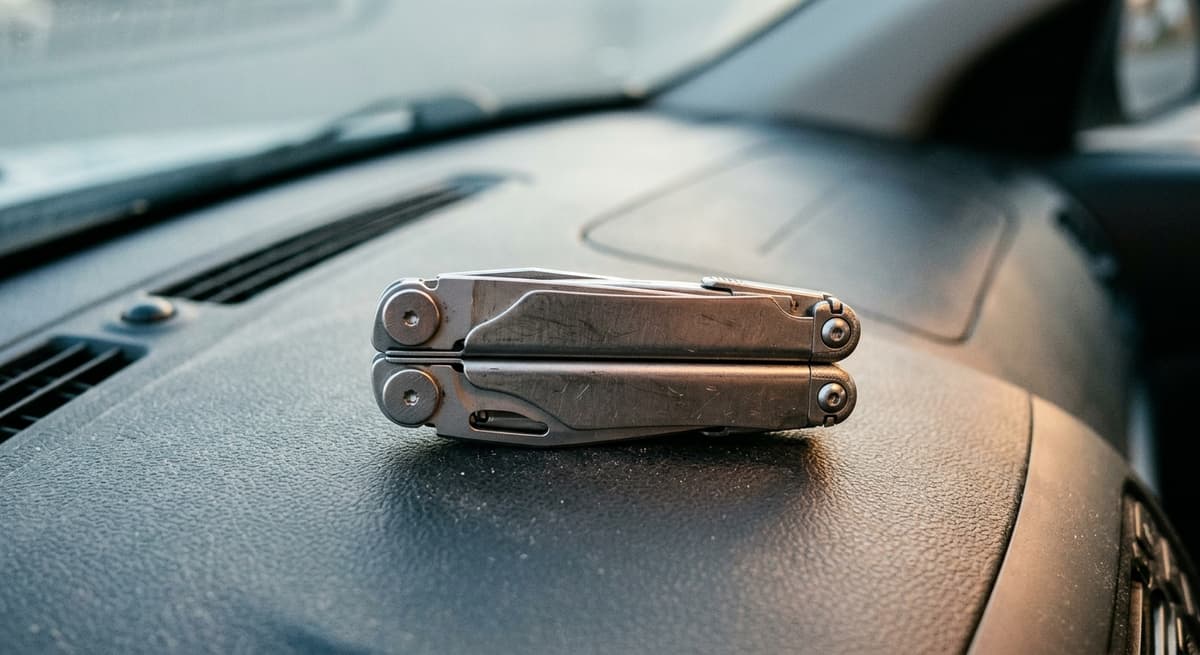
Kentucky excludes an "ordinary pocket knife or hunting knife" from its definition of "deadly weapon" entirely, so those two knife types are not regulated by the state's weapons-carry statutes at all. Any other knife counts as a deadly weapon, and carrying one concealed is a crime unless the carrier qualifies under Kentucky's permitless-carry statute or holds a formal concealed-deadly-weapon license. Kentucky is a permitless-carry state: anyone 21 or older who may lawfully possess a firearm may carry a concealed deadly weapon, including a qualifying knife, without any license at all.
Jurisdiction scope: This page covers Kentucky state law only, principally Ky. Rev. Stat. §§ 500.080, 527.020, 527.070, 237.109, 237.110, and 237.115. It does not cover Kentucky's general assault and menacing statutes, which can apply to a knife used as a weapon regardless of how it was carried.
The pocket-knife and hunting-knife carve-out that governs everything else
Ky. Rev. Stat. § 500.080(4) defines "deadly weapon" for the whole Kentucky Penal Code:
(4) "Deadly weapon" means any of the following: (a) A weapon of mass destruction; (b) Any weapon from which a shot, readily capable of producing death or other serious physical injury, may be discharged; (c) Any knife other than an ordinary pocket knife or hunting knife; (d) Billy, nightstick, or club; (e) Blackjack or slapjack; (f) Nunchaku karate sticks; (g) Shuriken or death star; or (h) Artificial knuckles made from metal, plastic, or other similar hard material.
Subsection (c) is the operative knife rule for the whole state: an ordinary pocket knife or hunting knife is excluded from the deadly-weapon definition by name, which means Kentucky's weapons-carry statutes, discussed below, do not reach those two knife types at all, regardless of blade length or how the knife is carried. Any other knife, one that does not qualify as an ordinary pocket knife or hunting knife, is a statutory deadly weapon.
Can you carry a knife openly or concealed in Kentucky?
Kentucky has no general statute restricting open carry of a knife. Kentucky's carrying statute, Ky. Rev. Stat. § 527.020, is titled "Carrying concealed deadly weapon" and by its own text reaches concealed carry only:
(1) A person is guilty of carrying a concealed weapon when he or she carries concealed a firearm or other deadly weapon on or about his or her person in violation of this section.
Because an ordinary pocket knife or hunting knife is not a "deadly weapon" under § 500.080(4)(c), carrying one concealed does not violate this statute. Any other knife (a dirk, dagger, switchblade, or similar knife falling outside the pocket-knife/hunting-knife carve-out) is a deadly weapon, and carrying one concealed is a Class A misdemeanor under § 527.020(10), rising to a Class D felony if the defendant has a prior felony conviction in which a deadly weapon was possessed, used, or displayed, unless the carrier qualifies under one of the exceptions below.
Section 527.020's general carry offense does not reach open carry, but two other statutes do, discussed below: KRS 527.070 makes possessing a deadly-weapon knife on the property of any educational institution other than postsecondary a felony whether it is carried openly or concealed, and KRS 237.115 lets a local government unit post its own buildings against concealed carry specifically.
Kentucky is a permitless-carry state
Ky. Rev. Stat. § 237.109 lets a qualifying adult carry a concealed deadly weapon, including a knife that would otherwise require a license, without any license at all:

(1) Persons age twenty-one (21) or older, and otherwise able to lawfully possess a firearm, may carry concealed firearms or other concealed deadly weapons without a license in the same locations as persons with valid licenses issued under KRS 237.110.
A separate, optional formal license is available under Ky. Rev. Stat. § 237.110, useful mainly for reciprocity with other states' concealed-carry laws, but the license requires the same 21-or-older age floor as the permitless-carry statute: § 237.110(4)(c) requires an applicant to be "twenty-one (21) years of age or older." Neither route is available to a person under 21.
Section 527.020(4) confirms that a person carrying under either § 237.109 or a § 237.110 license may do so "at all times within the Commonwealth of Kentucky" if carried in conformity with those sections' requirements, and that no criminal penalty attaches to carrying a deadly weapon concealed anywhere it could constitutionally be carried openly.
School property
Ky. Rev. Stat. § 527.070 makes it a Class D felony to knowingly possess, whether openly or concealed, a firearm or other deadly weapon in a public or private school building or bus, or on school grounds, of any educational institution other than a postsecondary or higher-education institution, for purposes other than instructional or school-sanctioned ceremonial purposes:
Unlawful possession of a weapon on school property is a Class D felony.
Because "deadly weapon" here carries the same § 500.080(4)(c) definition, a knife other than an ordinary pocket knife or hunting knife falls within this school-property offense, and the statute applies whether the weapon is carried openly or concealed. The statute exempts several categories, including ROTC and school-club members required to carry a weapon for official duties, peace officers, and, notably, "a person possessing guns or knives when conducting or attending a 'gun and knife show' when the program has been approved by the board of education or board of trustees of the educational institution." This statute applies to any public or private educational institution other than a postsecondary or higher-education institution.
One exemption is a practical trap for a knife carrier: subsection (3)(a) exempts an adult who leaves a firearm secured in a vehicle on school property. That exemption is written for a firearm only, so it does not shelter a deadly-weapon knife left in a car on school grounds.
Government buildings
Ky. Rev. Stat. § 237.115 lets a unit of state, city, county, urban-county, or charter county government prohibit or limit carrying a concealed deadly weapon, including a qualifying knife, in the portion of a building that unit of government owns, leases, or occupies, provided the restricted area is clearly posted with signage at its entrance. A violation of such a local restriction cannot carry a criminal penalty; the statute limits enforcement to denial of entry, removal from the building, or employee discipline. The same section confirms that a college, university, or postsecondary institution retains its own authority to control deadly weapons on its property.

Does Kentucky preempt local knife ordinances?
Kentucky's code contains no statewide knife-specific preemption statute. Kentucky's local-preemption statute, Ky. Rev. Stat. § 65.870, bars a local government from occupying "any part of the field of regulation of the manufacture, sale, purchase, taxation, transfer, ownership, possession, carrying, storage, or transportation of firearms, ammunition, components of firearms, components of ammunition, firearms accessories, or combination thereof." By its own text, this preemption statute is scoped to firearms and their components and accessories; it does not name knives.
Federal law: what it does and does not reach
Federal law does not ban an individual from owning or carrying a switchblade. The Federal Switchblade Act, 15 U.S.C. §§ 1241 to 1245, instead regulates interstate commerce in switchblade knives, barring their manufacture, sale, transport, or introduction into interstate commerce, and, in 15 U.S.C. § 1245, makes it a federal offense to knowingly possess, manufacture, sell, or import a ballistic knife in or affecting interstate commerce or within federal territorial jurisdiction. 15 U.S.C. § 1244 is captioned "Exceptions" and provides that the chapter "shall not apply to" the knives it lists, exempting them from the Act's prohibitions in 15 U.S.C. §§ 1242-1243 rather than changing the switchblade definition in 15 U.S.C. § 1241(b). Since a 2009 amendment, that exemption in § 1244(5) has covered any knife with a spring, detent, or other closure-bias mechanism that requires hand, wrist, or arm exertion to overcome the bias and assist opening, the carve-out that keeps modern assisted-opening folding knives legal in interstate commerce. A separate exception, § 1244(4), lets a person with only one arm possess and carry a switchblade with a blade three inches or less. None of this changes what Kentucky allows for ordinary carry; Kentucky's own deadly-weapon definition and permitless-carry statute above govern that question within the state.
Disclaimer: This article provides general legal information about Kentucky's knife laws as of September 2026. It is not legal advice. Consult a lawyer licensed in Kentucky for advice about a specific situation. Whether a specific knife qualifies as an "ordinary pocket knife or hunting knife" under Ky. Rev. Stat. 500.080(4)(c) can depend on the specific knife's features and the circumstances of its carry.
For a state-by-state comparison, see knife laws by state. Kentucky's self-defense statutes are covered separately on the Kentucky self-defense laws page.
Statutes cited reflect their in-force version as of 2026-09-18. Last updated: 2026-09-18.
Frequently Asked Questions
Is it legal to carry a knife in Kentucky?
An ordinary pocket knife or hunting knife is not regulated by Kentucky's weapons-carry statutes at all, open or concealed. Any other knife is a statutory deadly weapon, and carrying one concealed requires being 21 or older under Kentucky's permitless-carry statute or holding a formal concealed-deadly-weapon license.
Does Kentucky require a permit to carry a concealed knife?
No. Ky. Rev. Stat. 237.109 lets a person 21 or older who may otherwise lawfully possess a firearm carry a concealed deadly weapon, including a qualifying knife, without any license. A formal license under Ky. Rev. Stat. 237.110 is optional and mainly useful for reciprocity with other states.
Are switchblades illegal in Kentucky?
Ky. Rev. Stat. chapter 527 names no switchblade, dagger, dirk, or ballistic knife. A switchblade is regulated the same way as any other knife that is not an ordinary pocket knife or hunting knife, as a deadly weapon under Ky. Rev. Stat. 500.080(4)(c), requiring the carrier to be 21 or older to carry it concealed without a license.
Can you carry a knife on Kentucky school property?
No, unless an exemption applies. Ky. Rev. Stat. 527.070 makes possessing a deadly weapon, including a knife other than an ordinary pocket or hunting knife, on the property of any educational institution other than a postsecondary institution, a Class D felony, with exemptions including a school-board-approved gun and knife show.
Updates
Independently fact-checked against the cited primary sources
Independently fact-checked against the cited primary sources
The Law Behind This Article
This article rests on the statutory provisions below, held in our own legal record and retrieved from the official source. Tap a section to read the operative text.
Kentucky Revised Statutes, Chapter 527: OFFENSES RELATING TO FIREARMS AND WEAPONS
§ 527.020Carrying concealed deadly weaponIn forcecited in 2 of our articles
(1) A person is guilty of carrying a concealed weapon when he or she carries concealed a firearm or other deadly weapon on or about his or her person in violation of this section. (2) Peace officers and certified court security officers, when necessary for their protection in the discharge of their official duties; United States mail carriers when actually engaged in their duties; and agents and messengers of express companies, when necessary for their protection in the discharge of their official duties, may carry concealed weapons on or about their person. (3) The director of the Division of Law Enforcement in the Department of Fish and Wildlife Resources, game wardens of the Department of Fish and Wildlife Resources, and policemen directly employed by state, county, city, or urban-county governments may carry concealed deadly weapons on or about their person at all times within the Commonwealth of Kentucky, when expressly authorized to do so by law or by the government employing the officer.
Official text (excerpt) · last checked 2026-09-24 · Read the full text in our law library · Verify at apps.legislature.ky.gov
Cited in 40 court opinions in our collectionLatest citing opinion in our collection: 2025
Opinions citing this section in our collection:
- Mitchell v. University of Kentucky (Kentucky Supreme Court 2012, 366 S.W.3d 895)“…Vehicle's Glove Compartment, His Discharge Was Contrary to KRS 527.020(8) Mitchell asserts a cause of action…”
- Mohammad v. Commonwealth (Kentucky Supreme Court 2006, 202 S.W.3d 589)“…e compartment” is not the “glove compartment” referenced in KRS 527.020(8). In so concurring, I note that the C…”
- Phelps v. Commonwealth (Kentucky Supreme Court 2004, 125 S.W.3d 237)“…vehicle (KRS 514.100), carrying a concealed deadly weapon (KRS 527.020), and possession of a firearm by a conv…”
Identified automatically from the court opinions citing this section — not a ranking of which case controls.
Also relied on in: Kentucky Pepper Spray and Stun Gun Laws (2026)
§ 527.070Unlawful possession of a weapon on school property -- Posting of sign -- ExemptionsIn forcecited in 2 of our articles
(1) A person is guilty of unlawful possession of a weapon on school property when he knowingly deposits, possesses, or carries, whether openly or concealed, for purposes other than instructional or school-sanctioned ceremonial purposes, or the purposes permitted in subsection (3) of this section, any firearm or other deadly weapon, destructive device, or booby trap device in any public or private school building or bus, on any public or private school campus, grounds, recreation area, athletic field, or any other property owned, used, or operated by any board of education, school, board of trustees, regents, or directors for the administration of any public or private educational institution. The provisions of this section shall not apply to institutions of postsecondary or higher education.
Official text (excerpt) · last checked 2026-07-29 · Read the full text in our law library · Verify at apps.legislature.ky.gov
Cited in 6 court opinions in our collectionLatest citing opinion in our collection: 2023
Opinions citing this section in our collection:
- Mitchell v. University of Kentucky (Kentucky Supreme Court 2012, 366 S.W.3d 895)“…trictions on the possession of deadly weapons. For example, KRS 527.070, the statute that criminalizes possessi…”
- Darden v. Commonwealth (Kentucky Supreme Court 2001, 52 S.W.3d 574)“…possession of a firearm on school property, a violation of KRS 527.070, the statute which allows him to be tri…”
- James v. Wilson (Court of Appeals of Kentucky 2002, 95 S.W.3d 875)“…rought guns to school on numerous occasions in violation of KRS 527.070. Despite their duty to do so, they told…”
Identified automatically from the court opinions citing this section — not a ranking of which case controls.
Kentucky Revised Statutes, Chapter 500: GENERAL PROVISIONS
§ 500.080Definitions for Kentucky Penal CodeIn forcecited in 4 of our articles
As used in the Kentucky Penal Code, unless the context otherwise requires: (1) "Actor" means any natural person and, where relevant, a corporation or an unincorporated association; (2) "Crime" means a misdemeanor or a felony; (3) "Dangerous instrument" means any instrument, including parts of the human body when a serious physical injury is a direct result of the use of that part of the human body, article, or substance which, under the circumstances in which it is used, attempted to be used, or threatened to be used, is readily capable of causing death or serious physical injury.
Official text (excerpt) · last checked 2026-07-29 · Read the full text in our law library · Verify at apps.legislature.ky.gov
Cited in 221 court opinions in our collectionLatest citing opinion in our collection: 2026
Opinions citing this section in our collection:
- Taylor v. Commonwealth (Kentucky Supreme Court 1999, 995 S.W.2d 355)“…at the injury was a "serious physical injury" as defined in KRS 500.080(15), as opposed to a "physical injury"…”
- Wilburn v. Commonwealth (Kentucky Supreme Court 2010, 312 S.W.3d 321)“…ave been armed with a deadly weapon. See KRS 515.020(l)(b). KRS 500.080(4)(b) defines a deadly weapon, as it is…”
- Luttrell v. Commonwealth (Kentucky Supreme Court 1977, 554 S.W.2d 75)“…dangerous instrument; . . .". Physical injury is defined in KRS 500.080(13) to be substantial physical pain or…”
Identified automatically from the court opinions citing this section — not a ranking of which case controls.
Also relied on in: Knife Laws by State (2026): Carry Rules, Blade Limits, Penalties, Pepper Spray and Stun Gun Laws by State (2026)
Kentucky Revised Statutes, Chapter 237: FIREARMS AND DESTRUCTIVE DEVICES
§ 237.109Authorization to carry concealed deadly weapons without a licenseIn forcecited in 2 of our articles
(1) Persons age twenty-one (21) or older, and otherwise able to lawfully possess a firearm, may carry concealed firearms or other concealed deadly weapons without a license in the same locations as persons with valid licenses issued under KRS 237.110. (2) Nothing in this section shall be construed to allow the carrying or possession of any deadly weapon where it is prohibited by federal law.
Official text (excerpt) · last checked 2026-07-29 · Read the full text in our law library · Verify at apps.legislature.ky.gov
Cited in 1 court opinions in our collectionLatest citing opinion in our collection: 2024
Opinions citing this section in our collection:
- Sheard v. Novo Nordisk Inc. (District Court, W.D. Kentucky 2024)“…se in the same locations as persons with valid licenses.” KRS § 237.109. 4…”
Identified automatically from the court opinions citing this section — not a ranking of which case controls.
§ 237.110License to carry concealed deadly weapon -- Criteria -- Training -- Paper or electronic application -- Issuance and denial of licenses -- Automated listing of license holders -- Suspension or revocation -- Renewal -- Prohibitions -- Reciprocity -- Reports -- Requirements for training classesIn forcecited in 3 of our articles
(1) The Department of Kentucky State Police is authorized to issue and renew licenses to carry concealed firearms or other deadly weapons, or a combination thereof, to persons qualified as provided in this section. (2) An original or renewal license issued pursuant to this section shall: (a) Be valid throughout the Commonwealth and, except as provided in this section or other specific section of the Kentucky Revised Statutes or federal law, permit the holder of the license to carry firearms, ammunition, or other deadly weapons, or a combination thereof, at any location in the Commonwealth; (b) Unless revoked or suspended as provided by law, be valid for a period of five (5) years from the date of issuance; (c) Authorize the holder of the license to carry a concealed firearm or other deadly weapon, or a combination thereof, on or about his or her person; and (d) Authorize the holder of the license to carry ammunition for a firearm on or about his or her person.
Official text (excerpt) · last checked 2026-07-29 · Read the full text in our law library · Verify at apps.legislature.ky.gov
Cited in 11 court opinions in our collectionLatest citing opinion in our collection: 2024
Opinions citing this section in our collection:
- Mitchell v. University of Kentucky (Kentucky Supreme Court 2012, 366 S.W.3d 895)“…alid license to carry a concealed deadly weapon pursuant to KRS 237.110 ("concealed carry license"). On April 2…”
- Commonwealth v. Howard (Kentucky Supreme Court 1998, 969 S.W.2d 700)“…concealed deadly weapon, a person must be 21 years of age. KRS 237.110. There are a variety of situations whic…”
- City of Pikeville, Kentucky v. Kentucky Concealed Carry Coalition, Inc. (Kentucky Supreme Court 2023)“…requires relevant signage. Additionally, the City asserted KRS 237.110 and KRS 244.125 authorized the prohibi…”
Identified automatically from the court opinions citing this section — not a ranking of which case controls.
Also relied on in: Kentucky Restraining Order Laws (2026): How to Get a Protective Order
§ 237.115Construction of KRS 237.110 -- Prohibition by local government units of carrying concealed deadly weapons in governmental buildings -- Restriction on criminal penaltiesIn force
(1) Except as provided in KRS 527.020, nothing contained in KRS 237.109 or 237.110 shall be construed to limit, restrict, or prohibit in any manner the right of a college, university, or any postsecondary education facility, including technical schools and community colleges, to control the possession of deadly weapons on any property owned or controlled by them or the right of a unit of state, city, county, urban- county, or charter county government to prohibit the carrying of concealed deadly weapons in that portion of a building actually owned, leased, or occupied by that unit of government. (2) Except as provided in KRS 527.020, the legislative body of a state, city, county, or urban-county government may, by statute, administrative regulation, or ordinance, prohibit or limit the carrying of concealed deadly weapons in that portion of a building owned, leased, or controlled by that unit of government. That portion of a building in which the carrying of concealed deadly weapons is prohibited or limited shall be clearly identified by signs posted at the entrance to the restricted area.
Official text (excerpt) · last checked 2026-07-29 · Read the full text in our law library · Verify at apps.legislature.ky.gov
Cited in 3 court opinions in our collectionLatest citing opinion in our collection: 2023
Opinions citing this section in our collection:
- Mitchell v. University of Kentucky (Kentucky Supreme Court 2012, 366 S.W.3d 895)“…f, and establishes standards for, concealed carry licenses. KRS 237.115 concerns the construction of KRS 237.11…”
- Kentucky Concealed Carry Coalition, Inc v. City of Pikeville, Kentucky (Court of Appeals of Kentucky 2021)“…Nevertheless, the General Assembly also passed KRS 237.115(2), which provides, in applicable part…”
- City of Pikeville, Kentucky v. Kentucky Concealed Carry Coalition, Inc. (Kentucky Supreme Court 2023)“…forced pursuant to a duly enacted ordinance under KRS 237.115(2); (3) private renters of the E…”
Identified automatically from the court opinions citing this section — not a ranking of which case controls.
Kentucky Revised Statutes, Chapter 65: GENERAL PROVISIONS APPLICABLE TO COUNTIES, CITIES, AND OTHER LOCAL UNITS
§ 65.870Local firearms control ordinances prohibited -- Exemption from immunity - - Declaratory and injunctive reliefIn forcecited in 2 of our articles
(1) No existing or future city, county, urban-county government, charter county, consolidated local government, unified local government, special district, local or regional public or quasi-public agency, board, commission, department, public corporation, or any person acting under the authority of any of these organizations may occupy any part of the field of regulation of the manufacture, sale, purchase, taxation, transfer, ownership, possession, carrying, storage, or transportation of firearms, ammunition, components of firearms, components of ammunition, firearms accessories, or combination thereof. (2) Any existing or future ordinance, executive order, administrative regulation, policy, procedure, rule, or any other form of executive or legislative action in violation of this section or the spirit thereof is hereby declared null, void, and unenforceable.
Official text (excerpt) · last checked 2026-07-29 · Read the full text in our law library · Verify at apps.legislature.ky.gov
Cited in 5 court opinions in our collectionLatest citing opinion in our collection: 2025
Opinions citing this section in our collection:
- Peter Garrett Gunsmith, Inc. v. City of Dayton (Court of Appeals of Kentucky 2002, 98 S.W.3d 517)“…ng the zoning ordinances were invalid as being preempted by KRS 65.870. The two circuit court cases wer…”
- Kentucky Restaurant Ass'n v. Louisville/Jefferson County Metro Government (Kentucky Supreme Court 2016, 501 S.W.3d 425)“…m wage legislation by clear and unmistakable language. Se KRS 65.870 (expressly forbidding local governments…”
- Albert Marshall v. Commonwealth of Kentucky (Court of Appeals of Kentucky 2025)“…all also argues that LMCO § 135.03 is unenforceable because KRS 65.870 bars local governments from adopting lo…”
Identified automatically from the court opinions citing this section — not a ranking of which case controls.
United States Code Title 15
§ 1241DefinitionsIn forcecited in 52 of our articles
As used in this chapter— The term “interstate commerce” means commerce between any State, Territory, possession of the United States, or the District of Columbia, and any place outside thereof. The term “switchblade knife” means any knife having a blade which opens automatically— by hand pressure applied to a button or other device in the handle of the knife, or by operation of inertia, gravity, or both.
Official text (excerpt) · last checked 2026-07-28 · Read the full text in our law library · Verify at uscode.house.gov
Cited in 15 court opinions in our collectionLatest citing opinion in our collection: 2014
Opinions citing this section in our collection:
- Stewart A. Taylor, D/B/A Taylor Cutlery Mfg. Co. v. United States of America (Court of Appeals for the Sixth Circuit 1988, 848 F.2d 715)“…Service, are not switchblade knives within the meaning of 15 U.S.C. § 1241 (b) and 19 C.F.R. § 1295 (a)(1). The d…”
- Crowley Cutlery Company v. United States of America and Commissioner of Customs of the United States Customs Service (Court of Appeals for the Seventh Circuit 1988, 849 F.2d 273)“…Illinois for a declaration that the Switchblade Knife Act, 15 U.S.C. §§ 1241 et seq., which forbids th…”
- Edna Fall, as Administratrix of the Estate of Phillip Fall, Deceased v. Esso Standard Oil Company (Court of Appeals for the Fifth Circuit 1962, 297 F.2d 411)“…25 S.Ct. 158 , 49 L.Ed. 363 . Section 1 of the Act, 15 U.S.C.A. § 1241 (b), defines the term “switchblade knif…”
Identified automatically from the court opinions citing this section — not a ranking of which case controls.
Also relied on in: Alabama Knife Laws (2026): What Is Legal to Carry, Alaska Knife Laws (2026): Concealed Carry Rules Explained, Arizona Knife Laws (2026): Carry Rules and Preemption
§ 1244ExceptionsIn forcecited in 52 of our articles
Sections 1242 and 1243 of this title shall not apply to— any common carrier or contract carrier, with respect to any switchblade knife shipped, transported, or delivered for shipment in interstate commerce in the ordinary course of business; the manufacture, sale, transportation, distribution, possession, or introduction into interstate commerce, of switchblade knives pursuant to contract with the Armed Forces; the Armed Forces or any member or employee thereof acting in the performance of his duty; the possession, and transportation upon his person, of any switchblade knife with a blade three inches or less in length by any individual who has only one arm; or a knife that contains a spring, detent, or other mechanism designed to create a bias toward closure of the blade and that requires exertion applied to the blade by hand, wrist, or arm to overcome the bias toward closure to assist in opening the knife.
Official text (excerpt) · last checked 2026-07-28 · Read the full text in our law library · Verify at uscode.house.gov
Also relied on in: Arkansas Knife Laws (2026): Intent-Based Carry Rules, California Knife Laws (2026): Four Blade-Length Rules, Colorado Knife Laws (2026): Concealed Carry and Exceptions
§ 1245Ballistic knivesIn forcecited in 50 of our articles
Whoever in or affecting interstate commerce, within any Territory or possession of the United States, within Indian country (as defined in section 1151 of title 18), or within the special maritime and territorial jurisdiction of the United States (as defined in section 7 of title 18), knowingly possesses, manufactures, sells, or imports a ballistic knife shall be fined as provided in title 18, or imprisoned not more than ten years, or both. Whoever possesses or uses a ballistic knife in the commission of a Federal crime of violence shall be fined as provided in title 18, or imprisoned not less than five years and not more than ten years, or both. The exceptions provided in paragraphs (1), (2), and (3) of section 1244 of this title with respect to switchblade knives shall apply to ballistic knives under subsection (a) of this section. As used in this section, the term “ballistic knife” means a knife with a detachable blade that is propelled by a spring-operated mechanism.
Official text (excerpt) · last checked 2026-07-28 · Read the full text in our law library · Verify at uscode.house.gov
Cited in 2 court opinions in our collectionLatest citing opinion in our collection: 2008
Opinions citing this section in our collection:
- ALCANTAR (Board of Immigration Appeals 1994, 20 I. & N. Dec. 801)“…ed by an adult, would be felony and crime of violence); cf. 15 U.S.C. § 1245(b) (1988) (use of ballistic knife in co…”
- United States v. Polizzi (District Court, E.D. New York 2008, 549 F. Supp. 2d 308)“…8 Trust in l’estraint of import trade 3 months 15 U.S.C. § 1245 (b) Possession/use of a ballistic knife…”
Identified automatically from the court opinions citing this section — not a ranking of which case controls.
Also relied on in: Connecticut Knife Laws (2026): Open and Concealed Carry, Delaware Knife Laws (2026): Carry, Switchblades, and Bans, D.C. Knife Laws (2026): Possession and Carry Rules
Search our full record of US law — 2.1 million sections, every state + federal →
Sources and References
- Ky. Rev. Stat. 500.080(4) - Definitions for Kentucky Penal Code (deadly weapon, pocket knife/hunting knife carve-out)(apps.legislature.ky.gov).gov
- Ky. Rev. Stat. 527.020 - Carrying concealed deadly weapon (Class A misdemeanor / Class D felony)(apps.legislature.ky.gov).gov
- Ky. Rev. Stat. 527.070 - Unlawful possession of a weapon on school property, Class D felony, gun and knife show exemption(apps.legislature.ky.gov).gov
- Ky. Rev. Stat. 237.109 - Authorization to carry concealed deadly weapons without a license (21+)(apps.legislature.ky.gov).gov
- Ky. Rev. Stat. 237.110 - License to carry concealed deadly weapon (21+ eligibility criteria)(apps.legislature.ky.gov).gov
- Ky. Rev. Stat. 237.115 - Local government building restriction authority, no criminal penalty(apps.legislature.ky.gov).gov
- Ky. Rev. Stat. 65.870 - Local firearms control ordinances prohibited (firearms-only preemption, does not name knives)(apps.legislature.ky.gov).gov
- 15 U.S.C. 1241-1245 - Federal Switchblade Act, interstate commerce and importation scope(law.cornell.edu)
- 15 U.S.C. 1244 - exceptions, including the 2009 assisted-opening carve-out and the one-arm exception(law.cornell.edu)