
Colorado
Colorado Pepper Spray and Stun Gun Laws (2026)
Independently fact-checked against primary sources (last audited September 23, 2026). · 4 primary sources cited on this page. How we verify our legal content

An ordinary hand-held canister of pepper spray or tear gas carries no statute of its own in Colorado; the state's weapons article regulates a "gas gun," a device built to launch gas-filled projectiles, not an aerosol canister. A stun gun is regulated more directly: Colorado defines it, makes unlawful use of one during a crime a felony, and reaches it through the state's felon-in-possession statute.
Jurisdiction scope: This page covers Colorado state law only, principally Colo. Rev. Stat. §§ 18-12-101, 18-12-102, 18-12-105, 18-12-105.5, 18-12-105.6, 18-12-106.5, 18-12-108, 18-12-108.5, 18-12-108.7, 18-1-901, 18-4-513, and title 29, article 11.7. It does not cover Colorado's concealed handgun permit statute.
Is pepper spray legal in Colorado?
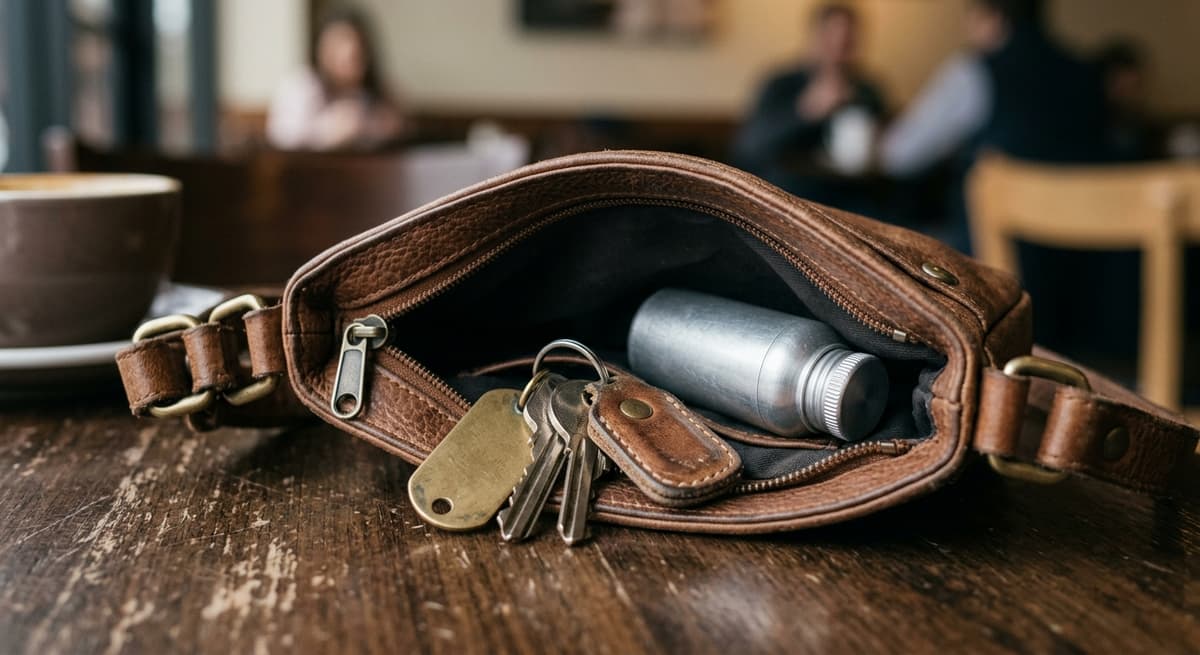
Yes. An ordinary hand-held aerosol canister of pepper spray, tear gas, or another chemical defense spray is legal to buy, carry, and possess in Colorado, because Article 12, the state's weapons article, does not define or regulate one. What Article 12 does regulate is a "gas gun." Colo. Rev. Stat. § 18-12-101(1)(n) defines "gas gun" as "a device designed for projecting gas-filled projectiles that release their contents after having been projected from the device," and includes the projectiles made for such a device. Section 18-12-102(2) lists a gas gun as an "illegal weapon" alongside a blackjack, a ballistic knife, and metallic knuckles, and § 18-12-102(4) makes knowingly possessing an illegal weapon a class 1 misdemeanor. That definition covers a device built to launch gas-filled projectiles, such as a pepper-ball or tear-gas launcher, and the projectiles for it; it does not describe a hand-held spray canister carried in a purse or on a keychain. Section 18-12-102(5) gives an affirmative defense to a gas-gun charge for a peace officer, a member of the armed forces or the Colorado National Guard acting in the lawful discharge of duties, or a person holding a valid permit and license for the weapon. Article 12 contains no separate age minimum, capacity or formula limit, or purchase restriction naming pepper spray, tear gas, or a chemical defense spray.
Is a stun gun legal in Colorado?
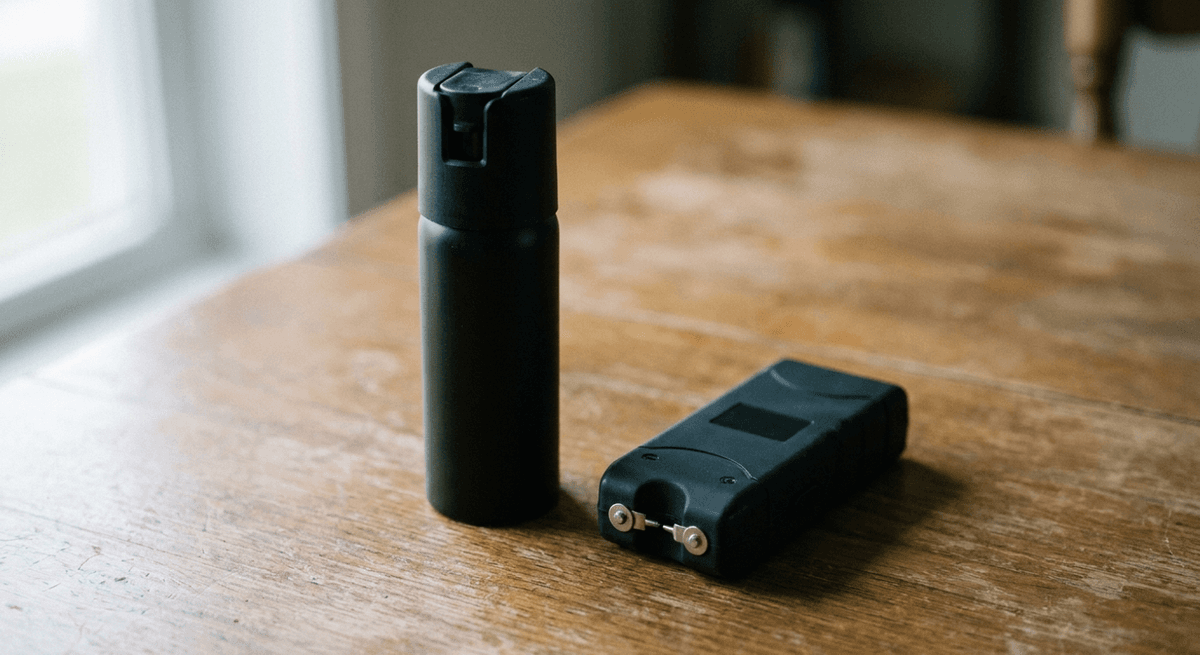
Yes, for lawful, simple possession. Colorado does directly regulate a stun gun, unlike an ordinary spray canister, but its regulation targets misuse and certain people, not ordinary carrying. Colo. Rev. Stat. § 18-12-101(1)(x) defines "stun gun" as "a device capable of temporarily immobilizing a person by the infliction of an electrical charge," a definition that applies throughout Article 12. Section 18-12-106.5, "Use of stun guns," states: "A person commits a class 5 felony if he knowingly and unlawfully uses a stun gun in the commission of a criminal offense." That offense turns on unlawful use during a crime, not on possessing or carrying a stun gun for ordinary self-defense; Article 12 contains no separate section restricting simple possession or carrying of a stun gun. The Colorado Court of Appeals reads "uses" broadly: in People v. Wheeler, 170 P.3d 817 (Colo. App. 2007), where the defendant activated a stun baton in front of other students but never touched or tried to touch them, the court held that section 18-12-106.5 "unambiguously creates a separate crime whenever a stun gun facilitates commission of the predicate offense, whether or not it is discharged." Wheeler and People v. Bass, 155 P.3d 547 (Colo. App. 2006), also hold that the predicate offense is not a lesser included offense of the stun gun count, so the two convictions do not merge.

Colorado's felon-in-possession statute, § 18-12-108(1), makes it a class 5 felony for a person previously convicted of a qualifying felony to knowingly possess, use, or carry "a firearm... or any other weapon that is subject to the provisions of this article 12." Both the stun-gun offense in § 18-12-106.5 and the gas-gun offense in § 18-12-102 sit within Article 12, so that language reaches a stun gun and a gas gun on its face; no published Colorado appellate decision construes this phrase as applied to a stun gun specifically. A hand-held pepper spray canister, which is not a gas gun, falls outside Article 12 and outside this felon-possession bar.
Restricted places and penalties
Colorado's school, college, and university weapons statute, § 18-12-105.5(1)(a), bars knowingly and unlawfully carrying, bringing, or possessing, without legal authority, "a deadly weapon as defined in section 18-1-901(3)(e) that is not a firearm" on the real estate of any public or private elementary, middle, junior high, high, or vocational school, or any public or private college, university, or seminary; violating it is a class 6 felony. Colorado's general "deadly weapon" definition, § 18-1-901(3)(e), has two branches: "(I) A firearm, whether loaded or unloaded; or (II) A knife, bludgeon, or any other weapon, device, instrument, material, or substance, whether animate or inanimate, that, in the manner it is used or intended to be used, is capable of producing death or serious bodily injury." The first branch names only a firearm; the second is functional rather than a list of named items, and neither branch names a stun gun or pepper spray. Because § 18-12-105.5(1)(a) reaches only a deadly weapon "that is not a firearm," it is branch (II) that governs here, so whether a stun gun or pepper spray counts as a "deadly weapon" for this school-grounds felony depends on how it is used or intended to be used in a given case. The statute also carries exceptions: § 18-12-105.5(1)(a) itself exempts an authorized public demonstration, an employee's necessary duties, and participation in an authorized extracurricular activity or athletic team, and § 18-12-105.5(3) adds that it is not an offense if the weapon is unloaded and stays inside a vehicle on college or university property, if the person is in their own dwelling, place of business, or on property under their control, or if the person is carrying the weapon in a private automobile for lawful protection of a person or property while traveling. That private-vehicle exception covers the most common real case, a person with a spray canister or stun gun in a car on campus.
Colorado's Capitol-grounds statute, § 18-12-105(1)(c), separately makes it a class 1 misdemeanor to carry, bring, or possess, without legal authority, "any explosive, incendiary, or other dangerous device" on the property of or within any building housing the General Assembly's chambers, galleries, or offices, or where a legislative hearing or meeting is being conducted. The companion statute for that same location, § 18-12-105.3, names only a firearm, so § 18-12-105(1)(c)'s "other dangerous device" language is a functional test, the same kind of question as the school-grounds statute, rather than a list naming pepper spray or a stun gun. Section 18-12-105(2) exempts the whole section, including (1)(c), from applying to a person in their own dwelling, place of business, or on property under their control, and to a person in a private automobile or other private means of conveyance who carries a weapon for lawful protection while traveling, the same private-vehicle situation most likely to come up in practice.
Colorado sets no statutory minimum age to buy or possess pepper spray or a stun gun. Article 12's juvenile weapons provisions, § 18-12-108.5 and § 18-12-108.7, reach only a firearm: § 18-12-108.5(1)(a) bars a person under 18 from knowingly possessing "any handgun," and § 18-12-108.7's heading and subsection (3) extend to "providing a firearm other than a handgun to a juvenile" as well, so together the two sections cover firearms generally rather than a handgun alone. Neither reaches pepper spray or a stun gun.
No Colorado statute generally preempts a local government from regulating pepper spray or a stun gun by ordinance. Title 29, article 11.7, has expressly permitted rather than preempted local firearm regulation since a 2021 amendment: § 29-11.7-103(1) states, "Unless otherwise expressly prohibited pursuant to state law, a local government may enact an ordinance, regulation, or other law governing or prohibiting the sale, purchase, transfer, or possession of a firearm, ammunition, or firearm component or accessory," as long as it is not less restrictive than state law. That article reaches only a firearm, ammunition, or a firearm component or accessory; it contains no reference to a chemical spray or an electronic defense weapon, so a city or county ordinance addressing either device generally is not affected by it. A separate, narrower statute does reach both devices, though: § 18-12-105.6(2)(b) provides, "Notwithstanding any other provision of law, no municipality, county, or city and county shall have the authority to enact or enforce any ordinance or resolution that would restrict a person's ability to travel with a weapon in a private automobile or other private means of conveyance for hunting or for lawful protection of a person's or another's person or property while traveling into, through, or within, a municipal, county, or city and county jurisdiction," although the section is headed "Limitation on local ordinances regarding firearms in private vehicles." The word "weapon" in the operative text is not limited to a firearm, and § 18-12-105.6(2)(a) confirms that this kind of travel, "except as described in section 18-12-114.5, is not an offense." The only Colorado decision construing the section treated the operative text the same way: in Trinen v. City & County of Denver, 53 P.3d 754 (Colo. App. 2002), the Court of Appeals measured Denver ordinances reaching "any dangerous or deadly weapon" against section 18-12-105.6 and said the General Assembly "made clear it wanted only to limit, not eliminate, local ordinances regulating the carrying of weapons in private vehicles." Trinen also held that the phrase then in the statute, "into or through," left local ordinances free to reach travel wholly within one jurisdiction; the General Assembly amended subsection (2) in 2003 to read "into, through, or within," the text in force today. So while local governments can otherwise regulate pepper spray and stun guns, they cannot enforce an ordinance restricting a person from carrying either device in a private vehicle for lawful protection while traveling.
Penalties tied directly to a stun gun or a gas gun in Colorado are narrow and turn on the circumstances: unlawful use of a stun gun in the commission of a crime is a class 5 felony under § 18-12-106.5, knowing possession of a gas gun is a class 1 misdemeanor under § 18-12-102(4), and possession of either by a person with a qualifying prior felony conviction is a separate class 5 felony under § 18-12-108. There is no dedicated felony or misdemeanor penalty statute for a hand-held pepper spray canister in Colorado; misuse would ordinarily be charged, if at all, under general assault law rather than a device-specific offense. One narrow substance-specific provision does exist: § 18-4-513, "Criminal use of a noxious substance," makes it a civil infraction to deposit, without consent, "any stink bomb or device, irritant, or offensive-smelling substance" on another person's land, building, or vehicle with intent to interfere with their use or enjoyment of it, a description a pepper-spray discharge into someone's car or home could fit; a peace officer's reasonable use of a noxious substance in the performance of duty is an affirmative defense.
Federal law: what it does and does not reach
No federal statute regulates a civilian's purchase or possession of pepper spray or a stun gun. Federal law matters in three places.
Federal buildings. Under 18 U.S.C. § 930(a), whoever knowingly possesses or causes to be present "a firearm or other dangerous weapon in a Federal facility (other than a Federal court facility)" faces a fine, imprisonment of up to 1 year, or both. Subsection (e) sets up to 2 years for a federal court facility, and subsection (b) up to 5 years where the weapon is intended to be used in a crime. Section 930(g)(2) defines the term:
The term "dangerous weapon" means a weapon, device, instrument, material, or substance, animate or inanimate, that is used for, or is readily capable of, causing death or serious bodily injury, except that such term does not include a pocket knife with a blade of less than 2½ inches in length.
The definition names neither device. Whether a particular spray or stun gun is "readily capable of" causing serious bodily injury is a question of fact the statute does not answer. Subsection (d)(3) exempts "the lawful carrying of firearms or other dangerous weapons in a Federal facility incident to hunting or other lawful purposes," and subsection (h) requires notice of the ban to be posted at each public entrance. A "Federal facility" is "a building or part thereof owned or leased by the Federal Government, where Federal employees are regularly present for the purpose of performing their official duties."
Air travel. The Transportation Security Administration's screening rules, which are agency policy rather than statute, bar both devices from carry-on bags. One 4 fl. oz. (118 ml) container of mace or pepper spray is permitted in checked baggage if it has a safety mechanism to prevent accidental discharge, and sprays containing more than 2 percent by mass of tear gas (CS or CN) are prohibited in checked baggage. Tasers, stun guns and other electro-shock weapons may travel in checked baggage only if transported so the device cannot discharge accidentally. Airlines may set stricter rules.
National parks. National Park Service regulations prohibit possessing, carrying or using a "weapon" in a park area except as the regulations provide (36 CFR 2.4(b)(1)). 36 CFR 1.4 defines "weapon" to include an "irritant gas device" and any "weapon the possession of which is prohibited under the laws of the State in which the park area or portion thereof is located."
Disclaimer: This article provides general legal information about Colorado's pepper spray and stun gun laws as of September 2026. It is not legal advice. Consult a lawyer licensed in Colorado for advice about a specific situation.
For a state-by-state comparison, see pepper spray and stun gun laws by state. Colorado's self-defense statutes are covered separately on the Colorado self-defense laws page.
Statutes cited are current through the 2026 session. Last updated: 2026-09-22.
Frequently Asked Questions
Is pepper spray legal to carry in Colorado?
Yes. Colorado's weapons article does not define or regulate a hand-held pepper spray canister. It regulates a "gas gun," a device designed to project gas-filled projectiles, as an illegal weapon under Colo. Rev. Stat. 18-12-102(2), a class 1 misdemeanor to possess knowingly under 18-12-102(4). That definition does not describe an aerosol spray canister.
Is a stun gun legal in Colorado?
Yes, for ordinary possession. Colorado defines "stun gun" in Colo. Rev. Stat. 18-12-101(1)(x) and criminalizes unlawful use of one during a crime as a class 5 felony under 18-12-106.5, but Article 12 contains no separate section restricting simple possession or carrying a stun gun for self-defense, though People v. Wheeler, 170 P.3d 817 (Colo. App. 2007), holds that "uses" covers a stun gun that merely facilitates the predicate offense, whether or not it is discharged.
Can a felon possess a stun gun in Colorado?
Colorado's felon-in-possession statute, 18-12-108, bars a person with a qualifying prior felony conviction from possessing "any other weapon that is subject to the provisions of this article 12," which on its face includes a stun gun because the stun-gun offense sits within Article 12. No published Colorado appellate decision applies that phrase to a stun gun specifically, but the statutory text reaches it.
Can you carry pepper spray or a stun gun on a Colorado school campus?
Colorado's school-grounds weapons felony, 18-12-105.5, bars a "deadly weapon" as functionally defined in 18-1-901(3)(e), anything capable of producing death or serious bodily injury in the manner it is used or intended to be used, so coverage depends on how a device is used. The statute exempts an unloaded weapon left inside a vehicle on college property and a weapon carried in a private vehicle for lawful protection while traveling.
Is there a minimum age to buy pepper spray or a stun gun in Colorado?
No. Colorado's juvenile weapons statutes, 18-12-108.5 and 18-12-108.7, reach only a firearm, not pepper spray or a stun gun. Neither statute, nor any other section of Article 12, sets a minimum age for either device on this page.
Updates
Independently fact-checked against the cited primary sources
The Law Behind This Article
This article rests on the statutory provisions below, held in our own legal record and retrieved from the official source. Tap a section to read the operative text.
Colorado Revised Statutes, Title 18: Criminal Code
§ 18-12-101Peace officer affirmative defense - definitionsIn forcecited in 2 of our articles
(1) As used in this article 12, unless the context otherwise requires: (a) Adult means any person eighteen years of age or older. (a.2) [Editor's note: Subsection (1)(a.2) is effective July 1, 2026.] Ammunition means an ammunition or cartridge case, primer, bullet, or propellant powder designed for use in a firearm. The term ammunition does not include: (I) A shotgun shot or pellet not designed for use as the single, complete projectile load for one shotgun hull or casing; or (II) An unloaded, nonmetallic shotgun hull or casing that does not have a primer. (b) Ballistic knife means any knife that has a blade that is forcefully projected from the handle by means of a spring-loaded device or explosive charge. (c) Blackjack includes any billy, sand club, sandbag, or other hand-operated striking weapon consisting, at the striking end, of an encased piece of lead or other heavy substance and, at the handle end, a strap or springy shaft that increases the force of impact.
Official text (excerpt) · last checked 2026-07-29 · Read the full text in our law library · Verify at olls.info
Cited in 3 court opinions in our collectionLatest citing opinion in our collection: 2026
Opinions citing this section in our collection:
- Navratil v. Parker (District Court, D. Colorado 1989, 726 F. Supp. 800)“…to permit its peace officers to be armed. See Colo.Rev.Stat. § 18-12-101(2); Colo.Rev.Stat. § 18-12-102(5); Colo…”
- National Association for Gun Rights v. Polis (Court of Appeals for the Tenth Circuit 2026)“…iver . . . once completed, assembled, or converted. C.R.S. § 18-12-101(1)(z) (emphasis added). The first part…”
- United States v. Mach (Court of Appeals for the Tenth Circuit 2012, 477 F. App'x 481)“…long or an overall length of less than twenty-six inches.” Colo. Rev. Stat. § 18-12-101(1)(I). Mach’s Colorado conviction is no…”
Identified automatically from the court opinions citing this section — not a ranking of which case controls.
Also relied on in: Colorado Knife Laws (2026): Concealed Carry and Exceptions
§ 18-12-102Possessing a dangerous or illegal weapon - affirmative defense - definitionIn forcecited in 3 of our articles
(1) As used in this section, the term dangerous weapon means a firearm silencer, machine gun, rapid-fire device, short shotgun, or short rifle. (2) As used in this section, the term illegal weapon means a blackjack, gas gun, ballistic knife, or metallic knuckles. (3) A person who knowingly possesses a dangerous weapon commits a class 5 felony. (4) A person who knowingly possesses an illegal weapon commits a class 1 misdemeanor. (5) It shall be an affirmative defense to the charge of possessing a dangerous weapon, or to the charge of possessing an illegal weapon, that the person so accused was a peace officer or member of the armed forces of the United States or Colorado National Guard acting in the lawful discharge of his duties, or that said person has a valid permit and license for possession of such weapon.
Official text (excerpt) · last checked 2026-07-29 · Read the full text in our law library · Verify at olls.info
Cited in 4 court opinions in our collectionLatest citing opinion in our collection: 2025
Opinions citing this section in our collection:
- Navratil v. Parker (District Court, D. Colorado 1989, 726 F. Supp. 800)“…o be armed. See Colo.Rev.Stat. § 18-12-101(2); Colo.Rev.Stat. § 18-12-102(5); Colo.Rev.Stat. § 18-12-105(2)(d) &…”
- United States v. Morgan (Court of Appeals for the Tenth Circuit 2025)“…ineguns in 11 Cal. Penal Code § 32625; Colo. Rev. Stat. § 18-12-102; Del. Code Ann. tit. 11, § 1444(a)(5);…”
- United States v. Broomfield (Court of Appeals for the Tenth Circuit 2005, 133 F. App'x 524)“…es an illegal weapon commits a class 1 misdemeanor. Colo. Rev. Stat. § 18-12-102(1)-(4) (emphasis added). The p…”
Identified automatically from the court opinions citing this section — not a ranking of which case controls.
Also relied on in: Knife Laws by State (2026): Carry Rules, Blade Limits, Penalties
§ 18-12-105Unlawfully carrying a concealed weapon - unlawful possession of weaponsIn forcecited in 2 of our articles
(1) A person commits a class 1 misdemeanor if the person knowingly and unlawfully: (a) Carries a knife concealed on or about his or her person; or (b) Carries a firearm concealed on or about his or her person; or (c) Without legal authority, carries, brings, or has in the person's possession any explosive, incendiary, or other dangerous device on the property of or within any building in which the chambers, galleries, or offices of the general assembly, or either house thereof, are located, or in which a legislative hearing or meeting is being or is to be conducted, or in which the official office of any member, officer, or employee of the general assembly is located. (d) (Deleted by amendment, L. 93, p.
Official text (excerpt) · last checked 2026-09-23 · Read the full text in our law library · Verify at olls.info
Cited in 6 court opinions in our collectionLatest citing opinion in our collection: 2022
Opinions citing this section in our collection:
- People v. Hook (Supreme Court of Colorado 2004, 91 P.3d 1070)“…y to the misdemeanor crimes of carrying a concealed weapon (C.R.S. § 18-12-105) and reckless endangerment (C.R.S. § 18…”
- Peterson v. Martinez (Court of Appeals for the Tenth Circuit 2013, 707 F.3d 1197)“…place of business, or private automobile in Colorado. See Colo. Rev. Stat. § 18-12-105. Peterson further notes that the Denver…”
- Peterson v. LaCABE (District Court, D. Colorado 2011, 783 F. Supp. 2d 1167)“…ncealed firearm in the State of Colorado without a license. C.R.S. § 18-12-105. The law contains several exceptions, m…”
Identified automatically from the court opinions citing this section — not a ranking of which case controls.
§ 18-12-105.5Unlawfully carrying a weapon - unlawful possession of weapons - school, college, or university grounds - definitionIn forcecited in 2 of our articles
(1) (a) A person shall not knowingly and unlawfully and without legal authority carry, bring, or have in the person's possession a deadly weapon as defined in section 18-1-901 (3)(e) that is not a firearm in or on the real estate and all improvements erected thereon of any public or private elementary, middle, junior high, high, or vocational school or any public or private college, university, or seminary; except for the purpose of presenting an authorized public demonstration or exhibition pursuant to instruction in conjunction with an organized school or class, for the purpose of carrying out the necessary duties and functions of an employee of an educational institution that require the use of a deadly weapon that is not a firearm, or for the purpose of participation in an authorized extracurricular activity or on an athletic team.
Official text (excerpt) · last checked 2026-07-29 · Read the full text in our law library · Verify at olls.info
Cited in 1 court opinions in our collectionLatest citing opinion in our collection: 1994
Opinions citing this section in our collection:
- United States v. Ornelas (District Court, D. Colorado 1994, 841 F. Supp. 1087)“…ossession of a gun on school property. See Colo. Rev.Stat. § 18-12-105.5. Section 922, like the numerous narcoti…”
Identified automatically from the court opinions citing this section — not a ranking of which case controls.
§ 18-12-105.6Limitation on local ordinances regarding firearms in private vehiclesIn force
(1) The general assembly hereby finds that: (a) A person carrying a weapon in a private automobile or other private means of conveyance for hunting or for lawful protection of such person's or another's person or property, as permitted in sections 18-12-105 (2)(b) and 18-12-105.5 (3)(c), may tend to travel within a county, city and county, or municipal jurisdiction or in or through different county, city and county, and municipal jurisdictions, en route to the person's destination; (b) Inconsistent laws exist in local jurisdictions with regard to the circumstances under which weapons may be carried in automobiles and other private means of conveyance; (c) This inconsistency creates a confusing patchwork of laws that unfairly subjects a person who lawfully travels with a weapon to criminal penalties because he or she travels within a jurisdiction or into or through another jurisdiction; (d) This inconsistency places citizens in the position of not knowing when they may be violating local laws while traveling within a jurisdiction or in, through, or between different jurisdictions, and therefore being unable to avoid committing a crime.
Official text (excerpt) · last checked 2026-07-29 · Read the full text in our law library · Verify at olls.info
Cited in 1 court opinions in our collectionLatest citing opinion in our collection: 2003
Opinions citing this section in our collection:
- United States v. Smith (Court of Appeals for the Tenth Circuit 2003, 55 F. App'x 489)“…f a concealed weapon. Smith pointed to a Colorado statute, Colo. Rev. Stat. § 18-12-105.6, enacted August 2, 2000, limiting the…”
Identified automatically from the court opinions citing this section — not a ranking of which case controls.
§ 18-12-106.5Use of stun gunsIn force
A person commits a class 5 felony if he knowingly and unlawfully uses a stun gun in the commission of a criminal offense.
Official text (excerpt) · last checked 2026-07-29 · Read the full text in our law library · Verify at olls.info
§ 18-12-108Possession of weapons by previous offendersIn force
(1) A person commits the crime of possession of a weapon by a previous offender if the person knowingly possesses, uses, or carries upon his or her person a firearm as defined in section 18-1-901 (3)(h) or any other weapon that is subject to the provisions of this article 12 subsequent to the person's conviction for a felony crime as defined in section 24-4.1-302 (1) or listed in subsection (7) of this section, or subsequent to the person's conviction for attempt or conspiracy to commit a crime as defined in section 24-4.1-302 (1) that is a felony, pursuant to Colorado or any other state's law or pursuant to federal law. (2) A person commits a class 5 felony if the person violates subsection (1) or (3) of this section. A person who violates subsection (1) or (3) of this section and used or threatened the use of the firearm in the commission of another crime is not eligible for probation or any other alternative sentence and shall be sentenced to the department of corrections.
Official text (excerpt) · last checked 2026-07-29 · Read the full text in our law library · Verify at olls.info
Cited in 20 court opinions in our collectionLatest citing opinion in our collection: 2025
Opinions citing this section in our collection:
- United States v. Lester Eugene Fowler (Court of Appeals for the Tenth Circuit 1996, 104 F.3d 368)“…2255 motion in the district court, the government relied on Colo.Rev.Stat. § 18-12-108. That section was amended effective Ju…”
- United States v. Petersen (District Court, D. Colorado 2003, 277 F. Supp. 2d 1089)“…restored upon his discharge in 1998. The relevant statute, C.R.S. § 18-12-108, was amended in 1994, after defendant w…”
- United States v. Juan Castillo-Rivera (Court of Appeals for the Fifth Circuit 2017, 853 F.3d 218)“…ishment of up to a year in prison (MD, 4 Colorado Colo. Rev. Stat. § 18-12-108 . . . under . . . any othe…”
Identified automatically from the court opinions citing this section — not a ranking of which case controls.
§ 18-4-513Criminal use of a noxious substanceIn force
(1) Any person who deposits on the land or in the building or vehicle of another, without the other person's consent, any stink bomb or device, irritant, or offensive-smelling substance with the intent to interfere with another's use or enjoyment of the land, building, or vehicle commits a civil infraction. (2) It shall be an affirmative defense that a peace officer in the performance of his duties reasonably used a noxious substance.
Official text (excerpt) · last checked 2026-07-29 · Read the full text in our law library · Verify at olls.info
Colorado Revised Statutes, Title 29: Government - Local
§ 29-11.7-103Local regulations governing firearms permittedIn force
(1) Unless otherwise expressly prohibited pursuant to state law, a local government may enact an ordinance, regulation, or other law governing or prohibiting the sale, purchase, transfer, or possession of a firearm, ammunition, or firearm component or accessory that a person may lawfully sell, purchase, transfer, or possess under state or federal law. The local ordinance, regulation, or other law may not impose a requirement on the sale, purchase, transfer, or possession of a firearm, ammunition, or firearm component or accessory that is less restrictive than state law, and any less restrictive ordinance, regulation, or other law enacted by a local government before the effective date of this section, as amended in 2021, is void and unenforceable. A local ordinance, regulation, or other law governing the sale, purchase, transfer, or possession of a firearm, ammunition, or firearm component or accessory may only impose a criminal penalty for a violation upon a person who knew or reasonably should have known that the person's conduct was prohibited.
Official text (excerpt) · last checked 2026-07-29 · Read the full text in our law library · Verify at olls.info
Code of Federal Regulations Title 36
§ 1.4What terms do I need to know?In forcecited in 53 of our articles
(a) The following definitions shall apply to this chapter, unless modified by the definitions for a specific part or regulation: Abandonment means the voluntary relinquishment of property with no intent to retain possession. Administrative activities means those activities conducted under the authority of the National Park Service for the purpose of safeguarding persons or property, implementing management plans and policies developed in accordance and consistent with the regulations in this chapter, or repairing or maintaining government facilities. Airboat means a vessel that is supported by the buoyancy of its hull and powered by a propeller or fan above the waterline. This definition should not be construed to mean a “hovercraft,” that is supported by a fan-generated air cushion. Aircraft means a device that is used or intended to be used for human flight in the air, including powerless flight. Archeological resource means material remains of past human life or activities that are of archeological interest and are at least 50 years of age.
Official text (excerpt) · last checked 2026-07-28 · Read the full text in our law library · Verify at ecfr.gov
Cited in 34 court opinions in our collectionLatest citing opinion in our collection: 2026
Opinions citing this section in our collection:
- WildEarth Guardians v. National Park Service (Court of Appeals for the Tenth Circuit 2013, 703 F.3d 1178)“…collect, kill, wound, or attempt to do any of the above.” 36 C.F.R. § 1.4(a). WildEarth argues that because NPS…”
- Nature v. United States (District Court, E.D. California 2017, 250 F. Supp. 3d 634)“…ent, historic, parkway, recreational, or other purposes. 36 C.F.R. § 1.4 . Nature argues that the El Portal Admi…”
- United States v. Knauer (District Court, E.D. New York 2010, 707 F. Supp. 2d 379)“…ng or attempting to take wildlife, except trapping. 36 C.F.R. § 1.4 (a) (in relevant part, reordered for cl…”
Identified automatically from the court opinions citing this section — not a ranking of which case controls.
Also relied on in: Pepper Spray and Stun Gun Laws by State (2026), Alabama Pepper Spray and Stun Gun Laws (2026), Alaska Pepper Spray and Stun Gun Laws (2026)
§ 2.4Weapons, traps and nets.In forcecited in 53 of our articles
(a) None of the provisions in this section or any regulation in this chapter may be enforced to prohibit an individual from possessing a firearm, including an assembled or functional firearm, in any National Park System unit if: (1) The individual is not otherwise prohibited by law from possessing the firearm; and (2) The possession of the firearm is in compliance with the law of the State in which the National Park System unit is located. (b)(1) Except as otherwise provided in this section and parts 7 (special regulations) and 13 (Alaska regulations), the following are prohibited: (i) Possessing a weapon, trap or net (ii) Carrying a weapon, trap or net (iii) Using a weapon, trap or net (2) Weapons, traps or nets may be carried, possessed or used: (i) At designated times and locations in park areas where: (A) The taking of wildlife is authorized by law in accordance with § 2.2 of this chapter; (B) The taking of fish is authorized by law in accordance with § 2.3 of this part. (ii) When used for target practice at designated times and at facilities or locations designed and constructed specifically for this purpose and designated pursuant to special regulations.
Official text (excerpt) · last checked 2026-07-28 · Read the full text in our law library · Verify at ecfr.gov
Cited in 26 court opinions in our collectionLatest citing opinion in our collection: 2024
Opinions citing this section in our collection:
- United States v. Masciandaro (Court of Appeals for the Fourth Circuit 2011, 638 F.3d 458)“…motor vehicle within a national park area, in violation of 36 C.F.R. § 2.4(b). He challenges his con- viction on t…”
- Brady Campaign to Prevent Gun Violence v. Salazar (District Court, District of Columbia 2009, 612 F. Supp. 2d 1)“…eady use.” 48 Fed.Reg. 30,252 (June 30, 1983), codified at 36 C.F.R. § 2.4 (a)(2). A similar regulation applied to…”
- United States v. Otis Lofton, United States of America v. Otis Lofton (Court of Appeals for the Fourth Circuit 2000, 233 F.3d 313)“…l Park Service. See 36 C.F.R. § 1.2 (2000); 36 C.F.R. § 2.4 (2000). Lofton’s conviction was affirm…”
Identified automatically from the court opinions citing this section — not a ranking of which case controls.
Also relied on in: Pennsylvania Pepper Spray and Stun Gun Laws (2026), Arizona Pepper Spray and Stun Gun Laws (2026), Arkansas Pepper Spray and Stun Gun Laws (2026)
United States Code Title 18
§ 930Possession of firearms and dangerous weapons in Federal facilitiesIn forcecited in 55 of our articles
Except as provided in subsection (d), whoever knowingly possesses or causes to be present a firearm or other dangerous weapon in a Federal facility (other than a Federal court facility), or attempts to do so, shall be fined under this title or imprisoned not more than 1 year, or both. Whoever, with intent that a firearm or other dangerous weapon be used in the commission of a crime, knowingly possesses or causes to be present such firearm or dangerous weapon in a Federal facility, or attempts to do so, shall be fined under this title or imprisoned not more than 5 years, or both. A person who kills any person in the course of a violation of subsection (a) or (b), or in the course of an attack on a Federal facility involving the use of a firearm or other dangerous weapon, or attempts or conspires to do such an act, shall be punished as provided in sections 1111, 1112, 1113, and 1117.
Official text (excerpt) · last checked 2026-07-28 · Read the full text in our law library · Verify at uscode.house.gov
Cited in 90 court opinions in our collectionLatest citing opinion in our collection: 2026
Opinions citing this section in our collection:
- United States v. Odeh (Court of Appeals for the Second Circuit 2008, 552 F.3d 93)“…f an attack on a U.S. facility in Nairobi, in violation of 18 U.S.C. § 930 (c) (Counts 9-221); murder of U.S. offi…”
- Kawaljeet Tagore v. USA (Court of Appeals for the Fifth Circuit 2013, 735 F.3d 324)“…statutory ban on weapons with blades exceeding 2.5 inches. 18 U.S.C. § 930(a), (g)(2).…”
- Heller v. District of Columbia (Court of Appeals for the D.C. Circuit 2015, 801 F.3d 264)“…universally prohibited from possessing firearms. See, e.g., 18 U.S.C. § 930(a), (g)(1) (unlawful to “knowingly poss…”
Identified automatically from the court opinions citing this section — not a ranking of which case controls.
Also relied on in: Idaho Knife Laws (2026): Carry, Blade Length, Preemption, North Dakota Knife Laws (2026): The 6-Inch Rule and Licensing, California Pepper Spray and Stun Gun Laws (2026)
Search our full record of US law — 2.1 million sections, every state + federal →
Sources and References
- Colo. Rev. Stat. 18-12-101 - Definitions (gas gun, (1)(n); stun gun, (1)(x))(colorado.public.law)
- Colo. Rev. Stat. 18-12-102 - Possessing a dangerous or illegal weapon (gas gun, class 1 misdemeanor)(colorado.public.law)
- Colo. Rev. Stat. 18-12-105 - Unlawfully carrying a concealed weapon; unlawful possession of weapons (Capitol grounds, (1)(c); section-wide exceptions, (2))(colorado.public.law)
- Colo. Rev. Stat. 18-12-105.5 - Unlawfully carrying a weapon; school, college, or university grounds(colorado.public.law)
- Colo. Rev. Stat. 18-12-105.6 - Limitation on local ordinances regarding firearms in private vehicles (subsection (2)(b) bars a local ordinance restricting travel with a weapon in a private automobile for lawful protection)(colorado.public.law)
- Trinen v. City & County of Denver, 53 P.3d 754 (Colo. App. 2002) - construing C.R.S. 18-12-105.6; local weapons-in-vehicle ordinances limited, not eliminated(static.case.law)
- Colo. Rev. Stat. 18-12-106.5 - Use of stun guns (class 5 felony, unlawful use during a criminal offense)(colorado.public.law)
- People v. Wheeler, 170 P.3d 817 (Colo. App. 2007) - C.R.S. 18-12-106.5; "uses" covers a stun gun that facilitates the predicate offense, whether or not discharged(static.case.law)
- Colo. Rev. Stat. 18-12-108 - Possession of weapons by previous offenders (class 5 felony, reaches any Article 12 weapon)(colorado.public.law)
- Colo. Rev. Stat. 18-12-108.5 and 18-12-108.7 - Possession of handguns by juveniles; unlawfully providing or permitting a juvenile to possess a handgun; unlawfully providing a firearm other than a handgun to a juvenile(colorado.public.law)
- Colo. Rev. Stat. 18-4-513 - Criminal use of a noxious substance (civil infraction; irritant deposited on another's land, building, or vehicle)(colorado.public.law)
- Colo. Rev. Stat. title 29, article 11.7 - Local regulations governing firearms permitted (29-11.7-103, since 2021 expressly permits local firearm regulation not less restrictive than state law; limited to firearms, ammunition, and components)(colorado.public.law)
- 18 U.S.C. § 930 - Possession of firearms and dangerous weapons in Federal facilities(law.cornell.edu)
- Transportation Security Administration - What Can I Bring? Pepper Spray(tsa.gov).gov
- Transportation Security Administration - What Can I Bring? Stun Guns/Shocking Devices(tsa.gov).gov
- 36 CFR 1.4 - National Park Service definitions (weapon)(ecfr.gov).gov
- 36 CFR 2.4 - Weapons, traps and nets(ecfr.gov).gov