
South Carolina
South Carolina Windshield Mounting Laws (2026 Guide)
Independently fact-checked against primary sources (last audited August 17, 2026). · Reviewed by the RecordingLaw editorial team. · Law checked current as of August 9, 2026. · 4 primary sources cited on this page. How we verify our legal content
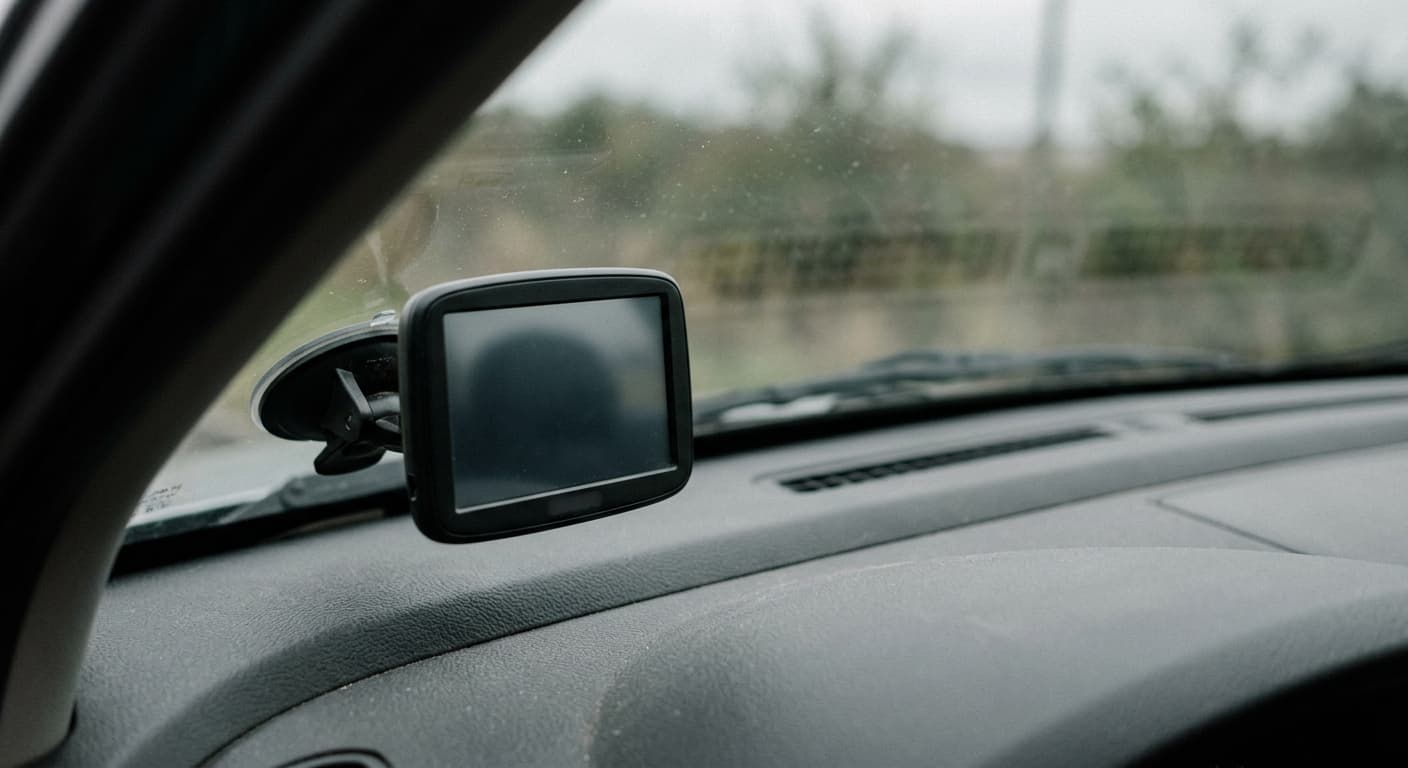
South Carolina Code Section 56-5-5000 bars any nontransparent material on the windshield that obstructs the driver's clear view. It does not ban windshield mounts by name, so a suction cup mount for a dashcam, GPS unit, or phone is a violation only if it blocks the driver's view, a judgment made by the officer at the roadside. Dashboard mounting keeps the question from arising. Toll transponders are commonly mounted within the top six inches of the windshield, a placement standard borrowed from federal commercial-vehicle rules rather than stated in South Carolina's own windshield statute.
South Carolina law restricts what drivers can place on their windshields to protect visibility and road safety. The primary statute governing windshield obstructions is Section 56-5-5000 of the South Carolina Code of Laws, which falls under Title 56 (Motor Vehicles), Chapter 5 (Uniform Act Regulating Traffic on Highways).
Whether you are considering a GPS mount, phone holder, dashcam, or window tint, this guide covers the specific rules, penalties, and exemptions you need to know as a South Carolina driver.
What South Carolina Law Says About Windshield Obstructions
The core provision is found in Section 56-5-5000, titled "Windows unobstructed; windshield wipers." The statute states that no person shall drive any motor vehicle with any sign, poster, or other nontransparent material upon the front windshield, side wings, or side or rear windows that obstructs the driver's clear view of the highway or any intersecting highway.
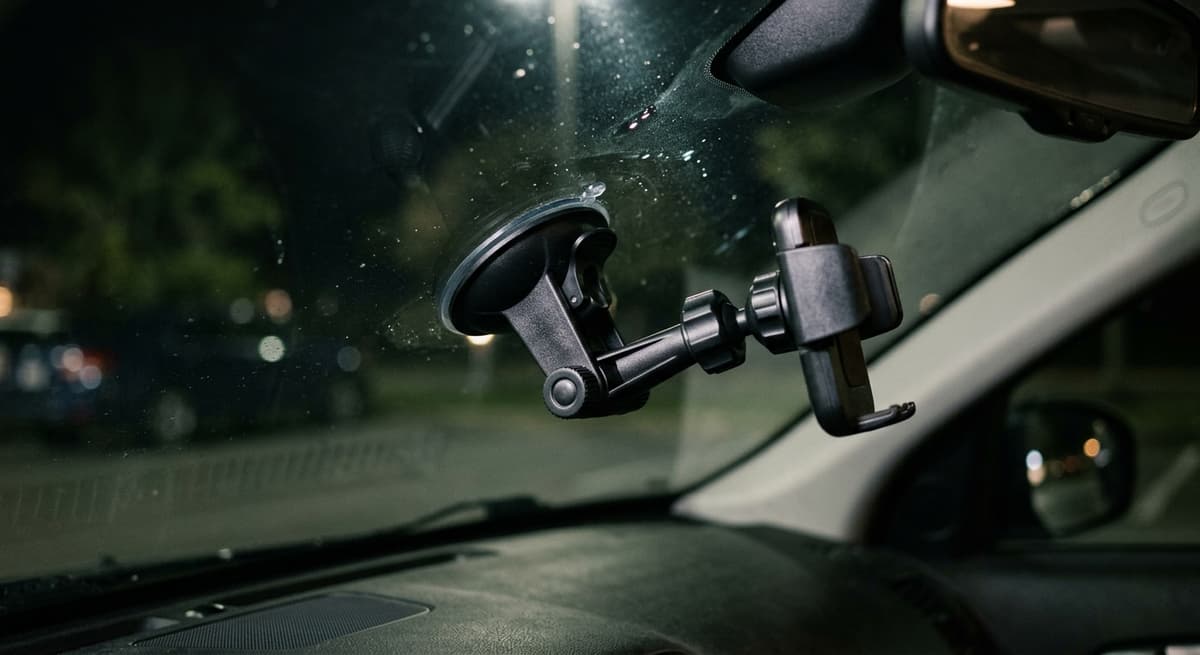
This language is broad. It covers not just stickers and signs but any nontransparent material that blocks visibility. The standard is whether the material "obstructs the driver's clear view," which gives law enforcement discretion in determining what constitutes a violation.
The statute also requires that every motor vehicle windshield be equipped with a functioning device for clearing rain, snow, or other moisture. Every windshield wiper must be maintained in good working order and be controllable by the driver.
GPS Mounts and Suction Cup Devices
South Carolina has no statute that names suction cup mounts or sets aside a legal windshield zone for them. Section 56-5-5000 is the only provision that reaches them, and it prohibits nontransparent material on the windshield only where that material obstructs the driver's clear view of the highway.
A windshield-mounted GPS unit, phone holder, or similar hardware is therefore not automatically illegal in South Carolina. It becomes a violation when an officer concludes the device blocks the driver's view, which turns on the size of the unit, where on the glass it sits, and how much of the driver's sight line it occupies.
Because that judgment is made at the roadside rather than against a published dimension, dashboard mounting is the safest choice. Dashboard mounts, vent clips, and console-mounted holders sit off the windshield entirely, so they never raise the obstruction question. Some states publish specific windshield zones where a small device is expressly allowed. South Carolina publishes none, which leaves the general obstruction test as the only standard.
Dashcam Mounting Rules
Dashcams are legal in South Carolina. The same obstruction test that governs GPS devices and phone holders governs dashboard cameras: Section 56-5-5000 reaches a windshield-mounted camera only if it obstructs the driver's clear view.
A compact camera tucked high behind the rearview mirror is unlikely to draw a citation, but South Carolina law offers no published size or placement allowance to point to if an officer disagrees. Mounting a dashcam on the dashboard itself avoids the issue. Many modern dashcam models offer both windshield and dashboard mounting options, so look for units that include a dashboard mount or adhesive pad.
South Carolina is a one-party consent state for recording purposes, so you can legally record audio and video inside your vehicle without informing other parties. The footage can be used as evidence in court. The only placement question South Carolina's windshield statute raises is whether the camera obstructs your clear view of the road.
Windshield Tint Laws (Section 56-5-5015)
South Carolina regulates window tinting through Section 56-5-5015, titled "Sunscreen devices." The windshield-specific rules are strict.
Windshield Tint Restrictions
A sunscreening device (tint film) may only be applied along the top of the windshield and cannot extend below the AS1 line. The AS1 line is a marking found on most windshields that indicates the manufacturer's recommended limit for tint application. If your windshield does not have a visible AS1 line, no tint may be applied to the windshield at all.
Any sunscreening device applied to the windshield must be nonreflective. It also cannot be red, yellow, or amber in color.
Side and Rear Window Requirements
For the front side windows (driver and passenger), after-factory tint must allow at least 27% light transmission when combined with the manufacturer's factory tint.
Rear side windows (behind the driver) must also maintain at least 27% combined light transmission.
The rear window must also have at least 27% light transmission (S.C. Code 56-5-5015; the old 20% figure was superseded effective January 1, 1993).
Certificate of Compliance
Every vehicle with after-factory tint must display a certificate of compliance at all times. This certificate verifies that the tint meets South Carolina's legal requirements.
Tint Violation Penalties
A consumer convicted of illegal window tint (tint that is too dark or otherwise fails the section's light-transmittance or color requirements) faces a misdemeanor charge in magistrate's court. Upon conviction under Section 56-5-5015(K), the fine is not more than $200, and imprisonment of up to 30 days is possible for each offense.
A separate, stricter penalty applies to certificate-of-compliance violations under subsections (E) and (G), such as installing tint without permanently affixing the required certificate. There, a consumer is fined not less than $200, and a professional window tinter is fined not less than $1,000 or imprisoned up to 30 days, or both, for each offense.
Medical Exemptions for Tint
South Carolina provides a medical exemption for drivers with physical conditions that require darker window tint. To qualify, you must obtain an affidavit signed by a licensed physician or optometrist practicing in South Carolina. The affidavit must state that you have a physical condition that makes it necessary to use sunscreening material that would otherwise violate the tinting limits.
You must keep the medical exemption affidavit in the vehicle at all times and renew it every two years.
Electronic Toll Transponders and Legal Stickers
Not everything is banned from the windshield. South Carolina law allows two categories of windshield-mounted items.
Toll Transponders and Antennas
Electronic toll transponders (such as the Palmetto Pass / PalPass used on South Carolina toll roads) and antennas are commonly mounted on the windshield. South Carolina's own windshield statute, Section 56-5-5000, is a brief general obstruction ban and does not itself set out a placement zone for these devices. The six-inch/wiper-sweep standard drivers typically follow instead comes from the federal commercial-vehicle windshield rule, 49 CFR 393.60(e), which requires antennas and similar devices to be mounted:
- No lower than six inches below the top of the windshield.
- Outside the area swept by the windshield wipers.
Legally Required Stickers
Stickers that are required by law, such as inspection decals or registration validation stickers, are also commonly placed on the windshield in their designated locations, consistent with the same federal placement rule.
South Carolina's Hands-Free and Distracted Driving Act
On September 1, 2025, South Carolina's Hands-Free and Distracted Driving Act took effect. Governor Henry McMaster signed the legislation into law in July 2025, making South Carolina the 33rd state to adopt a hands-free driving law.
This law has a direct impact on how drivers use electronic devices in their vehicles and adds another layer to the windshield mounting question.
What the Law Prohibits
Under Section 56-5-3890, as amended by the Hands-Free Act, drivers cannot:
- Hold or support a mobile electronic device with any part of their body while driving
- Read, compose, or send text messages, emails, or other written communications
- Interact with apps or websites on a mobile device
- Watch videos, movies, games, or video calls on an electronic device
What Is Allowed
Drivers may use mobile electronic devices in hands-free mode, including:
- Voice-activated features such as voice commands and voice-to-text
- Devices secured in a dashboard-mounted cradle, holder, or mount (not on the windshield)
- GPS navigation, music, and podcast apps operated through voice commands or a single touch
- Earpieces and wrist-worn devices for voice calls
- Reporting emergencies to 911
Enforcement Timeline
Law enforcement began issuing warnings for violations on September 1, 2025. After a 180-day grace period, citations began on approximately March 1, 2026. Drivers are now subject to full enforcement.
Penalties for Hands-Free Violations
| Offense | Fine | Points on License |
|---|---|---|
| First offense | $100 (no suspension possible) | None |
| Second or subsequent offense (within 3 years) | $200 (no suspension possible) | 2 points |
It takes 12 points to trigger a license suspension in South Carolina. While a single hands-free violation will not result in suspension, repeated violations can contribute to point accumulation alongside other traffic offenses.
Exemptions from the Hands-Free Law
The following individuals and situations are exempt:
- Law enforcement officers, firefighters, and emergency medical personnel while performing official duties
- Drivers reporting traffic accidents, medical emergencies, or hazardous road conditions
- Drivers using GPS navigation through a mounted (not handheld) device
- Use of citizens band radios, amateur radios, and commercial two-way radios
Windshield Safety Glass Requirements
Section 56-5-5010 requires that all motor vehicles registered in South Carolina be equipped with approved safety glass in all doors, windows, and windshields. The South Carolina Department of Motor Vehicles will not register a vehicle that does not meet this requirement and may suspend the registration of any vehicle found to be noncompliant.
Cracked Windshields
South Carolina does not have a mandatory annual vehicle inspection for most passenger vehicles. However, a cracked or damaged windshield can still result in a traffic stop and citation if the damage obstructs the driver's view of the road.
A vehicle with a cracked windshield that does not obstruct the driver's view is generally not considered unsafe under the law. The key question is whether the crack or chip interferes with the driver's ability to see clearly.
South Carolina sets no statutory crack or chip dimension for passenger vehicles. The only test in state law is Section 56-5-5000's question of whether the damage obstructs the driver's clear view. The numeric thresholds that circulate online, such as a three-quarter-inch (19 mm) damaged area sitting at least three inches (76 mm) from another one, come from the federal motor carrier rule at 49 CFR 393.60(c), which by its own terms applies to buses, trucks, and truck-tractors rather than to private passenger cars. Treat them as a rule of thumb, not a South Carolina standard.
Penalties for Windshield Obstruction Violations
Violations of Section 56-5-5000 (windshield obstruction) fall under the general traffic penalty provision in Section 56-5-6190.
A person convicted of violating the windshield obstruction law is guilty of a misdemeanor. The maximum penalties are:
- A fine of up to $100
- Imprisonment of up to 30 days
In practice, most windshield obstruction violations result in a traffic citation and fine rather than jail time. However, the misdemeanor classification means the offense goes on your criminal record, which is a significant consequence that many drivers do not realize.
Officers may also issue a warning for minor obstructions, giving the driver time to remove the offending item before a formal citation is issued.
Commercial Vehicle Considerations
Commercial motor vehicles operating in South Carolina must comply with both state windshield laws and federal regulations under 49 CFR Part 393 (Federal Motor Carrier Safety Regulations).
Federal rules require commercial vehicles to have windshields free from cracks, discoloration, or other damage that could reduce visibility. Commercial vehicles are subject to regular safety inspections that include windshield condition checks.
Electronic logging devices (ELDs) and other required technology must be mounted in compliance with both federal DOT rules and South Carolina's windshield obstruction statute. Dashboard mounting is the safest option for staying compliant with both sets of regulations.
Tips for Staying Compliant
Following these practical guidelines will help you avoid windshield-related citations in South Carolina:
- Prefer the dashboard. No statute forbids a windshield mount outright, but placing a GPS unit, phone holder, or dashcam on the dashboard keeps you clear of the obstruction test in Section 56-5-5000.
- Use a vent clip or console mount for your phone. These alternatives keep your phone accessible for hands-free use without violating windshield laws.
- Keep windshield tint above the AS1 line. If your windshield lacks an AS1 marking, do not apply any tint to it.
- Carry your medical exemption affidavit if you have darker tint for medical reasons.
- Inspect your windshield regularly. Repair cracks and chips promptly, especially those in your direct line of sight.
- Position toll transponders correctly. Mount within six inches of the top and outside the wiper sweep area.
- Remove temporary permits and expired stickers. Old parking passes and expired registrations left on the windshield can trigger a stop.
More South Carolina Laws
Frequently Asked Questions
Can I mount a GPS or phone on my windshield in South Carolina?
There is no outright ban. South Carolina Code Section 56-5-5000 prohibits nontransparent material on the windshield only where it obstructs the driver's clear view, and no other South Carolina statute bans windshield mounts by name. A suction cup mount for a GPS unit or phone is therefore lawful unless an officer determines that it blocks your view, which is a roadside judgment rather than a published measurement. A dashboard mount, vent clip, or console-mounted holder avoids the question entirely.
Is it legal to have a dashcam in South Carolina?
Yes, dashcams are legal in South Carolina. No statute requires dashboard mounting; Section 56-5-5000 reaches a windshield-mounted camera only if it obstructs the driver's clear view, so the dashboard is the safest placement rather than a legal requirement. South Carolina is a one-party consent state, so you can record audio and video inside your vehicle without informing other parties, and the footage is admissible as evidence in court.
What are the penalties for illegal window tint in South Carolina?
A consumer convicted of illegal window tint faces a misdemeanor charge with a fine of not more than $200 and possible imprisonment of up to 30 days per offense under Section 56-5-5015(K). A stricter floor of not less than $200 (consumers) or not less than $1,000 (professional tinters) applies specifically to certificate-of-compliance violations under subsections (E) and (G). Medical exemptions are available with a physician's or optometrist's signed affidavit.
What does South Carolina's hands-free law require for phone use while driving?
The South Carolina Hands-Free and Distracted Driving Act, effective September 1, 2025, prohibits holding or supporting a mobile electronic device with any part of the body while driving. Drivers may use devices through Bluetooth, voice commands, or when the phone is secured in a dashboard-mounted cradle or holder. First-time violations carry a $100 fine, and second or subsequent offenses within three years result in a $200 fine plus two points on the driver's license.
Can I put a toll transponder on my windshield in South Carolina?
Yes. Electronic toll transponders (such as the Palmetto Pass) and antennas are commonly mounted on the windshield, positioned no lower than six inches below the top of the windshield and outside the area swept by the windshield wipers. That placement standard comes from the federal commercial-vehicle windshield rule (49 CFR 393.60(e)) rather than South Carolina's own windshield statute. Stickers required by law, such as inspection or registration decals, are also commonly placed on the windshield in their designated locations.
Updates
Corrected the windshield-mount rule: South Carolina Code Section 56-5-5000 bars material on the windshield only where it obstructs the driver's clear view, so windshield mounts are not banned outright and dashboard mounting is a safe-harbor recommendation; removed an unsourced half-inch crack threshold and attributed the remaining chip dimensions to the federal commercial-vehicle rule at 49 CFR 393.60(c).
Corrected South Carolina's rear-window tint requirement to 27 percent light transmission; the 20 percent figure was superseded in 1993.
Independently fact-checked against the cited primary sources
Corrected the source of the six-inch/wiper-sweep toll-transponder placement rule: it is drawn from the federal commercial-vehicle windshield regulation (49 CFR 393.60(e)), not from S.C. Code 56-5-5000, which is a bare three-sentence general obstruction ban with no device-specific carve-out.
Governing law re-checked for recent changes
Fixed a penalty inversion: the general illegal-tint fine under Section 56-5-5015(K) is capped at 'not more than $200' (a ceiling), not 'at least $200' as the article stated in both the body text and FAQ; the 'not less than' floor language actually belongs to the separate certificate-of-compliance penalty in subsections (E)/(G), which the article now describes as a distinct, stricter case.
Governing law re-checked for recent changes
Reviewed and approved by an editor
The Law Behind This Article
This article rests on the statutory provisions below, held in our own legal record and retrieved from the official source. Tap a section to read the operative text.
South Carolina Code of Laws, Title 56: MOTOR VEHICLES
§ 56-5-5000Windows unobstructed; windshield wipersIn forcecited in 2 of our articles
No person shall drive any motor vehicle with any sign, poster or other nontransparent material upon the front windshield, sidewings or side or rear windows of such vehicle which obstructs the driver's clear view of the highway or any intersecting highway. The windshield on every motor vehicle shall be equipped with a device for cleaning rain, snow or other moisture from the windshield, which shall be so constructed as to be controlled or operated by the driver of the vehicle. Every windshield wiper upon a motor vehicle shall be maintained in good working order.
Official text (excerpt) · last checked 2026-09-08 · Read the full text in our law library · Verify at scstatehouse.gov
Also relied on in: South Carolina Dashcam Laws: Mounting Rules, Audio Recording, and Evidence (2026)
§ 56-5-5015Sunscreen devicesIn forcecited in 2 of our articles
(A) No person may operate a motor vehicle that is required to be registered in this State on any public highway, road, or street that has a sunscreen device on the windshield, the front side wings, and side windows adjacent to the right and left of the driver and windows to the rear of the driver that do not meet the requirements of this section. If no after-factory installed sunscreen device has been added to the window surface, the provisions of this section regarding light transmittance do not apply. (B) A sunscreening device must be nonreflective and may not be red, yellow, or amber in color. A sunscreening device may be used only along the top of the windshield and may not extend downward beyond the AS1 line. If the AS1 line is not visible, no sunscreening device may be applied to the windshield. (C) A single sunscreening device may be installed on the side wings or side windows, or both, located at the immediate right and left of the driver and the side windows behind the driver.
Official text (excerpt) · last checked 2026-09-01 · Read the full text in our law library · Verify at scstatehouse.gov
Cited in 2 court opinions in our collectionLatest citing opinion in our collection: 2019
Opinions citing this section in our collection:
- United States v. Johnson (Court of Appeals for the Fourth Circuit 2001)“…d full paragraph, line 10 -- a section symbol is added to “S.C. Code Ann. § 56-5-5015.” On page 4, first paragraph, lin…”
- United States v. Joshua Davis (Court of Appeals for the Fourth Circuit 2019)“…ns noticed that Davis’s windows were tinted in violation of S.C. Code Ann. § 56-5-5015(E) and initiated a traffic stop. He dir…”
Identified automatically from the court opinions citing this section — not a ranking of which case controls.
Also relied on in: South Carolina Window Tint Laws (2026): Legal VLT Limits
§ 56-5-3890Unlawful use of a mobile electronic device while operating a motor vehicle; penalties; limitation on law enforcement officers; department to maintain statistical information; preemption of local ordinancesIn force
(A) For purposes of this section "mobile electronic device" means a cellular telephone, portable computer, GPS receiver, electronic game, or any substantially similar stand-alone electronic device used to communicate, display, or record digital content. "Mobile electronic device" does not include a citizens band radio, amateur radio, ham radio, commercial two-way radio or its functional equivalent, subscription-based emergency communication device, or prescribed medical device. (B) While operating a motor vehicle on any public highway of this State, a person shall not: (1) hold or support, with any part of the body, a mobile electronic device. This provision does not prohibit the use of an earpiece or device worn on a wrist to conduct voice-based communication; (2) read, compose, or transmit any text including, but not limited to, a text message, email, application interaction, or website information on a mobile electronic device; (3) watch motion including, but not limited to, a video, movie, game, or video call on a mobile electronic device.
Official text (excerpt) · last checked 2026-07-29 · Read the full text in our law library · Verify at scstatehouse.gov
§ 56-5-5010Safety glass in motor vehiclesIn force
No person shall sell any new motor vehicle nor shall any new motor vehicle be registered unless such vehicle is equipped with safety glass wherever glass is used in doors, windows, and windshields. The foregoing provisions shall apply to all passenger-type motor vehicles, including passenger buses and school buses. But in respect to trucks, including truck tractors, the requirements as to safety glass shall apply to all glass used in doors, windows, and windshields in the drivers' compartments of such vehicles. The Department of Motor Vehicles shall not register any motor vehicle which is subject to the provisions of this section unless it is equipped with an approved type of safety glass, and the department may thereafter suspend the registration of any motor vehicle so subject to this section which it finds is not so equipped until it is made to conform to the requirements of this section.
Official text (excerpt) · last checked 2026-07-29 · Read the full text in our law library · Verify at scstatehouse.gov
§ 56-5-6190General penalty for violations of chapterIn force
It is a misdemeanor for any person to violate any of the provisions of this chapter unless such violation is by this chapter or other law of this State declared to be a felony. Every person convicted of a misdemeanor for a violation of any of the provisions of this chapter for which another penalty is not provided shall be punished by a fine of not more than one hundred dollars or by imprisonment for not more than thirty days.
Official text (excerpt) · last checked 2026-07-29 · Read the full text in our law library · Verify at scstatehouse.gov
Code of Federal Regulations Title 49
§ 393.60Glazing in specified openings.In forcecited in 15 of our articles
(a) Glazing material. Glazing material used in windshields, windows, and doors on a motor vehicle manufactured on or after December 25, 1968, shall at a minimum meet the requirements of Federal Motor Vehicle Safety Standard (FMVSS) No. 205 in effect on the date of manufacture of the motor vehicle. The glazing material shall be marked in accordance with FMVSS No. 205 (49 CFR 571.205, S6). (b) Windshields required. Each bus, truck and truck-tractor shall be equipped with a windshield. Each windshield or portion of a multi-piece windshield shall be mounted using the full periphery of the glazing material. (c) Windshield condition. With the exception of the conditions listed in paragraphs (c)(1), (c)(2), and (c)(3) of this section, each windshield shall be free of discoloration or damage in the area extending upward from the height of the top of the steering wheel (excluding a 51 mm (2 inch) border at the top of the windshield) and extending from a 25 mm (1 inch) border at each side of the windshield or windshield panel.
Official text (excerpt) · last checked 2026-07-28 · Read the full text in our law library · Verify at ecfr.gov
Cited in 3 court opinions in our collectionLatest citing opinion in our collection: 2021
In the courts (editorial summary, independently checked):The 70 percent light transmittance floor of 49 CFR 393.60(d) covers the windshield and the windows immediately right and left of the driver. Grooms Hauling, LLC v. Robinson (2020) applied it through Pennsylvania adoption and rejected racial profiling claims over tint citations; State v. Ford (2021) noted that Kansas adopts it too.
Opinions citing this section in our collection:
- United States of America, Government v. Robert L. Pierre, Defendant (District Court, D. New Hampshire 2015, 2015 DNH 083)“…rallel luminous transmittance of not less than 70 percent.” 49 C.F.R. 393.60(c). Neither the Government nor the defe…”
- GROOMS HAULING, LLC v. ROBINSON (District Court, E.D. Pennsylvania 2020)✓Officers repeatedly cited a Black-owned hauling company whose truck windows passed only 17 to 20 percent of light; treating 49 CFR 393.60's 70 percent transmittance standard as the governing rule, the court granted the officers summary judgment on the profiling claims.
- State v. Ford (Court of Appeals of Kansas 2021)“…Relevant to this appeal are regulations on window tinting (49 C.F.R. § 393.60[d]), medical examiner certificates (49…”
Identified automatically from the court opinions citing this section — not a ranking of which case controls.
Also relied on in: Connecticut Windshield Mounting Laws (2026 Guide), Idaho Windshield Mounting Laws (2026 Guide), Kansas Windshield Mounting Laws (2026 Guide)
Search our full record of US law — 2.1 million sections, every state + federal →
Sources and References
- S.C. Code Section 56-5-5000 - Windows unobstructed; windshield wipers(scstatehouse.gov).gov
- S.C. Code Section 56-5-5015 - Sunscreen devices (window tint)(law.justia.com)
- S.C. Code Section 56-5-5010 - Safety glass in motor vehicles(law.justia.com)
- S.C. Code Section 56-5-6190 - General penalty for violations(law.justia.com)
- Hands Free SC - SCDPS Official Page(scdps.sc.gov).gov
- S.C. Code Section 56-5-3890 - Hands-Free and Distracted Driving Act(law.justia.com)
- Governor McMaster Signs Hands-Free Bill Into Law(governor.sc.gov).gov
- South Carolina Code of Laws - Title 56 Motor Vehicles(scstatehouse.gov).gov
- 49 CFR 393.60 - Glazing in specified openings (windshield condition and permitted windshield-mounted devices; applies to buses, trucks and truck-tractors)(ecfr.gov)