
Illinois
Illinois Video Recording Laws: Consent, BIPA, and Surveillance Rules (2026)
Independently fact-checked against primary sources (last audited August 22, 2026). · Reviewed by the RecordingLaw editorial team. · Law checked current as of August 22, 2026. · 7 primary sources cited on this page. How we verify our legal content
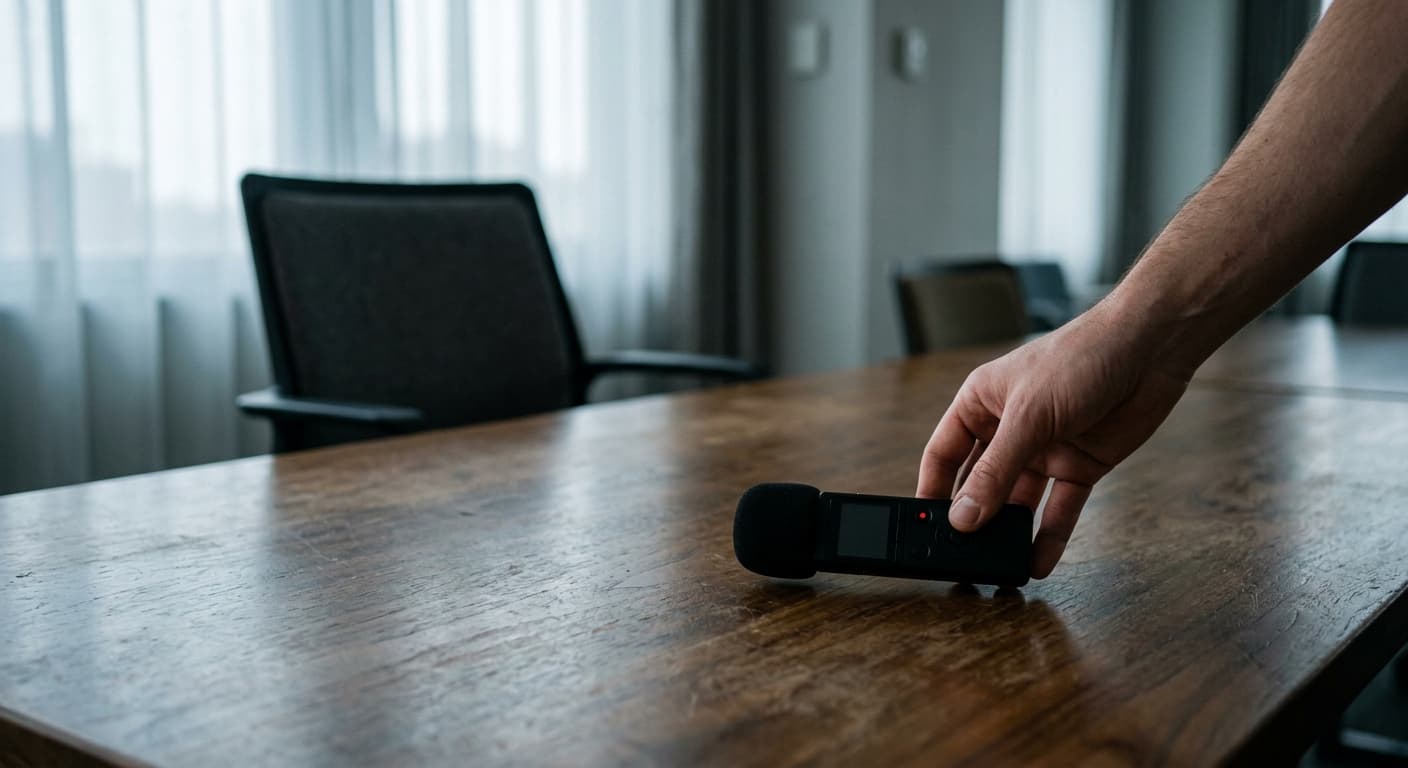
In Illinois, silent video recording in public spaces is broadly legal, but adding audio to any video of a private conversation requires all-party consent under 720 ILCS 5/14-2. Unauthorized video recording in bathrooms or changing rooms is a Class 4 felony under 720 ILCS 5/26-4.
Illinois video recording laws operate at the intersection of multiple statutes, creating a layered legal framework that depends on what the camera captures, where it is placed, and how the footage is used. The state's eavesdropping law under 720 ILCS 5/14-2 governs any video recording that includes audio of private conversations. The Biometric Information Privacy Act (740 ILCS 14) adds a separate compliance layer when video systems capture facial geometry or other biometric identifiers. And the video voyeurism statute under 720 ILCS 5/26-4 prohibits recording in areas where people have a reasonable expectation of bodily privacy.
This combination makes Illinois one of the most regulated states for video recording in the country.
Video Recording and the Illinois Eavesdropping Statute
The Audio-Video Distinction
The Illinois eavesdropping statute under Article 14 of the Criminal Code focuses primarily on audio capture. This creates an important legal distinction:
- Silent video (video without audio) in public spaces is generally legal and does not trigger the eavesdropping statute
- Video with audio of a private conversation requires all-party consent under 720 ILCS 5/14-2
This means a security camera that records video-only footage in a store does not implicate the eavesdropping law. But the same camera with audio recording capability that captures private conversations between employees or customers triggers the all-party consent requirement.
When Video Recording Requires Consent
You must obtain consent from all parties before making a video recording when:
- The recording captures audio of a private conversation
- The parties to the conversation have a reasonable expectation of privacy
- The recording takes place in a location where privacy expectations exist (private offices, homes, hotel rooms)
After People v. Clark (2014) and the subsequent statutory reform, the eavesdropping law only protects conversations where parties have a reasonable expectation of privacy. A video recording of a public interaction at normal volume on a sidewalk does not require consent, even if it captures audio, because no privacy expectation exists.
Penalties for Video Recording With Unauthorized Audio
Recording video that captures audio of a private conversation without consent carries the same penalties as any eavesdropping offense under 720 ILCS 5/14-4:
| Offense | Classification | Prison Sentence | Maximum Fine |
|---|---|---|---|
| Basic eavesdropping offense (first offense) | Class 4 Felony | 1 to 3 years | $25,000 |
| Basic eavesdropping offense (subsequent offense) | Class 3 Felony | 2 to 5 years | $25,000 |
| Eavesdropping on law enforcement (first offense) | Class 3 Felony | 2 to 5 years | $25,000 |
BIPA and Video Recording in Illinois
What Is BIPA?
The Biometric Information Privacy Act (740 ILCS 14), enacted in 2008, is one of the most powerful biometric privacy laws in the United States. BIPA regulates the collection, use, storage, and disclosure of biometric identifiers, which include:
- Retina or iris scans
- Fingerprints
- Voiceprints
- Scans of hand or face geometry
Video recording systems that capture facial geometry trigger BIPA compliance obligations. This includes security cameras with facial recognition capabilities, smart camera systems that identify individuals, and any video technology that processes biometric data from recorded footage.
BIPA Requirements for Video Systems
Any private entity (not a government agency) that collects biometric identifiers through video recording must:
- Inform the subject in writing that biometric data is being collected or stored
- Inform the subject in writing of the specific purpose and length of term for the collection
- Obtain a written release from the subject before collecting their biometric data
- Develop a publicly available written policy establishing a retention schedule and guidelines for permanent destruction of biometric data
BIPA Damages
BIPA provides a private right of action with significant statutory damages:
- $1,000 per violation for negligent violations
- $5,000 per violation for intentional or reckless violations
- Reasonable attorney fees and litigation costs
The scale of potential BIPA liability is substantial. The $51.75 million Clearview AI settlement in 2025 demonstrated the financial consequences of collecting facial biometrics without proper consent in Illinois. Facebook settled a BIPA class action for $650 million in 2021 over its facial recognition tag suggestion feature.
Video Surveillance Systems and BIPA
Businesses and property owners who install video surveillance systems with facial recognition or biometric processing capabilities face BIPA obligations for every individual whose facial geometry the system captures. This applies to:
- Retail stores using facial recognition to identify shoplifters
- Office buildings using biometric access control cameras
- Residential complexes using smart camera doorbells with facial identification
- Any camera system that processes facial geometry, even if the primary purpose is general security
The key question is whether the video system merely records visual images or actively processes biometric identifiers. A standard security camera that records footage without biometric analysis does not trigger BIPA. A camera system that scans and matches facial geometry does.
Video Voyeurism Laws in Illinois

720 ILCS 5/26-4: Unauthorized Video Recording and Related Dissemination
Illinois law separately prohibits video recording in contexts that violate personal bodily privacy. Under 720 ILCS 5/26-4 ("Unauthorized video recording and live video transmission"), it is illegal to:
- Record in private areas: Using a camera or recording device in a bathroom, changing room, tanning bed, or other area where a person has a reasonable expectation of privacy and the recording is made for sexual arousal or gratification
- Record under or through clothing: Capturing images or video under or through a person's clothing without their knowledge and consent
- Disseminate an unlawfully made video: Knowingly sharing a video or live transmission that was itself made in violation of this same section
Illinois's broader "revenge porn" law, covering the non-consensual sharing of intimate images regardless of how the image was originally obtained, is a separate statute: 720 ILCS 5/11-23.5, a Class 4 felony.
Penalties for Video Voyeurism
| Offense | Classification | Penalty |
|---|---|---|
| Placing a recording device with intent, before any recording occurs | Class A Misdemeanor | Up to 1 year in jail |
| Non-consensual recording in a private area or under/through clothing | Class 4 Felony | 1 to 3 years prison |
| Same, if the victim is under 18 or the offender is a registered sex offender | Class 3 Felony | 2 to 5 years prison |
| Disseminating a video unlawfully made under this section | Class 3 Felony | 2 to 5 years prison |
| Same dissemination, if the victim is under 18 or the offender is a registered sex offender | Class 2 Felony | 3 to 7 years prison |
A conviction for video voyeurism may also require registration under Illinois sex offender laws depending on the specific offense and circumstances.
Hidden Cameras in Private Spaces
Placing a hidden camera in any location where individuals have a reasonable expectation of bodily privacy is a criminal offense under Illinois law. This includes:
- Bathrooms and restrooms (public and private)
- Locker rooms and changing rooms
- Hotel rooms and guest bedrooms
- Dressing rooms in retail stores
- Any enclosed space where a person undresses
The prohibition applies regardless of whether the camera records audio. Silent hidden cameras in these locations violate the voyeurism statute independently of the eavesdropping law.
Video Recording in Public Spaces
General Rules for Public Recording
Video recording in public spaces where no expectation of privacy exists is generally permitted under Illinois law. After the 2014 reform, the eavesdropping statute only protects private conversations, so capturing video (even with audio) of public activity does not violate the statute.
Legal public video recording includes:
- Recording in parks, sidewalks, and public streets
- Filming public events, protests, and demonstrations
- Recording at government buildings that are open to the public
- Capturing video of police officers performing their public duties
Recording Police Officers
The 2014 statutory reform explicitly legalized recording police officers and other government officials performing their public duties. You may video record officers when:
- The officer is performing public duties
- You are in a place where you have a right to be
- You do not physically interfere with the officer's duties
- You are not trespassing on private property
This right covers both audio and video recording of police activity in public settings.
Commercial Video Recording
Retail and Business Surveillance
Illinois businesses may install video surveillance cameras in public areas of their premises, such as sales floors, lobbies, and parking lots. Standard video surveillance that does not capture audio of private conversations and does not process biometric data is generally lawful.
However, businesses must ensure:
- Cameras are not placed in restrooms, changing rooms, or other areas where bodily privacy is expected
- If cameras capture audio, the eavesdropping law requirements are met
- If cameras use facial recognition or biometric processing, BIPA requirements are satisfied
- Employees receive notice of video monitoring in the workplace
Video Doorbells and Smart Cameras
Residential video doorbell cameras (Ring, Nest, and similar products) raise several legal considerations in Illinois:
- Recording video of a public-facing front porch or driveway is generally legal
- If the camera captures audio of private conversations, the eavesdropping law may apply
- If the camera uses facial recognition features, BIPA compliance is required
- Cameras should not be pointed at areas where neighbors have a reasonable expectation of privacy
Drones and Aerial Video Recording
Illinois regulates drone-based video recording through the Freedom from Drone Surveillance Act (725 ILCS 167). This law restricts law enforcement drone use without a warrant, with exceptions for emergencies, terrorist threats, crime scene documentation, and search and rescue operations.
For civilian drone operators, standard video recording rules apply:
- Recording public spaces from the air is generally permitted
- Recording in locations where people have a reasonable expectation of privacy may violate state law
- Audio capture from drones triggers the eavesdropping statute for private conversations
- FAA regulations regarding drone operation must also be followed
Video Evidence in Illinois Courts
Admissibility Standards
Video recordings are admissible as evidence in Illinois courts when they are:
- Obtained lawfully (no eavesdropping or voyeurism violations)
- Authentic and unaltered
- Relevant to the case
- Properly preserved with a documented chain of custody
Video recordings made in violation of the eavesdropping statute or voyeurism laws are generally inadmissible. Recordings obtained in violation of BIPA may be subject to suppression motions, though BIPA's primary enforcement mechanism is civil rather than criminal.
Authentication Requirements
Illinois courts require authentication of video evidence, which typically involves testimony from the person who operated the recording device or a witness who can verify that the video accurately represents the events it depicts. For automated surveillance footage, testimony from the system's operator regarding the camera's installation, maintenance, and recording process can satisfy authentication requirements.
More Illinois Recording Laws
Audio Recording | Video Recording | Voyeurism & Hidden Cameras | Workplace Recording | Recording Police | Phone Call Recording | Security Cameras | Recording in Public | Landlord-Tenant | Dashcam Laws | Schools | Medical Recording
Back to Illinois Recording Laws
More Illinois Recording Topics
More Illinois Laws
Frequently Asked Questions
Is it legal to video record someone in Illinois without their knowledge?
It depends on the context. Silent video recording in public spaces is generally legal. Video recording that captures audio of a private conversation requires consent from all parties under 720 ILCS 5/14-2. Recording in areas where someone has bodily privacy (bathrooms, changing rooms) is a Class 4 felony under the voyeurism statute regardless of audio capture.
Does BIPA apply to video surveillance cameras?
BIPA applies to video cameras that capture biometric identifiers such as facial geometry. A standard security camera that simply records footage does not trigger BIPA. A camera system with facial recognition or biometric processing capabilities does. BIPA requires informed written consent before collecting biometric data, with damages of $1,000 per negligent violation and $5,000 per intentional violation.
Can I install a hidden camera in my home in Illinois?
You may install cameras in common areas of your own home, such as living rooms and entryways, for security purposes. You cannot place cameras in bathrooms, guest bedrooms where visitors expect privacy, or areas where nannies or caregivers change clothes. If cameras capture audio, the eavesdropping statute requires consent from all parties to any private conversation recorded.
What are the penalties for video voyeurism in Illinois?
Video voyeurism (recording in a private area or under/through clothing) is a Class 4 felony carrying 1 to 3 years in prison, escalating to a Class 3 felony (2 to 5 years) if the victim is under 18 or the offender is a registered sex offender. Disseminating a video that was itself unlawfully made under 720 ILCS 5/26-4 is a Class 3 felony, escalating to a Class 2 felony (3 to 7 years) under the same triggers. Illinois's broader revenge-porn law, 720 ILCS 5/11-23.5, separately makes the non-consensual sharing of intimate images a Class 4 felony regardless of how the image was originally obtained. A conviction may also trigger sex offender registration requirements.
Can I use a dashcam with audio in Illinois?
A dashcam that records video only is generally legal on public roads. If the dashcam captures audio of conversations inside the vehicle, the eavesdropping law applies. You need consent from all passengers before recording their private conversations. Audio recording of interactions with police during traffic stops is explicitly legal under the 2014 reform.
Updates
Corrected the penalty for unauthorized audio recording captured on video, which the page stated as a flat Class 2 felony: it is actually a Class 4 felony for a first offense and Class 3 felony for a subsequent offense. Also rebuilt the video-voyeurism penalty table, which invented a first-offense/subsequent-offense structure for disseminating an unlawfully recorded video: the real law sets a Class 3 felony baseline escalating to Class 2 when the victim is under 18 or the offender is a registered sex offender, and separately carries a Class A misdemeanor for placing a recording device with intent before any recording occurs. Retitled a mislabeled citation and added Illinois's actual revenge-porn statute, 720 ILCS 5/11-23.5, which the page had conflated with the narrower unauthorized-video-recording law.
Independently fact-checked against the cited primary sources; governing law re-checked for recent changes
Corrected the penalty for eavesdropping on a law enforcement officer or official: it is a Class 3 felony (2 to 5 years) for a first offense, not a Class 1 felony (4 to 15 years) as previously stated.
Governing law re-checked for recent changes
Spoke propagation refresh. Corrected eavesdropping penalty from Class 4 to Class 2 felony (up to 5 years) per 720 ILCS 5/14-4 and parent hub audit. Corrected law enforcement eavesdropping penalty from Class 3 to Class 1 felony (4 to 15 years). Corrected fear-of-crime exception from 14-3(i) to 14-3(h) where misattributed. Fixed SourcesList prop (sources to citations). Updated More Illinois Laws anchor text. Added People v. Clark and ACLU v. Alvarez citations where missing.
Spoke propagation refresh (2026-05-15) introduced errors this pass corrects: basic eavesdropping (audio captured on video) is a Class 4 felony (1 to 3 years) for a first offense and Class 3 felony (2 to 5 years) for a subsequent offense per 720 ILCS 5/14-4, not a flat Class 2; the 26-4(a-25) dissemination penalty is a Class 3 felony baseline escalating to Class 2 for a victim under 18 or a registered-sex-offender offender, not a fabricated first/subsequent-offense Class 4/Class 3 ladder; and 26-4 was retitled to its actual heading, with Illinois's real revenge-porn statute (720 ILCS 5/11-23.5) added.
Reviewed and approved by an editor
The Law Behind This Article
This article rests on the statutory provisions below, held in our own legal record and retrieved from the official source. Tap a section to read the operative text.
Illinois Compiled Statutes Chapter 720, Act 5 (Criminal Code of 2012)
§ 26-4Unauthorized video recording and live video transmissionIn forcecited in 3 of our articles
(a) It is unlawful for any person to knowingly make a video record or transmit live video of another person without that person's consent in a restroom, tanning bed, tanning salon, locker room, changing room, or hotel bedroom. (a-5) It is unlawful for any person to knowingly make a video record or transmit live video of another person in that other person's residence without that person's consent. (a-6) It is unlawful for any person to knowingly make a video record or transmit live video of another person in that other person's residence without that person's consent when the recording or transmission is made outside that person's residence by use of an audio or video device that records or transmits from a remote location. (a-10) It is unlawful for any person to knowingly make a video record or transmit live video of another person's intimate parts for the purpose of viewing the body of or the undergarments worn by that other person without that person's consent.
Official text (excerpt) · last checked 2026-08-31 · Read the full text in our law library · Verify at ilga.gov
United States Code Title 18
§ 2511Interception and disclosure of wire, oral, or electronic communications prohibitedIn forcecited in 418 of our articles
Except as otherwise specifically provided in this chapter any person who— intentionally intercepts, endeavors to intercept, or procures any other person to intercept or endeavor to intercept, any wire, oral, or electronic communication; intentionally uses, endeavors to use, or procures any other person to use or endeavor to use any electronic, mechanical, or other device to intercept any oral communication when— such device is affixed to, or otherwise transmits a signal through, a wire, cable, or other like connection used in wire communication; or such device transmits communications by radio, or interferes with the transmission of such communication; or such person knows, or has reason to know, that such device or any component thereof has been sent through the mail or transported in interstate or foreign commerce; or such use or endeavor to use (A) takes place on the premises of any business or other commercial establishment the operations of which affect interstate or foreign commerce; or (B) obtains or is for the purpose of obtaining information relating to the operations of any business or other commercial establishment the operations of which affect interstate or foreign…
Official text (excerpt) · last checked 2026-08-28 · Read the full text in our law library · Verify at uscode.house.gov
Cited in 2,045 court opinions in our collectionLatest citing opinion in our collection: 2026
In the courts (editorial summary, independently checked):Griggs-Ryan v. Smith (1990) applied the Section 2511(2)(d) prior-consent exception, treating a tenant repeatedly told that all incoming calls were taped as having impliedly consented. United States v. United States District Court (1972) read the then-current Section 2511(3) as conferring no presidential surveillance power.
Opinions citing this section in our collection:
- Mitchell v. Forsyth (Supreme Court of the United States 1985, 472 U.S. 511)✓The Attorney General authorized a warrantless 1970 national security wiretap that caught the plaintiff's calls; the Court held the since-repealed Section 2511(3) disclaimer left the tap lawful under Title III, and that Mitchell had qualified immunity.
- United States v. United States District Court for the Eastern District of Michigan (Supreme Court of the United States 1972, 407 U.S. 297)✓The Attorney General approved warrantless wiretaps on members of a domestic group accused of bombing a CIA office; the Court read Section 2511(3) as a congressional disclaimer conferring no surveillance power, then held the Fourth Amendment required prior judicial approval.
- Forsyth v. Barr (Court of Appeals for the Fifth Circuit 1994, 19 F.3d 1527)✓Dallas police used, in an internal affairs probe of an officer, calls private parties allegedly intercepted illegally; assuming that was unlawful, the Fifth Circuit held Section 2517(1) and (2) allowed the disclosure and use, defeating the Section 2511(1)(c) and (d) claims.
Identified automatically from the court opinions citing this section — not a ranking of which case controls.
Search our full record of US law — 2.1 million sections, every state + federal →
Sources and References
- 720 ILCS 5/14-2 - Elements of Eavesdropping Offense(ilga.gov).gov
- 720 ILCS 5/14-1 - Definitions(ilga.gov).gov
- 720 ILCS 5/14-4 - Penalties(ilga.gov).gov
- 740 ILCS 14 - Biometric Information Privacy Act (BIPA)(ilga.gov).gov
- 720 ILCS 5/26-4 - Unauthorized video recording and live video transmission(ilga.gov).gov
- 725 ILCS 167 - Freedom from Drone Surveillance Act(ilga.gov).gov
- 18 U.S.C. Section 2511 - Federal Wiretap Act(law.cornell.edu)
- 720 ILCS 5/11-23.5 - Non-consensual dissemination of private sexual images(ilga.gov).gov