
North Carolina
North Carolina Car Seat Laws: Requirements and Guidelines
Independently fact-checked against primary sources (last audited August 20, 2026). · Reviewed by the RecordingLaw editorial team. · Law checked current as of August 20, 2026. · 1 primary source cited on this page. How we verify our legal content
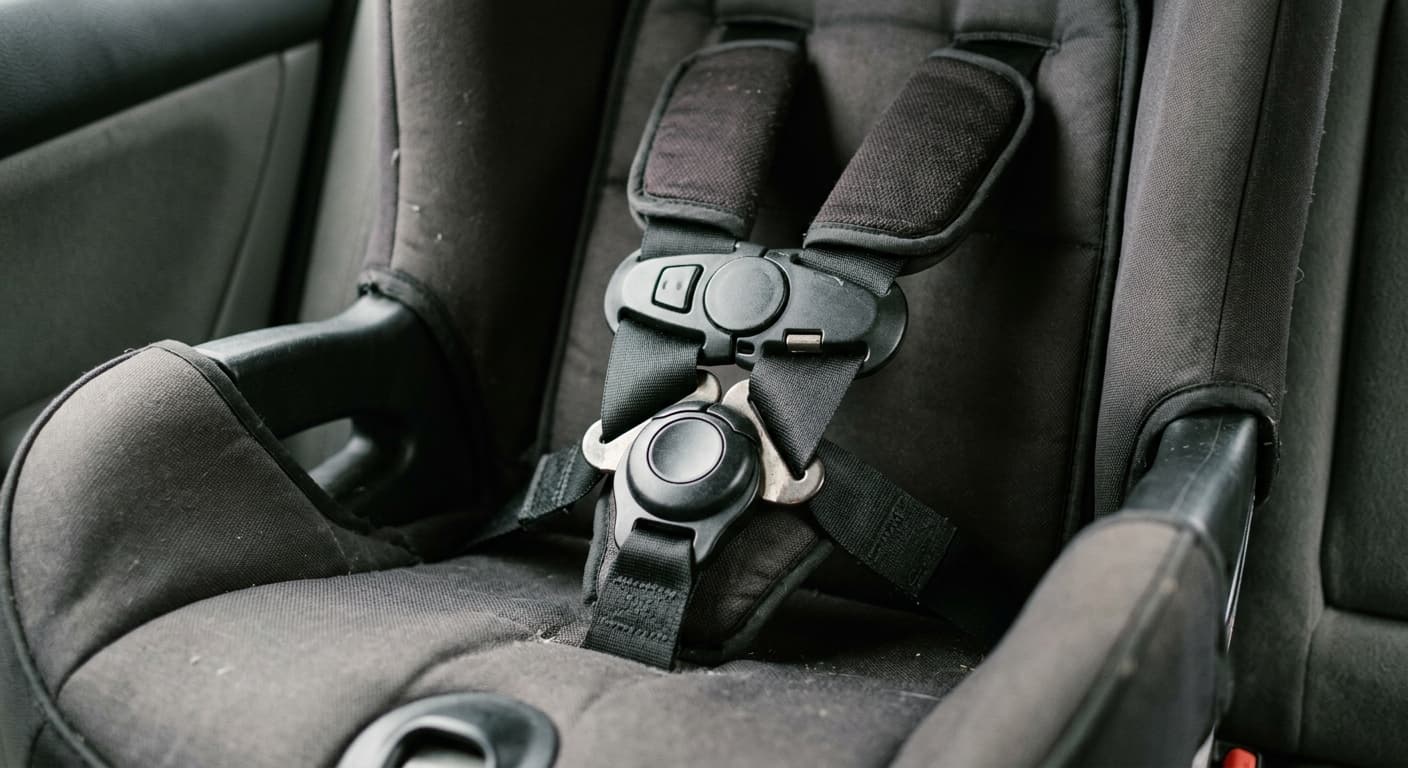
North Carolina requires children younger than 8 years old and weighing less than 80 pounds to ride in an appropriate child safety seat. Children younger than 5 who weigh less than 40 pounds must be secured in the back seat when the vehicle has an active front passenger airbag.
What Are the Height and Weight Requirements for Car Seats in North Carolina?
Children should remain rear-facing until at least age 2 or until they exceed the seat's top weight and height limits.
Children who have outgrown the rear-facing weight and height limits can graduate to forward-facing seats.
North Carolina law requires children younger than 8 years and those weighing less than 80 pounds to be secured in the appropriate child safety seat.
Children who have outgrown forward-facing seats can ride on booster seats until they reach age 8 or until they weigh 80 pounds.
Children younger than 5 years who weigh less than 40 pounds should be secured in the back seat.
What Are the Rear Facing Car Seat Laws in North Carolina?
North Carolina does not have specific rules for rear-facing seats. However, the law says any child restraint device must be used in accordance with the manufacturer's instructions. This means a child can legally graduate to the next seat as long as he or she has exceeded the minimum age and weight requirements set by the manufacturer (at least 20 pounds and age of 1 year).
According to the AAP (American Academy of Pediatrics), children should remain rear-facing until at least age 2 or until they exceed the seat's top weight and height limits. This is because the rear-facing position is considered safer as the back of the seat helps in protecting the child's fragile body parts such as the neck and spine in the event of a crash.
Parents can opt for infant-only seats for their newborn and then switch to convertible seats as the baby grows bigger. Convertible seats allow you to keep your baby rear-facing for a longer period (up to age 4) due to their higher weight limit (up to 40 pounds). Seats of this type should be installed in the rear of the car according to the manufacturer's instructions.
What Are the Forward Facing Car Seat Laws in North Carolina?
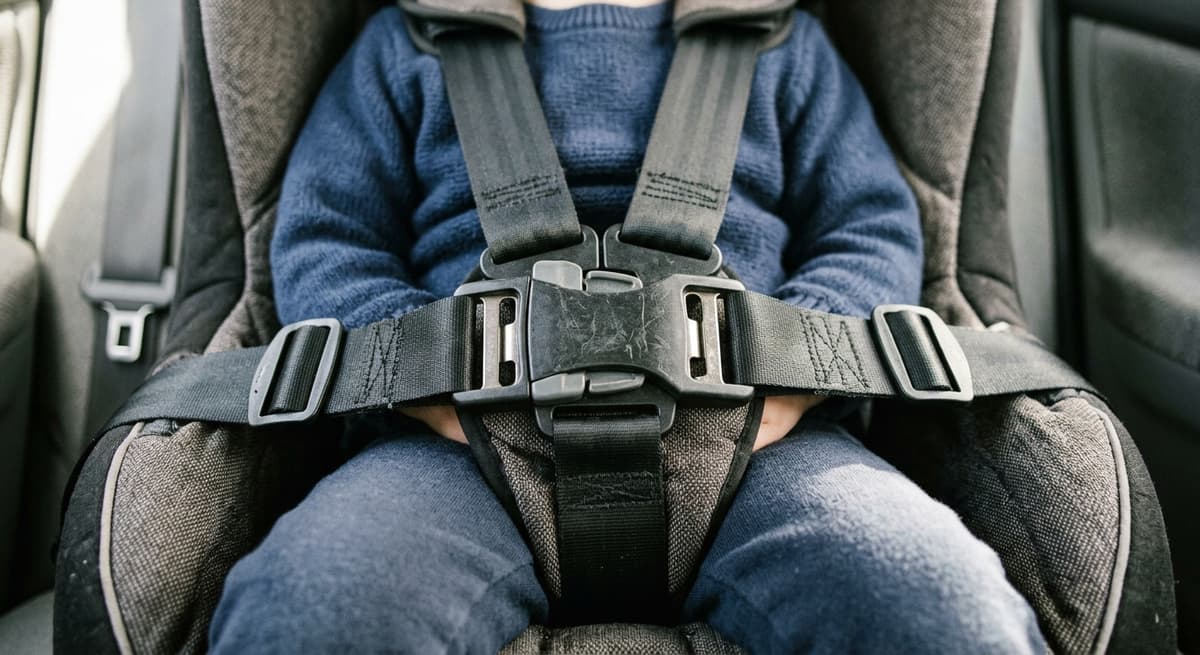
Once children outgrow the rear-facing seat's weight and height limits, they can graduate to forward-facing seats. Typically, this happens at age 2-4 years and when weight is at least 40 pounds. The seat used must be equipped with a harness and should be installed in a forward facing manner. The harness straps must be snug above the child's collarbone. If fastened properly or according to the manual's instructions, the straps and tether should help in spreading the impact forces across the more mature parts of the child's body (shoulders, hips, and chest) in case of a crash. You can use a lap-only belt, lap-shoulder belt, or a latch system together with the seat to maximize protection.
Many forward-facing seats can support up to 65 pounds, so children can safely remain forward-facing until age 7.
What Are the Booster Seat Laws in North Carolina?
North Carolina law requires children younger than 8 years and those weighing less than 80 pounds to be secured in the appropriate child safety seat. This means children who have outgrown forward-facing seats can ride on booster seats until they reach age 8 or until they weigh 80 pounds. A booster seat is designed to lift children so that they can safely fit in seat belts. For a child to be properly fitted, the shoulder belt should be snug across the chest area, and the lap belt should lie low and snug across the upper thighs. There are two different types of booster seats. A high-back booster seat is used when there are no headrests to support a child while a backless booster is preferred when the back seats already have headrests.
Booster seats should be secured with lap-shoulder belts (not lap-only belts) or with a latch system. While the law provides the age and weight requirements for seat belts, most experts agree that a height of 4'9" is required to fit in safety belts. This is because seat belts are manufactured with the height of an average adult in mind, so anyone shorter may not be safe in a safety belt. Typically, children reach this height when they are between 8-12 years. Also, for your child to be ready to use a seat belt, he or she should be able to sit all the way back against the seat and with knees bent above the edge of the seat without slouching.
When Can a Child Use the Front Seat in North Carolina?
The law requires children younger than 5 years who weigh less than 40 pounds to be secured in the back seat if the car has an active passenger-side front airbag. Exceptions to this law apply if the child restraint system is designed for use with airbags or if the car has no rear seat. According to the AAP, all children should remain in the back seat until they are 13 years old. This is because the back seat is generally safer and does not contain airbags that can be lethal to children.
Is it Illegal to Leave a Child Alone in a Car in North Carolina?
The state does not have a law regarding children left in cars. However, some places have made it illegal to leave a child unattended inside a car. So be sure to check your local laws. It is not recommended that you leave your child unattended in a vehicle for any length of time.
Is it Illegal to Smoke in a Car With a Child in North Carolina?
No law makes it illegal to smoke in a car with child passengers, although it is not recommended to smoke in a vehicle with children.
Are Car Seats Required in Taxis and Emergency Vehicles in North Carolina??
Ambulances and other emergency vehicles are exempted from complying with the state's car seat laws. Also exempted are vehicles that are not required by federal law to be equipped with seat belts. Commercial vehicles such as taxis are required to comply with child passenger restraint laws. School buses weighing less than 10,000 pounds are required to have seat belts installed.
In instances where all seating positions equipped with seat belts or child restraint devices are occupied, a child younger than 8 years who weighs 40-80 pounds can be secured with only a lap belt.
What Are the Car Seat Replacement Laws in North Carolina?
No law covers the replacement of car seats. Parents should follow the manufacturer's instructions included in the manual or contact the manufacturer in case of peculiar situations. It is also a good idea to replace car seats after an accident. This is because the seats can develop tiny cracks which may be hard to spot and can be dangerous to children.
More North Carolina Laws
Frequently Asked Questions
What Are the Height and Weight Requirements for Car Seats in North Carolina?
Children should remain rear-facing until at least age 2 or until they exceed the seat's top weight and height limits. Children who have outgrown the rear-facing weight and height limits can graduate to forward-facing seats. North Carolina law requires children younger than 8 years and those weighing less than 80 pounds to be secured in the appropriate child safety seat.
What Are the Rear Facing Car Seat Laws in North Carolina?
North Carolina does not have specific rules for rear-facing seats. However, the law says any child restraint device must be used in accordance with the manufacturer's instructions. This means a child can legally graduate to the next seat as long as he or she has exceeded the minimum age and weight requirements set by the manufacturer (at least 20 pounds and age of 1 year). According to the AAP (American Academy of Pediatrics), children should remain rear-facing until at least age 2 or until they exceed the seat's top weight and height limits.
What Are the Forward Facing Car Seat Laws in North Carolina?
Once children outgrow the rear-facing seat's weight and height limits, they can graduate to forward-facing seats. Typically, this happens at age 2-4 years and when weight is at least 40 pounds. The seat used must be equipped with a harness and should be installed in a forward facing manner. The harness straps must be snug above the child's collarbone. If fastened properly or according to the manual's instructions, the straps and tether should help in spreading the impact forces across the more mature parts of the child's body (shoulders, hips, and chest) in case of a crash.
What Are the Booster Seat Laws in North Carolina?
North Carolina law requires children younger than 8 years and those weighing less than 80 pounds to be secured in the appropriate child safety seat. This means children who have outgrown forward-facing seats can ride on booster seats until they reach age 8 or until they weigh 80 pounds. A booster seat is designed to lift children so that they can safely fit in seat belts. For a child to be properly fitted, the shoulder belt should be snug across the chest area, and the lap belt should lie low and snug across the upper thighs.
When Can a Child Use the Front Seat in North Carolina?
The law requires children younger than 5 years who weigh less than 40 pounds to be secured in the back seat if the car has an active passenger-side front airbag. Exceptions to this law apply if the child restraint system is designed for use with airbags or if the car has no rear seat. According to the AAP, all children should remain in the back seat until they are 13 years old. This is because the back seat is generally safer and does not contain airbags that can be lethal to children.
Is it Illegal to Leave a Child Alone in a Car in North Carolina?
The state does not have a law regarding children left in cars. However, some places have made it illegal to leave a child unattended inside a car. So be sure to check your local laws. It is not recommended that you leave your child unattended in a vehicle for any length of time.
Is it Illegal to Smoke in a Car With a Child in North Carolina?
No law makes it illegal to smoke in a car with child passengers, although it is not recommended to smoke in a vehicle with children.
Are Car Seats Required in Taxis and Emergency Vehicles in North Carolina??
Ambulances and other emergency vehicles are exempted from complying with the state's car seat laws. Also exempted are vehicles that are not required by federal law to be equipped with seat belts. Commercial vehicles such as taxis are required to comply with child passenger restraint laws. School buses weighing less than 10,000 pounds are required to have seat belts installed.
Updates
Independently fact-checked against the cited primary sources; governing law re-checked for recent changes
Corrected the child-restraint entry trigger from disjunctive to the statute's actual conjunctive threshold (younger than 8 AND under 80 pounds, not 'or') across the intro, KeyTakeaways, both body sections, and both FAQ answers.
Governing law re-checked for recent changes
Reviewed and approved by an editor
The Law Behind This Article
This article rests on the statutory provisions below, held in our own legal record and retrieved from the official source. Tap a section to read the operative text.
North Carolina General Statutes, Chapter 20: Motor Vehicles.
§ 20-137.1Child restraint systems requiredIn force
(a) Every driver who is transporting one or more passengers of less than 16 years of age shall have all such passengers properly secured in a child passenger restraint system or seat belt which meets federal standards applicable at the time of its manufacture. (a1) A child less than eight years of age and less than 80 pounds in weight shall be properly secured in a weight-appropriate child passenger restraint system. In vehicles equipped with an active passenger-side front air bag, if the vehicle has a rear seat, a child less than five years of age and less than 40 pounds in weight shall be properly secured in a rear seat, unless the child restraint system is designed for use with air bags. If no seating position equipped with a lap and shoulder belt to properly secure the weight-appropriate child passenger restraint system is available, a child less than eight years of age and between 40 and 80 pounds may be restrained by a properly fitted lap belt only.
Official text (excerpt) · last checked 2026-07-29 · Read the full text in our law library · Verify at ncleg.gov
Cited in 5 court opinions in our collectionLatest citing opinion in our collection: 2017
Opinions citing this section in our collection:
- State Farm Mutual Automobile Insurance v. Holland (Supreme Court of North Carolina 1989, 324 N.C. 466)“…to properly use a child restraint system as required by N.C.G.S. § 20-137.1, that Holland’s negligence was imputabl…”
- Chaney v. Young (Court of Appeals of North Carolina 1996, 122 N.C. App. 260)“…t children be placed in child restraints. See N.C. Gen. Stat. § 20-137.1 , entitled “Child restraint systems req…”
- State v. Swain (Court of Appeals of North Carolina 1988, 92 N.C. App. 240)“…ge and (2) not required to be restrained in accordance with G.S. 20-137.1, shall have the person secured by such…”
Identified automatically from the court opinions citing this section — not a ranking of which case controls.
Search our full record of US law — 2.1 million sections, every state + federal →
Sources and References
- N.C. Gen. Stat. § 20-137.1: child restraint systems required(ncleg.gov).gov