Are Police Reports Public Record? What's Open and What's Not
Independently fact-checked against primary sources (last audited August 11, 2026). · Law checked current as of August 11, 2026. · 6 primary sources cited on this page. How we verify our legal content
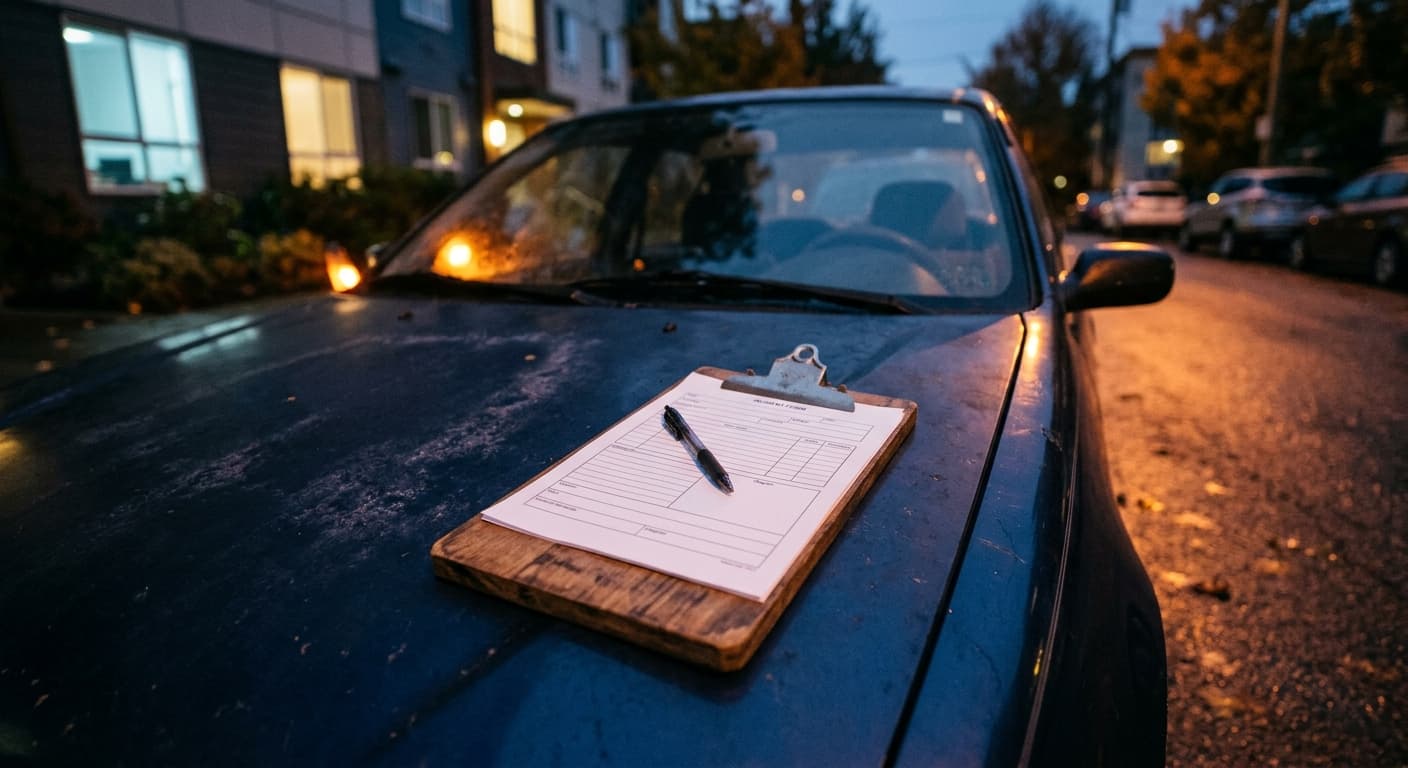
"Are police reports public?" does not have one answer, because "police report" is not one record. A crash report, an incident report, the fuller investigative file behind it, body camera footage, and a 911 call are five separate record types, often held by different custodians, and each one follows its own access rule, sometimes within the very same state.
This guide breaks that down by record type, covers the general presumption-plus-exemption structure most states use, and flags the real exceptions, including a meaningful minority of states that treat crash reports as open by default rather than confidential.
Information last verified on 2026-08-11. This article has not yet been reviewed by a licensed lawyer.
Five Different Records, Five Different Answers
A crash or collision report documents a traffic accident and is typically issued by a state DOT, DMV, or DPS. Most states treat it as confidential by default, opening it to a defined eligible list, though a real minority of states do not (see below).
An incident or offense report documents a non-crash police response: an arrest, a theft, an assault. It is held by the local department that responded and released under the state's general public-records act. The baseline facts are usually public even during an active matter; the deeper file is not always.
The full investigative file behind an incident, witness statements, an officer's working notes, evidence logs, is a further step removed and the most likely of the five to be withheld while a case remains open, under the same public-records law's law-enforcement exemption.
Bodycam footage is governed by its own statute in many states, sometimes a dedicated act, sometimes folded into the general exemption, sometimes absent entirely. It does not automatically follow whatever rule governs the written report of the same incident; a state can make the incident report public while keeping the video that documents it closed, or the reverse. See How to Request Body Cam Footage for the state-by-state breakdown.
A 911 call recording is typically held by a separate dispatch or emergency-communications entity rather than the responding police department, and follows its own exemption category, often distinct from both the incident report and any bodycam video from the same event. See Are 911 Calls Public Records? for that record type specifically.
The Default Structure: Presumption, Then Exemptions
Most states share the same underlying shape even though the details differ enormously: records are presumptively public under the state's open-records or public-records act, and specific categories are then carved out as confidential or exempt, rather than the reverse. Ohio's public records law, R.C. § 149.43, illustrates the pattern directly: its confidential-law-enforcement-investigatory-record exemption applies only to the extent releasing a record would create a high probability of a specific harm, exposing an uncharged suspect's identity, a confidential source, an investigative technique, or a safety risk, not as a blanket shield over anything connected to law enforcement. New York's FOIL exemption, Public Officers Law § 87(2)(e), is built the same way: a record compiled for law enforcement purposes can be withheld only to the extent disclosure would interfere with an investigation, compromise a fair trial, expose a confidential source, or reveal an investigative technique, a harm-based test rather than a category-based one.

This presumption-plus-exemption structure is why a closed case is generally easier to get records about than an open one, and why the outline of an incident (that it happened, when, where) tends to stay public even when the detailed file does not: the exemption has to point to an actual harm from releasing the specific information, not merely note that the record touches a police matter.
The States Where Crash Reports Are Open by Default
The confidential-by-default pattern most guides assume is not universal. New Jersey's N.J.S.A. 39:4-131 makes police-prepared crash reports open by statute, not confidential, which is why its own online crash-report portal requires no eligibility check for a basic report. Indiana Code § 9-26-2-3, headed "Accident report not confidential record," provides that a report filed by a law enforcement officer under section 2 of that chapter "is not a confidential record and shall be made available for inspection and copying under IC 5-14-3." South Dakota and North Dakota run the same direction: SDCL § 32-34-13 states that accident reports and the information in them are "not privileged and may not be held confidential," and N.D.C.C. § 39-08-13(4) likewise makes officer-forwarded crash reports "not privileged or confidential," though it exempts a short list of fields, including a party's telephone number, insurance policy number, and date of birth, from release to anyone who is not a party, a representative, or an insurer.
Two states often listed as open belong elsewhere. New York's Public Officers Law § 66-a opens accident reports "to the inspection of any person having an interest therein, or of such person's attorney or agent," and it lets the custodian withhold any report whose disclosure "would interfere with the investigation or prosecution ... of a crime involved in or connected with the accident." That is interested-person access with an investigative carve-out, not general public access. Nevada is squarely in the majority camp: NRS 268.900, 269.247, and 280.400 require a police department to provide a crash report only to a person who claims to have sustained damages as a result of the crash, or that person's legal representative or insurer, and they except crashes involving death or substantial bodily harm, failure to stop at the scene, or the commission of a felony.
If you are in one of the genuinely open states, expect a meaningfully easier path to a crash report than the sworn-statement or eligibility-list friction that governs most of the country. See Police Reports by State for the specific rule in your state.
Redaction, Victims, and the Marsy's Law Myth
A report being "public" does not always mean every field on it is visible to every requester. The most common source of redaction is the federal Driver's Privacy Protection Act, 18 U.S.C. § 2721, which bars a state DMV from disclosing personal information, names, addresses, license numbers, from a motor vehicle record to a requester outside a defined permitted-use list. A party or their insurer typically gets a full copy; a general member of the public requesting the same crash report often gets one with identifying fields stripped out. That is a privacy rule layered on top of an otherwise public record, not evidence the record itself is secret.

Marsy's Law, the crime-victims' rights constitutional amendment adopted in more than a dozen states, is frequently misunderstood as creating a blanket right for any victim, including a police officer injured on duty, to keep their name out of a report entirely. Florida's own Supreme Court rejected that reading directly. In City of Tallahassee v. Florida Police Benevolent Association (Nov. 2023), the court held that Marsy's Law does not give any crime victim, officer or civilian, a categorical right to withhold their name from public disclosure, reasoning in part that officers are "in a unique position of power and responsibility" with "access to a wealth of information and government resources," and that shielding their identities "prevents the public from effectively reviewing police actions." Name confidentiality in Florida, and generally elsewhere, still requires an actual statutory exemption, such as the crime-victim identity, address, and telephone protections in Fla. Stat. § 119.071(2)(j)1., not Marsy's Law standing alone. If a state's report withholds a victim's name, look for the specific statute doing that work rather than assuming Marsy's Law automatically covers it.
Related Records: Court Files and 911 Calls
A police report is also not the same thing as a court record. A police report is an executive-branch, law-enforcement-agency document; it only becomes part of a court record if and when it is filed as an exhibit in an actual case. See Are Court Records Public? for how that separate, judicial-branch system handles public access. And as noted above, a 911 call is typically a distinct record held by a dispatch entity rather than the police department itself; see Are 911 Calls Public Records? for that specific record type.
For the practical side of any of this, how to actually request a copy of a report in your state, its cost, and its timeline, see Police Reports by State.
Disclaimer
This article provides general information about public access to police records in the United States. It is not legal advice. Access rules vary by state and record type, and change over time; confirm current details with the relevant agency or a licensed attorney before relying on anything here for a specific situation.

Last updated: 2026-08-11. Descriptions reflect published statutes and rulings as of August 2026.
Frequently Asked Questions
Are police reports public record?
It depends on the record type and the state. Most states treat a crash report as confidential by default, opening it only to eligible requesters like parties and insurers, while a minority of states, including New Jersey, Indiana, South Dakota, and North Dakota, make police-filed crash reports open by statute. New York opens accident reports to any person having an interest in them, which is narrower than general public access. An incident report's baseline facts are usually public; the deeper investigative file is more often withheld while a case is open.
Is body cam footage public record?
It depends on the state, and it follows a separate legal framework from the written report of the same incident. Some states have a dedicated statute presuming release for certain categories; others fold access into the general law-enforcement exemption; a few require a court order for any copy. See How to Request Body Cam Footage for the state-by-state breakdown.
Can the public see an active police investigation file?
Generally not the full file. Most states let an agency withhold investigative records to the extent disclosure would interfere with an ongoing investigation, though the basic facts, that an incident occurred, its date, and general location, are usually public even during an open case.
Does Marsy's Law make a victim's name confidential?
Not automatically. Florida's Supreme Court held in 2023 that Marsy's Law does not give any crime victim a categorical right to withhold their name from a public record. Name confidentiality still requires a specific statutory exemption in most states, not Marsy's Law alone.
Why is my copy of a police report missing names and addresses?
Usually the federal Driver's Privacy Protection Act, which restricts a state DMV from disclosing personal information from a motor vehicle record to requesters outside a defined permitted-use list. A party to the incident or their insurer typically receives an unredacted copy; a general member of the public often receives a redacted one.
Are 911 calls public record?
Often yes, subject to state-specific exemptions, but a 911 call is usually held by a separate dispatch or emergency-communications entity and follows its own access rule, distinct from the responding officer's incident report. See Are 911 Calls Public Records? for the full picture.
Is a court case file the same as a police report?
No. A police report is a law-enforcement agency record; a court record is a judicial-branch record governed by court rules. A police report becomes part of a court file only if it is filed as an exhibit in an actual case, and the two are requested through completely different systems.
Updates
Corrected the crash-report access section: Nevada and New York were moved out of the open-by-default list (Nevada releases reports only to damaged parties, their representatives, and insurers; New York opens accident reports only to persons having an interest in them), the unsourced "1 in 6 states" figure was replaced with the states the page actually cites, the Indiana quotation was corrected to the statute’s verbatim text, and a dead Florida citation was fixed from Sec. 119.071(4)(j) to Sec. 119.071(2)(j)1.
Independently fact-checked against the cited primary sources; governing law re-checked for recent changes
The Law Behind This Article
This article rests on the statutory provisions below, held in our own legal record and retrieved from the official source. Tap a section to read the operative text.
Ohio Revised Code
§ 149.43Availability of public records for inspection and copyingIn forcecited in 12 of our articles
(A) As used in this section: (1) "Public record" means records kept by any public office, including, but not limited to, state, county, city, village, township, and school district units, and records pertaining to the delivery of educational services by an alternative school in this state kept by…
Official text (excerpt) · last checked 2026-09-08 · Read the full text in our law library · Verify at codes.ohio.gov
Also relied on in: Ohio Dashcam Laws: Mounting Rules, Audio Recording, and Evidence, Ohio Laws on Recording Police: Your Rights and Limitations, Ohio Death Records: Are They Public + How to Get Them
New York Public Officers Law
§ 87Access to agency recordsIn forcecited in 4 of our articles
Access to agency records. 1. (a) Within sixty days after the effective date of this article, the governing body of each public corporation shall promulgate uniform rules and regulations for all agencies in such public corporation pursuant to such general rules and regulations as may be promulgated by the committee on open government in conformity with the provisions of this article, pertaining to the administration of this article. (b) Each agency shall promulgate rules and regulations, in conformity with this article and applicable rules and regulations promulgated pursuant to the provisions of paragraph (a) of this subdivision, and pursuant to such general rules and regulations as may be promulgated by the committee on open government in conformity with the provisions of this article, pertaining to the availability of records and procedures to be followed, including, but not limited to: i. the times and places such records are available; ii. the persons from whom such records may be obtained, and iii.
Official text (excerpt) · last checked 2026-09-02 · Read the full text in our law library · Verify at legislation.nysenate.gov
Also relied on in: New York Recording Laws (2026): One-Party Consent Rules, New York Police Reports: How to Get a Crash Report, Incident Report, or Bodycam Video, New York FOIL: Freedom of Information Law Requests (2026)
United States Code Title 18
§ 2721Prohibition on release and use of certain personal information from State motor vehicle recordsIn forcecited in 11 of our articles
A State department of motor vehicles, and any officer, employee, or contractor thereof, shall not knowingly disclose or otherwise make available to any person or entity: personal information, as defined in 18 U.S.C. 2725(3), about any individual obtained by the department in connection with a motor vehicle record, except as provided in subsection (b) of this section; or highly restricted personal information, as defined in 18 U.S.C. 2725(4), about any individual obtained by the department in connection with a motor vehicle record, without the express consent of the person to whom such information applies, except uses permitted in subsections (b)(1), (b)(4), (b)(6), and (b)(9): Provided, That subsection (a)(2) shall not in any way affect the use of organ donation information on an individual’s driver’s license or affect the administration of organ donation initiatives in the States.
Official text (excerpt) · last checked 2026-07-28 · Read the full text in our law library · Verify at uscode.house.gov
Cited in 377 court opinions in our collectionLatest citing opinion in our collection: 2026
In the courts (editorial summary, independently checked):Maracich v. Spears (2013) held an attorney's solicitation of clients is not a permissible purpose under the DPPA litigation exception in 2721(b)(4). Reno v. Condon (2000) upheld the statute's restrictions on disclosing state motor vehicle records as a valid exercise of the commerce power that does not conscript state officers.
Opinions citing this section in our collection:
- Maracich v. Spears (Supreme Court of the United States 2013, 570 U.S. 48)✓Lawyers used South Carolina DMV records to mail over 34,000 car buyers letters recruiting them as clients; the Supreme Court held that sending communications with the predominant purpose of solicitation is not a use exempt under the section 2721(b)(4) litigation exception.
- Reno v. Condon (Supreme Court of the United States 2000, 528 U.S. 141)✓South Carolina, whose law let almost anyone buy DMV records, argued the federal driver-privacy law commandeered the states; the Supreme Court held section 2721 regulates states as owners of databases and upheld it under the Commerce Clause.
- Pichler v. UNITE (Court of Appeals for the Third Circuit 2008)✓Union organizers copied license plates from a company parking lot and pulled the owners' DMV records to make house calls; the Third Circuit held union organizing is not among the permissible uses in section 2721(b), and a parallel lawful purpose does not excuse it.
Identified automatically from the court opinions citing this section — not a ranking of which case controls.
Also relied on in: How to Request Body Cam Footage: State Laws and the Request Process, Police Reports by State: How to Get a Copy, What They Cost, and What's Public, Alabama Traffic Camera Tickets: Work Zone Pilot and City Camera Laws
New Jersey Statutes (Unannotated)
§ 39:4-131Accident reports; availability.In forcecited in 2 of our articles
39:4-131. The Department of Transportation shall prepare and supply to police departments and other suitable agencies, forms for accident reports calling for sufficiently detailed information with reference to a motor vehicle accident, including the cause, the conditions then existing, the persons and vehicles involved, the compliance with P.L.1984, c.179 (C.39:3-76.2e et seq.) by the operators and passengers of the vehicles involved in the accident, whether the operator of the vehicle was using a cellular telephone when the accident occurred, and such other information as the Commissioner of Transportation may require. Every law enforcement officer who investigates a vehicle accident of which report must be made as required in this Title, or who otherwise prepares a written or an electronic report as a result of an accident or thereafter by interviewing the participants or witnesses, shall electronically transmit a report of such accident to the department, on forms furnished by it and in the electronic format prescribed by the department, within five days after the law enforcement officer's investigation of the accident.
Official text (excerpt) · last checked 2026-09-02 · Read the full text in our law library · Verify at lis.njleg.state.nj.us
Cited in 10 court opinions in our collectionLatest citing opinion in our collection: 2019
In the courts (editorial summary, independently checked):North Jersey Media Group, Inc. v. Township of Lyndhurst (2015) placed motor vehicle accident reports outside OPRA's criminal investigatory records exception because Section 39:4-131 requires them to be made public. State v. Keaton (2015) held the duty to prepare that report did not justify a warrantless vehicle search.
Opinions citing this section in our collection:
- State v. Keaton (Supreme Court of New Jersey 2015, 222 N.J. 438)✓A trooper searched a crashed car for credentials without giving the injured driver a chance to produce them; the court held the duty to prepare an accident report under 39:4-131 is not an exigent circumstance justifying a warrantless search.
- North Jersey Media Group, Inc. v. Township of Lyndhurst (New Jersey Superior Court Appellate Division 2015, 441 N.J. Super. 70)✓Newspapers sought police records on a fatal shooting that followed a high-speed chase; while reversing the broader disclosure order, the court held motor vehicle accident reports fall outside OPRA's criminal investigatory records exception under 39:4-131.
- Laufgas v. New Jersey Turnpike Authority (Supreme Court of New Jersey 1998, 156 N.J. 436)“…ity and dissent concerns whether the general provisions of N.J.S.A 39:4-131 and 39:4-131.1, providing access to mot…”
Identified automatically from the court opinions citing this section — not a ranking of which case controls.
Also relied on in: New Jersey Police Reports: How to Get a Crash Report, Incident Report, or Bodycam Video
Florida Statutes
§ 119.071General exemptions from inspection or copying of public records.In forcecited in 5 of our articles
(1) AGENCY ADMINISTRATION.—(a) Examination questions and answer sheets of examinations administered by a governmental agency for the purpose of licensure, certification, or employment are exempt from s. 119.07(1) and s. 24(a), Art. I of the State Constitution. A person who has taken such an examination has the right to review his or her own completed examination. (b)1. For purposes of this paragraph, “competitive solicitation” means the process of requesting and receiving sealed bids, proposals, or replies in accordance with the terms of a competitive process, regardless of the method of procurement. 2. Sealed bids, proposals, or replies received by an agency pursuant to a competitive solicitation are exempt from s. 119.07(1) and s. 24(a), Art. I of the State Constitution until such time as the agency provides notice of an intended decision or until 30 days after opening the bids, proposals, or final replies, whichever is earlier. 3.
Official text (excerpt) · last checked 2026-08-31 · Read the full text in our law library · Verify at leg.state.fl.us
Cited in 13 court opinions in our collectionLatest citing opinion in our collection: 2024
In the courts (editorial summary, independently checked):Rameses, Inc. v. Demings (2010) held that giving a criminal defendant unredacted undercover surveillance recordings in discovery does not destroy section 119.071's exemptions for undercover law enforcement identity. Ingram v. State (2014) addressed how the section 119.071(2)(j) minor victim exemption applies to a defendant.
Opinions citing this section in our collection:
- State v. Wooten (District Court of Appeal of Florida 2018, 260 So. 3d 1060)✓The state tried to keep cell phone tracking details redacted from search warrant papers; the court held the section 119.071(2)(d) surveillance exemption was unpreserved and inapplicable here, since rule 2.420 on court records does not adopt it, and ordered unredacted release.
- Rameses, Inc. v. Demings (District Court of Appeal of Florida 2010, 29 So. 3d 418)✓A nightclub sought undercover surveillance tapes already given unredacted to charged dancers in discovery; the court held that discovery disclosure does not destroy section 119.071's exemptions for undercover personnel, so the officers' faces could be obscured.
- Ingram v. State (District Court of Appeal of Florida 2014, 164 So. 3d 676)✓An inmate serving life for sexual battery of a child sought the victim's recorded interview; the court quashed the denial for lack of a hearing and, as guidance on remand, read section 119.071(2)(j)2.b. to authorize releasing the minor's identifying video to the defendant.
Identified automatically from the court opinions citing this section — not a ranking of which case controls.
Also relied on in: Florida Public Records Laws: The Public Records Act (Chapter 119) Explained, Florida Police Reports: How to Get a Copy, Fees, and What's Public, Florida Police Bodycam Laws & Public Records
United States Code Title 23
§ 407Discovery and admission as evidence of certain reports and surveysIn forcecited in 3 of our articles
Notwithstanding any other provision of law, reports, surveys, schedules, lists, or data compiled or collected for the purpose of identifying, evaluating, or planning the safety enhancement of potential accident sites, hazardous roadway conditions, or railway-highway crossings, pursuant to sections 130, 144, and 148 of this title or for the purpose of developing any highway safety construction improvement project which may be implemented utilizing Federal-aid highway funds shall not be subject to discovery or admitted into evidence in a Federal or State court proceeding or considered for other purposes in any action for damages arising from any occurrence at a location mentioned or addressed in such reports, surveys, schedules, lists, or data.
Official text (excerpt) · last checked 2026-07-28 · Read the full text in our law library · Verify at uscode.house.gov
Cited in 6 court opinions in our collectionLatest citing opinion in our collection: 2024
Opinions citing this section in our collection:
- Courtois v. Union Pacific Railroad Company (District Court, E.D. Missouri 2024)“…issibly relied on data that should be excluded pursuant to 23 U.S.C. § 407. Contrary to the Defendants’ 1Secti…”
- Garcia v. N.M. Dep’t of Transp. (New Mexico Court of Appeals 2023, 535 P.3d 728)“…volves a federal statutory evidentiary privilege created by 23 U.S.C. § 407 (hereinafter § 407). 1 The cross-appeal…”
- in Re Texas Department of Transportation (Texas Court of Appeals, 13th District 2021)“…is original proceeding, 23 U.S.C. § 409 was transferred to 23 U.S.C. § 407 without substantive change. We refer to…”
Identified automatically from the court opinions citing this section — not a ranking of which case controls.
United States Code Title 5
§ 552Public information; agency rules, opinions, orders, records, and proceedingsIn forcecited in 36 of our articles
Each agency shall make available to the public information as follows: Each agency shall separately state and currently publish in the Federal Register for the guidance of the public— descriptions of its central and field organization and the established places at which, the employees (and in the case of a uniformed service, the members) from whom, and the methods whereby, the public may obtain information, make submittals or requests, or obtain decisions; statements of the general course and method by which its functions are channeled and determined, including the nature and requirements of all formal and informal procedures available; rules of procedure, descriptions of forms available or the places at which forms may be obtained, and instructions as to the scope and contents of all papers, reports, or examinations; substantive rules of general applicability adopted as authorized by law, and statements of general policy or interpretations of general applicability formulated and adopted by the agency; and each amendment, revision, or repeal of the foregoing.
Official text (excerpt) · last checked 2026-09-02 · Read the full text in our law library · Verify at uscode.house.gov
Cited in 11,434 court opinions in our collectionLatest citing opinion in our collection: 2026
In the courts (editorial summary, independently checked):United States Department of Justice v. Reporters Committee for Freedom of the Press (1989) held categorically that releasing a private citizen's FBI rap sheet to a third party is an unwarranted privacy invasion under Exemption 7(C). Consumer Product Safety Commission v. GTE Sylvania, Inc. (1980) applied Exemption 3, 552(b)(3).
Opinions citing this section in our collection:
- Alyeska Pipeline Service Co. v. Wilderness Society (Supreme Court of the United States 1975, 421 U.S. 240)“…Pub. L. 93-502, § 1 (b) (2), 88 Stat. 1561 (amending 5 U. S. C. § 552 (a)); Packers and Stockyards Act, 42…”
- Consumer Product Safety Commission v. GTE Sylvania, Inc. (Supreme Court of the United States 1980, 447 U.S. 102)✓Consumer groups filed FOIA requests for accident reports manufacturers had given the CPSC as confidential; the Court held that the Consumer Product Safety Act's section 6(b)(1) applies to FOIA requests and that its standards fall within Exemption 3, 5 U.S.C. § 552(b)(3).
- Taylor v. Sturgell (Supreme Court of the United States 2008, 553 U.S. 880)✓An aircraft enthusiast made a FOIA request for FAA records after a friend's identical suit failed; the Court disapproved preclusion by 'virtual representation' and read § 552(a)(3)(A) as directing agencies to release records to the requesting person, not the public at large.
Identified automatically from the court opinions citing this section — not a ranking of which case controls.
Also relied on in: Public Records Laws by State: FOIA Guide for All 50 States (2026), How to File a FOIA Request (Step by Step, 2026), Virginia Freedom of Information Act: Who Can Request and How (2026)
Search our full record of US law — 2.1 million sections, every state + federal →
Sources and References
- New Jersey Statutes, N.J.S.A. 39:4-131 (accident reports; availability)(lis.njleg.state.nj.us).gov
- Indiana Code § 9-26-2-3, Accident report not confidential record(iga.in.gov).gov
- New York Public Officers Law § 66-a (accident reports open to inspection of persons interested)(legislation.nysenate.gov).gov
- New York Public Officers Law § 87(2)(e) (FOIL, law enforcement exemption)(legislation.nysenate.gov).gov
- Florida Statutes § 119.071, General exemptions from inspection or copying of public records(leg.state.fl.us).gov
- Reporters Committee for Freedom of the Press, City of Tallahassee v. Florida Police Benevolent Association(rcfp.org)
- Ohio Rev. Code § 149.43, public records law, confidential law enforcement investigatory record exemption(codes.ohio.gov).gov
- 18 U.S.C. § 2721, Driver's Privacy Protection Act(law.cornell.edu)
- South Dakota Codified Laws § 32-34-13, accident reports not privileged(sdlegislature.gov)
- North Dakota Century Code § 39-08-13(4), crash report forms; reports not privileged or confidential(ndlegis.gov)
- Nevada Revised Statutes § 268.900, police department to provide copy of crash reports upon reasonable fee; exceptions(leg.state.nv.us)
- Nevada Revised Statutes § 280.400, metropolitan police department crash reports; provision upon reasonable fee(leg.state.nv.us)