
Oregon
Oregon Pepper Spray and Stun Gun Laws (2026)
Independently fact-checked against primary sources (last audited September 23, 2026). · 13 primary sources cited on this page. How we verify our legal content

Oregon regulates pepper spray and stun guns almost entirely through how they're used and where they're carried, not through a purchase or possession ban. A civilian can buy and carry either device without a permit, but Oregon's criminal code names both devices specifically in three different places, a two-tier discharge-against-a-person offense, a court-facility weapons rule that names them outright, and a public-building rule that reaches them only if the circumstances make them "dangerous."
Jurisdiction scope: This page covers Oregon state law only, principally ORS 163.211 to 163.213, 166.170, 166.173, 166.240, and 166.360 to 166.370. It does not cover Oregon's separate concealed-handgun-license statutes (ORS 166.291-166.292) except where they intersect with the public-building exceptions described below.
Is pepper spray legal to carry in Oregon?
Yes, to buy, possess, and carry openly, without a permit. No section of the Oregon Revised Statutes that names either device (ORS 163.211 to 163.213, 166.360, or 161.015) imposes an age minimum, a capacity or formula cap, or a licensed-dealer requirement on pepper spray. Concealed carry is less certain. ORS 166.240 makes it a Class B misdemeanor to carry concealed "any knife having a blade that projects or swings into position by force of a spring or by centrifugal force, any dirk, dagger, ice pick, slungshot, metal knuckles, or any similar instrument by the use of which injury could be inflicted upon the person or property of any other person." That list does not name pepper spray, mace, or tear gas, but it does not close at "metal knuckles" either; it ends in the residual "or any similar instrument by the use of which injury could be inflicted" clause. Whether a concealed canister of pepper spray falls within that residual language is not resolved by the statute's own text. The Oregon Supreme Court has read that residual clause narrowly in a related context: citing City of Portland v. Lodi, 308 Or 468, 473-475 (1989), the court's 2025 decision in State v. Cortes explains the catchall was "not intended to outlaw the concealed carrying of any knife that was not a switchblade, dirk, or dagger," because the legislature meant to restrict only bladed instruments historically used in combat, a reading of the clause as applied to knives, not sprays or stun guns.

Oregon regulates pepper spray through use, not possession, and the use statutes carry no built-in self-defense exception. ORS 163.212 makes it a Class A misdemeanor, unlawful use of an electrical stun gun, tear gas or mace in the second degree, to "recklessly discharge an electrical stun gun, tear gas weapon, mace, tear gas, pepper mace or any similar deleterious agent against another person." That is the entire offense; the culpable mental state is recklessness as to the discharge, with no justification language written into the section. ORS 163.213 raises the offense to a Class C felony, first degree, but only if the person "knowingly discharges or causes to be discharged" one of those agents against someone the discharger knows "to be a peace officer, corrections officer, parole and probation officer, firefighter or emergency medical services provider" acting "in the course of official duty." ORS 163.211 defines "mace, tear gas, pepper mace or any similar deleterious agent" broadly, covering sternutators, lacrimators, oleoresin capsicum, and any chemically similar substance capable of generating offensive, noxious, or suffocating fumes or immobilizing a person. Justification for using pepper spray in self-defense comes from Oregon's general criminal-code defenses (ORS 161.190 to 161.209), which a defendant raises separately; it is not an element or exception inside ORS 163.212 or 163.213 themselves, so a person who sprays an attacker and also catches a bystander has recklessly discharged the substance against that bystander regardless of the justified spray at the attacker.
Are stun guns legal to carry in Oregon?
The same framework applies. No section of the Oregon Revised Statutes that names a stun gun sets a permit, age floor, or capacity rule for buying, possessing, or openly carrying one, and the same open-ended residual clause in ORS 166.240, rather than a closed list, governs whether concealed carry is restricted; the Oregon Supreme Court has read that clause narrowly as applied to knives (State v. Cortes, 2025, citing City of Portland v. Lodi, 1989), restricting it to bladed instruments historically used in combat, though it has not construed the clause as applied to a spray or stun gun. The same two-tier discharge offense described above for pepper spray, ORS 163.212 (reckless discharge against any person, a Class A misdemeanor, with no self-defense exception written into the section) and ORS 163.213 (knowing discharge against a peace officer, corrections officer, parole and probation officer, firefighter, or EMS provider acting in official duty, a Class C felony), applies word-for-word to "an electrical stun gun."
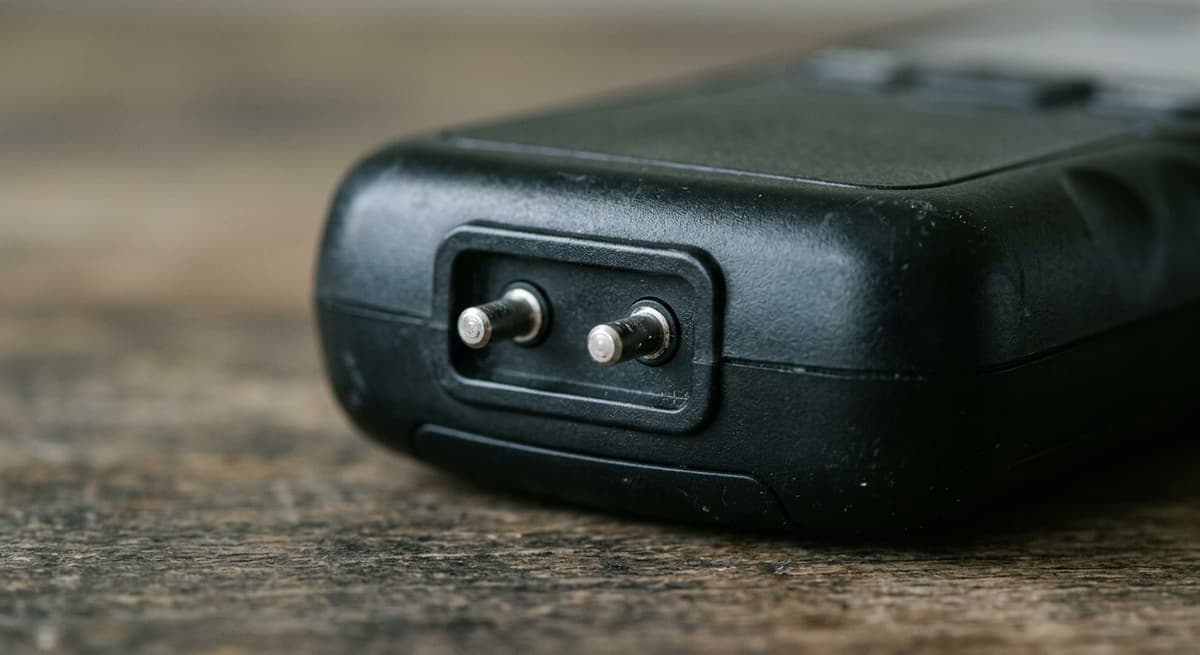
ORS 161.015(6), Oregon's general criminal-code definitions section, states that "'Physical force' includes, but is not limited to, the use of an electrical stun gun, tear gas or mace," which is the state's own textual acknowledgment that a stun gun is treated as capable of inflicting physical force under Oregon law generally, a point that matters for the public-building analysis below. No published Oregon decision squarely decides whether an ordinary self-defense stun gun or pepper spray canister is a "dangerous weapon" under ORS 161.015(1). In a separate context, construing a probation weapons condition, the Oregon Supreme Court's November 2025 decision in State v. Cortes, 374 Or 461, read the 1971 Criminal Code commentary to suggest that an unmodified "weapon," unlike a "deadly" or "dangerous" one, is an instrument "designed to produce injury short of serious physical injury or death such as pepper spray or tear gas." Cortes also recounts that in considering Senate Bill 334 (1993), which amended ORS 166.370 and ORS 166.280 to add an "intentionally" element, the legislature was told "almost anything could constitute a 'dangerous weapon.'"
Where you can't carry either device
Oregon draws a real distinction between two kinds of restricted locations, and the two use different legal tests.

Court facilities. ORS 166.360(10) defines "weapon," for purposes of ORS 166.360 to 166.380, to include, among other items, "(c) Mace, tear gas, pepper mace or any similar deleterious agent as defined in ORS 163.211" and "(d) An electrical stun gun or any similar instrument," by name, alongside firearms, dirks, daggers, slingshots, metal knuckles, clubs, batons, and any dangerous or deadly weapon under ORS 161.015. "Court facility" reaches further than the name suggests. ORS 166.360(2) defines it as "a courthouse or that portion of any other building occupied by a circuit court, the Court of Appeals, the Supreme Court or the Oregon Tax Court, or occupied by personnel related to the operations of those courts, or in which activities related to the operations of those courts take place." That reaches a clerk's counter, judicial or court-staff offices, a jury assembly area, or any part of a building where circuit or appellate court activities take place, not only a courtroom, and a "courthouse" as a whole qualifies regardless of which other courts also sit inside it. A municipal court, justice court, probate court, or juvenile court occupying a building of its own, one that is not also a courthouse and not itself a public building, is a separate "local court facility" under ORS 166.360(7), where ORS 166.370(2)(a)(C) is the only weapons rule, and it reaches firearms only: a person who intentionally possesses "a firearm in a local court facility is guilty, upon conviction, of a Class C felony if, prior to the offense, the presiding judge of the local court facility entered an order prohibiting firearms in the area in which the court conducts business and during the hours in which the court operates." A municipal court or justice of the peace district that shares a courthouse with a circuit court is still inside that courthouse's "court facility," so it remains subject to the surrender-or-remove duty described below, and it cannot cut against the circuit court's own weapons order: under ORS 166.370(2)(c), "within a shared court facility, the presiding judge of a municipal court or justice of the peace district may not enter an order concerning the possession of weapons in the court facility that is in conflict with an order entered by the presiding judge of the circuit court." Inside a true court facility, ORS 166.370(2)(a)(B) provides that a person who intentionally possesses "a weapon, other than a firearm, in a court facility may be required to surrender the weapon to a law enforcement officer or to immediately remove it from the court facility," and "a person who fails to comply with this subparagraph is guilty, upon conviction, of a Class C felony." The felony attaches to failing to comply once surrender or removal is required, not to possession by itself, and ORS 166.370(2)(b) separately lets "the presiding judge of a judicial district or a municipal court" enter an order permitting specified weapons in a court facility outright. So pepper spray or a stun gun carried into a circuit, appellate, Supreme, or Tax Court facility, including its non-courtroom areas, falls within the named "weapon" definition and its surrender-or-remove duty. That duty does not reach a municipal, justice, probate, or juvenile court sitting in a building of its own that is neither a shared courthouse nor a public building, because the duty and the "weapon" definition it uses apply only to a "court facility," not a "local court facility." But a courthouse shared with a circuit court remains a "court facility" regardless of which court is sitting, and a local court that meets in a city hall or other agency building instead falls within the "public building" definition below, where the dangerous-weapon offense, not the named-weapon surrender duty, applies.
Public buildings. ORS 166.360(9) defines "public building" to include a hospital, a capitol building, a public or private school as defined in ORS 339.315, a college or university, a city hall, the residence of any state official elected by the state at large, "and the grounds adjacent to each such building," the passenger terminal of a commercial service airport with more than one million passenger boardings a year, and the portion of any other building occupied by a state, city, county, or district agency, other than a court facility. "Capitol building" is itself defined in ORS 166.360(1) to reach beyond the Capitol itself: it includes "the State Office Building, the State Library Building, the Labor and Industries Building, the State Transportation Building, the Agriculture Building or the Public Service Building," plus new buildings later built on the same grounds. The "grounds adjacent to each such building" clause means the statute is not limited to indoor spaces: a school parking lot, a hospital forecourt, or the grounds around the Capitol are within its reach the same as the building itself. Here, the operative offense, ORS 166.370(1)(a), is written differently: it criminalizes possessing "a loaded or unloaded firearm or any other instrument used as a dangerous weapon," a Class C felony, using the term "dangerous weapon" rather than the "weapon" definition that names pepper spray and stun guns by name. ORS 166.370(8) makes the link explicit: "As used in this section, 'dangerous weapon' means a dangerous weapon as that term is defined in ORS 161.015." That definition, at ORS 161.015(1), is "any weapon, device, instrument, material or substance which under the circumstances in which it is used, attempted to be used or threatened to be used, is readily capable of causing death or serious physical injury." Whether an ordinary pepper spray canister or stun gun meets that circumstance-based test in a public building depends on how it is used, attempted to be used, or threatened to be used in the specific encounter, not on a flat statutory listing the way it is inside a court facility. Several exceptions apply to the public-building offense: ORS 166.370(3)(h) exempts "a person who is authorized by the officer or agency that controls the public building to possess a firearm or dangerous weapon in that public building," and subsection (4)(a) makes that exception, along with the others in subsection (3)(d) to (k), an affirmative defense the defendant must raise rather than an element the state must disprove. Subsection (6) subjects any weapon carried in violation of the section to forfeiture under ORS 166.279.
Local ordinances and state preemption
ORS 166.170(1) states: "Except as expressly authorized by state statute, the authority to regulate in any matter whatsoever the sale, acquisition, transfer, ownership, possession, storage, transportation or use of firearms or any element relating to firearms and components thereof, including ammunition, is vested solely in the Legislative Assembly." Subsection (2) uses the same "except as expressly authorized by state statute" opening and voids a conflicting local ordinance that attempts to regulate those same firearm-related activities. That opening qualifier matters, because the Legislative Assembly has used it: ORS 166.173(1) states that "a city or county may adopt ordinances to regulate, restrict or prohibit the possession of loaded firearms in public places as defined in ORS 161.015," subject to exceptions for law enforcement, military personnel on duty, and a person licensed to carry a concealed handgun. Pepper spray and stun guns are not named anywhere in either statute, so Oregon cities, counties, and other municipal corporations are not state-blocked from adopting their own ordinances regulating either device, the same room ORS 166.173 shows the legislature knows how to grant, but has granted only for loaded firearms in public places, not for pepper spray or stun guns.
Federal law: what it does and does not reach
No federal statute regulates a civilian's purchase or possession of pepper spray or a stun gun. Federal law matters in three places.
Federal buildings. Under 18 U.S.C. § 930(a), whoever knowingly possesses or causes to be present "a firearm or other dangerous weapon in a Federal facility (other than a Federal court facility)" faces a fine, imprisonment of up to 1 year, or both. Subsection (e) sets up to 2 years for a federal court facility, and subsection (b) up to 5 years where the weapon is intended to be used in a crime. Section 930(g)(2) defines the term:
The term "dangerous weapon" means a weapon, device, instrument, material, or substance, animate or inanimate, that is used for, or is readily capable of, causing death or serious bodily injury, except that such term does not include a pocket knife with a blade of less than 2½ inches in length.
The definition names neither device. Whether a particular spray or stun gun is "readily capable of" causing serious bodily injury is a question of fact the statute does not answer. Subsection (d)(3) exempts "the lawful carrying of firearms or other dangerous weapons in a Federal facility incident to hunting or other lawful purposes," and subsection (h) requires notice of the ban to be posted at each public entrance. A "Federal facility" is "a building or part thereof owned or leased by the Federal Government, where Federal employees are regularly present for the purpose of performing their official duties."
Air travel. The Transportation Security Administration's screening rules, which are agency policy rather than statute, bar both devices from carry-on bags. One 4 fl. oz. (118 ml) container of mace or pepper spray is permitted in checked baggage if it has a safety mechanism to prevent accidental discharge, and sprays containing more than 2 percent by mass of tear gas (CS or CN) are prohibited in checked baggage. Tasers, stun guns and other electro-shock weapons may travel in checked baggage only if transported so the device cannot discharge accidentally. Airlines may set stricter rules.
National parks. National Park Service regulations prohibit possessing, carrying or using a "weapon" in a park area except as the regulations provide (36 CFR 2.4(b)(1)). 36 CFR 1.4 defines "weapon" to include an "irritant gas device" and any "weapon the possession of which is prohibited under the laws of the State in which the park area or portion thereof is located."
Disclaimer: This article provides general legal information about Oregon's pepper spray and stun gun laws as of September 2026. It is not legal advice. Consult a lawyer licensed in Oregon for advice about a specific situation.
For a state-by-state comparison, see pepper spray and stun gun laws by state. Oregon's self-defense statutes are covered separately on the Oregon self-defense laws page.
Statutes cited reflect their in-force version as of 2026-09-18. Last updated: 2026-09-18.
Frequently Asked Questions
Do you need a permit for pepper spray or a stun gun in Oregon?
No permit is required to buy or openly possess and carry either device; no section of the Oregon Revised Statutes that names pepper spray or a stun gun sets a permit, age minimum, or dealer-license requirement. Concealed carry is a separate question: ORS 166.240's concealed-weapons statute does not name either device, but its list ends in an open 'or any similar instrument by the use of which injury could be inflicted' clause rather than closing after metal knuckles, so whether it reaches a concealed spray or stun gun is not resolved by the statute's own text. The Oregon Supreme Court has read that residual clause narrowly in a related context involving knives, not sprays or stun guns: State v. Cortes (2025), citing City of Portland v. Lodi (1989), says the clause was meant to restrict only bladed instruments historically used in combat.
What happens if you discharge pepper spray or a stun gun against someone in Oregon?
It depends on intent and the target, and neither offense carries a written self-defense exception. ORS 163.212 makes reckless discharge against any person a Class A misdemeanor, full stop; justification for a self-defense spray comes from Oregon's general defenses, raised separately, not from an exception inside the statute, so hitting a bystander while justifiably spraying an attacker is still a reckless discharge against that bystander. ORS 163.213 raises the offense to a Class C felony only if the person knowingly discharges it against someone known to be a peace officer, corrections officer, parole and probation officer, firefighter, or EMS provider acting in official duty.
Can you bring pepper spray or a stun gun into an Oregon courthouse?
It depends which court, and 'court facility' reaches further than the courtroom itself. ORS 166.360(2) defines 'court facility' as a courthouse or the portion of a building occupied by a circuit court, the Court of Appeals, the Supreme Court, or the Oregon Tax Court, or occupied by personnel related to the operations of those courts, or in which activities related to the operations of those courts take place, so a clerk's counter or a judge's office counts too. ORS 166.360(10) defines 'weapon' there to include mace, tear gas, pepper mace, and an electrical stun gun by name, and ORS 166.370(2)(a)(B) says a person possessing one 'may be required' to surrender it to a law enforcement officer or immediately remove it, with failing to comply once required a Class C felony (the presiding judge may also permit specified weapons by order). A municipal, justice, probate, or juvenile court occupying a building of its own, and not itself a public building, is a separate 'local court facility,' where the only weapons rule reaches firearms only. But a municipal or justice court that shares a courthouse with a circuit court is still inside that courthouse's 'court facility,' so the surrender-or-remove duty for pepper spray or a stun gun applies there too, and such a court cannot enter an order conflicting with the circuit court's own; a local court that sits in a city hall or other agency building instead falls under the public-building rule.
Is pepper spray or a stun gun banned from Oregon schools and hospitals?
It is not a flat ban the way it is in a courthouse. Schools, hospitals, and similar sites are 'public buildings' under ORS 166.360(9), a definition that also reaches the grounds adjacent to each such building, not just its interior, and the offense that applies there, ORS 166.370(1)(a), reaches 'a dangerous weapon' as defined by cross-reference in ORS 161.015(1), any device 'readily capable of causing death or serious physical injury' under the circumstances of its use, rather than the named 'weapon' list used for court facilities. The agency or officer controlling the building can authorize possession under ORS 166.370(3)(h), which the defendant raises as an affirmative defense under subsection (4)(a).
Can Oregon cities regulate pepper spray or stun guns locally?
Yes. Oregon's firearms preemption statute, ORS 166.170, reserves regulation of firearms and their components to the Legislative Assembly 'except as expressly authorized by state statute,' a carve-out the legislature has used for loaded firearms in public places specifically, under ORS 166.173. Neither statute mentions pepper spray or stun guns, so a city or county is not state-blocked from adopting its own ordinance for either device.
Updates
Independently fact-checked against the cited primary sources
The Law Behind This Article
This article rests on the statutory provisions below, held in our own legal record and retrieved from the official source. Tap a section to read the operative text.
Oregon Revised Statutes, Chapter 161: General Provisions
§ 161.015General definitionsIn forcecited in 4 of our articles
As used in chapter 743, Oregon Laws 1971, and ORS 166.635, unless the context requires otherwise: (1) “Dangerous weapon” means any weapon, device, instrument, material or substance which under the circumstances in which it is used, attempted to be used or threatened to be used, is readily capable of causing death or serious physical injury. (2) “Deadly weapon” means any instrument, article or substance specifically designed for and presently capable of causing death or serious physical injury. (3) “Deadly physical force” means physical force that under the circumstances in which it is used is readily capable of causing death or serious physical injury.
Official text (excerpt) · last checked 2026-07-29 · Read the full text in our law library · Verify at oregonlegislature.gov
Cited in 332 court opinions in our collectionLatest citing opinion in our collection: 2026
Opinions citing this section in our collection:
- State v. Fries (Oregon Supreme Court 2008, 344 Or. 541)“…ly * * * to possess a controlled substance.” 3 ORS 161.015(9) in turn provides that “ £[p]ossess’…”
- State v. Clevenger (Oregon Supreme Court 1984, 297 Or. 234)“…jury was a necessary element of the crime as charged. See ORS 161.015 and 163.175. [3] The trial court made…”
- Doe v. Medford School District 549C (Court of Appeals of Oregon 2009, 232 Or. App. 38)“…ngerous or deadly weapon is a firearm. See ORS 161.015(1) (defining “dangerous weapon” as “any…”
Identified automatically from the court opinions citing this section — not a ranking of which case controls.
Also relied on in: Oregon Knife Laws (2026): Concealed Carry, Intent Felony, Delgado, Oregon Self-Defense Laws: Stand Your Ground & Castle Doctrine (2026), Oregon Hit and Run Laws: Penalties and What to Do
§ 161.190Justification as a defenseIn forcecited in 2 of our articles
In any prosecution for an offense, justification, as defined in ORS 161.195 to 161.275, is a defense. [1971 c.743 §18] 161.195 “Justification” described. (1) Unless inconsistent with other provisions of chapter 743, Oregon Laws 1971, defining justifiable use of physical force, or with some other provision of law, conduct which would otherwise constitute an offense is justifiable and not criminal when it is required or authorized by law or by a judicial decree or is performed by a public servant in the reasonable exercise of official powers, duties or functions. (2) As used in subsection (1) of this section, “laws and judicial decrees” include but are not limited to: (a) Laws defining duties and functions of public servants; (b) Laws defining duties of private citizens to assist public servants in the performance of certain of their functions; (c) Laws governing the execution of legal process; (d) Laws governing the military services and conduct of war; and (e) Judgments and orders of courts. [1971 c.743 §19] Note: See note under 161.015. 161.200 Choice of evils.
Official text (excerpt) · last checked 2026-07-29 · Read the full text in our law library · Verify at oregonlegislature.gov
Cited in 17 court opinions in our collectionLatest citing opinion in our collection: 2025
Opinions citing this section in our collection:
- State v. Mayo (Court of Appeals of Oregon 2020, 303 Or. App. 525)“…ce other than the place where such offense was committed”); ORS 161.190 (“In any prosecution for an offense, ju…”
- State v. Oliphant (Oregon Supreme Court 2009, 347 Or. 175)“…including the justification of self-defense, is a defense. ORS 161.190. That means that, once self-defense has…”
- State v. Stone (Court of Appeals of Oregon 2023, 324 Or. App. 688)“…stification applies to any conduct “authorized by law.” See ORS 161.190 (“In any prosecution for an offense, ju…”
Identified automatically from the court opinions citing this section — not a ranking of which case controls.
Oregon Revised Statutes, Chapter 163: Offenses Against Persons
§ 163.211Definitions for ORS 163.211 to 163.213In force
As used in ORS 163.211 to 163.213: (1) “Corrections officer” and “parole and probation officer” have the meanings given those terms in ORS 181A.355. (2) “Mace, tear gas, pepper mace or any similar deleterious agent” means a sternutator, lacrimator or any substance composed of a mixture of a sternutator or lacrimator including, but not limited to, chloroacetophenone, alpha-chloroacetophenone, phenylchloromethylketone, orthochlorobenzalmalononitrile, oleoresin capsicum or a chemically similar sternutator or lacrimator by whatever name known, or phosgene or other gas or substance capable of generating offensive, noxious or suffocating fumes, gases or vapor or capable of immobilizing a person. (3) “Tear gas weapon” includes: (a) Any shell, cartridge or bomb capable of being discharged or exploded, when the discharge or explosion will cause or permit the release or emission of tear gas or oleoresin capsicum. (b) Any revolver, pistol, fountain pen gun, billy or other form of device, portable or fixed, intended for the projection or release of tear gas or oleoresin capsicum.
Official text (excerpt) · last checked 2026-07-29 · Read the full text in our law library · Verify at oregonlegislature.gov
Cited in 1 court opinions in our collectionLatest citing opinion in our collection: 2026
Opinions citing this section in our collection:
- State v. Demby (Court of Appeals of Oregon 2026, 347 Or. App. 780)“…hat the substance he sprayed constituted mace as defined in ORS 163.211(2), because the state relied on eyewitn…”
Identified automatically from the court opinions citing this section — not a ranking of which case controls.
§ 163.212Unlawful use of an electrical stun gun, tear gas or mace in the second degreeIn force
(1) A person commits the crime of unlawful use of an electrical stun gun, tear gas or mace in the second degree if the person recklessly discharges an electrical stun gun, tear gas weapon, mace, tear gas, pepper mace or any similar deleterious agent against another person. (2) Unlawful use of an electrical stun gun, tear gas or mace in the second degree is a Class A misdemeanor. [1995 c.651 §2] Note: See note under 163.211.
Official text (excerpt) · last checked 2026-07-29 · Read the full text in our law library · Verify at oregonlegislature.gov
Cited in 9 court opinions in our collectionLatest citing opinion in our collection: 2026
Opinions citing this section in our collection:
- State v. Sepelak (Court of Appeals of Oregon 2026, 346 Or. App. 819)“…ith one count of unlawful use of mace in the second degree, ORS 163.212 (Count 1),1 and one count of unlawful p…”
- State v. Myers (Court of Appeals of Oregon 2009, 225 Or. App. 666)“…nd one count of unlawful use of a stun gun (a misdemeanor), ORS 163.212. Also on July 15, on defendant’s motion…”
- State v. Harris (Court of Appeals of Oregon 2001, 174 Or. App. 105)“…y the term “use” narrowly to mean “discharge.” For example, ORS 163.212(1) provides: “A person commits t…”
Identified automatically from the court opinions citing this section — not a ranking of which case controls.
§ 163.213Unlawful use of an electrical stun gun, tear gas or mace in the first degreeIn force
(1) A person commits the crime of unlawful use of an electrical stun gun, tear gas or mace in the first degree if the person knowingly discharges or causes to be discharged any electrical stun gun, tear gas weapon, mace, tear gas, pepper mace or any similar deleterious agent against another person, knowing the other person to be a peace officer, corrections officer, parole and probation officer, firefighter or emergency medical services provider and while the other person is acting in the course of official duty. (2) Unlawful use of an electrical stun gun, tear gas or mace in the first degree is a Class C felony. [1995 c.651 §3; 2011 c.703 §50] Note: See note under 163.211. KIDNAPPING AND RELATED OFFENSES
Official text (excerpt) · last checked 2026-07-29 · Read the full text in our law library · Verify at oregonlegislature.gov
Cited in 1 court opinions in our collectionLatest citing opinion in our collection: 2001
Opinions citing this section in our collection:
- State v. Harris (Court of Appeals of Oregon 2001, 174 Or. App. 105)“…in that statute is expressly equated with “discharge[ ].” ORS 163.213 similarly defines the crime of unlawful…”
Identified automatically from the court opinions citing this section — not a ranking of which case controls.
Oregon Revised Statutes, Chapter 166
§ 166.173Authority of city or county to regulate possession of loaded firearms in public placesIn force
(1) A city or county may adopt ordinances to regulate, restrict or prohibit the possession of loaded firearms in public places as defined in ORS 161.015. (2) Ordinances adopted under subsection (1) of this section do not apply to or affect: (a) A law enforcement officer. (b) A member of the military in the performance of official duty. (c) A person licensed to carry a concealed handgun. (d) A person authorized to possess a loaded firearm while in or on a public building or court facility under ORS 166.370. (e) An employee of the United States Department of Agriculture, acting within the scope of employment, who possesses a loaded firearm in the course of the lawful taking of wildlife. (f) An honorably retired law enforcement officer, unless the person who is a retired law enforcement officer has been convicted of an offense that would make the person ineligible to obtain a concealed handgun license under ORS 166.291 and 166.292.
Official text (excerpt) · last checked 2026-07-29 · Read the full text in our law library · Verify at oregonlegislature.gov
Cited in 8 court opinions in our collectionLatest citing opinion in our collection: 2026
Opinions citing this section in our collection:
- Starrett v. CITY OF PORTLAND EX REL. STATE (Court of Appeals of Oregon 2004, 196 Or. App. 534)“…leased. Plaintiffs position is premised on ORS 166.170 and ORS 166.173, which effectively prohibit a city from…”
- State v. Christian (Court of Appeals of Oregon 2012, 249 Or. App. 1)“…d has statutory authority to enact regulations of firearms. ORS 166.173(1). [3] "The following are exception…”
- State v. Ward (Court of Appeals of Oregon 2008, 224 Or. App. 421)“…except as expressly authorized by state statute”). However, ORS 166.173 grants local governments limited power…”
Identified automatically from the court opinions citing this section — not a ranking of which case controls.
§ 166.240Carrying of concealed weaponsIn forcecited in 2 of our articles
(1) Except as provided in subsection (2) of this section, any person who carries concealed upon the person any knife having a blade that projects or swings into position by force of a spring or by centrifugal force, any dirk, dagger, ice pick, slungshot, metal knuckles, or any similar instrument by the use of which injury could be inflicted upon the person or property of any other person, commits a Class B misdemeanor. (2) Nothing in subsection (1) of this section applies to any peace officer as defined in ORS 133.005, whose duty it is to serve process or make arrests. Justice courts have concurrent jurisdiction to try any person charged with violating any of the provisions of subsection (1) of this section. [Amended by 1977 c.454 §1; 1985 c.543 §2; 1989 c.839 §21; 1999 c.1040 §15]
Official text (excerpt) · last checked 2026-09-24 · Read the full text in our law library · Verify at oregonlegislature.gov
Cited in 95 court opinions in our collectionLatest citing opinion in our collection: 2025
Opinions citing this section in our collection:
- State v. Brown (Oregon Supreme Court 1972, 262 Or. 442)“…ution and punishment under the other." A conviction under ORS 166.240(1) requires proof that the weapon was c…”
- City of Portland v. Lodi (Oregon Supreme Court 1989, 308 Or. 468)“…one-half inches was a dangerous weapon. Former ORS 166.240(1), a misdemeanor section which did not…”
- State v. Tucker (Court of Appeals of Oregon 1977, 28 Or. App. 29)“…murrer to a criminal complaint which charged a violation of ORS 166.240, 1 and stated that the def…”
Identified automatically from the court opinions citing this section — not a ranking of which case controls.
§ 166.279Forfeiture of deadly weaponsIn forcecited in 2 of our articles
(1) Except as provided in subsection (4) of this section, ORS 131.550 to 131.600 do not apply to the forfeiture of a firearm or other deadly weapon that was possessed, used or available for use to facilitate a criminal offense. (2) Except as provided in subsection (3) of this section, at the time of sentencing for any criminal offense in which a firearm or other deadly weapon was possessed, used or available for use to facilitate the offense, the court shall declare the weapon to be contraband and order that the weapon be forfeited. (3) If a firearm or other deadly weapon that was possessed, used or available for use to facilitate a criminal offense was stolen from its lawful owner and was recovered from a person other than the lawful owner, the court may not order that the weapon be forfeited but shall order that the weapon be restored to the lawful owner as soon as the weapon is no longer needed for evidentiary purposes. (4) The court shall release a firearm or other deadly weapon forfeited under subsection (2) of this section to the law enforcement agency that seized the weapon.
Official text (excerpt) · last checked 2026-07-29 · Read the full text in our law library · Verify at oregonlegislature.gov
Cited in 2 court opinions in our collectionLatest citing opinion in our collection: 2018
Opinions citing this section in our collection:
- State v. Fenton (Court of Appeals of Oregon 2018, 294 Or. App. 48)“…inally forfeited, but were forfeited as contraband under ORS 166.279 in Gann's case. The state asserts that…”
- State v. N.S.B. (In re N.S.B.) (Court of Appeals of Oregon 2018, 290 Or. App. 576)“…ssed, used or available for use to facilitate the offense." ORS 166.279(2). 1 The state, for its part, concede…”
Identified automatically from the court opinions citing this section — not a ranking of which case controls.
§ 166.280Repealed
Official text (excerpt) · last checked 2026-07-29 · Read the full text in our law library · Verify at oregonlegislature.gov
Cited in 6 court opinions in our collectionLatest citing opinion in our collection: 2025
Opinions citing this section in our collection:
- City of Portland v. Marshall (Court of Appeals of Oregon 1986, 82 Or. App. 497)“…se, is incompatible with the state statute, I dissent. ORS 166.280(1) provides: “The unlawful concealed…”
- State v. Berg (Court of Appeals of Oregon 1993, 122 Or. App. 573)“…uns. The state argues that the forfeiture was authorized by ORS 166.280(1), which provides, in part: “The unl…”
- State v. Wilson (Court of Appeals of Oregon 1990, 105 Or. App. 20)“…argues that the weapons may be considered a nuisance under ORS 166.280(2) and confiscated. However, that statu…”
Identified automatically from the court opinions citing this section — not a ranking of which case controls.
§ 166.291Issuance of concealed handgun license; application; fees; liabilityIn forcecited in 2 of our articles
(1) The sheriff of a county, upon a person’s application for an Oregon concealed handgun license, upon receipt of the appropriate fees and after compliance with the procedures set out in this section, shall issue the person a concealed handgun license if the person: (a)(A) Is a citizen of the United States; or (B) Is a legal resident noncitizen who can document continuous residency in the county for at least six months and has declared in writing to the United States Citizenship and Immigration Services the intent to acquire citizenship status and can present proof of the written declaration to the sheriff at the time of application for the license; (b) Is at least 21 years of age; (c) Is a resident of the county; (d) Has no outstanding warrants for arrest; (e) Is not free on any form of pretrial release; (f) Demonstrates competence with a handgun by any one of the following: (A) Completion of any hunter education or hunter safety course approved by the State Department of Fish and Wildlife or a similar agency of another state if handgun safety was a component of the course; (B) Completion of any National Rifle Association firearms safety or training…
Official text (excerpt) · last checked 2026-07-29 · Read the full text in our law library · Verify at oregonlegislature.gov
Cited in 28 court opinions in our collectionLatest citing opinion in our collection: 2026
Opinions citing this section in our collection:
- Willis v. Winters (Oregon Supreme Court 2011, 350 Or. 299)“…s of persons, including “a[ny] person who is licensed under ORS 166.291 and ORS 166.292 to carry a concealed ha…”
- State v. Williams (Court of Appeals of Oregon 1999, 161 Or. App. 111)“…ithout having a license to carry the firearm as provided in ORS 166.291 and 166.292; “(b) Carries concealed…”
- State v. Vinge (Court of Appeals of Oregon 2025, 337 Or. App. 621)“…however, does not apply to someone who is “licensed under ORS 166.291 and 166.292 to carry a concealed handgu…”
Identified automatically from the court opinions citing this section — not a ranking of which case controls.
Also relied on in: Oregon Background Check Laws (2026 Guide)
§ 166.360Definitions for ORS 166.360 to 166.380In forcecited in 2 of our articles
As used in ORS 166.360 to 166.380, unless the context requires otherwise: (1) “Capitol building” means the Capitol, the State Office Building, the State Library Building, the Labor and Industries Building, the State Transportation Building, the Agriculture Building or the Public Service Building and includes any new buildings which may be constructed on the same grounds as an addition to the group of buildings listed in this subsection. (2) “Court facility” means a courthouse or that portion of any other building occupied by a circuit court, the Court of Appeals, the Supreme Court or the Oregon Tax Court or occupied by personnel related to the operations of those courts, or in which activities related to the operations of those courts take place. (3) “Judge” means a judge of a circuit court, the Court of Appeals, the Supreme Court, the Oregon Tax Court, a municipal court, a probate court or a juvenile court or a justice of the peace. (4) “Judicial district” means a circuit court district established under ORS 3.012 or a justice of the peace district established under ORS 51.020. (5) “Juvenile court” has the meaning given that term in ORS 419A.004.
Official text (excerpt) · last checked 2026-07-29 · Read the full text in our law library · Verify at oregonlegislature.gov
Cited in 2 court opinions in our collectionLatest citing opinion in our collection: 2025
Opinions citing this section in our collection:
- Brundridge v. Board of Parole & Post-Prison Supervision (Court of Appeals of Oregon 2004, 192 Or. App. 648)“…or carries any “dirk, dagger or stiletto;” 3 ORS 166.360(5) defines “weapon,” for the purposes o…”
- State v. Cortes (Oregon Supreme Court 2025, 374 Or. 461)“…The state points to the definition of “weapon” in ORS 166.360 as relevant context. That statute defin…”
Identified automatically from the court opinions citing this section — not a ranking of which case controls.
§ 166.370Possession of firearm or dangerous weapon in public building or court facility; exceptions; discharging firearm at schoolIn forcecited in 2 of our articles
(1)(a) Any person who intentionally possesses a loaded or unloaded firearm or any other instrument used as a dangerous weapon, while in or on a public building, shall upon conviction be guilty of a Class C felony. (b) Notwithstanding paragraph (a) of this subsection, in a prosecution under this section for the possession of a firearm within the Capitol, within the passenger terminal of a commercial service airport with over one million passenger boardings per year, within a building subject to a policy described in ORS 166.377 (3) or on school grounds subject to a policy described in ORS 166.377 (1), if the person proves by a preponderance of the evidence that, at the time of the possession, the person was licensed under ORS 166.291 and 166.292 to carry a concealed handgun, upon conviction the person is guilty of a Class A misdemeanor. (2)(a) Except as otherwise provided in paragraph (b) of this subsection, a person who intentionally possesses: (A) A firearm in a court facility is guilty, upon conviction, of a Class C felony. A person who intentionally possesses a firearm in a court facility shall surrender the firearm to a law enforcement officer.
Official text (excerpt) · last checked 2026-07-29 · Read the full text in our law library · Verify at oregonlegislature.gov
Cited in 21 court opinions in our collectionLatest citing opinion in our collection: 2025
Opinions citing this section in our collection:
- State v. Christian (Court of Appeals of Oregon 2012, 249 Or. App. 1)“…ess a loaded firearm while in or on a public building under ORS 166.370. "5. A government employee authorized…”
- State v. Snow (Court of Appeals of Oregon 2011, 247 Or. App. 497)“…or any law enforcement officer shall enforce UTCR 6.180 and ORS 166.370 by every lawful necessary means, includ…”
- Oregon Firearms Educational Foundation v. Board of Higher Education (Court of Appeals of Oregon 2011, 245 Or. App. 713)“…cause the rule is inconsistent with state law, specifically ORS 166.370, which petitioner contends expressly pe…”
Identified automatically from the court opinions citing this section — not a ranking of which case controls.
Code of Federal Regulations Title 36
§ 1.4What terms do I need to know?In forcecited in 53 of our articles
(a) The following definitions shall apply to this chapter, unless modified by the definitions for a specific part or regulation: Abandonment means the voluntary relinquishment of property with no intent to retain possession. Administrative activities means those activities conducted under the authority of the National Park Service for the purpose of safeguarding persons or property, implementing management plans and policies developed in accordance and consistent with the regulations in this chapter, or repairing or maintaining government facilities. Airboat means a vessel that is supported by the buoyancy of its hull and powered by a propeller or fan above the waterline. This definition should not be construed to mean a “hovercraft,” that is supported by a fan-generated air cushion. Aircraft means a device that is used or intended to be used for human flight in the air, including powerless flight. Archeological resource means material remains of past human life or activities that are of archeological interest and are at least 50 years of age.
Official text (excerpt) · last checked 2026-07-28 · Read the full text in our law library · Verify at ecfr.gov
Cited in 34 court opinions in our collectionLatest citing opinion in our collection: 2026
Opinions citing this section in our collection:
- WildEarth Guardians v. National Park Service (Court of Appeals for the Tenth Circuit 2013, 703 F.3d 1178)“…collect, kill, wound, or attempt to do any of the above.” 36 C.F.R. § 1.4(a). WildEarth argues that because NPS…”
- Nature v. United States (District Court, E.D. California 2017, 250 F. Supp. 3d 634)“…ent, historic, parkway, recreational, or other purposes. 36 C.F.R. § 1.4 . Nature argues that the El Portal Admi…”
- United States v. Knauer (District Court, E.D. New York 2010, 707 F. Supp. 2d 379)“…ng or attempting to take wildlife, except trapping. 36 C.F.R. § 1.4 (a) (in relevant part, reordered for cl…”
Identified automatically from the court opinions citing this section — not a ranking of which case controls.
Also relied on in: Knife Laws by State (2026): Carry Rules, Blade Limits, Penalties, Pepper Spray and Stun Gun Laws by State (2026), Alabama Pepper Spray and Stun Gun Laws (2026)
§ 2.4Weapons, traps and nets.In forcecited in 53 of our articles
(a) None of the provisions in this section or any regulation in this chapter may be enforced to prohibit an individual from possessing a firearm, including an assembled or functional firearm, in any National Park System unit if: (1) The individual is not otherwise prohibited by law from possessing the firearm; and (2) The possession of the firearm is in compliance with the law of the State in which the National Park System unit is located. (b)(1) Except as otherwise provided in this section and parts 7 (special regulations) and 13 (Alaska regulations), the following are prohibited: (i) Possessing a weapon, trap or net (ii) Carrying a weapon, trap or net (iii) Using a weapon, trap or net (2) Weapons, traps or nets may be carried, possessed or used: (i) At designated times and locations in park areas where: (A) The taking of wildlife is authorized by law in accordance with § 2.2 of this chapter; (B) The taking of fish is authorized by law in accordance with § 2.3 of this part. (ii) When used for target practice at designated times and at facilities or locations designed and constructed specifically for this purpose and designated pursuant to special regulations.
Official text (excerpt) · last checked 2026-07-28 · Read the full text in our law library · Verify at ecfr.gov
Cited in 26 court opinions in our collectionLatest citing opinion in our collection: 2024
Opinions citing this section in our collection:
- United States v. Masciandaro (Court of Appeals for the Fourth Circuit 2011, 638 F.3d 458)“…motor vehicle within a national park area, in violation of 36 C.F.R. § 2.4(b). He challenges his con- viction on t…”
- Brady Campaign to Prevent Gun Violence v. Salazar (District Court, District of Columbia 2009, 612 F. Supp. 2d 1)“…eady use.” 48 Fed.Reg. 30,252 (June 30, 1983), codified at 36 C.F.R. § 2.4 (a)(2). A similar regulation applied to…”
- United States v. Otis Lofton, United States of America v. Otis Lofton (Court of Appeals for the Fourth Circuit 2000, 233 F.3d 313)“…l Park Service. See 36 C.F.R. § 1.2 (2000); 36 C.F.R. § 2.4 (2000). Lofton’s conviction was affirm…”
Identified automatically from the court opinions citing this section — not a ranking of which case controls.
Also relied on in: Pennsylvania Pepper Spray and Stun Gun Laws (2026), Alaska Pepper Spray and Stun Gun Laws (2026), Arizona Pepper Spray and Stun Gun Laws (2026)
United States Code Title 18
§ 930Possession of firearms and dangerous weapons in Federal facilitiesIn forcecited in 55 of our articles
Except as provided in subsection (d), whoever knowingly possesses or causes to be present a firearm or other dangerous weapon in a Federal facility (other than a Federal court facility), or attempts to do so, shall be fined under this title or imprisoned not more than 1 year, or both. Whoever, with intent that a firearm or other dangerous weapon be used in the commission of a crime, knowingly possesses or causes to be present such firearm or dangerous weapon in a Federal facility, or attempts to do so, shall be fined under this title or imprisoned not more than 5 years, or both. A person who kills any person in the course of a violation of subsection (a) or (b), or in the course of an attack on a Federal facility involving the use of a firearm or other dangerous weapon, or attempts or conspires to do such an act, shall be punished as provided in sections 1111, 1112, 1113, and 1117.
Official text (excerpt) · last checked 2026-07-28 · Read the full text in our law library · Verify at uscode.house.gov
Cited in 90 court opinions in our collectionLatest citing opinion in our collection: 2026
Opinions citing this section in our collection:
- United States v. Odeh (Court of Appeals for the Second Circuit 2008, 552 F.3d 93)“…f an attack on a U.S. facility in Nairobi, in violation of 18 U.S.C. § 930 (c) (Counts 9-221); murder of U.S. offi…”
- Kawaljeet Tagore v. USA (Court of Appeals for the Fifth Circuit 2013, 735 F.3d 324)“…statutory ban on weapons with blades exceeding 2.5 inches. 18 U.S.C. § 930(a), (g)(2).…”
- Heller v. District of Columbia (Court of Appeals for the D.C. Circuit 2015, 801 F.3d 264)“…universally prohibited from possessing firearms. See, e.g., 18 U.S.C. § 930(a), (g)(1) (unlawful to “knowingly poss…”
Identified automatically from the court opinions citing this section — not a ranking of which case controls.
Also relied on in: Idaho Knife Laws (2026): Carry, Blade Length, Preemption, North Dakota Knife Laws (2026): The 6-Inch Rule and Licensing, Arkansas Pepper Spray and Stun Gun Laws (2026)
Search our full record of US law — 2.1 million sections, every state + federal →
Sources and References
- ORS 163.211 - Definitions for ORS 163.211 to 163.213(oregonlegislature.gov).gov
- ORS 163.212 - Unlawful use of an electrical stun gun, tear gas or mace in the second degree(oregonlegislature.gov).gov
- ORS 163.213 - Unlawful use of an electrical stun gun, tear gas or mace in the first degree(oregonlegislature.gov).gov
- ORS 166.170 - State preemption (authority to regulate firearms)(oregonlegislature.gov).gov
- ORS 166.173 - Authority of city or county to regulate possession of loaded firearms in public places(oregonlegislature.gov).gov
- ORS 166.240 - Carrying of concealed weapons(oregonlegislature.gov).gov
- ORS 166.360 - Definitions for ORS 166.360 to 166.380 ('public building,' 'court facility,' 'weapon')(oregonlegislature.gov).gov
- ORS 166.370 - Possession of firearm or dangerous weapon in public building or court facility(oregonlegislature.gov).gov
- ORS 161.015 - General definitions ('dangerous weapon,' 'physical force')(oregonlegislature.gov).gov
- State v. Cortes, 374 Or 461 (2025)(courtlistener.com)
- 18 U.S.C. § 930 - Possession of firearms and dangerous weapons in Federal facilities(law.cornell.edu)
- Transportation Security Administration - What Can I Bring? Pepper Spray(tsa.gov).gov
- Transportation Security Administration - What Can I Bring? Stun Guns/Shocking Devices(tsa.gov).gov
- 36 CFR 1.4 - National Park Service definitions (weapon)(ecfr.gov).gov
- 36 CFR 2.4 - Weapons, traps and nets(ecfr.gov).gov