
Hawaii
Hawaii Pepper Spray and Stun Gun Laws (2026)
Independently fact-checked against primary sources (last audited September 23, 2026). · 18 primary sources cited on this page. How we verify our legal content
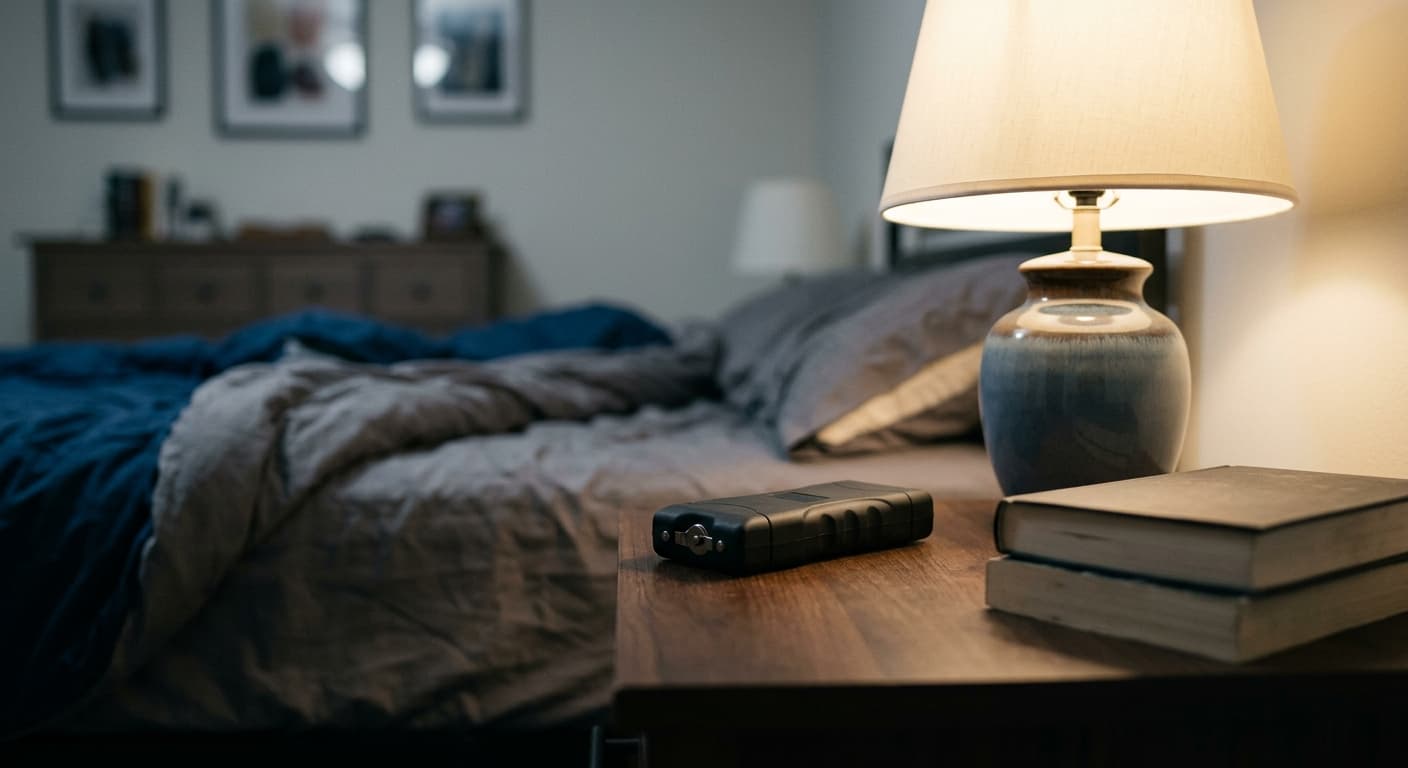
Hawaii treats pepper spray and stun guns very differently, and pepper spray's answer depends on where in Hawaii a reader lives and what kind of spray they mean. No Hawaii state statute names pepper spray, but Honolulu, home to roughly seven in ten Hawaii residents, regulates chemical sprays on two fronts: a citywide ban on CN and CS tear gas sprays and on OC-based animal repellents, and a separate ordinance that exempts and regulates the one narrowly defined product it calls "pepper spray." A state weapons catch-all also leaves an open question the page cannot resolve either way. Stun guns, which Hawaii calls "electric guns," are the opposite: a detailed, licensed-sale regulatory framework enacted by 2021 legislation, closer in structure to how Hawaii regulates firearms than to how most states treat a self-defense stun gun.
Jurisdiction scope: This page covers Hawaii state law, principally HRS Sections 134-51 and 134-81 through 134-90, and the City and County of Honolulu's obnoxious-substances and pepper spray ordinances, ROH Sections 41-12.3, 41-12.4, and 41-27.1 through 41-27.9. It does not cover Hawaii's firearm permitting statutes in detail, county-level licensing procedures beyond what Chapter 134 itself sets, or any chemical-spray ordinance that a Hawaii county other than Honolulu may have adopted.
Is pepper spray legal to carry in Hawaii?
No Hawaii state statute specifically regulates civilian possession, purchase, or carry of pepper spray or any other chemical spray by name. Hawaii's weapons statutes are concentrated in HRS Chapter 134, and its electric gun part (Sections 134-81 through 134-90) is exclusively about electric guns; the chapter's dangerous-weapons section, HRS Section 134-51, does not name a chemical or pepper spray either. Section 134-51(a) makes it a misdemeanor for a person "not authorized by law" to knowingly carry concealed "on the person, or in a bag or other container carried by the person, any dirk, dagger, blackjack, metal knuckles, or other deadly or dangerous weapon," with a proviso that the subsection does not apply to a billy; under (b), knowingly possessing, or intentionally using or threatening to use, such a weapon while engaged in the commission of a separate felony or misdemeanor is a class C felony. Its exclusion list, Section 134-51(e), as amended in 2024, removes a firearm, a switchblade knife, a butterfly knife, and an electric gun from the section, but says nothing about a chemical or pepper spray, so that exclusion neither reaches it nor rules it out. Section 134-51(g) provides a defense to a subsection (a) concealed-carry charge: it is a defense to prosecution "that a person was lawfully present in the person's own home at the time of the offense." The Hawaii Supreme Court has twice construed the same "other deadly or dangerous weapon" language, and both times read it narrowly and excluded the item before it. In State v. Rackle (1974) the court held a flare gun was not a "deadly or dangerous weapon." In State v. Giltner (1975), following Rackle, the court explained that the statute reaches "instruments associated with criminal activity whose sole design is to inflict death or bodily injury," that "the fact that an object originally designed for normal or lawful use can be perverted to a use dangerous to one attacked does not convert it into a 'deadly or dangerous weapon,'" and that the phrase reaches only an instrument "designed primarily as a weapon, or one which has been diverted from its normal use and prepared and modified for combat purposes," before holding that a diver's knife did not qualify and reversing the conviction. No published Hawaii decision applies Section 134-51 to a chemical or pepper spray in either direction, and the only two decisions construing this catch-all both excluded the item before them, so whether a concealed can of pepper spray falls within it is an open question under the statute's own terms, not a settled negative. General Hawaii assault law still applies to using pepper spray to injure someone regardless of how that question is resolved.

State law is not the only law that reaches pepper spray in Hawaii, however. The City and County of Honolulu, where roughly seven in ten Hawaii residents live, regulates it directly by ordinance; see the next section. Other Hawaii counties (Hawaii, Maui, and Kauai) may have adopted their own pepper spray ordinances, which are not covered on this page.
Honolulu's pepper spray ordinance
Honolulu does not regulate chemical sprays through a single ordinance; it bans most of them outright in one article of city code and then carves out a narrowly defined product in another. ROH Chapter 41, Article 12 ("Obnoxious Substances"), Section 41-12.3(b), makes it unlawful for any person to "possess, discharge, use, transport, sell, or offer to sell any shell, cartridge, bomb, gun, or other device capable of emitting chloracetophenone (CN), o-chlorobenzalmalononitrile (CS) or any derivatives thereof in any form." Section 41-12.3(c) does the same for "any shell, cartridge, bomb, gun, or other device capable of emitting oleo resin capsicum or any derivative thereof used to repel animals," covering products sold as bear spray or dog spray. Section 41-12.3(a) adds a third, intent-based prohibition that is not limited to CN, CS, or OC: no person may "use or possess with intent to use any shell, cartridge, bomb, gun, or other device capable of emitting any liquid, gaseous, or solid substance or any combination thereof that is injurious to person or property, or that is nauseous, sickening, irritating, or offensive to any of the senses; to injure, molest, discomfort, discommode, or coerce another in the use or control of the individual's person or property." Neither ban carries an age, purpose, or self-defense exception on its face; Section 41-12.4(a) lets the chief of police and the chief's subordinates use all of the listed devices in carrying out their duties, (b) lets private security officers employed by private police or security agencies use the subsection (a) and (b) devices, and (c) lets employees of government and private organizations who must enter private property for their work use the subsection (c) animal repellents, the last two subject to the conditions in Section 41-12.6; none of them covers ordinary personal possession. A violation of Article 12 is punished under Section 41-12.9 by a fine not exceeding $1,000, imprisonment not exceeding one year, or both, and any license or permit held by the violator is revoked on conviction.
Section 41-12.4(d) then opens a single, narrow exemption from the Section 41-12.3 ban: "The prohibitions of Section 41-12.3 shall not apply to the possession, use, transportation, or other distribution of any pepper spray as defined under Section 41-27.1 in the city in a manner permitted under Chapter 41, Article 27." Article 27 has its own exceptions section, 41-27.2, but it runs the other way: it lifts Article 27's restrictions only for "persons authorized under Sections 41-12.4 and 41-12.7 to possess, use, sell, transport, or otherwise distribute chemical devices in the city; provided that the persons possess, use, sell, transport, or otherwise distribute the chemical devices while acting in their capacities as employees of the city, of private security agencies, and of other organizations, or as licensed vendors, all in accordance with Chapter 41, Article 12." A resident carrying a canister for personal self-defense is not within that proviso, so Article 27 applies to that person in full. So the only chemical spray a Honolulu resident may lawfully possess for personal self-defense is the specific product Section 41-27.1 defines: an aerosol container or other device designed to fit into a handbag or pants pocket, with a trigger-guard, flip top, or similar mechanism against accidental release, that emits oleoresin capsicum (OC) or a derivative, without chloroacetophenone (CN) or orthochlorobenzalmalononitrile (CS), using a nonflammable propellant. A CN or CS spray, and an OC product marketed as bear or dog repellent, remain unlawful to possess, use, transport, or sell in Honolulu regardless of who carries it or why, including a can bought on another island or on the mainland and brought into the city.
The Revised Ordinances of Honolulu (ROH) devote an entire article, Sections 41-27.1 through 41-27.9, to "Possession, Use, and Sale of Pepper Sprays for Self-Defense," and it is this article that governs the exempted product. Section 41-27.3 restricts it on four fronts: subsection (a) limits use to self-defense, defense of another person, or protection of property; subsection (b) requires a city license to sell or offer to sell pepper spray in Honolulu; subsection (c) bars selling, offering to sell, or furnishing it to a minor (defined as anyone under 18); and subsection (d) bars a minor from purchasing, possessing, or using it at all. Section 41-27.3(e) also bars selling it where liquor is consumed, and (f) bars altering a canister's manufacturer name. Section 41-27.9 sets the penalty for a violation of Article 27: a fine not exceeding $2,000, imprisonment not exceeding one year, or both, with a licensee's violation also risking suspension or revocation of the license, and each prohibited transaction counted as a separate violation.
Hawaii's electric gun framework: how it's structured
Hawaii does not treat a stun gun as an unregulated self-defense item the way most states do. HRS Section 134-81 defines "electric gun" as "any portable device that is designed to discharge electric energy, charge, voltage, or current into the body through direct contact or utilizing a projectile," expressly including "devices commonly referred to as stun guns and Tasers," but excluding an automatic external defibrillator used in emergency medical situations.
Using an electric gun is limited by Section 134-82(a) to self-defense, defense of another person, or protection of property; using one for any other purpose is unlawful. Selling, offering to sell, distributing, or otherwise transferring an electric gun or cartridge requires an annual license issued by the county where the seller does business, under Section 134-83. An applicant for that license must show no felony convictions and, within the prior three years, completion of a county-approved electric gun safety or training course covering safe handling, the device's effects and risks, and Hawaii's electric gun laws. Licensees and their employees must repeat that training at least once every three years, and a licensee must post the license where customers can see it (Section 134-84(a)-(c)). Selling or transferring an electric gun or cartridge to anyone under 21 is separately unlawful under Section 134-82(d), and violating any part of Section 134-82 is a misdemeanor under subsection (f).
The buyer's side of a sale carries its own rules. Before completing a sale, the licensee or an employee must run a criminal history background check on the recipient, a name-based search of Hawaii adult criminal conviction records, and have the recipient review the results and sign a statutory declaration that they are not disqualified from owning an electric gun; if the recipient is disqualified, refuses, or cannot sign, the licensee must terminate the transaction (Section 134-84(f)). The licensee must also give the recipient a safety and disposal briefing and a signed certification of it (Section 134-84(g)-(h)). And Section 134-82(e) puts a duty on the buyer directly: it is unlawful for anyone other than a licensee, a law enforcement agency, or the Army or Air National Guard to knowingly or recklessly purchase, obtain, or otherwise receive an electric gun or cartridge from a person who does not hold a Section 134-83 license, a misdemeanor under Section 134-82(f).
A person who is not a licensee may not simply sell or discard an electric gun; Section 134-85 requires transferring it to a licensee or to the police chief of the appropriate county, who may destroy it or use it for educational purposes and must keep disposition records.
Who is barred from owning or possessing an electric gun
HRS Section 134-86 sets out Hawaii's prohibited-persons list for electric guns, and the penalties differ sharply by category. Owning, possessing, or controlling an electric gun while a fugitive from justice, or while under indictment for, having waived indictment for, having been bound over for, or having been convicted in Hawaii or elsewhere of a felony, a crime of violence, or an illegal drug sale, is a class C felony under Section 134-86(a), (b), and (j). Several other categories carry a misdemeanor penalty instead: a person currently or previously under treatment or counseling for addiction to or dependence on a dangerous or harmful drug, intoxicating compound, or intoxicating liquor; a person acquitted of a crime on grounds of mental disease, disorder, or defect; a person diagnosed with a significant behavioral, emotional, or mental disorder; or a person under treatment for an organic brain syndrome, unless medically documented as no longer affected (subsection (c)); a person under 25 adjudicated by family court of a felony, two or more crimes of violence, or an illegal drug sale (subsection (d)); and anyone under 21 (subsection (e)).
Two further misdemeanor-level rules apply regardless of a person's history. Section 134-86(f) bars possessing an electric gun owned by someone else, "regardless of whether the owner has consented to possession," a provision stricter than a simple lawful-possession rule since it does not depend on the possessor's own eligibility. Section 134-86(g) bars a person subject to a protective or restraining order, including certain ex parte orders, from possessing, controlling, or transferring an electric gun for as long as the order is in effect, unless the order specifically permits it for good cause; a person subject to such an order must surrender any electric gun to the appropriate county police department for safekeeping. Anyone disqualified under Section 134-86 must surrender or dispose of an electric gun through the same channel Section 134-85 sets for a non-licensee: transfer to a licensee or to the police.
Carrying or using an electric gun during another crime
Two sections add a penalty on top of whatever crime a person is already committing. Section 134-89(a) makes it unlawful to knowingly carry on the person, have within immediate control, or intentionally use or threaten to use an electric gun while committing a separate misdemeanor (other than a misdemeanor defined elsewhere in Chapter 134); violating it is a class C felony under subsection (c). Section 134-90 is the same structure for a separate felony, and violating it is a class B felony under subsection (c). Both sections provide that the added conviction and sentence are "in addition to and not in lieu of" the sentence for the underlying misdemeanor or felony, and the two sentences may run concurrently or consecutively.
Minors and secure storage
Section 134-88 makes it a misdemeanor to store or keep an electric gun on premises a person controls if that person knows, or reasonably should know, a minor is likely to gain access to it, unless the electric gun is kept in a securely locked box or other container, in a location a reasonable person would believe secure, or carried on the person or close enough that the minor cannot gain access.
Exemptions for law enforcement and the National Guard
Section 134-87 exempts law enforcement agencies and officers acting within the course of employment, and the Army or Air National Guard when assisting civil authorities in disaster relief, emergency management, or law enforcement, from the general use restriction in Section 134-82 and from the felony-and-violent-crime-conviction bar in Section 134-86(b), provided the electric guns are acquired by and remain in the custody of the agency rather than an individual officer. Agencies authorizing use of electric guns must provide manufacturer-based training before deployment, maintain usage records, and report to the legislature on those records before each regular session.
Federal law: what it does and does not reach
No federal statute regulates a civilian's purchase or possession of pepper spray or a stun gun. Federal law matters in three places.
Federal buildings. Under 18 U.S.C. § 930(a), whoever knowingly possesses or causes to be present "a firearm or other dangerous weapon in a Federal facility (other than a Federal court facility)" faces a fine, imprisonment of up to 1 year, or both. Subsection (e) sets up to 2 years for a federal court facility, and subsection (b) up to 5 years where the weapon is intended to be used in a crime. Section 930(g)(2) defines the term:
The term "dangerous weapon" means a weapon, device, instrument, material, or substance, animate or inanimate, that is used for, or is readily capable of, causing death or serious bodily injury, except that such term does not include a pocket knife with a blade of less than 2½ inches in length.
The definition names neither device. Whether a particular spray or stun gun is "readily capable of" causing serious bodily injury is a question of fact the statute does not answer. Subsection (d)(3) exempts "the lawful carrying of firearms or other dangerous weapons in a Federal facility incident to hunting or other lawful purposes," and subsection (h) requires notice of the ban to be posted at each public entrance. A "Federal facility" is "a building or part thereof owned or leased by the Federal Government, where Federal employees are regularly present for the purpose of performing their official duties."
Air travel. The Transportation Security Administration's screening rules, which are agency policy rather than statute, bar both devices from carry-on bags. One 4 fl. oz. (118 ml) container of mace or pepper spray is permitted in checked baggage if it has a safety mechanism to prevent accidental discharge, and sprays containing more than 2 percent by mass of tear gas (CS or CN) are prohibited in checked baggage. Tasers, stun guns and other electro-shock weapons may travel in checked baggage only if transported so the device cannot discharge accidentally. Airlines may set stricter rules.
National parks. National Park Service regulations prohibit possessing, carrying or using a "weapon" in a park area except as the regulations provide (36 CFR 2.4(b)(1)). 36 CFR 1.4 defines "weapon" to include an "irritant gas device" and any "weapon the possession of which is prohibited under the laws of the State in which the park area or portion thereof is located."
Disclaimer: This article provides general legal information about Hawaii's pepper spray and stun gun laws as of September 2026. It is not legal advice. Consult a lawyer licensed in Hawaii for advice about a specific situation.
For a state-by-state comparison, see pepper spray and stun gun laws by state. Hawaii's self-defense statutes are covered separately on the Hawaii self-defense laws page.
Statutes cited reflect their in-force version as of 2026-09-18. Last updated: 2026-09-18.
Frequently Asked Questions
Is pepper spray legal in Hawaii?
No Hawaii state statute specifically restricts it, and Hawaii's dangerous-weapons catch-all, HRS Section 134-51, does not name it either way. But in Honolulu, which covers about seven in ten Hawaii residents, city ordinance bans most chemical sprays outright: ROH Section 41-12.3 makes it unlawful to possess a CN or CS spray, or an OC device used to repel animals. The only spray Honolulu exempts and allows is the narrow product ROH Section 41-27.1 defines, an OC-only aerosol with an anti-accidental-release mechanism; ROH Sections 41-27.1 to 41-27.9 then limit an adult's use of that product to self-defense, defense of another, or protection of property, require a city license to sell it, and bar a minor from buying, possessing, or using it. Other counties may have their own rules.
Is tear gas or bear spray legal to carry in Honolulu?
No. ROH Section 41-12.3(b) bans possessing, discharging, using, transporting, or selling any device that emits CN or CS tear gas, and Section 41-12.3(c) bans an OC device used to repel animals, such as bear or dog spray. Section 41-12.4(d) exempts only the narrowly defined pepper spray product in ROH Section 41-27.1, an OC-only aerosol without CN or CS; a CS or CN spray, or an animal repellent, brought into the city from elsewhere remains unlawful to possess.
Can a minor possess pepper spray in Honolulu?
No. ROH Section 41-27.3(d) makes it unlawful for a minor, defined as anyone under 18, to purchase, possess, or use pepper spray in the city, and Section 41-27.3(c) separately bars selling, offering to sell, or furnishing it to a minor.
Are stun guns legal in Hawaii?
Yes, for adults 21 and older who are not otherwise disqualified. HRS Section 134-86(e) sets 21 as the minimum age, and Section 134-86 bars several categories of people, including fugitives, felons, and those convicted of a crime of violence or illegal drug sale, from owning or possessing one.
Do you need a license to buy or sell a stun gun in Hawaii?
Selling one does: HRS Section 134-83 requires anyone who sells, distributes, or transfers electric guns to hold an annual county-issued license, conditioned on no felony convictions and completed safety training, and the licensee must run a background check and safety briefing on each buyer under Section 134-84(f)-(h). Buying an electric gun from someone who is not a licensee is also unlawful for the buyer under Section 134-82(e), a misdemeanor.
Can you possess someone else's stun gun in Hawaii?
No. HRS Section 134-86(f) makes it a misdemeanor to possess an electric gun owned by another person, regardless of whether that owner consented, a stricter rule than the ordinary prohibited-persons list.
What happens if you use a stun gun while committing another crime in Hawaii?
It adds a separate, additional conviction. HRS Section 134-89 makes carrying, having under immediate control, or using or threatening to use an electric gun while committing a separate misdemeanor a class C felony, and Section 134-90 makes doing the same during a separate felony a class B felony, on top of whatever sentence the underlying misdemeanor or felony carries.
Updates
Independently fact-checked against the cited primary sources
The Law Behind This Article
This article rests on the statutory provisions below, held in our own legal record and retrieved from the official source. Tap a section to read the operative text.
Hawaii Revised Statutes, Chapter 134: FIREARMS, AMMUNITION AND DANGEROUS WEAPONS
§ 134-51Deadly or dangerous weapons; prohibitions; penaltyIn forcecited in 2 of our articles
(a) Any person, not authorized by law, who knowingly carries concealed on the person, or in a bag or other container carried by the person, any dirk, dagger, blackjack, metal knuckles, or other deadly or dangerous weapon shall be guilty of a misdemeanor; provided that this subsection shall not apply to a billy. (b) Any person who knowingly possesses or intentionally uses or threatens to use a dirk, dagger, blackjack, metal knuckles, or other deadly or dangerous weapon, or a billy, while engaged in the commission of a separate felony or misdemeanor shall be guilty of a class C felony. (c) A conviction and sentence under subsection (b) shall be in addition to and not in lieu of any conviction and sentence for the separate felony or misdemeanor; provided that the sentence imposed under subsection (b) may run concurrently or consecutively with the sentence for the separate felony or misdemeanor. (d) Upon conviction of a person for carrying or possessing a deadly or dangerous weapon pursuant to this section, the deadly or dangerous weapon shall be summarily destroyed by the chief of police or sheriff.
Official text (excerpt) · last checked 2026-09-23 · Read the full text in our law library · Verify at capitol.hawaii.gov
Cited in 22 court opinions in our collectionLatest citing opinion in our collection: 2019
Opinions citing this section in our collection:
- State v. Ganal (Hawaii Supreme Court 1996, 81 Haw. 358)“…At the same time, under section 3 of Act 195 (codified as HRS § 134-51(b)), to "knowingly possess[ ] or intent…”
- State v. Sanchez (Hawaii Intermediate Court of Appeals 1996, 82 Haw. 517)“…S § 134-6(a), or be “engaged in the commission of a crime,” HRS § 134-51(b). HRS § 134-7(b) does not require the…”
- State v. Ogata (Hawaii Supreme Court 1977, 58 Haw. 514)“…or the offense of carrying a deadly weapon, in violation of HRS § 134-51. The recovery of a sheathed sword-cane,…”
Identified automatically from the court opinions citing this section — not a ranking of which case controls.
Also relied on in: Hawaii Knife Laws (2026): Switchblade and Butterfly Rules
§ 134-81DefinitionsIn force
As used in this part: "Cartridge" means any device or object that is designed to be used with an electric gun to project a missile. "Cartridge" includes but is not limited to a Taser cartridge. "Electric gun" means any portable device that is designed to discharge electric energy, charge, voltage, or current into the body through direct contact or utilizing a projectile. "Electric gun" includes but is not limited to devices commonly referred to as stun guns and Tasers. "Electric gun" does not include any automatic external defibrillator used in emergency medical situations. "Law enforcement agency" means any county police department, the department of law enforcement, the department of the attorney general, the division of conservation and resources enforcement of the department of land and natural resources, and any other state or county public body that employs law enforcement officers.
Official text (excerpt) · last checked 2026-07-30 · Read the full text in our law library · Verify at capitol.hawaii.gov
§ 134-82Restrictions on use, sale, offer for sale, distribution, and transfer of electric guns and cartridgesIn force
(a) It shall be unlawful for any person to knowingly or recklessly use an electric gun for any purpose except: (1) Self-defense; (2) Defense of another person; or (3) Protection of property of the person or of another person. (b) Except as provided in section 134-85, it shall be unlawful for any person to knowingly sell, offer to sell, distribute, or otherwise transfer an electric gun or cartridge without a license obtained pursuant to section 134-83. It is an affirmative defense to prosecution pursuant to this subsection that the person is more than twenty-one years of age and is an employee of a licensee acting within the scope of the person's employment. (c) It shall be unlawful for a licensee or employee of a licensee to knowingly sell, offer to sell, distribute, or otherwise transfer an electric gun or cartridge at a place other than the licensee's designated place of business. (d) It shall be unlawful for any person to knowingly sell, offer to sell, distribute, or otherwise transfer an electric gun or cartridge to a person less than twenty-one years of age.
Official text (excerpt) · last checked 2026-07-30 · Read the full text in our law library · Verify at capitol.hawaii.gov
§ 134-83License to sell, offer to sell, distribute, or otherwise transfer electric guns or cartridges; feeIn force
(a) Any person desiring to sell, offer to sell, distribute, or otherwise transfer electric guns or cartridges to a person in the State, either at wholesale or retail, shall annually file an application for a license to do so with the county in which the person desires to conduct business or within the county to which the person intends the electric guns or cartridges to be sold, offered for sale, distributed, or otherwise transferred using forms prescribed by the county. (b) If the applicant is an individual, the application and supporting documentation shall establish at least the following: (1) The legal name, date of birth, and the last four digits of the social security number of the individual; (2) The street address, telephone number, fax number, and electronic mail address of the individual; (3) The name and location of the principal place of business of the individual and, if applicable, each additional designated place of business from which the individual desires to sell, offer to sell, distribute, or otherwise transfer electric guns or cartridges; (4) The individual's Hawaii tax identification number; (5) That the individual has had no convictions for any felony…
Official text (excerpt) · last checked 2026-07-30 · Read the full text in our law library · Verify at capitol.hawaii.gov
§ 134-84Sale, offer for sale, distribution, or transfer of electric guns or cartridgesIn force
(a) A licensee shall post the license to sell, offer to sell, distribute, or otherwise transfer electric guns or cartridges, or a certified copy thereof, in a location readily visible to customers at each designated place of business. For internet sales by a licensee, the license number shall be prominently displayed and an electronic copy of the license shall be readily accessible to the customer. (b) An individual licensee shall complete at least once every three years an electric gun safety or training course offered or approved by the county that focuses on: (1) The safe use and handling of electric guns; (2) Current information about the effects, dangers, risks, and limitations of electric guns; and (3) Education on the existing state laws on electric guns. A licensee shall keep copies of the certificates of completion of these training courses in the licensee's business records. (c) A licensee shall not allow any employee to participate in the sale or transfer of electric guns or cartridges unless the employee completes at least once every three years the training courses described in subsection (b).
Official text (excerpt) · last checked 2026-07-30 · Read the full text in our law library · Verify at capitol.hawaii.gov
§ 134-85Disposal of electric gun or cartridgeIn force
A person who is not a licensee may sell or otherwise transfer an electric gun or cartridge to a licensee or the chief of police of the appropriate county or designee. The chief of police may either destroy the electric gun or cartridge or utilize the electric gun or cartridge for educational purposes. The chief of police shall maintain records of all surrendered electric guns and cartridges, including their disposition. [L 2021, c 183, pt of §2]
Official text (excerpt) · last checked 2026-07-30 · Read the full text in our law library · Verify at capitol.hawaii.gov
§ 134-86Ownership or possession prohibitedIn force
(a) No person who is a fugitive from justice shall own, possess, or control an electric gun. (b) No person who is under indictment for, has waived indictment for, has been bound over to the circuit court for, or has been convicted in this State or elsewhere of having committed a felony, any crime of violence, or any illegal sale of any drug shall own, possess, or control an electric gun. (c) No person who: (1) Is or has been under treatment or counseling for addiction to, abuse of, or dependence upon any dangerous, harmful, or detrimental drug; intoxicating compound as defined in section 712-1240; or intoxicating liquor; (2) Has been acquitted of a crime on the grounds of mental disease, disorder, or defect pursuant to section 704-411; (3) Is or has been diagnosed as having a significant behavioral, emotional, or mental disorder as defined by the most current diagnostic manual of the American Psychiatric Association; or (4) Is under treatment for an organic brain syndrome; shall own, possess, or control an electric gun, unless the person has been medically documented to be no longer adversely affected by the addiction, abuse, dependence, syndrome, or mental disease,…
Official text (excerpt) · last checked 2026-07-30 · Read the full text in our law library · Verify at capitol.hawaii.gov
§ 134-87ExemptionsIn force
(a) Sections 134-82 and 134-86(f) shall not apply to: (1) Law enforcement agencies and law enforcement officers acting within the course of their employment; and (2) The Army or Air National Guard and its members when they are assisting civil authorities in disaster relief, emergency management, or law enforcement functions, subject to the requirements of section 121-34.5; provided that the electric guns shall be acquired by the law enforcement agencies or the Army or Air National Guard and not individual law enforcement officers or members of the Army or Air National Guard, and shall remain in the custody and control of law enforcement agencies or the Army or Air National Guard.
Official text (excerpt) · last checked 2026-07-30 · Read the full text in our law library · Verify at capitol.hawaii.gov
§ 134-88Storage of electric gun; responsibility with respect to minorsIn force
(a) No person shall store or keep any electric gun on any premises under the person's control if the person knows or reasonably should know that a minor is likely to gain access to the electric gun, unless the person: (1) Keeps the electric gun in a securely locked box or other container or in a location that a reasonable person would believe to be secure; or (2) Carries the electric gun on the person or within such close proximity thereto that the minor cannot gain access or control of the electric gun. (b) Any person violating this section shall be guilty of a misdemeanor. [L 2021, c 183, pt of §2]
Official text (excerpt) · last checked 2026-07-30 · Read the full text in our law library · Verify at capitol.hawaii.gov
Code of Federal Regulations Title 36
§ 1.4What terms do I need to know?In forcecited in 53 of our articles
(a) The following definitions shall apply to this chapter, unless modified by the definitions for a specific part or regulation: Abandonment means the voluntary relinquishment of property with no intent to retain possession. Administrative activities means those activities conducted under the authority of the National Park Service for the purpose of safeguarding persons or property, implementing management plans and policies developed in accordance and consistent with the regulations in this chapter, or repairing or maintaining government facilities. Airboat means a vessel that is supported by the buoyancy of its hull and powered by a propeller or fan above the waterline. This definition should not be construed to mean a “hovercraft,” that is supported by a fan-generated air cushion. Aircraft means a device that is used or intended to be used for human flight in the air, including powerless flight. Archeological resource means material remains of past human life or activities that are of archeological interest and are at least 50 years of age.
Official text (excerpt) · last checked 2026-07-28 · Read the full text in our law library · Verify at ecfr.gov
Cited in 34 court opinions in our collectionLatest citing opinion in our collection: 2026
Opinions citing this section in our collection:
- WildEarth Guardians v. National Park Service (Court of Appeals for the Tenth Circuit 2013, 703 F.3d 1178)“…collect, kill, wound, or attempt to do any of the above.” 36 C.F.R. § 1.4(a). WildEarth argues that because NPS…”
- Nature v. United States (District Court, E.D. California 2017, 250 F. Supp. 3d 634)“…ent, historic, parkway, recreational, or other purposes. 36 C.F.R. § 1.4 . Nature argues that the El Portal Admi…”
- United States v. Knauer (District Court, E.D. New York 2010, 707 F. Supp. 2d 379)“…ng or attempting to take wildlife, except trapping. 36 C.F.R. § 1.4 (a) (in relevant part, reordered for cl…”
Identified automatically from the court opinions citing this section — not a ranking of which case controls.
Also relied on in: Knife Laws by State (2026): Carry Rules, Blade Limits, Penalties, Pepper Spray and Stun Gun Laws by State (2026), Alabama Pepper Spray and Stun Gun Laws (2026)
§ 2.4Weapons, traps and nets.In forcecited in 53 of our articles
(a) None of the provisions in this section or any regulation in this chapter may be enforced to prohibit an individual from possessing a firearm, including an assembled or functional firearm, in any National Park System unit if: (1) The individual is not otherwise prohibited by law from possessing the firearm; and (2) The possession of the firearm is in compliance with the law of the State in which the National Park System unit is located. (b)(1) Except as otherwise provided in this section and parts 7 (special regulations) and 13 (Alaska regulations), the following are prohibited: (i) Possessing a weapon, trap or net (ii) Carrying a weapon, trap or net (iii) Using a weapon, trap or net (2) Weapons, traps or nets may be carried, possessed or used: (i) At designated times and locations in park areas where: (A) The taking of wildlife is authorized by law in accordance with § 2.2 of this chapter; (B) The taking of fish is authorized by law in accordance with § 2.3 of this part. (ii) When used for target practice at designated times and at facilities or locations designed and constructed specifically for this purpose and designated pursuant to special regulations.
Official text (excerpt) · last checked 2026-07-28 · Read the full text in our law library · Verify at ecfr.gov
Cited in 26 court opinions in our collectionLatest citing opinion in our collection: 2024
Opinions citing this section in our collection:
- United States v. Masciandaro (Court of Appeals for the Fourth Circuit 2011, 638 F.3d 458)“…motor vehicle within a national park area, in violation of 36 C.F.R. § 2.4(b). He challenges his con- viction on t…”
- Brady Campaign to Prevent Gun Violence v. Salazar (District Court, District of Columbia 2009, 612 F. Supp. 2d 1)“…eady use.” 48 Fed.Reg. 30,252 (June 30, 1983), codified at 36 C.F.R. § 2.4 (a)(2). A similar regulation applied to…”
- United States v. Otis Lofton, United States of America v. Otis Lofton (Court of Appeals for the Fourth Circuit 2000, 233 F.3d 313)“…l Park Service. See 36 C.F.R. § 1.2 (2000); 36 C.F.R. § 2.4 (2000). Lofton’s conviction was affirm…”
Identified automatically from the court opinions citing this section — not a ranking of which case controls.
Also relied on in: Pennsylvania Pepper Spray and Stun Gun Laws (2026), Alaska Pepper Spray and Stun Gun Laws (2026), Arizona Pepper Spray and Stun Gun Laws (2026)
United States Code Title 18
§ 930Possession of firearms and dangerous weapons in Federal facilitiesIn forcecited in 55 of our articles
Except as provided in subsection (d), whoever knowingly possesses or causes to be present a firearm or other dangerous weapon in a Federal facility (other than a Federal court facility), or attempts to do so, shall be fined under this title or imprisoned not more than 1 year, or both. Whoever, with intent that a firearm or other dangerous weapon be used in the commission of a crime, knowingly possesses or causes to be present such firearm or dangerous weapon in a Federal facility, or attempts to do so, shall be fined under this title or imprisoned not more than 5 years, or both. A person who kills any person in the course of a violation of subsection (a) or (b), or in the course of an attack on a Federal facility involving the use of a firearm or other dangerous weapon, or attempts or conspires to do such an act, shall be punished as provided in sections 1111, 1112, 1113, and 1117.
Official text (excerpt) · last checked 2026-07-28 · Read the full text in our law library · Verify at uscode.house.gov
Cited in 90 court opinions in our collectionLatest citing opinion in our collection: 2026
Opinions citing this section in our collection:
- United States v. Odeh (Court of Appeals for the Second Circuit 2008, 552 F.3d 93)“…f an attack on a U.S. facility in Nairobi, in violation of 18 U.S.C. § 930 (c) (Counts 9-221); murder of U.S. offi…”
- Kawaljeet Tagore v. USA (Court of Appeals for the Fifth Circuit 2013, 735 F.3d 324)“…statutory ban on weapons with blades exceeding 2.5 inches. 18 U.S.C. § 930(a), (g)(2).…”
- Heller v. District of Columbia (Court of Appeals for the D.C. Circuit 2015, 801 F.3d 264)“…universally prohibited from possessing firearms. See, e.g., 18 U.S.C. § 930(a), (g)(1) (unlawful to “knowingly poss…”
Identified automatically from the court opinions citing this section — not a ranking of which case controls.
Also relied on in: Idaho Knife Laws (2026): Carry, Blade Length, Preemption, North Dakota Knife Laws (2026): The 6-Inch Rule and Licensing, Arkansas Pepper Spray and Stun Gun Laws (2026)
Search our full record of US law — 2.1 million sections, every state + federal →
Sources and References
- HRS 134-51 - Deadly or dangerous weapons; prohibitions; penalty (concealed-carry catch-all; 2024-amended exclusion list)(capitol.hawaii.gov).gov
- ROH 41-27.1 to 41-27.9 - Honolulu ordinance, Possession, Use, and Sale of Pepper Sprays for Self-Defense(codelibrary.amlegal.com).gov
- ROH 41-12.3 - Obnoxious substances; prohibitions (CN/CS devices; OC animal repellents; intent-based catch-all)(codelibrary.amlegal.com).gov
- ROH 41-12.4 - Obnoxious substances; exceptions, incl. (d) the pepper spray carve-out(codelibrary.amlegal.com).gov
- ROH 41-12.9 - Obnoxious substances; violation and penalty(codelibrary.amlegal.com).gov
- HRS 134-81 - Definitions ('electric gun' incl. stun guns and Tasers; 'cartridge'; 'licensee')(capitol.hawaii.gov).gov
- HRS 134-82 - Use of electric guns; sale/transfer license requirement; under-21 sale bar; buyer-side misdemeanor; penalty(capitol.hawaii.gov).gov
- HRS 134-83 - County license to sell, distribute, or transfer electric guns or cartridges (felony-free, safety training)(capitol.hawaii.gov).gov
- HRS 134-84 - Licensee posting, recurring training, buyer background check, and briefing requirements(capitol.hawaii.gov).gov
- HRS 134-85 - Disposal of an electric gun by a non-licensee (transfer to licensee or police)(capitol.hawaii.gov).gov
- HRS 134-86 - Ownership or possession prohibited (prohibited persons, penalties by subsection, 21+ age floor, another's-gun bar, restraining order rule)(capitol.hawaii.gov).gov
- HRS 134-87 - Exemptions for law enforcement agencies and the Army/Air National Guard(capitol.hawaii.gov).gov
- HRS 134-88 - Secure storage duty where a minor is likely to gain access(capitol.hawaii.gov).gov
- HRS 134-89 and 134-90 - Carrying or use of an electric gun during a separate misdemeanor (class C felony) or felony (class B felony)(capitol.hawaii.gov).gov
- 18 U.S.C. § 930 - Possession of firearms and dangerous weapons in Federal facilities(law.cornell.edu)
- Transportation Security Administration - What Can I Bring? Pepper Spray(tsa.gov).gov
- Transportation Security Administration - What Can I Bring? Stun Guns/Shocking Devices(tsa.gov).gov
- 36 CFR 1.4 - National Park Service definitions (weapon)(ecfr.gov).gov
- 36 CFR 2.4 - Weapons, traps and nets(ecfr.gov).gov