
Maine
Maine Open Container Law (2026): Statute and Exemptions
Independently fact-checked against primary sources (last audited September 23, 2026). · 4 primary sources cited on this page. How we verify our legal content
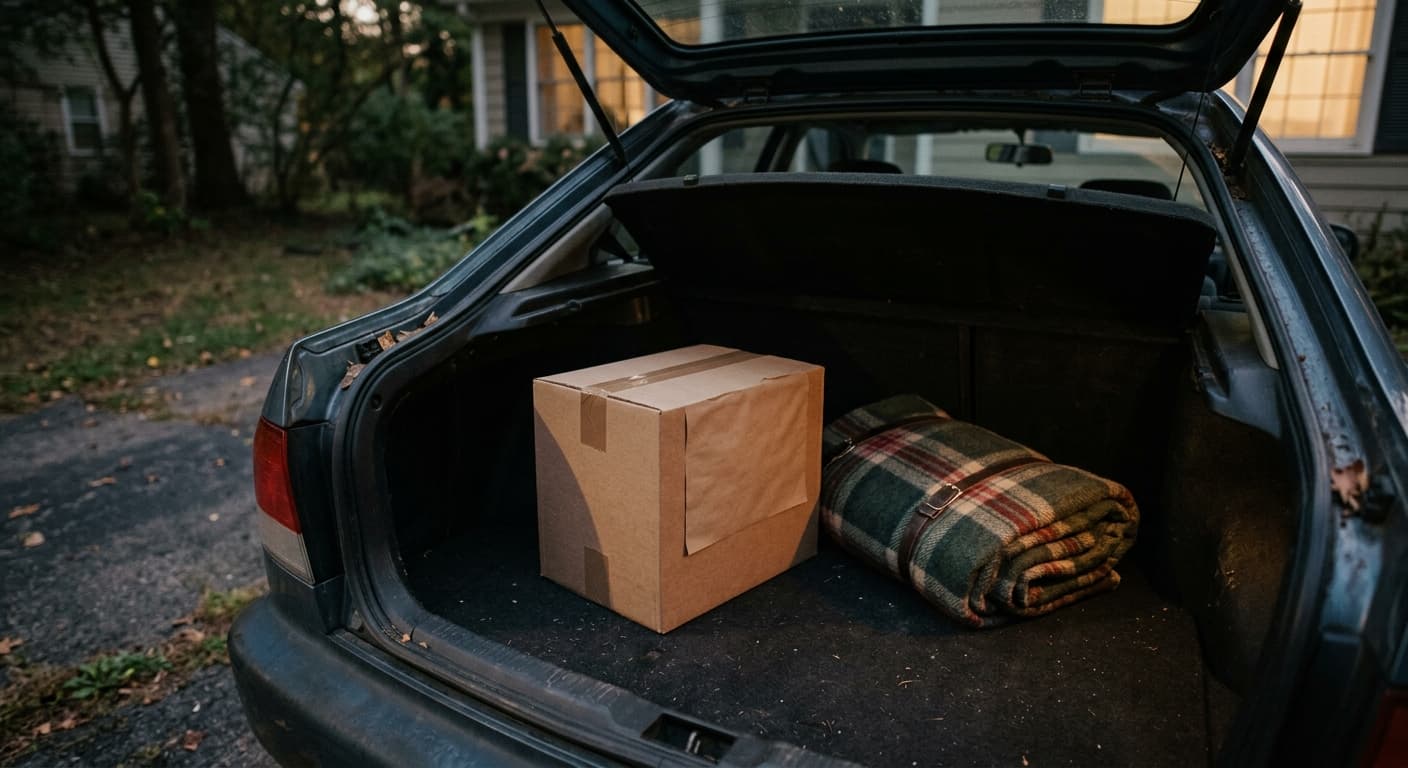
Maine makes the vehicle's operator liable, under 29-A M.R.S. § 2112-A, whenever the operator or a passenger in the passenger area possesses an open alcoholic beverage container or drinks alcohol there. As of September 2026, the exemption list and the statute's traffic-infraction status were confirmed against the state legislature's official statute site.
Jurisdiction scope: This article addresses Maine's state open container law, covering how 29-A M.R.S. § 2112-A treats the operator and passengers of a vehicle on a public way. It does not address OUI charges or boating rules. For the full 50-state comparison, see the open container laws hub; for Maine's separate OUI penalties, see Maine DUI laws.
What Maine's Open Container Law Prohibits
29-A M.R.S. § 2112-A(2), verbatim: "The operator of a vehicle on a public way is in violation of this section if the operator or a passenger in the passenger area of the vehicle: A. Consumes alcohol; or B. Possesses an open alcoholic beverage container." The person in violation is the operator, not the passenger: a passenger's drinking or possession in the passenger area is the conduct that triggers the offense, but the statute creates no separate liability for that passenger. So the driver can be cited for what a passenger does in the passenger area, even when the driver neither drank nor possessed anything. Section 2112-A(3) confirms this operator-only structure, phrasing every exception as "An operator of a vehicle is not in violation of this section if..."
What Counts as the "Passenger Area"
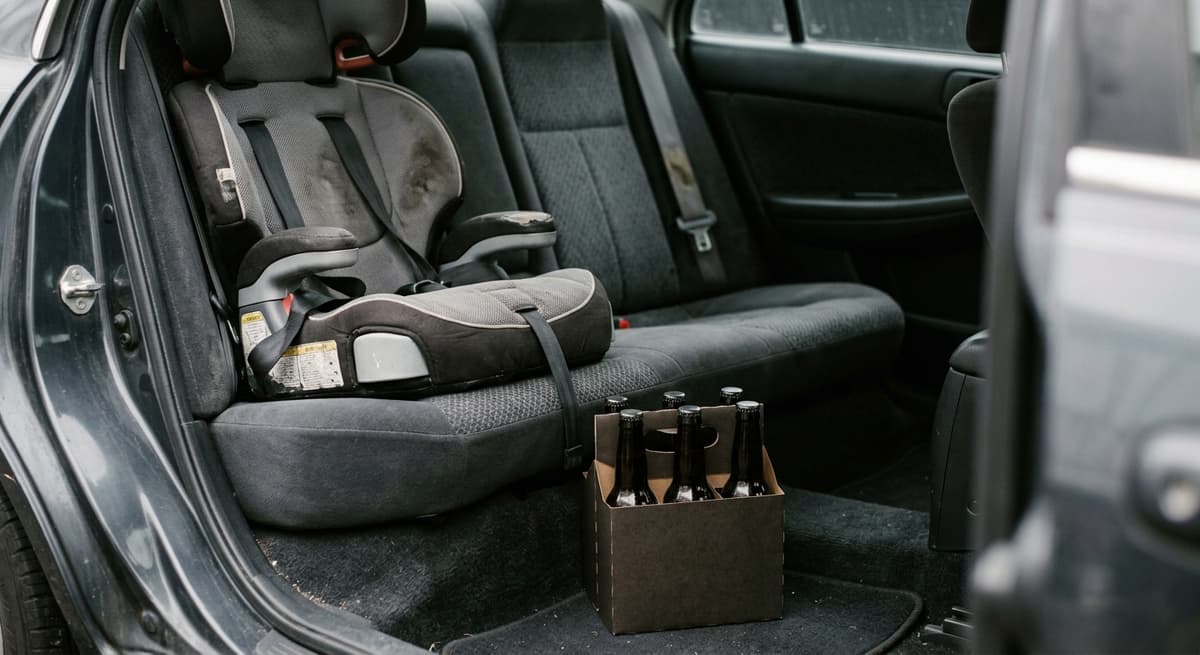
Maine's passenger area includes the glove compartment. That is a meaningful distinction from a handful of neighboring states in this dataset, whose statutes carve out a locked glove compartment as its own exemption; Maine's definitional clause for the passenger area does not state a comparable locked-glove-compartment exception. A reader should not assume that locking the glove box removes a container from Maine's passenger-area definition the way it does in some other states.
Exemptions
The statute exempts four situations:
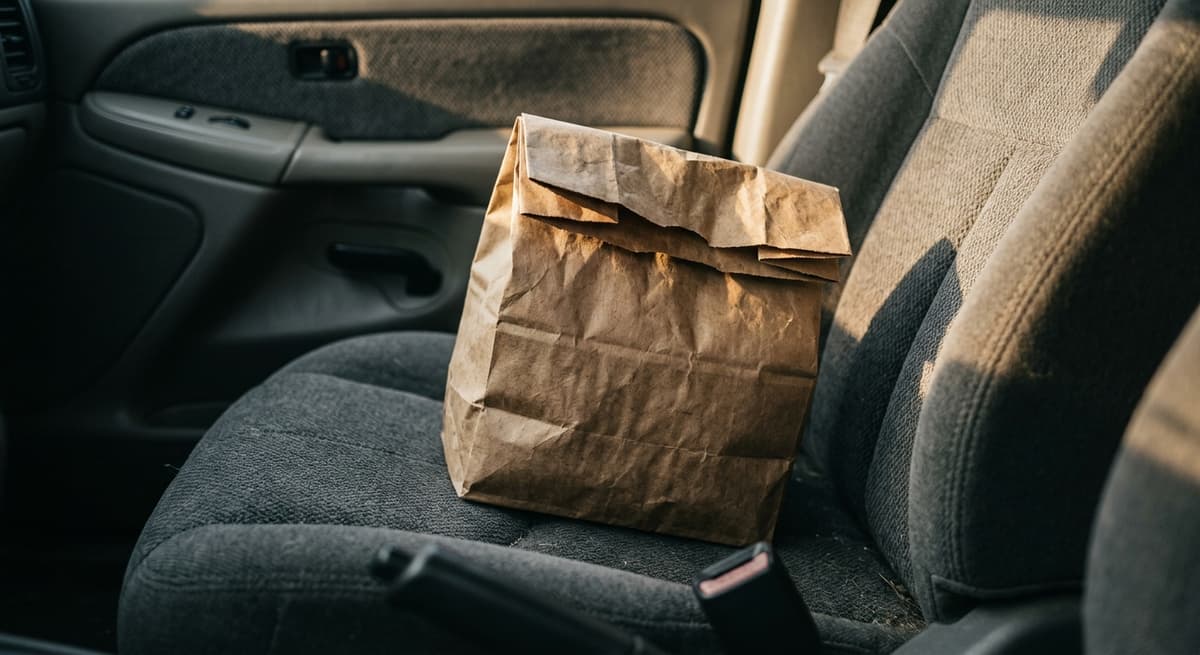
- Possession, but not consumption, behind the last upright seat, or in an area not normally occupied by the driver or passengers, in a vehicle with no trunk.
- A passenger transported for a fee in a for-hire vehicle, excluding a taxicab passenger.
- A passenger in the living quarters of a motor home, trailer, semitrailer, or truck camper.
- An operator or employer holding a valid off-premise catering license, while transporting alcohol to or from a catered event.
The first exemption is narrower than it might look: it covers possession only. Consumption behind the last seat in a trunkless vehicle is not exempted by this clause.
Penalty
A violation of 29-A M.R.S. § 2112-A is a traffic infraction, not a crime. Section 2112-A itself contains no penalty subsection; the penalty comes from two other sections of Title 29-A. 29-A M.R.S. § 104 provides: "Except as otherwise provided, a person who violates a provision of this Title commits a traffic infraction." And 29-A M.R.S. § 103 provides that "A traffic infraction is not a crime," that "the penalty for a traffic infraction may not be deemed for any purpose a penal or criminal punishment," and that "the exclusive penalty for a traffic infraction is a fine of not less than $25 nor more than $500, unless specifically authorized, or suspension of a license, or both." So a § 2112-A violation carries a fine of $25 to $500, or license suspension, or both, rather than a fixed dollar amount stated in § 2112-A itself.
Federal Compliance
Federal law, 23 U.S.C. § 154, conditions a share of a state's highway funding on having an open container law that bans both possession and consumption, covers the whole passenger area, reaches every occupant, and is primarily enforced. A state that falls short has 2.5 percent of certain federal highway apportionments reserved and redirected to highway safety programs, under FHWA's annual apportionment notice. Maine is on FHWA's list of non-conforming states for fiscal year 2026 (FHWA Notice N4510.905, dated October 1, 2025), and the notice lists Maine by name without stating a reason. This page's own reading, not a confirmed FHWA finding, is that because § 2112-A charges only the operator, even for a passenger's own drinking or possession, a passenger is never individually reached the way 23 CFR 1270.4(b)(4)'s "all occupants" element appears to require, which reaches more conduct than a typical driver-only state but fewer defendants. The specific compliance gap driving Maine's inclusion on that list was not resolved in this research, and this article presents that reading as an inference, not FHWA's stated reason.
Disclaimer: This article provides general legal information about open container laws in the United States as of September 2026. It is not legal advice. Open container statutes, exemptions, and penalties change; verify the current text of your state's law before relying on it, and consult a lawyer licensed in your state for advice about a specific situation.
Related articles:
Statutes cited reflect their in-force version as of 2026-09-16. Last updated: 2026-09-16.
Frequently Asked Questions
Is drinking alcohol as a passenger illegal in Maine?
The operator of the vehicle, not the passenger, is the one in violation. 29-A M.R.S. § 2112-A(2) states: "The operator of a vehicle on a public way is in violation of this section if the operator or a passenger in the passenger area of the vehicle...consumes alcohol." A passenger's drinking is the conduct that triggers the offense, but the statute cites the driver, not the passenger.
Is the glove compartment a safe place for an open container in Maine?
No. Maine's passenger-area definition includes the glove compartment, and the statute's definitional clause does not carry a locked-glove-compartment exemption the way some neighboring states' laws do.
What is the fine for an open container violation in Maine?
It is a traffic infraction, not a crime, under 29-A M.R.S. § 104 and § 103. Section 2112-A itself sets no dollar figure; § 103 fixes the exclusive penalty for a traffic infraction at a fine of $25 to $500, unless specifically authorized, or license suspension, or both.
Can a caterer transport alcohol in a vehicle in Maine?
Yes. An operator or employer holding a valid off-premise catering license is exempt while transporting alcohol to or from a catered event.
Why is Maine on the federal non-conforming open container list?
Maine appears on FHWA's FY2026 list of non-conforming states (Notice N4510.905), and the notice gives no reason for any state on it. This page's own reading is that because only the operator can be cited for a passenger's own drinking or possession, a passenger is never individually reached the way federal law's all-occupants element appears to require, which is a visible candidate for the gap, not a confirmed reason.
Updates
Independently fact-checked against the cited primary sources
Independently fact-checked against the cited primary sources
The Law Behind This Article
This article rests on the statutory provisions below, held in our own legal record and retrieved from the official source. Tap a section to read the operative text.
Maine Revised Statutes, Title 29-A: MOTOR VEHICLES AND TRAFFIC, Chapter 19: OPERATION
§ 2112-AOpen container; drinking in a vehicle prohibitedIn forcecited in 2 of our articles
1. Definitions. As used in this section, unless the context otherwise indicates, the following terms have the following meanings. A. "Alcohol" means spirituous, vinous, fermented or other alcoholic beverage, or combination of liquors and mixed liquors, intended for human consumption that contains more than 1/2 of 1% of alcohol by volume. [PL 1999, c. 293, §3 (NEW).] B. "Open alcoholic beverage container" means a bottle, can or other receptacle that contains any amount of alcohol, and that is open or has a broken seal, or the contents of which are partially removed. [PL 1999, c. 293, §3 (NEW).] C. "Passenger area" means the area designed to seat the operator and passengers while a motor vehicle is in operation and any area readily accessible to the operator or a passenger, including the glove compartment, while in their seating positions. [PL 1999, c. 293, §3 (NEW).] D. "Public way" means a way, including a right-of-way, owned and maintained by the State, a county or a municipality over which the general public has a right to pass. [PL 1999, c. 293, §3 (NEW).] 2. Violation.
Official text (excerpt) · last checked 2026-09-23 · Read the full text in our law library · Verify at legislature.maine.gov
Cited in 2 court opinions in our collectionLatest citing opinion in our collection: 2026
Opinions citing this section in our collection:
- State of Maine v. Joshua Martin (Supreme Judicial Court of Maine 2026, 2026 ME 24)“…lic way.” The court 6 See 29-A M.R.S. § 2112-A (2025): 2. Violation. The op…”
- United States v. Pugh (District Court, D. Maine 2002, 223 F. Supp. 2d 325)“…ly civil violations under Maine law. 22 M.R.S.A. § 2383(1); 29-A M.R.S.A. § 2112-A. No evidence was presented to suggest t…”
Identified automatically from the court opinions citing this section — not a ranking of which case controls.
Also relied on in: Open Container Laws by State (2026): Passengers, Exemptions, Penalties
Maine Revised Statutes, Title 29-A: MOTOR VEHICLES AND TRAFFIC, Chapter 1: GENERAL PROVISIONS
§ 103Traffic infractionIn forcecited in 2 of our articles
1. Traffic infraction. A traffic infraction is not a crime. The penalty for a traffic infraction may not be deemed for any purpose a penal or criminal punishment. 2. Jury trial. There is no right to trial by jury for a traffic infraction. 3. Exclusive penalty. The exclusive penalty for a traffic infraction is a fine of not less than $25 nor more than $500, unless specifically authorized, or suspension of a license, or both. 4. Standard of proof. The burden of proof that a traffic infraction has occurred is on the State and must be established by a standard of a preponderance of the evidence.
Official text (excerpt) · last checked 2026-07-30 · Read the full text in our law library · Verify at legislature.maine.gov
Cited in 11 court opinions in our collectionLatest citing opinion in our collection: 2025
Opinions citing this section in our collection:
- State v. LaPlante (Supreme Judicial Court of Maine 2011, 26 A.3d 337)“…posted speed limit. "A traffic infraction is not a crime.” 29-A M.R.S. § 103 (2010); but see 29-A M…”
- State v. Chittim (Supreme Judicial Court of Maine 2001, 775 A.2d 381)“…cifically authorized, or suspension of a license, or both.” 29-A M.R.S.A. § 103 (Supp.2000).…”
- State v. Chase (Supreme Judicial Court of Maine 2017, 157 A.3d 1291)“…ablished at trial by a preponderance of the evidence. See 29-A M.R.S. § 103(4) (2016); State v. Jeskey, 2016 ME…”
Identified automatically from the court opinions citing this section — not a ranking of which case controls.
§ 104Penalty for violation of provisions of TitleIn force
Except as otherwise provided, a person who violates a provision of this Title commits a traffic infraction. When a violation of this Title has a designated minimum sentence, the court may not suspend the sentence. [PL 1993, c. 683, Pt. A, §2 (NEW); PL 1993, c. 683, Pt. B, §5 (AFF).]
Official text (excerpt) · last checked 2026-07-30 · Read the full text in our law library · Verify at legislature.maine.gov
Cited in 1 court opinions in our collectionLatest citing opinion in our collection: 2021
Opinions citing this section in our collection:
- State of Maine v. Jusko (Superior Court of Maine 2021)“…violation of this section constitutes a traffic infraction. 29-A M.R.S. § 104 (in pertinent part). Finally, "if an of…”
Identified automatically from the court opinions citing this section — not a ranking of which case controls.
Code of Federal Regulations Title 23
§ 1270.4Compliance criteria.In forcecited in 20 of our articles
(a) To avoid the reservation of funds specified in § 1270.6, a State must enact and enforce an open container law that prohibits the possession of any open alcoholic beverage container, and the consumption of any alcoholic beverage, in the passenger area of any motor vehicle (including possession or consumption by the driver of the vehicle) located on a public highway, or the right-of-way of a public highway, in the State. (b) The law must apply to: (1) The possession of any open alcoholic beverage container and the consumption of any alcoholic beverage; (2) The passenger area of any motor vehicle; (3) All alcoholic beverages; (4) All occupants of a motor vehicle; and (5) All motor vehicles located on a public highway or the right-of-way of a public highway. (c) The law must provide for primary enforcement. (d) Exceptions.
Official text (excerpt) · last checked 2026-07-28 · Read the full text in our law library · Verify at ecfr.gov
Also relied on in: Alaska Open Container Law (2026): A Driver-Only Driving Offense, Arizona Open Container Law (2026): Possession and Drinking Both Banned, Arkansas Open Container Law (2026): Rules, Exemptions, and Penalty
United States Code Title 23
§ 154Open container requirementsIn forcecited in 46 of our articles
In this section, the following definitions apply: The term “alcoholic beverage” has the meaning given the term in section 158(c). The term “motor vehicle” means a vehicle driven or drawn by mechanical power and manufactured primarily for use on public highways, but does not include a vehicle operated exclusively on a rail or rails. The term “open alcoholic beverage container” means any bottle, can, or other receptacle— that contains any amount of alcoholic beverage; and that is open or has a broken seal; or the contents of which are partially removed. The term “passenger area” shall have the meaning given the term by the Secretary by regulation. For the purposes of this section, each State shall have in effect a law that prohibits the possession of any open alcoholic beverage container, or the consumption of any alcoholic beverage, in the passenger area of any motor vehicle (including possession or consumption by the driver of the vehicle) located on a public highway, or the right-of-way of a public highway, in the State.
Official text (excerpt) · last checked 2026-09-23 · Read the full text in our law library · Verify at uscode.house.gov
Cited in 20 court opinions in our collectionLatest citing opinion in our collection: 2004
Opinions citing this section in our collection:
- Foremost Insurance v. Richardson (Supreme Court of the United States 1982, 457 U.S. 668)“…er traffic, just as it has done for some land traffic. See 23 U. S. C. § 154 (55 m.p.h. speed limit). Yet no one su…”
- United States v. Kevin Bishop, United States of America v. Edward Stokes (Court of Appeals for the Third Circuit 1995, 66 F.3d 569)“…nder the Spending Clause, not the Commerce Clause. See 23 U.S.C. § 154 (Supp.1995) (conditioning receipt of f…”
- Mrs. Lizzie Beatrice Easterwood v. Csx Transportation, Inc. (Court of Appeals for the Eleventh Circuit 1991, 933 F.2d 1548)“…ce with the national highway speed limit. See 23 U.S.C.A. § 154 (1990). Easterwood argues that an auto…”
Identified automatically from the court opinions citing this section — not a ranking of which case controls.
Also relied on in: Alabama Open Container Law (2026): The $25 Fine and No-Points Rule, California Open Container Law (2026): The Full Rule, Colorado Open Container Law (2026): Statute and Penalty
Search our full record of US law — 2.1 million sections, every state + federal →
Sources and References
- 29-A M.R.S. § 2112-A - Possessing or consuming alcoholic beverages in a motor vehicle(legislature.maine.gov).gov
- 29-A M.R.S. § 104 - Traffic infraction, generally(legislature.maine.gov).gov
- 29-A M.R.S. § 103 - Traffic infraction is not a crime; exclusive penalty $25-$500 fine or license suspension, or both(legislature.maine.gov).gov
- 23 U.S.C. § 154(a) - Open container requirements(law.cornell.edu)
- FHWA Notice N4510.905 - FY2026 Apportionment of Federal-Aid Highway Program Funds (open container non-conforming states list)(highways.dot.gov).gov