
Iowa
Iowa Open Container Law (2026): Rules, THC, Penalties
Independently fact-checked against primary sources (last audited September 17, 2026). · 4 primary sources cited on this page. How we verify our legal content
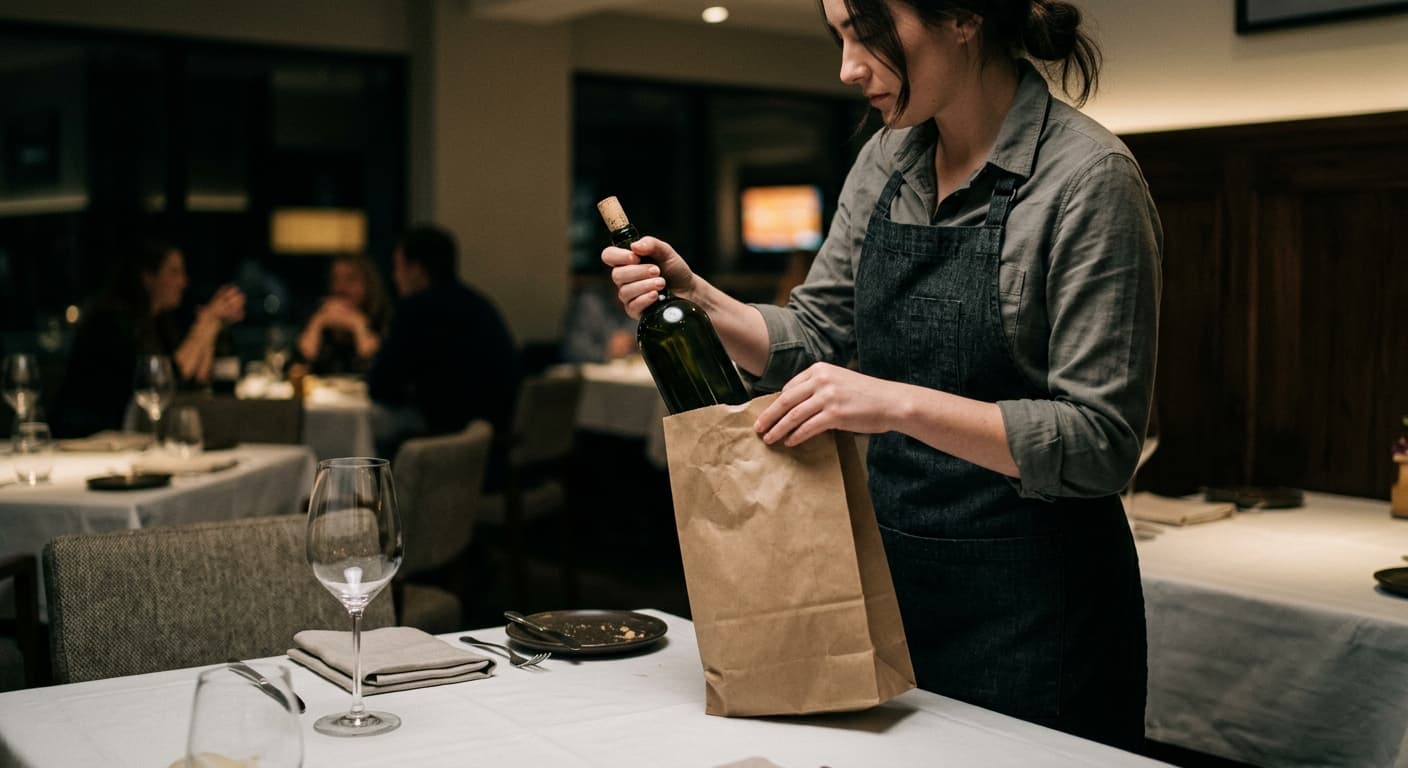
As of September 2026, Iowa law bans possessing an unsealed container of alcohol, or, since a 2025 amendment, a container of a THC beverage, in the passenger area of a motor vehicle, under a pair of statutes: Iowa Code § 321.284 for the driver and § 321.284A for passengers.
Jurisdiction scope: This article addresses Iowa's statewide open container law for motor vehicles under Iowa Code §§ 321.284 and 321.284A, the 2025 THC-beverage amendment, and the federal framework in 23 U.S.C. § 154. It does not address Iowa's OWI statute, cannabis possession law generally, or local ordinances.
Two Statutes: One for the Driver, One for Passengers
Iowa's open container law is not a single section. Iowa Code § 321.284 addresses the vehicle's operator, while § 321.284A addresses passengers. Both ban possessing, in the passenger area of a motor vehicle, an open or unsealed bottle, can, jar, or other receptacle. Reading only one of the two sections gives an incomplete picture: the driver's obligations and the passenger's obligations are set out separately, even though the underlying prohibition, an unsealed container in the passenger area, is the same for both.
A Possession Ban, and a Separate Highway Consumption Rule
Iowa's open container statutes ban possession of an unsealed container. Neither § 321.284 nor § 321.284A separately criminalizes the act of drinking as its own offense distinct from that possession rule, and in practice the statute is triggered by having the opened container in the passenger area, whether or not anyone has actually taken a drink from it. The enacted text of § 321.284A does not itself cross-reference chapter 123; rather, the official Iowa Code prints an editor's annotation beneath § 321.284A's act history pointing to Iowa Code § 123.46 generally, a finding aid rather than statutory language. Section 123.46(2) states: "A person shall not use or consume alcoholic liquor, wine, or beer upon the public streets or highways." Whether drinking inside a vehicle on a highway falls within that clause is not resolved by the statutory text alone, so a reader should not treat Iowa's open container sections as the state's only rule touching consumption in a vehicle.
The 2025 THC-Beverage Amendment
Effective July 1, 2025, 2025 Iowa Acts ch. 9 (HF181) added any beverage containing THC to the list of containers covered by both § 321.284 and § 321.284A, alongside alcohol. This confirms that Iowa's open container rule now reaches a THC beverage the same way it reaches beer, wine, or liquor: an unsealed THC-beverage container in the passenger area is treated the same as an unsealed alcohol container for purposes of this law. This finding is drawn from the current codified statute text, which already incorporates the 2025 change, rather than from a bill-tracking page.
Exemptions
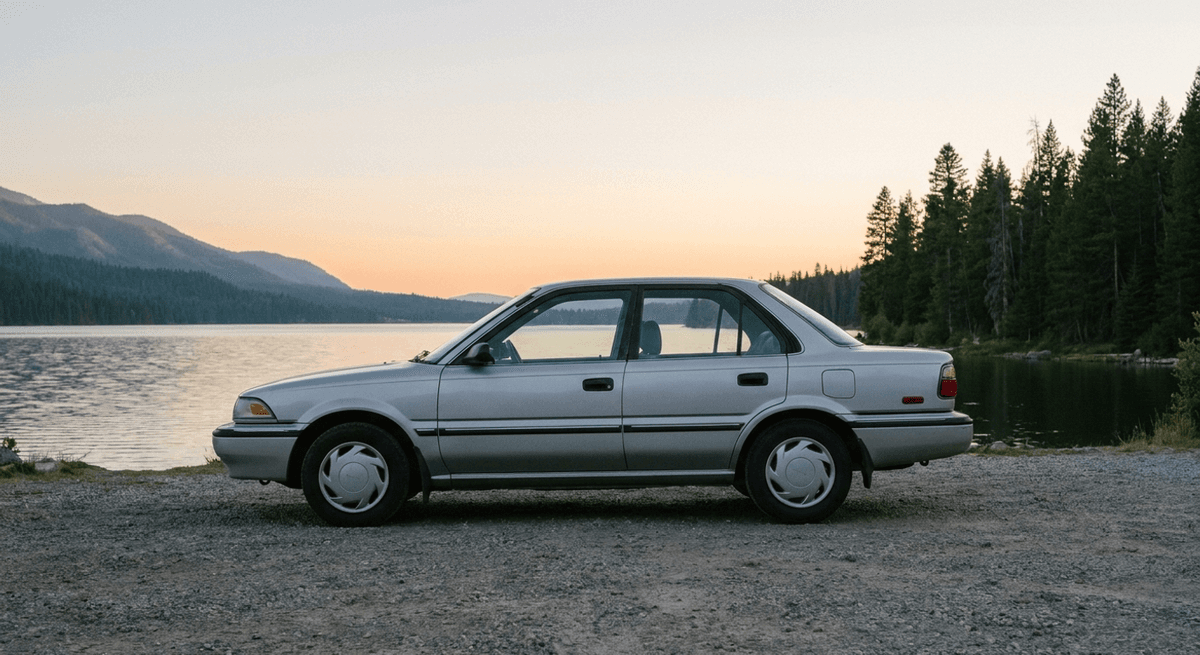
Both sections permit an open or unsealed container to be stored in the trunk, or, in a vehicle without a trunk, an unsealed container behind the last upright seat. Iowa's statutory text lists only those two storage spots; it does not include a broader carve-out for an area "not normally occupied" by the driver or passengers. Under § 321.284A specifically, a passenger, but not the driver, may possess an unsealed container in a for-hire vehicle, or in the living quarters of a motor home, motorsports RV, manufactured or mobile home, travel trailer, or fifth-wheel travel trailer. Separately, Iowa Code § 123.49(2)(d)(3) exempts a mixed drink or cocktail that is mixed on the premises under a class "C" or special class "C" retail alcohol license, or a special class "C" retail native wine license, and immediately filled into a sealed container to go: that container "shall not be deemed an open container subject to the requirements of sections 321.284 and 321.284A if the sealed container is unopened and the seal has not been tampered with, and the contents of the container have not been partially removed." This is a licensed cocktails-to-go rule, not a general tamper-evident-container exemption available to any sealed drink.
One detail worth flagging on its own: Iowa's passenger area expressly includes the glove compartment. That is a meaningful contrast with some neighboring states, which carve out a locked glove compartment as an acceptable place to store an unsealed container. In Iowa, putting an open container in the glove compartment does not take it out of the passenger area.
Penalties
A violation of § 321.284 or § 321.284A is a simple misdemeanor, but it is punished as a fine-only scheduled violation under Iowa Code § 805.8A(14)(e), meaning there is no jail exposure tied to a standard violation of this specific offense. A violator under 21 faces an additional consequence: they are also guilty of underage possession of alcohol under Iowa Code § 123.47, a separate statute with its own penalty.
How Iowa's Law Fits the Federal Rule
Federal law, 23 U.S.C. § 154, conditions a portion of each state's highway funding on maintaining an open container law that meets minimum federal standards under 23 CFR § 1270.4: a ban on both possession and consumption, covering the driver and all passengers, on public highways, with primary enforcement, while still permitting the trunk, locked-container, for-hire vehicle, and motorhome exemptions the federal rule allows, not all of which Iowa uses (Iowa's own exemption list does not include a locked-container safe harbor; its passenger area expressly includes the glove compartment). A state without a compliant law has 2.5 percent of certain federal highway funds reserved rather than released for ordinary use.
FHWA's FY2026 apportionment notice (Notice N4510.905, dated October 1, 2025) lists 12 states as non-conforming: Alaska, Connecticut, Delaware, Hawaii, Louisiana, Maine, Mississippi, Missouri, Ohio, Tennessee, Virginia, and Wyoming. Iowa is not one of them. That absence from the list means Iowa's law was not flagged as non-conforming in the FY2026 notice; it is not the same thing as an independent, per-state federal certification of every detail of the statute, including how its possession-only structure squares with the federal consumption element.
Disclaimer: This article provides general legal information about open container laws in the United States as of September 2026. It is not legal advice. Open container statutes, exemptions, and penalties change; verify the current text of your state's law before relying on it, and consult a lawyer licensed in your state for advice about a specific situation.
For the federal framework and how every state compares, see the open container laws by state hub. Related reading: Iowa DUI laws and Iowa window tint laws.
Statutes cited reflect their in-force version as of 2026-09-16. Last updated: 2026-09-16.
Frequently Asked Questions
Can you have an open container in the glove compartment in Iowa?
No. Iowa's passenger area expressly includes the glove compartment, unlike some neighboring states that treat a locked glove compartment as safe storage. Store an unsealed container in the trunk instead.
Does Iowa's open container law cover THC beverages?
Yes, since a 2025 amendment (2025 Iowa Acts ch. 9, HF181, effective July 1, 2025), both Iowa Code § 321.284 and § 321.284A cover any beverage containing THC the same way they cover alcohol.
Is it illegal to drink alcohol in a car in Iowa if the container stays sealed?
Iowa Code §§ 321.284 and 321.284A ban possession of an unsealed container in the passenger area; they do not separately criminalize drinking as their own offense apart from that possession rule. The Iowa Code does print an editorial cross-reference under § 321.284A to Iowa Code § 123.46, which in subsection (2) bars consuming alcoholic liquor, wine, or beer on public streets or highways, and whether that reaches drinking inside a moving vehicle is not settled by the text alone.
What happens if a minor is caught with an open container in Iowa?
A minor faces the standard fine-only scheduled violation for the open container offense, and is also separately guilty of underage possession of alcohol under Iowa Code § 123.47.
Updates
Corrected the description of the containers Iowa bans to match the statute's "open or unsealed" wording, and corrected the name of the native wine license in the cocktails-to-go exemption.
Independently fact-checked against the cited primary sources
The Law Behind This Article
This article rests on the statutory provisions below, held in our own legal record and retrieved from the official source. Tap a section to read the operative text.
Iowa Code, Chapter 321: MOTOR VEHICLES AND LAW OF THE ROAD
§ 321.284Open containers in motor vehicles — drivers.In force
1. A person operating a motor vehicle upon a public street or highway shall not possess in the passenger area of the motor vehicle an open or unsealed bottle, can, jar, or other receptacle containing an alcoholic beverage or a beverage containing any amount of tetrahydrocannabinol. “Passenger area” means the area designed to seat the driver and passengers while the motor vehicle is in operation and any area that is readily accessible to the driver or a passenger while in their seating positions, including the glove compartment. An open or unsealed receptacle containing an alcoholic beverage or an otherwise lawful beverage containing tetrahydrocannabinol may be transported in the trunk of the motor vehicle. An unsealed receptacle containing an alcoholic beverage or an otherwise lawful beverage containing tetrahydrocannabinol may be transported behind the last upright seat of the motor vehicle if the motor vehicle does not have a trunk. A person convicted of a violation of this section is guilty of a simple misdemeanor punishable as a scheduled violation under section 805.8A, subsection 14, paragraph “e”. 2.
Official text (excerpt) · last checked 2026-09-23 · Read the full text in our law library · Verify at legis.iowa.gov
§ 321.284AOpen containers in motor vehicles — passengers.In force
1. A passenger in a motor vehicle upon a public street or highway shall not possess in the passenger area of the motor vehicle an open or unsealed bottle, can, jar, or other receptacle containing an alcoholic beverage or a beverage containing any amount of tetrahydrocannabinol. “Passenger area” means the area of a motor vehicle designed to seat the driver and passengers while the motor vehicle is in operation and any area that is readily accessible to the driver or a passenger while in their seating positions, including the glove compartment. An open or unsealed receptacle containing an alcoholic beverage or an otherwise lawful beverage containing tetrahydrocannabinol may be transported in the trunk of the motor vehicle. An unsealed receptacle containing an alcoholic beverage or an otherwise lawful beverage containing tetrahydrocannabinol may be transported behind the last upright seat of the motor vehicle if the motor vehicle does not have a trunk. 2.
Official text (excerpt) · last checked 2026-07-29 · Read the full text in our law library · Verify at legis.iowa.gov
Cited in 2 court opinions in our collectionLatest citing opinion in our collection: 2022
Opinions citing this section in our collection:
- State of Iowa v. Ezekial Cortez Phillips Jr. (Court of Appeals of Iowa 2016)“…dant’s passenger seat, he witnessed an ongoing violation of Iowa Code section 321.284A.” Officer Nissen did not state he made…”
- State of Iowa v. Myranda Marie Rincon (Supreme Court of Iowa 2022)“…jar, or other receptacle containing an alcoholic beverage.” Iowa Code section 321.284A(1) provides, “A passenger in a motor ve…”
Identified automatically from the court opinions citing this section — not a ranking of which case controls.
Iowa Code, Chapter 123: ALCOHOLIC BEVERAGE CONTROL
§ 123.46Consumption or intoxication in public places — notifications — chemical tests — expungement.In force
1. As used in this section unless the context otherwise requires: a. “Arrest” means the same as defined in section 804.5 and includes taking into custody pursuant to section 232.19. b. “Chemical test” means a test of a person’s blood, breath, or urine to determine the percentage of alcohol present by a qualified person using devices and methods approved by the commissioner of public safety. c. “Peace officer” means the same as defined in section 801.4. 2. A person shall not use or consume alcoholic liquor, wine, or beer upon the public streets or highways. A person shall not use or consume alcoholic liquor in any public place except premises covered by a retail alcohol license. A person shall not possess or consume alcoholic liquors, wine, or beer on public school property or while attending a public or private school-related function. A person shall not be intoxicated in a public place. A person violating this subsection is guilty of a simple misdemeanor. 3. A person shall not simulate intoxication in a public place. A person violating this subsection is guilty of a simple misdemeanor. 4.
Official text (excerpt) · last checked 2026-07-29 · Read the full text in our law library · Verify at legis.iowa.gov
Cited in 32 court opinions in our collectionLatest citing opinion in our collection: 2022
Opinions citing this section in our collection:
- State of Iowa v. Patience Paye (Supreme Court of Iowa 2015, 865 N.W.2d 1)“…State v. Booth, 670 N.W.2d 209, 215–16 (Iowa 2003); see Iowa Code § 123.46(2) (2013) (“A person shall not be into…”
- State v. Lake (Supreme Court of Iowa 1991, 476 N.W.2d 55)“…t, she was charged with public intoxication in violation of Iowa Code section 123.46 (1989). The public intoxication charg…”
- State v. Allen (Supreme Court of Iowa 2005, 690 N.W.2d 684)“…intoxication, an aggravated misdemeanor. See Iowa Code §§ 123.46 (2), .91 (2003). 1 Allen d…”
Identified automatically from the court opinions citing this section — not a ranking of which case controls.
§ 123.47Persons under eighteen years of age, persons eighteen, nineteen, or twenty years of age, and persons twenty-one years of age and older.In force
1. A person shall not sell, give, or otherwise supply any alcoholic beverage to any person knowing or having reasonable cause to believe that person to be under legal age. 2. a. Except for the purposes described in subsection 3, a person who is the owner or lessee of, or who otherwise has control over, property that is not a licensed premises, shall not knowingly permit any person, knowing or having reasonable cause to believe the person to be under the age of eighteen, to consume or possess on such property any alcoholic beverage. b. A person who violates this subsection commits the following: (1) For a first offense, a simple misdemeanor punishable as a scheduled violation under section 805.8C, subsection 8. (2) For a second or subsequent offense, a simple misdemeanor punishable by a fine of five hundred dollars. c. This subsection shall not apply to any of the following: (1) A landlord or manager of the property. (2) A person under legal age who consumes or possesses any alcoholic beverage in connection with a religious observance, ceremony, or rite. 3.
Official text (excerpt) · last checked 2026-07-29 · Read the full text in our law library · Verify at legis.iowa.gov
Cited in 38 court opinions in our collectionLatest citing opinion in our collection: 2022
Opinions citing this section in our collection:
- State v. Rohm (Supreme Court of Iowa 2000, 609 N.W.2d 504)“…s alcoholic liquor, wine, or beer" to an underaged person. Iowa Code § 123.47 (4) (Supp.1997). The crime is elevated…”
- De More by De More v. Dieters (Supreme Court of Iowa 1983, 334 N.W.2d 734)“…The first three certified questions relate directly to Iowa Code section 123.47 which provides: No person shall…”
- Bauer v. Dann (Supreme Court of Iowa 1988, 428 N.W.2d 658)“…hed beer to Dann, a person under legal age, in violation of Iowa Code section 123.47 (1981), and that this act was a proxima…”
Identified automatically from the court opinions citing this section — not a ranking of which case controls.
§ 123.49Miscellaneous prohibitions.In force
1. A person shall not sell, dispense, or give to an intoxicated person, or one simulating intoxication, any alcoholic beverage. a. A person other than a person required to hold a license or permit under this chapter who dispenses or gives an alcoholic beverage in violation of this subsection is not civilly liable to an injured person or the estate of a person for injuries inflicted on that person as a result of intoxication by the consumer of the alcoholic beverage. b. The general assembly declares that this subsection shall be interpreted so that the holding of Clark v. Mincks, 364 N.W.2d 226 (Iowa 1985) is abrogated in favor of prior judicial interpretation finding the consumption of alcoholic beverages rather than the serving of alcoholic beverages as the proximate cause of injury inflicted upon another by an intoxicated person. 2. A person holding a retail alcohol license under this chapter, and the person’s agents or employees, shall not do any of the following: a.
Official text (excerpt) · last checked 2026-07-29 · Read the full text in our law library · Verify at legis.iowa.gov
Cited in 33 court opinions in our collectionLatest citing opinion in our collection: 2026
Opinions citing this section in our collection:
- Kelly v. Sinclair Oil Corp. (Supreme Court of Iowa 1991, 476 N.W.2d 341)“…it has had ample opportunity to indicate as much. Cf Iowa Code § 123.49 (1) (1987), overruling Clark v. Mincks…”
- Haafke v. Mitchell (Supreme Court of Iowa 1984, 347 N.W.2d 381)“…wanton and malicious" and was illegal under two statutes, Iowa Code section 123.49(1) (sale to intoxicated persons) and se…”
- Fuhrman v. Total Petroleum, Inc. (Supreme Court of Iowa 1987, 398 N.W.2d 807)“…onable cause to believe that person to be under legal age.” Iowa Code section 123.49(1) likewise provides that “[n]o person…”
Identified automatically from the court opinions citing this section — not a ranking of which case controls.
Iowa Code, Chapter 805: CITATIONS IN LIEU OF ARREST
§ 805.8AMotor vehicle and transportation scheduled violations.In forcecited in 6 of our articles
1. Parking violations. a. For parking violations under sections 321.236, 321.239, 321.358, 321.360, and 321.361, the scheduled fine is five dollars, except if the local authority has established the fine by ordinance. The scheduled fine for a parking violation pursuant to section 321.236 increases by five dollars if authorized by ordinance and if the parking violation is not paid within thirty days of the date upon which the violation occurred. For purposes of calculating the unsecured appearance bond required under section 805.6, the scheduled fine shall be five dollars, or if the amount of the fine is greater than five dollars, the unsecured appearance bond shall be the amount of the fine established by the local authority. However, violations charged by a city or county upon simple notice of a fine instead of a uniform citation and complaint required by section 321.236, subsection 1, paragraph “b”, are not scheduled violations, and this section shall not apply to any offense charged in that manner. For a parking violation under section 461A.38, the scheduled fine is ten dollars. For a parking violation under section 321.362, the scheduled fine is twenty dollars. b.
Official text (excerpt) · last checked 2026-07-29 · Read the full text in our law library · Verify at legis.iowa.gov
Cited in 5 court opinions in our collectionLatest citing opinion in our collection: 2024
Opinions citing this section in our collection:
- City of Davenport v. Seymour (Supreme Court of Iowa 2008, 755 N.W.2d 533)“…e road established in Iowa Code chapter 321. Id. § 805.6. Iowa Code section 805.8A establishes a schedule of fines for suc…”
- State of Iowa v. Richard Eugene Noll (Court of Appeals of Iowa 2024)“…e arguments. 6 Iowa Code § 805.8A(2)(f), (3)(l) (designating a violation…”
- State of Iowa v. Jasmaine R. Warren (Court of Appeals of Iowa 2020)“…izes her violation was a completed parking infraction. See Iowa Code § 805.8A(1)(a) (classifying parking violations u…”
Identified automatically from the court opinions citing this section — not a ranking of which case controls.
Also relied on in: Iowa Windshield Mounting Laws (2026 Guide), Iowa Hit and Run Laws: Penalties and What to Do, Iowa E-Scooter Laws: Sidewalk, Helmet & Age Rules (2026)
Code of Federal Regulations Title 23
§ 1270.4Compliance criteria.In forcecited in 20 of our articles
(a) To avoid the reservation of funds specified in § 1270.6, a State must enact and enforce an open container law that prohibits the possession of any open alcoholic beverage container, and the consumption of any alcoholic beverage, in the passenger area of any motor vehicle (including possession or consumption by the driver of the vehicle) located on a public highway, or the right-of-way of a public highway, in the State. (b) The law must apply to: (1) The possession of any open alcoholic beverage container and the consumption of any alcoholic beverage; (2) The passenger area of any motor vehicle; (3) All alcoholic beverages; (4) All occupants of a motor vehicle; and (5) All motor vehicles located on a public highway or the right-of-way of a public highway. (c) The law must provide for primary enforcement. (d) Exceptions.
Official text (excerpt) · last checked 2026-07-28 · Read the full text in our law library · Verify at ecfr.gov
Also relied on in: Maine Open Container Law (2026): Statute and Exemptions, Open Container Laws by State (2026): Passengers, Exemptions, Penalties, Alaska Open Container Law (2026): A Driver-Only Driving Offense
United States Code Title 23
§ 154Open container requirementsIn forcecited in 46 of our articles
In this section, the following definitions apply: The term “alcoholic beverage” has the meaning given the term in section 158(c). The term “motor vehicle” means a vehicle driven or drawn by mechanical power and manufactured primarily for use on public highways, but does not include a vehicle operated exclusively on a rail or rails. The term “open alcoholic beverage container” means any bottle, can, or other receptacle— that contains any amount of alcoholic beverage; and that is open or has a broken seal; or the contents of which are partially removed. The term “passenger area” shall have the meaning given the term by the Secretary by regulation. For the purposes of this section, each State shall have in effect a law that prohibits the possession of any open alcoholic beverage container, or the consumption of any alcoholic beverage, in the passenger area of any motor vehicle (including possession or consumption by the driver of the vehicle) located on a public highway, or the right-of-way of a public highway, in the State.
Official text (excerpt) · last checked 2026-09-23 · Read the full text in our law library · Verify at uscode.house.gov
Cited in 20 court opinions in our collectionLatest citing opinion in our collection: 2004
Opinions citing this section in our collection:
- Foremost Insurance v. Richardson (Supreme Court of the United States 1982, 457 U.S. 668)“…er traffic, just as it has done for some land traffic. See 23 U. S. C. § 154 (55 m.p.h. speed limit). Yet no one su…”
- United States v. Kevin Bishop, United States of America v. Edward Stokes (Court of Appeals for the Third Circuit 1995, 66 F.3d 569)“…nder the Spending Clause, not the Commerce Clause. See 23 U.S.C. § 154 (Supp.1995) (conditioning receipt of f…”
- Mrs. Lizzie Beatrice Easterwood v. Csx Transportation, Inc. (Court of Appeals for the Eleventh Circuit 1991, 933 F.2d 1548)“…ce with the national highway speed limit. See 23 U.S.C.A. § 154 (1990). Easterwood argues that an auto…”
Identified automatically from the court opinions citing this section — not a ranking of which case controls.
Also relied on in: Alabama Open Container Law (2026): The $25 Fine and No-Points Rule, Arkansas Open Container Law (2026): Rules, Exemptions, and Penalty, California Open Container Law (2026): The Full Rule
Search our full record of US law — 2.1 million sections, every state + federal →
Sources and References
- Iowa Code §§ 321.284 (driver) and 321.284A (passenger), open container prohibition and exemptions, including the 2025 THC-beverage amendment(legis.iowa.gov).gov
- Iowa Code § 123.46(2), public streets/highways alcohol consumption ban cross-referenced from § 321.284A(legis.iowa.gov).gov
- Iowa Code § 123.49(2)(d)(3), licensed cocktails-to-go sealed-container exemption(legis.iowa.gov).gov
- 23 U.S.C. § 154(a), federal open container law requirements for state highway funding(law.cornell.edu)
- 23 CFR § 1270.4, federal compliance criteria and permitted state exemptions(law.cornell.edu)
- FHWA Notice N4510.905, FY2026 Apportionment of Federal-Aid Highway Program Funds (non-conforming state list, dated 2025-10-01)(highways.dot.gov).gov
- Iowa Code § 321.284, open containers in motor vehicles (drivers)(legis.iowa.gov)
- Iowa Code § 321.284A, open containers in motor vehicles (passengers)(legis.iowa.gov)
- Iowa Code § 123.49(2)(d)(3), sealed mixed drinks and cocktails to go(legis.iowa.gov)