
Nebraska
Nebraska Nursing Home Camera Laws: No Statute, One-Party Consent
Independently fact-checked against primary sources (last audited August 14, 2026). · 5 primary sources cited on this page. How we verify our legal content
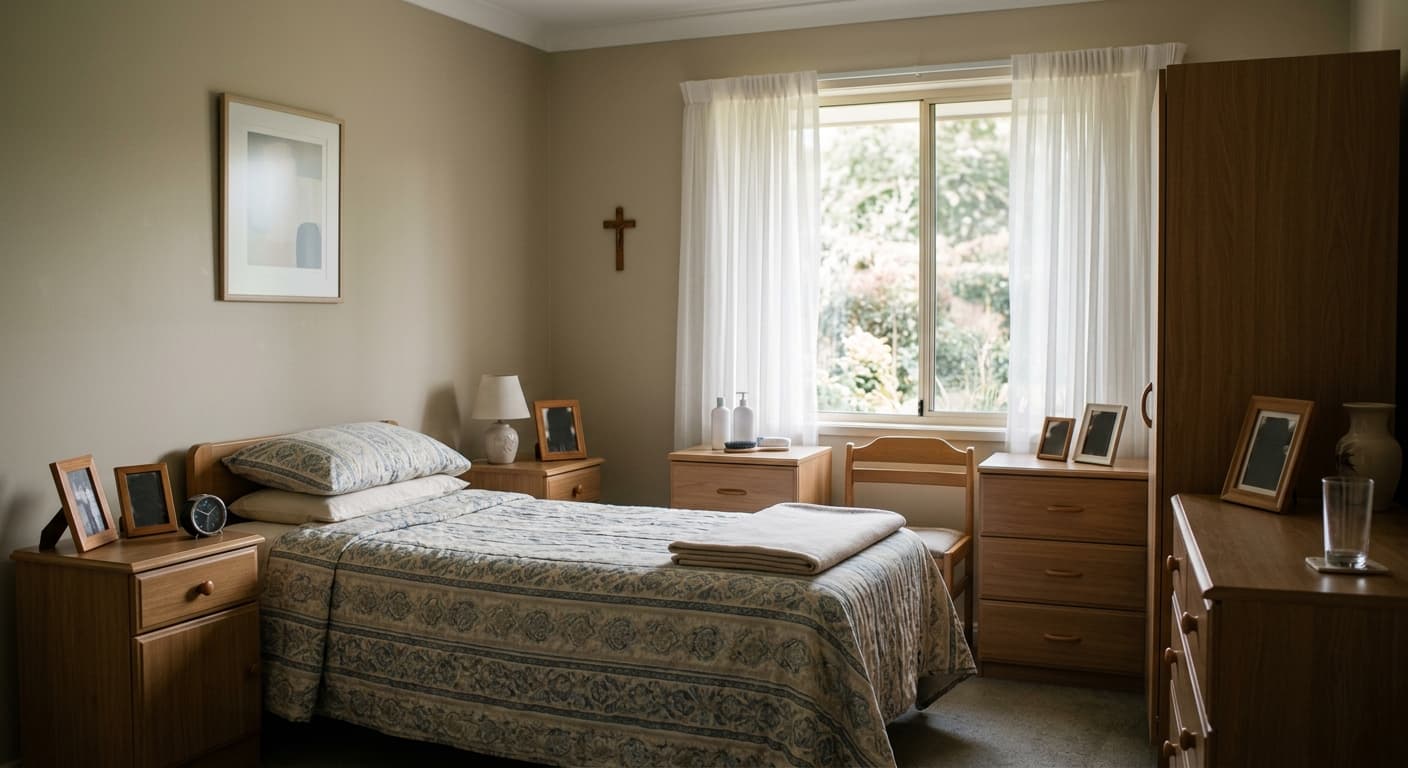
Nebraska has no statute or rule giving a nursing home resident or family a right to install a camera in a resident's room. This article covers what a full search of Nebraska's licensing law found, the general recording law that applies instead, and where to turn if a facility interferes.
This page addresses Nebraska specifically. For the 18 states with an enacted electronic-monitoring statute, see the nursing home camera laws hub and the state-by-state comparison.
Does Nebraska Have a Nursing Home Camera Law?
No. Nebraska's Health Care Facility Licensure Act, Neb. Rev. Stat. Sections 71-401 through 71-476, was reviewed in full using the state's own compiled statutory text, and contains no provision on cameras or electronic monitoring. The Act's privacy-related language, which appears in the assisted-living administrator-discretion section, mentions privacy only as a general value the administrator must respect, never extending to monitoring devices.
175 Neb. Admin. Code Chapter 12, the operative administrative code for skilled nursing, nursing, and intermediate care facility resident rights and standards, was also reviewed in full, including its resident-rights sections on telephone privacy, personal possessions, and resident councils. It has no camera or electronic-monitoring content either. A targeted search of the Nebraska Legislature's own Advanced Keyword Search tool for "nursing home camera" across the 108th and 109th Legislatures returned only an unrelated omnibus appropriations bill that happened to contain both words in different budget lines. A broader search for "electronic monitoring" traced entirely to criminal-justice GPS monitoring and telehealth licensure provisions, not a nursing-home right.
Nebraska's Recording and Consent Law: What Applies to a Camera
With no nursing-home-specific statute, the general recording-consent law governs a camera installed without the facility's agreement. Nebraska is a one-party consent state under Neb. Rev. Stat. Section 86-290(2)(c): a participant in a conversation may record it without telling the others, losing that protection only if the recording is made to commit a criminal or tortious act.

A separate statute, Section 28-311.08, is the provision that matters most for a camera pointed at a bed, and it reaches further than the bathroom-and-locker-room framing it is often given. Subsection (2) makes it a Class IV felony to knowingly and intentionally record an image or video of another person's intimate area without that person's knowledge and consent, when the intimate area would not be generally visible to the public, and it applies by its own terms regardless of whether that person is located in a public or private place. There is no place limitation in that subsection at all, so a resident's own bedroom is within it.
Subsection (1) is the second exposure, and it is the one most directly on point. It makes it a Class I misdemeanor, and a Class IV felony on a second or subsequent violation, to knowingly intrude upon another person without that person's consent in a place of solitude or seclusion. The statute defines intrude to include recording another person in a state of undress by video, photographic, digital, or other electronic means. It defines a place of solitude or seclusion as a place where a person would intend to be in a state of undress and have a reasonable expectation of privacy, including, but not limited to, a restroom, tanning booth, locker room, shower room, fitting room, or dressing room. That list is expressly not exhaustive, and a nursing home room where a resident is changed, bathed, or toileted fits the definition on its own terms. The restroom and locker room list belongs to this definition; it is not a limit on the felony in subsection (2).
Neither provision is specific to long-term care, and neither carries a monitoring exception for a worried family. What takes a camera outside both is consent from the person being recorded, which is why disclosure matters so much here. See our Nebraska recording laws guide for the full framework.
Facility Policy Decides Whether a Camera Is Allowed
Because no Nebraska statute grants a resident a right to a camera, the facility's admission agreement is what actually governs day to day. A facility can permit a camera, condition it on notice, or prohibit one outright as a matter of its own contract terms. Federal nursing home rules under 42 CFR 483.10 protect resident privacy and dignity broadly but say nothing about cameras, so no federal law fills the gap either.
The Practical Risk of a Hidden Camera
A family considering a camera without anyone's knowledge is taking a real criminal risk, not a theoretical one. A camera aimed at a bed captures the resident being changed, bathed, or toileted, and that is precisely what Section 28-311.08 describes: subsection (2) reaches an intimate-area recording made without knowledge and consent wherever the person is, and subsection (1) reaches recording a person in a state of undress in a place where that person expects privacy. A roommate caught on the same camera is a second person with the same complaint, and the statute carries no exception for a family member or a good motive.
Consent is the answer the statute itself supplies. Disclosing the camera to the facility, to the resident or the resident's legal decision maker, and to any roommate, and getting written acknowledgment where possible, is what removes that exposure in a state with no statutory right either way.

Using Camera Footage as Evidence of Abuse or Neglect
Footage that appears to show abuse or neglect can support a report to Adult Protective Services or the ombudsman, and it can support a civil claim, though it is typically reviewed alongside medical and staffing records rather than on its own. For a broader look at how a nursing home abuse or neglect claim works, see Nursing Home Abuse & Neglect.
Harmed by a product or exposure? Speak with an attorney about your options
If you or a loved one may have been harmed, you can speak with an attorney about your legal options at no cost. Whether you have a claim depends on the specific facts. This is attorney advertising, not a guarantee that you qualify or of any particular outcome.
Where to Turn: Nebraska's Long-Term Care Ombudsman
The Nebraska State Long-Term Care Ombudsman Program investigates complaints affecting the health, safety, welfare, and rights of residents in nursing homes and assisted living, under authority tracing to the federal Older Americans Act, 42 U.S.C. Section 3058g. A camera dispute, a facility's refusal to discuss monitoring, or a suspected retaliation concern are all within its scope.

Information last verified on 2026-08-31, drawn from the Nebraska Health Care Facility Licensure Act, 175 NAC Chapter 12, Neb. Rev. Stat. Sections 86-290 and 28-311.08, and a Nebraska Legislature bill-database search of the 108th and 109th Legislatures. This article has not yet been reviewed by a licensed lawyer and is general legal information, not legal advice for your specific situation.
Related Resources
- Nursing Home Camera Laws by State covers every state's regime, including the 18 states with an enacted statute.
- Nursing Home Camera Laws: State-by-State Comparison breaks down the 18 states with a full statutory right.
- Nebraska Recording Laws covers Nebraska's one-party consent framework in full.
- Nursing Home Abuse & Neglect covers how an abuse or neglect claim works once evidence, including camera footage, is in hand.
- US Recording Laws by State covers the general consent framework nationwide.
Last updated: 2026-08-31.
Frequently Asked Questions
Is it legal to put a camera in a nursing home room in Nebraska?
Nebraska has no statute granting or forbidding a resident camera, so the facility's own admission agreement and policy decide whether one is allowed. Separately, Neb. Rev. Stat. Section 28-311.08 can make a camera that records a resident undressed a crime if the recording is made without that person's consent.
Has Nebraska ever considered a nursing home camera bill?
A targeted full-text search of the Nebraska Legislature's bill database for the two most recent Legislatures found no nursing-home-specific electronic-monitoring bill.
Can I record conversations in a Nebraska nursing home room?
Nebraska is a one-party consent state, so a participant in a conversation may record it without telling the others, unless the recording is made to commit a crime or a tort.
Could a hidden camera in a Nebraska nursing home room violate the intimate-areas statute?
Yes. Section 28-311.08 is not limited to bathrooms, locker rooms, and dressing rooms. Subsection (2) makes it a Class IV felony to record another person's intimate area without that person's knowledge and consent when the area would not be generally visible to the public, and it applies regardless of whether the person is in a public or private place, which takes in a resident's own room. Subsection (1) separately makes it a Class I misdemeanor, and a Class IV felony on a second violation, to record a person in a state of undress in a place where that person expects privacy, and the statute says its restroom and locker room list is not exhaustive. Consent from the person recorded is what takes a camera outside both provisions.
What can I do if a Nebraska facility refuses to let me install a camera?
Contact the Nebraska State Long-Term Care Ombudsman Program, which investigates complaints affecting resident rights at nursing homes and assisted living facilities and covers monitoring disputes.
Updates
Corrected the discussion of Nebraska’s unlawful intrusion statute, Neb. Rev. Stat. 28-311.08: the intimate-area felony in subsection (2) applies regardless of whether the person is in a public or private place, the restroom and locker room list is a non-exhaustive definition attached to the separate subsection (1) offense, and subsection (1), which covers recording a person in a state of undress where they expect privacy, is now explained.
Independently fact-checked against the cited primary sources
The Law Behind This Article
This article rests on the statutory provisions below, held in our own legal record and retrieved from the official source. Tap a section to read the operative text.
Nebraska Revised Statutes, Chapter 86: TELECOMMUNICATIONS AND TECHNOLOGY
§ 86-290Unlawful acts; penaltyIn forcecited in 18 of our articles
(1) Except as otherwise specifically provided in sections 86-271 to 86-295, it is unlawful to: (a) Intentionally intercept, endeavor to intercept, or procure any other person to intercept or endeavor to intercept any wire, electronic, or oral communication; (b) Intentionally use, endeavor to use, or procure any other person to use or endeavor to use any electronic, mechanical, or other device to intercept any oral communication when (i) such device is affixed to, or otherwise transmits a signal through, a wire, cable, or other like connection used in wire communication or (ii) such device transmits communications by radio or interferes with the transmission of such communication; (c) Intentionally disclose or endeavor to disclose to any other person the contents of any wire, electronic, or oral communication, knowing or having reason to know that the information was obtained through the interception of a wire, electronic, or oral communication in violation of this subsection; (d) Intentionally use or endeavor to use the contents of any wire, electronic, or oral communication, knowing or having reason to know that the information was obtained through the interception of a wire,…
Official text (excerpt) · last checked 2026-08-31 · Read the full text in our law library · Verify at nebraskalegislature.gov
Cited in 3 court opinions in our collectionLatest citing opinion in our collection: 2022
Opinions citing this section in our collection:
- Hays v. Hays (Nebraska Court of Appeals 2022)“…to her. We address these arguments, in turn. Under Neb. Rev. Stat. § 86-290(2)(c) (Reissue 2016), “it is not unlawf…”
- Ades v. Omni Hotels Management Corp. (District Court, C.D. California 2014, 46 F. Supp. 3d 999)“…f the carrier or provider of such communication services.”' Neb.Rev.Stat. § 86-290(2)(a). Based on this provision, Omni co…”
- Lewton Ex Rel. Lewton v. Divingnzzo (District Court, D. Nebraska 2011, 772 F. Supp. 2d 1046)“…7) to exclude the recordings as illegally intercepted under Neb.Rev.Stat. § 86-290(a) (see Doc. 137-16 at p.…”
Identified automatically from the court opinions citing this section — not a ranking of which case controls.
Also relied on in: Nebraska Recording Laws (2026): One-Party Consent Rules, Nebraska Audio Recording Laws: One-Party Consent Rules and Penalties (2026), Nebraska Dashcam Laws: Mounting Rules, Audio Recording, and Evidence (2026)
Nebraska Revised Statutes, Chapter 28: CRIMES AND PUNISHMENTS
§ 28-311.08Unlawful intrusion; photograph, film, or record image or video of intimate area; distribute or make public; penalty; court; duties; registration under Sex Offender Registration Act; statute of limitationsIn forcecited in 16 of our articles
(1) It shall be unlawful for any person to knowingly intrude upon any other person without his or her consent in a place of solitude or seclusion. Violation of this subsection is a Class I misdemeanor. A second or subsequent violation of this subsection is a Class IV felony. (2) It shall be unlawful for any person to knowingly and intentionally photograph, film, or otherwise record an image or video of the intimate area of any other person without his or her knowledge and consent when his or her intimate area would not be generally visible to the public regardless of whether such other person is located in a public or private place. Violation of this subsection is a Class IV felony. (3) It shall be unlawful for any person to knowingly and intentionally distribute or otherwise make public an image or video of another person recorded in violation of subsection (2) of this section without that person's consent. A first or second violation of this subsection is a Class IIA felony. A third or subsequent violation of this subsection is a Class II felony.
Official text (excerpt) · last checked 2026-08-31 · Read the full text in our law library · Verify at nebraskalegislature.gov
Cited in 4 court opinions in our collectionLatest citing opinion in our collection: 2024
Opinions citing this section in our collection:
- State v. McGovern (Nebraska Supreme Court 2022, 311 Neb. 705)“…62 See Riley v. California, supra note 5. 63 See Neb. Rev. Stat. § 28-311.08 (Reissue 2016 & Cum. Supp. 2020).…”
- State v. Zitterkopf (Nebraska Supreme Court 2024, 317 Neb. 312)“…unlawful distribution of an intimate image in violation of Neb. Rev. Stat. § 28-311.08(3) (Cum. Supp. 2022). Zitterkopf claims…”
- In Re Interest of Dustin S. (Nebraska Supreme Court 2008, 276 Neb. 635)“…le undressing would constitute a Class II misdemeanor under Neb. Rev.Stat. § 28-311.08 (Cum.Supp.2006). Therefore, Dustin is a…”
Identified automatically from the court opinions citing this section — not a ranking of which case controls.
Also relied on in: Nebraska Medical Recording Laws: Patient Rights, HIPAA, and Consent (2026), Nebraska Public Recording Laws: Filming in Public Spaces and Government Meetings (2026), Nebraska Security Camera Laws: Rules for Homes, Businesses, and HOAs (2026)
Code of Federal Regulations Title 42
§ 483.10Resident rights.In forcecited in 19 of our articles
(a) Residents rights. The resident has a right to a dignified existence, self-determination, and communication with and access to persons and services inside and outside the facility, including those specified in this section. (1) A facility must treat each resident with respect and dignity and care for each resident in a manner and in an environment that promotes maintenance or enhancement of his or her quality of life, recognizing each resident's individuality. The facility must protect and promote the rights of the resident. (2) The facility must provide equal access to quality care regardless of diagnosis, severity of condition, or payment source. A facility must establish and maintain identical policies and practices regarding transfer, discharge, and the provision of services under the State plan for all residents regardless of payment source. (b) Exercise of rights. The resident has the right to exercise his or her rights as a resident of the facility and as a citizen or resident of the United States.
Official text (excerpt) · last checked 2026-07-28 · Read the full text in our law library · Verify at ecfr.gov
Cited in 85 court opinions in our collectionLatest citing opinion in our collection: 2026
In the courts (editorial summary, independently checked):Courts reviewing CMS penalties have applied the notice duty then codified at section 483.10(b)(11). Claiborne-Hughes Health Center v. Sebelius (2010) upheld noncompliance where a facility did not promptly consult the physician or notify family after a resident's decline; Senior Rehabilitation (2010) sustained a similar finding.
Opinions citing this section in our collection:
- Roudachevski v. All-American Care Centers, Inc. (Court of Appeals for the Eighth Circuit 2011, 648 F.3d 701)✓A doctor cut off from his nursing home patients sought an injunction, arguing residents' right under Section 483.10(d)(1) to choose a physician made the public interest favor him; the Eighth Circuit affirmed the denial, finding that interest not presently ascertainable.
- CLAIBORNE-HUGHES HEALTH CENTER v. Sebelius (Court of Appeals for the Sixth Circuit 2010, 609 F.3d 839)✓A resident's food intake fell sharply for three weeks and he lost 18.5 pounds before the nursing home called his doctor or family; the Sixth Circuit upheld findings that it violated Section 483.10(b)(11)'s immediate-notification duty and that the lapse was immediate jeopardy.
- Gray Panthers Advocacy Committee v. Louis W. Sullivan, M.D., Secretary, Department of Health and Human Services (Court of Appeals for the D.C. Circuit 1991, 936 F.2d 1284)“…how to apply for and use Medicare and Medicaid benefits.” 42 C.F.R. § 483.10 (b)(9) (1990). On the topic of property…”
Identified automatically from the court opinions citing this section — not a ranking of which case controls.
Also relied on in: Alabama Nursing Home Camera Laws: No Statute, What Applies, Colorado Nursing Home Camera Laws: No Statute, What Applies, Massachusetts Nursing Home Camera Laws: All-Party Consent Risks
Search our full record of US law — 2.1 million sections, every state + federal →
Sources and References
- Neb. Rev. Stat. § 86-290, Interception and Disclosure of Wire, Electronic, or Oral Communications(nebraskalegislature.gov).gov
- Neb. Rev. Stat. § 28-311.08, Unlawful Intrusion(nebraskalegislature.gov).gov
- Nebraska Health Care Facility Licensure Act, Neb. Rev. Stat. §§ 71-401 to 71-476(dhhs.ne.gov).gov
- 175 Neb. Admin. Code Ch. 12, Skilled Nursing Facilities, Nursing Facilities, and Intermediate Care Facilities(govdocs.nebraska.gov).gov
- 42 CFR § 483.10, Resident Rights(law.cornell.edu)
- Nebraska State Long-Term Care Ombudsman Program(dhhs.ne.gov).gov