Are Flock Cameras Legal? State Rules and Court Limits
Independently fact-checked against primary sources (last audited September 11, 2026). · 8 primary sources cited on this page. How we verify our legal content
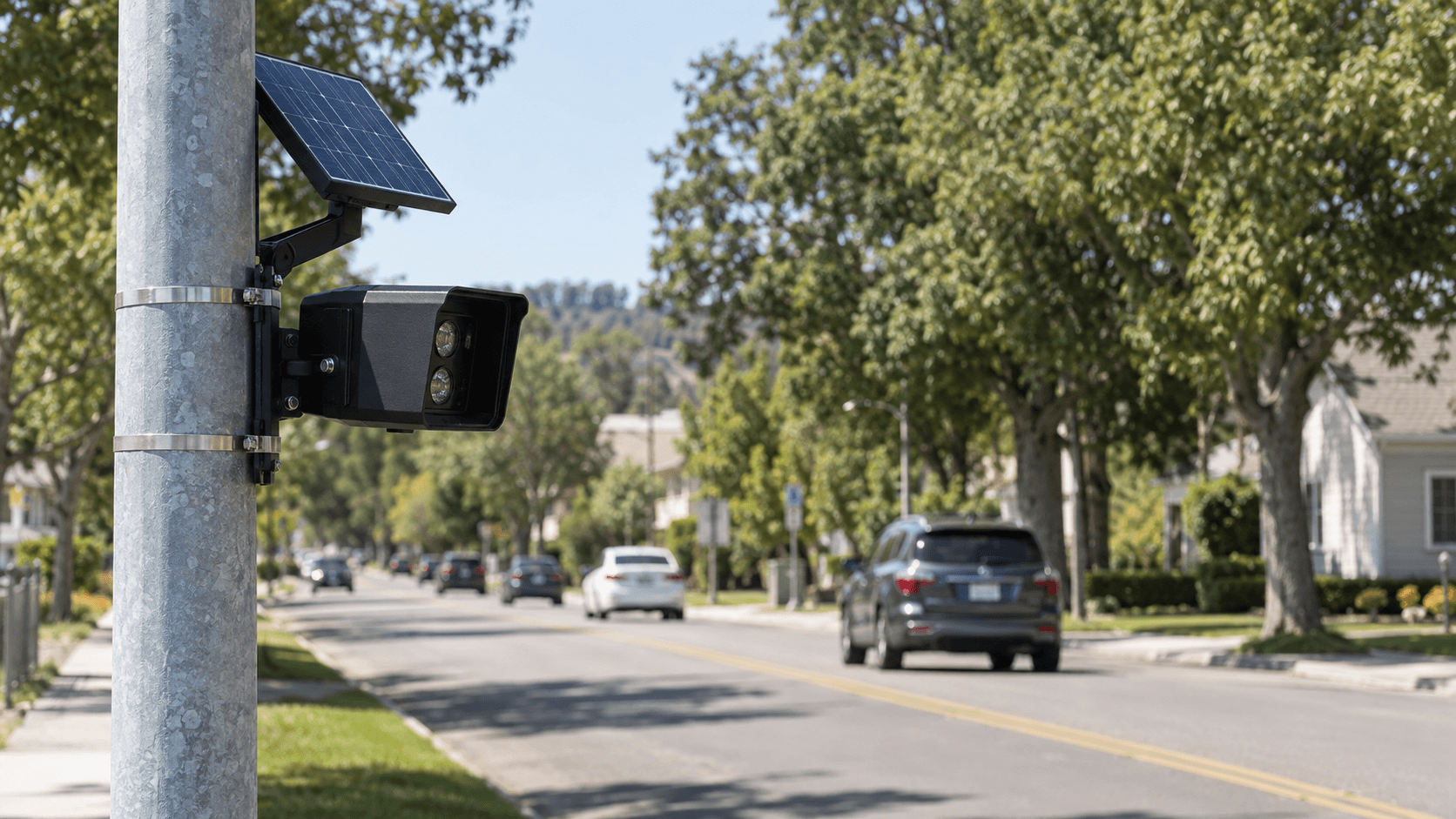
Flock cameras can be used lawfully, but the rules depend on who operates them, where they operate, and how the resulting records are used. State ALPR statutes regulate different activities, while court decisions address particular constitutional claims. A camera purchase does not resolve those separate questions.
See the state comparison · Explore the cited laws
Information reviewed September 11, 2026.
Jurisdiction scope: This guide addresses US Flock license plate reader systems, with identified state-law examples and federal court decisions. It does not treat every Flock product as an ALPR or supply one rule for every state. The state-by-state ALPR comparison includes all 50 states and the District of Columbia.
What determines whether a Flock deployment is lawful?
The useful starting point is the activity being evaluated. Installing a camera, collecting plate images, searching stored records, retaining those records, and giving another organization access are distinct acts. For example, California separates an operator's privacy and security responsibilities from access logging and the additional obligations of public agencies. Its rules appear in Civil Code §§1798.90.51, 1798.90.52, and 1798.90.55.
The operator's identity matters too. California's definitions distinguish an ALPR operator from an end-user and include specific exclusions; the defined term “person” can encompass private entities and public agencies. Those definitions explain why a police department, a contractor, and a business accessing a database cannot automatically be analyzed as the same actor. See Civil Code §1798.90.5.
This guide uses the following questions to organize those distinctions:

| Question | What it helps identify |
|---|---|
| Who operates the system? | The public agency, private operator, or contractor whose conduct is at issue |
| Which state and locality are involved? | The applicable statutory framework and local deployment materials |
| What activity is disputed? | Installation, collection, a particular query, preservation, or disclosure |
| Which records support the answer? | The enacted law, written policy, contract, access log, or court decision |
These are research questions, not a substitute for the governing law. They also help separate this topic from ordinary security video. For the technology overview and related topics, see the ALPR laws hub and surveillance camera laws.
How long does Flock keep license plate data?
Flock's published materials describe a default, customer-specific settings, and investigative preservation. Its Evidence Policy, dated August 12, 2026, states a 30-calendar-day standard unless a customer's agreement specifies otherwise. The policy also says that expired LPR data cannot be restored after deletion. Those are the company's representations about its services, not a statutory retention period for every jurisdiction.
The company's August 13, 2026 announcement describes a seven-day recommendation and default, together with an Evidence Mode for preserving selected investigative data. It expressly says existing customers will keep their current approved retention periods and describes Evidence Mode as a forthcoming rollout. The announcement therefore does not establish that every installed camera or customer account switched to seven days.
When assessing a particular deployment, the relevant materials include its current agreement, the agency's published policy, and the applicable state retention rule. A company's general announcement cannot identify the configuration of a named customer's account. Likewise, the presence of a preservation feature does not establish that preserving a particular record satisfies state law.
Montana illustrates the distinction between a default and an exception: MCA §46-5-118 generally limits covered police plate data to 90 days but permits specified preservation requests and warrants. The preservation-request procedure requires identified cameras, plates, times, investigative grounds, and case information. A generic statement that the data “might be useful” is not a description of that statutory procedure.
How do state laws change the answer?
State rules can regulate authorized uses, privacy policies, searches, storage, sharing, vendor behavior, and oversight. A state-law permission for one purpose cannot be assumed to authorize every other purpose. Conversely, a prohibition with express exceptions cannot be reduced to a headline announcing that all cameras are banned. The following examples illustrate different legal structures; they do not replace the complete state comparison.

California: public policies and documented access
Civil Code §1798.90.51 requires covered operators to maintain reasonable security safeguards and a written public usage and privacy policy. The required topics include authorized purposes, authorized users and training, monitoring, sharing, responsibility for the system, accuracy measures, and retention and destruction.
Under §1798.90.52, access records identify the time, query information, user and relevant affiliation, and purpose. Uses must remain within the policy's authorized purposes. This makes the difference between possessing a database and having authority to conduct a particular search especially important.
Maryland: police use and vendor restrictions
Maryland Public Safety §3-509 requires a legitimate law-enforcement purpose for using captured plate data. Historical data belongs to the agency, cannot be sold, and is subject to limits on vendor access and uploads, including an express allowance for the Maryland Coordination and Analysis Center database.
The same section requires operational procedures, an audit process, privacy safeguards, personnel controls, and breach reporting. Annual reporting addresses matters including requests, releases, unauthorized uses, and completed audits. These are substantive police-data requirements; describing Maryland's law as merely a transportation provision would miss them.
Montana: exceptions to the public-highway restriction
MCA §46-5-117 begins with a restriction on state and local agencies using plate readers on public highways, then supplies exceptions. The police exception requires a public written policy, annual auditing, access records, and other safeguards. Listed police purposes include stolen vehicles, certain wanted or missing-person matters, warrants, and specified crime investigations.
The statute also says a positive reader match alone does not establish reasonable suspicion for a vehicle stop. It requires independent reasonable suspicion or the specified visual and other confirmation. The exception and its conditions both matter when answering whether a Montana police deployment is permitted.
What have courts decided about Flock and location searches?
Court decisions need to be read with their facts, procedural posture, and the conduct challenged. A ruling about one government's camera network is not a nationwide approval of all collection or searches. Nor does a decision about another technology automatically decide an ALPR case. These distinctions are particularly important when comparing the Norfolk litigation with the Supreme Court's later Google Location History decision.
The Norfolk district-court decision
In Schmidt v. City of Norfolk, No. 2:24-cv-00621, opinion filed January 27, 2026, the Eastern District of Virginia granted summary judgment to the defendants. The court allowed the plaintiffs to challenge collection and storage but found they lacked standing to challenge database queries on the record presented.
The constitutional analysis addressed the proved capabilities of Norfolk's system, including gaps in the vehicle observations. It did not decide that every ALPR network can collect unlimited location histories or that every database query is permissible. An opening brief filed April 13, 2026 identifies Fourth Circuit appeal No. 26-1227.
Chatrie concerns a different data source
In Chatrie v. United States, No. 25-112, decided June 29, 2026, the Supreme Court held that acquiring the Google Location History at issue was a Fourth Amendment search. It vacated the judgment and remanded questions about the warrant's validity. The decision did not adjudicate Flock cameras or establish a universal ALPR warrant rule.
The distinction between deciding that government conduct is a search and deciding whether that search is lawful remains essential. Chatrie's remand left warrant questions for further consideration rather than resolving them simply by identifying a search. Its location-data reasoning provides context for the broader debate, but an ALPR claim still requires attention to the challenged system and governing authority.
How can residents find the rules for a local deployment?
Start with the documents that govern the specific operator. A city meeting record concerns authorization and public participation; an agency policy describes operational rules; an agreement identifies contractual terms; and an access log addresses actual queries. Those documents answer different questions. In California, Civil Code §1798.90.55(a) requires an opportunity for public comment at a regularly scheduled governing-body meeting before a public agency implements its program.
Useful materials to look for include:
- The agency's current ALPR usage and privacy policy, with its revision date.
- The governing body's agenda, staff report, meeting record, or deployment proposal.
- The contract and amendments addressing storage, access, sharing, and termination.
- Published oversight reports or descriptions of how improper access is investigated.
This list identifies research leads rather than promising public access to every underlying plate record. Maryland, for example, separately excludes ALPR information from disclosure under its Public Information Act while requiring annual reporting under Public Safety §3-509(d) and (e). A published report and an individual's raw travel records are different materials.
Watch out: A vendor's statement that customers control their data is not permission to share it without legal limits. California's Civil Code §1798.90.55(b) limits a public agency's transfers to another public agency and only as otherwise permitted by law, with a clarification for hosting and towing services.
Frequently asked questions
This guide provides general legal information about identified US jurisdictions as reviewed on September 11, 2026. It is not legal advice. Consult a lawyer licensed in the relevant jurisdiction about a particular deployment, search, dispute, or case.
Last updated: September 11, 2026. State examples reflect the identified versions reviewed; the dated court filings and company statements retain their stated scope.
Frequently Asked Questions
Are Flock cameras legal in every state?
There is no single vendor-wide permission covering every activity. California, Maryland, and Montana illustrate different rules for operators, police uses, access, retention, and oversight. The state comparison identifies the authority and scope of each entry.
Does Flock delete every customer's data after seven days?
No. Flock's August 13, 2026 announcement expressly preserves existing customers' approved periods. The agreement, current local policy, applicable law, and any valid preservation process matter.
Did the Norfolk case approve every ALPR search?
No. The January 27, 2026 district opinion resolved the challenged collection and storage on its record; the plaintiffs lacked query standing.
Did Chatrie decide whether Flock cameras are constitutional?
No. Chatrie addressed Google Location History acquisition and remanded warrant-validity questions. It was not an ALPR decision.
Can a Flock alert alone justify a stop in Montana?
MCA §46-5-117 says a positive match alone does not establish reasonable suspicion. It requires independent suspicion or the specified visual and other confirmation.
Where can I compare my state's rules?
The linked ALPR laws by state page includes a section for every state and DC, distinguishing verified rules, limited provisions, future effective dates, and unresolved questions.
Updates
Independently fact-checked against the cited primary sources
The Law Behind This Article
This article rests on the statutory provisions below, held in our own legal record and retrieved from the official source. Tap a section to read the operative text.
California Civil Code
§ 1798.90.51In forcecited in 4 of our articles
An ALPR operator shall do all of the following: (a) Maintain reasonable security procedures and practices, including operational, administrative, technical, and physical safeguards, to protect ALPR information from unauthorized access, destruction, use, modification, or disclosure. (b) (1) Implement a usage and privacy policy in order to ensure that the collection, use, maintenance, sharing, and dissemination of ALPR information is consistent with respect for individuals’ privacy and civil liberties. The usage and privacy policy shall be available to the public in writing, and, if the ALPR operator has an Internet Web site, the usage and privacy policy shall be posted conspicuously on that Internet Web site. (2) The usage and privacy policy shall, at a minimum, include all of the following: (A) The authorized purposes for using the ALPR system and collecting ALPR information. (B) A description of the job title or other designation of the employees and independent contractors who are authorized to use or access the ALPR system, or to collect ALPR information.
Official text (excerpt) · last checked 2026-07-28 · Read the full text in our law library · Verify at leginfo.legislature.ca.gov
Also relied on in: License Plate Reader Laws by State: 2026 Comparison
§ 1798.90.52In forcecited in 4 of our articles
If an ALPR operator accesses or provides access to ALPR information, the ALPR operator shall do both of the following: (a) Maintain a record of that access. At a minimum, the record shall include all of the following: (1) The date and time the information is accessed. (2) The license plate number or other data elements used to query the ALPR system. (3) The username of the person who accesses the information, and, as applicable, the organization or entity with whom the person is affiliated. (4) The purpose for accessing the information. (b) Require that ALPR information only be used for the authorized purposes described in the usage and privacy policy required by subdivision (b) of Section 1798.90.51.
Official text (excerpt) · last checked 2026-07-28 · Read the full text in our law library · Verify at leginfo.legislature.ca.gov
§ 1798.90.55In forcecited in 4 of our articles
Notwithstanding any other law or regulation: (a) A public agency that operates or intends to operate an ALPR system shall provide an opportunity for public comment at a regularly scheduled public meeting of the governing body of the public agency before implementing the program. (b) A public agency shall not sell, share, or transfer ALPR information, except to another public agency, and only as otherwise permitted by law. For purposes of this section, the provision of data hosting or towing services shall not be considered the sale, sharing, or transferring of ALPR information.
Official text (excerpt) · last checked 2026-07-28 · Read the full text in our law library · Verify at leginfo.legislature.ca.gov
§ 1798.90.5In forcecited in 6 of our articles
The following definitions shall apply for purposes of this title: (a) “Automated license plate recognition end-user” or “ALPR end-user” means a person that accesses or uses an ALPR system, but does not include any of the following: (1) A transportation agency when subject to Section 31490 of the Streets and Highways Code. (2) A person that is subject to Sections 6801 to 6809, inclusive, of Title 15 of the United States Code and state or federal statutes or regulations implementing those sections, if the person is subject to compliance oversight by a state or federal regulatory agency with respect to those sections. (3) A person, other than a law enforcement agency, to whom information may be disclosed as a permissible use pursuant to Section 2721 of Title 18 of the United States Code. (b) “Automated license plate recognition information,” or “ALPR information” means information or data collected through the use of an ALPR system. (c) “Automated license plate recognition operator” or “ALPR operator” means a person that operates an ALPR system, but does not include a transportation agency when subject to Section 31490 of the Streets and Highways Code.
Official text (excerpt) · last checked 2026-07-28 · Read the full text in our law library · Verify at leginfo.legislature.ca.gov
Also relied on in: Automated License Plate Reader (ALPR) Laws Explained (2026), San Francisco Police Audit: Flock License Plate Data Improperly Searched for Federal Agencies (2026)
Montana Code Annotated, Title 46
§ 46-5-118Preservation And Disclosure Of Records By Law Enforcement AgencyIn forcecited in 4 of our articles
46-5-118. Preservation and disclosure of records by law enforcement agency. (1) Except as provided in subsection (2), captured license plate data obtained by an automatic license plate reader system that is operated by or on behalf of a law enforcement agency for law enforcement purposes pursuant to 46-5-117(2)(d) may not be preserved for more than 90 days after the date that the data is captured. (2) Data obtained by an automatic license plate reader may be preserved for more than 90 days pursuant to any of the following: (a) a preservation request submitted pursuant to subsection (3); (b) a search warrant issued pursuant to 46-5-220; or (c) a federal search warrant issued in compliance with the Federal Rules of Civil Procedure. (3) Upon the request of a law enforcement agency, the custodian of captured license plate data shall take all necessary steps to immediately preserve captured license plate data in its possession.
Official text (excerpt) · last checked 2026-07-29 · Read the full text in our law library · Verify at mca.legmt.gov
§ 46-5-117Use Of License Plate Reader Prohibited -- Exceptions -- Definition -- PenaltyIn forcecited in 4 of our articles
46-5-117. Use of license plate reader prohibited -- exceptions -- definition -- penalty. (1) Except as provided in subsection (2), an agency or employee of the state or any subdivision of the state may not use, either directly or indirectly, a license plate reader on any public highway. (2) (a) The department of transportation or an incorporated city or town may use a license plate reader: (i) to collect data for planning. If data is collected under this subsection (2)(a)(i), the department of transportation or city or town shall ensure and maintain the anonymity of the vehicle, the vehicle owner, the driver of the vehicle, and any passengers in the vehicle. Data collected under this subsection (2)(a)(i) without a search warrant or outside of judicially recognized exceptions to search warrant requirements may not be used to investigate or prosecute an individual or as evidence in court. (ii) in a regulated parking system, but only to identify a vehicle's location and license plate number to enforce parking restrictions.
Official text (excerpt) · last checked 2026-07-29 · Read the full text in our law library · Verify at mca.legmt.gov
Maryland Code, Public Safety Article
§ 3-509In forcecited in 4 of our articles
§3–509. (a) (1) In this section the following words have the meanings indicated. (2) (i) “Active data” means: 1. data uploaded to individual automatic license plate reader system units before operation; and 2. data gathered during the operation of an automatic license plate reader system. (ii) “Active data” does not include historical data. (3) “Automatic license plate reader system” means a system of one or more mobile or fixed high–speed cameras used in combination with computer algorithms to convert images of license plates into computer–readable data. (4) (i) “Captured plate data” means the global positioning system coordinates, dates and times, photographs, license plate numbers, and any other data collected by or derived from an automatic license plate reader system. (ii) “Captured plate data” includes active data and historical data. (5) “Center” means the Maryland Coordination and Analysis Center. (6) “Criminal justice information” means information relating to criminal justice collected, processed, or preserved by a law enforcement agency.
Official text (excerpt) · last checked 2026-07-29 · Read the full text in our law library · Verify at mgaleg.maryland.gov
Search our full record of US law — 2.1 million sections, every state + federal →
Sources and References
- Civil Code §§1798.90.51(leginfo.legislature.ca.gov).gov
- 1798.90.52(leginfo.legislature.ca.gov).gov
- 1798.90.55(leginfo.legislature.ca.gov).gov
- Civil Code §1798.90.5(leginfo.legislature.ca.gov).gov
- Evidence Policy(www.flocksafety.com)
- August 13, 2026 announcement(www.flocksafety.com)
- MCA §46-5-118(mca.legmt.gov).gov
- Maryland Public Safety §3-509(mgaleg.maryland.gov).gov
- MCA §46-5-117(mca.legmt.gov).gov
- Schmidt v. City of Norfolk, No. 2:24-cv-00621, opinion filed January 27, 2026(ij.org)
- opening brief filed April 13, 2026(ij.org)
- Chatrie v. United States, No. 25-112, decided June 29, 2026(www.supremecourt.gov).gov