
West Virginia
West Virginia Voyeurism Laws: Hidden Cameras and Privacy Violations
Independently fact-checked against primary sources (last audited August 15, 2026). · Reviewed by the RecordingLaw editorial team. · Law checked current as of August 15, 2026. · 4 primary sources cited on this page. How we verify our legal content
West Virginia prohibits hidden camera recording and voyeurism under W. Va. Code 61-8-28, which criminalizes knowingly recording someone without consent in locations where they have a reasonable expectation of privacy, including bathrooms, locker rooms, and bedrooms. A first offense is a misdemeanor; a second offense is a felony.
West Virginia has specific criminal statutes that address voyeurism, hidden cameras, and the nonconsensual creation and distribution of intimate images. These laws exist alongside the state's general wiretapping statute to provide comprehensive protection against visual privacy violations. The primary statutes are W. Va. Code 61-8-28 (criminal invasion of privacy) and W. Va. Code 61-8-28a (nonconsensual disclosure of intimate images).
This guide covers every aspect of voyeurism and hidden camera law in West Virginia, including what conduct is criminalized, the penalties for violations, hidden camera detection, the revenge porn law, victim remedies, sex offender registration requirements, and related federal protections.
Criminal Invasion of Privacy (W. Va. Code 61-8-28)
What the Statute Prohibits
W. Va. Code 61-8-28 makes it a crime to knowingly photograph, record, or film another person without their knowledge and consent in a location where the person has a reasonable expectation of privacy. The statute specifically targets:
- Creating visual images of a person who is fully or partially nude in a private setting without their consent
- Using any device to view or record through someone's clothing (commonly known as "upskirting" or "downblousing")
- Placing hidden cameras in locations where individuals undress, bathe, or engage in private activities
- Any visual recording of a person in a place where they have a reasonable expectation of bodily privacy
Key Elements of the Offense
To convict under W. Va. Code 61-8-28, the prosecution must prove:
- The defendant knowingly created the image or recording (not accidental)
- Without the knowledge and consent of the person being recorded
- In a location where the person had a reasonable expectation of privacy
- The recording captured the person in a state of undress or in a private situation
Protected Locations
The statute protects individuals in locations where they have a reasonable expectation of privacy. These locations include:
| Location | Protected? | Notes |
|---|---|---|
| Bathrooms and restrooms | Yes | Always protected, including public restrooms |
| Locker rooms | Yes | Gym, pool, school, workplace locker rooms |
| Changing rooms and fitting rooms | Yes | Retail stores, gyms, spas |
| Bedrooms | Yes | Private sleeping areas in homes, hotels, dormitories |
| Hotel rooms | Yes | Guests have full privacy expectation |
| Medical examination rooms | Yes | During patient care |
| Tanning beds and booths | Yes | Enclosed private spaces |
| Private showers | Yes | In any setting |
| Dormitory rooms | Yes | Student living quarters |
| Private areas of homes | Yes | Behind closed doors |
What Is NOT Protected
The statute generally does not apply to:
- Recording in public spaces where the subject is fully clothed and visible to anyone
- Security cameras in common areas of businesses
- Consensual photography or filming (including artistic or commercial work with model releases)
- Recording in areas where no reasonable expectation of privacy exists
Penalties for Criminal Invasion of Privacy
Adult Victims
The penalties escalate based on the number of offenses:
| Offense | Classification | Maximum Penalty |
|---|---|---|
| First offense | Misdemeanor | Up to 1 year in jail, up to $5,000 fine, or both |
| Second or subsequent offense | Felony | 1 to 5 years in prison, up to $10,000 fine, or both |
Does the Victim's Age Change the Penalty?
W. Va. Code 61-8-28 does not set a separate penalty tier based on the victim's age. The statute's misdemeanor-then-felony structure applies the same way whether the person recorded is an adult or a minor: what makes a violation a felony is a second or subsequent offense, not the victim's age.
Additional Consequences
Beyond criminal penalties, a conviction for criminal invasion of privacy can result in:
- Sex offender registration requirements (discussed below)
- Loss of employment, especially in positions involving contact with children or vulnerable populations
- Immigration consequences for non-citizens
- Loss of professional licenses
- Difficulty finding housing
- Social stigma and reputational harm
Types of Hidden Camera Violations
Bathroom and Restroom Cameras
Installing hidden cameras in bathrooms is one of the most common violations prosecuted under W. Va. Code 61-8-28. This includes:
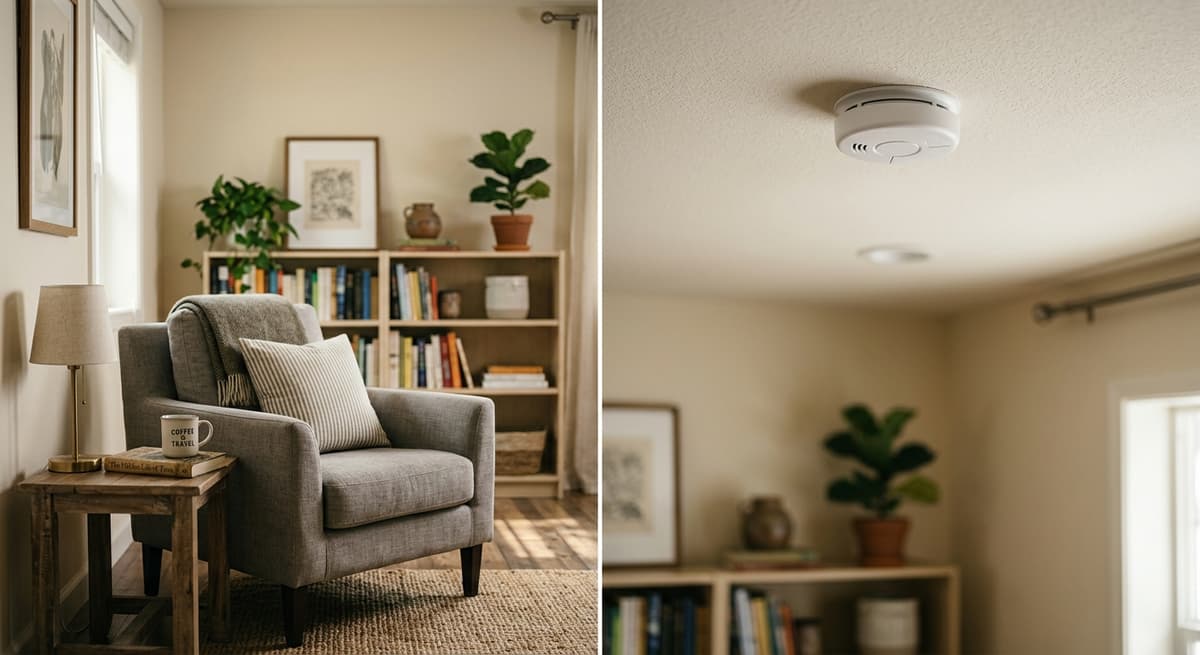
- Cameras concealed in household items (clocks, smoke detectors, outlets)
- Pinhole cameras hidden in walls, ceilings, or vents
- Modified electronics (phone chargers, Bluetooth speakers) with embedded cameras
- Cameras placed in rental property bathrooms by landlords or property managers
Locker Room and Changing Area Cameras
Hidden cameras in gyms, pools, schools, and retail fitting rooms are prohibited. Facility owners and operators have an affirmative duty to ensure these spaces are free from recording devices. Violations have been prosecuted against:
- Gym owners and employees
- School staff
- Retail store employees
- Spa and salon workers
- Pool and recreation center personnel
Bedroom Cameras
Hidden cameras in bedrooms violate the statute when placed without the recorded person's knowledge. This includes:
- Cameras installed by a partner or spouse to monitor the other's activities
- Cameras placed in guest bedrooms
- Cameras hidden in rental properties (Airbnb, vacation rentals, etc.)
- Cameras installed by landlords in tenant bedrooms
Upskirting and Downblousing
Using a device to view or capture images under someone's clothing or through openings in their clothing is prohibited. This applies in all settings, including public spaces. The violation occurs because the person has a reasonable expectation that areas covered by clothing are private, regardless of the overall setting.
Nonconsensual Disclosure of Intimate Images (W. Va. Code 61-8-28a)
What the Statute Prohibits
W. Va. Code 61-8-28a addresses the distribution of intimate images without the subject's consent. This law, commonly referred to as the "revenge porn" statute, makes it illegal to knowingly and intentionally disclose intimate images of another person when:
- The person depicted had a reasonable expectation that the images would remain private
- The disclosure was made without the consent of the person depicted
- The disclosure was made with the intent to harass, intimidate, or embarrass the person
Definition of Intimate Image
Under the statute, an "intimate image" includes images depicting:
- Nudity or partial nudity
- Sexual conduct or activity
- Intimate body parts that are typically covered by clothing
The images can be photographs, videos, digital recordings, or any other visual medium.
Penalties
| Offense | Classification | Maximum Penalty |
|---|---|---|
| First offense | Misdemeanor | Up to 1 year in jail, fine of $1,000 to $5,000, or both |
| Second or subsequent offense | Felony | Up to 3 years state correctional facility, fine of $2,500 to $10,000, or both |
What Constitutes "Disclosure"
The statute covers various forms of distribution:
- Posting images on social media platforms
- Sending images via text message, email, or messaging apps
- Uploading images to websites, including pornographic sites
- Sharing images through file-sharing services
- Printing and physically distributing images
- Showing images to others on a screen
Exceptions
The statute includes exceptions for:
- Images voluntarily disclosed by the subject themselves
- Disclosures made in the public interest (such as reporting criminal activity to law enforcement)
- Disclosures required by law or court order
Victim Remedies and Protections
Criminal Reporting
Victims of voyeurism, hidden cameras, or nonconsensual image sharing should:
- Contact law enforcement immediately. Report the crime to local police or the county sheriff.
- Preserve evidence. Save screenshots, URLs, messages, and any other documentation of the violation.
- Do not destroy the hidden camera. If you find a hidden camera, leave it in place and call police. The device itself is evidence.
- Document the discovery. Take photos of the camera's location and note the date, time, and circumstances of discovery.
Civil Remedies
Victims can pursue civil lawsuits against perpetrators for:
- Invasion of privacy. Civil tort claims for intrusion upon seclusion or public disclosure of private facts.
- Intentional infliction of emotional distress. When the conduct is extreme and outrageous.
- Negligence. Against property owners or facility operators who failed to prevent hidden camera installation.
- Actual damages. Including therapy costs, lost wages, and other quantifiable harm.
- Punitive damages. For willful and malicious conduct.
- Injunctive relief. Court orders to remove images from the internet and prevent further distribution.
Protective Orders
Victims may seek protective orders against perpetrators. West Virginia courts can issue orders requiring the offender to:
- Stay away from the victim
- Remove all intimate images from their possession and any platforms where they were posted
- Refrain from further contact with the victim
- Surrender devices used to create or distribute images
Federal Remedies
Federal law provides additional protections in certain circumstances:
- 18 U.S.C. 1801 (Video Voyeurism Prevention Act) criminalizes voyeuristic recordings within the special maritime and territorial jurisdiction of the United States, which covers federal enclaves, vessels, aircraft, and certain other areas under federal jurisdiction
- 18 U.S.C. 2257 addresses record-keeping requirements for sexually explicit material
- Child pornography statutes apply when victims are minors
- The SHIELD Act and similar federal proposals aim to further criminalize nonconsensual intimate image sharing
Hidden Camera Detection
Signs of Hidden Cameras
Be alert to potential hidden cameras in private spaces, especially in:
- Rental properties (Airbnb, vacation homes, hotel rooms)
- New living situations
- Workplaces with access to private areas
- Gyms and spas
- Public restrooms in unfamiliar locations
Signs that a hidden camera may be present:
- Small holes in walls, ceilings, or objects
- Unusual or out-of-place items in private areas
- Objects with indicator lights (especially small red or green LEDs)
- Smoke detectors, clocks, or outlets that look different from others in the building
- New items that appeared without explanation
- Wires or cables that do not appear to connect to normal fixtures
Detection Methods
If you suspect a hidden camera:
- Visual inspection. Carefully examine the room, paying attention to unusual objects, small holes, and devices with lenses.
- Turn off the lights. Some hidden cameras have indicator LEDs visible in darkness.
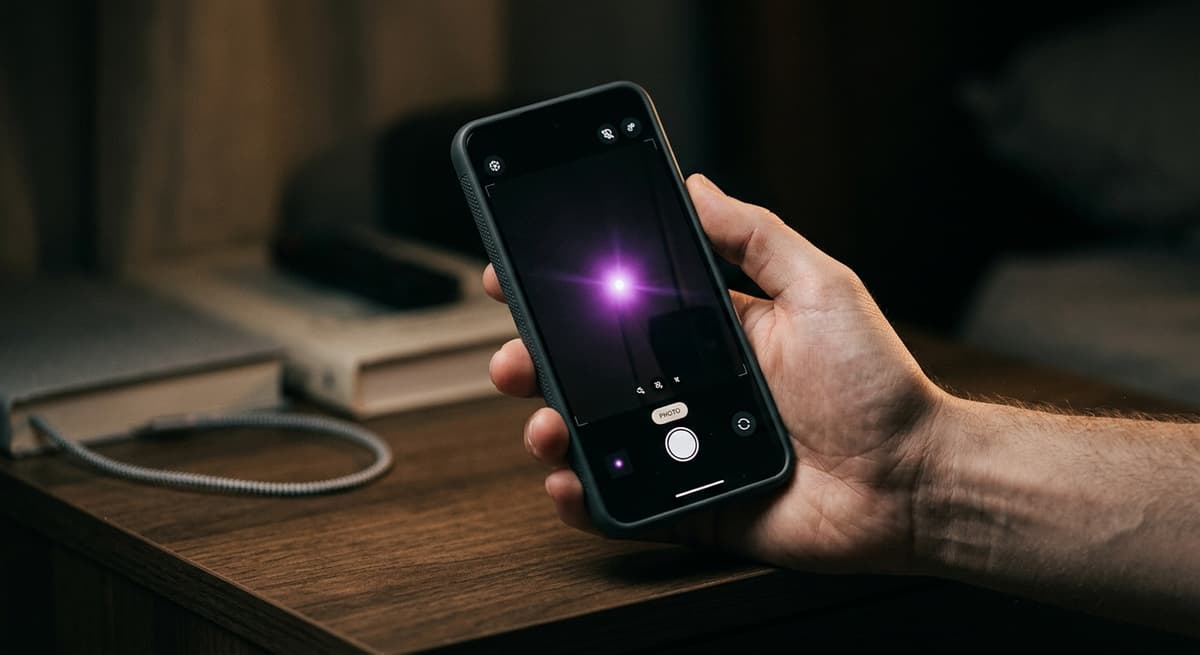
- Use your phone camera. Some infrared cameras can be detected by viewing the room through your phone camera (infrared LEDs may appear as bright spots).
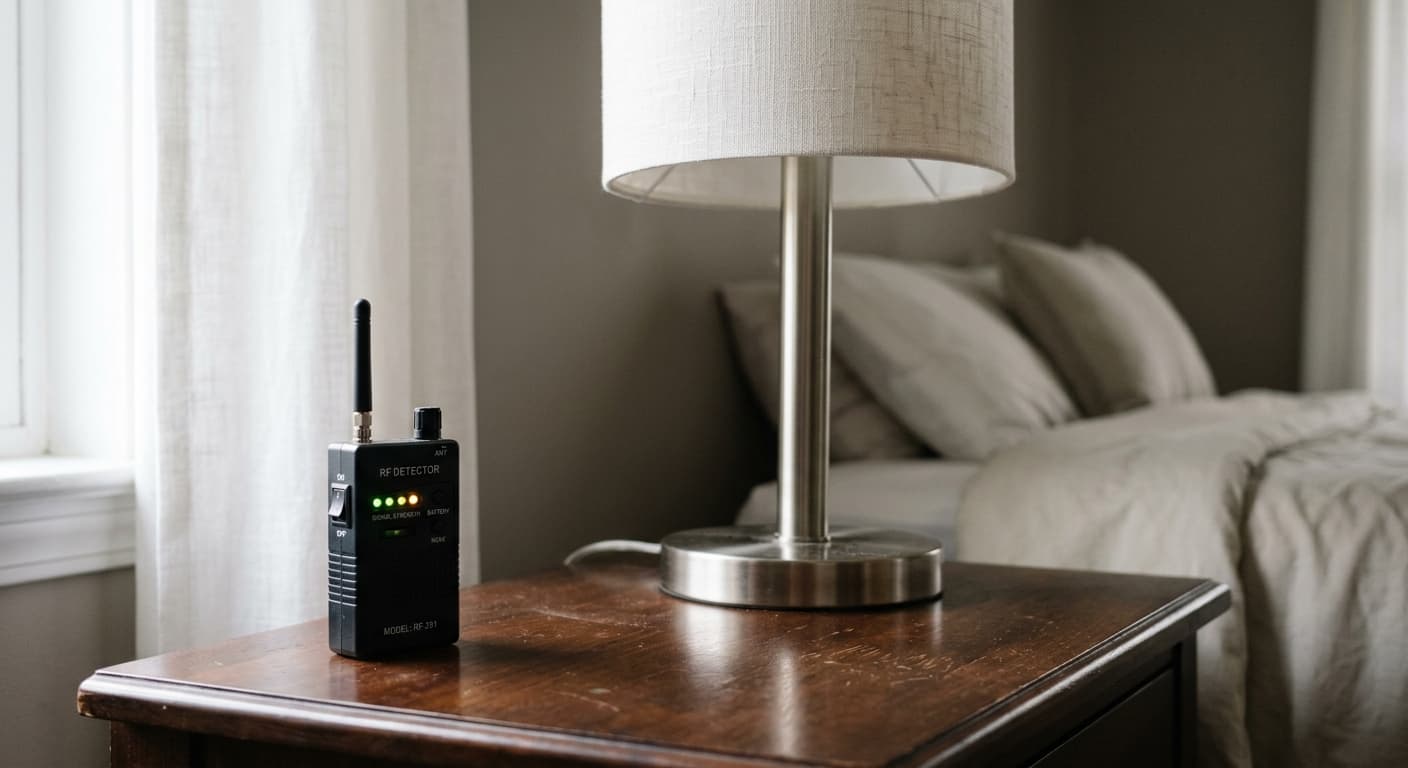
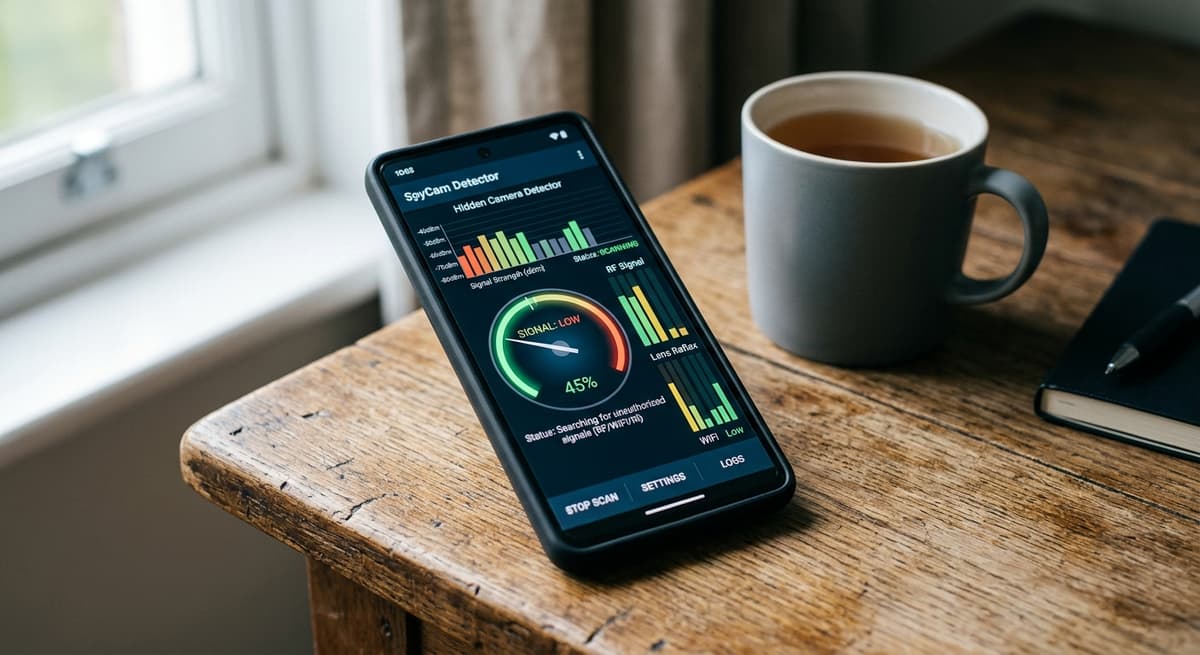
- RF detector. Radio frequency detectors can identify wireless cameras transmitting signals.
- Professional sweep. Security professionals can conduct comprehensive electronic sweeps of a space.
What to Do If You Find a Hidden Camera
- Do not touch or remove the camera. It is evidence.
- Document its location with photographs and notes.
- Leave the area if you feel unsafe.
- Call law enforcement to report the discovery.
- Contact a lawyer if you have been recorded and want to pursue civil remedies.
- Notify the property manager if it is in a rental, hotel, or commercial space.
Sex Offender Registration
When Registration Is Required
West Virginia's sex offender registration requirements under W. Va. Code 15-12 may apply to individuals convicted of criminal invasion of privacy, depending on the specific circumstances of the offense and the victim's age. Registration requirements are particularly likely when:
- The victim is a minor
- The offense involved sexual motivation
- The conviction is for a felony-level offense (second or subsequent offense, or minor victim)
Registration Requirements
If registration is required, the offender must:
- Register with local law enforcement within a specified time after conviction or release from custody
- Provide personal identifying information, addresses, employment information, and vehicle information
- Update registration information when circumstances change
- Comply with registration for the period specified by the court (which can be lifetime registration for serious offenses)
Digital and Technology-Specific Issues
Deepfakes and AI-Generated Images
The emergence of deepfake technology creates new challenges for voyeurism and intimate image laws. AI-generated intimate images using someone's likeness without consent may fall under W. Va. Code 61-8-28a if created and distributed with intent to harass. As this technology evolves, West Virginia enacted 2025 SB 198 (signed April 24, 2025; effective July 9, 2025), which expanded W. Va. Code § 61-8-28a to reach AI-generated "fabricated intimate images." West Virginia has addressed this technology through statute.
Cloud Storage and Jurisdictional Issues
Hidden camera footage and intimate images stored in cloud services create jurisdictional complexities. The data may be physically stored on servers in another state or country, but West Virginia courts can exercise jurisdiction when:
- The victim is in West Virginia
- The recording took place in West Virginia
- The defendant resides in West Virginia
- The distribution targeted West Virginia residents
Social Media Platform Responsibilities
Major social media platforms have policies prohibiting nonconsensual intimate images. Victims can report such content through platform-specific tools. Additionally, organizations like the Cyber Civil Rights Initiative maintain resources for victims of nonconsensual pornography.
More West Virginia Recording Laws
Audio Recording | Video Recording | Voyeurism and Hidden Cameras | Workplace Recording | Recording Police | Phone Call Recording | Security Cameras | Recording in Public | Landlord-Tenant Recording | Dashcam Laws | School Recording | Medical Recording
Back to West Virginia Recording Laws
More West Virginia Recording Topics
More West Virginia Laws
Frequently Asked Questions
What is criminal invasion of privacy in West Virginia?
Under W. Va. Code 61-8-28, it is a crime to knowingly record or photograph someone without their consent in a location where they have a reasonable expectation of privacy. This includes hidden cameras in bathrooms, bedrooms, changing rooms, and locker rooms. First offense is a misdemeanor; second offense is a felony.
What are the penalties for hidden cameras in West Virginia?
First offense: misdemeanor with up to 1 year in jail and a $5,000 fine. Second or subsequent offense: felony with 1 to 5 years in prison and a $10,000 fine. West Virginia's criminal invasion of privacy statute does not set a separate penalty tier for a minor victim; the felony tier is based on repeat offenses, not the victim's age.
Is revenge porn illegal in West Virginia?
Yes. W. Va. Code 61-8-28a makes it illegal to knowingly distribute intimate images of someone without their consent when done with intent to harass, intimidate, or embarrass. First offense is a misdemeanor (up to 1 year jail, fine of $1,000 to $5,000). Second offense is a felony (up to 3 years, fine of $2,500 to $10,000).
What should I do if I find a hidden camera in West Virginia?
Do not touch or remove the camera. Document its location with photos. Leave the area if you feel unsafe. Call law enforcement immediately to report the discovery. The camera is evidence and should be handled by police. You may also have civil remedies against the person who placed it.
Can I sue someone for recording me without consent in a private area in West Virginia?
Yes. In addition to criminal penalties, victims can file civil lawsuits for invasion of privacy, intentional infliction of emotional distress, and related claims. Civil remedies include actual damages, punitive damages, attorney fees, and injunctive relief to remove and prevent further distribution of images.
Updates
Removed a fabricated minor-victim felony tier (2 to 10 years, $25,000) and a fabricated 'public figure' exception that had both been attributed to West Virginia's voyeurism and revenge-porn statutes but do not appear in the actual statute text.
Independently fact-checked against the cited primary sources; governing law re-checked for recent changes
Governing law re-checked for recent changes
Corrected the FAQ penalty figures for a second W. Va. Code 61-8-28a (revenge porn) offense to match the statute: up to 3 years imprisonment and a $2,500-$10,000 fine, not 1-5 years and a flat $5,000 fine.
Corrected the revenge porn FAQ's first-offense fine to the statute's actual $1,000-$5,000 range (was misstated as a flat $1,000), and corrected the federal video voyeurism statute's jurisdictional scope from a general "federal property" claim to the special maritime and territorial jurisdiction defined in 18 U.S.C. 1801.
Governing law re-checked for recent changes
Reviewed and approved by an editor
The Law Behind This Article
This article rests on the statutory provisions below, held in our own legal record and retrieved from the official source. Tap a section to read the operative text.
West Virginia Code
§ 61-8-28Criminal invasion of privacy; penalties.In forcecited in 27 of our articles
(a) For the purposes of this section, the words or terms defined in this subsection have the meanings ascribed to them. These definitions are applicable unless a different meaning clearly appears from the context: (1) “A person fully or partially nude” means a male or female who is either clothed or unclothed so that: (A) All or any part of his or her genitals, pubic area or buttocks is visible; or (B) in the case of a female only, a part of a nipple of her breast is visible and is without a fully opaque covering; (2) “To visually portray” a person means to create a reproducible image of that person by means of: (A) A photograph; (B) A motion picture; (C) A video tape; (D) A digital recording; or (E) Any other mechanical or electronic recording process or device that can preserve, for later viewing, a visual image of a person; and (3) “Place where a reasonable person would have an expectation of privacy” means a place where a reasonable person would believe that he or she could, in privacy, be fully or partially nude without expecting that the act of exposing his or her body was being visually portrayed by another person.
Official text (excerpt) · last checked 2026-08-31 · Read the full text in our law library · Verify at code.wvlegislature.gov
Cited in 2 court opinions in our collectionLatest citing opinion in our collection: 2014
Opinions citing this section in our collection:
- Imaginary Images, Inc. v. Evans (Court of Appeals for the Fourth Circuit 2010, 612 F.3d 736)“…8 Pa. Cons. Stat. § 7507.1(e); Utah Code Ann. § 76-5a-2(6); W. Va. Code § 61-8-28(a)(1); Wis. Stat. § 942.08(1)(a). The m…”
- United States v. Thoms (U S Coast Guard Court of Criminal Appeals 2014)“…9-702.7 (West 2013); Vt. Stat. Ann. Tit. 13, § 2605 (2010); W. Va. Code § 61-8-28 (2000). 4 Ariz. Rev. Stat. Ann. § 13-…”
Identified automatically from the court opinions citing this section — not a ranking of which case controls.
Also relied on in: West Virginia Smart Glasses Recording Laws, West Virginia Audio Recording Laws: One-Party Consent Guide, West Virginia Landlord-Tenant Recording Laws: Rights and Rules
§ 61-8-28ANonconsensual disclosure of private intimate images; definitions; and penalties.In forcecited in 15 of our articles
(a) As used in this section: (1) “Disclose” means to publish, publicly display, distribute, deliver, circulate or disseminate by any means, including, but not limited to, electronic transmission. (2) “Image” means a photograph, videotape, motion picture film, digital recording or any product of any mechanical or electronic recording process or device that can preserve, for later viewing, a visual image. (3) “Intimate parts” means a person’s genitalia, pubic area, anus, or female post-pubescent breasts. (4) To “publicly disclose” means to disclose an image to one or more persons other than those persons whom the person depicted understood would view the image at the time it was captured. (5) “Fabricated intimate image” means an image of an identifiable depicted individual that was created by the use of artificial intelligence or other computer technology capable of processing and interpreting specific data inputs and depicts computer-generated intimate parts or the intimate parts of another human being as the intimate parts of the depicted individual.
Official text (excerpt) · last checked 2026-08-30 · Read the full text in our law library · Verify at code.wvlegislature.gov
Also relied on in: West Virginia Video Recording Laws: Privacy Rules and Consent, West Virginia Recording Laws (2026): One-Party Consent Rules, West Virginia Deepfake Laws: AI Images, Voice Cloning & Penalties (2026)
United States Code Title 18
§ 1801Video voyeurismIn forcecited in 79 of our articles
Whoever, in the special maritime and territorial jurisdiction of the United States, has the intent to capture an image of a private area of an individual without their consent, and knowingly does so under circumstances in which the individual has a reasonable expectation of privacy, shall be fined under this title or imprisoned not more than one year, or both. In this section— the term “capture”, with respect to an image, means to videotape, photograph, film, record by any means, or broadcast; the term “broadcast” means to electronically transmit a visual image with the intent that it be viewed by a person or persons; the term “a private area of the individual” means the naked or undergarment clad genitals, pubic area, buttocks, or female breast of that individual; the term “female breast” means any portion of the female breast below the top of the areola; and the term “under circumstances in which that individual has a reasonable expectation of privacy” means— circumstances in which a reasonable person would believe that he or she could disrobe in privacy, without being concerned that an image of a private area of the individual was being captured; or circumstances in which a…
Official text (excerpt) · last checked 2026-07-28 · Read the full text in our law library · Verify at uscode.house.gov
Cited in 53 court opinions in our collectionLatest citing opinion in our collection: 2026
In the courts (editorial summary, independently checked):Courts have applied 18 U.S.C. 1801 mainly at its edges. United States v. Johnson (2010) read it as Congress's answer to secretly filming nudity on federal property, acquitting on a child exploitation charge instead. EPIC v. Department of Homeland Security (2011) applied the Section 1801(c) law enforcement exception to a TSA scanner claim.
Opinions citing this section in our collection:
- United States v. Anthony Helton (Court of Appeals for the Fourth Circuit 2019, 944 F.3d 198)“…from this list of federal offenses is video voyeurism under 18 U.S.C. § 1801. Rather than list this statute as an enu…”
- United States v. Johnson (District Court, W.D. Missouri 2010, 719 F. Supp. 2d 1059)✓A weightlifting coach hid a camera to film minors weighing in nude; acquitting him under the child exploitation statute, the court called that conduct plain video voyeurism under section 1801, but noted the section reaches only federal maritime and territorial jurisdiction.
- Electronic Privacy Information Center v. United States Department of Homeland Security (Court of Appeals for the D.C. Circuit 2011, 653 F.3d 1)✓Privacy groups challenged TSA body scanners under the Video Voyeurism Prevention Act; the D.C. Circuit held the statute's exception for lawful law enforcement, correctional, or intelligence activity applied to airport screening, so the section 1801 claim failed.
Identified automatically from the court opinions citing this section — not a ranking of which case controls.
Also relied on in: Alaska Voyeurism and Hidden Camera Laws: AS 11.61.123 Explained (2026), Arizona Surreptitious Recording & Voyeurism Laws: ARS 13-3019 Penalties (2026), Arkansas Voyeurism Laws: Hidden Cameras, Penalties, and Defenses (2026)
§ 2257Record keeping requirementsIn forcecited in 33 of our articles
Whoever produces any book, magazine, periodical, film, videotape, digital image, digitally- or computer-manipulated image of an actual human being, picture, or other matter which— contains one or more visual depictions made after November 1, 1990 of actual sexually explicit conduct; and is produced in whole or in part with materials which have been mailed or shipped in interstate or foreign commerce, or is shipped or transported or is intended for shipment or transportation in interstate or foreign commerce; shall create and maintain individually identifiable records pertaining to every performer portrayed in such a visual depiction.
Official text (excerpt) · last checked 2026-07-28 · Read the full text in our law library · Verify at uscode.house.gov
Cited in 68 court opinions in our collectionLatest citing opinion in our collection: 2025
In the courts (editorial summary, independently checked):Connection Distributing Co. v. The Honorable Janet Reno (1998) affirmed denial of a preliminary injunction against section 2257. Free Speech Coalition, Inc. v. Attorney General of the United States (2012) reviewed it as content neutral under intermediate scrutiny, a standard the Third Circuit later replaced with strict scrutiny.
Opinions citing this section in our collection:
- United States v. X-Citement Video, Inc. (Supreme Court of the United States 1994, 513 U.S. 64)“…rformers with independent penalties for failure to comply. 18 U. S. C. §§ 2257 (a) and (i) (1988 ed. and Supp. V); Am…”
- Connection Distributing Co. v. The Honorable Janet Reno (Court of Appeals for the Sixth Circuit 1998, 154 F.3d 281)✓A swingers magazine that ran readers' sexually explicit ads challenged section 2257's age record and labeling duties; the court treated the statute as content neutral, found no substantial likelihood of First Amendment success, and affirmed denial of a preliminary injunction.
- Free Speech Coalition, Inc. v. Attorney General of the United States (Court of Appeals for the Third Circuit 2012, 677 F.3d 519)✓Adult film producers, photographers and sex educators challenged section 2257's recordkeeping duties; the court held the statutes content neutral and found they advance protecting children, but vacated dismissal of the First and Fourth Amendment claims for record development.
Identified automatically from the court opinions citing this section — not a ranking of which case controls.
Also relied on in: How to File a DMCA Takedown on Xvideos (2026 Guide), Illinois Pornography Laws (2026): Legality & No AV Law Yet, Pornography Laws by State (2026)
Search our full record of US law — 2.1 million sections, every state + federal →
Sources and References
- W. Va. Code 61-8-28 - Criminal Invasion of Privacy(code.wvlegislature.gov).gov
- W. Va. Code 61-8-28a - Nonconsensual Disclosure of Intimate Images(code.wvlegislature.gov).gov
- W. Va. Code 15-12 - Sex Offender Registration(code.wvlegislature.gov).gov
- 18 U.S.C. 1801 - Video Voyeurism Prevention Act(law.cornell.edu)
- DOJ - Citizens Guide to Federal Law on Child Exploitation(justice.gov).gov