
West Virginia
West Virginia Medical Recording Laws: Patient Rights and HIPAA Guide
Independently fact-checked against primary sources (last audited August 15, 2026). · Reviewed by the RecordingLaw editorial team. · Law checked current as of August 7, 2026. · 6 primary sources cited on this page. How we verify our legal content
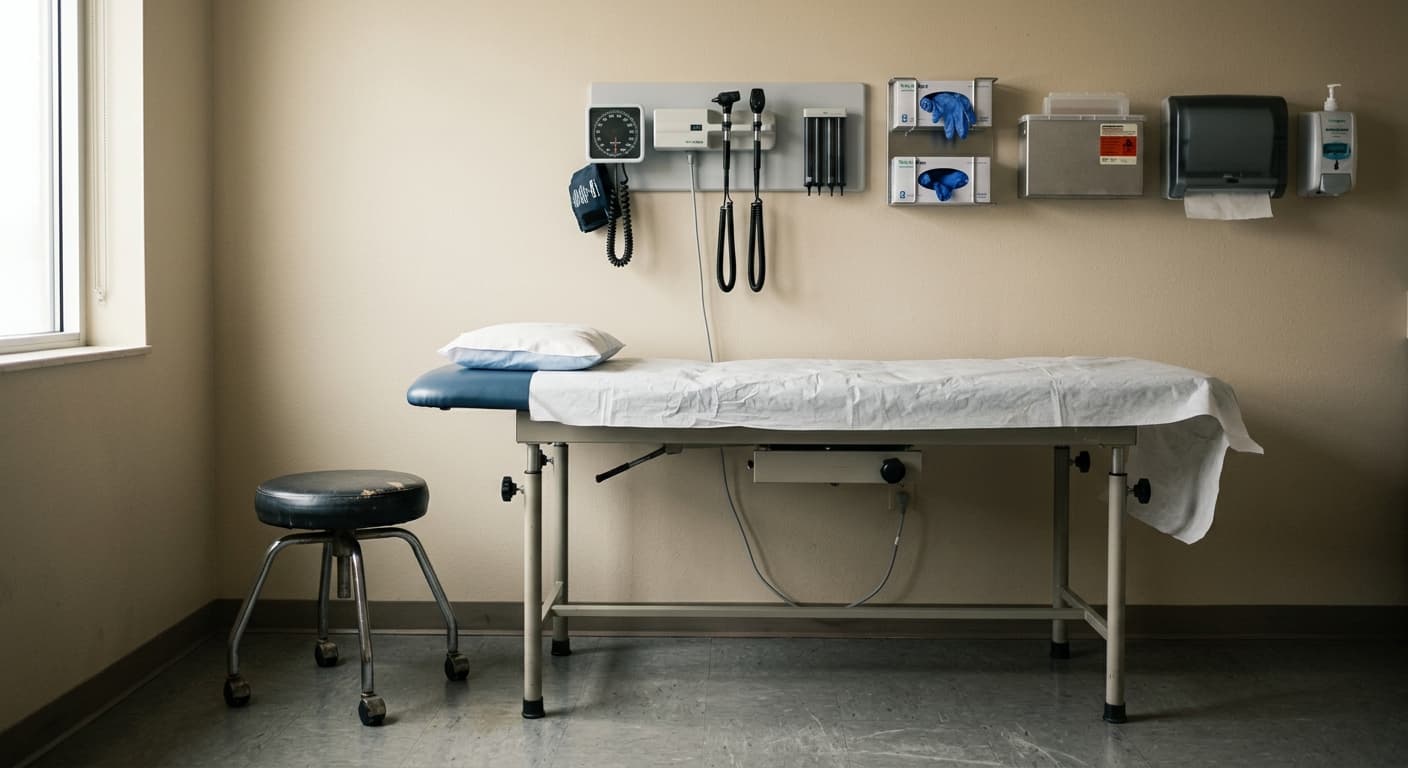
West Virginia patients may record their own medical appointments without notifying healthcare providers, because W. Va. Code 62-1D-3 permits one-party consent recording. HIPAA does not restrict patients from recording their own health conversations. Facility policies may ask patients not to record, but those policies cannot make a lawful recording a criminal act.
Recording in medical settings in West Virginia involves the intersection of the state's one-party consent wiretapping law, federal health privacy regulations under HIPAA, medical facility policies, and patient rights. Under W. Va. Code 62-1D-3, patients who participate in medical conversations can record them without notifying their healthcare providers. However, the practical considerations in medical environments create additional layers of complexity.
This guide covers every aspect of medical recording in West Virginia, including patient recording rights, provider policies, HIPAA considerations, telehealth recording, recording for caregivers, medical facility surveillance, using recordings in malpractice claims, and mental health recording considerations.
Patient Recording Rights
The One-Party Consent Foundation
Under West Virginia's one-party consent law, patients can record conversations they participate in with healthcare providers. This includes:
- Discussions with doctors during office visits
- Conversations with nurses about medications and care instructions
- Pre-operative consultations with surgeons
- Informed consent discussions before procedures
- Discharge instructions and follow-up care plans
- Conversations with specialists about diagnoses and treatment options
- Phone calls with medical offices about appointments, results, or referrals
Your participation in the conversation provides the required one-party consent. You do not need to ask for permission or notify the provider that you are recording.
Benefits of Recording Medical Appointments
Research published in medical journals has shown that patients forget a significant portion of medical information discussed during appointments. Recording offers practical benefits:
- Improving recall. Complex diagnoses, medication instructions, and treatment plans can be reviewed later for accuracy.
- Sharing with caregivers. Recordings allow family members or caregivers who could not attend the appointment to hear the information directly.
- Reducing medical errors. An accurate record of what was discussed helps patients follow treatment plans correctly.
- Documenting informed consent. Recordings preserve the details of what a provider explained about risks, benefits, and alternatives before a procedure.
- Supporting second opinions. Other providers can hear the original doctor's assessment when consulted for a second opinion.
- Building trust. Some providers welcome recording because it improves patient compliance and reduces miscommunication.
What You Can Record
Patients in West Virginia can record:
| Interaction | Can You Record? | Notes |
|---|---|---|
| Office visit with your doctor | Yes | You are a participant |
| Phone call with medical office | Yes | One-party consent applies |
| Conversation with nurses | Yes | You are a participant |
| Pre-surgical consultation | Yes | Critical informed consent discussion |
| Discharge instructions | Yes | Often complex and easy to forget |
| Telehealth appointment | Yes | Same rules as in-person |
| Emergency room treatment | Yes | You or your legal representative can record |
| Physical therapy sessions | Yes | You are a participant |
| Pharmacy consultations | Yes | You are a participant |
Healthcare Provider Recording Policies
Facility Policies
Many West Virginia healthcare facilities have internal policies addressing patient recording. These policies may:
- Prohibit audio or video recording without staff permission
- Require patients to sign agreements not to record
- Post signs indicating that recording is not permitted
- Request that phones be put away during appointments
Can a Provider Stop You from Recording?
A healthcare provider cannot make your recording a criminal offense, since West Virginia law permits one-party consent recording. However, providers and facilities can:
- Ask you to stop recording as a matter of facility policy
- Refuse to continue treatment if you violate their recording policy (except in emergencies)
- Dismiss you as a patient for repeated policy violations
- Restrict your access to the facility if you violate their rules
This creates a practical tension: the recording is legal under state law, but the provider-patient relationship is voluntary (outside of emergency care), and the provider can end it if policies are not followed.
Best Practices for Patients
To balance your legal rights with the practical realities of medical care:
- Inform your provider. While not legally required, telling your doctor you would like to record for personal recall purposes often receives a positive response.
- Explain your reason. Providers are more receptive when they understand the recording is for remembering instructions, sharing with family, or improving care compliance.
- Respect facility rules. If a facility has a no-recording policy, consider discussing it with the provider privately before recording.
- Use audio only. Audio recording is less intrusive than video and raises fewer concerns about other patients' privacy.
- Keep recordings private. Do not post medical recordings on social media or share them publicly.
HIPAA and Patient Recording

What HIPAA Does and Does Not Restrict
The Health Insurance Portability and Accountability Act (HIPAA) is a federal law that governs how healthcare providers, insurers, and their business associates handle protected health information (PHI). Key points for patient recording:
- HIPAA does not prohibit patients from recording their own medical conversations. HIPAA regulates what providers do with patient information, not what patients do with their own health information.
- HIPAA restricts providers from recording patients without following their own privacy practices and policies.
- HIPAA does not create a right for providers to prohibit patient recording. The law addresses provider conduct, not patient conduct.
- Recordings that contain other patients' PHI could create HIPAA issues if a patient's recording inadvertently captures information about other patients (such as in a shared treatment area).
Provider Obligations Under HIPAA
Healthcare providers who create or maintain audio or video recordings of patient encounters must comply with HIPAA requirements:
- Recordings containing PHI are subject to the HIPAA Privacy Rule
- Storage of recordings must meet HIPAA Security Rule requirements
- Patient authorization may be required before creating recordings for purposes beyond treatment, payment, or healthcare operations
- Recordings must be included in the provider's Notice of Privacy Practices if recording is part of their standard process
Telehealth Recording and HIPAA
Telehealth appointments are subject to the same HIPAA protections as in-person visits. Providers using platforms like Zoom for Healthcare, Doxy.me, or similar services must:
- Use HIPAA-compliant platforms with business associate agreements
- Inform patients about platform recording capabilities
- Ensure recordings are stored securely
- Follow their telehealth recording policies consistently
Patients can record their own telehealth appointments using screen recording software, external devices, or the platform's built-in recording feature (if available) under one-party consent.
Telehealth Recording in West Virginia
Patient Rights for Telehealth Recording
West Virginia's one-party consent law applies to telehealth appointments just as it does to in-person visits. When you are participating in a telehealth call, you can record it using:
- Screen recording software on your computer or phone
- An external recording device capturing the audio from your speaker
- The platform's built-in recording feature (if you have access)
- A separate phone recording the conversation
Cross-State Telehealth Considerations
If your telehealth provider is in a different state, the recording laws of both states may apply. West Virginia's one-party consent permits your recording, but if the provider is in an all-party consent state (such as Maryland or Pennsylvania), the provider's state law may require their consent. In practice:
- Most telehealth platforms are based on the patient's location for legal purposes
- Patient recording of their own telehealth visits is generally treated under the patient's state law
- If you are concerned, informing the provider about the recording eliminates the issue
Recording for Caregivers and Family Members
Recording on Behalf of a Patient
Family members and caregivers who attend medical appointments with a patient can record the conversation if the patient consents to their participation. The patient's one-party consent extends to the entire conversation they are part of, and the caregiver's presence (with the patient's permission) makes them a participant as well.
Common caregiver recording scenarios:
- An adult child recording a parent's appointment to help manage their care
- A spouse recording a partner's surgical consultation to review later
- A parent recording a child's medical appointment for the other parent
- A healthcare power of attorney recording appointments for an incapacitated patient
When the Patient Cannot Consent
If a patient is incapacitated or unable to consent (unconscious, under anesthesia, experiencing a medical emergency), the legal authority to record typically falls to:
- The patient's designated healthcare power of attorney
- A legal guardian
- A parent (for minor children)
These authorized decision-makers can record medical interactions as part of their authority to make healthcare decisions on behalf of the patient.
Medical Facility Security Cameras
Where Cameras Are Permitted
Healthcare facilities in West Virginia use security cameras in many areas:
- Waiting rooms and lobbies -- permitted for security
- Hallways and corridors -- permitted for safety monitoring
- Parking lots and exterior areas -- permitted for property security
- Pharmacy counters -- permitted for loss prevention and security
- Nurse stations (common areas) -- permitted with notice
Where Cameras Are Prohibited
Cameras are not permitted in areas where patients have a reasonable expectation of privacy:
- Examination rooms during patient care -- patients are often in various states of undress
- Patient rooms in hospitals (private areas) -- patients have a heightened privacy expectation
- Restrooms and bathrooms -- criminal violation under W. Va. Code 61-8-28
- Changing areas -- criminal violation
- Mental health treatment rooms -- heightened privacy concerns
- Substance abuse treatment areas -- additional federal protections under 42 CFR Part 2
Cameras in Nursing Homes and Long-Term Care
Nursing home and long-term care facility cameras present specific considerations. West Virginia does not have a specific "granny cam" statute, but families may want to monitor the care of a loved one. Key points:
- Families may be able to install cameras in a patient's private room with the patient's consent (or consent of their legal representative)
- The facility's roommate (if any) must also consent, as they share the space
- Common area cameras are subject to the same rules as other healthcare facilities
- Audio recording triggers wiretapping statute considerations
Using Medical Recordings as Evidence
Medical Malpractice Cases
Recordings made during medical encounters can be powerful evidence in malpractice cases:
- Recordings of informed consent discussions showing what the provider did or did not explain
- Documentation of symptoms described to the provider
- Records of treatment recommendations and the provider's reasoning
- Evidence of post-operative instructions that were not followed correctly
West Virginia medical malpractice law requires patients to prove that the provider deviated from the standard of care and that the deviation caused harm. Recordings can help establish what was communicated between provider and patient.
Admissibility in Court
Medical recordings made under one-party consent are generally admissible in West Virginia courts. Standard evidentiary requirements apply:
- The recording must be authenticated as genuine
- The content must be relevant to the issues in the case
- The recording must not have been altered or edited
- The probative value must outweigh any prejudicial effect
Recordings in Administrative Proceedings
Medical recordings may also be relevant in administrative proceedings such as:
- Complaints to the West Virginia Board of Medicine
- Complaints to the West Virginia Board of Osteopathic Medicine
- Nursing board complaints
- Hospital credentialing proceedings
- Insurance appeals and grievances
Mental Health Recording Considerations
Therapy and Counseling Sessions
Patients can legally record their own therapy and counseling sessions under one-party consent. However, mental health providers may have strong objections to recording because:
- Recording may inhibit the therapeutic process
- Patients may share recordings inappropriately, harming their own interests
- The therapeutic relationship depends on a sense of safety and confidentiality
- Recordings taken out of context may be misleading
Many mental health providers include recording restrictions in their treatment agreements. While these restrictions cannot make the recording a criminal act, they are part of the provider-patient agreement, and violating them could lead to discharge from treatment.
Substance Abuse Treatment Records
Federal regulations under 42 CFR Part 2 provide enhanced privacy protections for substance abuse treatment records. While this federal regulation primarily restricts provider disclosure (not patient recording), recordings made during substance abuse treatment may implicate these protections if shared with third parties.
More West Virginia Recording Laws
Audio Recording | Video Recording | Voyeurism and Hidden Cameras | Workplace Recording | Recording Police | Phone Call Recording | Security Cameras | Recording in Public | Landlord-Tenant Recording | Dashcam Laws | School Recording | Medical Recording
Back to West Virginia Recording Laws
More West Virginia Recording Topics
More West Virginia Laws
Frequently Asked Questions
Can I record my doctor's appointment in West Virginia?
Yes. Under West Virginia's one-party consent law (W. Va. Code 62-1D-3), you can record any medical appointment you participate in without notifying your healthcare provider. This applies to in-person visits, phone calls, and telehealth appointments.
Does HIPAA prevent me from recording my own medical visit?
No. HIPAA regulates how healthcare providers handle patient information. It does not restrict what patients do with their own health information. You can record your own medical conversations for personal use without violating HIPAA.
Can a doctor refuse to treat me if I record the appointment?
A doctor can decline to continue a non-emergency appointment if you violate their facility recording policy. However, emergency care cannot be refused. Many providers are receptive to recording when patients explain it helps them remember instructions and follow treatment plans.
Can I use a recording of my doctor as evidence in a malpractice case?
Yes. Recordings made under one-party consent are generally admissible in West Virginia courts. They can provide evidence of what was discussed during informed consent, what symptoms were reported, and what treatment was recommended.
Can a family member record a medical appointment for me in West Virginia?
Yes, if you consent to their presence at the appointment. Your one-party consent extends to the entire conversation, and the caregiver's participation with your permission makes them part of the recorded interaction. A healthcare power of attorney can record on behalf of an incapacitated patient.
Updates
Fixed the West Virginia Board of Medicine link to the working site address.
Independently fact-checked against the cited primary sources
Governing law re-checked for recent changes
Reviewed and approved by an editor
The Law Behind This Article
This article rests on the statutory provisions below, held in our own legal record and retrieved from the official source. Tap a section to read the operative text.
West Virginia Code
§ 62-1D-3Interception of communications generally.In forcecited in 36 of our articles
(a) Except as otherwise specifically provided in this article it is unlawful for any person to: (1) Intentionally intercept, attempt to intercept or procure any other person to intercept or attempt to intercept, any wire, oral or electronic communication; or (2) Intentionally disclose or intentionally attempt to disclose to any other person the contents of any wire, oral or electronic communication, knowing or having reason to know that the information was obtained through the interception of a wire, oral or electronic communication in violation of this article; and (3) Intentionally use or disclose or intentionally attempt to use or disclose the contents of any wire, oral or electronic communication or the identity of any party thereto, knowing or having reason to know that such information was obtained through the interception of a wire, oral or electronic communication in violation of this article. (b) Any person who violates subsection (a) of this section is guilty of a felony and, upon conviction thereof, shall be imprisoned in the penitentiary for not more than five years or fined not more than $10,000 or both fined and imprisoned.
Official text (excerpt) · last checked 2026-08-31 · Read the full text in our law library · Verify at code.wvlegislature.gov
Cited in 1 court opinions in our collectionLatest citing opinion in our collection: 1999
Opinions citing this section in our collection:
- Bartnicki v. Vopper (Court of Appeals for the Third Circuit 1999, 200 F.3d 109)“…77 -23a-4, 77-23a-11; Va. Code Ann. §§ 19.2-62 , 19.2-69; W. Va.Code §§ 62-1D-3, 62-1D-12; Wis. Stat. § 968.31 ; Wyo.…”
Identified automatically from the court opinions citing this section — not a ranking of which case controls.
Also relied on in: West Virginia Smart Glasses Recording Laws, West Virginia Security Camera Laws: Rules for Homes and Businesses, West Virginia Video Recording Laws: Privacy Rules and Consent
§ 61-8-28Criminal invasion of privacy; penalties.In forcecited in 27 of our articles
(a) For the purposes of this section, the words or terms defined in this subsection have the meanings ascribed to them. These definitions are applicable unless a different meaning clearly appears from the context: (1) “A person fully or partially nude” means a male or female who is either clothed or unclothed so that: (A) All or any part of his or her genitals, pubic area or buttocks is visible; or (B) in the case of a female only, a part of a nipple of her breast is visible and is without a fully opaque covering; (2) “To visually portray” a person means to create a reproducible image of that person by means of: (A) A photograph; (B) A motion picture; (C) A video tape; (D) A digital recording; or (E) Any other mechanical or electronic recording process or device that can preserve, for later viewing, a visual image of a person; and (3) “Place where a reasonable person would have an expectation of privacy” means a place where a reasonable person would believe that he or she could, in privacy, be fully or partially nude without expecting that the act of exposing his or her body was being visually portrayed by another person.
Official text (excerpt) · last checked 2026-08-31 · Read the full text in our law library · Verify at code.wvlegislature.gov
Cited in 2 court opinions in our collectionLatest citing opinion in our collection: 2014
Opinions citing this section in our collection:
- Imaginary Images, Inc. v. Evans (Court of Appeals for the Fourth Circuit 2010, 612 F.3d 736)“…8 Pa. Cons. Stat. § 7507.1(e); Utah Code Ann. § 76-5a-2(6); W. Va. Code § 61-8-28(a)(1); Wis. Stat. § 942.08(1)(a). The m…”
- United States v. Thoms (U S Coast Guard Court of Criminal Appeals 2014)“…9-702.7 (West 2013); Vt. Stat. Ann. Tit. 13, § 2605 (2010); W. Va. Code § 61-8-28 (2000). 4 Ariz. Rev. Stat. Ann. § 13-…”
Identified automatically from the court opinions citing this section — not a ranking of which case controls.
Also relied on in: West Virginia Audio Recording Laws: One-Party Consent Guide, West Virginia Landlord-Tenant Recording Laws: Rights and Rules, West Virginia Laws on Recording in Public: What You Can and Cannot Do
Search our full record of US law — 2.1 million sections, every state + federal →
Sources and References
- W. Va. Code 62-1D-3 - Interception of Communications(code.wvlegislature.gov).gov
- W. Va. Code 61-8-28 - Criminal Invasion of Privacy(code.wvlegislature.gov).gov
- HHS HIPAA Privacy Rule(hhs.gov).gov
- HHS HIPAA Security Rule(hhs.gov).gov
- 42 CFR Part 2 - Substance Abuse Treatment Records(ecfr.gov).gov
- West Virginia Board of Medicine(wvbom.wv.gov).gov