
West Virginia
West Virginia Landlord-Tenant Recording Laws: Rights and Rules
Independently fact-checked against primary sources (last audited August 15, 2026). · Reviewed by the RecordingLaw editorial team. · Law checked current as of August 15, 2026. · 5 primary sources cited on this page. How we verify our legal content

In West Virginia, both landlords and tenants may record conversations they participate in without the other party's knowledge or consent, under W. Va. Code 62-1D-3. Landlords may not place cameras inside rental units, while tenants can install interior cameras in their own unit and doorbell cameras at their entrance.
Recording interactions between landlords and tenants in West Virginia is governed by the state's one-party consent wiretapping law, W. Va. Code 62-1D-3, alongside property rights principles and privacy protections. Both landlords and tenants have recording rights when they are participants in conversations, but each faces limitations when it comes to surveillance of the other party's private spaces.
This guide covers every aspect of landlord-tenant recording in West Virginia, including tenant recording rights, landlord surveillance powers, security camera rules for rental properties, audio recording of interactions, using recordings as evidence in disputes, and privacy boundaries.
Tenant Recording Rights
Recording Conversations with Your Landlord
Under West Virginia's one-party consent law, tenants can record conversations with their landlord without the landlord's knowledge or permission. This right applies to:
- In-person conversations about rent, repairs, or lease terms
- Phone calls regarding maintenance requests or complaints
- Meetings to discuss lease renewals or termination
- Walk-through inspections where you are present
- Conversations with property managers, maintenance staff, or other landlord representatives
Your participation in the conversation provides the required one-party consent. You do not need to announce that you are recording.
Why Tenants Record Landlords
Common reasons tenants record interactions with their landlords include:
- Documenting repair promises. When a landlord verbally agrees to fix a plumbing leak, electrical issue, or other problem, a recording preserves that commitment.
- Preserving evidence of harassment. If a landlord is making threats, entering without notice, or engaging in retaliatory behavior, recordings provide critical documentation.
- Recording security deposit discussions. Conversations about the condition of the property at move-in and move-out can protect tenants against unfair deposit deductions.
- Documenting lease violations by the landlord. If the landlord is failing to maintain habitable conditions or violating other lease terms, recordings help prove the case.
- Protecting against unlawful eviction. Recording interactions where a landlord threatens illegal self-help eviction (changing locks, removing belongings, shutting off utilities) creates important evidence.
Tenant Security Camera Rights
Tenants in West Virginia can install security cameras within their own rental unit for personal security:
Inside the unit:
- You can place cameras in your own living areas (living room, kitchen, entryway)
- Nanny cameras to monitor caregivers are permitted
- Pet cameras are permitted
- You should not place cameras in areas where guests have a privacy expectation (guest bathroom, guest bedroom)
At your entrance:
- Doorbell cameras (Ring, Nest, etc.) at your unit's entrance are generally permitted
- These cameras capture the area immediately outside your door, which is typically a common area
- Check your lease for restrictions on exterior modifications
Limitations:
- You generally cannot install cameras in common areas without landlord permission
- Cameras that extensively capture other tenants' private spaces should be avoided
- Lease provisions may restrict exterior camera installation
- Any camera removal requirements upon move-out should be followed
Landlord Recording and Surveillance Rights
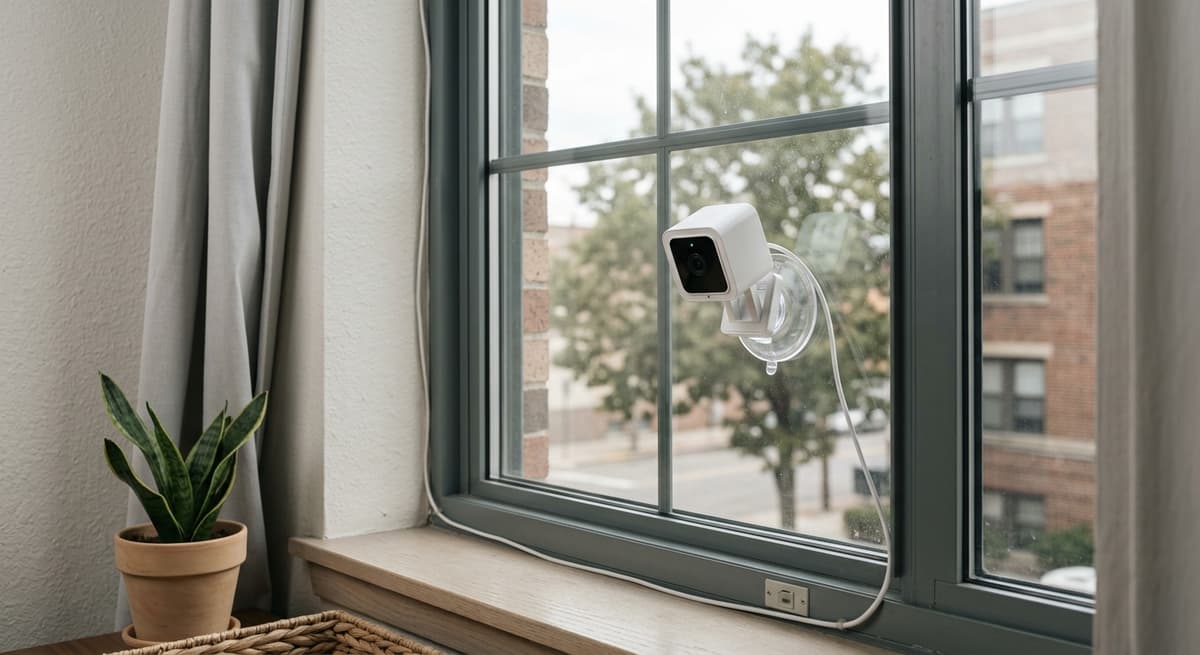
Security Cameras in Common Areas
Landlords can install security cameras in common areas of rental properties for security and management purposes. Appropriate locations include:
| Location | Camera Permitted? | Notes |
|---|---|---|
| Building entrances and lobbies | Yes | Primary security concern |
| Parking lots and garages | Yes | Vehicle and personal security |
| Hallways and stairwells | Yes | Common area monitoring |
| Laundry rooms | Yes | Shared facility security |
| Exterior building perimeter | Yes | Property protection |
| Swimming pools and fitness rooms | Yes (video only) | Common area, no audio |
| Inside individual rental units | No | Tenant's private space |
| Individual unit bathrooms | No | Criminal violation |
| Unit porches/patios (exclusive use) | Caution | May be tenant's private space |
Audio Recording Restrictions for Landlords
If common area security cameras include audio recording, landlords must consider the wiretapping statute. Options include:
- Disable audio recording on common area cameras (simplest approach)
- Post clear signage indicating that audio and video recording is in progress in common areas
- Limit audio capture to areas where conversations are not expected to be private
Installing hidden audio recording devices in common areas to eavesdrop on tenant conversations without being a participant would violate W. Va. Code 62-1D-3.
Restrictions on Landlord Recording
Landlords face strict limitations on surveillance and recording:
- Cannot install cameras inside rental units. A tenant's unit is their private home. Placing cameras inside, even before a tenant moves in, violates privacy rights and potentially W. Va. Code 61-8-28.
- Cannot use cameras to monitor tenant behavior. Surveillance intended to track when tenants come and go, who visits them, or their daily activities crosses the line from security into harassment.
- Cannot record private conversations. A landlord cannot use recording devices to listen to tenants' phone calls or private conversations in their units.
- Cannot use cameras for retaliation. Installing cameras aimed at a specific tenant's unit after a dispute or complaint could constitute retaliatory conduct.
Recording During Landlord Entry
West Virginia Entry Requirements
West Virginia has no general statute setting a notice period for a landlord to enter an occupied rental unit. Chapter 37, Articles 6 and 6A of the West Virginia Code (the state's landlord-tenant and security-deposit statutes) do not contain an entry-notice requirement; their only entry-related provisions concern a landlord's re-entry after a tenant defaults or abandons the property. Giving reasonable notice before a routine entry is standard practice and is often required by the lease itself, but in West Virginia it is a contractual and customary norm, not a statutory mandate.
Tenant Rights During Entry
When a landlord or their representative enters your rental unit, you can record the entire visit. This protects you by documenting:
- Whether the landlord provided proper notice
- The stated reason for entry vs. what actually occurred
- The condition of the property at the time of entry
- Any comments about lease compliance, damage, or repairs
- Whether the entry was conducted respectfully and within the stated purpose
Landlord Rights During Entry
Landlords can also record during property entries they participate in. This helps document:
- The condition of the property during inspections
- Damage observed during walk-throughs
- Conversations about needed repairs or tenant responsibilities
- Move-in and move-out conditions for security deposit purposes
Both parties benefit from recording during these interactions because it creates an objective record that reduces he-said/she-said disputes.
Recording as Evidence in Landlord-Tenant Disputes
Types of Disputes Where Recordings Are Valuable
Recordings frequently play a role in West Virginia landlord-tenant disputes:
Security deposit disputes:
- Move-in condition recordings establish baseline property condition
- Move-out recordings document the state of the property at departure
- Conversations about deductions and refund amounts
Repair and habitability disputes:
- Recordings of repair requests and landlord responses
- Documentation of property conditions (mold, leaks, pest infestations)
- Verbal promises to make repairs within specific timeframes
Eviction proceedings:
- Recordings of conversations about lease violations
- Documentation of landlord threats or illegal self-help eviction attempts
- Evidence that the landlord failed to follow proper eviction procedures
Harassment claims:
- Recordings of threatening or intimidating communications
- Documentation of excessive or unauthorized entries
- Evidence of retaliatory conduct following tenant complaints
Admissibility in West Virginia Courts
Recordings made under one-party consent are generally admissible in West Virginia courts, including:
- Magistrate court (small claims and landlord-tenant disputes)
- Circuit court (larger civil claims)
- Family court (if relevant to housing-related family matters)
To maximize admissibility:
- Record complete conversations, not just selected portions
- Preserve original files without editing
- Document the date, time, location, and participants
- Maintain secure storage with backup copies
- Present recordings through testimony of the person who made them
Small Claims Court
Many landlord-tenant disputes in West Virginia are resolved in magistrate court, which handles claims up to $20,000 under W. Va. Code § 50-2-1, as amended in 2025. Recordings are frequently presented as evidence in magistrate court for:
- Security deposit refund claims
- Repair cost recovery
- Lease violation disputes
- Property damage claims
Privacy Boundaries in Rental Properties
Tenant Privacy Rights
West Virginia tenants have a reasonable expectation of privacy within their rental units. This privacy right means:
- The landlord cannot monitor the interior of the unit by any means
- Audio surveillance of the unit's interior is prohibited
- Video surveillance inside the unit is prohibited
- The landlord cannot intercept the tenant's phone calls, emails, or electronic communications
- Smart home devices installed by the landlord must not be used for surveillance (smart thermostats, smart locks, etc. should not have cameras or microphones)
Shared Spaces and Common Areas
The privacy expectation is lower in common areas of multi-unit properties. However, tenants still have some privacy interests:
- Individual mailboxes should not be monitored by cameras at close range
- Laundry room cameras should be for security, not to track individual tenant usage patterns
- Hallway cameras should monitor for security threats, not to document tenant comings and goings for non-security purposes
Outdoor Spaces
Outdoor spaces associated with rental properties present mixed privacy expectations:
- Shared yards and gardens: Lower privacy expectation; landlord cameras generally acceptable
- Individual patios and balconies (exclusive use): Higher privacy expectation; cameras aimed at these spaces may be problematic
- Fenced private yards (exclusive use): Higher privacy expectation, especially with privacy fencing
- Parking spaces: Lower privacy expectation; cameras generally acceptable for security
Specific Landlord-Tenant Recording Scenarios
Recording Maintenance Workers
When a landlord sends maintenance workers to your unit, you can record their visit. This documents:
- What work was performed
- The quality of the work
- Any comments about the property condition
- Whether workers accessed only the areas relevant to the repair
Recording During Move-In and Move-Out
Both landlords and tenants benefit from recording detailed video during move-in and move-out:
- Move-in recording: Walk through every room, document existing damage, note any concerns
- Move-out recording: Document the condition of every room, show that cleaning was completed, record any pre-existing damage
- Include date and time stamps or narrate the date while recording
This documentation is essential for resolving security deposit disputes.
Recording Lease Negotiations
You can record lease negotiation conversations under one-party consent. This is particularly useful when:
- Verbal promises are made about included amenities or services
- The landlord agrees to specific terms not reflected in the written lease
- Rent increase discussions include contested justifications
- Special accommodations or modifications are discussed
Recording Noise Complaints
If you are documenting noise from neighbors or from building defects, you can:
- Record audio and video of the noise from within your own unit
- Note dates, times, and duration of disturbances
- Record conversations with your landlord about the noise issue
- Use recordings as evidence if the noise constitutes a lease violation or habitability concern
More West Virginia Recording Laws
Audio Recording | Video Recording | Voyeurism and Hidden Cameras | Workplace Recording | Recording Police | Phone Call Recording | Security Cameras | Recording in Public | Landlord-Tenant Recording | Dashcam Laws | School Recording | Medical Recording
Back to West Virginia Recording Laws
More West Virginia Recording Topics
More West Virginia Laws
Frequently Asked Questions
Can I record my landlord in West Virginia without telling them?
Yes. Under West Virginia's one-party consent law (W. Va. Code 62-1D-3), you can record any conversation you participate in with your landlord without their knowledge. This applies to in-person meetings, phone calls, and property inspections where you are present.
Can my landlord put security cameras inside my apartment in West Virginia?
No. Your rental unit is your private home, and you have a reasonable expectation of privacy inside it. A landlord cannot install cameras inside your unit. Doing so could violate W. Va. Code 61-8-28 (criminal invasion of privacy) and the state wiretapping statute if audio is captured.
Can I install a Ring doorbell camera at my rental unit in West Virginia?
Generally yes. Tenants can install doorbell cameras at their entrance. However, check your lease for restrictions on exterior modifications. The camera should primarily capture the area immediately outside your door. Be prepared to remove it upon move-out if your lease requires it.
Can I use a recording of my landlord as evidence in court?
Yes. Recordings made under one-party consent are generally admissible in West Virginia courts. They are commonly used in security deposit disputes, repair and habitability cases, eviction proceedings, and harassment claims. Preserve the original recording and be prepared to authenticate it.
Can my landlord record in the hallways and common areas of my building?
Yes. Landlords can install security cameras in common areas like lobbies, hallways, parking lots, and laundry rooms. These are shared spaces with a lower expectation of privacy. However, cameras should serve a security purpose, and audio recording in common areas requires either notice or should be disabled.
Updates
Corrected a claim that West Virginia law sets a landlord entry-notice period (it does not; that is a lease and customary matter), and updated the magistrate-court claims limit from an outdated $10,000 to the current $20,000 figure.
Independently fact-checked against the cited primary sources; governing law re-checked for recent changes
Governing law re-checked for recent changes
Reviewed and approved by an editor
The Law Behind This Article
This article rests on the statutory provisions below, held in our own legal record and retrieved from the official source. Tap a section to read the operative text.
West Virginia Code
§ 62-1D-3Interception of communications generally.In forcecited in 36 of our articles
(a) Except as otherwise specifically provided in this article it is unlawful for any person to: (1) Intentionally intercept, attempt to intercept or procure any other person to intercept or attempt to intercept, any wire, oral or electronic communication; or (2) Intentionally disclose or intentionally attempt to disclose to any other person the contents of any wire, oral or electronic communication, knowing or having reason to know that the information was obtained through the interception of a wire, oral or electronic communication in violation of this article; and (3) Intentionally use or disclose or intentionally attempt to use or disclose the contents of any wire, oral or electronic communication or the identity of any party thereto, knowing or having reason to know that such information was obtained through the interception of a wire, oral or electronic communication in violation of this article. (b) Any person who violates subsection (a) of this section is guilty of a felony and, upon conviction thereof, shall be imprisoned in the penitentiary for not more than five years or fined not more than $10,000 or both fined and imprisoned.
Official text (excerpt) · last checked 2026-08-31 · Read the full text in our law library · Verify at code.wvlegislature.gov
Cited in 1 court opinions in our collectionLatest citing opinion in our collection: 1999
Opinions citing this section in our collection:
- Bartnicki v. Vopper (Court of Appeals for the Third Circuit 1999, 200 F.3d 109)“…77 -23a-4, 77-23a-11; Va. Code Ann. §§ 19.2-62 , 19.2-69; W. Va.Code §§ 62-1D-3, 62-1D-12; Wis. Stat. § 968.31 ; Wyo.…”
Identified automatically from the court opinions citing this section — not a ranking of which case controls.
Also relied on in: West Virginia Smart Glasses Recording Laws, West Virginia Security Camera Laws: Rules for Homes and Businesses, West Virginia Video Recording Laws: Privacy Rules and Consent
§ 50-2-1Civil jurisdiction.In force
Except as limited herein and in addition to jurisdiction granted elsewhere to magistrate courts, such courts shall have jurisdiction of all civil actions wherein the value or amount in controversy or the value of property sought, exclusive of interest and cost, is not more than $20,000. Magistrate courts shall have jurisdiction of all matters involving unlawful entry or detainer of real property or involving wrongful occupation of residential rental property, so long as the title to such property is not in dispute. Except as the same may be in conflict with the provisions of this chapter, the provisions of article three, chapter fifty-five of this code, regarding unlawful entry and detainer, shall apply to such actions in magistrate court. Magistrate courts shall have jurisdiction of actions on bonds given pursuant to the provisions of this chapter. Magistrate courts shall have continuing jurisdiction to entertain motions in regard to post-judgment process issued from magistrate court and decisions thereon may be appealed in the same manner as judgments.
Official text (excerpt) · last checked 2026-07-30 · Read the full text in our law library · Verify at code.wvlegislature.gov
Cited in 2 court opinions in our collectionLatest citing opinion in our collection: 2009
Opinions citing this section in our collection:
- PATTERSON v. WARNER Et Al. (Supreme Court of the United States 1974, 415 U.S. 303)“…of the peace in a civil action for the recovery of money. W. Va. Code Ann. § 50-2-1 .…”
- Strawn v. AT & T MOBILITY, INC. (District Court, S.D. West Virginia 2009, 593 F. Supp. 2d 894)“…nterest and cost, is not more than five thousand dollars.” W. Va. Code § 50-2-1 . The court declines to expand the perm…”
Identified automatically from the court opinions citing this section — not a ranking of which case controls.
§ 61-8-28Criminal invasion of privacy; penalties.In forcecited in 27 of our articles
(a) For the purposes of this section, the words or terms defined in this subsection have the meanings ascribed to them. These definitions are applicable unless a different meaning clearly appears from the context: (1) “A person fully or partially nude” means a male or female who is either clothed or unclothed so that: (A) All or any part of his or her genitals, pubic area or buttocks is visible; or (B) in the case of a female only, a part of a nipple of her breast is visible and is without a fully opaque covering; (2) “To visually portray” a person means to create a reproducible image of that person by means of: (A) A photograph; (B) A motion picture; (C) A video tape; (D) A digital recording; or (E) Any other mechanical or electronic recording process or device that can preserve, for later viewing, a visual image of a person; and (3) “Place where a reasonable person would have an expectation of privacy” means a place where a reasonable person would believe that he or she could, in privacy, be fully or partially nude without expecting that the act of exposing his or her body was being visually portrayed by another person.
Official text (excerpt) · last checked 2026-08-31 · Read the full text in our law library · Verify at code.wvlegislature.gov
Cited in 2 court opinions in our collectionLatest citing opinion in our collection: 2014
Opinions citing this section in our collection:
- Imaginary Images, Inc. v. Evans (Court of Appeals for the Fourth Circuit 2010, 612 F.3d 736)“…8 Pa. Cons. Stat. § 7507.1(e); Utah Code Ann. § 76-5a-2(6); W. Va. Code § 61-8-28(a)(1); Wis. Stat. § 942.08(1)(a). The m…”
- United States v. Thoms (U S Coast Guard Court of Criminal Appeals 2014)“…9-702.7 (West 2013); Vt. Stat. Ann. Tit. 13, § 2605 (2010); W. Va. Code § 61-8-28 (2000). 4 Ariz. Rev. Stat. Ann. § 13-…”
Identified automatically from the court opinions citing this section — not a ranking of which case controls.
Also relied on in: West Virginia Audio Recording Laws: One-Party Consent Guide, West Virginia Medical Recording Laws: Patient Rights and HIPAA Guide, West Virginia Laws on Recording in Public: What You Can and Cannot Do
§ 62-1D-12Civil liability; defense to civil or criminal action.In forcecited in 20 of our articles
(a) Any person whose wire, oral or electronic communication is intercepted, disclosed, used or whose identity is disclosed in violation of this article shall have a civil cause of action against any person who so intercepts, discloses, or uses, or procures any other person to intercept, disclose, or use the communications, and shall be entitled to recover from any such person or persons: (1) Actual damages, but not less than $100 for each day of violation; (2) Punitive damages, if found to be proper; and (3) Reasonable attorney fees and reasonable costs of litigation incurred. (b) A good faith reliance by a provider of electronic or wire communication services on a court order or legislative authorization constitutes a complete defense to any civil or criminal action brought under this article or any other law.
Official text (excerpt) · last checked 2026-07-30 · Read the full text in our law library · Verify at code.wvlegislature.gov
Also relied on in: West Virginia Phone Call Recording Laws: Rules and Consent Guide, West Virginia Workplace Recording Laws: Employee and Employer Rights, West Virginia AI Meeting Recording Laws (2026)
Search our full record of US law — 2.1 million sections, every state + federal →
Sources and References
- W. Va. Code 62-1D-3 - Interception of Communications(code.wvlegislature.gov).gov
- W. Va. Code 61-8-28 - Criminal Invasion of Privacy(code.wvlegislature.gov).gov
- W. Va. Code 62-1D-12 - Civil Cause of Action(code.wvlegislature.gov).gov
- W. Va. Code 62-1D - Wiretapping and Electronic Surveillance Act(code.wvlegislature.gov).gov
- HUD - Tenant Rights(hud.gov).gov