
West Virginia
West Virginia Security Camera Laws: Rules for Homes and Businesses
Independently fact-checked against primary sources (last audited August 15, 2026). · Reviewed by the RecordingLaw editorial team. · Law checked current as of August 15, 2026. · 4 primary sources cited on this page. How we verify our legal content

In West Virginia, video-only security cameras are broadly legal on private property, provided they avoid capturing people fully or partially nude in areas where they have a reasonable expectation of privacy under W. Va. Code 61-8-28. Cameras that record audio must satisfy the one-party consent rule in W. Va. Code 62-1D-3.
West Virginia does not have a single comprehensive statute governing security camera use. Instead, the legality of security cameras is determined by a combination of the state's wiretapping law (W. Va. Code 62-1D-3), the criminal invasion of privacy statute (W. Va. Code 61-8-28), property rights principles, and federal regulations for certain contexts. Video-only security cameras are broadly permitted in West Virginia, while cameras with audio recording capabilities trigger additional legal requirements.
This guide covers every aspect of security camera law in West Virginia, including residential cameras, business surveillance, workplace monitoring, doorbell cameras, audio recording restrictions, HOA and landlord rules, and privacy limitations.
Legal Framework for Security Cameras
Video-Only Cameras
Video-only security cameras do not fall under West Virginia's wiretapping statute because W. Va. Code 62-1D specifically addresses the interception of wire, oral, and electronic communications. Silent video surveillance captures images, not communications, so the wiretapping act does not apply.
The primary legal constraint on video-only cameras is the expectation of privacy. Under W. Va. Code 61-8-28, it is illegal to knowingly visually portray someone without their knowledge while they are fully or partially nude and in a place where they have a reasonable expectation of privacy.
Cameras with Audio Recording
Security cameras that record audio must comply with the one-party consent rule under W. Va. Code 62-1D-3. This creates a practical issue for security cameras because they often record continuously without a participant being present. Options for lawful audio recording with security cameras include:
- Posting visible signage that recording is in progress (implied consent through voluntary entry)
- Disabling the audio recording feature
- Using audio recording only in areas where you are personally present
Many security camera owners in West Virginia choose to disable audio or post clear notice to avoid potential wiretapping issues.
Summary of Legal Requirements
| Camera Type | Legal? | Key Requirement |
|---|---|---|
| Video-only in public area | Yes | No expectation of privacy required |
| Video-only on your property (exterior) | Yes | Avoid capturing neighbors' private areas |
| Video-only in your home (interior) | Yes | Cannot record guests in private areas (bathrooms) |
| Video with audio (you are present) | Yes | One-party consent satisfied by your presence |
| Video with audio (no one present) | Caution | Post notice or disable audio |
| Camera in bathroom/locker room | Caution | Violates W. Va. Code 61-8-28 if it captures nudity without consent |
| Hidden camera in someone else's property | No | Violates privacy laws |
Residential Security Cameras
Exterior Cameras
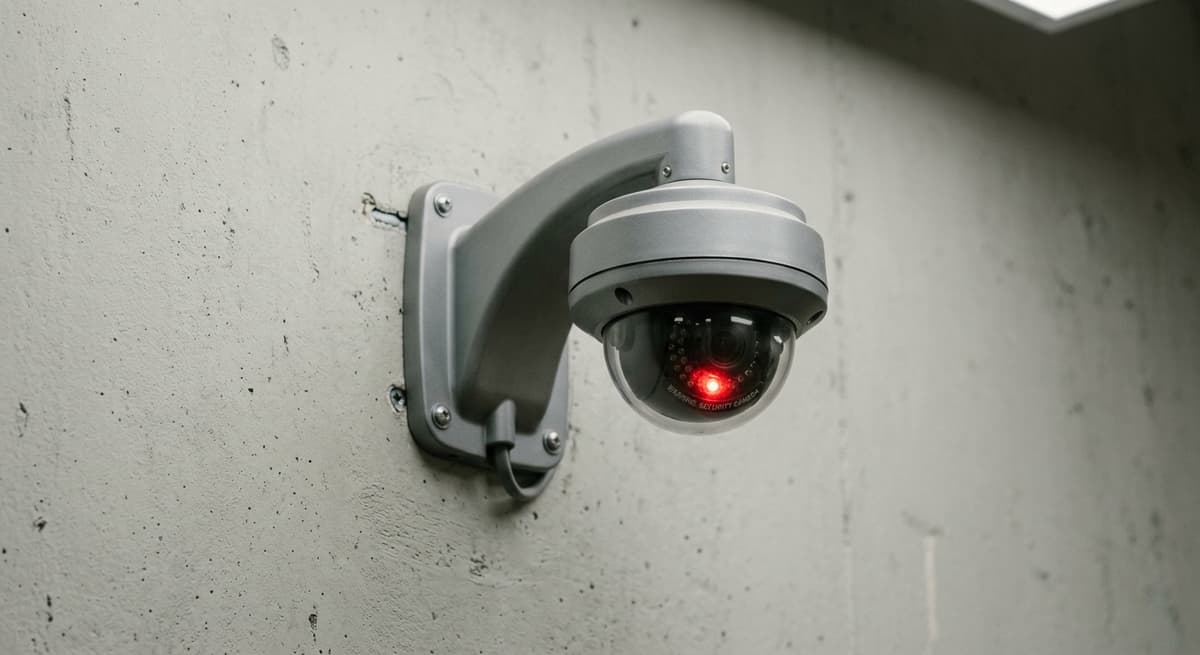
West Virginia homeowners can install security cameras on the exterior of their property. Common placements include:
- Front porch and entryway areas
- Driveway and garage entrances
- Backyard and side yard areas
- Fences and gates
- Windows pointing outward
Best practices for exterior cameras:
- Point cameras at your own property, entrances, and approaches
- Avoid aiming cameras directly at a neighbor's windows, doors, or private outdoor spaces
- Position cameras to minimize capturing a neighbor's yard or activity
- If cameras unavoidably capture portions of a neighbor's property, ensure the primary focus is on your own
- Consider adjusting camera angles if a neighbor raises legitimate privacy concerns
Interior Cameras
You can install security cameras inside your own home. Common uses include:
- Monitoring entrances when you are away
- Checking on pets or children through nanny cameras
- Documenting any unauthorized entry
- Monitoring deliveries and service personnel
Limitations on interior cameras:
- You should avoid placing cameras where they could capture a guest fully or partially nude in a guest bathroom, guest bedroom where visitors are staying, or other area where guests have a reasonable expectation of privacy, since W. Va. Code 61-8-28 only restricts capturing nudity without the guest's knowledge
- If you rent rooms in your home (such as through Airbnb), guests have a heightened expectation of privacy in their sleeping and bathing areas
- Cameras in shared living spaces are generally acceptable when disclosed
Doorbell Cameras
Doorbell cameras (Ring, Nest, Google Doorbell, and similar products) are legal in West Virginia. These devices capture video and often audio of the area immediately outside your front door. Because they record a public-facing area of your property, they are generally lawful.
Considerations for doorbell cameras:
- The camera typically captures your porch, walkway, and a portion of the street or sidewalk
- Audio recording of visitors speaking at your door may trigger wiretapping considerations if you are not present
- Many doorbell cameras display a visible indicator or company logo that serves as notice of recording
- Posting a small sign indicating video and audio recording provides additional legal protection
Business Security Cameras
Retail and Commercial Establishments
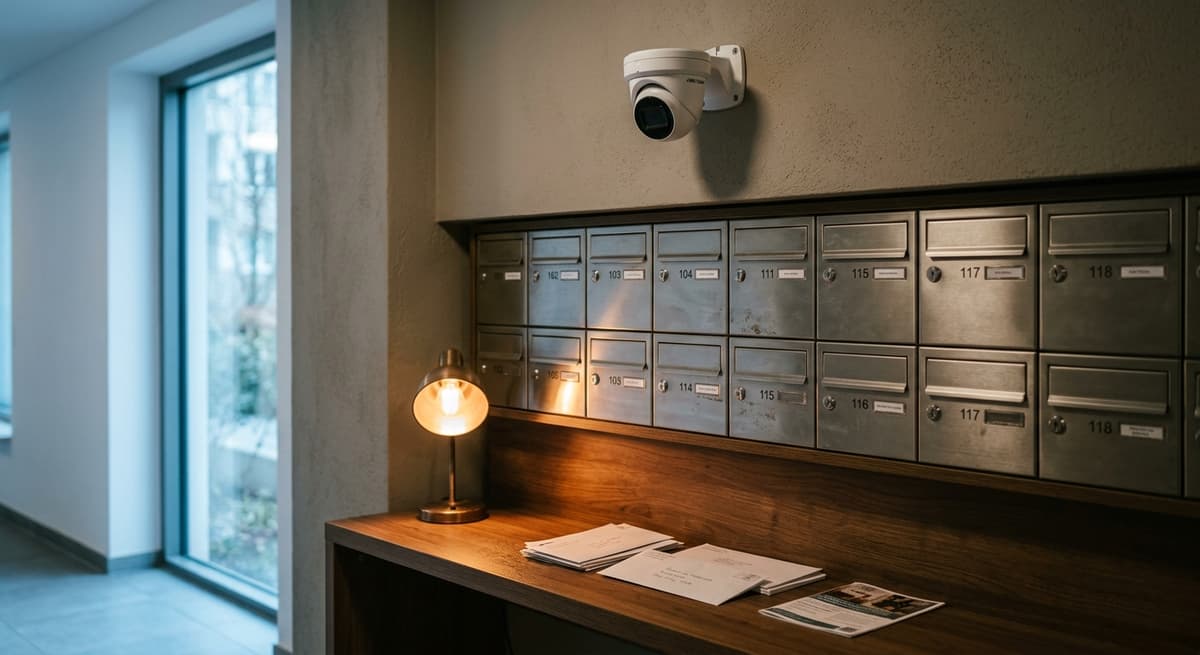
West Virginia businesses can use security cameras extensively for loss prevention, safety, and operational monitoring. Appropriate locations include:
- Sales floors and merchandise areas
- Cash registers and point-of-sale terminals
- Entrances, exits, and loading docks
- Parking lots and exterior areas
- Storage rooms and inventory areas
- Hallways and corridors
Businesses should post visible signs indicating that video surveillance is in progress. While not strictly required by law for video-only cameras, signage serves multiple purposes: it deters theft, provides notice to customers and employees, and helps establish that individuals voluntarily entered a monitored area.
Restricted Areas for Business Cameras
Businesses cannot install cameras in areas where customers or employees have a reasonable expectation of privacy:
- Restrooms and bathrooms -- recording someone fully or partially nude without their knowledge here violates W. Va. Code 61-8-28
- Fitting rooms and changing areas -- same nudity-based privacy protections apply
- Lactation rooms -- private spaces designated for nursing mothers
- Medical examination areas -- patient privacy must be maintained
- Employee locker rooms -- areas where employees change clothes
Security Camera Footage Retention
West Virginia does not mandate specific retention periods for business security camera footage. However, best practices include:
- Retaining footage for at least 30 days for general security purposes
- Preserving footage indefinitely when it captures an incident relevant to a potential claim
- Following industry-specific retention requirements (financial institutions, healthcare facilities)
- Implementing a consistent retention policy and communicating it to staff
Workplace Security Cameras
Employer Rights
West Virginia employers can use security cameras in the workplace for legitimate business purposes including security, safety, loss prevention, and productivity monitoring. The rules follow the same privacy framework as other settings:
Permitted locations:
- Production areas, warehouses, and manufacturing floors
- Retail sales areas and customer service counters
- Lobbies, reception areas, and common spaces
- Parking lots and building perimeters
- Server rooms and secure areas (for access control)
Prohibited locations:
- Bathrooms, restrooms, and shower facilities
- Locker rooms and employee changing areas
- Private offices (without notice to the occupant)
- Break rooms with closed doors (context-dependent)
Employee Notice
While West Virginia law does not explicitly require employers to notify employees about video surveillance in common areas, providing notice is a recommended best practice:
- Include surveillance policies in the employee handbook
- Post visible signs in monitored areas
- Inform new employees about camera locations during onboarding
- Update employees when camera systems are expanded or changed
Audio Monitoring in the Workplace
If workplace security cameras include audio recording, the employer must comply with W. Va. Code 62-1D-3. This means:
- A management participant must be part of recorded conversations (one-party consent), or
- Clear notice must be posted and employees must be informed that audio is captured (implied consent through continued presence after notice), or
- Audio recording should be disabled on workplace cameras
Neighbor Disputes Over Security Cameras
Common Issues
Security camera disputes between neighbors are among the most common privacy-related conflicts in West Virginia. Typical complaints include:
- A camera pointed directly at a neighbor's windows or backyard
- A camera capturing a neighbor's daily activities in their private outdoor space
- Audio recording capabilities capturing conversations in a neighbor's yard
- Cameras creating a feeling of being constantly monitored
Legal Remedies for Camera Disputes
If a neighbor's security camera creates a legitimate privacy concern, possible remedies include:
- Direct communication. Many camera disputes can be resolved by asking the neighbor to adjust camera angles
- Homeowners association complaints. If both parties are in an HOA, the association may have rules governing camera placement
- Civil lawsuit. If a camera constitutes an invasion of privacy or creates a nuisance, the affected neighbor may seek injunctive relief in court
- Criminal complaint. If a camera is used to capture someone fully or partially nude without their knowledge in an area with a reasonable expectation of privacy, the conduct may violate W. Va. Code 61-8-28
Preventing Disputes
To avoid camera-related neighbor conflicts:
- Inform neighbors before installing cameras
- Point cameras at your own property whenever possible
- Use privacy masking features (available on many modern camera systems) to black out areas of the frame that capture a neighbor's property
- Choose camera locations that capture approaches to your home rather than broad views of the neighborhood
- Disable audio recording if it might capture neighbors' conversations
HOA and Landlord Rules
Homeowners Association Restrictions
West Virginia homeowners associations can adopt rules governing security camera placement, including:
- Requiring architectural approval before installing exterior cameras
- Restricting camera placement on common elements
- Mandating that cameras be discreet or match the building's aesthetic
- Prohibiting cameras that face common areas used by other residents
HOA rules cannot override state criminal privacy protections. An HOA can regulate the placement and appearance of cameras but cannot authorize camera placement that would violate W. Va. Code 61-8-28.
Landlord and Tenant Considerations
The relationship between landlords and tenants creates specific security camera considerations:
Landlord rights:
- Install cameras in common areas (hallways, parking lots, building entrances)
- Monitor shared spaces for security purposes
- Require tenants to follow camera-related lease provisions
Landlord restrictions:
- Cannot install cameras inside individual rental units
- Cannot use cameras to monitor tenant activities in private spaces
- Cannot disable tenant-installed cameras without proper notice and legal justification
- Install cameras inside their own rental unit
- Use doorbell cameras at their own entrance
- Record interactions with landlords under one-party consent
Tenant restrictions:
- Must follow lease provisions regarding exterior modifications
- Should avoid cameras that extensively capture other tenants' private areas
- Must remove cameras upon moving out if required by the lease
Security Camera Footage and Law Enforcement
Police Requests for Footage
Law enforcement officers may request security camera footage from homeowners and businesses. You are generally not required to provide footage voluntarily without a warrant. However:
- Police can obtain a warrant requiring you to produce footage
- A subpoena in connection with a court case can compel production
- Voluntarily providing footage to assist an investigation is lawful
- Refusing a warrantless request is not obstruction of justice
Ring and Amazon Neighbors Program
If you use a Ring doorbell or security camera, be aware that the Ring Neighbors program and law enforcement partnerships may allow police to request footage from Ring users in a specific area. Participation is voluntary, and you can decline these requests.
Footage as Evidence
Security camera footage is commonly used as evidence in West Virginia courts for:
- Burglary and property crime prosecutions
- Personal injury and slip-and-fall cases
- Domestic disputes and protective order proceedings
- Insurance claims
- Traffic accidents captured by exterior cameras
More West Virginia Recording Laws
Audio Recording | Video Recording | Voyeurism and Hidden Cameras | Workplace Recording | Recording Police | Phone Call Recording | Security Cameras | Recording in Public | Landlord-Tenant Recording | Dashcam Laws | School Recording | Medical Recording
Back to West Virginia Recording Laws
More West Virginia Recording Topics
See Also
- West Virginia Surveillance Camera Laws covers home, HOA, neighbor, workplace, and landlord camera rules in West Virginia.
More West Virginia Laws
Frequently Asked Questions
Do I need permission to install security cameras on my property in West Virginia?
No. West Virginia homeowners can install security cameras on their own property without permission from neighbors or local government. However, HOA rules may require architectural approval, and cameras should not be aimed at areas where neighbors have a reasonable expectation of privacy.
Can security cameras record audio in West Virginia?
Security cameras with audio recording must comply with the one-party consent rule under W. Va. Code 62-1D-3. If you are not present during the recorded conversations, posting clear notice of audio recording or disabling the audio feature is recommended to avoid wiretapping issues.
Is it legal for businesses to use security cameras in West Virginia?
Yes. Businesses can use security cameras in sales areas, lobbies, parking lots, and other common areas. Cameras cannot be used to capture someone fully or partially nude without their knowledge in restrooms, fitting rooms, or locker rooms. Posting signs about video surveillance is recommended but not strictly required for video-only cameras.
Can my neighbor point a security camera at my property in West Virginia?
Your neighbor can point cameras at their own property, which may incidentally capture portions of yours. However, a camera deliberately aimed at your windows, backyard, or other private areas could constitute an invasion of privacy. Try direct communication first, and consult an attorney if the issue persists.
Do I have to give security camera footage to the police in West Virginia?
You are not required to provide footage voluntarily without a warrant. Police can obtain a warrant or subpoena to compel production of footage. Voluntarily sharing footage to assist an investigation is lawful but not mandatory.
Updates
Independently fact-checked against the cited primary sources; governing law re-checked for recent changes
Corrected the description of W. Va. Code 61-8-28 to include its nudity element: the statute only criminalizes recording a person who is fully or partially nude in a place with a reasonable expectation of privacy, not any undisclosed recording of a person in such a place.
Corrected eight restatements across KeyTakeaways, the requirements table, and the residential, business, neighbor-dispute, and FAQ sections that had dropped W. Va. Code 61-8-28's nudity element, which the statute requires for a violation.
Governing law re-checked for recent changes
Reviewed and approved by an editor
The Law Behind This Article
This article rests on the statutory provisions below, held in our own legal record and retrieved from the official source. Tap a section to read the operative text.
West Virginia Code
§ 61-8-28Criminal invasion of privacy; penalties.In forcecited in 27 of our articles
(a) For the purposes of this section, the words or terms defined in this subsection have the meanings ascribed to them. These definitions are applicable unless a different meaning clearly appears from the context: (1) “A person fully or partially nude” means a male or female who is either clothed or unclothed so that: (A) All or any part of his or her genitals, pubic area or buttocks is visible; or (B) in the case of a female only, a part of a nipple of her breast is visible and is without a fully opaque covering; (2) “To visually portray” a person means to create a reproducible image of that person by means of: (A) A photograph; (B) A motion picture; (C) A video tape; (D) A digital recording; or (E) Any other mechanical or electronic recording process or device that can preserve, for later viewing, a visual image of a person; and (3) “Place where a reasonable person would have an expectation of privacy” means a place where a reasonable person would believe that he or she could, in privacy, be fully or partially nude without expecting that the act of exposing his or her body was being visually portrayed by another person.
Official text (excerpt) · last checked 2026-08-31 · Read the full text in our law library · Verify at code.wvlegislature.gov
Cited in 2 court opinions in our collectionLatest citing opinion in our collection: 2014
Opinions citing this section in our collection:
- Imaginary Images, Inc. v. Evans (Court of Appeals for the Fourth Circuit 2010, 612 F.3d 736)“…8 Pa. Cons. Stat. § 7507.1(e); Utah Code Ann. § 76-5a-2(6); W. Va. Code § 61-8-28(a)(1); Wis. Stat. § 942.08(1)(a). The m…”
- United States v. Thoms (U S Coast Guard Court of Criminal Appeals 2014)“…9-702.7 (West 2013); Vt. Stat. Ann. Tit. 13, § 2605 (2010); W. Va. Code § 61-8-28 (2000). 4 Ariz. Rev. Stat. Ann. § 13-…”
Identified automatically from the court opinions citing this section — not a ranking of which case controls.
Also relied on in: West Virginia Smart Glasses Recording Laws, West Virginia Audio Recording Laws: One-Party Consent Guide, West Virginia Landlord-Tenant Recording Laws: Rights and Rules
§ 62-1D-12Civil liability; defense to civil or criminal action.In forcecited in 20 of our articles
(a) Any person whose wire, oral or electronic communication is intercepted, disclosed, used or whose identity is disclosed in violation of this article shall have a civil cause of action against any person who so intercepts, discloses, or uses, or procures any other person to intercept, disclose, or use the communications, and shall be entitled to recover from any such person or persons: (1) Actual damages, but not less than $100 for each day of violation; (2) Punitive damages, if found to be proper; and (3) Reasonable attorney fees and reasonable costs of litigation incurred. (b) A good faith reliance by a provider of electronic or wire communication services on a court order or legislative authorization constitutes a complete defense to any civil or criminal action brought under this article or any other law.
Official text (excerpt) · last checked 2026-07-30 · Read the full text in our law library · Verify at code.wvlegislature.gov
Also relied on in: West Virginia Phone Call Recording Laws: Rules and Consent Guide, West Virginia Workplace Recording Laws: Employee and Employer Rights, West Virginia AI Meeting Recording Laws (2026)
§ 62-1D-3Interception of communications generally.In forcecited in 36 of our articles
(a) Except as otherwise specifically provided in this article it is unlawful for any person to: (1) Intentionally intercept, attempt to intercept or procure any other person to intercept or attempt to intercept, any wire, oral or electronic communication; or (2) Intentionally disclose or intentionally attempt to disclose to any other person the contents of any wire, oral or electronic communication, knowing or having reason to know that the information was obtained through the interception of a wire, oral or electronic communication in violation of this article; and (3) Intentionally use or disclose or intentionally attempt to use or disclose the contents of any wire, oral or electronic communication or the identity of any party thereto, knowing or having reason to know that such information was obtained through the interception of a wire, oral or electronic communication in violation of this article. (b) Any person who violates subsection (a) of this section is guilty of a felony and, upon conviction thereof, shall be imprisoned in the penitentiary for not more than five years or fined not more than $10,000 or both fined and imprisoned.
Official text (excerpt) · last checked 2026-08-31 · Read the full text in our law library · Verify at code.wvlegislature.gov
Cited in 1 court opinions in our collectionLatest citing opinion in our collection: 1999
Opinions citing this section in our collection:
- Bartnicki v. Vopper (Court of Appeals for the Third Circuit 1999, 200 F.3d 109)“…77 -23a-4, 77-23a-11; Va. Code Ann. §§ 19.2-62 , 19.2-69; W. Va.Code §§ 62-1D-3, 62-1D-12; Wis. Stat. § 968.31 ; Wyo.…”
Identified automatically from the court opinions citing this section — not a ranking of which case controls.
Also relied on in: West Virginia Video Recording Laws: Privacy Rules and Consent, West Virginia Dashcam Laws: Legality, Mounting, and Evidence Rules, West Virginia Medical Recording Laws: Patient Rights and HIPAA Guide
Search our full record of US law — 2.1 million sections, every state + federal →
Sources and References
- W. Va. Code 62-1D-3 - Interception of Communications(code.wvlegislature.gov).gov
- W. Va. Code 61-8-28 - Criminal Invasion of Privacy(code.wvlegislature.gov).gov
- W. Va. Code 62-1D-12 - Civil Cause of Action(code.wvlegislature.gov).gov
- W. Va. Code 62-1D - Wiretapping and Electronic Surveillance Act(code.wvlegislature.gov).gov