
New Jersey
New Jersey E-Scooter Laws: Sidewalk, Helmet & Age Rules (2026)
Independently fact-checked against primary sources (last audited July 23, 2026). · Law checked current as of August 9, 2026. · 7 primary sources cited on this page. How we verify our legal content
This article is general information about New Jersey e-scooter law and is not legal advice. If you were cited or injured, a New Jersey-licensed attorney or the New Jersey Legislature's own statute text can give you a current, situation-specific answer. Information last verified on 7 September 2026.
Are e-scooters legal in New Jersey?
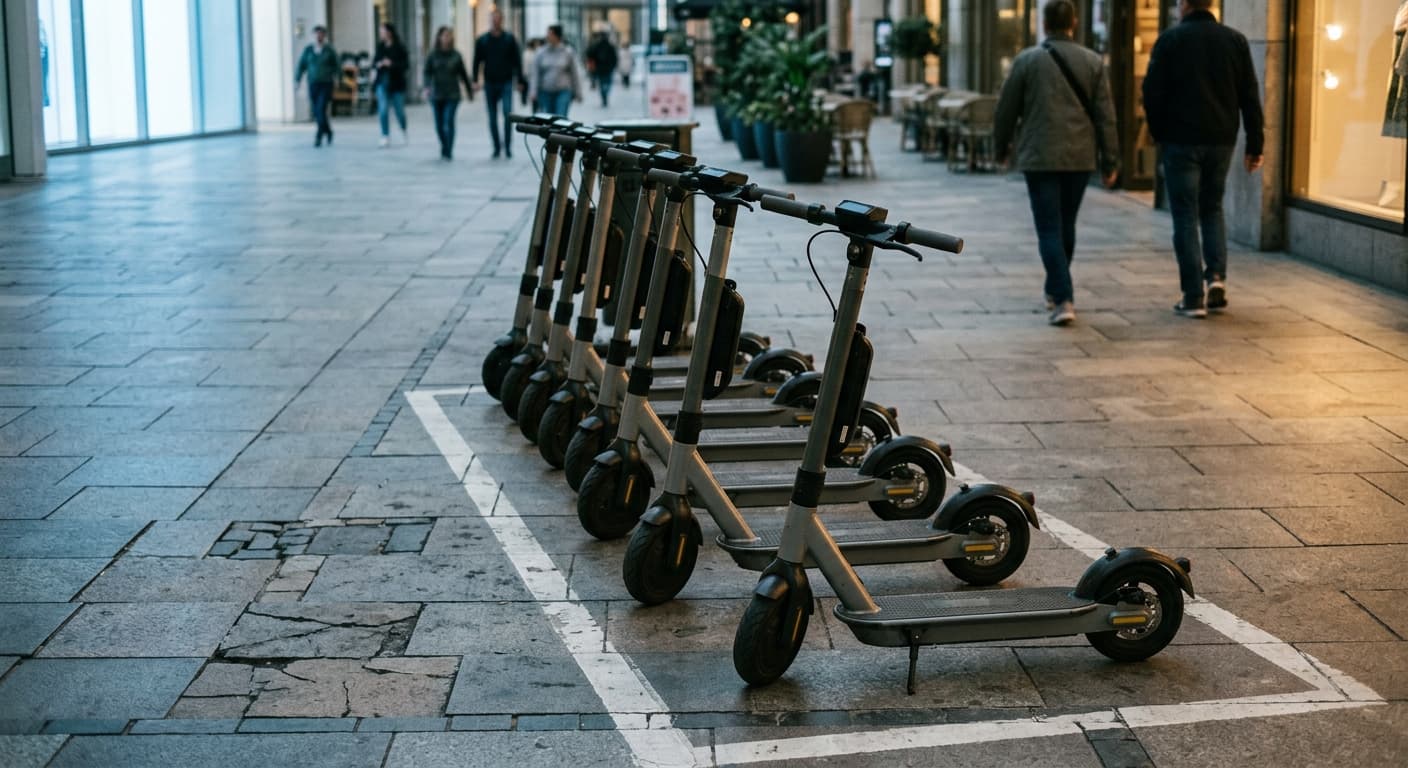
Yes. New Jersey created a dedicated device category for e-scooters with N.J.S.A. 39:4-14.16, enacted as P.L.2019, c.121 and approved May 13, 2019, then amended by P.L.2025, c.285, approved January 19, 2026. The statute is titled to cover "low-speed electric bicycles and low-speed electric scooters" together, and it sets out where a scooter may be operated, what equipment it needs, and what local governments can and cannot restrict. For how New Jersey compares to other states, see the e-scooter laws hub.
What counts as an e-scooter in New Jersey
The definition does not live in the operating statute. N.J.S.A. 39:4-14.16 opens by referring to a low-speed electric bicycle or low-speed electric scooter "as defined in R.S.39:1-1," and it is N.J.S.A. 39:1-1 that supplies the definition: a scooter with a floorboard that can be stood upon by the operator, with handlebars, and an electric motor that is capable of propelling the device, with or without human propulsion, at a maximum speed of less than 19 miles per hour. A device capable of more than that falls outside the category.
That definition is speed-only, and it contains no wattage cap. The New Jersey Office of the Attorney General's own operating-rules chart lists a motor limit of 750 watts (1 horsepower) or less for scooters, but that figure is the chart's rather than the statute's. The chart also still shows the pre-2026 e-bike rules, so treat it as guidance that predates the January 2026 amendments described below.
Where you can ride
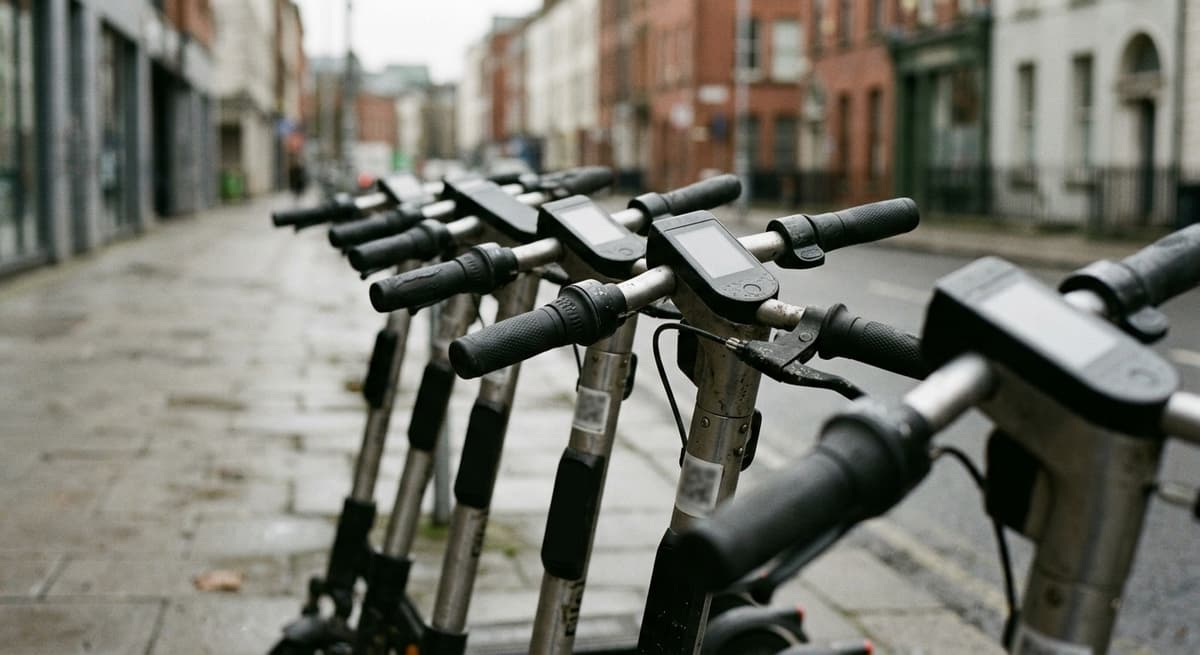
The statute permits a low-speed electric scooter to be operated on the streets, highways, roadways, and bicycle paths of the state. It also allows parking a scooter on a sidewalk, but only if doing so does not impede the normal movement of pedestrians or other sidewalk traffic; the statute's own text authorizes sidewalk parking, not sidewalk riding, and whether riding on a sidewalk is otherwise permitted is left to individual municipalities.
A local government entity or state agency may prohibit scooter use on bicycle paths within its jurisdiction. Unless a local government or state agency permits it, scooters may not be ridden on natural-surface, non-motorized trails, meaning unpaved trails created by clearing and grading soil without added surfacing material.
New Jersey's Safe Passing Law, N.J.S.A. 39:4-92.4, also protects scooter riders directly: it names "low-speed electric scooter" riders alongside pedestrians and cyclists, requiring a passing motorist to change lanes or leave four feet of space, and to slow to 25 mph if a lane change isn't possible. A motorist who violates this and causes bodily injury faces a $500 fine and two motor vehicle penalty points; a violation without injury carries a $100 fine and no points. This is a penalty on drivers who pass unsafely, not a penalty on scooter riders themselves.
Rider rules
License and registration: none required. As amended in 2026, subsection (f)(1) of the statute reads: "The operator of a low-speed electric scooter shall not be required to register the low-speed electric scooter or have a driver's license."
Insurance: not addressed by the statute anymore. The 2019 version of subsection (f) also said a scooter operator need not "furnish proof of insurance," but P.L.2025, c.285 deleted that phrase when it rewrote the subsection, so the current text neither requires nor excuses scooter insurance. The same act added N.J.S.A. 39:6A-4.8, which defines "pedestrian" for personal injury protection purposes to include a person operating a bicycle or a low-speed electric bicycle and does not mention low-speed electric scooters. How a scooter rider's own coverage works after that change is an open question worth putting to your insurer or an attorney rather than assuming an exemption.
Age: New Jersey sets no statutory minimum age to operate a low-speed electric scooter. The statute's subsections contain no age clause, and the state's own operating-rules chart lists "No Restrictions" for age.
Helmet: required for riders under 17. The scooter statute incorporates all bicycle-applicable statutes and regulations into scooter operation (except where they cannot logically apply), which pulls in New Jersey's general bicycle helmet law, N.J.S.A. 39:4-10.1, requiring anyone under 17 to wear a safety helmet while riding.
Penalties
A flat "$100 first offense, $200 second offense" scooter penalty circulates in some online sources, but that figure could not be confirmed against a primary source and should not be relied on. The only penalty figures confirmed directly from statute apply to motorists under the Safe Passing Law described above, a $500 fine and two points for a passing violation that causes injury, $100 and no points if it does not, rather than a penalty aimed at the scooter rider.
Because a scooter rider is treated as a road user, New Jersey's broader impaired-driving rules can still come into play; for the general framework on impaired operation in the state, see New Jersey DUI laws.
The 2026 e-bike law and what it changed for scooters
P.L.2025, c.285 was approved January 19, 2026 and took effect immediately, except for its automobile-insurance section. It created New Jersey Motor Vehicle Commission registration and driver's license requirements for the "low-speed electric bicycle" and "motorized bicycle" categories defined under N.J.S.A. 39:1-1, plus an insurance requirement for motorized bicycles that were not previously required to carry it. It created none of those requirements for low-speed electric scooters, and the MVC's own release describing the new appointment process for e-bike licensing and registration does not mention low-speed electric scooters anywhere in its text.
The act did rewrite the scooter statute itself, so it is not accurate to call the 2019 law untouched. Section 3 of c.285 amended N.J.S.A. 39:4-14.16: it split subsection (f) into (f)(1) for scooters and (f)(2) for e-bikes, added cross-references to the new act in subsections (a) and (g), narrowed subsection (h) so that only a low-speed electric scooter is treated as a motor vehicle to the extent required by 23 U.S.C. s.154, dropped the tamper-label language from subsection (c), and added new subsections (i) and (j) aimed at e-bikes. What did not change is the practical outcome for scooter riders: still no registration, still no driver's license. If you have seen news coverage about New Jersey requiring a license or registration for an e-bike, that story does not extend to standard stand-up e-scooters.
Enforcement in practice
No statewide New Jersey e-scooter citation statistics were documented in the research behind this article. Enforcement patterns do not change what the statute requires, and how strictly a given town enforces these rules on a given day is not a form of permission to ignore the sidewalk, bike-path, or helmet rules described above.
Newark and Jersey City e-scooter rules
Newark's official city guidance states plainly that "riding scooters on the sidewalk is strictly prohibited" within city limits; scooters must be ridden on the street or in a bike lane where one is accessible, and may only be walked, not ridden, on a sidewalk to reach parking or the curb.
Jersey City's official e-mobility guidance instructs riders to stay off sidewalks, wear a helmet, yield to pedestrians, and watch for turning vehicles. Neither city's publicly available materials specify a minimum age for shared scooter rentals in a way that could be confirmed for this article, so check the current rental app or municipal code directly if that detail matters to your situation.
If you are hit by a vehicle while riding an e-scooter in New Jersey, or a scooter rider is involved in a collision with you, the general fault and insurance framework in New Jersey car accident laws applies to scooter riders as road users in most respects, and an attorney can explain how it applies to your specific situation.
Frequently Asked Questions
Can I ride an e-scooter on the sidewalk in New Jersey?
State law only authorizes parking a scooter on a sidewalk, not riding one there, provided it does not block pedestrians. Newark expressly bans sidewalk riding, and Jersey City's guidance tells riders to stay off sidewalks; check your local rules.
Do I need a license or registration for an e-scooter in New Jersey?
No. As amended in 2026, N.J.S.A. 39:4-14.16(f)(1) says a low-speed electric scooter operator is not required to register the scooter or have a driver's license. The subsection's older wording about proof of insurance was deleted by P.L.2025, c.285, so the statute no longer addresses scooter insurance either way.
Is there a minimum age to ride an e-scooter in New Jersey?
No statutory minimum age was found. The statute contains no age clause, and the state's own operating chart lists no age restriction.
Do I have to wear a helmet on an e-scooter in New Jersey?
Yes, if you are under 17. The scooter statute incorporates New Jersey's general bicycle helmet law, which requires a helmet for anyone under 17.
Does New Jersey's new e-bike licensing law apply to e-scooters?
Not in substance. P.L.2025, c.285, approved January 19, 2026, created licensing and registration rules for e-bikes and motorized bicycles, not for scooters. It did amend the scooter statute, but scooter riders still need no registration and no driver's license.
How fast can an e-scooter go in New Jersey?
Under 19 mph. That is the ceiling in the low-speed electric scooter definition at N.J.S.A. 39:1-1, which the operating statute points to. The definition sets no wattage limit; the 750-watt figure comes from the state Attorney General's micromobility chart, not from the statute.
What's the fine for an e-scooter violation in New Jersey?
A commonly cited flat $100/$200 rider penalty could not be confirmed against a primary source. The only confirmed penalties apply to motorists who violate the Safe Passing Law around a scooter rider, not to the scooter rider.
Is Newark's e-scooter rule different from the state's?
Newark adds a strict citywide sidewalk-riding ban on top of the state framework, requiring scooters to stay on the street or in bike lanes.
Injured in New Jersey? Get a free case review from a personal-injury attorney
If someone else's negligence caused your injury, you may be owed compensation for medical bills, lost wages, and pain and suffering. Get a free, no-obligation review from a New Jersey personal-injury attorney. Most work on contingency, so there is no upfront cost.
Updates
Corrected the scooter definition to its actual source at N.J.S.A. 39:1-1, removed the 750-watt figure as a statutory limit, and updated the license, registration and insurance discussion to the current text of N.J.S.A. 39:4-14.16(f)(1) as amended by P.L.2025, c.285.
Fixed a mis-citation: New Jersey genuinely does not require insurance for low-speed e-scooters, but that exemption follows from R.S. 39:1-1's 'motor vehicle' exclusion, not from N.J.S.A. 39:4-14.16(f), which addresses only registration and licensing.
Restored the correct statutory attribution: N.J.S.A. 39:4-14.16(f) itself, enacted as P.L.2019, c.121 section 2(f), directly exempts a low-speed electric scooter operator from registration, insurance, and a driver's license in the same sentence, contrary to a prior fix wave's incorrect claim that subsection (f) never mentions insurance.
Governing law re-checked for recent changes
Independently fact-checked against the cited primary sources
The Law Behind This Article
This article rests on the statutory provisions below, held in our own legal record and retrieved from the official source. Tap a section to read the operative text.
New Jersey Statutes (Unannotated)
§ 39:4-14.16Operation of low-speed electric bicycle or scooter.In force
2. a. A low-speed electric bicycle or low-speed electric scooter, as defined in R.S.39:1-1, may be operated on the streets, highways, roadways, and bicycle paths of this State, except as otherwise provided in this section, section 2 of P.L.1975, c.250 (C.39:4-14.3), section 9 of P.L.1983, c.105 (C.39:4-14.3i), and P.L.2025, c.285 (C.39:6A-4.8 et al.), and may be parked on a sidewalk provided that the low-speed electric bicycle or low-speed electric scooter does not impede the normal movement of pedestrian or other traffic upon the sidewalk. b. On and after January 1, 2019, manufacturers and distributors of low-speed electric bicycles shall apply a label that is permanently affixed, in a prominent location, to each low-speed electric bicycle. The label shall contain the classification number, top assisted speed, and motor wattage of the low-speed electric bicycle and shall be printed in Arial font in at least 9-point type. c. A person shall not tamper with or modify a low-speed electric bicycle so as to change the motor-powered speed capability or engagement of a low-speed electric bicycle.
Official text (excerpt) · last checked 2026-09-07 · Read the full text in our law library · Verify at lis.njleg.state.nj.us
Cited in 1 court opinions in our collectionLatest citing opinion in our collection: 2024
Opinions citing this section in our collection:
- David Goyco v. Progressive Insurance Company (Supreme Court of New Jersey 2024)“…ts under the No-Fault Act in light of the 2019 enactment of N.J.S.A. 39:4-14.16(g), which provides that an LSES should…”
Identified automatically from the court opinions citing this section — not a ranking of which case controls.
§ 39:4-92.4Motor vehicles overtaking certain pedestrians, persons operating bicycles, personal conveyances; definitions.In force
1. a. As used in this section: "Bicycle" shall have the same meaning as set forth in section 2 of P.L.1975, c.328 (C.39:4-14.5). "Pedestrian" shall include, but not be limited to, a pedestrian as defined in R.S.39:1-1 or any other person who is upon the roadway and outside of a motor vehicle for work, emergency response, or recreation. "Personal conveyance" shall include, but not be limited to, a low-speed electric bicycle as defined in R.S.39:1-1, a low-speed electric scooter as defined in R.S.39:1-1, a manual wheelchair, a motorized wheelchair as defined in R.S.39:1-1 or a similar mobility assisting device used by persons with physical disabilities or by persons whose ambulatory mobility has been impaired by age or illness, an electric personal assistive mobility device as defined in section 1 of P.L.2001, c.430 (C.39:4-14.10), a motorized scooter as defined in R.S.39:1-1, a skateboard as referenced in section 1 of P.L.1997, c.411 (C.39:4-10.5), a motorized skateboard as defined in R.S.39:1-1, roller skates as defined in section 1 of P.L.1997, c.411 (C.39:4-10.5), or any other device used by a person for transportation.
Official text (excerpt) · last checked 2026-08-01 · Read the full text in our law library · Verify at lis.njleg.state.nj.us
§ 39:4-10.1Bicycle helmets, requirements.In force
1. a. A person under 17 years of age shall not operate, or ride upon a bicycle as a passenger, unless that person is wearing a properly fitted and fastened bicycle helmet which meets the standards of the American National Standards Institute (ANSI Z90.4 bicycle helmet standard) or the Snell Memorial Foundation's 1990 Standard for Protective Headgear for Use in Bicycling. This requirement shall apply to a person who rides upon a bicycle while in a restraining seat which is attached to the bicycle or in a trailer towed by the bicycle. As used in this act, "bicycle" means a vehicle with two wheels propelled solely by human power and having pedals, handle bars and a saddle-like seat. The term shall include a bicycle for two or more persons having seats and corresponding sets of pedals arranged in tandem. b. The director shall publish a list of bicycle helmets which meet the standards described in subsection a. of this section and shall provide for its distribution in as many locations frequented by the public as the director deems appropriate and practicable. c. The requirement in subsection a.
Official text (excerpt) · last checked 2026-08-01 · Read the full text in our law library · Verify at lis.njleg.state.nj.us
Cited in 2 court opinions in our collectionLatest citing opinion in our collection: 2002
Opinions citing this section in our collection:
- Cordy v. Sherwin Williams Co. (District Court, D. New Jersey 1997, 975 F. Supp. 639)“…to persons under the age of 14. 2 See N.J.S.A. 39:4-10.1. Moreover, the decision to apply the he…”
- Nunez v. Schneider National Carriers, Inc. (District Court, D. New Jersey 2002, 217 F. Supp. 2d 562)“…helmets by bicyclists over the age of 14, see N.J.S.A. 39:4-10.1, there is legislation in place which se…”
Identified automatically from the court opinions citing this section — not a ranking of which case controls.
§ 39:1-1Definitions.In force
39:1-1. As used in this subtitle, unless other meaning is clearly apparent from the language or context, or unless inconsistent with the manifest intention of the Legislature: "Alley" means a public highway wherein the roadway does not exceed 12 feet in width. "Authorized emergency vehicles" means vehicles of the fire department, police vehicles, and such ambulances and other vehicles as are approved by the chief administrator when operated in response to an emergency call. "Autocycle" means a three-wheeled motorcycle designed to be controlled with a steering wheel and pedals in which the operator and passenger may ride in a completely or partially enclosed seating area that is equipped with a roll cage or roll hoops, safety seat belts for each occupant, and anti-lock brakes. "Automobile" includes all motor vehicles except motorcycles. "Berm" means that portion of the highway, exclusive of the roadway and shoulder, that borders the shoulder but is not to be used for vehicular travel.
Official text (excerpt) · last checked 2026-08-01 · Read the full text in our law library · Verify at lis.njleg.state.nj.us
Cited in 121 court opinions in our collectionLatest citing opinion in our collection: 2026
Opinions citing this section in our collection:
- State v. Moran (Supreme Court of New Jersey 2010, 202 N.J. 311)“…such willful violation of any of the provisions of [N.J.S.A. 39:1-1 to 39:5G-2] as shall, in the discretion…”
- Wilno v. NJ Mfrs. Ins. Co. (New Jersey Superior Court Appellate Division 1981, 180 N.J. Super. 146)“…more relatives resident in the same household. Moreover, N.J.S.A. 39:1-1 defines automobile as "all motor vehicl…”
- Melone v. Jersey Central Power & Light Co. (New Jersey Superior Court Appellate Division 1954, 30 N.J. Super. 95)“…e truck stalled, within a residence district; that is (see N.J.S.A. 39:1-1), was it within "that portion of a hi…”
Identified automatically from the court opinions citing this section — not a ranking of which case controls.
Search our full record of US law — 2.1 million sections, every state + federal →
Sources and References
- N.J.S.A. 39:4-14.16, P.L.2019 c.121, low-speed electric scooter statute (Wayback capture of njleg.gov PDF)(web.archive.org)
- NJ Office of the Attorney General, Micromobility Operating Rules and Regulations chart(nj.gov).gov
- NJ DOT, Biking in New Jersey: Regulations (Safe Passing Law, helmet cross-reference)(nj.gov).gov
- NJ MVC press release, E-bike Licensing and Registration (confirms scooters are excluded)(nj.gov).gov
- City of Newark, Shared Scooters & E-Bikes(newarknj.gov).gov
- City of Jersey City, E-Mobility (E-Bikes, E-Scooters)(jerseycitynj.gov).gov
- P.L.2025, c.285 (approved January 19, 2026), amending R.S.39:1-1 and N.J.S.A. 39:4-14.16 and adding N.J.S.A. 39:6A-4.8(pub.njleg.gov).gov
- P.L.2019, c.121, the original low-speed electric scooter act (official njleg PDF, replaces the Wayback capture)(pub.njleg.gov).gov