
Florida
Florida Car Seat Laws: Requirements and Guidelines
Independently fact-checked against primary sources (last audited August 20, 2026). · Reviewed by the RecordingLaw editorial team. · Law checked current as of August 20, 2026. How we verify our legal content
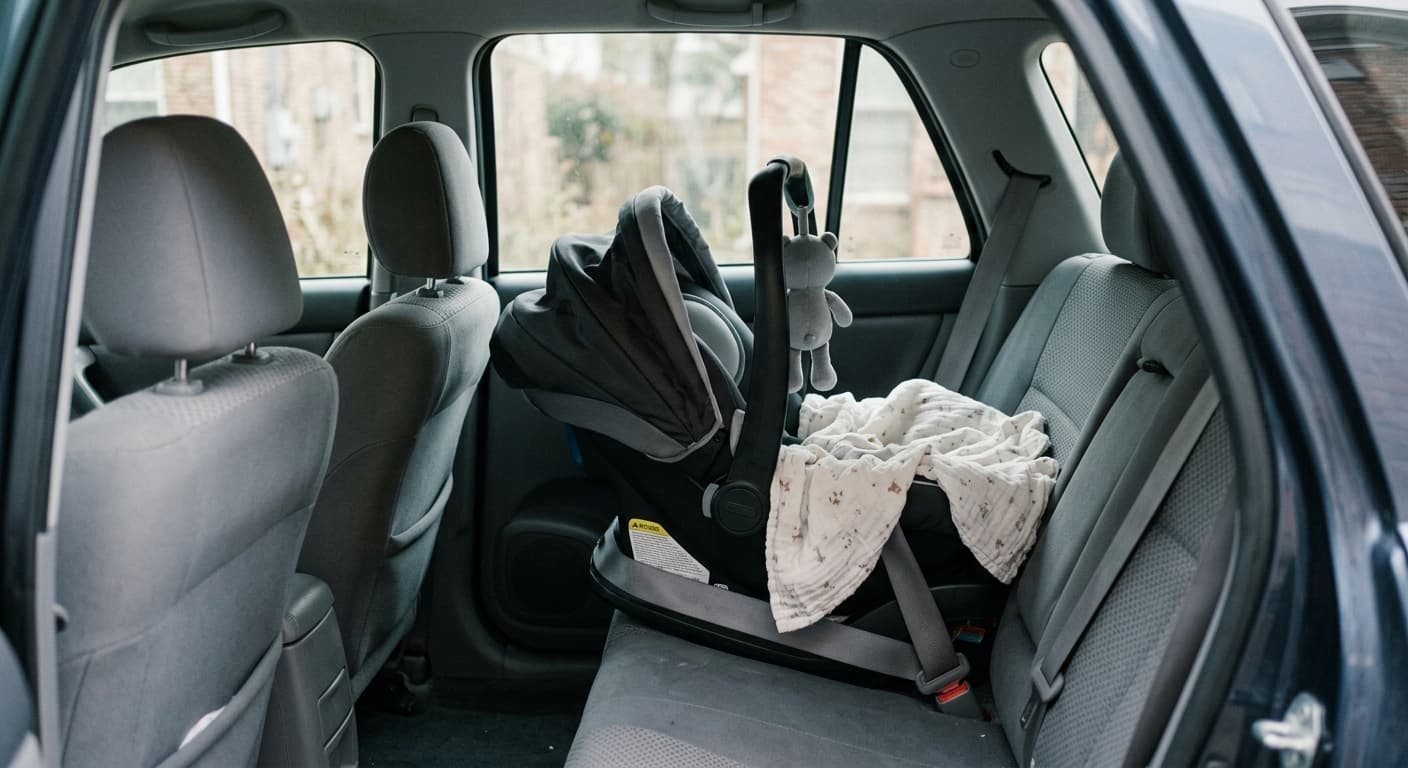
Florida law requires children age 3 and under to ride in a separate carrier or an inbuilt child-safety seat, and children ages 4 and 5 must use a booster seat or approved child restraint. Florida does not specify rear-facing or forward-facing rules beyond those age thresholds.
A Summary of Child Car Seat Laws in Florida
What are the Height and Weight Requirements for Car Seats in Florida?
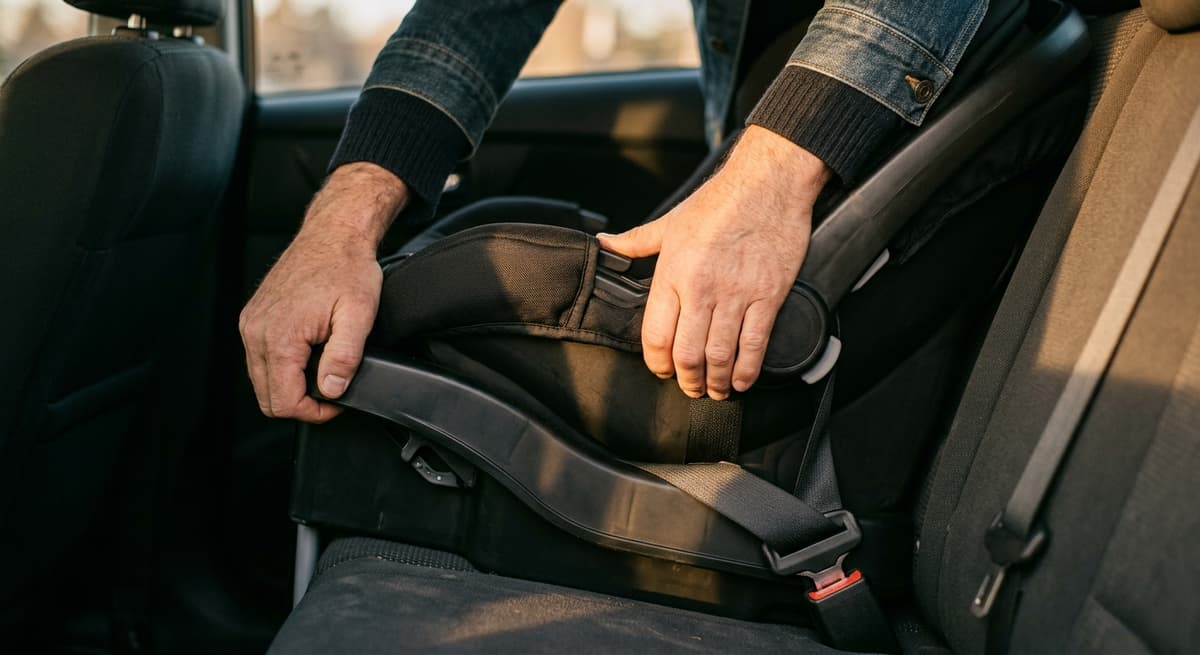
Children younger than 4 years are required by law to ride on a child restraint device whether inbuilt or on a separate carrier.
Florida car seat laws do not issue guidelines for rear-facing and forward-facing seats.
Children ages 4 and 5 are allowed to use a booster seat.
Florida law does not set an age or rule for when a child may sit in the front seat; age 6 is simply when the child-restraint-device requirement under Fla. Stat. Section 316.613 ends and an ordinary seat belt becomes legally sufficient (Although moving to the front seat is not recommended until a child reaches the appropriate height to do so safely)
What are the Rear Facing Car Seat Laws in Florida?
Florida law requires children ages 0-3 to sit on child restraint devices of a separate carrier or a car's inbuilt child-safety seat. The law does not cover rear-facing seat requirements, however, the Florida Department of Highway Safety and Motor Vehicles says the best car seat should fit your child perfectly.
The state encourages parents to follow AAP (American Academy of Pediatrics) guidelines. The guidelines recommend children should use a rear-facing seat until they are at least 2 years old or until they exceed the car seat manufacturer's height and weight limits. The maximum weight for most seats is at least 20 pounds, although some manufacturers are now making seats that can support infants of up to 40 pounds. This means some children may use a rear-facing seat until age 4, which is still recommended by AAP.
What are the Forward Facing Car Seat Laws in Florida?
Florida does not address specifications for forward-facing seats. This means parents may be confused when trying to comply with forward-facing car seat laws. However, AAP and the car seat manufacturer's manual outline specifics which can help you keep your baby safe while complying with the law. AAP recommends children to transition to a forward-facing seat once they weigh at least 20 pounds and are at least 2 years old. The seat must be federally approved and secured in the back seat away from an active airbag. Additionally, children should remain in this seat as long as they are within the manufacturer's limits.
What are the Booster Seat Laws in Florida?
Florida requires booster seats for children who are aged 4 to 5. Unfortunately, this is not in line with best practices for child safety. Typically, children are ready for booster seats when they weigh at least 40 pounds and are older than 5 years. For a safe fit, the shoulder belt should cross the center of your child's chest (not neck) and the lap belt should lie low across the upper thighs. Additionally, the seat must meet the federal safety standards and be secured in the back seat. Once your child is 4'9'' or taller, he or she can now transition to a regular car seat belt.
When can a Child Ride in the Front Seat in Florida?
Florida has no statute governing where in the vehicle a child may sit. Age 6 is simply the age at which Fla. Stat. Section 316.613's child-restraint-device requirement ends, allowing an ordinary seat belt instead; it is not a front-seat placement rule. Moving a young child to the front seat at that age is highly discouraged because children are too small for regular seat belts to fit safely. Regular car seat belts were designed to fit people with a height of 4'9'' or more, so children wearing them may be exposed to serious injury in case of an accident due to oversize seat belts. If the shoulder belts and lap belts are wrongly positioned across the child's body, serious damage to the spleen, intestines and spine may occur due to the forces exerted on the child during a car crash. Most experts recommend keeping children in the back seat until they have a height of 4'9''.
Is it Illegal to Leave a Child Alone in a Vehicle in Floria?
Parents are not allowed to leave their children in a car for more than 15 minutes if the engine is not running. If the car is turned on, leaving the child unsupervised for any amount of time is against the law. We do not recommend leaving your child alone in the car for any amount of time.
Are Car Seats Required in Taxis in Florida?
Florida has one of the clearest laws applied to chauffeur-driven vehicles. Taxis, Limos, Sedans, Vans, Busses, and Motor Coaches are all exempt from car seat laws**. **The caveat for this exclusion is that the vehicle must be hired and used for the transportation of persons for compensations. So to qualify for this exemption the driver must be paid.
Note - It is not recommended to travel without using the proper child restraints.
More Florida Laws
Frequently Asked Questions
What are the Height and Weight Requirements for Car Seats in Florida?
Children younger than 4 years are required by law to ride on a child restraint device whether inbuilt or on a separate carrier. Florida car seat laws do not issue guidelines for rear-facing and forward-facing seats. Children ages 4 and 5 are allowed to use a booster seat.
What are the Rear Facing Car Seat Laws in Florida?
Florida law requires children ages 0-3 to sit on child restraint devices of a separate carrier or a car's inbuilt child-safety seat. The law does not cover rear-facing seat requirements, however, the Florida Department of Highway Safety and Motor Vehicles says the best car seat should fit your child perfectly. The state encourages parents to follow AAP (American Academy of Pediatrics) guidelines.
What are the Forward Facing Car Seat Laws in Florida?
Florida does not address specifications for forward-facing seats. This means parents may be confused when trying to comply with forward-facing car seat laws. However, AAP and the car seat manufacturer's manual outline specifics which can help you keep your baby safe while complying with the law. AAP recommends children to transition to a forward-facing seat once they weigh at least 20 pounds and are at least 2 years old.
What are the Booster Seat Laws in Florida?
Florida requires booster seats for children who are aged 4 to 5. Unfortunately, this is not in line with best practices for child safety. Typically, children are ready for booster seats when they weigh at least 40 pounds and are older than 5 years. For a safe fit, the shoulder belt should cross the center of your child's chest (not neck) and the lap belt should lie low across the upper thighs. Additionally, the seat must meet the federal safety standards and be secured in the back seat.
When can a Child Ride in the Front Seat in Florida?
Florida has no statute governing where in the vehicle a child may sit. Age 6 is simply the age at which Fla. Stat. Section 316.613's child-restraint-device requirement ends, allowing an ordinary seat belt instead; it is not a front-seat placement rule. Moving a young child to the front seat at that age is highly discouraged because children are too small for regular seat belts to fit safely. Regular car seat belts were designed to fit people with a height of 4'9'' or more, so children wearing them may be exposed to serious injury in case of an accident due to oversize seat belts. If the shoulder belts and lap belts are wrongly positioned across the child's body, serious damage to the spleen, intestines and spine may occur due to the forces exerted on the child during a car crash.
Is it Illegal to Leave a Child Alone in a Vehicle in Floria?
Parents are not allowed to leave their children in a car for more than 15 minutes if the engine is not running. If the car is turned on, leaving the child unsupervised for any amount of time is against the law. We do not recommend leaving your child alone in the car for any amount of time.
Are Car Seats Required in Taxis in Florida?
Florida has one of the clearest laws applied to chauffeur-driven vehicles. Taxis, Limos, Sedans, Vans, Busses, and Motor Coaches are all exempt from car seat laws**. **The caveat for this exclusion is that the vehicle must be hired and used for the transportation of persons for compensations. So to qualify for this exemption the driver must be paid. Note - It is not recommended to travel without using the proper child restraints.
Updates
Removed a fabricated "front seat allowed at age 6" legal claim (it appeared 4 times): Florida's child restraint statute sets no front-seat placement rule at all; age 6 is simply when the child-restraint-device requirement ends and an ordinary seat belt becomes legally sufficient.
Independently fact-checked against the cited primary sources; governing law re-checked for recent changes
Governing law re-checked for recent changes
Reviewed and approved by an editor
The Law Behind This Article
This article rests on the statutory provisions below, held in our own legal record and retrieved from the official source. Tap a section to read the operative text.
Florida Statutes
§ 316.613Child restraint requirements.In force
(1)(a) Every operator of a motor vehicle as defined in this section, while transporting a child in a motor vehicle operated on the roadways, streets, or highways of this state, shall, if the child is 5 years of age or younger, provide for protection of the child by properly using a crash-tested, federally approved child restraint device.1. For children aged through 3 years, such restraint device must be a separate carrier or a vehicle manufacturer’s integrated child seat. 2. For children aged 4 through 5 years, a separate carrier, an integrated child seat, or a child booster seat may be used. However, the requirement to use a child restraint device under this subparagraph does not apply when a safety belt is used as required in s. 316.614(4)(a) and the child:a. Is being transported gratuitously by an operator who is not a member of the child’s immediate family; b. Is being transported in a medical emergency situation involving the child; or c. Has a medical condition that necessitates an exception as evidenced by appropriate documentation from a health care professional.
Official text (excerpt) · last checked 2026-09-09 · Read the full text in our law library · Verify at leg.state.fl.us
Cited in 2 court opinions in our collectionLatest citing opinion in our collection: 2008
Opinions citing this section in our collection:
- Quarantello v. Leroy (District Court of Appeal of Florida 2008, 977 So. 2d 648)“…omplaint did not allege breach of a duty of care created by section 316.613, Florida Statutes (1999). [1] In order to meet her burde…”
- Edic Ex Rel. Edic v. Century Products Co. (Court of Appeals for the Eleventh Circuit 2004, 364 F.3d 1276)“…dics’ misuse of the CRS was the cause of Dylan’s injuries. Fla. Stat. Ann. §316.613(3) (2001). We discuss each of these ar…”
Identified automatically from the court opinions citing this section — not a ranking of which case controls.
Search our full record of US law — 2.1 million sections, every state + federal →
Sources and References
- Fla. Stat. § 316.613: child restraint devices required(leg.state.fl.us)