
South Carolina
South Carolina Squatters Rights and Adverse Possession Laws (2026)
Independently fact-checked against primary sources (last audited August 18, 2026). · Reviewed by the RecordingLaw editorial team. · Law checked current as of August 18, 2026. How we verify our legal content
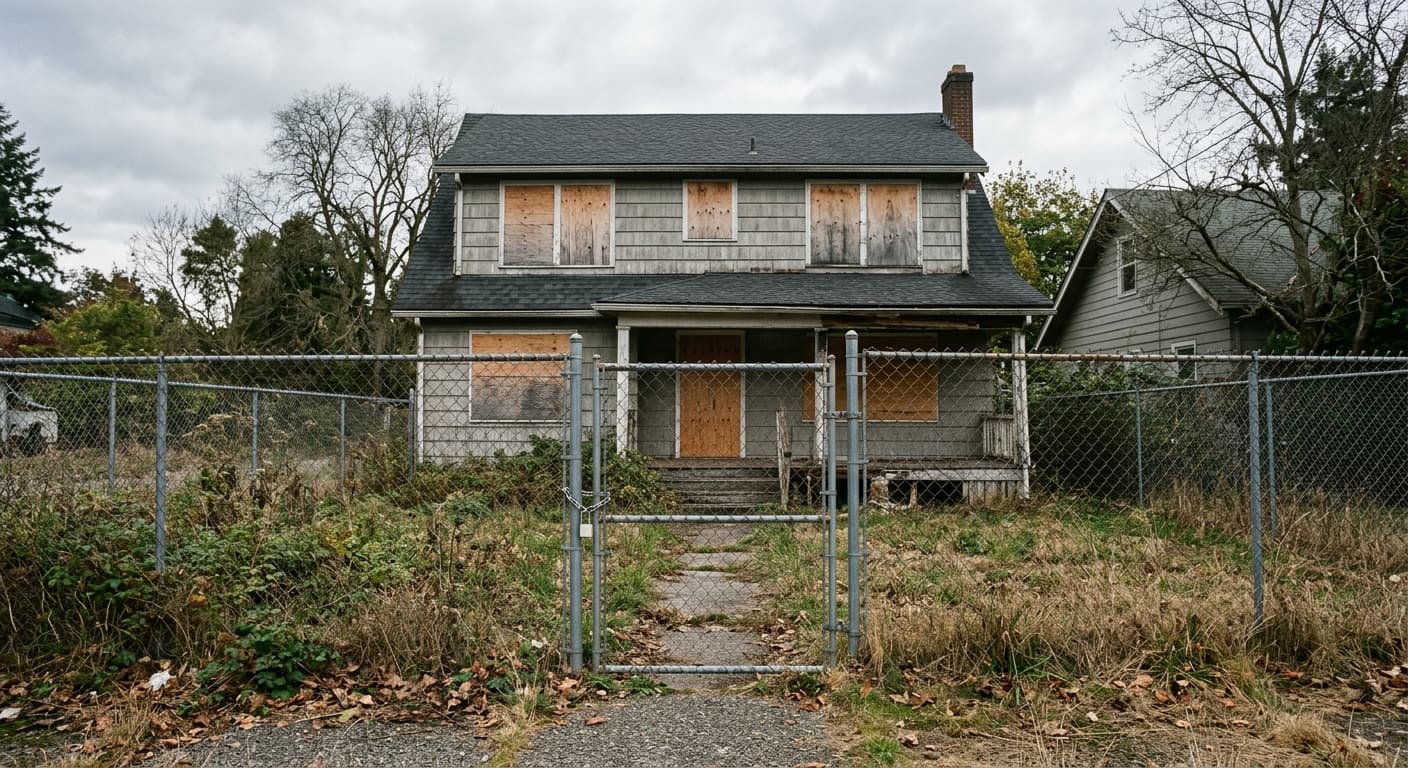
South Carolina sets a 10-year clock on adverse possession claims, and property owners who act promptly can remove unauthorized occupants through a summary magistrate procedure written specifically for trespassers, well before that clock ever runs out.
Information last verified on May 27, 2026. This article provides general legal information, not legal advice.
Jurisdiction scope: This article covers South Carolina state law only. For a nationwide overview, see the national squatters rights guide.
Adverse Possession in South Carolina: Period and Elements
The 10-Year Statutory Period
South Carolina's adverse possession framework is codified at S.C. Code Ann. §§ 15-67-210 through 15-67-260. Section 15-67-210 establishes the foundational presumption: a person holding legal title is deemed to have been in possession within the statutory period, and any occupation by another person is presumed subordinate to that title unless the occupant can show continuous adverse possession for 10 years before the action is brought.
That 10-year period is uniform. Unlike several other states, South Carolina does not offer a shorter limitations window for claimants who hold color of title. Both of the primary statutory tracks run on the same 10-year clock.

Possession With a Written Instrument (§ 15-67-220)
When a claimant enters property under a claim of title that is founded on a written instrument, such as a deed that is defective or covers the wrong parcel, the claim falls under § 15-67-220. Possession is deemed adverse under this track when there has been continued occupation and possession, for 10 years, of the premises (or part of the premises) described in the written instrument, decree, or judgment under that claim of title. When the described premises consist of a tract divided into lots, possession of one lot is not deemed possession of any other lot in the same tract.
The written-instrument track is broader in scope. A claimant can point to the full footprint described in the instrument, not just the ground they physically touched.
Possession Without a Written Instrument (§ 15-67-240)
When no written instrument supports the claim, § 15-67-240 restricts the adverse possession claim to the premises the claimant actually occupied and no others. Section 15-67-250 adds a stricter proof standard: the claimant must show both substantial enclosure and usual cultivation or improvement. Vague or sporadic use does not satisfy this test.
This distinction is important in squatter cases. A squatter who moves into a vacant home with no deed, no lease, and no written claim is on the harder track. The claimant must demonstrate 10 uninterrupted years of actual, open, exclusive, hostile, and notorious use confined to the space physically occupied.
The OCEAN Elements Under South Carolina Law
South Carolina courts require a claimant to prove all five classic adverse possession elements throughout the full 10-year period:
Open and Notorious. The occupation must be visible and obvious to the true owner. Hiding inside a property during the day or avoiding detection defeats this element.
Continuous. Possession cannot be seasonal or intermittent in a way that breaks the chain. A claimant may tack the periods of successive adverse possessors, but only if privity exists between them.
Exclusive. The claimant must hold the property without sharing control with the owner or the general public.
Actual. Physical occupation is required. Simply claiming or asserting an intent to possess is not enough.
Hostile. Possession must be without the owner's permission. If the owner consents to the occupancy at any point, hostility ends and the clock resets.
No Tax-Payment Requirement
South Carolina statutes contain no provision requiring an adverse possessor to pay property taxes as a condition of the claim. Paying taxes may serve as evidence of open and notorious use, but failure to pay taxes does not defeat an otherwise valid adverse possession claim.

How to Remove a Squatter in South Carolina
Why the Landlord-Tenant Act Does Not Apply
South Carolina's Residential Landlord-Tenant Act, S.C. Code Ann. § 27-40-210 et seq., applies only where a rental agreement exists. A squatter who enters without any agreement is not a "tenant" as defined in § 27-40-210(15). Attempting to use the Chapter 27-40 summary ejectment process against a squatter with no tenancy history is legally incorrect and may create complications.
The same reasoning rules out Chapter 27-37, which is titled "Ejectment of Tenants." Every operative provision in it assumes a landlord-tenant relationship. Section 27-37-10 is captioned "Grounds for ejectment of tenant" and lists only tenant-specific grounds: failure to pay rent, expiration of the term of tenancy, and violation of the lease. Section 27-37-20 permits ejectment of "any tenant" upon application by "the landlord or his agent or attorney." Section 27-37-70 has the magistrate designate the landlord as plaintiff and the tenant as defendant. A person who never had a rental agreement is no more a "tenant" under Chapter 27-37 than under the Landlord-Tenant Act.
South Carolina has a separate statute written for exactly this fact pattern. Title 15, Chapter 67, Article 7 is captioned "Summary Ejectment of Trespassers," and § 15-67-610 reaches any person who has "gone into or shall hereafter go into possession of any lands or tenements of another without his consent or without warrant of law." That is the provision that fits a squatter, and it sits in the same chapter of the code as the adverse possession sections discussed above.
Step 1: Do Not Use Self-Help Eviction
South Carolina law prohibits self-help removal. A property owner may not change locks, remove personal property, shut off utilities, or physically remove a squatter without a court order. Doing so exposes the owner to civil liability and potential criminal charges.
Step 2: Apply to a Magistrate for a Notice to Quit (S.C. Code Ann. § 15-67-610)
The owner of the trespassed land applies to any magistrate, who serves a notice on the occupant to quit the premises. There is no rule to show cause and no ten-day answer period here. Those belong to the tenant procedure in Chapter 27-37.
Personal service matters. The five-day period in § 15-67-610 runs from personal service of the notice to quit, so an owner cannot start the clock by taping a notice to the door the way the tenant chapter sometimes permits.
Step 3: The Five-Day Window
If the trespasser refuses or neglects to quit after five days from personal service of the notice, the magistrate issues a warrant to any sheriff or constable requiring him forthwith to eject the trespasser, using such force as may be necessary. Where a contested Chapter 27-37 tenant ejectment can run for weeks, the Article 7 trespasser procedure is built to move in days.
Step 4: If the Occupant Claims a Right to Be There
Section 15-67-620 gives the occupant one off-ramp. Before the five days expire, the occupant may appear before the magistrate and satisfy him that he has a bona fide color of claim to possession of the premises. The occupant must also enter into a bond, with security approved by the magistrate, covering the costs and expenses the owner incurs in successfully establishing his claim and any damages from being kept out of possession. If the occupant does both, the magistrate does not issue the warrant, and the dispute moves into ordinary litigation where title and possession are decided. This is the stage at which an occupant asserting adverse possession would raise the 10-year claim.
Section 15-67-640 preserves an appeal for either party. The magistrate may not issue the warrant until five days after announcing his decision, and in that window the defendant may apply for an injunction, on the same bond, restraining execution of the warrant while the circuit court hears the appeal.
Step 5: Warrant of Ejectment and Physical Removal
Under § 15-67-610 the warrant runs to any sheriff or constable, who is required to eject the trespasser forthwith and may use such force as is necessary. Article 7 contains no 24-hour grace period; that waiting period is part of the tenant procedure described below.
When Chapter 27-37 Ejectment Applies Instead
Chapter 27-37 is the right vehicle when the occupant was a tenant and then stayed past the end of the tenancy, stopped paying rent, or broke the lease. Holdover former tenants are a frequent source of confusion, because owners often describe them as squatters. If there was ever a rental agreement, this is the path:
The rule. On application by the landlord, the magistrate issues a written rule requiring the tenant forthwith to vacate or to show cause, within ten days after service of the rule, why he should not be ejected (§ 27-37-20). The substantive grounds sit one section earlier, in § 27-37-10, which states grounds only and contains no procedure.
Service. The rule may be served like a summons. If no one can be found in possession and the premises have been abandoned, as the statute defines that term, for fifteen days or more, the rule may be affixed to the most conspicuous part of the premises. After two unsuccessful service attempts separated by at least forty-eight hours and made at times of day at least eight hours apart, documented by affidavit or, for a law enforcement officer, by certificate, the rule may be posted and a copy mailed (§ 27-37-30).
The hearing. If the tenant appears and contests, the magistrate hears the case as any other civil matter, and either party may demand a jury (§§ 27-37-60, 27-37-80). If the tenant fails to appear and show cause within the ten days, the magistrate issues a warrant of ejectment (§ 27-37-40).
Execution. Under § 27-37-160, the constable or deputy sheriff presents a copy of the writ and gives the occupants twenty-four hours to vacate voluntarily. If they refuse, or the premises appear unoccupied, the officer announces his identity and purpose, and if necessary "the deputy sheriff, but not a constable, may then enter the premises by force, using the least destructive means possible." A constable has no authority to force entry under this section. If the premises appear occupied but no one responds, the writ is posted on the door, and twenty-four hours after that posting the deputy sheriff, again but not a constable, may enter by force on the same terms. The section also lets the constable or deputy sheriff exercise discretion in granting a delay in the dispossession of ill or elderly tenants.
No Expedited Squatter-Removal Law as of May 27, 2026
Several states enacted standalone expedited squatter-removal statutes in 2024 and 2025. As of May 27, 2026, South Carolina has not passed a comparable new law. It already has a fast route: the summary ejectment of trespassers procedure at §§ 15-67-610 through 15-67-640 runs on a five-day clock and applies squarely to an occupant with no rental agreement. Property owners should monitor the South Carolina General Assembly for any updates, as the legislative landscape on this issue continues to evolve nationally.
Practical Advice for Property Owners
Owners who discover a squatter should document the unauthorized occupation with dated photographs and written records, then consult a South Carolina real estate attorney before filing. Picking the wrong chapter is the most common early mistake: a trespasser goes through Article 7, a holdover former tenant goes through Chapter 27-37, and filing under the wrong one invites dismissal and delay. Courts take adverse possession claims seriously when the 10-year window is close, so early legal action is the most reliable way to prevent a squatter from building a record of continuous possession.
Legal Disclaimer: This article provides general legal information about South Carolina squatters rights and adverse possession laws. It is not legal advice and does not create an attorney-client relationship. Property owners facing squatter situations and individuals seeking to assert adverse possession claims should consult a licensed South Carolina real estate attorney for guidance specific to their circumstances.
national squatters rights guide
Last updated: May 27, 2026.
Statutes cited reflect their in-force version as of May 27, 2026.
More South Carolina Laws
Frequently Asked Questions
How long does a squatter have to stay in South Carolina before claiming ownership?
A squatter must maintain open, continuous, exclusive, hostile, and actual possession for 10 years before filing an adverse possession claim under S.C. Code Ann. §§ 15-67-210 to 15-67-260. South Carolina has no shorter period for any category of claimant.
Does a squatter need to pay property taxes to claim adverse possession in South Carolina?
No. South Carolina does not require tax payments as an element of adverse possession. Paying taxes may support an open-and-notorious argument, but it is not a statutory requirement.
Can a property owner in South Carolina change the locks to remove a squatter?
No. Self-help eviction is prohibited. The owner must apply to a magistrate under S.C. Code Ann. § 15-67-610 for a notice to quit and obtain a warrant of ejectment before anyone physically removes a squatter.
How long does the South Carolina squatter ejectment process take?
For an occupant with no rental agreement, § 15-67-610 runs on a five-day clock: the magistrate serves a notice to quit, and if the trespasser has not left five days after personal service, the magistrate issues a warrant of ejectment. The occupant can stop that warrant by appearing within the five days, showing a bona fide color of claim to possession, and entering into a bond under § 15-67-620, which pushes the dispute into ordinary litigation and can add months. A holdover former tenant is removed under Chapter 27-37 instead, where the rule gives ten days to vacate or show cause.
What is the difference between § 15-67-220 and § 15-67-240 in South Carolina?
Section 15-67-220 covers adverse possession claims backed by a written instrument such as a defective deed. The claimant can assert the full footprint described in the document. Section 15-67-240 covers claims with no written instrument. The claimant is limited to the ground actually occupied and must show both substantial enclosure and usual cultivation or improvement.
Does the South Carolina Residential Landlord-Tenant Act apply to squatters?
No. The Residential Landlord-Tenant Act at S.C. Code Ann. § 27-40-210 et seq. applies only where a rental agreement exists. Chapter 27-37 ejectment is tenant-premised for the same reason: § 27-37-10 lists only tenant grounds and § 27-37-20 allows ejectment of a tenant on application by a landlord. A squatter with no rental agreement is removed under the summary ejectment of trespassers statute, S.C. Code Ann. § 15-67-610.
Can a constable force entry to remove an occupant in South Carolina?
It depends on which statute the removal is under. On a Chapter 27-37 writ of ejectment against a tenant, § 27-37-160 states twice that the deputy sheriff, but not a constable, may enter the premises by force using the least destructive means possible. On an Article 7 warrant against a trespasser, § 15-67-610 directs the warrant to any sheriff or constable and authorizes the officer named in it to eject the trespasser using such force as may be necessary.
Has South Carolina passed any new law to speed up squatter removal in 2024 or 2025?
As of May 27, 2026, South Carolina has not enacted a new standalone expedited squatter-removal statute. Removal proceeds under the existing summary ejectment of trespassers procedure at S.C. Code Ann. §§ 15-67-610 through 15-67-640.
Updates
Corrected the squatter-removal procedure to South Carolina’s summary ejectment of trespassers statute (S.C. Code Ann. § 15-67-610), which applies to occupants with no rental agreement, and scoped the Chapter 27-37 tenant ejectment process to holdover former tenants, with corrected pinpoint citations and the statutory limit allowing only a deputy sheriff to force entry.
Independently fact-checked against the cited primary sources; governing law re-checked for recent changes
Corrected the description of S.C. Code Ann. § 15-67-220's written-instrument adverse possession track: it requires 10 years of continued occupation and possession of the premises described in the instrument, not the four-part cultivation/enclosure/fuel-use/partial-improvement test (which belongs to an uncited section).
Governing law re-checked for recent changes
Reviewed and approved by an editor
The Law Behind This Article
This article rests on the statutory provisions below, held in our own legal record and retrieved from the official source. Tap a section to read the operative text.
South Carolina Code of Laws, Title 15: CIVIL REMEDIES AND PROCEDURES
§ 15-67-210Presumption of possession; when occupation deemed under legal titleIn force
In every action for the recovery of real property or the possession thereof the person establishing a legal title to the premises shall be presumed to have been possessed thereof within the time required by law. The occupation of such premises by any other person shall be deemed to have been under and in subordination to the legal title unless it appear that such premises have been held and possessed adversely to such legal title for ten years before the commencement of such action.
Official text (excerpt) · last checked 2026-09-08 · Read the full text in our law library · Verify at scstatehouse.gov
Cited in 20 court opinions in our collectionLatest citing opinion in our collection: 2023
In the courts (editorial summary, independently checked):Hoogenboom reversed for failed proof of a valid title chain. Getsinger rejected ordinary-successor tacking under the 10-year statute and required trial of disputed possession. Miller held a later-created life estate did not stop an already-running adverse-possession period.
Opinions citing this section in our collection:
- Hoogenboom v. City of Beaufort (Court of Appeals of South Carolina 1993, 315 S.C. 306)✓The claimant’s deed chain failed because she did not show the original grantor could convey the disputed street extension. Section 15-67-210 meant the title holder remained in legal possession, so the street-closing decree could not supply her title.
- Getsinger v. Midlands Orthopaedic Profit Sharing Plan (Court of Appeals of South Carolina 1997, 327 S.C. 424)✓The 10-year route required personal possession and allowed tacking only between ancestor and heir. Conflicting evidence about successive occupants and the tract’s identity required reversal of the directed verdict and a new trial.
- Miller v. Leaird (Supreme Court of South Carolina 1992, 307 S.C. 56)✓Evidence of taxes, mortgages, marked boundaries and timber supported adverse possession by clear and convincing proof. A life estate created after the limitations period began did not suspend that period.
Identified automatically from the court opinions citing this section — not a ranking of which case controls.
§ 15-67-240Premises held adversely but not under written instrument or court judgment or decreeIn force
When it shall appear that there has been an actual continued occupation of premises under a claim of title, exclusive of any other right but not founded upon a written instrument or a judgment or decree, the premises so actually occupied, and no other, shall be deemed to have been held adversely.
Official text (excerpt) · last checked 2026-07-29 · Read the full text in our law library · Verify at scstatehouse.gov
§ 15-67-250What constitutes adverse possession under claim of title not under written instrument or court judgment or decreeIn force
For the purpose of constituting an adverse possession by a person claiming title not founded upon a written instrument or a judgment or decree, land shall be deemed to have been possessed in the following cases only: (1) When it has been protected by a substantial enclosure; and (2) When it has been usually cultivated or improved.
Official text (excerpt) · last checked 2026-07-29 · Read the full text in our law library · Verify at scstatehouse.gov
§ 15-67-220Effect of occupation under written instrument or court decree or judgmentIn force
Whenever it shall appear (a)that the occupant or those under whom he claims entered into the possession of premises under claim of title, exclusive of any other right, founding such claim upon a written instrument as being a conveyance of the premises in question or upon the decree or judgment of a competent court and (b) that there has been a continued occupation and possession of the premises, or of some part of such premises, included in such instrument, decree or judgment under such claim for ten years, the premises so included shall be deemed to have been held adversely, except that when the premises so included consist of a tract divided into lots, the possession of one lot shall not be deemed a possession of any other lot of the same tract.
Official text (excerpt) · last checked 2026-07-29 · Read the full text in our law library · Verify at scstatehouse.gov
Cited in 3 court opinions in our collectionLatest citing opinion in our collection: 2006
Opinions citing this section in our collection:
- Getsinger v. Midlands Orthopaedic Profit Sharing Plan (Court of Appeals of South Carolina 1997, 327 S.C. 424)“…Code § 15-3-340 (Supp.1996); S.C. Code § 15-67-210 (1976); S.C.Code § 15-67-220 (1976). The person claiming adverse pos…”
- Miller v. Leaird (Supreme Court of South Carolina 1992, 307 S.C. 56)“…ent had satisfied the ten-year adverse possession statute, S.C. Code Ann. § 15-67-220 (1976). 2 Moreover, the r…”
- McKee v. Brown (Court of Appeals of South Carolina 2006)“…of the property for the statutory period. Pursuant to S.C. Code Ann. § 15-67-220 (1976), Whenever it shall appea…”
Identified automatically from the court opinions citing this section — not a ranking of which case controls.
South Carolina Code of Laws, Title 27: PROPERTY AND CONVEYANCES
§ 27-37-10Grounds for ejectment of tenantIn forcecited in 2 of our articles
(A) The tenant may be ejected upon application of the landlord or his agent when (1) the tenant fails or refuses to pay the rent when due or when demanded, (2) the term of tenancy or occupancy has ended, or (3) the terms or conditions of the lease have been violated. (B) For residential rental agreements, nonpayment of rent within five days of the date due constitutes legal notice to the tenant that the landlord has the right to begin ejectment proceedings under this chapter if a written rental agreement specifies in bold conspicuous type that nonpayment of rent constitutes such notice. This requirement is satisfied if the written rental agreement contains the notice specified in Section 27-40-710(B).
Official text (excerpt) · last checked 2026-07-29 · Read the full text in our law library · Verify at scstatehouse.gov
Cited in 3 court opinions in our collectionLatest citing opinion in our collection: 2025
Opinions citing this section in our collection:
- Kiriakides v. United Artists Communications, Inc. (Supreme Court of South Carolina 1994, 312 S.C. 271)“…dlord argues that because both the lease 2 and S.C. Code § 27-37-10 (1991) provide for termination of the l…”
- Family Dollar Stores v. 1260 E Butler Road Self Storage, LLC (Court of Appeals of South Carolina 2025)“…the record, we find Landlord was entitled to ejectment. See S.C. Code Ann. § 27-37-10 (2007) (providing a landlord may eject…”
- Demetric Hayes v. Jim Stroud (Court of Appeals of South Carolina 2022)“…Appellants provide no legal excuse for his nonpayment. See S.C. Code Ann. § 27-37-10(A) (2007) ("The tenant may be ejected u…”
Identified automatically from the court opinions citing this section — not a ranking of which case controls.
Also relied on in: South Carolina's New Squatter Law Creates a Fast Ex Parte Removal Process (H.3387)
§ 27-40-210General definitionsIn force
Subject to additional definitions contained in subsequent articles of this chapter which apply to specific articles or parts of this chapter, and unless the context otherwise requires, in this chapter: (1) "action" includes recoupment, counterclaim, set-off, suit in equity, and any other proceeding in which rights are determined, including an action for possession; (2) "building and housing codes" include any law, ordinance, or governmental regulation concerning fitness for habitation, or the construction, maintenance, operation, occupancy, use, or appearance of any premise, or dwelling unit; (3) "dwelling unit" means a structure or the part of a structure that is used as a home, residence, or sleeping place by one person who maintains a household or by two or more persons who maintain a common household and includes landlord-owned mobile homes. Property that is leased for the exclusive purpose of being renovated by the lessee is not considered a dwelling unit within the meaning of this chapter; (4) "fair-market rental value" means the actual periodic rental payment for comparable rental property to which a willing landlord and a willing tenant would agree.
Official text (excerpt) · last checked 2026-07-29 · Read the full text in our law library · Verify at scstatehouse.gov
Cited in 2 court opinions in our collectionLatest citing opinion in our collection: 2025
Opinions citing this section in our collection:
- Rufus Rivers v. James Smith, Jr. (Supreme Court of South Carolina 2025)“…Landlord and Tenant Act specifically contemplates this. See S.C. Code Ann. § 27-40-210(6) (2007) ("'landlord' means the owner,…”
- Wood v. Goddard (Court of Appeals of South Carolina 2009)“…the owner may request a court to eject the trespasser); S.C. Code Ann. § 27-40-210 (6) & (15) (2007) (defining landlord…”
Identified automatically from the court opinions citing this section — not a ranking of which case controls.
Search our full record of US law — 2.1 million sections, every state + federal →
Sources and References
- S.C. Code Ann. § 15-67-210, Presumption of possession by holder of legal title(scstatehouse.gov)
- S.C. Code Ann. § 15-67-220, Adverse possession under written instrument or court decree(scstatehouse.gov)
- S.C. Code Ann. § 15-67-240, Adverse possession not under written instrument(scstatehouse.gov)
- S.C. Code Ann. § 15-67-250, What constitutes adverse possession without written instrument(scstatehouse.gov)
- S.C. Code Ann. § 27-37-10 et seq., Ejectment of tenants and intruders(scstatehouse.gov)
- S.C. Code Ann. § 27-40-210, Residential Landlord and Tenant Act, definitions(scstatehouse.gov)