Common Law Marriage by State: Where It's Recognized (2026)
Independently fact-checked against primary sources (last audited September 7, 2026). · Reviewed by the RecordingLaw editorial team. · Law checked current as of August 18, 2026. How we verify our legal content

A common law marriage is a legally recognized marriage formed without a license or ceremony, through mutual agreement, cohabitation, and publicly presenting as a married couple. Only a minority of states still allow couples to form one today, but every state recognizes a valid common law marriage formed in a state that permits it.
Information last verified on June 2, 2026.
Jurisdiction scope: This article covers the law of common law marriage across all 50 U.S. states and the District of Columbia. It addresses which jurisdictions allow formation of a new common law marriage, which have abolished it, grandfather dates for pre-abolition marriages, and out-of-state recognition. It does not cover common law marriage in Canadian provinces or other countries. For related topics, see our guides on alimony laws by state and child support laws.
What Is a Common Law Marriage?
A common law marriage is a marriage formed without a marriage license or formal ceremony. The couple instead satisfies a set of legal elements recognized by their state. Although the precise elements vary by jurisdiction, courts generally require four things: legal capacity to marry (meaning both parties are of legal age and neither is already married), a present mutual agreement to be married now (not a promise to marry in the future), cohabitation, and openly holding out to the world as husband and wife (or, in modern usage, as spouses). The present-agreement element is the most important. Courts in Texas, for example, have held that the parties must have agreed to be married in the present tense, not merely to live together (Tex. Fam. Code section 2.401).
Critically, common law marriage is not defined by any number of years of living together. The requirement is the quality of the relationship, specifically the mutual intent to be married, not its duration. A couple that has lived together for twenty years with no intent to be married has no common law marriage. A couple that has lived together for six months, agreed they are married, and presented themselves publicly as married may have a valid one, depending on their state's law.
Once a common law marriage is validly formed, it is legally equivalent to a marriage obtained by license and ceremony. The spouses have the same rights and obligations: property rights, inheritance rights, the right to bring a wrongful death claim, the duty of spousal support, and all other consequences of legal marriage. That equivalence cuts both ways: a common law marriage also ends only through a formal legal divorce. There is no such thing as a "common law divorce." The parties must go to court.
Which States Still Recognize a New Common Law Marriage?
As of 2026, the following jurisdictions allow a couple to form a new common law marriage:
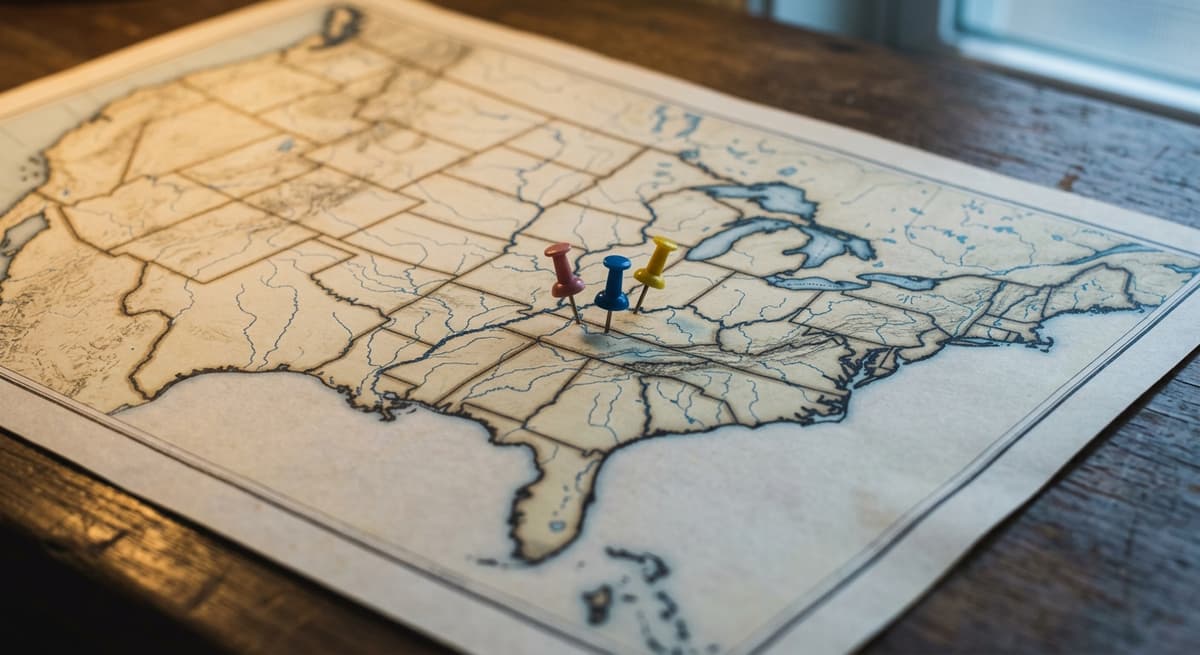
Colorado allows common law marriage for parties who are both at least 18 years old (C.R.S. section 14-2-109.5, added in 2021 following In re Marriage of Hogsett, 2021 CO 1). The Colorado Supreme Court in Hogsett clarified that courts must look at the totality of the circumstances, including factors such as joint tax returns, joint bank accounts, shared residence, and statements to others, rather than relying on any single piece of evidence.
Iowa recognizes common law marriage based on the intent of the parties, cohabitation, and public holding out as married. Iowa courts have applied this standard since at least In re Marriage of Winegard, 257 N.W.2d 609 (Iowa 1977).
Kansas recognizes common law marriage for parties who are both at least 18 years old (K.S.A. section 23-2502). Kansas courts have emphasized that all three elements (capacity, present agreement, and holding out) must be proven simultaneously, not sequentially.
Montana recognizes common law marriage under MCA section 40-1-403. Montana courts have held that the party asserting a common law marriage must prove it by a preponderance of the evidence.
Rhode Island recognizes common law marriage based on serious intent and conduct under Sardonis v. Sardonis, 106 R.I. 469 (1970). Notably, a Rhode Island bill (H5258) that would have abolished common law marriage died in the 2025 legislative session, leaving the practice in place.
Texas calls it an "informal marriage" and provides two routes to establish one under Tex. Fam. Code section 2.401: the couple can file a signed declaration of informal marriage with the county clerk, or they can prove an agreement to be married, cohabitation in Texas as spouses, and representation to others in Texas that they are married. Texas also has a unique two-year provision: if the couple separates and neither files a proceeding to prove the marriage within two years of separation, there is a rebuttable presumption that the parties never agreed to be married (Tex. Fam. Code section 2.401(b)).
Utah recognizes what it calls an "unsolemnized marriage" but with an important procedural requirement. Under Utah Code section 81-2-408 (renumbered from section 30-1-4.5 effective September 1, 2024), a court or administrative body must enter an order validating the marriage. A party must file a petition during the relationship or within one year after the relationship ends. Without that order, the marriage is not automatically recognized. Utah Code section 81-2-408(4) also sunsets this pathway: an individual may not file that petition on or after May 5, 2027.
The District of Columbia recognizes common law marriage based on a present agreement to be married, cohabitation, and clear-and-convincing evidence of the relationship, as established in East v. East, 536 A.2d 1103 (D.C. 1988), drawing on the earlier holding in Hoage v. Murch Bros. & Nichols, 50 App. D.C. 380 (1920).
Oklahoma is contested. Oklahoma courts have consistently upheld common law marriage based on case law including Standefer v. Standefer, 2001 OK 37, 26 P.3d 104, and multiple legislative attempts to abolish it have failed. However, some Oklahoma agencies and employers have taken conflicting positions. The current legal status in Oklahoma courts is that common law marriage is recognized, but parties in Oklahoma should be aware of the contested environment.
New Hampshire occupies a unique category. Under RSA section 457:39, New Hampshire recognizes a common law marriage only for the purpose of inheritance at death: if a couple cohabited and acknowledged each other as spouses for at least three years before one partner dies, the survivor may be treated as a surviving spouse for inheritance purposes. New Hampshire does not recognize a common law marriage as a valid subsisting marriage for living couples.
States That Abolished Common Law Marriage (with Grandfather Dates)
A number of states recognized common law marriage historically but abolished it going forward while preserving the validity of marriages formed before a cutoff date. The following states fall into this category:

Alabama abolished common law marriage effective January 1, 2017 (Ala. Code section 30-1-20). Marriages formed before that date remain valid.
South Carolina abolished common law marriage prospectively on July 24, 2019, following Stone v. Thompson, 428 S.C. 79 (2019). The South Carolina Supreme Court held that common law marriage was prospectively abolished as of the date of that decision. Marriages formed before July 24, 2019 remain valid, but parties seeking to prove a pre-2019 common law marriage in South Carolina bear a clear-and-convincing burden of proof.
Pennsylvania recognized common law marriage until January 1, 2005 (23 Pa. C.S. section 1103). Marriages validly formed in Pennsylvania before that date remain recognized.
Ohio recognized common law marriage until October 10, 1991 (Ohio Rev. Code section 3105.12). Pre-cutoff marriages remain valid.
Georgia recognized common law marriage until January 1, 1997 (Ga. Code Ann. section 19-3-1.1).
Idaho recognized common law marriage until January 1, 1996 (Idaho Code section 32-201).
Florida has not recognized common law marriage formed in Florida since January 1, 1968 (Fla. Stat. section 741.211).
Indiana recognized common law marriage until January 1, 1958 (Ind. Code section 31-11-8-5).
Kentucky recognized common law marriage until January 1, 1990, when the state began requiring a marriage license for every Kentucky marriage.
Massachusetts recognized common law marriage until July 12, 1977.
Michigan recognized common law marriage until January 1, 1957 (Mich. Comp. Laws section 551.2).
Minnesota recognized common law marriage until April 26, 1941 (Minn. Stat. section 517.01).
Mississippi recognized common law marriage until approximately April 5, 1956 (Miss. Code section 93-1-15).
Nevada recognized common law marriage until March 29, 1943 (Nev. Rev. Stat. section 122.010).
New Jersey recognized common law marriage until December 1, 1939 (N.J.S.A. section 37:1-10).
New York recognized common law marriage until April 29, 1933 (N.Y. Dom. Rel. Law section 11).
South Dakota recognized common law marriage until July 1, 1959 (S.D. Codified Laws section 25-1-29).
Alaska required a marriage license after January 1, 1964 (Alaska Stat. section 25.05.061).
Additional states where common law marriage was abolished or never allowed at various earlier dates include Nebraska (1923), Missouri (1921), Wisconsin (1917), Illinois (after June 30, 1905 under 750 ILCS 5/214), North Dakota (approximately 1890), and others listed in the full comparison table below.
States that never recognized common law marriage formation at all include Arizona, Arkansas, California (since 1895), Connecticut, Delaware, Hawaii, Louisiana, Maine, Maryland, New Mexico, North Carolina, Oregon, Tennessee, Vermont, Virginia, Washington, West Virginia, and Wyoming, among others. Washington recognizes a "committed intimate relationship" for property division purposes only, which is not a marriage.
The 7-Year Cohabitation Rule Is a Myth
Perhaps the most persistent misconception in U.S. family law is that a couple becomes "common law married" after living together for seven years. No state has ever imposed a seven-year requirement, or any other fixed time period, for forming a common law marriage. The myth appears to derive from a misremembering of older English common law or from confusion with statutes of limitations and adverse possession rules that involve seven-year periods in unrelated areas of law.
The actual legal requirements, in every state that recognizes common law marriage, focus on the parties' intent and conduct, not on the calendar. Courts look for a mutual present agreement to be married, cohabitation, and holding out to friends, family, neighbors, employers, and the public as a married couple. Evidence courts have relied on includes jointly filed tax returns listing marital status as "married," shared last names, joint bank accounts or credit cards describing the parties as spouses, lease agreements or mortgage applications signed as husband and wife, testimony from friends and family about how the parties described each other, and anniversary celebrations or other conduct consistent with marriage.
None of that evidence requires any particular length of cohabitation. The absence of the seven-year myth matters practically: a person who has lived with a partner for three years in Colorado, for example, may already have a valid common law marriage, while a person who has lived with a partner for ten years in California has no common law marriage at all, regardless of duration, because California does not allow one to form.
Does Another State Recognize Your Common Law Marriage?
Yes. Every U.S. state and the District of Columbia recognizes a common law marriage that was validly formed in a state that allows it. This principle has two legal foundations. The Full Faith and Credit Clause of the U.S. Constitution (Article IV, Section 1) requires each state to give effect to the public acts, records, and judicial proceedings of every other state. In addition, the common-law doctrine of comity provides that states will recognize marriages valid where celebrated.

As a practical matter, this means that a couple who formed a valid common law marriage in Texas and then moved to California are legally married in California. A California court will apply California law to any divorce proceeding, but California will not deny that the marriage exists. The same principle applies to inheritance rights, insurance beneficiary designations, hospital visitation rights, spousal privilege in court, and all other consequences of marriage.
One important nuance: courts in the new state apply the law of the state where the marriage was formed to determine whether it was validly formed. So if a couple claims a common law marriage was formed in Texas while they were living in Texas, a court in their new state will ask whether the requirements of Texas law were met, including the Texas requirement of cohabitation in Texas as spouses and representation to others in Texas.
For couples in states that no longer recognize new common law marriages, this recognition rule can have significant practical importance. A couple that formed a valid common law marriage in Pennsylvania before January 1, 2005, and later moved to Florida, has a legally recognized marriage in Florida, even though neither Pennsylvania nor Florida would allow a new common law marriage to form today.
How a Common Law Marriage Is Proved and How It Ends
Because there is no marriage license or certificate for a common law marriage, the existence of one must often be proved through circumstantial evidence. Courts have considered a wide range of evidence:

- Joint tax returns filed as "married filing jointly" or "married filing separately"
- Joint bank accounts, joint credit cards, or joint titles to property
- Lease agreements, mortgage applications, or other documents describing the parties as spouses
- Insurance policies naming the other party as spouse
- Testimony from friends, family members, coworkers, and neighbors about how the parties represented their relationship
- Use of the same last name, or a name change
- Birth certificates for children listing both parties as parents and describing their relationship
- Written statements or social media posts describing the parties as married
The burden of proof varies by state. Colorado courts, following Hogsett, use a preponderance-of-the-evidence standard and examine the totality of circumstances. Some other states, including South Carolina for pre-2019 marriages, apply a clear-and-convincing standard because of the potential for fraudulent claims.
Ending a common law marriage requires a formal legal divorce, exactly as with a ceremonially solemnized marriage. A common law marriage does not end when the parties stop living together, when they decide they are "no longer married," or after any passage of time. The parties remain legally married until a court enters a divorce decree. This means that all of the legal consequences of marriage, including property division, potential spousal support obligations, and the inability to legally remarry, continue until a divorce is obtained.
The practical consequence of this rule is that a person who was in a common law marriage in a state that recognized it, separated without obtaining a divorce, and later married someone else in a ceremonial marriage may have committed bigamy. Courts take this risk seriously. Anyone who believes they may have formed a common law marriage should consult a family law attorney about their legal status before entering a new marriage.
Common Law Marriage by State: Full Comparison Table
The table below shows the common law marriage status for all 50 states and the District of Columbia. Each state name links to a detailed state guide. The "Recognizes a new CLM?" column reflects whether a couple can form a new common law marriage in that state as of June 2026. The "Out-of-state CLM recognized?" column is "Yes" for every jurisdiction because all jurisdictions recognize a valid CLM formed elsewhere.
| State | Recognizes a new CLM? | Abolished / grandfather date | Recognizes out-of-state CLM? |
|---|---|---|---|
| Alabama | No | Abolished Jan. 1, 2017 (Ala. Code 30-1-20); pre-2017 valid | Yes |
| Alaska | No | License required after Jan. 1, 1964 (AS 25.05.061) | Yes |
| Arizona | No | Never recognized (A.R.S. 25-111) | Yes |
| Arkansas | No | Never recognized (Fryar v. Roberts, 346 Ark. 432 (2001)) | Yes |
| California | No | Never recognized (Cal. Fam. Code sections 300, 308; since 1895) | Yes |
| Colorado | Yes | Active (C.R.S. 14-2-109.5; both parties 18+) | Yes |
| Connecticut | No | Never recognized | Yes |
| Delaware | No | Never recognized (13 Del. C. 126) | Yes |
| District of Columbia | Yes | Active (East v. East, 536 A.2d 1103 (D.C. 1988)) | Yes |
| Florida | No | Abolished Jan. 1, 1968 (Fla. Stat. 741.211); pre-1968 valid | Yes |
| Georgia | No | Abolished Jan. 1, 1997 (OCGA 19-3-1.1); pre-1997 valid | Yes |
| Hawaii | No | Never recognized (HRS 572-1) | Yes |
| Idaho | No | Abolished Jan. 1, 1996 (Idaho Code 32-201); pre-1996 valid | Yes |
| Illinois | No | Invalid after June 30, 1905 (750 ILCS 5/214) | Yes |
| Indiana | No | Abolished Jan. 1, 1958 (Ind. Code 31-11-8-5); pre-1958 valid | Yes |
| Iowa | Yes | Active (In re Marriage of Winegard, 257 N.W.2d 609 (Iowa 1977)) | Yes |
| Kansas | Yes | Active (K.S.A. 23-2502; both parties 18+) | Yes |
| Kentucky | No | Abolished Jan. 1, 1990; pre-1990 valid | Yes |
| Louisiana | No | Never recognized (La. Civ. Code arts. 86-87) | Yes |
| Maine | No | Never recognized | Yes |
| Maryland | No | Never recognized (Goldin v. Goldin, 48 Md. App. 154 (1981)) | Yes |
| Massachusetts | No | Abolished July 12, 1977; pre-1977 valid | Yes |
| Michigan | No | Abolished Jan. 1, 1957 (MCL 551.2); pre-1957 valid | Yes |
| Minnesota | No | Abolished Apr. 26, 1941 (Minn. Stat. 517.01); pre-1941 valid | Yes |
| Mississippi | No | Abolished approx. Apr. 5, 1956 (Miss. Code 93-1-15) | Yes |
| Missouri | No | Abolished 1921 (RSMo 451.040) | Yes |
| Montana | Yes | Active (MCA 40-1-403) | Yes |
| Nebraska | No | Abolished 1923 (Neb. Rev. Stat. 42-104) | Yes |
| Nevada | No | Abolished Mar. 29, 1943 (NRS 122.010); pre-1943 valid | Yes |
| New Hampshire | Inheritance only | RSA 457:39 (posthumous recognition after 3 yrs cohabitation) | Yes |
| New Jersey | No | Abolished Dec. 1, 1939 (N.J.S.A. 37:1-10); pre-1939 valid | Yes |
| New Mexico | No | Never recognized (NMSA 40-1-1) | Yes |
| New York | No | Abolished Apr. 29, 1933 (N.Y. Dom. Rel. Law 11); pre-1933 valid | Yes |
| North Carolina | No | Never recognized (N.C.G.S. 51-1) | Yes |
| North Dakota | No | Abolished approx. 1890 | Yes |
| Ohio | No | Abolished Oct. 10, 1991 (Ohio Rev. Code 3105.12); pre-1991 valid | Yes |
| Oklahoma | Yes (contested) | Active per case law (Standefer v. Standefer, 2001 OK 37, 26 P.3d 104); contested | Yes |
| Oregon | No | Never recognized (ORS 106.010) | Yes |
| Pennsylvania | No | Abolished Jan. 1, 2005 (23 Pa. C.S. 1103); pre-2005 valid | Yes |
| Rhode Island | Yes | Active (Sardonis v. Sardonis, 106 R.I. 469 (1970)) | Yes |
| South Carolina | No | Abolished July 24, 2019 (Stone v. Thompson, 428 S.C. 79); pre-2019 valid | Yes |
| South Dakota | No | Abolished July 1, 1959 (SDCL 25-1-29); pre-1959 valid | Yes |
| Tennessee | No | Never recognized (Tenn. Code 36-4-104) | Yes |
| Texas | Yes | Active ("informal marriage"; Tex. Fam. Code 2.401) | Yes |
| Utah | Yes (court order required) | Active through May 4, 2027 (Utah Code 81-2-408; petition within 1 yr of relationship end; no new petitions on/after May 5, 2027) | Yes |
| Vermont | No | Never recognized (15 V.S.A. 8) | Yes |
| Virginia | No | Never recognized (Va. Code 20-13) | Yes |
| Washington | No | Never recognized as marriage (RCW 26.04.010; committed intimate relationship is property-only) | Yes |
| West Virginia | No | Never recognized (W. Va. Code 48-2-101) | Yes |
| Wisconsin | No | Abolished 1917 (Wis. Stat. 765.01) | Yes |
| Wyoming | No | Never recognized (Wyo. Stat. 20-1-101) | Yes |
Disclaimer: This article provides general legal information about common law marriage laws across the United States. It does not constitute legal advice. Family law varies significantly by state and changes over time. The information on this page reflects statutes and case law as verified on June 2, 2026. If you have questions about your specific situation, whether a common law marriage exists, how to dissolve one, or what rights you or your partner may have, consult a licensed family law attorney in your state.
Frequently Asked Questions
What is a common law marriage?
A common law marriage is a legally recognized marriage formed without a marriage license or ceremony. The couple must meet their state's requirements, which generally include legal capacity, a present mutual agreement to be married, cohabitation, and openly presenting as a married couple. It has the same legal effect as a ceremonial marriage.
Which states still allow a couple to form a common law marriage?
As of 2026, the jurisdictions that allow new common law marriages are Colorado, Iowa, Kansas, Montana, Oklahoma (contested), Rhode Island, Texas, Utah (requires a court order), and the District of Columbia. New Hampshire allows a limited posthumous form for inheritance purposes only.
How long do you have to live together to be common law married?
There is no required length of time. The so-called 7-year rule is a myth. No state has ever set a minimum number of years of cohabitation. What matters is whether the parties mutually agreed to be married, lived together, and presented themselves publicly as spouses, regardless of how long that relationship lasted.
Does my state recognize a common law marriage from another state?
Yes. All 50 states and DC recognize a common law marriage that was validly formed in a state that allows it, under the Full Faith and Credit Clause of the U.S. Constitution and common-law comity principles. If you formed a valid common law marriage in Texas and moved to California, California recognizes your marriage.
How do you prove a common law marriage?
Because there is no certificate, parties prove a common law marriage through circumstantial evidence: joint tax returns filed as married, joint bank accounts or property titles, lease or mortgage applications listing both parties as spouses, insurance policies naming the other as spouse, and testimony from friends, family, and coworkers about how the parties presented their relationship.
How does a common law marriage end?
A common law marriage ends only through a formal legal divorce, just like any other marriage. Separation, moving apart, or agreeing to break up does not end it. The parties remain legally married, with all legal obligations that entails, until a court enters a divorce decree.
Is there such a thing as a common law divorce?
No. There is no common law divorce. A common law marriage, once validly formed, can end only through a formal court divorce proceeding. A couple cannot simply declare themselves unmarried or use an informal agreement to dissolve the marriage.
What states abolished common law marriage and when?
Several states abolished common law marriage while grandfathering earlier marriages. Key dates include Alabama (Jan. 1, 2017), South Carolina (July 24, 2019), Pennsylvania (Jan. 1, 2005), Ohio (Oct. 10, 1991), Georgia (Jan. 1, 1997), Idaho (Jan. 1, 1996), Indiana (Jan. 1, 1958), Florida (Jan. 1, 1968), and others. Marriages formed before the cutoff date in each state remain valid.
Does Texas have common law marriage?
Yes. Texas calls it an informal marriage and recognizes it under Tex. Fam. Code section 2.401. A couple can establish an informal marriage either by filing a signed declaration with the county clerk or by proving an agreement to be married, cohabitation in Texas as spouses, and holding out to others as married. Texas also imposes a two-year post-separation presumption against the marriage if no proceeding is filed.
Does California recognize common law marriage?
California does not allow a couple to form a common law marriage in California, and has not since 1895 (Cal. Fam. Code section 300). However, California does recognize a valid common law marriage formed in a state that permits it, such as Texas or Colorado, under comity principles (Cal. Fam. Code section 308).
What is the difference between a common law marriage and a domestic partnership?
A common law marriage is a full legal marriage with all its rights and obligations, including the requirement of a formal divorce to end it. A domestic partnership or civil union is a separate legal status created by statute in specific states, with rights and obligations defined by those statutes. Not all states offer domestic partnerships, and the rights they confer vary widely.
Can a same-sex couple have a common law marriage?
Yes. Following Obergefell v. Hodges, 576 U.S. 644 (2015), in which the U.S. Supreme Court held that same-sex couples have a constitutional right to marry, states that recognize common law marriage apply that recognition equally to same-sex and opposite-sex couples. Colorado's 2021 statute (C.R.S. 14-2-109.5) explicitly uses gender-neutral language.
Updates
Independently fact-checked against the cited primary sources
Corrected the Standefer v. Standefer citation to 2001 OK 37 and repaired the Obergefell v. Hodges and Ala. Code 30-1-20 source links.
Independently fact-checked against the cited primary sources; governing law re-checked for recent changes
Removed the KRS 402.005 pinpoint citation from the Kentucky common-law-marriage abolition claim; the current text of that section is an unrelated 1998 opposite-sex marriage definition and does not support the 1990 date.
Governing law re-checked for recent changes
Added Utah's May 5, 2027 sunset on filing petitions to validate an unsolemnized marriage (Utah Code 81-2-408(4)), which the page previously omitted from the comparison table, the state summary, and the key takeaways.
Governing law re-checked for recent changes
Reviewed and approved by an editor
State-by-state comparison
Each state guide below is paired with the governing statute our editors adjudicated for it, held in our own legal record and verified against the official source.
Each statute shown is the same adjudicated anchor its state guide renders, independently verified against primary sources. A dash means not yet adjudicated in our record — never that no law exists.
The Law Behind This Article
This article rests on the statutory provisions below, held in our own legal record and retrieved from the official source. Tap a section to read the operative text.
Texas Family Code
§ 2.401PROOF OF INFORMAL MARRIAGEIn forcecited in 23 of our articles
(a) In a judicial, administrative, or other proceeding, the marriage of a man and woman may be proved by evidence that: (1) a declaration of their marriage has been signed as provided by this subchapter; or (2) the man and woman agreed to be married and after the agreement they lived together in this state as husband and wife and there represented to others that they were married. (b) If a proceeding in which a marriage is to be proved as provided by Subsection (a)(2) is not commenced before the second anniversary of the date on which the parties separated and ceased living together, it is rebuttably presumed that the parties did not enter into an agreement to be married. (c) A person under 18 years of age may not: (1) be a party to an informal marriage; or (2) execute a declaration of informal marriage under Section 2.402. (d) A person may not be a party to an informal marriage or execute a declaration of an informal marriage if the person is presently married to a person who is not the other party to the informal marriage or declaration of an informal marriage, as applicable.
Official text (excerpt) · last checked 2026-09-07 · Read the full text in our law library · Verify at statutes.capitol.texas.gov
Cited in 98 court opinions in our collectionLatest citing opinion in our collection: 2026
In the courts (editorial summary, independently checked):Joplin v. Borusheski (2008) applied section 2.401(b): a suit filed over two years after separation raises a rebuttable presumption the parties never agreed to marry, which that proponent did not rebut. In Lan Ngoc Nguyen v. Dinh Duc Nguyen (2011) the 2.401(d) prior-marriage impediment was not proved, and that finding was reversed.
Opinions citing this section in our collection:
- Lan Ngoc Nguyen v. Dinh Duc Nguyen (Texas Court of Appeals, 1st District (Houston) 2011, 355 S.W.3d 82)✓A husband fought his wife's divorce petition by claiming an earlier Vietnamese marriage was an impediment under Section 2.401(d); the court found the proof of that prior marriage factually insufficient and remanded to decide the statute's three informal-marriage elements.
- Assoun v. Gustafson (Court of Appeals of Texas 2016, 493 S.W.3d 156)✓An ex-husband sued to have his former wife declared informally married to her boyfriend, ending his alimony; applying Section 2.401(a), the court affirmed summary judgment for the couple because their sworn denials of any agreement to marry defeated his circumstantial proof.
- Joplin v. Borusheski (Texas Court of Appeals, 5th District (Dallas) 2008, 244 S.W.3d 607)✓A man filed for divorce in 2005 claiming a common-law marriage, more than two years after the couple stopped living together; the court applied Section 2.401(b)'s rebuttable presumption of no agreement to marry and held his testimony failed to rebut it.
Identified automatically from the court opinions citing this section — not a ranking of which case controls.
Also relied on in: Common Law Marriage in Arizona: Is It Recognized? (2026), Common Law Marriage in Delaware: Is It Recognized? (2026), Common Law Marriage in Florida: Is It Recognized? (2026)
Utah Code, Title 81: Utah Domestic Relations Code
§ 81-2-408Validity of marriage not solemnized or solemnized before an unauthorized individual.In forcecited in 2 of our articles
(1) Before May 5, 2027, an individual may file a petition with a court to validate and make legal a marriage that is not solemnized in accordance with this chapter. (2) On a filing of a petition described in Subsection (1), the court may enter an order validating and making legal a marriage that is not solemnized in accordance with this chapter if the court establishes that the marriage arises out of a contract between two individuals: (a) of legal age and capable of giving consent; (b) legally capable of entering a solemnized marriage under the provisions of this chapter; (c) who have cohabited; (d) who mutually assume marital rights, duties, and obligations; and (e) who hold themselves out as and have acquired a uniform and general reputation as spouses. (3) (a) An individual may only file the petition described in Subsection (1) during the relationship described in Subsection (2), or within one year following the termination of that relationship. (b) Evidence of a marriage recognizable under this section may be: (i) manifested in any form; and (ii) proved under the same general rules of evidence as facts in other cases.
Official text (excerpt) · last checked 2026-09-07 · Read the full text in our law library · Verify at le.utah.gov
Cited in 1 court opinions in our collectionLatest citing opinion in our collection: 2025
Opinions citing this section in our collection:
- Daniel v. Daniel (Court of Appeals of Utah 2025, 2025 UT App 193)“…ges have been a creature of statute in Utah since 1987. See Utah Code § 81-2-408 (setting forth the current requirements…”
Identified automatically from the court opinions citing this section — not a ranking of which case controls.
Also relied on in: Common Law Marriage in Utah: Is It Recognized? (2026)
New Hampshire Revised Statutes Annotated, TITLE XLIII DOMESTIC RELATIONS, CHAPTER 457 MARRIAGES
§ 457:39Cohabitation, etc.In forcecited in 2 of our articles
Persons cohabiting and acknowledging each other as husband and wife, and generally reputed to be such, for the period of 3 years, and until the decease of one of them, shall thereafter be deemed to have been legally married.
Official text (excerpt) · last checked 2026-09-07 · Read the full text in our law library · Verify at gc.nh.gov
Cited in 12 court opinions in our collectionLatest citing opinion in our collection: 2025
Opinions citing this section in our collection:
- In re Estate of Buttrick (Supreme Court of New Hampshire 1991, 134 N.H. 675)“…e been legally married” as of the time of Buttrick’s death. RSA 457:39. The question presented is whether ther…”
- In re Mallett (Supreme Court of New Hampshire 2012, 163 N.H. 202)“…is not recognized, except to the limited extent provided in RSA 457:39 (2004). Joan S. v. John S., 121 N.H…”
- JOAN S. v. John S. (Supreme Court of New Hampshire 1981, 121 N.H. 96)“…marriages’ . . . except to the limited extent provided by [RSA 457:39].” Fowler v. Fowler, 96…”
Identified automatically from the court opinions citing this section — not a ranking of which case controls.
Also relied on in: Common Law Marriage in New Hampshire: Is It Recognized? (2026)
Kansas Statutes Annotated, Chapter 23: KANSAS FAMILY LAW CODE-REVISED
§ 23-2502Common-law marriage.In forcecited in 2 of our articles
The state of Kansas shall not recognize a common-law marriage contract if either party to the marriage contract is under 18 years of age.
Official text (excerpt) · last checked 2026-09-07 · Read the full text in our law library · Verify at ksrevisor.gov
Also relied on in: Common Law Marriage in Kansas: Is It Recognized? (2026)
Code of Alabama 1975, Title 30: Marital and Domestic Relations.
§ 30-1-20Common-Law Marriage Abolished.In forcecited in 2 of our articles
(a) No common-law marriage may be entered into in this state on or after January 1, 2017. (b) An otherwise valid common-law marriage entered into before January 1, 2017, shall continue to be valid in this state.
Official text (excerpt) · last checked 2026-09-07 · Read the full text in our law library · Verify at alison.legislature.state.al.us
Cited in 1 court opinions in our collectionLatest citing opinion in our collection: 2018
Opinions citing this section in our collection:
- Blalock v. Sutphin (Supreme Court of Alabama 2018, 275 So. 3d 519)“…ommon-law marriage has now been abolished in Alabama. See Ala. Code 1975, § 30-1-20. However, "[a]n otherwise valid common-…”
Identified automatically from the court opinions citing this section — not a ranking of which case controls.
Also relied on in: Common Law Marriage in Alabama: Is It Recognized? (2026)
Official Code of Georgia Annotated
§ 19-3-1.1Common-law marriage; effectiveness.In forcecited in 2 of our articles
No common-law marriage shall be entered into in this state on or after January 1, 1997. Otherwise valid common-law marriages entered into prior to January 1, 1997, shall not be affected by this Code section and shall continue to be recognized in this state. (Code 1981, § 19-3-1.1 , enacted by Ga.…
Official text (excerpt) · last checked 2026-09-07 · Read the full text in our law library
Cited in 18 court opinions in our collectionLatest citing opinion in our collection: 2021
Opinions citing this section in our collection:
- Jordan v. State (Supreme Court of Georgia 1997, 267 Ga. 442)“…d . . . and shall continue to be recognized in this state.” OCGA § 19-3-1.1 (Ga. L. 1996, p. 1414, § 1).…”
- Norman v. Ault (Supreme Court of Georgia 2010, 287 Ga. 324)“…n and shall continue to be recognized in this state. OCGA § 19-3-1.1. However, Ms. Ault relied on the law of…”
- In Re Estate of Dunn (Court of Appeals of Georgia 1999, 236 Ga. App. 211)“…ed into prior to that date shall continue to be recognized. OCGA § 19-3-1.1.…”
Identified automatically from the court opinions citing this section — not a ranking of which case controls.
Also relied on in: Common Law Marriage in Georgia: Is It Recognized? (2026)
Ohio Revised Code
§ 3105.12Proof of marriageIn forcecited in 2 of our articles
(A) Except as provided in division (B) of this section, proof of cohabitation and reputation of the marriage of a man and woman is competent evidence to prove their marriage, and, in the discretion of the court, that proof may be sufficient to establish their marriage for a particular purpose.
Official text (excerpt) · last checked 2026-09-07 · Read the full text in our law library · Verify at codes.ohio.gov
Cited in 62 court opinions in our collectionLatest citing opinion in our collection: 2026
Opinions citing this section in our collection:
- Hornbeck v. Hornbeck (Ohio Court of Appeals 2019, 2019 Ohio 2035)“…islature abolished them in 1991.” Ward at ¶ 27, citing R.C. 3105.12(B). The statute abolishing comm…”
- Williams v. Ormsby (Ohio Supreme Court 2012, 131 Ohio St. 3d 427)“…ited in Ohio by statutory amendment after October 10, 1991, R.C. 3105.12(B)(1). D. Love and Affection Are No…”
- State v. Burkitt (Ohio Court of Appeals 1993, 89 Ohio App. 3d 214)“…October 10, 1991, they have been prohibited altogether. See R.C. 3105.12.…”
Identified automatically from the court opinions citing this section — not a ranking of which case controls.
Also relied on in: Common Law Marriage in Ohio: Is It Recognized? (2026)
Florida Statutes
§ 741.211Common-law marriages void.In forcecited in 2 of our articles
No common-law marriage entered into after January 1, 1968, shall be valid, except that nothing contained in this section shall affect any marriage which, though otherwise defective, was entered into by the party asserting such marriage in good faith and in substantial compliance with this chapter.
Official text (excerpt) · last checked 2026-09-07 · Read the full text in our law library · Verify at leg.state.fl.us
Cited in 21 court opinions in our collectionLatest citing opinion in our collection: 2022
Opinions citing this section in our collection:
- Johnson v. Lincoln Square Properties, Inc. (District Court of Appeal of Florida 1990, 571 So. 2d 541)“…Florida does not recognize common law marriages pursuant to section 741.211, Florida Statutes (1987). The trial court agreed and dism…”
- Hall v. MAAL (District Court of Appeal of Florida 2010, 32 So. 3d 682)“…much broader savings clause than the one that exists under section 741.211, Florida Statutes (2002), was held not to apply because a…”
- Lowe v. Broward County (District Court of Appeal of Florida 2000, 766 So. 2d 1199)“…lation. We reject Lowe's contention that the DPA violates section 741.211, Florida Statutes (1999), which prohibits recognition of…”
Identified automatically from the court opinions citing this section — not a ranking of which case controls.
New Jersey Statutes (Unannotated)
§ 37:1-10Common law and other marriages without license; validityIn forcecited in 2 of our articles
Nothing in this chapter shall be deemed or taken to render any common law or other marriage, otherwise lawful, contracted before December first, nineteen hundred and thirty-nine, invalid by reason of the failure to take out a license as herein provided. But no marriage contracted on and after December first, nineteen hundred and thirty-nine, shall be valid unless the contracting parties shall have obtained a marriage license as required by section 37:1-2 of this Title, and unless, also, the marriage, after license duly issued therefor, shall have been performed by or before any person, religious society, institution or organization authorized by section 37:1-13 of this Title to solemnize marriages; and failure in any case to comply with both prerequisites aforesaid, which shall always be construed as mandatory and not merely directory, shall render the purported marriage absolutely void.
Official text (excerpt) · last checked 2026-09-07 · Read the full text in our law library · Verify at lis.njleg.state.nj.us
Cited in 45 court opinions in our collectionLatest citing opinion in our collection: 2025
Opinions citing this section in our collection:
- Crowe v. De Gioia (Supreme Court of New Jersey 1982, 90 N.J. 126)“…4:75. The Legislature has proscribed common law marriages. N.J.S.A. 37:1-10. We continue to decline to view non-mar…”
- Dacunzo v. Edgye (Supreme Court of New Jersey 1955, 19 N.J. 443)“…es, the public policy of this State as manifested in N. J. S. A. 37:1-10 must prevail until the Legislature itse…”
- Parkinson v. J. & S. TOOL CO. (Supreme Court of New Jersey 1974, 64 N.J. 159)“…ve both declared that common law marriages are prohibited. N.J.S.A. 37:1-10; [2] Dacunzo v. Edgye, 19 N.J. 44…”
Identified automatically from the court opinions citing this section — not a ranking of which case controls.
Also relied on in: Common Law Marriage in New Jersey: Is It Recognized? (2026)
Minnesota Statutes, Chapter 517: CIVIL MARRIAGE
§ 517.01CIVIL MARRIAGE CONTRACTIn forcecited in 2 of our articles
A civil marriage, so far as its validity in law is concerned, is a civil contract between two persons, to which the consent of the parties, capable in law of contracting, is essential. A lawful civil marriage may be contracted only when a license has been obtained as provided by law and when the civil marriage is contracted in the presence of two witnesses and solemnized by one authorized, or whom one or both of the parties in good faith believe to be authorized, so to do. Marriages subsequent to April 26, 1941, not so contracted shall be null and void.
Official text (excerpt) · last checked 2026-09-07 · Read the full text in our law library · Verify at revisor.mn.gov
Cited in 16 court opinions in our collectionLatest citing opinion in our collection: 2026
Opinions citing this section in our collection:
- Marriage of Cummings v. Cummings (Court of Appeals of Minnesota 1985, 376 N.W.2d 726)“…neered Concrete, 277 N.W.2d 653, 656 (Minn.1979); Minn.Stat. § 517.01 (1984). Consequently, we hold th…”
- Monson v. Rochester Athlectic Club (Court of Appeals of Minnesota 2009, 759 N.W.2d 60)“…cerned, is a civil contract between a man and a woman....” Minn. Stat. § 517.01 (2008). By itself, RAC’s policy does n…”
- Hedlund v. Monumental General Insurance Co. (Court of Appeals of Minnesota 1987, 404 N.W.2d 371)“…specifically abolished by the legislature. See Minn.Stat. § 517.01 (1986). We cannot ignore that pronounce…”
Identified automatically from the court opinions citing this section — not a ranking of which case controls.
Also relied on in: Common Law Marriage in Minnesota: Is It Recognized? (2026)
Michigan Compiled Laws
§ 551.2Marriage as civil contract; consent; license; solemnizationIn forcecited in 3 of our articles
So far as its validity in law is concerned, marriage is a civil contract between a man and a woman, to which the consent of parties capable in law of contracting is essential. Consent alone is not enough to effectuate a legal marriage on and after January 1, 1957. Consent shall be followed by obtaining a license as required by section 1 of Act No. 128 of the Public Acts of 1887, being section 551.101 of the Michigan Compiled Laws, or as provided for by section 1 of Act No. 180 of the Public Acts of 1897, being section 551.201 of the Michigan Compiled Laws, and solemnization as authorized by sections 7 to 18 of this chapter.
Official text (excerpt) · last checked 2026-09-07 · Read the full text in our law library · Verify at legislature.mi.gov
Cited in 25 court opinions in our collectionLatest citing opinion in our collection: 2025
Opinions citing this section in our collection:
- National Pride at Work, Inc v. Governor (Michigan Supreme Court 2008, 481 Mich. 56)“…en individuals of the same sex is invalid in this state.”); MCL 551.2 (“[M]arriage is a civil contract betwee…”
- Ford v. Wagner (Michigan Court of Appeals 1986, 153 Mich. App. 466)“…ccrue as the result of a legal marriage which complies with MCL 551.2; MSA 25.2. No legal rights accrue based…”
- May v. Leneair (Michigan Court of Appeals 1980, 99 Mich. App. 209)“…afin v Serafin, 401 Mich 629 ; 258 NW2d 461 (1977), MCL 551.2; MSA 25.2, 16 Michigan Law & Practice,…”
Identified automatically from the court opinions citing this section — not a ranking of which case controls.
Also relied on in: Common Law Marriage in Michigan: Is It Recognized? (2026)
Wisconsin Statutes, Chapter 765: Marriage
§ 765.01A civil contract.In forcecited in 2 of our articles
Marriage, so far as its validity at law is concerned, is a civil contract, to which the consent of the parties capable in law of contracting is essential, and which creates the legal status of husband and wife. NOTE: In Wolf v. Walker, 26 F. Supp. 3d 866 (2014), the U.S. District Court, Western District of Wisconsin declared that “Any Wisconsin statutory provisions, including those in Wisconsin Statutes chapter 765, that limit marriages to a ‘husband’ and a ‘wife,’ are unconstitutional as applied to same-sex couples.” Affirmed. 766 F.3d 648. U.S. Seventh Circuit Court of Appeals, Case No. 14-2526, issued September 4, 2014. See also Obergefell v. Hodges, 576 U.S. 644, 135 S. Ct. 2584, 192 L. Ed. 2d 609 (2015). 765.01 Note
Official text (excerpt) · last checked 2026-07-29 · Read the full text in our law library · Verify at docs.legis.wisconsin.gov
Cited in 2 court opinions in our collectionLatest citing opinion in our collection: 2013
Opinions citing this section in our collection:
- Yer Xiong v. Nhia Lue Xiong (Court of Appeals of Wisconsin 2002, 255 Wis. 2d 693)“…2, 269 , 190 N.W.2d 174 (1971); see also Wis. Stat. § 765.01 . So strong are the presumptions and pu…”
- Patricia Mudlaff v. Joseph McLeod (Wisconsin Supreme Court 2013, 350 Wis. 2d 182)“…f the parties capable in law of contracting is essential." Wis. Stat. § 765.01 (emphasis added). See also Campbell v…”
Identified automatically from the court opinions citing this section — not a ranking of which case controls.
Also relied on in: Common Law Marriage in Wisconsin: Is It Recognized? (2026)
West Virginia Code
§ 48-2-101Necessity of marriage license.In forcecited in 3 of our articles
Every marriage in this state must be solemnized under a marriage license issued by a clerk of the county commission in accordance with the provisions of this article. If a ceremony of marriage is performed without a license, the attempted marriage is void, and the parties do not attain the legal status of husband and wife.
Official text (excerpt) · last checked 2026-09-07 · Read the full text in our law library · Verify at code.wvlegislature.gov
Cited in 1 court opinions in our collectionLatest citing opinion in our collection: 2014
Opinions citing this section in our collection:
- McGee v. Cole (District Court, S.D. West Virginia 2014, 66 F. Supp. 3d 747)“…necessary to legally marry under the laws of West Virginia. W. Va.Code § 48-2-101 (2001). By refusing to issue licenses,…”
Identified automatically from the court opinions citing this section — not a ranking of which case controls.
Also relied on in: Common Law Marriage in West Virginia: Is It Recognized? (2026)
New Mexico Statutes Annotated 1978, Chapter 40
§ 40-1-1[Marriage is civil contract requiring consent of parties.]In forcecited in 3 of our articles
Marriage is contemplated by the law as a civil contract, for which the consent of the contracting parties, capable in law of contracting, is essential.
Official text (excerpt) · last checked 2026-09-07 · Read the full text in our law library · Verify at nmonesource.com
Cited in 9 court opinions in our collectionLatest citing opinion in our collection: 2019
Opinions citing this section in our collection:
- Griego v. Oliver (New Mexico Supreme Court 2013, 2014 NMSC 3)“…s basic marriage statutes in 1862. Our analysis begins with NMSA 1978, Section 40-1-1 (1862-63), which provides that “[m]arri…”
- Vigil v. Haber (New Mexico Supreme Court 1994, 119 N.M. 9)“…Marriage is a civil contract between two consenting adults. NMSA1978, § 40-1-1 (Repl. Pamp.1994). Thus, although Haber…”
- Merrill v. Davis (New Mexico Supreme Court 1983, 100 N.M. 552)“…ood v. Hazelwood, 89 N.M. 659 , 556 P.2d 345 (1976); NMSA 1978, §§ 40-1-1 and -2. Common-law marriage is n…”
Identified automatically from the court opinions citing this section — not a ranking of which case controls.
Also relied on in: Common Law Marriage in New Mexico: Is It Recognized? (2026)
California Family Code
§ 308In forcecited in 2 of our articles
A marriage contracted outside this state that would be valid by laws of the jurisdiction in which the marriage was contracted is valid in California.
Official text (excerpt) · last checked 2026-07-28 · Read the full text in our law library · Verify at leginfo.legislature.ca.gov
Cited in 9 court opinions in our collectionLatest citing opinion in our collection: 2023
Opinions citing this section in our collection:
- Armijo v. Miles (California Court of Appeal 2005, 26 Cal. Rptr. 3d 623)“…The law to which the Legislative Analyst made reference was Family Code section 308. Enacted in 1992 (Stats. 1992, ch. 162,…”
- Marriage of V.S. & V.K. (California Court of Appeal 2023)“…of the jurisdiction in which the marriage was contracted.” (Fam. Code, § 308.) In this appeal from the trial court’s…”
- People v. Badgett (California Supreme Court 1995, 10 Cal. 4th 330)“…other state that would be valid by the laws of that state. (Fam. Code, § 308.) Defendant Chris Badgett claimed he…”
Identified automatically from the court opinions citing this section — not a ranking of which case controls.
Also relied on in: Common Law Marriage in California: Is It Recognized? (2026)
Revised Code of Washington
§ 26.04.010Marriage contract—Void marriages—Construction of gender-specific terms—Recognition of solemnization of marriage not required.In forcecited in 3 of our articles
(1) Marriage is a civil contract between two persons who have each attained the age of 18 years, and who are otherwise capable. (2) Every marriage entered into in which either person has not attained the age of 18 years is void. (3) Where necessary to implement the rights and responsibilities of spouses under the law, gender-specific terms such as husband and wife used in any statute, rule, or other law must be construed to be gender neutral and applicable to spouses of the same sex. (4) No regularly licensed or ordained minister or any priest, imam, rabbi, or similar official of any religious organization is required to solemnize or recognize any marriage. A regularly licensed or ordained minister or priest, imam, rabbi, or similar official of any religious organization shall be immune from any civil claim or cause of action based on a refusal to solemnize or recognize any marriage under this section. No state agency or local government may base a decision to penalize, withhold benefits from, or refuse to contract with any religious organization on the refusal of a person associated with such religious organization to solemnize or recognize a marriage under this section.
Official text (excerpt) · last checked 2026-07-29 · Read the full text in our law library · Verify at app.leg.wa.gov
Cited in 45 court opinions in our collectionLatest citing opinion in our collection: 2025
Opinions citing this section in our collection:
- Singer v. Hara (Court of Appeals of Washington 1974, 11 Wash. App. 247)“…erred in concluding that the Washington marriage statutes, RCW 26.04.010 et seq., prohibit same-sex…”
- Andersen v. King County (Washington Supreme Court 2006, 158 Wash. 2d 1)“…e of Marriage Act (DOMA). Laws of 1998, ch. 1. DOMA amended RCW 26.04.010 to describe marriage as a civil contrac…”
- State v. Arlene's Flowers, Inc. (Washington Supreme Court 2019, 441 P.3d 1203)“…t meet the WLAD's definition of a "religious organization." RCW 26.04.010(7)(b) (defining…”
Identified automatically from the court opinions citing this section — not a ranking of which case controls.
Also relied on in: Common Law Marriage in Washington State: Is It Recognized? (2026), Washington Emancipation Laws: How to Get Emancipated in Washington (2026)
Revised Statutes of Missouri, Title XXX (DOMESTIC RELATIONS), Chapter 451
§ 451.040Marriage license required, waiting period — presence not required, when — application, contents — license void when — common law of marriages void — lack of authority to perform marriage, effect — online applications, procedure.In forcecited in 2 of our articles
1. Previous to any marriage in this state, a license for that purpose shall be obtained from the officer authorized to issue the same, and no marriage contracted shall be recognized as valid unless the license has been previously obtained, and unless the marriage is solemnized by a person authorized by law to solemnize marriages. 2. Before applicants for a marriage license shall receive a license, and before the recorder of deeds shall be authorized to issue a license, the parties to the marriage shall present an application for the license, duly executed and signed in the presence of the recorder of deeds or their deputy or electronically through an online process. If an applicant is unable to sign the application in the presence of the recorder of deeds as a result of the applicant's incarceration or because the applicant has been called or ordered to active military duty out of the state or country, the recorder of deeds may issue a license if: (1) An affidavit or sworn statement is submitted by the incarcerated or military applicant on a form furnished by the recorder of deeds which includes the necessary information for the recorder of deeds to issue a marriage license…
Official text (excerpt) · last checked 2026-09-07 · Read the full text in our law library · Verify at revisor.mo.gov
Cited in 9 court opinions in our collectionLatest citing opinion in our collection: 2021
Opinions citing this section in our collection:
- Nelson v. Marshall (Missouri Court of Appeals 1993, 869 S.W.2d 132)“…ized by a person authorized by law to solemnize marriages.” § 451.040 RSMo. (1986). (emphasis added). The q…”
- McKeever v. Bi-State Development Agency (Missouri Court of Appeals 1999, 988 S.W.2d 599)“…eever and decedent’s marriage was properly solemnized under Section 451.040 RSMo (1994). We dismiss this appeal for lack…”
- Chervitz v. Bi-State Development Agency (Missouri Court of Appeals 1999, 11 S.W.3d 714)“…h because such marriage had not been solemnized pursuant to Section 451.040 RSMo 1994. 1 The circuit court held a heari…”
Identified automatically from the court opinions citing this section — not a ranking of which case controls.
Also relied on in: Common Law Marriage in Missouri: Is It Recognized? (2026)
Explore the law
The laws cited above reference these related sections in their own text:
- Michigan Compiled Laws § 551.101 — Marriage license; requirements; place to obtain, delivery to person officiating view in our statute record · read at the official source
- Michigan Compiled Laws § 551.201 — Issuance of marriage license without publicity; order view in our statute record · read at the official source
Related law for further reading — not part of this article’s citations.
Search our full record of US law — 2.1 million sections, every state + federal →
Sources and References
- C.R.S. section 14-2-109.5 (Colorado common law marriage, 2021)(leg.colorado.gov)
- In re Marriage of Hogsett, 2021 CO 1 (Colorado Supreme Court)(courts.state.co.us)
- Tex. Fam. Code section 2.401 (informal marriage)(statutes.capitol.texas.gov)
- Utah Code section 81-2-408 (unsolemnized marriage, eff. Sept. 1, 2024)(le.utah.gov)
- RSA section 457:39 (New Hampshire inheritance-only common law marriage)(gencourt.state.nh.us)
- K.S.A. section 23-2502 (Kansas common law marriage requirements)(kslegislature.org)
- MCA section 40-1-403 (Montana common law marriage)(leg.mt.gov)
- Stone v. Thompson, 428 S.C. 79 (2019) (South Carolina abolition)(sccourts.org)
- Ala. Code section 30-1-20 (Alabama abolition, 2017)(law.justia.com)
- 23 Pa. C.S. section 1103 (Pennsylvania abolition, 2005)(legis.state.pa.us)
- Ohio Rev. Code section 3105.12 (Ohio abolition, 1991)(codes.ohio.gov)
- Fla. Stat. section 741.211 (Florida abolition, 1968)(flsenate.gov)
- Sardonis v. Sardonis, 106 R.I. 469 (1970) (Rhode Island)(law.cornell.edu)
- East v. East, 536 A.2d 1103 (D.C. App. 1988) (District of Columbia)(law.cornell.edu)
- Standefer v. Standefer, 2001 OK 37, 26 P.3d 104 (Oklahoma common law marriage)(oscn.net)
- NCSL: Common Law Marriage by State(ncsl.org)
- Cal. Fam. Code sections 300 and 308(leginfo.legislature.ca.gov)
- Obergefell v. Hodges, 576 U.S. 644 (2015)(supreme.justia.com)