
New Mexico
New Mexico Squatters Rights and Adverse Possession Laws (2026)
Independently fact-checked against primary sources (last audited August 18, 2026). · Reviewed by the RecordingLaw editorial team. · Law checked current as of August 18, 2026. How we verify our legal content
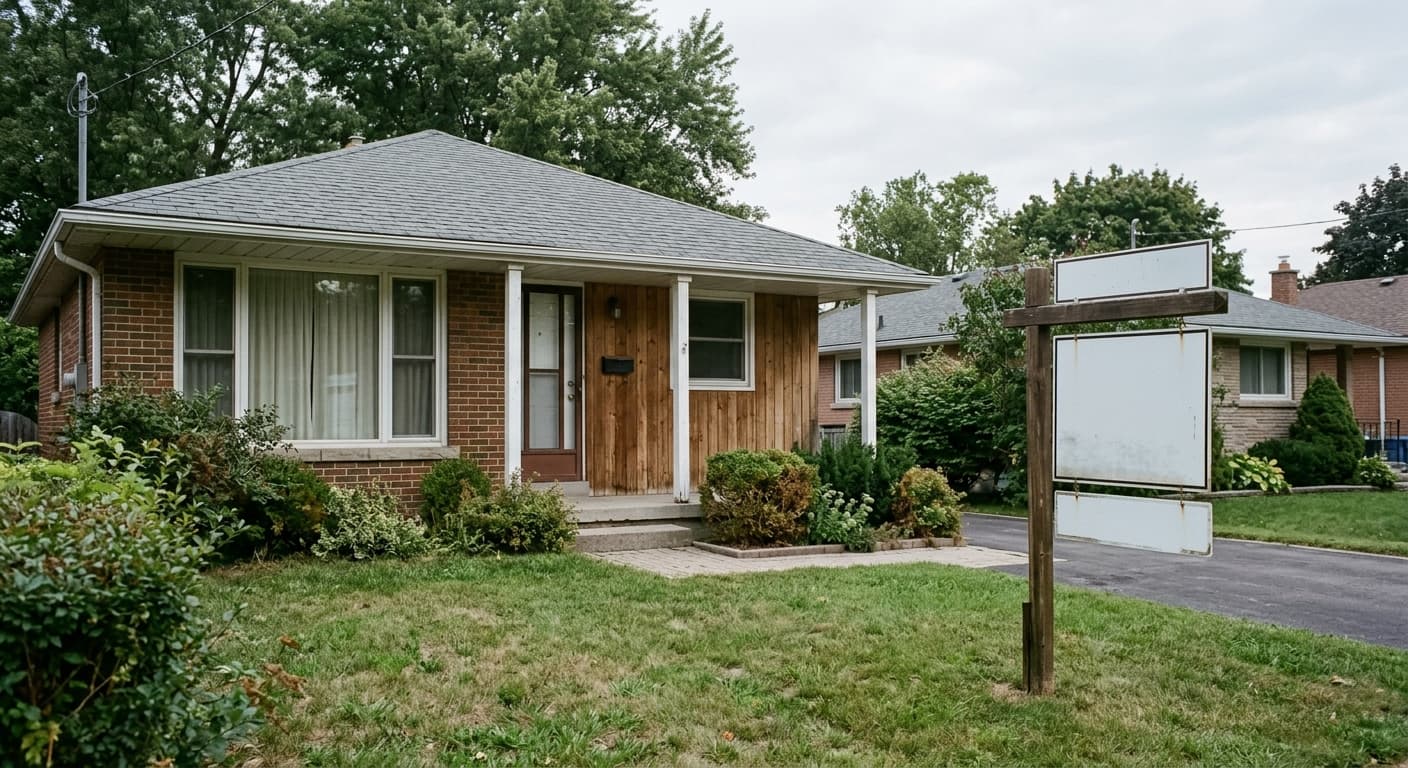
New Mexico sets one of the strictest adverse possession standards in the country: a claimant must possess the property for 10 continuous years, hold color of title, pay all property taxes for the entire period, and have possessed in good faith. All four conditions are mandatory under NMSA 1978 § 37-1-22. Property owners can remove squatters through a Forcible Entry and Detainer (FED) action or an ejectment lawsuit.
Information last verified on May 27, 2026. This article provides general legal information, not legal advice.
Jurisdiction scope: This article covers New Mexico state law. For a comparison of all 50 states, see the national squatters rights guide.
Adverse Possession in New Mexico: Color of Title, Taxes, and the 10-Year Period
The Statute: NMSA 1978 § 37-1-22
New Mexico's adverse possession law appears in NMSA 1978 § 37-1-22. The statute requires that a claimant who seeks to acquire title to real property through adverse possession must satisfy four independent requirements simultaneously:

-
Continuous possession for 10 years. The claimant must actually occupy the land in a continuous, uninterrupted manner for a full decade. Seasonal use can qualify if it is consistent with how the land is ordinarily used, but any abandonment restarts the clock.
-
Color of title. The claimant must hold a written instrument that appears on its face to convey title to the property. Examples include a defective deed, a sheriff's deed that was not properly executed, a will admitted to probate that incorrectly describes the parcel, or a tax deed issued after a flawed sale. A claimant who occupies land with no written basis for ownership cannot satisfy this requirement and cannot bring an adverse possession claim under § 37-1-22.
-
Payment of property taxes for the 10-year period. The claimant must have paid all property taxes assessed against the parcel for the entire 10-year period. Tax records are public, and courts examine county assessor records to verify this requirement. Gaps in tax payment defeat the claim even when possession and color of title are established.
-
Good faith. The statute requires that the possession have been "continuously and in good faith under color of title for ten years." Good faith is a separate element, not a restatement of color of title. In Heron v. Conder, 1967-NMSC-039, the New Mexico Supreme Court read the statute as requiring, "in addition to color of title, (a) ten years of continuous adverse possession, (b) payment of taxes, and (c) good faith." A claimant who manufactured the instrument relied on for color of title, or who knew the instrument conveyed nothing, can satisfy the other elements and still lose for want of good faith.
All four requirements must be met. New Mexico courts have consistently refused adverse possession claims that satisfied only some of the statutory elements. This structure reflects the legislature's policy choice to protect record title holders while providing a limited remedy for long-term possessors who have a colorable written claim and have contributed to the public fisc through tax payment.
What Counts as "Hostile" Possession
Hostility comes from the statute itself, not from a separate common law overlay. NMSA 1978 § 37-1-22 defines adverse possession as "an actual and visible appropriation of land, commenced and continued under a color of title and claim of right inconsistent with and hostile to the claim of another." Possession is hostile when the claimant occupied the land as an owner would, without the permission of the true owner. Permission defeats hostility. A tenant, licensee, or family member allowed to use the property cannot use that period of permissive use toward an adverse possession claim.
Tacking
A claimant may add (tack) the continuous possession periods of prior possessors in privity to reach the 10-year threshold. Privity generally requires a written transfer of the possessory interest between the predecessor and successor. However, the tax payment requirement applies to each year of the combined period, not just the years the current claimant held the property. The claimant must show that taxes were paid for the full duration.
What Color of Title Does Not Include
Color of title requires more than a belief that one owns the land. Oral agreements to convey property, handshake deals, or claims based solely on long use do not constitute color of title. The instrument must be written, must describe the property, and must appear on its face to convey an interest, even if the conveyance is void for some technical defect.
Scope of the Adverse Possession Claim
When a claimant holds color of title, the adverse possession claim extends to the full parcel described in the instrument, not merely the portion physically occupied. This is one practical reason the color of title requirement exists: it gives third parties notice of the claimed boundary through the public record.
How to Remove a Squatter in New Mexico
Step 1: Confirm the Squatter Is Not a Tenant
Before filing any action, a property owner should confirm whether the occupant has any tenancy relationship. If the person once paid rent or received written permission to occupy, they may have tenant rights under the New Mexico Uniform Owner-Resident Relations Act, NMSA 1978 § 47-8-1 et seq. Treating a former tenant as a trespasser without following the UORRA notice and FED process can expose the owner to legal liability.
A true squatter is someone who entered the property without permission and without any rental agreement. These individuals have no tenancy rights, but the formal removal process still applies.

Step 2: Serve a Written Notice to Vacate
Written notice is a statutory prerequisite in New Mexico, not a courtesy. NMSA 1978 § 35-10-3(A) provides that, "except as provided in Section 35-10-1 NMSA 1978, three days' notice in writing to quit must be given to the defendant before a civil action for forcible entry or unlawful detainer may be filed." That requirement is not limited to tenants. It governs every FED action, including one brought on the trespasser ground in § 35-10-1(A)(1), which itself covers a defendant who entered and occupied the land against the owner's will and "refused to vacate the premises after notice by the owner or his agent or attorney." Filing without the required notice to quit can get the case dismissed.
The carve-out that § 35-10-3(A) refers to is § 35-10-1(A)(5): a tenant from month to month or a tenant at will must be given thirty days' written notice to vacate rather than three days.
For occupants who entered under a rental agreement that has ended or been terminated, NMSA 1978 § 47-8-33 requires specific notice depending on the grounds: three days for nonpayment of rent, or seven days for other material lease violations.
Step 3: File a Forcible Entry and Detainer Action
The primary judicial remedy for removing a squatter in New Mexico is a Forcible Entry and Detainer action, sometimes called a "restitution of premises" action. The property's value is not what decides where the case is filed. NMSA 1978 § 35-3-3(A) caps magistrate civil jurisdiction at ten thousand dollars on "the debt or sum claimed," and § 35-3-3(C)(4) denies a magistrate any jurisdiction over a civil action "in which the title or boundaries of land may be in dispute or drawn into question." Under § 35-10-1(B), the district court of the county where the property sits has concurrent original jurisdiction over FED actions "when the rent contracted for amounts to fifty dollars ($50.00) or more a month or when the reasonable rental value of the premises is fifty dollars ($50.00) or more a month," a threshold low enough that district court is concurrently available in nearly every case.
The FED process in New Mexico works as follows:
- The owner files a complaint for restitution of the premises, pays the filing fee, and requests a hearing date.
- The court issues a summons. The squatter is served with the summons and complaint.
- A hearing is scheduled, typically within a few days to two weeks after filing.
- At the hearing, the judge determines whether the owner is entitled to possession. If the owner prevails, the court issues a judgment for restitution.
- If the squatter does not leave voluntarily after judgment, the owner can request a writ of restitution. A law enforcement officer executes the writ and removes the occupant.
FED actions focus on the right to possession, not title, and there is no mechanism that transfers an FED case to district court when a squatter raises adverse possession. NMSA 1978 § 35-10-3(C) provides that "the questions of title or boundaries of land shall not be investigated in an action for forcible entry or unlawful detainer, but the action does not prevent a party from testing the right of property in any other manner," and § 35-3-3(C)(4) denies a magistrate jurisdiction over a civil action in which title or boundaries are drawn into question. The possession case is not moved. The title question has to be brought as a separate ejectment or quiet title action in district court.

Step 4: Ejectment for Occupants Claiming Ownership
When a squatter asserts a claim of adverse possession or otherwise claims an ownership interest in the property, the correct remedy is a separate ejectment action in New Mexico district court. NMSA 1978 § 42-4-1 provides that "the action of ejectment may be maintained in all cases where the plaintiff is legally entitled to the possession of the premises," and unlike an FED action it can resolve the question of title. The district court has jurisdiction to quiet title and permanently settle ownership.
Property owners should consult with a New Mexico real estate attorney before filing an ejectment action, because adverse possession claims require the owner to rebut the squatter's evidence of continuous possession, color of title, and tax payment.
What Property Owners Cannot Do
New Mexico law prohibits self-help eviction. Changing locks, removing doors or windows, shutting off utilities, removing the squatter's personal property, or using threats or physical force to compel the occupant to leave are all unlawful. An owner who uses self-help measures can face civil liability for damages. The proper remedy is always a court order.
2024-2025 Legislative Update
New Mexico did not enact any expedited squatter removal statute in 2024 or 2025. During the 2026 regular legislative session, HB 144 was introduced to create a criminal offense for unlawful squatting. The bill died in committee and did not become law. As of May 2026, no expedited removal process outside the standard FED and ejectment procedures exists under New Mexico law.
Disclaimer: This article provides general legal information about New Mexico squatters rights and adverse possession law. It is not legal advice and does not create an attorney-client relationship. Laws change, and individual circumstances vary. If you are dealing with a squatter situation or an adverse possession claim in New Mexico, consult a licensed New Mexico real estate attorney.
National squatters rights guide
RecordingLaw.com provides free legal information for educational purposes. Nothing on this site constitutes legal advice or creates an attorney-client relationship.
More New Mexico Laws
Frequently Asked Questions
Does New Mexico recognize adverse possession without color of title?
No. NMSA 1978 § 37-1-22 requires color of title as a mandatory element. There is no adverse possession pathway in New Mexico for a claimant who lacks a written instrument that appears to convey ownership of the property.
What happens if the claimant paid taxes for only 9 of the 10 required years?
The adverse possession claim fails. New Mexico requires tax payment for the full 10-year statutory period. A gap of even one year defeats the tax payment element, regardless of how long possession has continued.
Can a squatter in New Mexico claim adverse possession after fewer than 10 years?
No. The 10-year period under § 37-1-22 is a minimum, not a guideline. A squatter who has occupied property for fewer than 10 years has not met the statutory period and cannot make an adverse possession claim, even with color of title and tax payment.
Is good faith a separate requirement for adverse possession in New Mexico?
Yes. NMSA 1978 § 37-1-22 requires possession continuously and in good faith under color of title for ten years, and the New Mexico Supreme Court in Heron v. Conder read the statute as requiring good faith in addition to color of title, ten years of continuous adverse possession, and payment of taxes. An owner defending against a claim can attack good faith directly, for example where the claimant created the instrument relied on for color of title or knew it conveyed nothing.
How long does a FED case take in New Mexico?
After the owner files and the squatter is served, a hearing is usually scheduled within one to two weeks. If the owner wins, a writ of restitution can be issued shortly after judgment. Total time from filing to physical removal is often two to four weeks, though contested cases may take longer.
Does New Mexico have a squatter hotline or emergency removal process?
No. New Mexico does not have an emergency or administrative removal process for squatters. Property owners must use the standard FED or ejectment process through the court system. Law enforcement can respond to an active criminal trespass if the person entered by force or was verbally warned to leave and refused, but civil removal requires a court order.
Can I call the police to remove a squatter instead of going to court?
Police may be able to remove an occupant who committed criminal trespass, meaning entry by force or after being told to leave. However, if the person has occupied the property for any period of time, police typically treat the matter as a civil dispute and will direct the owner to file a FED action. A court order is the safest and most reliable path to removal.
Does paying property taxes alone give someone a claim to my property in New Mexico?
No. Tax payment is one of four required elements under § 37-1-22, not a standalone basis for a claim. A person who pays taxes on property they do not own cannot claim adverse possession without also establishing continuous 10-year possession, color of title, and good faith.
Updates
Corrected the New Mexico eviction and adverse possession sections: the three-day written notice to quit is a statutory prerequisite under NMSA 1978 § 35-10-3(A) rather than mere practice, good faith is added as the fourth statutory element of adverse possession, hostility is attributed to the statutory definition instead of common law, the forcible entry and detainer forum rules are restated against the correct statutory thresholds, and the page no longer says an adverse possession defense transfers the case to district court.
Replaced a dead statute-citation link (nmlegis.gov 404) for NMSA 1978 § 37-1-22 with a working Justia link; the article's legal content about New Mexico's 10-year/color-of-title/tax-payment adverse possession test was already accurate and required no change.
Independently fact-checked against the cited primary sources; governing law re-checked for recent changes
Corrected the notice-period description under NMSA 1978 § 47-8-33 to the two notice periods the statute's text actually supports (three days for nonpayment, seven days for other material violations), removing an unsupported 30-day no-fault termination figure.
Governing law re-checked for recent changes
Reviewed and approved by an editor
The Law Behind This Article
This article rests on the statutory provisions below, held in our own legal record and retrieved from the official source. Tap a section to read the operative text.
New Mexico Statutes Annotated 1978, Chapter 37
§ 37-1-22Title in fee simple by adverse possession; action after ten years barred; definition; payment of taxes.In forcecited in 5 of our articles
In all cases where any person or persons, their children, heirs or assigns, shall have had adverse possession continuously and in good faith under color of title for ten years of any lands, tenements or hereditaments and no claim by suit in law or equity effectually prosecuted shall have been set up or made to the said lands, tenements or hereditaments, within the aforesaid time of ten years, then and in that case, the person or persons, their children, heirs or assigns, so holding adverse possession as aforesaid, shall be entitled to keep and hold in possession such quantity of lands as shall be specified and described in some writing purporting to give color of title to such adverse occupant, in preference to all, and against all, and all manner of person or persons whatsoever; and any person or persons, their children or their heirs or assigns, who shall neglect or who have neglected for the said term of ten years, to avail themselves of the benefit of any title, legal or equitable, which he, she or they may have to any lands, tenements or hereditaments, within this state, by suit of law or equity effectually prosecuted against the person or persons so as aforesaid…
Official text (excerpt) · last checked 2026-09-08 · Read the full text in our law library · Verify at nmonesource.com
Cited in 22 court opinions in our collectionLatest citing opinion in our collection: 2018
In the courts (editorial summary, independently checked):Deaton excluded possession before federal land was patented. Rio Rancho held that a drainage-easement plat was not color of fee title. Lopez limited adverse title to the portion exclusively and continuously possessed.
Opinions citing this section in our collection:
- Deaton v. Gutierrez (New Mexico Court of Appeals 2003, 135 N.M. 423)✓Adverse possession of federal public land could not begin before the patent issued, and strangers to the patent claimant could not use relation back to count earlier possession.
- City of Rio Rancho v. AMREP SOUTHWEST INC. (New Mexico Supreme Court 2011, 150 N.M. 428)✓A recorded drainage-easement plat did not purport to convey fee title, so it was not color of title and the City's adverse-possession claim failed.
- Lopez v. Adams (New Mexico Court of Appeals 1993, 116 N.M. 757)✓A 1964 deed and tax payments supported color of title and taxes, but competing use defeated exclusive, uninterrupted possession on the eastern portion, limiting title to the western portion.
Identified automatically from the court opinions citing this section — not a ranking of which case controls.
Also relied on in: New Mexico Statute of Limitations: Filing Deadlines by Case Type, Squatters Rights by State: Adverse Possession Laws (2026)
New Mexico Statutes Annotated 1978, Chapter 47
§ 47-8-33Breach of agreement by resident and relief by ownerIn forcecited in 2 of our articles
A. Except as provided in the Uniform Owner-Resident Relations Act, if there is noncompliance with Section 47-8-22 NMSA 1978 materially affecting health and safety or upon the initial material noncompliance by the resident with the rental agreement or any separate agreement, the owner shall deliver a written notice to the resident specifying the acts and omissions constituting the breach, including the dates and specific facts describing the nature of the alleged breach, and stating that the rental agreement will terminate upon a date not less than seven days after receipt of the notice if the breach is not remedied in seven days. B. Upon the second material noncompliance with the rental agreement or any separate agreement by the resident, within six months of the initial breach, the owner shall deliver a written notice to the resident specifying the acts and omissions constituting the breach, including the dates and specific facts describing the nature of the alleged breach, and stating that the rental agreement shall terminate upon a date not less than seven days after receipt of the notice.
Official text (excerpt) · last checked 2026-07-30 · Read the full text in our law library · Verify at nmonesource.com
Cited in 2 court opinions in our collectionLatest citing opinion in our collection: 2023
Opinions citing this section in our collection:
- Roser v. Hufstedler (New Mexico Court of Appeals 2023, 531 P.3d 615)“…referring to “the judgment” and 4 “writ of restitution”); NMSA 1978, § 47-8-33(E)(2) (1999) (referring to “a writ of…”
- State v. Anaya (New Mexico Supreme Court 2015)“…ithout taking the proper steps provided by 15 statute. See NMSA 1978, § 47-8-33 (1999). 16 {24} Defendant’s second…”
Identified automatically from the court opinions citing this section — not a ranking of which case controls.
§ 47-8-1Short titleIn forcecited in 4 of our articles
Sections 47-8-1 through 47-8-51 [47-8-52] NMSA 1978 may be cited as the "Uniform Owner-Resident Relations Act".
Official text (excerpt) · last checked 2026-07-30 · Read the full text in our law library · Verify at nmonesource.com
Cited in 33 court opinions in our collectionLatest citing opinion in our collection: 2025
Opinions citing this section in our collection:
- Ramirez-Eames v. Hover (New Mexico Supreme Court 1989, 108 N.M. 520)“…to some extent by the Uniform Owner-Resident Relations Act, NMSA 1978, Sections 47-8-1 to 47-8-51 (Repl.Pamp. 1982). Section 4…”
- Gracia v. Bittner (New Mexico Court of Appeals 1995, 120 N.M. 191)“…efendant for violation of the Owner-Resident Relations Act, NMSA1978, §§ 47-8-1 to -51 (Repl.Pamp.1982 & Cum.Supp.1994)…”
- Hedicke v. Gunville (New Mexico Court of Appeals 2002, 133 N.M. 335)“…he New Mexico Uniform Owner-Resident Relations Act (UORRA), NMSA1978, §§ 47-8-1 through -51 (1975, as amended through 1…”
Identified automatically from the court opinions citing this section — not a ranking of which case controls.
Also relied on in: New Mexico Landlord-Tenant Recording Laws: Rights for Renters and Landlords (2026)
Search our full record of US law — 2.1 million sections, every state + federal →
Sources and References
- NMSA 1978 § 37-1-22 — Adverse Possession (Justia)(law.justia.com)
- NMSA 1978 § 47-8-1 et seq. — Uniform Owner-Resident Relations Act(nmlegis.gov)
- NMSA 1978 § 47-8-33 — Termination of Rental Agreement by Owner(nmlegis.gov)
- New Mexico Courts — Magistrate Court Civil Division(nmcourts.gov)
- HB 144 (2026 Regular Session) — Crime of Unlawful Squatting (Died in Committee)(nmlegis.gov)
- NMSA 1978 §§ 35-3-3, 35-10-1, 35-10-3 — Magistrate civil jurisdiction; forcible entry and detainer grounds and special provisions (New Mexico One Source, official)(nmonesource.com)
- NMSA 1978 § 37-1-22 — Title in fee simple by adverse possession; definition; payment of taxes (New Mexico One Source, official)(nmonesource.com)
- NMSA 1978 § 42-4-1 — When ejectment maintainable (New Mexico One Source, official)(nmonesource.com)
- Heron v. Conder, 77 N.M. 462, 423 P.2d 985 (1967) — adverse possession requires color of title, ten years of continuous adverse possession, payment of taxes, and good faith(courtlistener.com)