
New Hampshire
New Hampshire Slip and Fall Laws: Proving Premises Liability
Independently fact-checked against primary sources (last audited August 17, 2026). · Reviewed by the RecordingLaw editorial team. · Law checked current as of August 17, 2026. · 3 primary sources cited on this page. How we verify our legal content
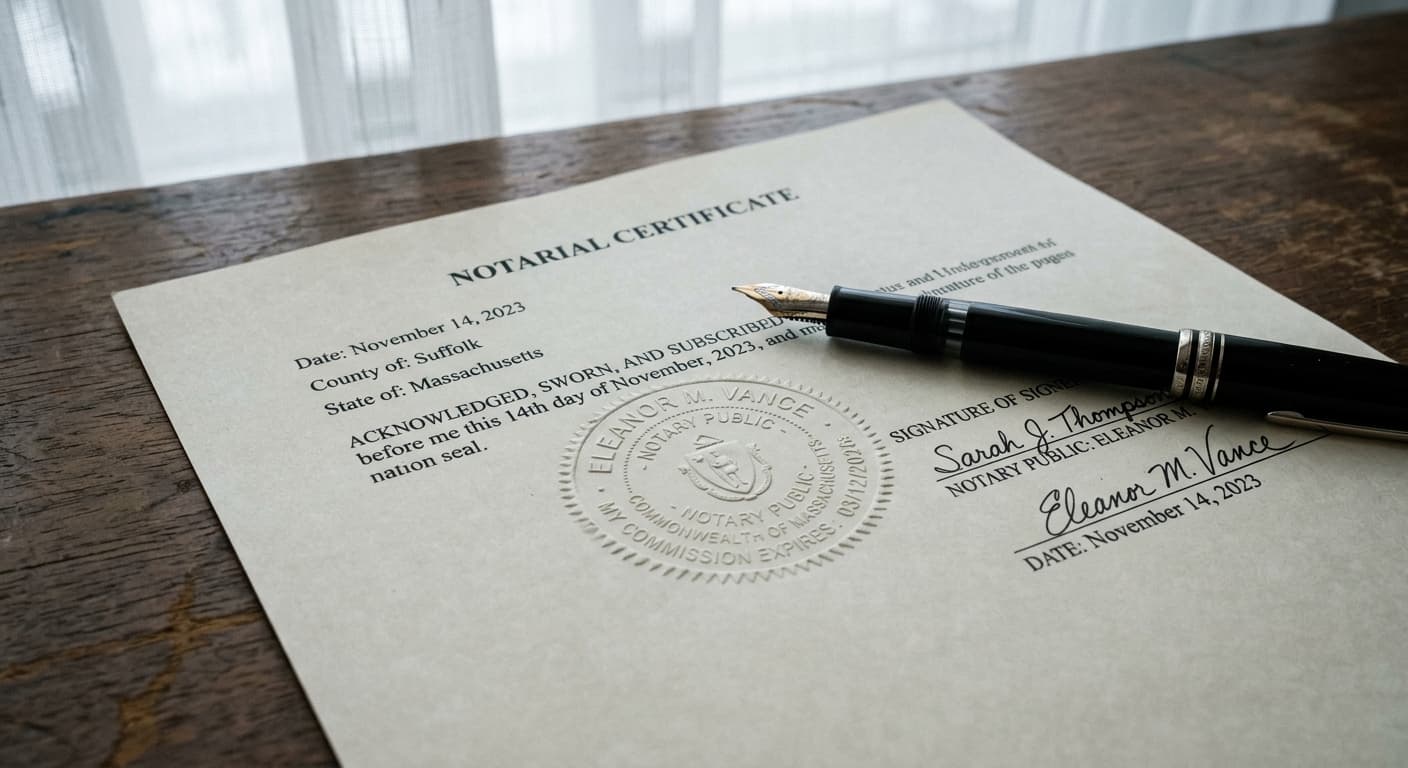
To win a slip and fall claim in New Hampshire, you must prove the property owner was negligent by showing the owner knew or should have known about the hazard, failed to fix or warn of it, and that failure caused your injury. New Hampshire applies modified-51 comparative negligence, which reduces or bars recovery depending on your share of fault.
Proving a slip and fall claim in New Hampshire
New Hampshire premises liability law was fundamentally reshaped by Ouellette v. Blanchard, 116 N.H. 552 (1976), in which the New Hampshire Supreme Court abolished the traditional invitee/licensee/trespasser status categories. In their place, the court imposed a single duty of reasonable care under all the circumstances on every landowner. That unified framework means the analysis for a business visitor and a social guest is governed by the same reasonableness standard, not by separate, tiered duties.
Rallis v. Demoulas Super Markets, Inc., 159 N.H. 95 (2009) restates the operative standard: a premises owner must use ordinary care to keep the premises in a reasonably safe condition and to warn of, or remedy, dangerous conditions it knows or should know exist. The notice element is central to most cases. A defendant who had no actual or constructive knowledge of the hazard typically cannot be held liable.
Constructive notice arises when a condition exists long enough that a reasonably prudent owner exercising ordinary care would have discovered and corrected it. Courts weigh how visible the hazard was, how long it had been present, and whether the owner maintained a reasonable inspection schedule. If the condition was caused by the owner's own employees or by a pattern of prior incidents, a court may infer constructive notice more quickly.
Causation must also be established. The hazard must have actually caused your fall and resulting injuries. A property owner is not an insurer of the safety of everyone who enters; you must link the specific defect to your specific harm.
The open-and-obvious doctrine in New Hampshire
New Hampshire does NOT apply the open-and-obvious doctrine as a no-duty bar. Under Ouellette v. Blanchard and Rallis v. Demoulas Super Markets, the owner's duty of reasonable care is not extinguished merely because a hazard is visible or should have been noticed by the entrant. The owner must still anticipate that a person may be harmed despite the danger being apparent; distraction, the need to use a particular path, or other circumstances can make harm foreseeable even from an obvious condition.
A plaintiff's own awareness of the hazard is not irrelevant. Under the comparative-fault framework of RSA 507:7-d, the jury will weigh that awareness as a factor bearing on how much fault to assign the plaintiff. If the jury concludes the plaintiff's fault is greater than the defendant's (more than 50%), recovery is barred. But the case proceeds to that fault-allocation analysis; a visible hazard does not win summary judgment for the defendant as a matter of law.
In practical terms, encountering an obvious hazard that a reasonable person would avoid will hurt your case at trial, because the jury may assign you a larger share of fault. It does not, however, end the case automatically. New Hampshire treats open-and-obvious as a comparative-fault factor, not a complete defense.
Ice, snow, and natural accumulation in New Hampshire
New Hampshire's courts have not adopted the rigid "natural accumulation" no-duty rule that shields property owners in states like Illinois and Ohio. Under the unified reasonable-care duty established in Ouellette v. Blanchard and restated in Rallis v. Demoulas Super Markets, owners owe an ongoing duty of ordinary care to keep their premises reasonably safe, and at common law that duty extends to naturally accumulated snow and ice.
What "ordinary care" requires is judged case-by-case. Courts consider factors such as anticipated foot traffic, the magnitude of the slipping risk, and the burden of removal or treatment. Depending on the circumstances, ordinary care may require salting, sanding, plowing, rerouting foot traffic, or posting warnings about conditions like black ice that may not be easily visible.
New Hampshire has also not adopted a judicial "storm-in-progress" doctrine. That doctrine, followed in several other states, gives property owners a window of suspension during an active storm before the duty to clear ice and snow kicks in. As a matter of common law, the New Hampshire duty of reasonable care applies continuously, and the fact that a storm is ongoing does not automatically postpone it.
That is the common-law picture, and it is not the whole picture. The legislature has supplied a statutory safe harbor that covers the single most common New Hampshire winter fact pattern, a plowed and salted parking lot or walkway maintained under contract. Under RSA 508:22, I, no commercial applicator certified under RSA 489-C:2, and no owner, occupant, or lessee of land whose premises is maintained by such an applicator, is liable for damages arising from hazards "caused solely by snow or ice," "even with actual notice thereof," where the failure or delay in removing or mitigating the hazard results from implementing the best management practices for winter road, parking lot, and sidewalk maintenance adopted and published by the New Hampshire Department of Transportation and the Department of Environmental Services. Gross negligence or reckless disregard of the hazard defeats the protection. Ordinary negligence does not.
The statute also builds in a presumption and a paper trail. Anyone who adopts those best management practices is presumed to be acting under them "in the absence of proof to the contrary," so the practical burden falls on the injured person to show the defendant departed from them. RSA 508:22, II conditions the protection on keeping a written record of the de-icing materials used, the rate or quantity applied, the treatment dates, and the weather conditions for each event requiring de-icing, retained for three years. Those records are among the first things to request in a New Hampshire ice case, because whether the defendant actually followed the practices it claims to follow is usually where the case is won or lost. RSA 508:22 took effect in 2013 and was amended effective July 1, 2021.
Falls on public sidewalks, streets, and highways are governed by a separate and even more protective rule. RSA 231:92-a bars a municipality or school district from liability for hazards "caused solely by snow, ice, or other inclement weather," even where it has actual notice or knowledge of them, when its failure or delay in removing or mitigating the hazard results from implementing a winter or inclement weather maintenance policy or set of priorities adopted in good faith by the responsible officials, absent gross negligence or reckless disregard. Municipal and school-district employees and officials are presumed to be acting under such a policy absent proof to the contrary.
Case law supplies one further boundary. Rutkauskas v. Hodgins, 120 N.H. 788 (1980) held there is no strict liability for a building that redirected precipitation from its roof onto an adjacent public sidewalk. Rutkauskas is narrow: it rejects strict (no-fault) liability in that specific context, not the ordinary reasonable-care duty, and owners may still be liable for redirected precipitation where their own negligence contributed to the hazard. It should not be misread as a broad natural-accumulation shield. But it is no longer the operative limit either. The controlling limits on New Hampshire snow and ice liability today are statutory: RSA 508:22 for private premises and RSA 231:92-a for public ways.
How fault is shared: New Hampshire's negligence rule
New Hampshire follows modified comparative negligence under RSA 507:7-d. Under this rule, a plaintiff's damages are reduced in direct proportion to their own percentage of fault. A plaintiff who is 25% at fault in a $100,000 case receives $75,000.

The critical threshold is 51%. RSA 507:7-d bars recovery only if the plaintiff's contributory fault "was greater than the fault of the defendant" (or the aggregate fault of all defendants if there are multiple). A plaintiff who is exactly 50% at fault still recovers (fault is equal to, not greater than, the defendant's 50%). A plaintiff found 51% at fault is completely barred.
This makes New Hampshire a modified-51 state, one rung more plaintiff-friendly than modified-50 states (like Maine) where a 50/50 finding bars recovery. New Hampshire is decidedly not one of the four pure-contributory states (Alabama, Maryland, North Carolina, Virginia) or the District of Columbia, where even 1% of fault by the plaintiff can bar all recovery.
Where multiple defendants are responsible, each defendant's percentage of fault is assessed individually. RSA 507:7-d directs the reduction against the defendant or defendants whose combined fault is measured against the plaintiff's fault.
Deadlines: statute of limitations and government claims
New Hampshire's general personal injury statute of limitations is 3 years, established by RSA 508:4, I. The clock typically starts on the date of the fall itself. However, RSA 508:4 also contains a discovery-rule provision: where the injury and its causal relationship to the defendant's conduct were not reasonably discoverable at the time of the accident, the 3-year period runs from when the plaintiff discovered, or reasonably should have discovered, both the injury and its cause.
Disability tolling is available under RSA 508:8 for minors and persons under legal disability. For a child injured in a slip and fall, the statute of limitations may be tolled until the child reaches majority, though best practice is to investigate promptly regardless of tolling.
If your fall occurred on state-owned property, RSA 541-B:14, IV requires written notice to the responsible state agency within 180 days after the injury. The notice must state the date, time, and location of the incident. Missing the 180-day window does not automatically bar the claim in New Hampshire; the claim is barred only if the State proves by a preponderance of the evidence that its ability to defend was substantially prejudiced by the late notice. Even so, acting within the 180-day window eliminates that risk entirely.
Claims against municipalities and local governmental units work differently, and the difference is substantive rather than just a matter of dates. RSA chapter 507-B governs municipal liability generally, but RSA 507-B:2 carves out the most common slip and fall setting: "the liability of any governmental unit with respect to its sidewalks, streets, and highways shall be limited as provided in RSA 231."
Under RSA 231:92, I, a municipality is not liable for an injury arising from an insufficient class IV or class V highway, bridge, or sidewalk unless one of three things is true: it received written notice of the insufficiency under RSA 231:90 and then failed to act as RSA 231:91 requires; a selectman, highway agent, mayor, or street commissioner had actual knowledge of the insufficiency and was grossly negligent or exercised bad faith in responding to it; or the condition was created by an intentional act of a municipal officer or employee. RSA 231:92, II adds a pleading hurdle: the complaint must describe with particularity the means by which the municipality received actual notice of the alleged insufficiency, or the intentional act that created it. RSA 231:90, II narrows "insufficient" itself to a way that is not passable in any safe manner by those permitted on it, or a safety hazard that is not reasonably discoverable or reasonably avoidable by a person traveling prudently and in obedience to posted regulations, given prevailing visibility and weather conditions.
Two consequences follow. First, on the filing calendar there is no separate short pre-suit notice period for a municipal claim. The written notice under RSA 231:90 is a predicate for liability, not a deadline for bringing suit, so the general 3-year limitation period under RSA 508:4 still governs when you must file. That is not the same as nothing extra applying. Second, if the hazard was snow or ice, RSA 231:92-a is likely to be decisive on its own, because it bars municipal and school-district liability for weather-caused hazards even with actual notice where a good-faith winter maintenance policy was implemented without gross negligence.
For more on New Hampshire's civil deadlines, see New Hampshire Statute of Limitations.
What a New Hampshire slip and fall claim is worth
New Hampshire slip and fall settlements and verdicts typically include two categories of damages. Economic damages cover your measurable financial losses: emergency-room and hospital bills, surgery, physical therapy and rehabilitation, future medical care, lost wages during recovery, and reduced earning capacity if the injury is permanent. These are calculated from medical records, billing statements, and employment documents.

Non-economic damages cover pain and suffering, emotional distress, loss of enjoyment of life, permanent scarring or disfigurement, and similar intangible harms. New Hampshire does not impose a statutory cap on non-economic damages in a claim against a private defendant. Jury awards for non-economic damages against a private defendant are bounded by what is reasonable and proportionate to the evidence, but there is no dollar ceiling. If your claim is against a state agency, however, RSA 541-B:14, I caps your total recovery (economic and non-economic combined) at $475,000 per claimant and $3,750,000 per single incident, or the amount of any applicable state insurance coverage if greater; punitive damages are barred entirely against the state.
Your net recovery is reduced by your share of comparative fault under RSA 507:7-d. If you are found 20% at fault, you keep 80% of total damages. If you are found 51% or more at fault, you recover nothing. Prompt documentation (photographs of the hazard, preserved incident reports, witness contact information) is critical because the evidence gathered in the hours and days after a fall shapes how the jury allocates fault.
The New Hampshire Slip and Fall Settlement Calculator can help you estimate the range of economic and non-economic damages before consulting an attorney.
This article is general legal information, not legal advice. Premises liability law varies by state and changes, and case values depend on the specific facts. For advice about a specific fall, consult a licensed attorney in New Hampshire.
Explore related resources: Slip and Fall Laws by State | New Hampshire Slip and Fall Settlement Calculator | New Hampshire Statute of Limitations
More New Hampshire Laws
Frequently Asked Questions
How do I prove a slip and fall in New Hampshire?
You must establish four elements: (1) the owner owed you a duty of reasonable care (all landowners owe this unified duty under Ouellette v. Blanchard, 116 N.H. 552 (1976)); (2) a dangerous condition existed on the premises; (3) the owner had actual or constructive notice of the hazard and failed to fix or warn of it within a reasonable time; and (4) that failure caused your injury. Constructive notice means the hazard existed long enough that a reasonable owner conducting ordinary inspections should have discovered it.
Is New Hampshire an open-and-obvious state?
No. New Hampshire does not use the open-and-obvious doctrine as an automatic bar. Under Rallis v. Demoulas Super Markets, Inc., 159 N.H. 95 (2009), an owner must still anticipate that an entrant may be harmed by an apparent hazard. The victim's awareness of the condition is weighed as comparative fault under RSA 507:7-d, which bars recovery only if the plaintiff's fault exceeds the defendant's (51% or more).
Can I sue for falling on ice or snow in New Hampshire?
Sometimes, but two statutes shield a large share of New Hampshire ice and snow defendants. At common law the ordinary reasonable-care duty applies to naturally accumulated snow and ice, and the courts have not adopted a 'storm-in-progress' doctrine. However, RSA 508:22 bars liability for hazards 'caused solely by snow or ice,' even with actual notice, where the premises is maintained by a commercial applicator certified under RSA 489-C:2 and the delay in clearing results from implementing the state's published winter best management practices, absent gross negligence or reckless disregard. For a fall on a public sidewalk, street, or highway, RSA 231:92-a gives municipalities and school districts a parallel bar where a good-faith winter maintenance policy was implemented. Whether the defendant actually followed those practices, and whether it kept the three years of de-icing records RSA 508:22, II requires, is often the decisive question.
How long do I have to file a slip and fall lawsuit in New Hampshire?
New Hampshire's general personal injury statute of limitations is 3 years from the date of the accident (or from discovery) under RSA 508:4. If your fall was on state property, you must also provide written notice to the responsible state agency within 180 days under RSA 541-B:14. Missing the 180-day window does not automatically bar the claim, but the State can argue prejudice, so timely notice is strongly advisable.
Can I recover if I was partly at fault for my fall in New Hampshire?
Yes, as long as your share of fault is not greater than the defendant's (i.e., 50% or below). New Hampshire's modified-51 comparative negligence rule under RSA 507:7-d reduces your damages by your percentage of fault. A plaintiff who is 50% at fault still recovers (damages reduced by half). Only if you are found 51% or more at fault is recovery completely barred.
How much is a New Hampshire slip and fall claim worth?
Value depends on your economic losses (medical bills, lost wages, future care costs) plus non-economic damages (pain and suffering, loss of enjoyment of life). New Hampshire does not cap non-economic damages against a private defendant. If your claim is against a state agency, RSA 541-B:14, I caps your total recovery at $475,000 per claimant and $3,750,000 per incident. Your net recovery is reduced by your comparative fault percentage under RSA 507:7-d. Use the New Hampshire Slip and Fall Settlement Calculator to estimate a range, then consult an attorney for a case-specific assessment.
What is the notice deadline for falls on government property in New Hampshire?
For falls on state property, RSA 541-B:14 requires written notice to the responsible state agency within 180 days of the injury as a condition precedent to suit, stating the date, time, and location. For falls on municipal property there is no comparable short pre-suit notice deadline, so the general 3-year limitation period under RSA 508:4 governs when you must file. The deadline is the easy part, though. RSA 507-B:2 limits a municipality's liability for its sidewalks, streets, and highways 'as provided in RSA 231,' and under RSA 231:92 the town is not liable at all unless it got written notice of the insufficiency under RSA 231:90 and failed to act, a named official had actual knowledge and was grossly negligent or acted in bad faith, or a municipal officer intentionally created the condition. The complaint must plead that notice with particularity.
Injured in New Hampshire? Get a free case review from a personal-injury attorney
If someone else's negligence caused your injury, you may be owed compensation for medical bills, lost wages, and pain and suffering. Get a free, no-obligation review from a New Hampshire personal-injury attorney. Most work on contingency, so there is no upfront cost.
Updates
Added New Hampshire's statutory snow and ice liability shields, which the article previously omitted: RSA 508:22 for private premises maintained by a certified winter applicator, and RSA 507-B:2 with RSA 231:90, 231:92 and 231:92-a for falls on municipal sidewalks, streets and highways.
Repointed the Ouellette v. Blanchard citation to the actual case opinion; it had been misdirected to an unrelated state tort-claims statute page.
Independently fact-checked against the cited primary sources; governing law re-checked for recent changes
Governing law re-checked for recent changes
Corrected the blanket "no cap on non-economic damages" claim: state-agency claims under RSA 541-B:14, I cap total recovery at $475,000 per claimant / $3,750,000 per incident. Also fixed the state-notice pincite from RSA 541-B:14, III to the correct subsection IV.
Governing law re-checked for recent changes
Reviewed and approved by an editor
The Law Behind This Article
This article rests on the statutory provisions below, held in our own legal record and retrieved from the official source. Tap a section to read the operative text.
New Hampshire Revised Statutes Annotated, TITLE LII ACTIONS, PROCESS, AND SERVICE OF PROCESS, CHAPTER 507 ACTIONS
§ 507:7-dComparative Fault.In forcecited in 2 of our articles
Contributory fault shall not bar recovery in an action by any plaintiff or plaintiff's legal representative, to recover damages in tort for death, personal injury or property damage, if such fault was not greater than the fault of the defendant, or the defendants in the aggregate if recovery is allowed against more than one defendant, but the damages awarded shall be diminished in proportion to the amount of fault attributed to the plaintiff by general verdict. The burden of proof as to the existence or amount of fault attributable to a party shall rest upon the party making such allegation.
Official text (excerpt) · last checked 2026-09-08 · Read the full text in our law library · Verify at gc.nh.gov
Also relied on in: Truck Accident Laws in New Hampshire (2026): Deadlines & Liability
New Hampshire Revised Statutes Annotated, TITLE LII ACTIONS, PROCESS, AND SERVICE OF PROCESS, CHAPTER 508 LIMITATION OF ACTIONS
§ 508:4Personal Actions.In forcecited in 8 of our articles
I. Except as otherwise provided by law, all personal actions, except actions for slander or libel, may be brought only within 3 years of the act or omission complained of, except that when the injury and its causal relationship to the act or omission were not discovered and could not reasonably have been discovered at the time of the act or omission, the action shall be commenced within 3 years of the time the plaintiff discovers, or in the exercise of reasonable diligence should have discovered, the injury and its causal relationship to the act or omission complained of. II. Personal actions for slander or libel, unless otherwise provided by law, may be brought only within 3 years of the time the cause of action accrued.
Official text (excerpt) · last checked 2026-09-08 · Read the full text in our law library · Verify at gc.nh.gov
Cited in 304 court opinions in our collectionLatest citing opinion in our collection: 2025
Opinions citing this section in our collection:
- Kelleher v. Marvin Lumber & Cedar Co. (Supreme Court of New Hampshire 2005, 152 N.H. 813)“…96, and, therefore, even if the discovery rule exception to RSA 508:4, I (1997) applied, the plaintiff still…”
- Beane v. Dana S. Beane & Co., P.C. (Supreme Court of New Hampshire 2010, 160 N.H. 708)“…ver, because in that case we interpreted a prior version of RSA 508:4 (Supp. 1973), which did not expressly s…”
- Keeton v. Hustler Magazine, Inc. (Supreme Court of New Hampshire 1988, 131 N.H. 6)“…utes of limitations for many causes of action, see, e.g., RSA 508:4 (Supp. 1987), and our liberal discovery…”
Identified automatically from the court opinions citing this section — not a ranking of which case controls.
Also relied on in: Medical Malpractice Laws in New Hampshire (2026): Deadlines & Caps, Motorcycle Accident Laws in New Hampshire (2026): Deadlines, New Hampshire Statute of Limitations: Filing Deadlines by Case Type
New Hampshire Revised Statutes Annotated, TITLE LV PROCEEDINGS IN SPECIAL CASES, CHAPTER 541-B CLAIMS AGAINST THE STATE
§ 541-B:14Limitation on Action and Claims.In force
I. All claims arising out of any single incident against any agency for damages in tort actions shall be limited to an award not to exceed $475,000 per claimant and $3,750,000 per any single incident, or the proceeds from any insurance policy procured pursuant to RSA 9:27, whichever amount is greater; except that no claim for punitive damages may be awarded under this chapter. The limits applicable to any action shall be the limits in effect at the time of the judgment or settlement. II. If a claim is filed against the state for time unjustly served in the state prison when a person is found to be innocent of the crime for which he was convicted, such a claim shall be limited to an award not to exceed $20,000. III. The payment of interest shall be granted on any award authorized under this chapter at the rate provided in RSA 336:1 in the same manner as is provided for in civil actions generally. IV. Any claim submitted under this chapter shall be brought within 3 years of the date of the alleged bodily injury, personal injury or property damage or the wrongful death resulting from bodily injury.
Official text (excerpt) · last checked 2026-07-29 · Read the full text in our law library · Verify at gc.nh.gov
Cited in 13 court opinions in our collectionLatest citing opinion in our collection: 2023
Opinions citing this section in our collection:
- Laramie v. Stone (Supreme Court of New Hampshire 2010, 160 N.H. 419)“…ing argument; and (5) failing to apply the statutory cap in RSA 541-B:14,1 (Supp. 2009), which limits recovery i…”
- Petition of New Hampshire Division for Children, Youth and Families (Supreme Court of New Hampshire 2023)“…YF arguing, inter alia, that the claims were time-barred by RSA 541-B:14, IV. The respondent objected, asserting…”
- Opinion of the Justices (Supreme Court of New Hampshire 1985, 126 N.H. 554)“…and Notice of Claim Requirement HB 440 proposes to amend RSA 541-B:14, IV to provide: “Any claim submitted…”
Identified automatically from the court opinions citing this section — not a ranking of which case controls.
Search our full record of US law — 2.1 million sections, every state + federal →
Sources and References
- RSA 541-B:14 — State Claims: Notice of Claim (180-day deadline)(gc.nh.gov).gov
- RSA 507:7-d — Modified Comparative Negligence (51% bar rule)(gc.nh.gov).gov
- RSA 508:4 — 3-Year Personal Injury Statute of Limitations(gc.nh.gov).gov
- Ouellette v. Blanchard, 116 N.H. 552 (1976)(law.justia.com)
- RSA 508:22 - Liability Limited for Winter Maintenance (snow and ice safe harbor for premises maintained by an RSA 489-C:2 certified commercial applicator)(gc.nh.gov)
- RSA 231:92-a - Snow, Ice and Other Weather Hazards (municipal and school district bar)(gc.nh.gov)
- RSA 231:92 - Liability of Municipalities; Standard of Care (notice predicates and particularity pleading)(gc.nh.gov)
- RSA 231:90 - Duty of Town After Notice of Insufficiency (written notice; definition of insufficient)(gc.nh.gov)
- RSA 507-B:2 - Liability for Negligence (sidewalk, street and highway liability limited as provided in RSA 231)(gc.nh.gov)