
Arizona
Arizona Video Recording Laws: Rules for Cameras and Filming
Independently fact-checked against primary sources (last audited August 15, 2026). · Reviewed by the RecordingLaw editorial team. · Law checked current as of August 15, 2026. · 7 primary sources cited on this page. How we verify our legal content
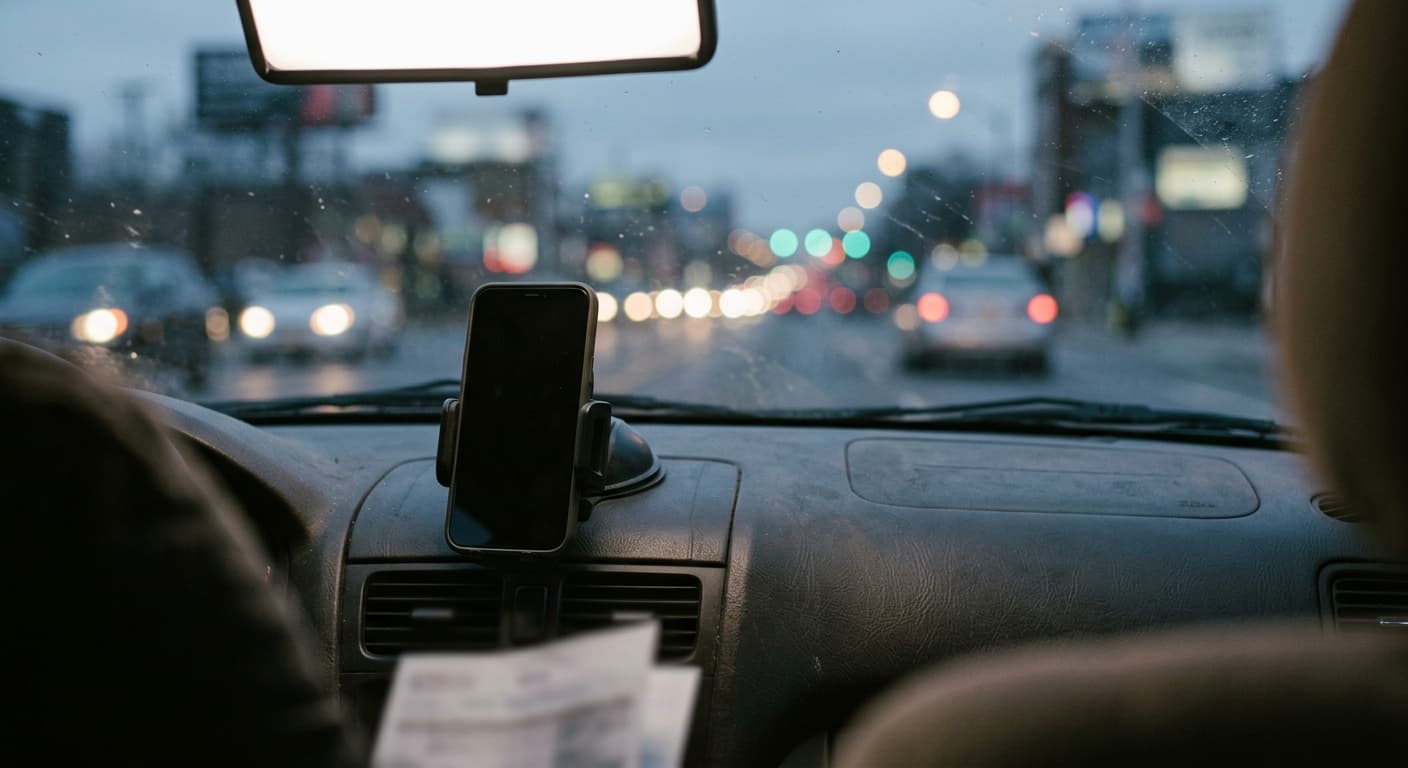
In Arizona, silent video recording in public is legal with no permit or consent required. Adding audio triggers one-party consent under A.R.S. 13-3005. Secret recording in private locations such as bathrooms, locker rooms, and bedrooms is a felony under A.R.S. 13-3019.
Arizona does not have a single statute that governs all video recording. Instead, multiple laws work together to define what is legal and what is not. Your rights depend on where you are recording, whether you are capturing audio along with video, and the purpose of the recording.
This guide covers Arizona's video recording laws in full, including public filming rights, the surreptitious recording statute, voyeurism laws, and the rules for security cameras, drones, and other recording equipment.
Arizona's Key Video Recording Statutes
ARS 13-3019: Surreptitious Photographing, Videotaping, Filming
ARS 13-3019 is Arizona's primary statute addressing unauthorized visual recording. It makes it a crime to knowingly photograph, videotape, film, digitally record, or by any other means secretly view another person without that person's consent in any of the following situations:
- The person is in a restroom, bathroom, locker room, bedroom, or other location where the person has a reasonable expectation of privacy
- The recording captures the person in a state of undress or engaged in sexual activity
- The recording captures or allows viewing of the person's genitalia, buttock, or female breast, clothed or unclothed, in a manner not otherwise visible to the public
This statute applies to all forms of visual recording, including smartphones, hidden cameras, body cameras, drones, and any other image-capturing device.
ARS 13-1424: Voyeurism
ARS 13-1424 prohibits knowingly invading the privacy of another person without the knowledge of the other person for the purpose of sexual stimulation. This includes video recording. The statute classifies basic voyeurism as a Class 5 felony.
If the person distributes, discloses, displays, transmits, or publishes a voyeuristic recording in which the victim is identifiable, the offense becomes a Class 4 felony carrying up to 3.75 years in prison.
ARS 13-3005: When Audio Is Included
When your video recording also captures audio, the one-party consent rules under ARS 13-3005 apply to the audio portion. Silent video recording in public does not trigger the wiretapping statute. But the moment you record someone's voice in a setting where they have a reasonable expectation of privacy, you need one-party consent for the audio component.
Video Recording in Public Places

Your Rights as a Videographer
Arizona has no law that prohibits video recording in public places. You can:
- Film on public streets, sidewalks, and parks
- Record at public protests, rallies, and demonstrations
- Film the exterior of buildings visible from public property
- Record public transportation, including buses and light rail
- Capture video at public events, fairs, and festivals
- Film government buildings from public areas
- Record in any location where you have a legal right to be
The First Amendment to the U.S. Constitution protects your right to record matters of public interest from public spaces. Arizona courts have consistently upheld this right.
Limitations in Public
Even in public, there are boundaries:
- You cannot use recording as a pretext to harass someone under ARS 13-2921
- You cannot record up someone's skirt or down their blouse, even in public, under ARS 13-3019
- You cannot block traffic, trespass, or obstruct public operations to get a better filming angle
- Private businesses open to the public can set their own recording policies on their premises
Recording on Private Property
On private property, the property owner sets the rules. A business can prohibit video recording on its premises, and if you refuse to stop, you may be asked to leave. Continuing to record after being asked to leave could result in a trespassing charge under ARS 13-1502.
However, a property owner cannot prohibit you from recording from a public location that happens to capture their property. If you are standing on a public sidewalk and film a private building, that is protected activity.
Video Recording in Private Locations
The Reasonable Expectation of Privacy Test
Arizona law protects video recording privacy in locations where a person has a reasonable expectation of privacy. Courts evaluate this on a case-by-case basis, considering:
- Whether the location is open to the public or restricted
- Whether the person took steps to ensure privacy (closing doors, drawing curtains)
- Whether a reasonable person would expect to be observed in that setting
- The nature of the activity being recorded
Locations Where Secret Video Recording Is Always Illegal
Under ARS 13-3019, these locations carry an automatic expectation of privacy for video recording purposes:
- Bathrooms and restrooms (including portable toilets)
- Locker rooms (at gyms, pools, schools, or workplaces)
- Changing rooms (at retail stores, fitness centers, or any other facility)
- Bedrooms (in private homes, hotel rooms, or other sleeping areas)
- Any location where a person is in a state of undress and has not consented to observation
Video Recording in Your Own Home
You can generally install cameras in your own home, but there are limits:
- You can record common areas like living rooms, kitchens, and hallways
- You cannot record in bathrooms or areas where guests have a privacy expectation
- If you have roommates, recording shared common areas is generally permissible, but recording in their private bedrooms is not
- Recording intimate activities of another person without consent violates ARS 13-1424
- Hidden cameras used to capture nonconsensual intimate images can lead to felony charges
Drones and Aerial Video Recording in Arizona

State Drone Laws
Arizona regulates drone use primarily through ARS 13-3729, which addresses the use of unmanned aircraft. Key provisions include:
- It is illegal to operate a drone in a manner prohibited by federal aviation regulations, or in a way that interferes with law enforcement, firefighting, or emergency response operations
- Critical infrastructure facilities (power plants, dams, water treatment facilities) are protected from drone surveillance under ARS 13-3729
- Drone operators must comply with all FAA regulations, including registration, altitude limits, and airspace restrictions
FAA Regulations
The Federal Aviation Administration governs airspace and drone operations nationwide. Arizona drone operators must:
- Register drones weighing more than 0.55 pounds with the FAA
- Fly below 400 feet in uncontrolled airspace
- Maintain visual line of sight with the drone
- Avoid restricted airspace near airports without authorization
- Follow Part 107 rules if flying for commercial purposes
Security Cameras and Video Surveillance
Residential Security Cameras
Arizona homeowners can install security cameras on their property with few restrictions. However:
- Cameras must not be positioned to record areas where neighbors have a reasonable expectation of privacy (looking into bedroom windows, for example)
- Audio recording through security cameras follows one-party consent rules under ARS 13-3005
- There are no statewide permit or registration requirements for residential security cameras
Business Security Cameras
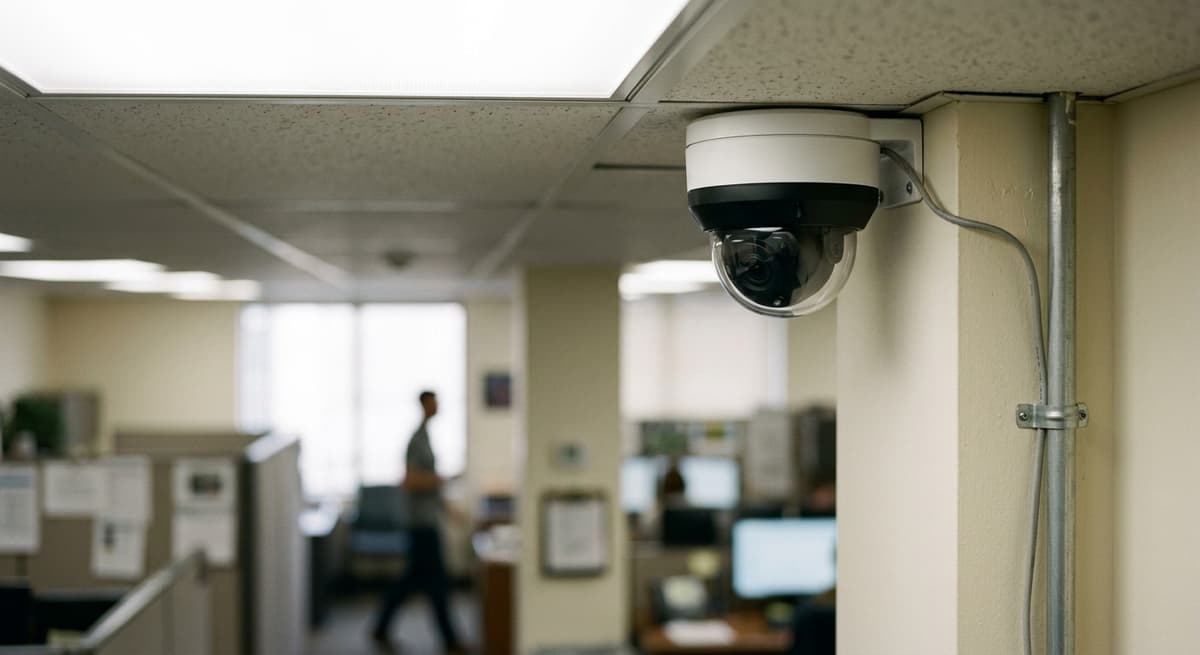
Businesses in Arizona can use video surveillance in areas where employees and customers do not have a reasonable expectation of privacy. This includes:
- Sales floors, lobbies, and reception areas
- Parking lots and exterior areas
- Hallways and common spaces
- Loading docks and storage areas
Businesses cannot place cameras in:
- Bathrooms and restrooms
- Locker rooms and changing areas
- Break rooms where employees have a privacy expectation (this varies by court interpretation)
Some Arizona municipalities may have additional ordinances regarding security camera placement and signage. Check your local city or county regulations.
Penalties for Illegal Video Recording in Arizona
ARS 13-3019 Penalties
| Offense | Classification | Maximum Sentence |
|---|---|---|
| Surreptitious recording in a private location | Class 5 felony | 2.5 years |
| Distribution of surreptitious recording (victim recognizable) | Class 4 felony | 3.75 years |
| Capturing genitalia, buttock, or female breast not visible to the public | Class 5 felony | 2.5 years |
ARS 13-1424 Voyeurism Penalties
| Offense | Classification | Maximum Sentence |
|---|---|---|
| Voyeurism (basic offense) | Class 5 felony | 2.5 years |
| Distribution of voyeuristic recording (victim identifiable) | Class 4 felony | 3.75 years |
AI Deepfakes and Synthetic Video in Arizona
State Deepfake Laws
Arizona enacted two AI-related visual media laws in 2024. HB 2394 (ARS 16-1023), signed May 21, 2024, creates a private civil right of action against any person who knowingly creates, distributes, or publishes a synthetic digital image that falsely depicts an identifiable person in a sexually explicit manner without consent. SB 1359, signed May 29, 2024, requires disclosure labeling on AI-generated content in political advertising during election cycles. SB 1078 was not enacted.
Federal TAKE IT DOWN Act
The federal TAKE IT DOWN Act (Pub. L. No. 119-12) was signed May 19, 2025, and requires online platforms to remove nonconsensual intimate images, including AI-generated deepfakes, within 48 hours of notice. Platform compliance obligations became effective May 19, 2026. Victims whose intimate images appear online, including AI-generated depictions, may send takedown notices directly to covered platforms under this federal law in addition to pursuing state civil remedies under ARS 16-1023 and ARS 13-1425.
Civil Liability
Victims of illegal video recording can pursue civil lawsuits for:
- Invasion of privacy
- Intentional infliction of emotional distress
- Negligent infliction of emotional distress
- Statutory damages under applicable federal laws
- Punitive damages in cases of willful misconduct
Using Video Recordings as Evidence in Arizona
Admissibility Standards
Video recordings are generally admissible in Arizona courts if they meet standard evidence requirements:
- Authentication: A witness must testify that the video accurately represents what it purports to show, under Arizona Rule of Evidence 901, a rule of the Arizona Supreme Court
- Relevance: The video must relate to a material issue in the case
- Not illegally obtained: Videos made in violation of ARS 13-3019, ARS 13-1424, or ARS 13-3005 may be excluded
- Probative vs. prejudicial: The court will weigh the evidentiary value against any unfair prejudice
Best Practices for Video Evidence
- Preserve the original video file without editing
- Note the date, time, and location of the recording
- Maintain a clear chain of custody
- Back up the file to a secure secondary location
- If the video includes audio, ensure compliance with one-party consent rules
Arizona Recording Laws by Topic
Phone Call Recording | Audio Recording | Video Recording | Workplace Recording | Recording Police | Security Cameras | Recording in Public | Landlord-Tenant | Dashcam Laws | Schools | Medical Recording | Voyeurism & Hidden Cameras
Back to Arizona Recording Laws
More Arizona Recording Topics
More Arizona Laws
Frequently Asked Questions
Is it legal to video record someone in Arizona without their consent?
It depends on where the recording takes place. In public areas, you can freely video record anyone without consent. In private locations like bathrooms, locker rooms, and bedrooms, secret video recording is a felony under ARS 13-3019. For video with audio in private settings, one-party consent rules under ARS 13-3005 apply.
Can I install security cameras at my Arizona home?
Yes. Arizona homeowners can install security cameras on their own property. However, cameras should not be pointed into areas where neighbors have a reasonable expectation of privacy, such as looking into bedroom windows. Audio capture through security cameras follows one-party consent rules.
Is it illegal to fly a drone with a camera in Arizona?
Flying a camera-equipped drone is legal in Arizona, but you must follow FAA regulations and Arizona state law. Under ARS 13-3729, it is illegal to use a drone to intentionally photograph or loiter near a critical facility (such as a power plant, water treatment facility, courthouse, or jail) in furtherance of a criminal offense, or to operate a drone in a way that interferes with law enforcement or emergency response operations.
What is the penalty for secretly filming someone in a private location in Arizona?
Secretly filming someone in a bathroom, locker room, bedroom, or other private location is a Class 5 felony under ARS 13-3019, punishable by up to 2.5 years in prison. If the recording is distributed and the victim is recognizable, it becomes a Class 4 felony with up to 3.75 years in prison.
Can I film police officers in Arizona?
Yes. The First Amendment protects your right to record police officers performing their duties in public, as confirmed by Fordyce v. City of Seattle, 55 F.3d 436 (9th Cir. 1995), and Askins v. DHS, 899 F.3d 1035 (9th Cir. 2018). Arizona's HB 2319 eight-foot buffer was permanently enjoined by stipulated injunction in Arizona Broadcasters Ass'n v. Mayes (D. Ariz. July 21, 2023), not struck down on the merits.
Updates
Fixed a dead link on the page's HB 2394 deepfake-law citation, replaced a literal unfilled placeholder with the TAKE IT DOWN Act's actual public law number (Pub. L. No. 119-12), and replaced a dead, mislabeled Rules-of-Evidence citation with a link to the Arizona Supreme Court's rules portal.
Independently fact-checked against the cited primary sources; governing law re-checked for recent changes
Corrected ARS 13-3019 felony classifications (device-based surreptitious recording is a Class 5 felony, not Class 6) and corrected ARS 13-3729's drone provisions, which restrict photographing/loitering near critical facilities and interfering with emergency operations, not photographing individuals on private property.
Governing law re-checked for recent changes
Corrected HB 2319 framing to stipulated injunction in Arizona Broadcasters Ass'n v. Mayes (D. Ariz. July 21, 2023). Added Fordyce v. Seattle and Askins v. DHS as controlling 9th Circuit authority. Added AI [deepfake](/us-laws/deepfake-laws) section covering HB 2394 (ARS 16-1023, signed May 21 2024) and [TAKE IT DOWN Act](/us-laws/take-it-down-act) (signed May 19 2025, effective May 19 2026).
Reviewed and approved by an editor
The Law Behind This Article
This article rests on the statutory provisions below, held in our own legal record and retrieved from the official source. Tap a section to read the operative text.
Arizona Revised Statutes, Title 13 (Criminal Code), Chapter 30 (EAVESDROPPING AND COMMUNICATIONS)
§ 13-3019Surreptitious photographing, videotaping, filming or digitally recording or viewing; exemptions; classification; definitionsIn forcecited in 14 of our articles
A. It is unlawful for any person to knowingly photograph, videotape, film, digitally record or by any other means secretly view, with or without a device, another person without that person's consent under either of the following circumstances: 1. In a restroom, bathroom, locker room, bedroom or other location where the person has a reasonable expectation of privacy and the person is urinating, defecating, dressing, undressing, nude or involved in sexual intercourse or sexual contact. 2. In a manner that directly or indirectly captures or allows the viewing of the person's genitalia, buttock or female breast, whether clothed or unclothed, that is not otherwise visible to the public. B. It is unlawful to disclose, display, distribute or publish a photograph, videotape, film or digital recording made in violation of subsection A of this section without the consent or knowledge of the person depicted. C. This section does not apply to: 1.
Official text (excerpt) · last checked 2026-08-31 · Read the full text in our law library · Verify at azleg.gov
Cited in 8 court opinions in our collectionLatest citing opinion in our collection: 2026
In the courts (editorial summary, independently checked):State of Arizona v. Whytte Dragun Duncan (2024) found a hidden bathroom camera established a fair probability of surreptitious recording under 13-3019, supporting a search warrant. State of Arizona v. Agustin Gonzalez Gongora (2014) contrasted the section with the voyeurism statute, which adds a sexual stimulation element.
Opinions citing this section in our collection:
- State of Arizona v. Agustin Gonzalez Gongora (Court of Appeals of Arizona 2014, 235 Ariz. 178)✓A man crouched behind a shopper in a store and looked up her dress; convicted under the separate voyeurism statute, he argued a 2006 draft amendment made upskirt viewing only a section 13-3019 offense, and the court rejected that reading of the two statutes.
- Tucson Unified School District v. Borek (Court of Appeals of Arizona 2014, 234 Ariz. 364)“…g or recording another person without their consent.” See A.R.S. § 13-3019(A), (D).…”
- State of Arizona v. Whytte Dragun Duncan (Court of Appeals of Arizona 2024, 548 P.3d 1128)✓A foster parent hid a camera inside a USB charger in the bathroom and recorded teenage girls showering and undressing; the court held that even with the unlawfully searched SD card excised, the affidavit showed a fair probability of a section 13-3019 offense.
Identified automatically from the court opinions citing this section — not a ranking of which case controls.
Also relied on in: Arizona Audio Recording Laws: Complete Guide to Consent Rules, Arizona Landlord-Tenant Recording Laws: Rights for Renters and Property Owners, Arizona Medical Recording Laws: Patient Rights and HIPAA Rules
§ 13-3005Interception of wire, electronic and oral communications; installation of pen register or trap and trace device; classification; exceptionsIn forcecited in 19 of our articles
A. Except as provided in this section and section 13-3012, a person is guilty of a class 5 felony who either: 1. Intentionally intercepts a wire or electronic communication to which he is not a party, or aids, authorizes, employs, procures or permits another to so do, without the consent of either a sender or receiver thereof. 2. Intentionally intercepts a conversation or discussion at which he is not present, or aids, authorizes, employs, procures or permits another to so do, without the consent of a party to such conversation or discussion. 3. Intentionally intercepts the deliberations of a jury or aids, authorizes, employs, procures or permits another to so do. B. Except as provided in sections 13-3012 and 13-3017, a person who intentionally and without lawful authority installs or uses a pen register or trap and trace device on the telephone lines or communications facilities of another person which are utilized for wire or electronic communication is guilty of a class 6 felony.
Official text (excerpt) · last checked 2026-08-31 · Read the full text in our law library · Verify at azleg.gov
Cited in 7 court opinions in our collectionLatest citing opinion in our collection: 2025
In the courts (editorial summary, independently checked):State v. Morrison (2002) held that 13-3005 criminalizes unlawful interception but provides no exclusionary remedy, so a recording made in violation of it is not automatically inadmissible. State v. Hauss (1984) held the section inapplicable to a police station interview room talk where no reasonable expectation of privacy existed.
Opinions citing this section in our collection:
- State v. Morrison (Court of Appeals of Arizona 2002, 203 Ariz. 489)“…ause it was made without his or her consent in violation of A.R.S. § 13-3005 and 18 U.S.C. § 2511 and was, therefo…”
- State v. Hauss (Court of Appeals of Arizona 1984, 142 Ariz. 159)✓Police secretly recorded an arrested suspect's talk with his girlfriend in a station interview room, after telling her the room was being monitored; the court held there was no reasonable expectation of privacy in that setting, so section 13-3005 did not apply.
- State v. Allgood (Court of Appeals of Arizona 1992, 171 Ariz. 522)“…communication.” (Emphasis added.) See also A.R.S. § 13-3005. (penalizing as a class 5 felony interc…”
Identified automatically from the court opinions citing this section — not a ranking of which case controls.
Also relied on in: Arizona Recording Laws (2026): One-Party Consent Rules, One-Party Consent States: Complete 2026 Guide, Arizona Phone Call Recording Laws: What You Need to Know
Arizona Revised Statutes, Title 13 (Criminal Code), Chapter 14 (SEXUAL OFFENSES)
§ 13-1424Voyeurism; classificationIn forcecited in 8 of our articles
A. It is unlawful to knowingly invade the privacy of another person without the knowledge of the other person for the purpose of sexual stimulation. B. It is unlawful for a person to disclose, display, distribute or publish a photograph, videotape, film or digital recording that is made in violation of subsection A of this section without the consent or knowledge of the person depicted. C. For the purposes of this section, a person's privacy is invaded if both of the following apply: 1. The person has a reasonable expectation that the person will not be photographed, videotaped, filmed, digitally recorded or otherwise viewed or recorded. 2. The person is photographed, videotaped, filmed, digitally recorded or otherwise viewed, with or without a device, either: (a) While the person is in a state of undress or partial dress. (b) While the person is engaged in sexual intercourse or sexual contact. (c) While the person is urinating or defecating. (d) In a manner that directly or indirectly captures or allows the viewing of the person's genitalia, buttock or female breast, whether clothed or unclothed, that is not otherwise visible to the public. D.
Official text (excerpt) · last checked 2026-08-04 · Read the full text in our law library · Verify at azleg.gov
Cited in 15 court opinions in our collectionLatest citing opinion in our collection: 2026
Opinions citing this section in our collection:
- State v. Blazak (Arizona Supreme Court 1977, 114 Ariz. 199)“…timony and not to the admissibility of the evidence. A.R.S. § 13-1424 permits a peace officer to apply to a m…”
- State v. Grijalva (Arizona Supreme Court 1975, 111 Ariz. 476)“…fense sought to suppress certain evidence taken pursuant to ARS § 13-1424, including photographs of the defendant…”
- Long v. Garrett (Court of Appeals of Arizona 1974, 22 Ariz. App. 397)“…tioner's special action challenges the constitutionality of A.R.S. § 13-1424, both on its face and as construed and…”
Identified automatically from the court opinions citing this section — not a ranking of which case controls.
Also relied on in: Arizona Security Camera Laws: Rules for Homes and Businesses, Arizona Surreptitious Recording & Voyeurism Laws: ARS 13-3019 Penalties (2026), Arizona Data Privacy Laws: Breach Rules & Consumer Rights (2026)
Arizona Revised Statutes, Title 13 (Criminal Code), Chapter 15 (CRIMINAL TRESPASS AND BURGLARY)
§ 13-1502Criminal trespass in the third degree; classificationIn forcecited in 2 of our articles
A. A person commits criminal trespass in the third degree by: 1. Knowingly entering or remaining unlawfully on any real property after a reasonable request to leave by a law enforcement officer, the owner or any other person having lawful control over such property, or reasonable notice prohibiting entry. 2. Knowingly entering or remaining unlawfully on the right-of-way for tracks, or the storage or switching yards or rolling stock of a railroad company. B. Pursuant to subsection A, paragraph 1 of this section, a request to leave by a law enforcement officer acting at the request of the owner of the property or any other person having lawful control over the property has the same legal effect as a request made by the property owner or other person having lawful control of the property. C. Criminal trespass in the third degree is a class 3 misdemeanor.
Official text (excerpt) · last checked 2026-08-04 · Read the full text in our law library · Verify at azleg.gov
Cited in 34 court opinions in our collectionLatest citing opinion in our collection: 2026
Opinions citing this section in our collection:
- State v. Barr (Court of Appeals of Arizona 1995, 183 Ariz. 434)“…992). Based upon our examination of the plain language of A.R.S. section 13-1502(A), we conclude that it applies to both…”
- State v. Hinden (Court of Appeals of Arizona 2010, 224 Ariz. 508)“…to make these very types of distinctions. See A.R.S. §§ 13-1502 through 13-1504 (trespass); A.R.S. §§ 1…”
- State of Arizona v. Anthony Lewis (Court of Appeals of Arizona 2014, 236 Ariz. 336)“…en, 224 Ariz. 508, ¶ 13, 233 P.3d 621, 624 (App. 2010); see A.R.S. §§ 13-1502 through 13-1504 (trespass); A.R.S. §§ 1…”
Identified automatically from the court opinions citing this section — not a ranking of which case controls.
Also relied on in: Arizona Laws on Recording in Public: What You Can and Cannot Film
Arizona Revised Statutes, Title 13 (Criminal Code), Chapter 37 (MISCELLANEOUS OFFENSES)
§ 13-3729Unlawful operation of model or unmanned aircraft; state preemption; classification; definitionsIn forcecited in 3 of our articles
A. It is unlawful for a person to operate a model aircraft or a civil unmanned aircraft if the operation: 1. Is prohibited by a federal law or regulation that governs aeronautics, including federal aviation administration regulations. 2. Interferes with a law enforcement, firefighter or emergency services operation. B. It is unlawful for a person to operate or use an unmanned aircraft or unmanned aircraft system to intentionally photograph or loiter over or near a critical facility in the furtherance of any criminal offense. C. Except as authorized by law, a city, town or county may not enact or adopt any ordinance, policy or rule that relates to the ownership or operation of an unmanned aircraft or unmanned aircraft system or otherwise engage in the regulation of the ownership or operation of an unmanned aircraft or an unmanned aircraft system. Any ordinance, policy or rule that violates this subsection, whether enacted or adopted by the city, town or county before or after August 6, 2016, is void. D. This section does not: 1.
Official text (excerpt) · last checked 2026-08-31 · Read the full text in our law library · Verify at azleg.gov
Also relied on in: Arizona Drone Laws (2026): Privacy, Critical Facilities & Warrants, Arizona Surveillance Camera Laws (2026 Guide)
§ 13-3732Unlawful video recording of law enforcement activity; classification; definitionIn forcecited in 4 of our articles
A. It is unlawful for a person to knowingly make a video recording of law enforcement activity if the person making the video recording is within eight feet of where the person knows or reasonably should know that law enforcement activity is occurring, either receives or has previously received a verbal warning from a law enforcement officer that the person is prohibited from making a video recording of a law enforcement activity within eight feet of the activity and continues to make a video recording of the law enforcement activity within eight feet of the activity. If the law enforcement activity is occurring in an enclosed structure that is on private property, a person who is authorized to be on the private property may make a video recording of the activity from an adjacent room or area that is less than eight feet away from where the activity is occurring, unless a law enforcement officer determines that the person is interfering in the law enforcement activity or that it is not safe to be in the area and orders the person to leave the area. B.
Official text (excerpt) · last checked 2026-08-04 · Read the full text in our law library · Verify at azleg.gov
Cited in 1 court opinions in our collectionLatest citing opinion in our collection: 2022
Opinions citing this section in our collection:
- Arizona Broadcasters Association v. Mayes (District Court, D. Arizona 2022)“…13-3732(A). A violation of HB2319 is a class 3 misdemeanor. A.R.S. § 13-3732(D). 2 HB2319 is set to take effect o…”
Identified automatically from the court opinions citing this section — not a ranking of which case controls.
Also relied on in: Arizona Dashcam Laws: Rules for Dashboard Cameras in Vehicles, Arizona Laws on Recording Police: Your Rights After HB 2319
Search our full record of US law — 2.1 million sections, every state + federal →
Sources and References
- Arizona Revised Statutes 13-3019 - Surreptitious Photographing, Videotaping, Filming(azleg.gov).gov
- Arizona Revised Statutes 13-1424 - Voyeurism Classification(azleg.gov).gov
- Arizona Revised Statutes 13-3005 - Interception of Communications(azleg.gov).gov
- Arizona Revised Statutes 13-3729 - Unmanned Aircraft(azleg.gov).gov
- FAA Unmanned Aircraft Systems (UAS)(faa.gov).gov
- Arizona Revised Statutes 13-3732 - Recording of Law Enforcement Activity(azleg.gov).gov
- Arizona Revised Statutes 13-1502 - Criminal Trespass(azleg.gov).gov