
Mississippi
Mississippi Police Bodycam Laws (2026): Mandate & Access
Independently fact-checked against primary sources (last audited August 20, 2026). · Reviewed by the RecordingLaw editorial team. · Law checked current as of August 20, 2026. · 3 primary sources cited on this page. How we verify our legal content
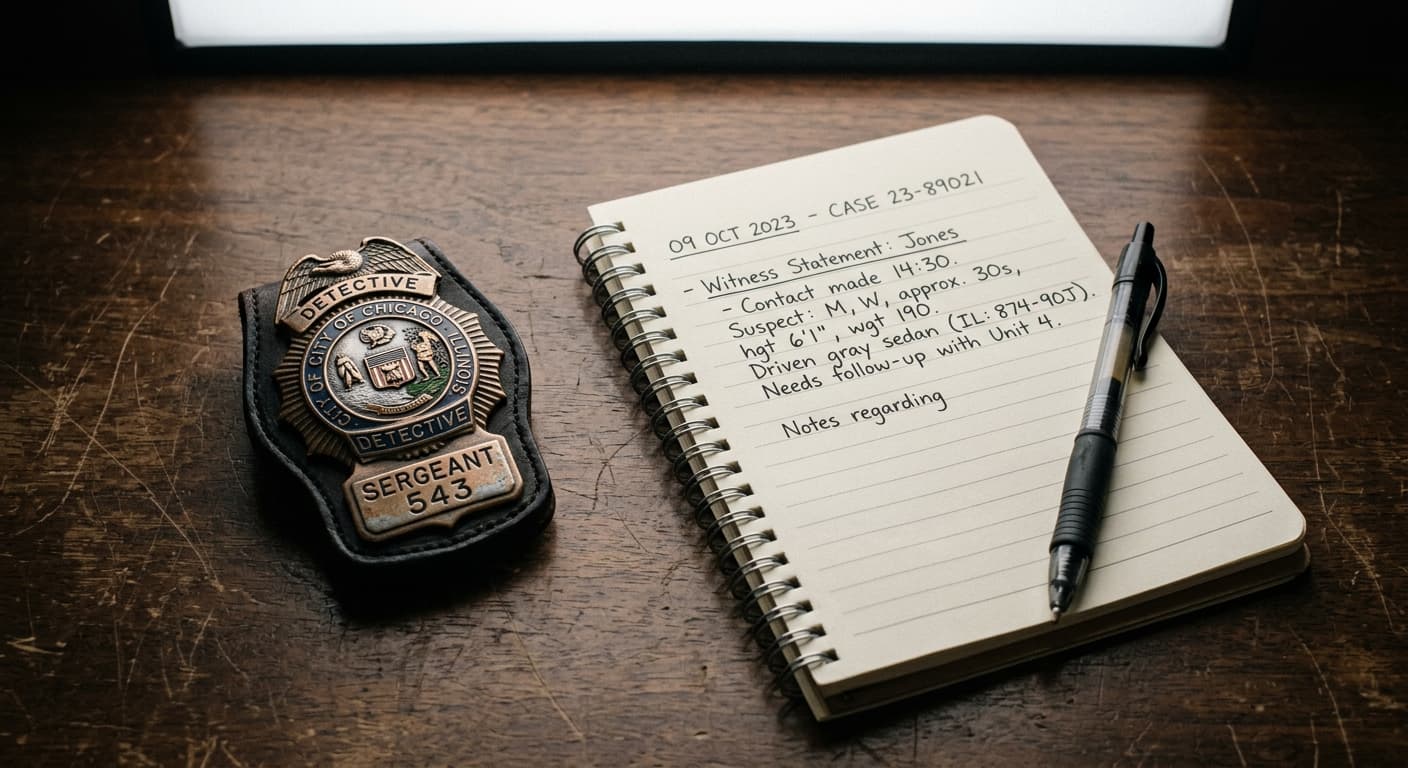
Mississippi has no statewide law requiring local police to wear body cameras. Whether an officer has one, when it must record, and whether the public can see the footage depends on local department policy and the Mississippi Public Records Act of 1983, Miss. Code Ann. section 25-61-1 et seq.
Information last verified on 2026-07-08. This article has not yet been reviewed by a licensed lawyer.
Jurisdiction scope: This article addresses Mississippi law, specifically the Mississippi Public Records Act of 1983 (Miss. Code Ann. section 25-61-1 et seq.) and Miss. Code Ann. section 45-1-20, as verified on 2026-07-08. It does not address whether a civilian may lawfully record an on-duty police officer; that question is settled separately and covered in Is It Illegal to Record Someone in Public?. This page addresses the reverse question: what happens to the footage police record of the public.
Does Mississippi require police to wear body cameras?
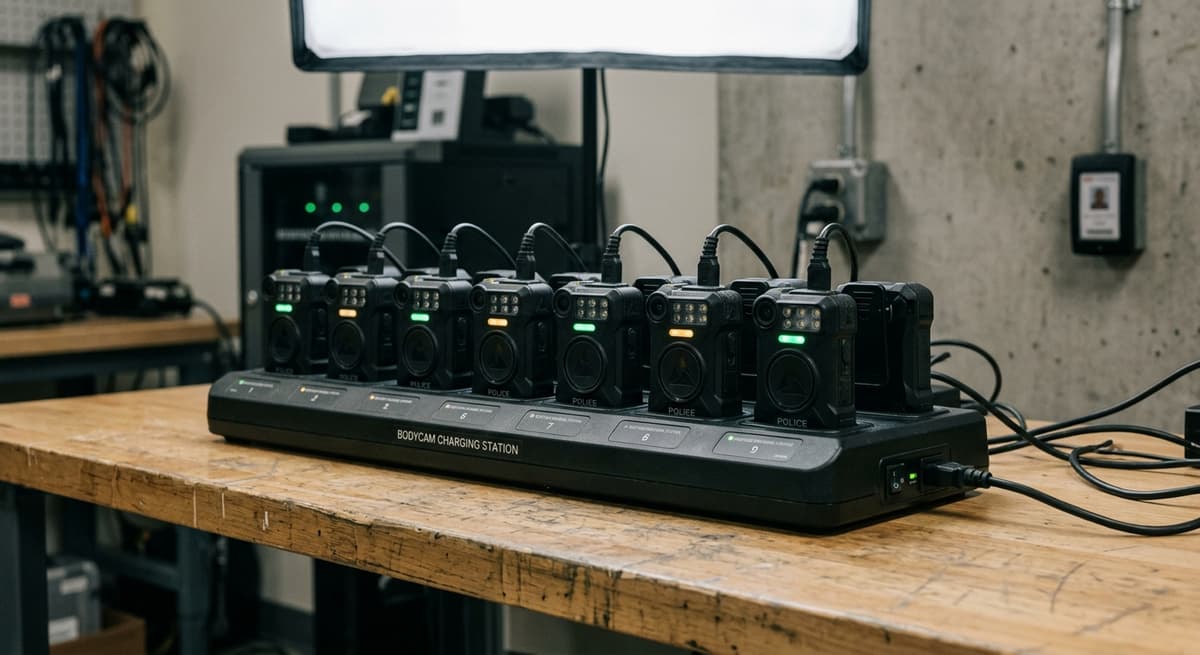
No, not as a general matter. Mississippi has never enacted a statute requiring municipal police departments or county sheriff's offices to equip patrol officers with body cameras. The only state-level mandate applies to the Office of Capitol Police, the state-funded force with jurisdiction over the Capitol Complex Improvement District in Jackson, which Miss. Code Ann. section 45-1-20 requires to provide body-worn cameras to every patrol officer, subject to available funding. That provision was added by 2023 Miss. Laws ch. 546 (H.B. 1020), section 11, effective July 1, 2023. Outside that one agency, whether a department in Mississippi uses body cameras, and how many officers carry one, is a local budget and policy decision.
Did Mississippi come close to a statewide mandate?
Yes, in the 2025 legislative session. House Bill 707 would have required every municipality to provide body-worn cameras to patrol officers and every county board of supervisors to budget for cameras for patrol deputies, with a misdemeanor penalty (up to a $1,000 fine, six months in jail, or both) for an officer who failed to wear one. The bill was referred to the House Judiciary B Committee on January 15, 2025, and died there on February 4, 2025, without a floor vote. Similar bills have been introduced in earlier sessions and have not advanced. Until the Legislature passes one, Mississippi remains a local-discretion state for bodycam deployment outside Capitol Police.
When must an officer turn the camera on?
Mississippi has no statute setting a statewide activation standard, so there is no single answer that applies to every agency. Departments that use body cameras set their own activation and deactivation rules in written policy, typically covering traffic stops, arrests, searches, and use-of-force incidents, but the specifics (and how strictly they are enforced) differ from one city or county to the next. A reader who wants to know exactly when a given department's cameras must be recording needs to check that department's policy directly, since no state law fills the gap.
How long is bodycam footage kept in Mississippi?
There is likewise no statewide retention statute for general law enforcement agencies. Retention periods are set locally, consistent with each agency's records retention schedule and storage budget. This means how long footage survives before deletion, and whether it survives long enough to be requested, can vary by department. Agencies that receive federal Bureau of Justice Assistance body-worn camera grants must adopt a written policy addressing retention as a condition of that funding, but that is a federal grant condition, not a Mississippi statute.
Can the public get a copy of bodycam footage in Mississippi?
It depends on what the video is classified as. The Mississippi Public Records Act splits law enforcement records into two categories. An incident report, defined at Miss. Code Ann. section 25-61-3(e) as the basic facts of an arrest (the name of the person charged, plus the time, date, location, and property involved), is always a public record. The operative rule sits at section 25-61-12(2)(c), which provides that "Nothing in this chapter shall be construed to exempt from public disclosure a law enforcement incident report" and that an incident report "shall be a public record." An investigative report, defined more broadly at section 25-61-3(f) to include crime-scene detail, witness information, and material that could compromise a prosecution, is exempt from disclosure under section 25-61-12(2)(a) while it is in the custody of a law enforcement agency. Bodycam video from anything beyond a routine, closed-out arrest is normally treated as part of the investigative file and therefore exempt, not because a bodycam-specific rule says so, but because the general investigative-report exemption covers it.
Critically, that exemption is discretionary, not mandatory. Section 25-61-12(2)(a) lets an agency "choose to make public all or any part" of an investigative report even while it is technically exempt. That cuts both ways for a requester: an agency can release footage voluntarily before a case closes, and it can also decline to release footage indefinitely, since Mississippi's statute does not include an automatic switch to open status once an investigation ends (unlike neighboring states that tie disclosure to a fixed point, such as Missouri's rule that mobile video recordings open once an investigation becomes "inactive"). A requester who is denied challenges that denial under Miss. Code Ann. section 25-61-13, which routes the dispute first to the Mississippi Ethics Commission: the Commission gives the agency fourteen days to respond, then may dismiss the complaint, set a hearing under its own rules, order the agency to produce the records, or order them produced for the Commission's own private review. Any party may petition the chancery court of the county where the public body sits to enforce or appeal a Commission order, and that court reviews the matter de novo. Exhausting the Commission process is not required, so a requester may instead file directly in chancery court, with written notice to the Commission. Agencies must respond to any public records request within seven working days, or fourteen with a written explanation for the delay, under section 25-61-5.
A real example: the Aderrien Murry shooting
In May 2023, Indianola Police Sergeant Greg Capers shot and wounded 11-year-old Aderrien Murry inside his own home after the boy called 911 for help during a domestic disturbance. A Sunflower County grand jury declined to bring criminal charges against Capers in December 2023, and the Mississippi Attorney General's office said it would take no further action in the matter. The bodycam footage stayed unreleased for roughly eight months after the shooting and did not become public until January 2024, after the boy's mother and her attorney publicly pushed for its release. The case illustrates how Mississippi's discretionary exemption actually plays out: nothing in state law forced the department to release the video on any particular timeline, and it took sustained public pressure, not a statutory deadline, to get it out.
What happens if an officer doesn't activate the camera, or footage goes missing?
Mississippi has no statute that specifically penalizes an officer for failing to turn on a body camera or for footage being lost or deleted, because the state has no general bodycam statute to attach such a penalty to in the first place. Any consequence for a non-activation or spoliation problem comes from internal department discipline, general evidence-tampering law if applicable, or civil litigation over the missing evidence, not from a dedicated bodycam accountability statute. This is one of the clearest gaps between Mississippi's framework and the roughly two dozen states that have enacted bodycam-specific statutes; see the Police Bodycam Laws by State hub for how other states handle activation and accountability by law rather than policy alone.
Disclaimer
This article provides general legal information about Mississippi law governing police body cameras and public access to footage, as verified on 2026-07-08. It does not constitute legal advice and does not create an attorney-client relationship. Readers should consult a lawyer licensed in Mississippi for advice about a specific records request or incident.
Related articles
- Police Bodycam Laws by State: the complete hub
- Is It Illegal to Record Someone in Public?
- Mississippi Recording Laws: One-Party Consent Rules
Last updated: 2026-07-08. Statutes cited reflect their in-force version as of 2026-07-08.
More Mississippi Laws
Frequently Asked Questions
Does Mississippi require all police officers to wear body cameras?
No. Only the Office of Capitol Police in Jackson is required to provide body-worn cameras to patrol officers, under Miss. Code Ann. section 45-1-20. A 2025 bill that would have extended a mandate to municipal police and county deputies, House Bill 707, died in committee.
Is bodycam footage a public record in Mississippi?
It depends on classification. Incident reports, the basic facts of an arrest, are always public under Miss. Code Ann. section 25-61-12(2)(c), which applies the definition of 'incident report' at section 25-61-3(e). Footage tied to a broader investigative report is exempt while in the agency's custody, though the agency may release it at its discretion under section 25-61-12(2)(a).
How long does a Mississippi agency have to respond to a bodycam footage request?
Generally seven working days under Miss. Code Ann. section 25-61-5, extendable to fourteen working days if the agency provides a written explanation for the delay.
Can I get bodycam footage of my own arrest in Mississippi?
You can submit a Mississippi Public Records Act request, but there is no bodycam-specific right of access separate from the general request process. If the footage is part of an open investigative file, the agency can decline under Miss. Code Ann. section 25-61-12(2)(a). You challenge that denial under section 25-61-13 by filing a complaint with the Mississippi Ethics Commission, which can order the records produced, or by filing directly in chancery court, which reviews the matter de novo.
Does an officer need my consent to record me with a body camera in Mississippi?
No. Mississippi is a one-party consent state for recording generally, and an on-duty officer recording a member of the public raises no consent issue under state wiretap law at all.
What happened to the 2025 bill that would have mandated body cameras statewide?
House Bill 707 would have required municipalities and county sheriff's offices to equip patrol officers and deputies with body cameras, with misdemeanor penalties for noncompliance. It was referred to the House Judiciary B Committee on January 15, 2025, and died there on February 4, 2025, without passing.
Does Mississippi law say when officers must turn their cameras on?
No. There is no statewide activation statute. Individual departments that use body cameras set their own activation and deactivation rules in written policy, and those rules vary from agency to agency.
Can a Mississippi police department withhold bodycam video indefinitely?
Practically, yes in many cases. Because the investigative report exemption in Miss. Code Ann. section 25-61-12(2)(a) is discretionary and does not automatically expire once a case closes, an agency can continue withholding footage unless a requester successfully challenges the denial under section 25-61-13, before the Mississippi Ethics Commission or in chancery court.
Updates
Corrected the public-records enforcement pathway to reflect that a denial goes first to the Mississippi Ethics Commission under Miss. Code Ann. section 25-61-13 before chancery court, fixed the statutory pinpoints for incident reports and the investigative-report exemption, and corrected the order of events in the Aderrien Murry case.
Independently fact-checked against the cited primary sources; governing law re-checked for recent changes
Reviewed and approved by an editor
The Law Behind This Article
This article rests on the statutory provisions below, held in our own legal record and retrieved from the official source. Tap a section to read the operative text.
Mississippi Code of 1972 Annotated
§ 25-61-12Exemption for private information of law enforcement, judicial and prosecutorial personnel; exceptions.In forcecited in 2 of our articles
(1) The home address, any telephone number of a privately paid account or other private information of any law enforcement officer, criminal investigator, judge or district attorney or the spouse or child of the law enforcement officer, criminal investigator, judge or district attorney shall be…
Official text (excerpt) · last checked 2026-09-02 · Read the full text in our law library · Verify at ethics.ms.gov
Cited in 3 court opinions in our collectionLatest citing opinion in our collection: 2017
Opinions citing this section in our collection:
- Mississippi Department of Audit v. Gulf Publishing Company, Inc. (Mississippi Supreme Court 2017, 236 So. 3d 32)“…ports in the agency’s possession are exempt from the MPRA. Miss. Code Ann. § 25-61-12(2)(a) (Supp. 2016). ¶38. But as evin…”
- Steven A. DeLoge' v. Desoto County Sheriff Department (Court of Appeals of Mississippi 2017, 230 So. 3d 1026)“…all be exempt from the provisions of this chapter . . . .” Miss. Code Ann. § 25-61-12(2)(a) (Rev. 2010). ¶18. The Act defi…”
Identified automatically from the court opinions citing this section — not a ranking of which case controls.
Also relied on in: How to Get a Police Report in Mississippi (2026 Guide)
Search our full record of US law — 2.1 million sections, every state + federal →
Sources and References
- Mississippi Ethics Commission, The Mississippi Public Records Act (summarizing Miss. Code Ann. sections 25-61-3, 25-61-5, and 25-61-12)(ethics.ms.gov).gov
- Miss. Code Ann. section 45-1-20, body-worn cameras for the Office of Capitol Police, enacted by 2023 Miss. Laws ch. 546 (H.B. 1020) section 11(billstatus.ls.state.ms.us).gov
- Mississippi House Bill 707 (2025 Regular Session), body-worn camera mandate, died in House Judiciary B Committee February 4, 2025(billstatus.ls.state.ms.us).gov
- NPR, Police release video of officer shooting boy, 11, who had called 911 for help (Jan. 10, 2024)(npr.org)
- NPR, No criminal conduct in case of officer who shot 11-year-old Aderrien Murry (Dec. 14, 2023), reporting the Sunflower County grand jury declination(npr.org)