
Washington
Washington Pepper Spray and Stun Gun Laws (2026)
Independently fact-checked against primary sources (last audited September 23, 2026). · 16 primary sources cited on this page. How we verify our legal content
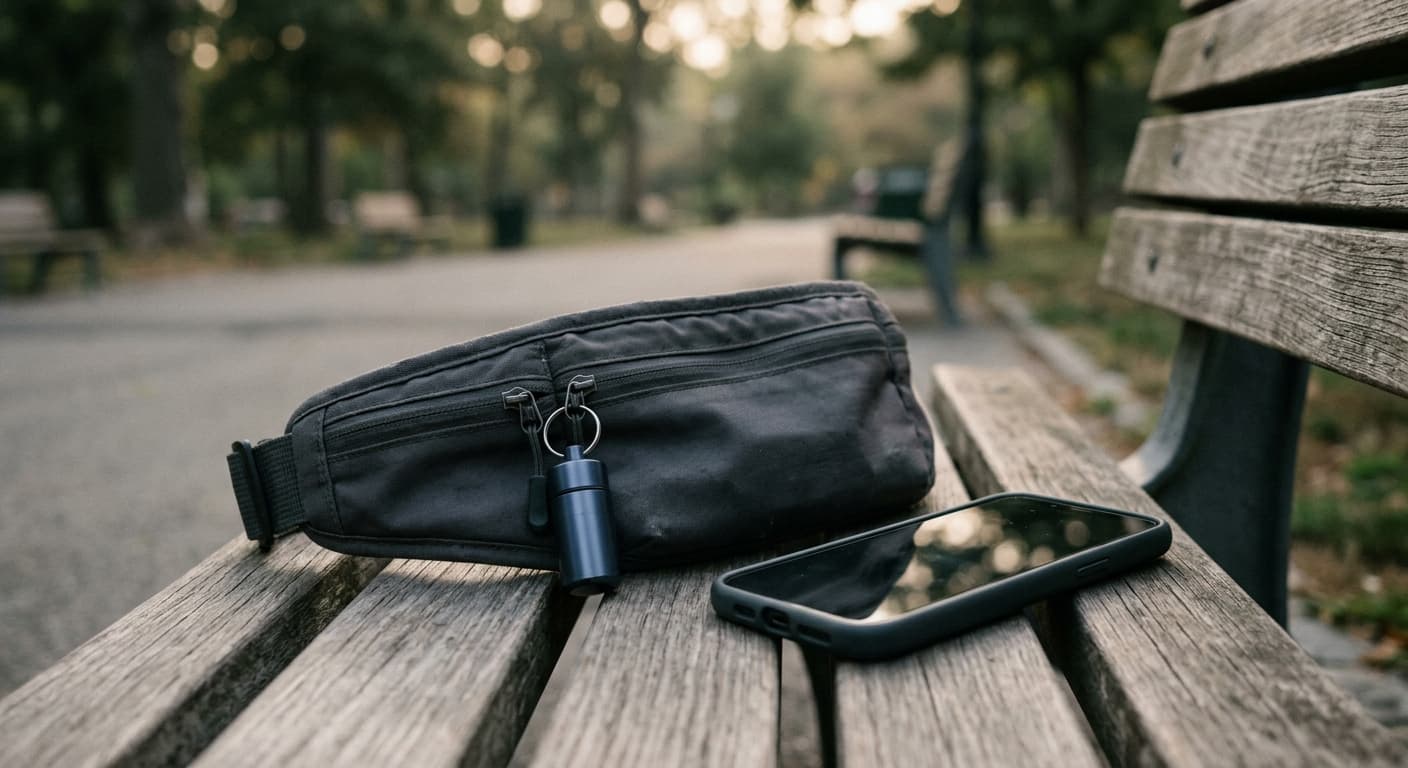
Washington regulates pepper spray by name in a single statute that sets an age floor and then affirmatively bars local governments from adding restrictions on top of it. Stun guns get a different structure: no general civilian possession statute names them at all, but three place-based statutes (schools, licensed child care centers, and voting facilities) name and ban a stun gun directly, while a broader restricted-places statute (RCW 9.41.300) and a protection-order surrender statute (RCW 9.41.800) name neither device, and whether either reaches them turns on catch-all language whose scope this page states carefully rather than assumes. Using a stun gun against a peace officer carries its own enhanced assault charge, and displaying either device to intimidate is a separate offense.
Jurisdiction scope: This page covers Washington state law only, principally RCW §§ 9.91.160, 9.41.040, 9.41.250, 9.41.270, 9.41.280, 9.41.282, 9.41.284, 9.41.290, 9.41.300, 9.41.305, 9.41.800, and 9A.36.031. It does not cover Washington's concealed pistol license statutes in detail or any local ordinance on stun guns; no statute cited on this page preempts local stun-gun regulation the way RCW 9.91.160(2) does for pepper spray.
Is pepper spray legal in Washington?
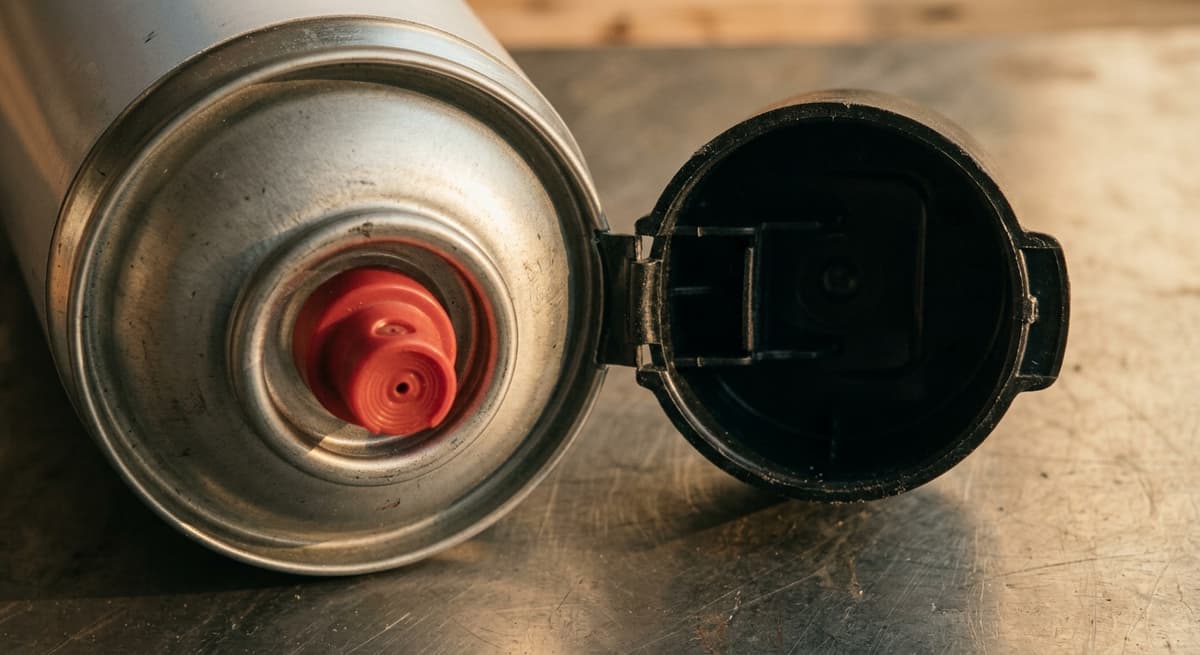
Yes, for anyone 18 or older, and for a 14-to-17-year-old with a parent or guardian's permission, with no capacity or formula limit in the statute itself. RCW 9.91.160(1) states: "It is unlawful for a person under eighteen years old, unless the person is at least fourteen years old and has the permission of a parent or guardian to do so, to purchase or possess a personal protection spray device. A violation of this subsection is a misdemeanor." Subsection (3)(a) defines "personal protection spray device" as "a commercially available dispensing device designed and intended for use in self-defense and containing a nonlethal sternutator or lacrimator agent, including but not limited to: (i) Tear gas, the active ingredient of which is either chloroacetophenone (CN) or O-chlorobenzylidene malononitrile (CS); or (ii) Other agent commonly known as mace, pepper mace, or pepper gas," which covers ordinary retail pepper spray directly.
Washington goes a step further than simply permitting the device: subsection (2) bars any "town, city, county, special purpose district, quasi-municipal corporation or other unit of government" from prohibiting an adult, or a permitted 14-to-17-year-old, from purchasing or possessing a personal protection spray device, or from using one "in a manner consistent with the authorized use of force" under RCW 9A.16.020 (Washington's general use-of-force justification statute). The same subsection also bars a local government from prohibiting an adult from delivering a device to someone authorized to have it. Subsection (4) clarifies that none of this authorizes possessing or using a device or chemical agent that is otherwise prohibited by state law elsewhere, so this protection is specific to the personal-protection spray devices the statute defines, not a blanket shield for any chemical weapon. Whether the place-based statutes covered below reach pepper spray through their own "other dangerous weapon" language is a separate question from this age-floor and preemption statute.
Are stun guns legal in Washington?
For general civilian possession outside the specific places covered below, most likely yes, but no Washington statute named on this page regulates a stun gun in its general possession rules the way RCW 9.91.160 names pepper spray. RCW 9.41.250, the core "dangerous weapons" statute, criminalizes manufacturing, selling, or possessing "any instrument or weapon of the kind usually known as slungshot, sand club, or metal knuckles, or spring blade knife," and separately criminalizes furtively carrying a concealed "dagger, dirk, pistol, or other dangerous weapon" with intent to conceal it. Neither a stun gun nor pepper spray is one of the four named items in the first clause, and the residual "other dangerous weapon" language in the furtive-concealment clause is not defined to include or exclude either device, so this page cannot say with certainty that furtively concealing one is outside that offense; it can say neither device is enumerated by name. Either clause of RCW 9.41.250, if it applied, is a gross misdemeanor. Washington otherwise regulates stun guns mainly by restricting where they may be carried, covered below, and by imposing an enhanced assault charge for using one against a peace officer.
RCW 9.41.040, "Unlawful possession of firearms," reaches only a person who "owns, accesses, has in the person's custody, control, or possession, or receives any firearm" after a qualifying offense or while subject to a qualifying protection order; its operative text is limited to firearms and does not extend to either device by itself. But a separate statute can still reach a stun gun or pepper spray through a status order: RCW 9.41.800 requires a court entering an order under any of a list of protection-order and related statutes (including chapter 7.105 RCW and the domestic-violence protection-order statutes) to, on a showing that the party used, displayed, or threatened to use a firearm or other dangerous weapon in a felony, or is ineligible to possess a firearm under RCW 9.41.040, "[r]equire that the party immediately surrender all firearms and other dangerous weapons" and "[p]rohibit the party from accessing, having custody or control, possessing, purchasing, receiving, or attempting to purchase or receive, any firearms or other dangerous weapons." Subsection (2) imposes the same mandatory surrender and possession bar on a party subject to a qualifying domestic-violence protection order that finds a credible threat to safety or explicitly prohibits force against the protected person. Whether a stun gun or a personal protection spray device is an "other dangerous weapon" for purposes of RCW 9.41.800 is the same open residual-clause question this page states elsewhere; what this page cannot say is that no Washington statute reaches a status-prohibited person's possession of either device at all.
Restricted places
Washington bans a stun gun, defined in each of the three statutes below as "any portable device manufactured to function as a weapon and which is commonly known as a stun gun, including a projectile stun gun that projects wired probes that are attached to the device that emit an electrical charge designed to administer to a person or an animal an electric shock, charge, or impulse," in several specific settings. Each of those three statutes adds a second, broader clause covering "any device, object, or instrument which is used or intended to be used as a weapon with the intent to injure a person by an electric shock, charge, or impulse," which is the catch-all a home-made or repurposed electric device would fall into even if it is not "commonly known as a stun gun." Washington separately restricts a broader set of "weapons" in other sensitive places under RCW 9.41.300, discussed below.
- Schools. RCW 9.41.280 makes it unlawful to knowingly carry or possess, on public or private elementary or secondary school premises, on school-provided transportation, or at an official school board meeting: a firearm; "any other dangerous weapon as defined in RCW 9.41.250" (the same residual clause discussed above, not a closed list); nunchaku; throwing stars; an air gun; or a stun gun, defined and banned in its own clause. A first violation is a misdemeanor; a second or subsequent violation is a gross misdemeanor, and a firearm-specific violation triggers a three-year concealed pistol license revocation. A violation by an elementary or secondary student "constitutes grounds for expulsion from the state's public schools in accordance with RCW 28A.600.010," and the school must promptly notify law enforcement and the student's parent or guardian. The statute exempts, among others, a nonstudent at least 18 secured in a vehicle while conducting legitimate school business (subsection (3)(f)), and a stun gun "possessed and used solely for the purpose approved by a school for use in a school authorized event, lecture, or activity conducted on the school premises" (subsection (5)).
- Child care premises. RCW 9.41.282 bans the same core list of items on licensed child care center premises or its provided transportation, including a stun gun by name and "any other dangerous weapon as described in RCW 9.41.250" by the same residual cross-reference; a violation is a gross misdemeanor.
- Voting facilities. RCW 9.41.284 bans the same core list, plus a spring blade knife specifically, at a ballot counting center, voting center, student engagement hub, or county elections and voter registration office; a first violation is a misdemeanor, and a second or subsequent violation is a gross misdemeanor. A stun gun is banned there by the same named clause as at schools and child care centers; whether pepper spray is covered turns on the same "other dangerous weapon" cross-reference to RCW 9.41.250.
- Jails, courts, mental health facilities, restricted liquor areas, airports, libraries, zoos, and transit facilities. RCW 9.41.300 is Washington's broadest restricted-places weapons statute and a gross misdemeanor. It bars knowingly possessing or controlling a "weapon" in the restricted access areas of a jail or law-enforcement facility; areas used in connection with court proceedings; the restricted access areas of a public mental health facility; the portion of an establishment classified as off-limits to persons under 21; the restricted access areas of a commercial service airport; the premises of a library; the premises of a zoo or aquarium; and the premises of a transit station or facility (subsection (14) exempts a valid concealed pistol licensee from the library, zoo, and transit branches specifically). Subsection (2)(a) separately bars open carry at any permitted demonstration outright; (2)(b) is conditional, barring open carry within 250 feet of a permitted demonstration's perimeter only after a law enforcement officer has advised the person of the demonstration and directed them to leave, and it does not apply to a person on private property they own or lease. The section-wide definition at (17) is "any firearm, explosive as defined in RCW 70.74.010, or instrument or weapon listed in RCW 9.41.250." RCW 9.41.250 lists the slungshot, sand club, metal knuckles, and spring blade knife in (1)(a), and the dagger, dirk, pistol, "or other dangerous weapon" in (1)(b); whether "listed in" reaches that closing residual phrase is not answered by the text. The court-areas paragraph, (1)(b), uses its own separate, self-contained definition that does not cite RCW 9.41.250 at all: a firearm, an explosive, a slungshot, sand club, or metal knuckles, or "any knife, dagger, dirk, or other similar weapon that is capable of causing death or bodily injury and is commonly used with the intent to cause" it. Neither definition names a stun gun or pepper spray, so whether either device is a "weapon" in a Washington jail, courthouse, mental health facility, restricted liquor area, airport, library, zoo, or transit facility is not settled by either definition's text.
- State capitol grounds and municipal government buildings. RCW 9.41.305 separately bars open carry of a firearm "or other weapon, as defined in RCW 9.41.300(1)(b)," on the west state capitol campus, in capitol buildings, at legislative hearings, and in city, town, or county buildings used for meetings of the governing body, or at a public meeting or hearing of that body. A first violation is a misdemeanor; a second or subsequent violation is a gross misdemeanor. This statute reaches only open carry, and its weapon definition is the same narrower court-areas definition discussed above.
Separately, RCW 9A.36.031(1)(h) makes it third degree assault, a class C felony under subsection (2), to assault "a peace officer with a projectile stun gun," an enhanced classification that applies on top of, not instead of, the possession restrictions above.
Displaying or drawing pepper spray or a stun gun
Apart from where a device may be carried, Washington also regulates how it is displayed. RCW 9.41.270(1) makes it unlawful to "carry, exhibit, display, or draw any firearm, dagger, sword, knife or other cutting or stabbing instrument, club, or any other weapon apparently capable of producing bodily harm, in a manner, under circumstances, and at a time and place that either manifests an intent to intimidate another or that warrants alarm for the safety of other persons." That open, functional language ("any other weapon apparently capable of producing bodily harm") is broad enough to reach a pepper spray canister or a stun gun brandished in a threatening way, even though neither device is named. A violation is a gross misdemeanor and carries concealed pistol license loss under subsection (2). Subsection (3) exempts several situations, including "[a]ny act committed by a person while in his or her place of abode or fixed place of business" and, most relevant to self-defense with either device, "[a]ny person acting for the purpose of protecting himself or herself against the use of presently threatened unlawful force by another, or for the purpose of protecting another against the use of such unlawful force by a third person."
Federal law: what it does and does not reach
No federal statute regulates a civilian's purchase or possession of pepper spray or a stun gun. Federal law matters in three places.

Federal buildings. Under 18 U.S.C. § 930(a), whoever knowingly possesses or causes to be present "a firearm or other dangerous weapon in a Federal facility (other than a Federal court facility)" faces a fine, imprisonment of up to 1 year, or both. Subsection (e) sets up to 2 years for a federal court facility, and subsection (b) up to 5 years where the weapon is intended to be used in a crime. Section 930(g)(2) defines the term:
The term "dangerous weapon" means a weapon, device, instrument, material, or substance, animate or inanimate, that is used for, or is readily capable of, causing death or serious bodily injury, except that such term does not include a pocket knife with a blade of less than 2½ inches in length.
The definition names neither device. Whether a particular spray or stun gun is "readily capable of" causing serious bodily injury is a question of fact the statute does not answer. Subsection (d)(3) exempts "the lawful carrying of firearms or other dangerous weapons in a Federal facility incident to hunting or other lawful purposes," and subsection (h) requires notice of the ban to be posted at each public entrance. A "Federal facility" is "a building or part thereof owned or leased by the Federal Government, where Federal employees are regularly present for the purpose of performing their official duties."
Air travel. The Transportation Security Administration's screening rules, which are agency policy rather than statute, bar both devices from carry-on bags. One 4 fl. oz. (118 ml) container of mace or pepper spray is permitted in checked baggage only, with a safety mechanism to prevent accidental discharge, and sprays containing more than 2 percent by mass of tear gas (CS or CN) are prohibited in checked baggage. Tasers, stun guns and other electro-shock weapons may travel in checked baggage only if transported so the device cannot discharge accidentally. Airlines may set stricter rules.
National parks. National Park Service regulations prohibit possessing, carrying or using a "weapon" in a park area except as the regulations provide (36 CFR 2.4(b)(1)). 36 CFR 1.4 defines "weapon" to include an "irritant gas device" and any "weapon the possession of which is prohibited under the laws of the State in which the park area or portion thereof is located."
Does Washington preempt local pepper spray or stun gun ordinances?
For pepper spray, yes, directly: RCW 9.91.160(2), described above, is itself a standalone preemption clause specific to personal protection spray devices, barring any local government from prohibiting their purchase, possession, authorized use, or delivery.
For stun guns, no comparable statewide preemption clause exists among the statutes cited on this page. Washington's general firearms preemption statute, RCW 9.41.290, states that "the state of Washington hereby fully occupies and preempts the entire field of firearms regulation within the boundaries of the state, including the registration, licensing, possession, purchase, sale, acquisition, transfer, discharge, and transportation of firearms, or any other element relating to firearms or parts thereof, including ammunition and reloader components." That scope is written entirely around firearms and their components; it does not mention stun guns. This page does not identify or examine any specific Washington municipal ordinance addressing stun guns, so whether a particular city currently regulates them is unverified here rather than affirmatively described.
Disclaimer: This article provides general legal information about Washington's pepper spray and stun gun laws as of September 2026. It is not legal advice. Consult a lawyer licensed in Washington for advice about a specific situation.
For a state-by-state comparison, see pepper spray and stun gun laws by state. Washington's self-defense statutes are covered separately on the Washington self-defense laws page.
Statutes cited reflect their in-force version as of 2026-09-18. Last updated: 2026-09-18.
Frequently Asked Questions
Is pepper spray legal in Washington?
Yes, for anyone 18 or older, or 14 to 17 with a parent or guardian's permission. RCW 9.91.160 sets that age floor and also bars local governments from prohibiting purchase, possession, or authorized self-defense use of a 'personal protection spray device.'
Do you need a permit for a stun gun in Washington?
No Washington statute imposes a general permit or age floor on stun guns by name. RCW 9.41.250, the state's core dangerous-weapons statute, does not list a stun gun among its four named items, though its residual 'other dangerous weapon' clause is not defined to exclude one either.
Can you carry a stun gun on Washington school property?
No. RCW 9.41.280 specifically bans a stun gun, defined to include a projectile stun gun, on public or private school premises and school transportation, alongside firearms and other listed weapons. A first violation is a misdemeanor, repeat violations are a gross misdemeanor, and a student violation is grounds for expulsion. Limited exceptions apply, including a stun gun used for a school-authorized event.
Where else does Washington restrict stun guns or pepper spray besides schools?
RCW 9.41.282 bans a stun gun by name at licensed child care centers (gross misdemeanor); RCW 9.41.284 bans one by name at voting and ballot-counting facilities (misdemeanor, then gross misdemeanor for repeat violations); and RCW 9.41.300 bars a 'weapon' from jails, court areas, mental health facilities, restricted liquor-establishment areas, restricted airport areas, libraries, zoos, and transit facilities, a gross misdemeanor, but its definitions do not name a stun gun or pepper spray and do not clearly incorporate RCW 9.41.250's residual 'other dangerous weapon' clause either, so whether either device is covered there is not resolved by the text. RCW 9.41.270 separately makes it a gross misdemeanor to display either device in a manner that manifests intent to intimidate or warrants alarm, wherever that happens, subject to a self-defense exception, and RCW 9.41.800 can require a person under certain protection orders to surrender 'all firearms and other dangerous weapons,' which raises the same open question of whether either device counts.
Does Washington preempt local ordinances on pepper spray or stun guns?
For pepper spray, yes: RCW 9.91.160 itself bars local governments from restricting a personal protection spray device's purchase, possession, or authorized use. For stun guns, Washington's firearms preemption statute, RCW 9.41.290, is scoped to firearms and does not mention stun guns, and this page does not examine any specific municipal ordinance that might otherwise regulate them.
Updates
Independently fact-checked against the cited primary sources
The Law Behind This Article
This article rests on the statutory provisions below, held in our own legal record and retrieved from the official source. Tap a section to read the operative text.
Revised Code of Washington
§ 70.74.010Definitions.In forcecited in 2 of our articles
As used in this chapter, unless a different meaning is plainly required by the context: (1) The terms "authorized," "approved," or "approval" shall be held to mean authorized, approved, or approval by the department of labor and industries. (2) The term "blasting agent" shall be held to mean and include any material or mixture consisting of a fuel and oxidizer, that is intended for blasting and not otherwise defined as an explosive; if the finished product, as mixed for use or shipment, cannot be detonated by means of a number 8 test blasting cap when unconfined. A number 8 test blasting cap is one containing two grams of a mixture of eighty percent mercury fulminate and twenty percent potassium chlorate, or a blasting cap of equivalent strength. An equivalent strength cap comprises 0.40-0.45 grams of PETN base charge pressed in an aluminum shell with bottom thickness not to exceed 0.03 of an inch, to a specific gravity of not less than 1.4 g/cc., and primed with standard weights of primer depending on the manufacturer.
Official text (excerpt) · last checked 2026-07-29 · Read the full text in our law library · Verify at app.leg.wa.gov
Cited in 8 court opinions in our collectionLatest citing opinion in our collection: 2024
Opinions citing this section in our collection:
- In Re Yim (Washington Supreme Court 1999, 139 Wash. 2d 581)“…referred to as fireworks. purpose of manufacture. Former RCW 70.74.010. This provision obviously defines "fire…”
- State v. Wiggins (Court of Appeals of Washington 2002, 114 Wash. App. 478)“…ch is designed to disfigure, destroy, distract, or harass.” RCW 70.74.010(7). The term “components” in RCW 70.7…”
- State v. Yokley (Court of Appeals of Washington 1998, 91 Wash. App. 773)“…fects on contiguous objects or of destroying life or limb.” RCW 70.74.010(3). 14 Hence, without a “f…”
Identified automatically from the court opinions citing this section — not a ranking of which case controls.
Also relied on in: Washington Knife Laws (2026): Spring Blade, Intimidation Rule
§ 9.41.040Unlawful possession of firearms—Penalties.In forcecited in 2 of our articles
(1)(a) A person, whether an adult or juvenile, is guilty of the crime of unlawful possession of a firearm in the first degree: (i) If the person owns, accesses, has in the person's custody, control, or possession, or receives any firearm after having previously been convicted or found not guilty by reason of insanity in this state or elsewhere of any serious offense; or (ii) If the person owns, accesses, has in the person's custody, control, or possession, or receives any untraceable or undetectable firearm during any period of time that the person is subject to an order described in subsection (2)(a)(ii) of this section. (b) Unlawful possession of a firearm in the first degree is a class B felony punishable according to chapter 9A.20 RCW.
Official text (excerpt) · last checked 2026-07-29 · Read the full text in our law library · Verify at app.leg.wa.gov
Cited in 535 court opinions in our collectionLatest citing opinion in our collection: 2026
Opinions citing this section in our collection:
- State v. Gore (Washington Supreme Court 1984, 101 Wash. 2d 481)“…some people in a parking lot. He was charged with violating RCW 9.41.040, which prohibits one who has been "conv…”
- Davis v. Department of Licensing (Washington Supreme Court 1999, 137 Wash. 2d 957)“…hen the department receives notice from a court pursuant to RCW 9.41.040(5), 13.40.265, 66.44.365, 69.41.065, 69…”
- Morris v. Blaker (Washington Supreme Court 1992, 118 Wash. 2d 133)“…320 of the involuntary commitment act. RCW 9.41.070(1)(a); RCW 9.41.040(4). Mr. Morris brought an action…”
Identified automatically from the court opinions citing this section — not a ranking of which case controls.
§ 9.41.250Dangerous weapons—Penalty.In forcecited in 3 of our articles
(1) Every person who: (a) Manufactures, sells, or disposes of or possesses any instrument or weapon of the kind usually known as slungshot, sand club, or metal knuckles, or spring blade knife; (b) Furtively carries with intent to conceal any dagger, dirk, pistol, or other dangerous weapon; or (c) Uses any contrivance or device for suppressing the noise of any firearm unless the suppressor is legally registered and possessed in accordance with federal law, is guilty of a gross misdemeanor punishable under chapter 9A.20 RCW. (2) "Spring blade knife" means any knife, including a prototype, model, or other sample, with a blade that is automatically released by a spring mechanism or other mechanical device, or any knife having a blade which opens, or falls, or is ejected into position by the force of gravity, or by an outward, downward, or centrifugal thrust or movement. A knife that contains a spring, detent, or other mechanism designed to create a bias toward closure of the blade and that requires physical exertion applied to the blade by hand, wrist, or arm to overcome the bias toward closure to assist in opening the knife is not a spring blade knife.
Official text (excerpt) · last checked 2026-09-24 · Read the full text in our law library · Verify at app.leg.wa.gov
Cited in 24 court opinions in our collectionLatest citing opinion in our collection: 2026
Opinions citing this section in our collection:
- State v. Echeverria (Court of Appeals of Washington 1997, 85 Wash. App. 777)“…count two, possession of a dangerous weapon in violation of RCW 9.41.250, in that he, "with intent to conceal su…”
- State v. Myles (Washington Supreme Court 1995, 127 Wash. 2d 807)“…f unlawful possession of a dangerous weapon in violation of RCW 9.41.250. At issue is the constitutionality of t…”
- State v. Wadsworth (Washington Supreme Court 2000, 139 Wash. 2d 724)“…ovided Respondent an opportunity to review RCW 9.41.300 and RCW 9.41.250. 25 After reviewing the statutes, Resp…”
Identified automatically from the court opinions citing this section — not a ranking of which case controls.
Also relied on in: Knife Laws by State (2026): Carry Rules, Blade Limits, Penalties
§ 9.41.270Weapons apparently capable of producing bodily harm—Unlawful carrying or handling—Penalty—Exceptions. (Effective until May 1, 2027.)In forcecited in 2 of our articles
(1) It shall be unlawful for any person to carry, exhibit, display, or draw any firearm, dagger, sword, knife or other cutting or stabbing instrument, club, or any other weapon apparently capable of producing bodily harm, in a manner, under circumstances, and at a time and place that either manifests an intent to intimidate another or that warrants alarm for the safety of other persons. (2) Any person violating the provisions of subsection (1) above shall be guilty of a gross misdemeanor. If any person is convicted of a violation of subsection (1) of this section, the person shall lose his or her concealed pistol license, if any. The court shall send notice of the revocation to the department of licensing, and the city, town, or county which issued the license.
Official text (excerpt) · last checked 2026-07-29 · Read the full text in our law library · Verify at app.leg.wa.gov
Cited in 75 court opinions in our collectionLatest citing opinion in our collection: 2026
Opinions citing this section in our collection:
- State v. Workman (Washington Supreme Court 1978, 90 Wash. 2d 443)“…uction on the offense of unlawfully carrying a weapon under RCW 9.41.270 should have been given. Failure to give…”
- State v. MacIolek (Washington Supreme Court 1984, 101 Wash. 2d 259)“…resents a single issue, whether a statute and an ordinance, RCW 9.41.270 and Seattle city ordinance 110179, codi…”
- City of Seattle v. Montana (Washington Supreme Court 1996, 129 Wash. 2d 583)“…5.22.280(35). As the Court of Appeals noted with respect to RCW 9.41.270, which makes it unlawful for a person t…”
Identified automatically from the court opinions citing this section — not a ranking of which case controls.
§ 9.41.280Possessing dangerous weapons on school facilities—Penalty—Exceptions.In forcecited in 2 of our articles
(1) It is unlawful for a person to knowingly carry onto, or to possess on, public or private elementary or secondary school premises, school-provided transportation, areas of facilities while being used exclusively by public or private schools, or areas of facilities while being used for official meetings of a school district board of directors: (a) Any firearm; (b) Any other dangerous weapon as defined in RCW 9.41.250; (c) Any device commonly known as "nun-chu-ka [nunchaku] sticks," consisting of two or more lengths of wood, metal, plastic, or similar substance connected with wire, rope, or other means; (d) Any device, commonly known as "throwing stars," which are multipointed, metal objects designed to embed upon impact from any aspect; (e) Any air gun, including any air pistol or air rifle, designed to propel a BB, pellet, or other projectile by the discharge of compressed air, carbon dioxide, or other gas; or (f)(i) Any portable device manufactured to function as a weapon and which is commonly known as a stun gun, including a projectile stun gun which projects wired probes that are attached to the device that emit an electrical charge designed to administer to a person…
Official text (excerpt) · last checked 2026-07-29 · Read the full text in our law library · Verify at app.leg.wa.gov
Cited in 11 court opinions in our collectionLatest citing opinion in our collection: 2026
Opinions citing this section in our collection:
- State v. C.Q. (Court of Appeals of Washington 1999, 96 Wash. App. 273)“…d by the Legislature. The definitional statute in question, RCW 9.41.280, lists a variety of weapons of a kind c…”
- State v. J.R. (Court of Appeals of Washington 2005, 127 Wash. App. 293)“…scalloped-edge blade is a dangerous weapon for purposes of RCW 9.41.280, the criminal statute that prohibits po…”
- State v. JR (Court of Appeals of Washington 2005, 111 P.3d 264)“…scalloped-edge blade is a dangerous weapon for purposes of RCW 9.41.280, the criminal statute that prohibits po…”
Identified automatically from the court opinions citing this section — not a ranking of which case controls.
§ 9.41.282Possessing dangerous weapons on child care premises—Penalty—Exceptions.In forcecited in 2 of our articles
(1) It is unlawful for a person to carry onto, or to possess on, licensed child care center premises, child care center-provided transportation, or areas of facilities while being used exclusively by a child care center: (a) Any firearm; (b) Any other dangerous weapon as described in RCW 9.41.250; (c) Any air gun, including any air pistol or air rifle, designed to propel a BB, pellet, or other projectile by the discharge of compressed air, carbon dioxide, or other gas; or (d)(i) Any portable device manufactured to function as a weapon and which is commonly known as a stun gun, including a projectile stun gun that projects wired probes that are attached to the device that emit an electrical charge designed to administer to a person or an animal an electric shock, charge, or impulse; or (ii) Any device, object, or instrument that is used or intended to be used as a weapon with the intent to injure a person by an electric shock, charge, or impulse. (2) A person who violates subsection (1) of this section is guilty of a gross misdemeanor.
Official text (excerpt) · last checked 2026-07-29 · Read the full text in our law library · Verify at app.leg.wa.gov
§ 9.41.284Possessing dangerous weapons at voting facilities—Penalty—Exceptions.In forcecited in 2 of our articles
(1) Except as provided in subsections (3) and (4) of this section, it is unlawful for a person to knowingly carry onto, or to possess in, a ballot counting center, a voting center, a student engagement hub, or the county elections and voter registration office, or areas of facilities while being used as a ballot counting center, a voting center, a student engagement hub, or the county elections and voter registration office: (a) Any firearm; (b) Any other dangerous weapon as described in RCW 9.41.250; (c) Any air gun, including any air pistol or air rifle, designed to propel a BB, pellet, or other projectile by the discharge of compressed air, carbon dioxide, or other gas; (d)(i) Any portable device manufactured to function as a weapon and which is commonly known as a stun gun, including a projectile stun gun that projects wired probes that are attached to the device that emit an electrical charge designed to administer to a person or an animal an electric shock, charge, or impulse; or (ii) Any device, object, or instrument that is used or intended to be used as a weapon with the intent to injure a person by an electric shock, charge, or impulse; or (e) Any spring blade…
Official text (excerpt) · last checked 2026-07-29 · Read the full text in our law library · Verify at app.leg.wa.gov
§ 9.41.290State preemption.In forcecited in 2 of our articles
The state of Washington hereby fully occupies and preempts the entire field of firearms regulation within the boundaries of the state, including the registration, licensing, possession, purchase, sale, acquisition, transfer, discharge, and transportation of firearms, or any other element relating to firearms or parts thereof, including ammunition and reloader components. Cities, towns, and counties or other municipalities may enact only those laws and ordinances relating to firearms that are specifically authorized by state law, as in RCW 9.41.300, and are consistent with this chapter. Such local ordinances shall have the same penalty as provided for by state law. Local laws and ordinances that are inconsistent with, more restrictive than, or exceed the requirements of state law shall not be enacted and are preempted and repealed, regardless of the nature of the code, charter, or home rule status of such city, town, county, or municipality.
Official text (excerpt) · last checked 2026-07-29 · Read the full text in our law library · Verify at app.leg.wa.gov
Cited in 17 court opinions in our collectionLatest citing opinion in our collection: 2022
Opinions citing this section in our collection:
- Pacific Northwest Shooting Park Ass'n v. City of Sequim (Washington Supreme Court 2006, 158 Wash. 2d 342)“…gun show. It also claimed that the city’s actions violated RCW 9.41.290 and .300. PNSPA later argued that the c…”
- Cherry v. Municipality of Metropolitan Seattle (Washington Supreme Court 1991, 116 Wash. 2d 794)“…796 policy. The Court of Appeals held that RCW 9.41.290 preempted ¿nd invalidated Metro's regul…”
- City of Seattle v. Ballsmider (Court of Appeals of Washington 1993, 71 Wash. App. 159)“…allowed under RCW 9.41.230 (90 days and $1,000). In RCW 9.41.290, the Legislature declared its intent to…”
Identified automatically from the court opinions citing this section — not a ranking of which case controls.
§ 9.41.300Weapons prohibited in certain places—Local laws and ordinances—Exceptions—Penalty.In forcecited in 2 of our articles
(1) It is unlawful for any person to enter the following places when he or she knowingly possesses or knowingly has under his or her control a weapon: (a) The restricted access areas of a jail, or of a law enforcement facility, or any place used for the confinement of a person (i) arrested for, charged with, or convicted of an offense, (ii) held for extradition or as a material witness, or (iii) otherwise confined pursuant to an order of a court, except an order under chapter 13.32A or 13.34 RCW. Restricted access areas do not include common areas of egress or ingress open to the general public; (b) Those areas in any building which are used in connection with court proceedings, including courtrooms, jury rooms, judge's chambers, offices and areas used to conduct court business, waiting areas, and corridors adjacent to areas used in connection with court proceedings. The restricted areas do not include common areas of ingress and egress to the building that is used in connection with court proceedings, when it is possible to protect court areas without restricting ingress and egress to the building.
Official text (excerpt) · last checked 2026-07-29 · Read the full text in our law library · Verify at app.leg.wa.gov
Cited in 14 court opinions in our collectionLatest citing opinion in our collection: 2022
Opinions citing this section in our collection:
- Pacific Northwest Shooting Park Ass'n v. City of Sequim (Washington Supreme Court 2006, 158 Wash. 2d 342)“…0, failed because there is no private cause of action under RCW 9.41.300 and neither statute was violated. In it…”
- State v. Anderson (Washington Supreme Court 2000, 141 Wash. 2d 357)“…n of the fact that in a similar weapons possession statute, RCW 9.41.300, the Legislature explicitly included a…”
- State v. Wadsworth (Washington Supreme Court 2000, 139 Wash. 2d 724)“…th court proceedings in which weapons are prohibited. See RCW 9.41.300(l)(b). The problematic aspects of the s…”
Identified automatically from the court opinions citing this section — not a ranking of which case controls.
§ 9.41.305Open carry of weapons prohibited on state capitol grounds and municipal buildings.In forcecited in 2 of our articles
(1) Unless exempt under subsection (3) of this section, it is unlawful for any person to knowingly open carry a firearm or other weapon, as defined in RCW 9.41.300(1)(b), while knowingly being in the following locations: (a) The west state capitol campus grounds; any buildings on the state capitol grounds; any state legislative office; or any location of a public state legislative hearing or meeting during the hearing or meeting; or (b) City, town, county, or other municipality buildings used in connection with meetings of the governing body of the city, town, county, or other municipality, or any location of a public meeting or hearing of the governing body of a city, town, county, or other municipality during the hearing or meeting. (2) For the purposes of this section: (a) "Buildings on the state capitol grounds" means the following buildings located on the state capitol grounds, commonly known as Legislative, Temple of Justice, John L. O'Brien, John A. Cherberg, Irving R. Newhouse, Joel M. Pritchard, Helen Sommers, Insurance, Governor's Mansion, Visitor Information Center, Carlyon House, Ayer House, General Administration, 1500 Jefferson, James M.
Official text (excerpt) · last checked 2026-07-29 · Read the full text in our law library · Verify at app.leg.wa.gov
§ 9.41.800Surrender of weapons or licenses—Prohibition on future possession or licensing.In forcecited in 3 of our articles
(1) Any court when entering an order authorized under chapter 7.105 RCW, RCW 9A.40.102, 9A.44.210, 9A.46.080, 9A.88.160, 10.99.040, 10.99.045, 26.09.050, 26.09.060, 26.26B.020, 26.26A.470, or 46.61.5055 shall, upon a showing by a preponderance of the evidence, that a party has: Used, displayed, or threatened to use a firearm or other dangerous weapon in a felony, or is ineligible to possess a firearm under the provisions of RCW 9.41.040: (a) Require that the party immediately surrender all firearms and other dangerous weapons; (b) Require that the party immediately surrender any concealed pistol license issued under RCW 9.41.070; (c) Prohibit the party from accessing, having custody or control, possessing, purchasing, receiving, or attempting to purchase or receive, any firearms or other dangerous weapons; (d) Prohibit the party from obtaining or possessing a concealed pistol license; (e) Other than for ex parte temporary protection orders, unless the ex parte temporary protection order was reissued after the party received noticed and had an opportunity to be heard, direct law enforcement to revoke any concealed pistol license issued to the party.
Official text (excerpt) · last checked 2026-07-29 · Read the full text in our law library · Verify at app.leg.wa.gov
Cited in 34 court opinions in our collectionLatest citing opinion in our collection: 2026
Opinions citing this section in our collection:
- Alexandra Braatz v. Michael Braatz (Court of Appeals of Washington 2018, 413 P.3d 612)“…rson to surrender all firearms and other dangerous weapons. RCW 9.41.800(3). We are asked to determine the burde…”
- Jennifer Jo Dare Medlin v. Andrew Allen Miller (Court of Appeals of Washington 2026)“…firearms, dangerous weapons, and concealed pistol licenses. RCW 9.41.800(1)(a), (b), (2)(c)(ii)(A), (B). The ord…”
- State Of Washington, V. Caleb Dane Bell (Court of Appeals of Washington 2026)“…ith No. 87502-7-I)/4 (II) Includes an order under RCW 9.41.800 requiring the person to surrend…”
Identified automatically from the court opinions citing this section — not a ranking of which case controls.
Also relied on in: Washington Restraining Order Laws (2026): How to Get a Protection Order
§ 9.91.160Personal protection spray devices.In forcecited in 2 of our articles
(1) It is unlawful for a person under eighteen years old, unless the person is at least fourteen years old and has the permission of a parent or guardian to do so, to purchase or possess a personal protection spray device. A violation of this subsection is a misdemeanor. (2) No town, city, county, special purpose district, quasi-municipal corporation or other unit of government may prohibit a person eighteen years old or older, or a person fourteen years old or older who has the permission of a parent or guardian to do so, from purchasing or possessing a personal protection spray device or from using such a device in a manner consistent with the authorized use of force under RCW 9A.16.020. No town, city, county, special purpose district, quasi-municipal corporation, or other unit of government may prohibit a person eighteen years old or older from delivering a personal protection spray device to a person authorized to possess such a device.
Official text (excerpt) · last checked 2026-07-29 · Read the full text in our law library · Verify at app.leg.wa.gov
Also relied on in: Pepper Spray and Stun Gun Laws by State (2026)
Code of Federal Regulations Title 36
§ 1.4What terms do I need to know?In forcecited in 53 of our articles
(a) The following definitions shall apply to this chapter, unless modified by the definitions for a specific part or regulation: Abandonment means the voluntary relinquishment of property with no intent to retain possession. Administrative activities means those activities conducted under the authority of the National Park Service for the purpose of safeguarding persons or property, implementing management plans and policies developed in accordance and consistent with the regulations in this chapter, or repairing or maintaining government facilities. Airboat means a vessel that is supported by the buoyancy of its hull and powered by a propeller or fan above the waterline. This definition should not be construed to mean a “hovercraft,” that is supported by a fan-generated air cushion. Aircraft means a device that is used or intended to be used for human flight in the air, including powerless flight. Archeological resource means material remains of past human life or activities that are of archeological interest and are at least 50 years of age.
Official text (excerpt) · last checked 2026-07-28 · Read the full text in our law library · Verify at ecfr.gov
Cited in 34 court opinions in our collectionLatest citing opinion in our collection: 2026
Opinions citing this section in our collection:
- WildEarth Guardians v. National Park Service (Court of Appeals for the Tenth Circuit 2013, 703 F.3d 1178)“…collect, kill, wound, or attempt to do any of the above.” 36 C.F.R. § 1.4(a). WildEarth argues that because NPS…”
- Nature v. United States (District Court, E.D. California 2017, 250 F. Supp. 3d 634)“…ent, historic, parkway, recreational, or other purposes. 36 C.F.R. § 1.4 . Nature argues that the El Portal Admi…”
- United States v. Knauer (District Court, E.D. New York 2010, 707 F. Supp. 2d 379)“…ng or attempting to take wildlife, except trapping. 36 C.F.R. § 1.4 (a) (in relevant part, reordered for cl…”
Identified automatically from the court opinions citing this section — not a ranking of which case controls.
Also relied on in: Alabama Pepper Spray and Stun Gun Laws (2026), Alaska Pepper Spray and Stun Gun Laws (2026), Arizona Pepper Spray and Stun Gun Laws (2026)
§ 2.4Weapons, traps and nets.In forcecited in 53 of our articles
(a) None of the provisions in this section or any regulation in this chapter may be enforced to prohibit an individual from possessing a firearm, including an assembled or functional firearm, in any National Park System unit if: (1) The individual is not otherwise prohibited by law from possessing the firearm; and (2) The possession of the firearm is in compliance with the law of the State in which the National Park System unit is located. (b)(1) Except as otherwise provided in this section and parts 7 (special regulations) and 13 (Alaska regulations), the following are prohibited: (i) Possessing a weapon, trap or net (ii) Carrying a weapon, trap or net (iii) Using a weapon, trap or net (2) Weapons, traps or nets may be carried, possessed or used: (i) At designated times and locations in park areas where: (A) The taking of wildlife is authorized by law in accordance with § 2.2 of this chapter; (B) The taking of fish is authorized by law in accordance with § 2.3 of this part. (ii) When used for target practice at designated times and at facilities or locations designed and constructed specifically for this purpose and designated pursuant to special regulations.
Official text (excerpt) · last checked 2026-07-28 · Read the full text in our law library · Verify at ecfr.gov
Cited in 26 court opinions in our collectionLatest citing opinion in our collection: 2024
Opinions citing this section in our collection:
- United States v. Masciandaro (Court of Appeals for the Fourth Circuit 2011, 638 F.3d 458)“…motor vehicle within a national park area, in violation of 36 C.F.R. § 2.4(b). He challenges his con- viction on t…”
- Brady Campaign to Prevent Gun Violence v. Salazar (District Court, District of Columbia 2009, 612 F. Supp. 2d 1)“…eady use.” 48 Fed.Reg. 30,252 (June 30, 1983), codified at 36 C.F.R. § 2.4 (a)(2). A similar regulation applied to…”
- United States v. Otis Lofton, United States of America v. Otis Lofton (Court of Appeals for the Fourth Circuit 2000, 233 F.3d 313)“…l Park Service. See 36 C.F.R. § 1.2 (2000); 36 C.F.R. § 2.4 (2000). Lofton’s conviction was affirm…”
Identified automatically from the court opinions citing this section — not a ranking of which case controls.
Also relied on in: Pennsylvania Pepper Spray and Stun Gun Laws (2026), Arkansas Pepper Spray and Stun Gun Laws (2026), California Pepper Spray and Stun Gun Laws (2026)
United States Code Title 18
§ 930Possession of firearms and dangerous weapons in Federal facilitiesIn forcecited in 55 of our articles
Except as provided in subsection (d), whoever knowingly possesses or causes to be present a firearm or other dangerous weapon in a Federal facility (other than a Federal court facility), or attempts to do so, shall be fined under this title or imprisoned not more than 1 year, or both. Whoever, with intent that a firearm or other dangerous weapon be used in the commission of a crime, knowingly possesses or causes to be present such firearm or dangerous weapon in a Federal facility, or attempts to do so, shall be fined under this title or imprisoned not more than 5 years, or both. A person who kills any person in the course of a violation of subsection (a) or (b), or in the course of an attack on a Federal facility involving the use of a firearm or other dangerous weapon, or attempts or conspires to do such an act, shall be punished as provided in sections 1111, 1112, 1113, and 1117.
Official text (excerpt) · last checked 2026-07-28 · Read the full text in our law library · Verify at uscode.house.gov
Cited in 90 court opinions in our collectionLatest citing opinion in our collection: 2026
Opinions citing this section in our collection:
- United States v. Odeh (Court of Appeals for the Second Circuit 2008, 552 F.3d 93)“…f an attack on a U.S. facility in Nairobi, in violation of 18 U.S.C. § 930 (c) (Counts 9-221); murder of U.S. offi…”
- Kawaljeet Tagore v. USA (Court of Appeals for the Fifth Circuit 2013, 735 F.3d 324)“…statutory ban on weapons with blades exceeding 2.5 inches. 18 U.S.C. § 930(a), (g)(2).…”
- Heller v. District of Columbia (Court of Appeals for the D.C. Circuit 2015, 801 F.3d 264)“…universally prohibited from possessing firearms. See, e.g., 18 U.S.C. § 930(a), (g)(1) (unlawful to “knowingly poss…”
Identified automatically from the court opinions citing this section — not a ranking of which case controls.
Also relied on in: Idaho Knife Laws (2026): Carry, Blade Length, Preemption, North Dakota Knife Laws (2026): The 6-Inch Rule and Licensing, Colorado Pepper Spray and Stun Gun Laws (2026)
Search our full record of US law — 2.1 million sections, every state + federal →
Sources and References
- RCW 9.91.160 - Personal protection spray devices (age floor, definition, local-preemption clause)(app.leg.wa.gov).gov
- RCW 9.41.250 - Dangerous weapons - Penalty (residual 'other dangerous weapon' clause; neither device enumerated by name)(app.leg.wa.gov).gov
- RCW 9.41.040 - Unlawful possession of firearms - Penalties (operative text limited to firearms)(app.leg.wa.gov).gov
- RCW 9.41.280 - Possessing dangerous weapons on school facilities - Penalty - Exceptions (stun gun named)(app.leg.wa.gov).gov
- RCW 9.41.282 - Possessing dangerous weapons on child care premises - Penalty - Exceptions(app.leg.wa.gov).gov
- RCW 9.41.284 - Possessing dangerous weapons at voting facilities - Penalty - Exceptions(app.leg.wa.gov).gov
- RCW 9.41.300 - Weapons prohibited in certain places - Local laws and ordinances - Exceptions - Penalty(app.leg.wa.gov).gov
- RCW 9.41.305 - Open carry of weapons prohibited on state capitol grounds and municipal buildings(app.leg.wa.gov).gov
- RCW 9.41.290 - State preemption (firearms-only scope; does not mention stun guns)(app.leg.wa.gov).gov
- RCW 9.41.270 - Weapons apparently capable of producing bodily harm (display/intimidation offense; self-defense exception)(app.leg.wa.gov).gov
- RCW 9.41.800 - Surrender of weapons or licenses; prohibition on future possession or licensing (protection-order dangerous-weapon surrender)(app.leg.wa.gov).gov
- RCW 9A.36.031 - Assault in the third degree (peace officer assaulted with a projectile stun gun, class C felony)(app.leg.wa.gov).gov
- 18 U.S.C. 930 - Possession of firearms and dangerous weapons in Federal facilities(law.cornell.edu)
- Transportation Security Administration - What Can I Bring? Pepper Spray(tsa.gov).gov
- Transportation Security Administration - What Can I Bring? Stun Guns/Shocking Devices(tsa.gov).gov
- 36 CFR 1.4 - National Park Service definitions (weapon)(ecfr.gov).gov
- 36 CFR 2.4 - Weapons, traps and nets(ecfr.gov).gov