
Nevada
Nevada Pepper Spray and Stun Gun Laws (2026)
Independently fact-checked against primary sources (last audited September 23, 2026). · 16 primary sources cited on this page. How we verify our legal content

Nevada allows both pepper spray and stun guns for ordinary self-defense, but the pepper-spray rule turns on chemistry and the stun-gun rule turns on how the device is carried. Nevada's tear-gas statutes cap a CS-based device at 2 fluid ounces, but on the statutory text, an ordinary oleoresin capsicum (OC) spray, made from a natural pepper extract that causes no permanent injury, falls outside the statutory definition of "tear gas" altogether and is not subject to that 2-fluid-ounce ceiling; no Nevada court, Attorney General opinion, or agency guidance has ever tested that reading, and a product that in fact causes permanent injury would not qualify for the exclusion. A stun gun has no dedicated possession permit, only a use limit and a list of people who may not have one, but carrying one concealed may implicate Nevada's general concealed-weapon statute, which requires a sheriff's permit for a covered weapon and makes an unpermitted violation a felony; whether a stun gun is a covered weapon is a question the statute's text does not resolve.
Jurisdiction scope: This page covers Nevada state law only, principally NRS 202.357, 202.370 to 202.440, 202.350, 202.265, 244.364, 268.418, and 269.222. It does not cover any municipal ordinance that may separately restrict either device, such as Clark County's ordinances addressing concealed weapons and electronic stun devices.
Is pepper spray legal in Nevada?
Yes. Nevada regulates a "tear gas" device through NRS 202.370 to 202.440, but its own definitions section carves ordinary pepper spray out of that scheme. NRS 202.370(2) defines "tear gas": "Tear gas includes all liquid, gaseous or solid substances intended to produce temporary physical discomfort or permanent injury through being vaporized or otherwise dispersed in the air. The term does not include a liquid, gaseous or solid substance whose active ingredient is composed of natural substances or products derived from natural substances which cause no permanent injury through being vaporized or otherwise dispersed in the air." Oleoresin capsicum (OC), the active ingredient in most consumer pepper spray, is an oleoresin extracted from capsicum peppers, a product derived from a natural substance, and it is not claimed to cause permanent injury when dispersed. On that reading of the text, an ordinary OC spray falls outside the statutory definition of "tear gas," and NRS 202.370 to 202.440, including the 2-fluid-ounce ceiling described below, do not govern it. No Nevada court, Attorney General opinion, or agency guidance has construed this exclusion, and it turns on a fact question specific to a given product, whether it in fact "causes no permanent injury," rather than a bright-line size or ingredient rule; a product that does cause permanent injury would not qualify.
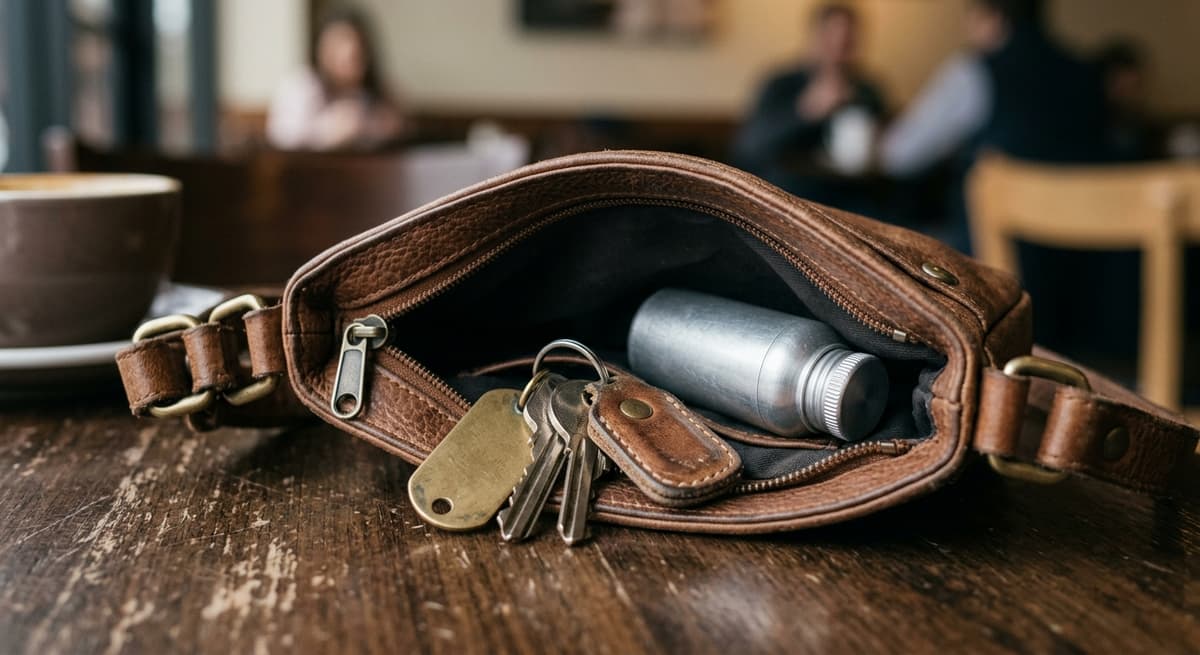
That ceiling instead governs a CS-based device. NRS 202.375 exempts from the tear-gas statutes "the sale or purchase by any adult, or the possession or use by any person, including a minor but not including a convicted person as defined in NRS 179C.010, of any form of: (a) Cartridge which contains not more than 2 fluid ounces in volume of 'CS' tear gas that may be propelled by air or another gas, but not an explosive, in the form of an aerosol spray; or (b) Weapon designed for the use of such a cartridge which does not exceed that size... and which is designed and intended for use as an instrument of self-defense." NRS 202.375(4) defines "CS" tear gas as "a crystalline powder containing ortho-chlorobenzalmalononitrile." A CS-based spray or cartridge that exceeds 2 fluid ounces, or that is possessed by a convicted person, falls outside this exemption and back into NRS 202.370 to 202.440's general scheme.
Sale of a qualifying CS device is restricted to an adult, but possession or use is open more broadly: the statute names "any person, including a minor," as exempt, carving out only a "convicted person" as defined in NRS 179C.010, generally a person convicted, in Nevada or elsewhere, of two or more felony-punishable offenses, or of a single category-A felony. A seller has a separate record-keeping duty under NRS 202.375(2): before delivering a qualifying cartridge or weapon, the seller must record and keep, for at least two years, the purchaser's name and address and the product's brand name, model number or type, and serial number if it has one. NRS 202.375(3) also exempts police departments and their salaried officers, sheriffs and deputies, Department of Corrections personnel, the Nevada Highway Patrol, and military or naval forces personnel purchasing, possessing, or transporting tear-gas weapons for official use.
Outside NRS 202.375's exemption, a tear-gas device is regulated as a criminal offense. NRS 202.380(1) makes it a gross misdemeanor for a person other than a convicted person to knowingly sell, offer for sale, possess, or transport, within Nevada, "any form of shell, cartridge or bomb containing or capable of emitting tear gas, or any weapon designed for the use of such shell, cartridge or bomb, except as permitted" under NRS 202.370 to 202.440. NRS 202.380(2) makes it a category B felony, punishable by imprisonment of 1 to 6 years, a fine of up to $5,000, or both, for a convicted person to own, possess, or control such a device at all. A sheriff may also issue a permit for possessing and transporting a non-exempt device "to any applicant who submits proof that good cause exists" (NRS 202.400), and may license its retail sale for up to one year (NRS 202.440). NRS 202.390 requires each tear-gas weapon to bear the manufacturer's name and a serial number; changing, altering, or removing that mark is a separate gross misdemeanor.
Are stun guns legal in Nevada?
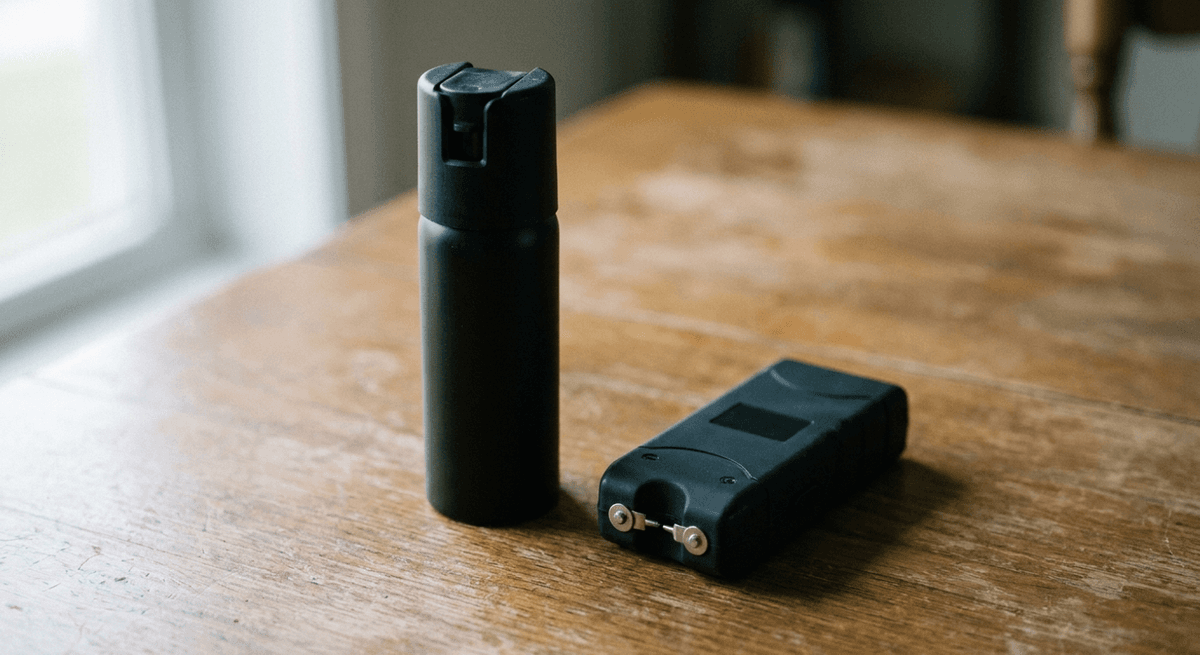
Yes, subject to a use-and-possession restriction rather than a dedicated licensing scheme, and subject to Nevada's general concealed-weapon statute if the device is carried concealed. NRS 202.357(9) defines an "electronic stun device" as one that "(a) Emits an electrical charge or current that is transmitted by projectile, physical contact or other means; and (b) Is designed to disable a person or animal temporarily or permanently," a definition broad enough to cover both a contact stun gun and a projectile device such as a Taser. NRS 202.357 itself sets no dedicated possession permit for an adult who does not fall into a prohibited category. Subsection 1 limits lawful use to self-defense: "a person shall not use an electronic stun device on another person for any purpose other than self-defense." Subsection 2 bars possession, custody, or control by a person who "(a) Has been convicted of a felony in this State or any other state... unless the person has received a pardon and the pardon does not restrict his or her right to bear arms; (b) Is a fugitive from justice; (c) Has been adjudicated as mentally ill or has been committed to any mental health facility; or (d) Is illegally or unlawfully in the United States." Subsection 3 separately bars a child under 18 from possessing, or having custody or control of, an electronic stun device, regardless of the categories in subsection 2. Subsection 4 bars selling, giving, or otherwise providing a device to anyone the provider has actual knowledge falls into one of those same prohibited categories, including a minor.

Penalties scale with the violation. Unlawful use, or possession by a felon or a fugitive from justice, is a category B felony, punishable by 1 to 6 years imprisonment and up to a $5,000 fine (NRS 202.357(5)(a)). Possession by a person adjudicated mentally ill or unlawfully present in the United States, or unlawfully providing a device to a prohibited person, is a category D felony (NRS 202.357(5)(b), (7)). A minor who violates the under-18 possession bar commits a delinquent act rather than an adult felony, and a court may order detention as if the act had been a felony if committed by an adult (NRS 202.357(6)). Peace officers acting within the scope of their duties are exempt from subsections 1, 2, and 4 only, the use restriction, the felon/fugitive/mentally-ill/unlawfully-present possession bar, and the unlawful-provision bar (NRS 202.357(8)); that exemption does not reach subsection 3's under-18 possession bar or the penalty subsections.
NRS 202.357 is not Nevada's only weapons statute that can reach a stun gun. NRS 202.350(1)(d) separately bars carrying concealed upon a person any "Explosive substance, other than ammunition or any components thereof," "Machete," or "Pistol, revolver or other firearm, other dangerous or deadly weapon or pneumatic gun," and NRS 202.350(2)(b) makes a violation involving a firearm or an "other dangerous or deadly weapon" a category C felony. The statute does not define "other dangerous or deadly weapon" or say whether a stun gun or a pepper-spray device falls within it. NRS 202.350(3) supplies a permit for a concealed weapon described in the section: "the sheriff of any county may, upon written application by a resident of that county showing the reason or the purpose for which a concealed weapon is to be carried, issue a permit authorizing the applicant to carry in this State the concealed weapon described in the permit." Whether that permit, or NRS 202.350's felony exposure, applies to a concealed stun gun or spray is a question the statute's own text does not resolve.
Where you can't carry either device
Neither device is named specifically in Nevada's school and child-care weapons statute, though one item in its list is written broadly enough to reach a marking-type canister. NRS 202.265 bars carrying or possessing, on the property of the Nevada System of Higher Education, a private or public school, or a child care facility, or in a school or child-care vehicle, the following items: an explosive or incendiary device, a dirk, dagger, or switchblade knife, a nunchaku or trefoil, a blackjack, billy club, or metal knuckles, a pneumatic gun, a pistol, revolver, or other firearm, or any device used to mark any part of a person with paint or any other substance. Pepper spray, tear gas, and a stun gun are not named by device, but a canister that both irritates and marks a person with a substance could fall within that last, open-ended item. Violating the statute is a gross misdemeanor, with exceptions for a peace officer, a school security guard, or a person with written permission from the relevant school or facility official.
Local regulation: Nevada preempts firearms, not either device
NRS 244.364 (for counties), NRS 268.418 (for cities), and NRS 269.222 (for unincorporated towns) reserve to the Legislature the exclusive authority to regulate "the transfer, sale, purchase, possession, carrying, ownership, transportation, storage, registration and licensing of firearms, firearm accessories and ammunition," and void any local ordinance that conflicts with that reservation. All three statutes are scoped to firearms, firearm accessories, and ammunition; none mentions a stun gun, an electronic device, pepper spray, or tear gas anywhere in its text. Nevada counties, cities, and towns are accordingly not state-preempted from adopting their own, potentially stricter, ordinances for either pepper spray or stun guns specifically, and at least one large county has done so. Clark County, the state's most populous, has adopted ordinances addressing concealed weapons and electronic stun devices. A reader in Clark County, or in any other Nevada county, city, or town, should check that jurisdiction's own code before relying on state law alone.
Federal law: what it does and does not reach
No federal statute regulates a civilian's purchase or possession of pepper spray or a stun gun. Federal law matters in three places.
Federal buildings. Under 18 U.S.C. § 930(a), whoever knowingly possesses or causes to be present "a firearm or other dangerous weapon in a Federal facility (other than a Federal court facility)" faces a fine, imprisonment of up to 1 year, or both. Subsection (e) sets up to 2 years for a federal court facility, and subsection (b) up to 5 years where the weapon is intended to be used in a crime. Section 930(g)(2) defines the term:
The term "dangerous weapon" means a weapon, device, instrument, material, or substance, animate or inanimate, that is used for, or is readily capable of, causing death or serious bodily injury, except that such term does not include a pocket knife with a blade of less than 2½ inches in length.
The definition names neither device. Whether a particular spray or stun gun is "readily capable of" causing serious bodily injury is a question of fact the statute does not answer. Subsection (d)(3) exempts "the lawful carrying of firearms or other dangerous weapons in a Federal facility incident to hunting or other lawful purposes," and subsection (h) requires notice of the ban to be posted at each public entrance. A "Federal facility" is "a building or part thereof owned or leased by the Federal Government, where Federal employees are regularly present for the purpose of performing their official duties."
Air travel. The Transportation Security Administration's screening rules, which are agency policy rather than statute, bar both devices from carry-on bags. One 4 fl. oz. (118 ml) container of mace or pepper spray is permitted in checked baggage if it has a safety mechanism to prevent accidental discharge, and sprays containing more than 2 percent by mass of tear gas (CS or CN) are prohibited in checked baggage. Tasers, stun guns and other electro-shock weapons may travel in checked baggage only if transported so the device cannot discharge accidentally. Airlines may set stricter rules.
National parks. National Park Service regulations prohibit possessing, carrying or using a "weapon" in a park area except as the regulations provide (36 CFR 2.4(b)(1)). 36 CFR 1.4 defines "weapon" to include an "irritant gas device" and any "weapon the possession of which is prohibited under the laws of the State in which the park area or portion thereof is located."
Disclaimer: This article provides general legal information about Nevada's pepper spray and stun gun laws as of September 2026. It is not legal advice. Consult a lawyer licensed in Nevada for advice about a specific situation.
For a state-by-state comparison, see pepper spray and stun gun laws by state. Nevada's self-defense statutes are covered separately on the Nevada self-defense laws page.
Statutes cited reflect their in-force version as of 2026-09-23. Last updated: 2026-09-23.
Frequently Asked Questions
What is the capacity limit for pepper spray in Nevada?
Nevada's 2-fluid-ounce limit in NRS 202.375 applies to a cartridge or weapon using 'CS' tear gas, a defined chemical compound. An ordinary oleoresin capsicum (OC) spray, the active ingredient in most consumer pepper spray, is made from a natural substance and is not claimed to cause permanent injury, so on the statute's text it falls outside Nevada's statutory definition of 'tear gas' in NRS 202.370(2), and the tear-gas statutes, including that 2-fluid-ounce ceiling, state no capacity limit for it. No Nevada court or agency has tested that reading, and it depends on the specific product actually causing no permanent injury.
Can a minor carry pepper spray in Nevada?
Possession and use are open to 'any person, including a minor,' under NRS 202.375's exemption for CS tear-gas devices, though sale or purchase of a qualifying device is limited to an adult. A minor is not exempt if they qualify as a 'convicted person' under NRS 179C.010; a convicted person's possession of a tear-gas device outside the exemption is a category B felony under NRS 202.380(2), regardless of age.
Do you need a permit for a stun gun in Nevada?
Not under NRS 202.357, which sets no dedicated possession-permit requirement; an adult may possess a stun gun unless they are an unpardoned felon, a fugitive from justice, adjudicated mentally ill or committed to a mental health facility, or unlawfully in the United States. Carrying a stun gun concealed is a separate question: NRS 202.350 requires a sheriff's permit to carry a concealed 'other dangerous or deadly weapon,' and its text does not say whether a stun gun counts as one.
Can a felon possess a stun gun in Nevada?
Not unless the felon has received a pardon that does not restrict the right to bear arms. NRS 202.357(2)(a) bars possession by a person convicted of a felony in Nevada, another state, or federally, absent that qualifying pardon; violating this bar is a category B felony.
Are stun guns allowed on Nevada school grounds?
NRS 202.265's school and child-care weapons ban lists explosives, certain knives, nunchaku, blackjacks, metal knuckles, pneumatic guns, and firearms by name, plus one open-ended item, any device used to mark a person with paint or another substance. Neither a pepper-spray canister nor a stun gun is named by device, but that last item could reach a canister that marks as well as irritates.
Can a Nevada city or county ban pepper spray or stun guns even though state law allows them?
Yes. NRS 244.364, NRS 268.418, and NRS 269.222 preempt local regulation of firearms, firearm accessories, and ammunition specifically; none of the three mentions a stun gun or a pepper-spray device. Clark County, the state's most populous, has adopted ordinances addressing concealed weapons and electronic stun devices; check the ordinances of the specific county, city, or town where you live before relying on state law alone.
Updates
Independently fact-checked against the cited primary sources
The Law Behind This Article
This article rests on the statutory provisions below, held in our own legal record and retrieved from the official source. Tap a section to read the operative text.
Nevada Revised Statutes, Chapter 179C: REGISTRATION OF CONVICTED PERSONS
§ 179C.010“Convicted person” defined.In force
1. Except as otherwise provided in subsection 2, as used in this chapter, unless the context otherwise requires, “convicted person” means: (a) A person convicted in the State of Nevada or convicted in any place other than the State of Nevada of two or more offenses punishable as felonies. (b) A person convicted in the State of Nevada of an offense punishable as a category A felony. (c) A person convicted in the State of Nevada or convicted in any place other than the State of Nevada of a crime that would constitute a category A felony if committed in this State on or after July 1, 2003. 2. For the purposes of this chapter, “convicted person” does not include: (a) A person who has been convicted of a crime against a child, as defined in NRS 179D.0357, or a sexual offense, as defined in NRS 179D.097; or (b) Except as otherwise provided in this chapter, a person whose conviction is or has been set aside in the manner provided by law.
Official text (excerpt) · last checked 2026-07-29 · Read the full text in our law library · Verify at leg.state.nv.us
Nevada Revised Statutes, Chapter 202: CRIMES AGAINST PUBLIC HEALTH AND SAFETY
§ 202.265Possession of dangerous weapon on property or in vehicle of school or child care facility; penalty; exceptions.In forcecited in 2 of our articles
1. Except as otherwise provided in this section, a person shall not carry or possess while on the property of the Nevada System of Higher Education, a private or public school or child care facility, or while in a vehicle of a private or public school or child care facility: (a) An explosive or incendiary device; (b) A dirk, dagger or switchblade knife; (c) A nunchaku or trefoil; (d) A blackjack or billy club or metal knuckles; (e) A pneumatic gun; (f) A pistol, revolver or other firearm; or (g) Any device used to mark any part of a person with paint or any other substance. 2. Any person who violates subsection 1 is guilty of a gross misdemeanor. 3. This section does not prohibit the possession of a weapon listed in subsection 1 on the property of: (a) A private or public school or child care facility by a: (1) Peace officer; (2) School security guard; or (3) Person having written permission from the president of a branch or facility of the Nevada System of Higher Education or the principal of the school or the person designated by a child care facility to give permission to carry or possess the weapon.
Official text (excerpt) · last checked 2026-07-29 · Read the full text in our law library · Verify at leg.state.nv.us
Cited in 17 court opinions in our collectionLatest citing opinion in our collection: 2022
Opinions citing this section in our collection:
- Berry v. State (Nevada Supreme Court 2009, 125 Nev. 265)“…tructed the jury on the meaning of “deadly weapon” by using NRS 202.265(5)(b)’s and NRS 202.253(2)’s definition…”
- Funderburk v. State (Nevada Supreme Court 2009, 125 Nev. 260)“…e jury that a BB gun constitutes a “firearm,” as defined in NRS 202.265(5)05), 1 a statute referenced in NRS 1…”
- Guerrina v. State (Nevada Supreme Court 2018, 419 P.3d 705)“…some knives as deadly weapons, see NRS 193.165(6)(c) ; NRS 202.265(1)(b), the principle of expressio uniu…”
Identified automatically from the court opinions citing this section — not a ranking of which case controls.
Also relied on in: Nevada Knife Laws (2026): Machete, Concealed Carry, and Preemption
§ 202.350Manufacture, importation, possession or use of dangerous weapon or silencer; carrying concealed weapon without permit; penalties; issuance of permit to carry concealed weapon; exceptions.In forcecited in 2 of our articles
1. Except as otherwise provided in this section and NRS 202.3653 to 202.369, inclusive, a person within this State shall not: (a) Manufacture or cause to be manufactured, or import into the State, or keep, offer or expose for sale, or give, lend or possess any instrument or weapon of the kind commonly known as a blackjack, slungshot, billy, sand-club, sandbag or metal knuckles; (b) Manufacture or cause to be manufactured, or import into the State, or keep, offer or expose for sale, or give, lend, possess or use a machine gun or a silencer, unless authorized by federal law; (c) With the intent to inflict harm upon the person of another, possess or use a nunchaku or trefoil; or (d) Carry concealed upon his or her person any: (1) Explosive substance, other than ammunition or any components thereof; (2) Machete; or (3) Pistol, revolver or other firearm, other dangerous or deadly weapon or pneumatic gun.
Official text (excerpt) · last checked 2026-07-29 · Read the full text in our law library · Verify at leg.state.nv.us
Cited in 32 court opinions in our collectionLatest citing opinion in our collection: 2025
Opinions citing this section in our collection:
- State v. Lisenbee (Nevada Supreme Court 2000, 116 Nev. 1124)“…l Spyderco knife is not considered a dangerous weapon under NRS 202.350. Therefore, under the purview of NRS 17…”
- Knight v. State (Nevada Supreme Court 2000, 1 Nev. 140)“…to convict him of carrying a concealed weapon, pursuant to NRS 202.350(l)(b). The statute prohibits an individ…”
- Bradvica v. State (Nevada Supreme Court 1988, 104 Nev. 475)“…ed and convicted for carrying a concealed, dangerous knife (NRS 202.350(l)(b)(2» and possession of an illegal w…”
Identified automatically from the court opinions citing this section — not a ranking of which case controls.
§ 202.357Electronic stun device: Use prohibited except for self-defense; possession by certain persons prohibited; sale, gift or other provision to certain persons prohibited; penalties.In force
1. Except as otherwise provided in this section, a person shall not use an electronic stun device on another person for any purpose other than self-defense. 2. Except as otherwise provided in this section, a person shall not have in his or her possession or under his or her custody or control any electronic stun device if the person: (a) Has been convicted of a felony in this State or any other state, or in any political subdivision thereof, or of a felony in violation of the laws of the United States of America, unless the person has received a pardon and the pardon does not restrict his or her right to bear arms; (b) Is a fugitive from justice; (c) Has been adjudicated as mentally ill or has been committed to any mental health facility; or (d) Is illegally or unlawfully in the United States. 3. A child under 18 years of age shall not have in his or her possession or under his or her custody or control any electronic stun device.
Official text (excerpt) · last checked 2026-07-29 · Read the full text in our law library · Verify at leg.state.nv.us
§ 202.370Definitions.In force
As used in NRS 202.370 to 202.440, inclusive: 1. “Shell,” “cartridge” or “bomb” includes all shells, cartridges or bombs capable of being discharged or exploded, when such discharge or explosions will cause or permit the release or emission of tear gas. 2. “Tear gas” includes all liquid, gaseous or solid substances intended to produce temporary physical discomfort or permanent injury through being vaporized or otherwise dispersed in the air. The term does not include a liquid, gaseous or solid substance whose active ingredient is composed of natural substances or products derived from natural substances which cause no permanent injury through being vaporized or otherwise dispersed in the air. 3. “Weapon designed for the use of such shell, cartridge or bomb” includes all revolvers, pistols, fountain pen guns, billies, riot guns or other form of device, portable or fixed, intended for the projection or release of tear gas except those regularly manufactured and sold for use with firearm ammunition.
Official text (excerpt) · last checked 2026-07-29 · Read the full text in our law library · Verify at leg.state.nv.us
Cited in 2 court opinions in our collectionLatest citing opinion in our collection: 1973
Opinions citing this section in our collection:
- Harris v. State (Nevada Supreme Court 1967, 83 Nev. 404)“…tridge or bomb, except as permitted under the provisions of NRS 202.370 to 202.440, inclusive, shall be guilty…”
- Sorg v. State (Nevada Supreme Court 1973, 89 Nev. 130)“…t contends that the definition of “tear gas,” as defined in NRS 202.370(2), and as applied in NRS 202.380, is u…”
Identified automatically from the court opinions citing this section — not a ranking of which case controls.
§ 202.375Applicability of NRS 202.370In force
to 202.440, inclusive, to small weapons containing “CS” tear gas and to certain law enforcement, correctional and military personnel. 1. The provisions of NRS 202.370 to 202.440, inclusive, do not apply to the sale or purchase by any adult, or the possession or use by any person, including a minor but not including a convicted person as defined in NRS 179C.010, of any form of: (a) Cartridge which contains not more than 2 fluid ounces in volume of “CS” tear gas that may be propelled by air or another gas, but not an explosive, in the form of an aerosol spray; or (b) Weapon designed for the use of such a cartridge which does not exceed that size, Ê and which is designed and intended for use as an instrument of self-defense. 2. A seller, before delivering to a purchaser a cartridge or weapon which may be sold pursuant to subsection 1, must record and maintain for not less than 2 years the name and address of the purchaser and the brand name, model number or type, and serial number if there is one, of the weapon or cartridge, or both.
Official text (excerpt) · last checked 2026-07-29 · Read the full text in our law library · Verify at leg.state.nv.us
Cited in 8 court opinions in our collectionLatest citing opinion in our collection: 2021
Opinions citing this section in our collection:
- Kazalyn v. State (Nevada Supreme Court 1992, 108 Nev. 67)“…ing tear gas, whether or not its possession is permitted by NRS 202.375, in the commission of a crime shall be…”
- Zgombic v. State (Nevada Supreme Court 1990, 106 Nev. 571)“…ing tear gas, whether or not its possession is permitted by NRS 202.375, in the commission of a crime shall be…”
- Milton v. State (Nevada Supreme Court 1995, 111 Nev. 1487)“…ing tear gas, whether or not its possession is permitted by NRS 202.375, in the commission of a crime shall be…”
Identified automatically from the court opinions citing this section — not a ranking of which case controls.
§ 202.390Weapon to bear name of manufacturer and serial number; penalty for removal.In force
1. Each tear gas weapon sold, transported or possessed under the authority of NRS 202.370 to 202.440, inclusive, shall bear the name of the manufacturer and a serial number applied by the manufacturer. 2. No person shall change, alter, remove or obliterate the name of the manufacturer, the serial number or any other mark of identification on any tear gas weapon. Possession of any such weapon upon which the same shall have been changed, altered, removed or obliterated, shall be presumptive evidence that such possessor has changed, altered, removed or obliterated the same. 3. Any person who violates any of the provisions of this section is guilty of a gross misdemeanor.
Official text (excerpt) · last checked 2026-07-29 · Read the full text in our law library · Verify at leg.state.nv.us
§ 202.400Permit for possession, transportation and use in protective system to be issued by sheriff.In force
1. The sheriff of any county may issue a permit for the possession and transportation of such shells, cartridges, bombs or weapons to any applicant who submits proof that good cause exists for issuance of the permit. 2. The permit may also allow the applicant to install, maintain and operate a protective system involving the use of such shells, cartridges, bombs or weapons in any place which is accurately and completely described in the application for the permit.
Official text (excerpt) · last checked 2026-07-29 · Read the full text in our law library · Verify at leg.state.nv.us
Cited in 1 court opinions in our collectionLatest citing opinion in our collection: 1967
Opinions citing this section in our collection:
- Harris v. State (Nevada Supreme Court 1967, 83 Nev. 404)“…a. 1934). 3. Further, the appellant seeks to declare NRS 202.400 2 an unconstitutional dele…”
Identified automatically from the court opinions citing this section — not a ranking of which case controls.
§ 202.440License for retail sale of bombs or weapons; conditions.In force
The sheriff of any county may also grant licenses in a form to be prescribed by the sheriff, effective for not more than 1 year from the date of issuance, to permit the sale at retail, at the place specified in the license, of such shells, cartridges, bombs or weapons, and to permit the installation and maintenance of protective systems involving the use of such shells, cartridges, bombs or weapons, subject to the following conditions, upon breach of any of which the license shall be subject to forfeiture: 1. Such business shall be carried on only in the building designated in the license. 2. Such license or certified copy thereof must be displayed on the premises in a place where it may easily be read. 3. No such shell, cartridge, bomb or weapon shall be delivered to any person not authorized to possess or transport the same under the provisions of NRS 202.370 to 202.440, inclusive.
Official text (excerpt) · last checked 2026-07-29 · Read the full text in our law library · Verify at leg.state.nv.us
Nevada Revised Statutes, Chapter 244: COUNTIES: GOVERNMENT
§ 244.364State control over regulation of firearms, firearm accessories and ammunition; limited regulatory authority of county; conflicting ordinance or regulation void; records of ownership of firearms; civil action by person adversely affected by enforcement of conflicting ordinance or regulation.In forcecited in 2 of our articles
1. The Legislature hereby declares that: (a) The purpose of this section is to establish state control over the regulation of and policies concerning firearms, firearm accessories and ammunition to ensure that such regulation and policies are uniform throughout this State and to ensure the protection of the right to keep and bear arms, which is recognized by the United States Constitution and the Nevada Constitution. (b) The regulation of the transfer, sale, purchase, possession, carrying, ownership, transportation, storage, registration and licensing of firearms, firearm accessories and ammunition in this State and the ability to define such terms is within the exclusive domain of the Legislature, and any other law, regulation, rule or ordinance to the contrary is null and void. (c) This section must be liberally construed to effectuate its purpose.
Official text (excerpt) · last checked 2026-07-29 · Read the full text in our law library · Verify at leg.state.nv.us
Cited in 3 court opinions in our collectionLatest citing opinion in our collection: 2021
Opinions citing this section in our collection:
- PARSONS v. COLT'S MANUFACTURING COMPANY, LLC (NRAP 5) (Nevada Supreme Court 2021, 2021 NV 72)“…in Nevada." NRS 268.418(2); NRS 269.222(2); NRS 244.364(2); see also NRS 12.107…”
- Flores v. Las Vegas-Clark Cnty. Library Dist. (Nevada Supreme Court 2018, 432 P.3d 173)“…(Nev. 2015), drastically expanded upon the 1989 versions of NRS 244.364, 268.418, and 269.222. By way of exampl…”
Identified automatically from the court opinions citing this section — not a ranking of which case controls.
Nevada Revised Statutes, Chapter 268: POWERS AND DUTIES COMMON TO CITIES AND TOWNS INCORPORATED UNDER GENERAL OR SPECIAL LAWS
§ 268.418State control over regulation of firearms, firearm accessories and ammunition; limited regulatory authority of city; conflicting ordinance or regulation void; records of ownership of firearms; civil action by person adversely affected by enforcement of conflicting ordinance or regulation.In forcecited in 2 of our articles
1. The Legislature hereby declares that: (a) The purpose of this section is to establish state control over the regulation of and policies concerning firearms, firearm accessories and ammunition to ensure that such regulation and policies are uniform throughout this State and to ensure the protection of the right to bear arms, which is recognized by the United States Constitution and the Nevada Constitution. (b) The regulation of the transfer, sale, purchase, possession, carrying, ownership, transportation, storage, registration and licensing of firearms, firearm accessories and ammunition in this State and the ability to define such terms is within the exclusive domain of the Legislature, and any other law, regulation, rule or ordinance to the contrary is null and void. (c) This section must be liberally construed to effectuate its purpose.
Official text (excerpt) · last checked 2026-07-29 · Read the full text in our law library · Verify at leg.state.nv.us
Cited in 1 court opinions in our collectionLatest citing opinion in our collection: 2021
Opinions citing this section in our collection:
- PARSONS v. COLT'S MANUFACTURING COMPANY, LLC (NRAP 5) (Nevada Supreme Court 2021, 2021 NV 72)“…earm accessories and ammunition in Nevada." NRS 268.418(2); NRS 269.222(2); NRS 244.364(2); see…”
Identified automatically from the court opinions citing this section — not a ranking of which case controls.
Nevada Revised Statutes, Chapter 269: UNINCORPORATED TOWNS
§ 269.222State control over regulation of firearms, firearm accessories and ammunition; limited regulatory authority of town; conflicting ordinance or regulation void; records of ownership of firearms; civil action by person adversely affected by enforcement of conflicting ordinance or regulation.In forcecited in 2 of our articles
1. The Legislature hereby declares that: (a) The purpose of this section is to establish state control over the regulation of and policies concerning firearms, firearm accessories and ammunition to ensure that such regulation and policies are uniform throughout this State and to ensure the protection of the right to keep and bear arms, which is recognized by the United States Constitution and the Nevada Constitution. (b) The regulation of the transfer, sale, purchase, possession, carrying, ownership, transportation, storage, registration and licensing of firearms, firearm accessories and ammunition in this State and the ability to define such terms is within the exclusive domain of the Legislature, and any other law, regulation, rule or ordinance to the contrary is null and void. (c) This section must be liberally construed to effectuate its purpose.
Official text (excerpt) · last checked 2026-07-29 · Read the full text in our law library · Verify at leg.state.nv.us
Cited in 1 court opinions in our collectionLatest citing opinion in our collection: 2021
Opinions citing this section in our collection:
- PARSONS v. COLT'S MANUFACTURING COMPANY, LLC (NRAP 5) (Nevada Supreme Court 2021, 2021 NV 72)“…and ammunition in Nevada." NRS 268.418(2); NRS 269.222(2); NRS 244.364(2); see also…”
Identified automatically from the court opinions citing this section — not a ranking of which case controls.
Code of Federal Regulations Title 36
§ 1.4What terms do I need to know?In forcecited in 53 of our articles
(a) The following definitions shall apply to this chapter, unless modified by the definitions for a specific part or regulation: Abandonment means the voluntary relinquishment of property with no intent to retain possession. Administrative activities means those activities conducted under the authority of the National Park Service for the purpose of safeguarding persons or property, implementing management plans and policies developed in accordance and consistent with the regulations in this chapter, or repairing or maintaining government facilities. Airboat means a vessel that is supported by the buoyancy of its hull and powered by a propeller or fan above the waterline. This definition should not be construed to mean a “hovercraft,” that is supported by a fan-generated air cushion. Aircraft means a device that is used or intended to be used for human flight in the air, including powerless flight. Archeological resource means material remains of past human life or activities that are of archeological interest and are at least 50 years of age.
Official text (excerpt) · last checked 2026-07-28 · Read the full text in our law library · Verify at ecfr.gov
Cited in 34 court opinions in our collectionLatest citing opinion in our collection: 2026
Opinions citing this section in our collection:
- WildEarth Guardians v. National Park Service (Court of Appeals for the Tenth Circuit 2013, 703 F.3d 1178)“…collect, kill, wound, or attempt to do any of the above.” 36 C.F.R. § 1.4(a). WildEarth argues that because NPS…”
- Nature v. United States (District Court, E.D. California 2017, 250 F. Supp. 3d 634)“…ent, historic, parkway, recreational, or other purposes. 36 C.F.R. § 1.4 . Nature argues that the El Portal Admi…”
- United States v. Knauer (District Court, E.D. New York 2010, 707 F. Supp. 2d 379)“…ng or attempting to take wildlife, except trapping. 36 C.F.R. § 1.4 (a) (in relevant part, reordered for cl…”
Identified automatically from the court opinions citing this section — not a ranking of which case controls.
Also relied on in: Knife Laws by State (2026): Carry Rules, Blade Limits, Penalties, Pepper Spray and Stun Gun Laws by State (2026), Alabama Pepper Spray and Stun Gun Laws (2026)
§ 2.4Weapons, traps and nets.In forcecited in 53 of our articles
(a) None of the provisions in this section or any regulation in this chapter may be enforced to prohibit an individual from possessing a firearm, including an assembled or functional firearm, in any National Park System unit if: (1) The individual is not otherwise prohibited by law from possessing the firearm; and (2) The possession of the firearm is in compliance with the law of the State in which the National Park System unit is located. (b)(1) Except as otherwise provided in this section and parts 7 (special regulations) and 13 (Alaska regulations), the following are prohibited: (i) Possessing a weapon, trap or net (ii) Carrying a weapon, trap or net (iii) Using a weapon, trap or net (2) Weapons, traps or nets may be carried, possessed or used: (i) At designated times and locations in park areas where: (A) The taking of wildlife is authorized by law in accordance with § 2.2 of this chapter; (B) The taking of fish is authorized by law in accordance with § 2.3 of this part. (ii) When used for target practice at designated times and at facilities or locations designed and constructed specifically for this purpose and designated pursuant to special regulations.
Official text (excerpt) · last checked 2026-07-28 · Read the full text in our law library · Verify at ecfr.gov
Cited in 26 court opinions in our collectionLatest citing opinion in our collection: 2024
Opinions citing this section in our collection:
- United States v. Masciandaro (Court of Appeals for the Fourth Circuit 2011, 638 F.3d 458)“…motor vehicle within a national park area, in violation of 36 C.F.R. § 2.4(b). He challenges his con- viction on t…”
- Brady Campaign to Prevent Gun Violence v. Salazar (District Court, District of Columbia 2009, 612 F. Supp. 2d 1)“…eady use.” 48 Fed.Reg. 30,252 (June 30, 1983), codified at 36 C.F.R. § 2.4 (a)(2). A similar regulation applied to…”
- United States v. Otis Lofton, United States of America v. Otis Lofton (Court of Appeals for the Fourth Circuit 2000, 233 F.3d 313)“…l Park Service. See 36 C.F.R. § 1.2 (2000); 36 C.F.R. § 2.4 (2000). Lofton’s conviction was affirm…”
Identified automatically from the court opinions citing this section — not a ranking of which case controls.
Also relied on in: Pennsylvania Pepper Spray and Stun Gun Laws (2026), Alaska Pepper Spray and Stun Gun Laws (2026), Arizona Pepper Spray and Stun Gun Laws (2026)
United States Code Title 18
§ 930Possession of firearms and dangerous weapons in Federal facilitiesIn forcecited in 55 of our articles
Except as provided in subsection (d), whoever knowingly possesses or causes to be present a firearm or other dangerous weapon in a Federal facility (other than a Federal court facility), or attempts to do so, shall be fined under this title or imprisoned not more than 1 year, or both. Whoever, with intent that a firearm or other dangerous weapon be used in the commission of a crime, knowingly possesses or causes to be present such firearm or dangerous weapon in a Federal facility, or attempts to do so, shall be fined under this title or imprisoned not more than 5 years, or both. A person who kills any person in the course of a violation of subsection (a) or (b), or in the course of an attack on a Federal facility involving the use of a firearm or other dangerous weapon, or attempts or conspires to do such an act, shall be punished as provided in sections 1111, 1112, 1113, and 1117.
Official text (excerpt) · last checked 2026-07-28 · Read the full text in our law library · Verify at uscode.house.gov
Cited in 90 court opinions in our collectionLatest citing opinion in our collection: 2026
Opinions citing this section in our collection:
- United States v. Odeh (Court of Appeals for the Second Circuit 2008, 552 F.3d 93)“…f an attack on a U.S. facility in Nairobi, in violation of 18 U.S.C. § 930 (c) (Counts 9-221); murder of U.S. offi…”
- Kawaljeet Tagore v. USA (Court of Appeals for the Fifth Circuit 2013, 735 F.3d 324)“…statutory ban on weapons with blades exceeding 2.5 inches. 18 U.S.C. § 930(a), (g)(2).…”
- Heller v. District of Columbia (Court of Appeals for the D.C. Circuit 2015, 801 F.3d 264)“…universally prohibited from possessing firearms. See, e.g., 18 U.S.C. § 930(a), (g)(1) (unlawful to “knowingly poss…”
Identified automatically from the court opinions citing this section — not a ranking of which case controls.
Also relied on in: Idaho Knife Laws (2026): Carry, Blade Length, Preemption, North Dakota Knife Laws (2026): The 6-Inch Rule and Licensing, Arkansas Pepper Spray and Stun Gun Laws (2026)
Search our full record of US law — 2.1 million sections, every state + federal →
Sources and References
- NRS 202.370 - Definitions(leg.state.nv.us).gov
- NRS 202.375 - Applicability of NRS 202.370 to 202.440 to small weapons containing 'CS' tear gas and to certain law enforcement, correctional and military personnel(leg.state.nv.us).gov
- NRS 202.380 - Sale or possession of tear gas bombs or weapons which are not permitted under NRS 202.370 to 202.440; penalties(leg.state.nv.us).gov
- NRS 202.390 - Weapon to bear name of manufacturer and serial number; penalty for removal(leg.state.nv.us).gov
- NRS 202.400 - Permit for possession, transportation and use in protective system to be issued by sheriff(leg.state.nv.us).gov
- NRS 202.440 - License for retail sale of bombs or weapons; conditions(leg.state.nv.us).gov
- NRS 202.357 - Electronic stun device: Use prohibited except for self-defense; possession by certain persons prohibited; sale, gift or other provision to certain persons prohibited; penalties(leg.state.nv.us).gov
- NRS 202.350 - Manufacture, importation, possession or use of dangerous weapon or silencer; carrying concealed weapon without permit; penalties; issuance of permit to carry concealed weapon; exceptions(leg.state.nv.us).gov
- NRS 202.265 - Possession of dangerous weapon on property or in vehicle of school or child care facility; penalty; exceptions(leg.state.nv.us).gov
- NRS 244.364 - State control over regulation of firearms, firearm accessories and ammunition; limited regulatory authority of county(leg.state.nv.us).gov
- NRS 268.418 - State control over regulation of firearms, firearm accessories and ammunition; limited regulatory authority of city(leg.state.nv.us).gov
- NRS 269.222 - State control over regulation of firearms, firearm accessories and ammunition; limited regulatory authority of town(leg.state.nv.us).gov
- 18 U.S.C. § 930 - Possession of firearms and dangerous weapons in Federal facilities(law.cornell.edu)
- Transportation Security Administration - What Can I Bring? Pepper Spray(tsa.gov).gov
- Transportation Security Administration - What Can I Bring? Stun Guns/Shocking Devices(tsa.gov).gov
- 36 CFR 1.4 - National Park Service definitions (weapon)(ecfr.gov).gov
- 36 CFR 2.4 - Weapons, traps and nets(ecfr.gov).gov