
Nevada
Nevada DUI Laws: Penalties, BAC Limit & License (2026)
Independently fact-checked against primary sources (last audited August 18, 2026). · Reviewed by the RecordingLaw editorial team. · Law checked current as of August 18, 2026. · 5 primary sources cited on this page. How we verify our legal content
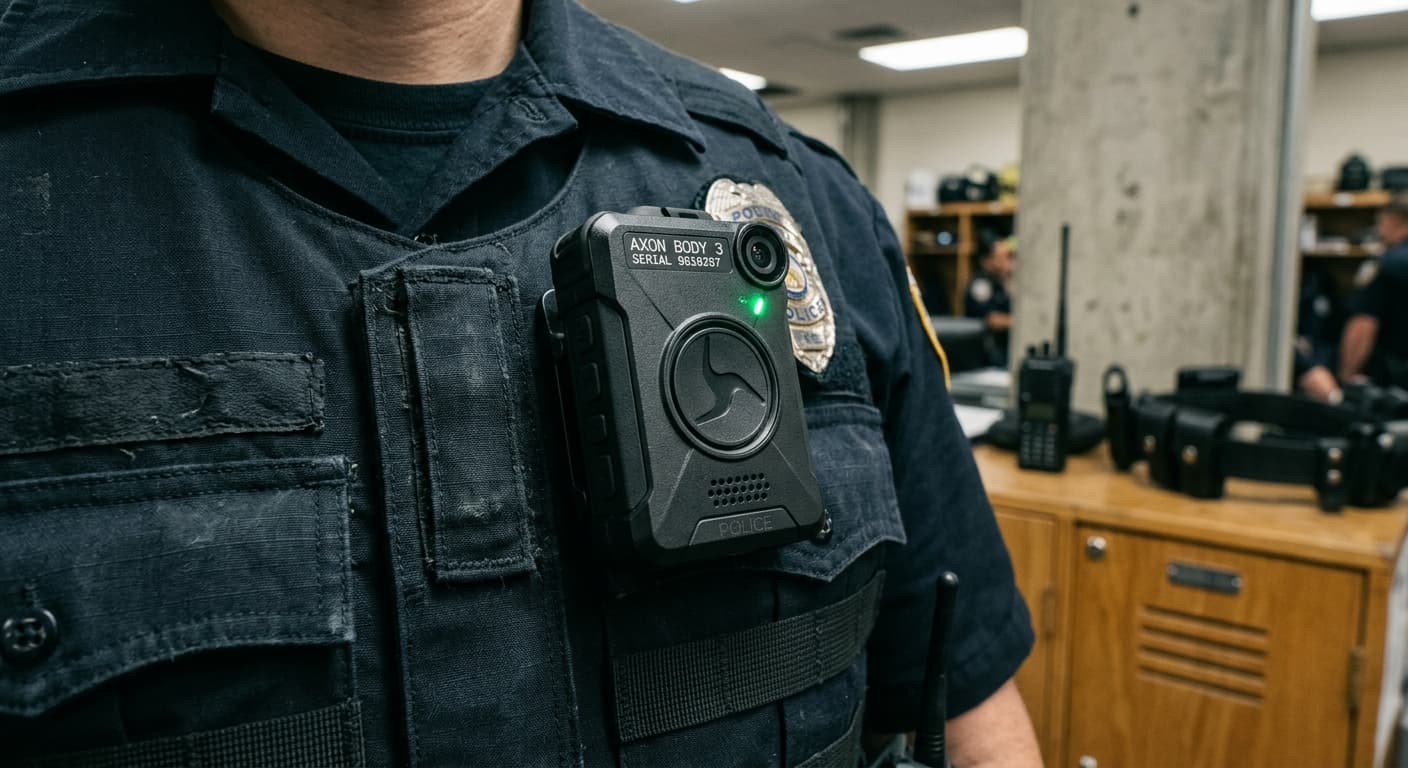
In Nevada the offense is called driving under the influence (DUI), and NRS 484C.110 makes it unlawful to drive with a blood or breath alcohol concentration (BAC) of 0.08 percent or more. A first DUI is a misdemeanor punishable by 2 days to 6 months in jail or community service, a $400 to $1,000 fine under NRS 484C.400, and a 185-day license revocation under NRS 483.460.
This guide is part of our DUI Laws by State series.
What counts as a DUI in Nevada
Nevada's core DUI statute, NRS 484C.110, makes it unlawful to drive or be in actual physical control of a vehicle while under the influence of alcohol or a prohibited substance, or with a BAC of 0.08 percent or more. Because impairment is its own basis for the charge, a driver under 0.08 can still be convicted if alcohol or drugs impaired the ability to drive. Commercial drivers are held to a 0.04 percent limit, and drivers under 21 fall under a 0.02 percent zero-tolerance rule. The statute also sets per se limits for prohibited drugs. Subsection 3 of NRS 484C.110 lists amphetamine, cocaine, heroin, LSD, methamphetamine, and phencyclidine, and those limits apply to an ordinary misdemeanor DUI. The marijuana (delta-9-THC) limits sit in subsection 4, which applies only to felony-level DUI charges, so a misdemeanor marijuana DUI has to be proved by impairment rather than by a per se number. The 0.08 figure is the federal benchmark adopted by every state except Utah, which sets its limit at 0.05 percent, as the National Highway Traffic Safety Administration describes. A BAC of 0.16 percent or more does not create a separate offense name, but under NRS 484C.400(1)(a)(4) it requires the court to order a treatment program under NRS 484C.360 on a first offense.
First-offense DUI penalties in Nevada (jail, fines, suspension)
A first DUI within 7 years is a misdemeanor. According to NRS 484C.400, the court must sentence the person to between 2 days and 6 months in jail, or to 48 to 96 hours of community service, and impose a fine of $400 to $1,000. The driver must also attend a DUI education program and, if the BAC was 0.16 percent or more, a treatment program under NRS 484C.360. Courts often allow the jail time to be served through alternatives for a first offense, but the financial cost climbs once court costs and program fees are added. Separately, the Department of Motor Vehicles revokes the license for 185 days on a first offense under NRS 483.460, and the driver can keep driving by installing an ignition interlock device and meeting the reinstatement conditions.

| First-offense item | Nevada rule (statute) |
|---|---|
| Offense level | Misdemeanor (NRS 484C.110) |
| Jail | 2 days to 6 months, or community service (NRS 484C.400) |
| Fine | $400 to $1,000 (NRS 484C.400) |
| License revocation | 185 days (NRS 483.460) |
| Interlock | Mandatory, 185 days (NRS 484C.460) |
| BAC 0.16%+ | Mandatory treatment program (NRS 484C.400) |
| Refusal revocation | 1 year (NRS 484C.210) |
| Look-back period | 7 years (NRS 484C.400) |
Watch out: The DMV's license revocation runs on a separate track from the criminal case. You generally have only 7 days from a failed test to request a DMV hearing, and you can lose your license through the DMV even if the criminal DUI charge is later reduced or dismissed.
Ignition interlock requirements in Nevada
Nevada is one of the strictest states on ignition interlock devices because the device is mandatory even on a first offense. Under NRS 484C.460, a court that convicts a person of a first DUI must order an ignition interlock device for 185 days, for 1 year on a second violation within 7 years, and for 3 years on a felony-level DUI. The statute sets no longer term based on BAC, so older material describing a 12 to 36 month device for a high-BAC first offense is out of date. The interlock also lets a driver get back on the road quickly: installing the device is the standard route to a restricted driving privilege during the revocation. Limited exceptions exist, such as for a person who cannot provide a deep-lung breath sample or who lives more than 100 miles from an interlock provider. The device requires a clean breath sample before the engine starts and at random points during a trip.
License revocation and the administrative process in Nevada
Nevada runs an administrative license revocation through the DMV that is separate from the criminal DUI case. For a first offense, the revocation is 185 days under NRS 483.460, and the failed-test revocation in NRS 484C.210 runs for the same 185 days. The driver may obtain an ignition interlock privilege by installing an ignition interlock device, as NRS 484C.460 provides. The arresting officer takes the license and issues a 7-day temporary permit, and the driver has those 7 days to request a DMV hearing to contest the revocation. To reinstate, a driver generally pays a reinstatement fee and a chemical analysis fee, files proof of financial responsibility (an SR-22) maintained for 3 years, completes the DUI program, and keeps the interlock for the required period. A refusal carries a longer one-year revocation handled through the same administrative process.
Repeat offenses and the Nevada look-back period
Nevada counts prior DUIs within a 7-year look-back window, and convictions from other states count too. A second DUI within 7 years is a misdemeanor with a mandatory 20 days to 6 months in jail or residential confinement, a $750 to $1,000 fine, and a 1-year revocation under NRS 484C.400. The felony threshold sits at the third offense: a third DUI within 7 years is a Category B felony punishable by 1 to 6 years in state prison, a $2,000 to $5,000 fine, and a 3-year license revocation. A DUI causing death or substantial bodily harm is a felony regardless of offense number, and a driver with a prior felony DUI who reoffends faces a Category B felony as well. Because the 7-year clock resets the felony exposure, the timing of prior convictions matters a great deal.
Watch out: Refusing the breath or blood test does not protect your license. A refusal brings a one-year revocation, and under NRS 484C.160 an officer may apply for a warrant or court order directing that reasonable force be used to draw blood, so refusing rarely avoids testing.
Refusing a breath or blood test in Nevada
Nevada's implied consent law means that by driving in the state, you have agreed to submit to an evidentiary chemical test if there are reasonable grounds to believe you were driving under the influence. If a driver fails the test, the DMV revokes the license for 185 days on a first offense under NRS 484C.210. If a driver refuses, the revocation runs one year, and under NRS 484C.160 an officer who has reasonable grounds may apply for a warrant or court order directing that reasonable force be used to obtain a blood sample. The refusal can also be used as evidence in the criminal case. Because refusing brings a longer revocation and usually does not prevent a sample from being collected, it generally makes the outcome worse rather than better.
Can you expunge or seal a DUI in Nevada
Nevada does not use the term expungement; the equivalent relief is record sealing under NRS 179.245. A misdemeanor DUI conviction can be sealed 7 years after the case closes, measured from release from custody or the end of the sentence, whichever is later. Felony DUI convictions, such as a third offense within 7 years punishable under NRS 484C.400(1)(c), can never be sealed, and a DUI causing substantial bodily harm or death under NRS 484C.430 is barred outright under NRS 179.245(6)(e), with a DUI homicide barred under NRS 179.245(6)(f). A DUI that was dismissed or that ended in an acquittal can generally be sealed without the waiting period. Sealing removes the record from most public background checks, though law enforcement and the DMV may still access it, and a sealed DUI can still count as a prior within the 7-year window. Many people consult a Nevada attorney to confirm eligibility before filing.
What to do after a DUI arrest in Nevada
A Nevada DUI creates two separate matters: a criminal case in court and an administrative license case at the DMV. The DMV deadline is short, so a common first step is to request a DMV hearing within 7 days of the failed test if you want to contest the revocation. The criminal case proceeds on its own schedule from arraignment through pretrial and resolution. General information cannot tell you how your case will come out, because the outcome depends on the specific facts, the evidence, and your record. Many people consult a licensed Nevada DUI attorney to understand the charge, the DMV deadline, and the options for both the criminal case and the license case. Keep the arrest paperwork, the temporary permit, and any test results in a safe place.
More Nevada Laws
Frequently Asked Questions
What is the BAC limit in Nevada?
The per se limit is 0.08 percent BAC under NRS 484C.110. Commercial drivers are limited to 0.04 percent, and drivers under 21 face a 0.02 percent zero-tolerance limit. A BAC of 0.16 percent or more requires the court to order a treatment program on a first offense.
How long do you lose your license for a first DUI in Nevada?
The DMV revokes the license for 185 days on a first offense under NRS 483.460. A driver may keep driving on an ignition interlock privilege by installing an ignition interlock device, which is mandatory for 185 days under NRS 484C.460.
Is a first DUI a felony in Nevada?
No. A first DUI within 7 years is a misdemeanor. A DUI becomes a Category B felony at the third offense within 7 years, or at any time if it causes substantial bodily harm or death.
Do you need an interlock for a first DUI in Nevada?
Yes. Under NRS 484C.460, an ignition interlock device is mandatory on a first offense for 185 days. The term rises to 1 year for a second offense within 7 years and 3 years for a felony-level DUI. Limited exceptions apply.
What happens if you refuse a breathalyzer in Nevada?
Refusing the test triggers a one-year license revocation, longer than the 185-day revocation for failing it. Under NRS 484C.160, an officer may apply for a warrant or court order directing that reasonable force be used to draw blood, and the refusal can be used as evidence.
How long does a DUI stay on your record in Nevada?
A DUI counts as a prior for 7 years under Nevada's look-back period. A misdemeanor DUI conviction can be sealed 7 years after the case closes. Felony DUI convictions can never be sealed under NRS 179.245.
Can you get a DUI expunged in Nevada?
Nevada uses record sealing rather than [expungement](/us-laws/expungement). A misdemeanor DUI can be sealed 7 years after the case closes under NRS 179.245. Felony DUI convictions can never be sealed.
What is the look-back period for DUI in Nevada?
Nevada uses a 7-year look-back period. Prior DUI convictions within 7 years, including those from other states, count toward second, third, and felony offender status under NRS 484C.400.
Facing a warrant, DUI, or criminal charge in Nevada? Get a free case review
An active warrant or a criminal charge like DUI puts your freedom, license, and record at risk, and deadlines to act, like challenging a license suspension or resolving a warrant before an arrest, can be just days away. Get a free, confidential review from a Nevada criminal defense attorney. Acting quickly protects your options.
Updates
Corrected the first-offense license revocation to 185 days, the court-ordered treatment threshold to a 0.16 BAC, the second-offense jail minimum to 20 days, the ignition interlock terms, the implied consent citation, and the marijuana per se and record-sealing references.
Removed a fabricated statutory carve-out from this page: NRS 179.245 does not contain any petition right letting a felony-exposure DUI sealed as a misdemeanor be sealed after 7 years; felony DUI can never be sealed under Nevada law.
Independently fact-checked against the cited primary sources; governing law re-checked for recent changes
Corrected the blanket claim that felony DUI can never be sealed in Nevada: NRS 179.245(7) preserves a narrow petition right for a felony DUI conviction resentenced to a lesser tier through the statewide sobriety and drug monitoring program, though DUI causing substantial bodily harm or death remains barred outright.
Corrected a mischaracterization of the NRS 179.245(7) sealing carve-out: the eligible conviction is a second-offense DUI under NRS 484C.400(1)(b), a misdemeanor tier, not a felony DUI.
Governing law re-checked for recent changes
Reviewed and approved by an editor
The Law Behind This Article
This article rests on the statutory provisions below, held in our own legal record and retrieved from the official source. Tap a section to read the operative text.
Nevada Revised Statutes, Chapter 484C: DRIVING UNDER THE INFLUENCE OF ALCOHOL OR A PROHIBITED SUBSTANCE
§ 484C.110Unlawful acts relating to operation of vehicle; affirmative defense; additional penalty for violation committed in certain zones.In force
1. It is unlawful for any person who: (a) Is under the influence of intoxicating liquor; (b) Has a concentration of alcohol of 0.08 or more in his or her blood or breath; or (c) Is found by measurement within 2 hours after driving or being in actual physical control of a vehicle to have a concentration of alcohol of 0.08 or more in his or her blood or breath, Ê to drive or be in actual physical control of a vehicle on a highway or on premises to which the public has access. 2. It is unlawful for any person who: (a) Is under the influence of a controlled substance; (b) Is under the combined influence of intoxicating liquor and a controlled substance; or (c) Inhales, ingests, applies or otherwise uses any chemical, poison or organic solvent, or any compound or combination of any of these, to a degree which renders the person incapable of safely driving or exercising actual physical control of a vehicle, Ê to drive or be in actual physical control of a vehicle on a highway or on premises to which the public has access.
Official text (excerpt) · last checked 2026-09-05 · Read the full text in our law library · Verify at leg.state.nv.us
Nevada Revised Statutes, Chapter 179: SPECIAL PROCEEDINGS OF A CRIMINAL NATURE; SEALING RECORDS OF CRIMINAL PROCEEDINGS; REWARDS; FORMS
§ 179.245Sealing records after conviction: Persons eligible; petition; notice; hearing; order; waiver of fees for certain victims of sex trafficking.In forcecited in 4 of our articles
1. Except as otherwise provided in subsection 6 and NRS 176.211, 176A.245, 176A.265, 176A.295, 179.247, 179.259, 201.354 and 453.3365, a person may petition the court in which the person was convicted for the sealing of all records relating to a conviction of: (a) A category A felony, a crime of violence or residential burglary pursuant to NRS 205.060 after 10 years from the date of release from actual custody or discharge from parole or probation, whichever occurs later; (b) Except as otherwise provided in paragraphs (a) and (e), a category B, C or D felony after 5 years from the date of release from actual custody or discharge from parole or probation, whichever occurs later; (c) A category E felony after 2 years from the date of release from actual custody or discharge from parole or probation, whichever occurs later; (d) Except as otherwise provided in paragraph (e), any gross misdemeanor after 2 years from the date of release from actual custody or discharge from probation, whichever occurs later; (e) A violation of NRS 422.540 to 422.570, inclusive, a violation of NRS 484C.110 or 484C.120 other than a felony, or a battery which constitutes domestic…
Official text (excerpt) · last checked 2026-07-29 · Read the full text in our law library · Verify at leg.state.nv.us
Cited in 17 court opinions in our collectionLatest citing opinion in our collection: 2024
In the courts (editorial summary, independently checked):Sang Man Shin v. State (2009) upheld the NRS 179.245 bar on sealing sexual-offense records and held a pardon carries no right to expunction. State v. Cavaricci (1992) found no discretion to seal where later arrests broke the clean-record condition, but Tiffee (2021) held an eligible petitioner gets a presumption favoring sealing.
Opinions citing this section in our collection:
- State v. Cavaricci (Nevada Supreme Court 1992, 108 Nev. 411)✓Cavaricci won sealing of three 1984 convictions and later arrests, though his record showed at least seven incidents since 1984, including DUIs and battery with a deadly weapon. The court held those were not minor traffic violations, so NRS 179.245(3) gave no discretion to seal.
- Baliotis v. Clark County (Nevada Supreme Court 1986, 102 Nev. 568)✓A former felon whose records were sealed under NRS 179.245 refused to hand police the sealing orders in a private detective license check. The court held the statute lets him disavow the sealed events but cannot force licensing bodies to disregard what they know independently.
- Sang Man Shin v. State (Nevada Supreme Court 2009, 125 Nev. 100)✓Shin, pardoned years after pleading guilty to attempted lewdness with a minor, had his record sealed and then unsealed. The court held NRS 179.245(5)'s bar on sealing sexual offense records does not impinge on the pardons power, because expunction is not a civil right.
Identified automatically from the court opinions citing this section — not a ranking of which case controls.
Also relied on in: Nevada Expungement Laws: How to Seal Your Criminal Record (2025 Guide), Nevada Background Check Laws (2026 Guide), Nevada Court Records: How to Search by County, Appellate Case Lookup, and How Sealing Works
Explore the law
This article also draws on these acts and chapters (opening at their first section): Nevada Revised Statutes, Chapter 484C: DRIVING UNDER THE INFLUENCE OF ALCOHOL OR A PROHIBITED SUBSTANCE § 484C.010 (Definitions.)
Related law for further reading — not part of this article’s citations.
Search our full record of US law — 2.1 million sections, every state + federal →
Sources and References
- Nevada Revised Statutes Chapter 484C, DUI offense, BAC limit, penalties, and interlock (NRS 484C.110, 484C.400, 484C.460)(leg.state.nv.us).gov
- Nevada DMV, DUI quick reference (license revocation, restricted license, reinstatement)(dmv.nv.gov).gov
- Nevada Courts, ignition interlock notice for DUI cases(nvcourts.gov).gov
- Nevada Revised Statutes 179.245, sealing records after a conviction(leg.state.nv.us).gov
- NHTSA, drunk driving and the 0.08% federal BAC standard(nhtsa.gov).gov
- Nevada Revised Statutes 483.460, mandatory license revocation periods (185 days for a first DUI within 7 years of NRS 484C.110)(leg.state.nv.us)