
Montana
Montana Pepper Spray and Stun Gun Laws (2026)
Independently fact-checked against primary sources (last audited September 23, 2026). · 16 primary sources cited on this page. How we verify our legal content

Montana's weapons statutes, Title 45, chapter 8, part 3 of the Montana Code Annotated, contain no section written specifically for pepper spray or stun guns. Most of the part's roughly 45 sections define "weapon" narrowly for a specific offense, naming firearms or a short enumerated list, and pepper spray and stun guns never appear on those lists. Several sections still reach beyond that narrow list with an open catchall, though: the possession-by-a-prisoner-or-youth offense ends its enumerated list with "or other deadly weapon," an undefined term, and the school-weapons offense adds "any other article or instrument possessed with the purpose to commit a criminal offense." The chapter's "destructive device" definition is open-ended too ("includes but is not limited to"), but its five listed categories are all ordnance, projectiles, bombs, large-caliber weapons, rockets, and incendiary devices, so the separate 10-year felony it feeds does not reach either device. Montana's local-preemption clause is also broadly worded, "any weapon," not just firearms, but its second subsection hands cities and counties back the power to bar carrying any weapon into a publicly owned and occupied building, which on the same reading would include these two.
Jurisdiction scope: This page covers Montana state law only, principally MCA 45-8-315, 45-8-316, 45-8-318, 45-8-321, 45-8-328, 45-8-332, 45-8-334, 45-8-351, 45-8-356, 45-8-361, 45-5-213, and 45-2-101. It does not cover municipal ordinances (beyond what MCA 45-8-351 itself permits) or Montana's general assault statutes outside Title 45.
Is pepper spray legal in Montana?
Montana's weapons part does not contain a section devoted to pepper spray, and enumerating the part's sections shows why there is little to find in Part 3 specifically. MCA 45-8-316 bars carrying or bearing a "firearm" concealed upon the person, naming the device directly rather than through a defined term, and a person eligible to possess a firearm under state or federal law is exempted from the offense entirely by subsection (3). MCA 45-8-321 (permit to carry a concealed weapon) is scoped by MCA 45-8-315's definition of "concealed weapon," which is limited to "a firearm that is wholly or partially covered by the clothing or wearing apparel of the person carrying or bearing the weapon." Because both provisions reach only a firearm, one by its own text and the other by that defined term, neither the concealed-carry offense nor the concealed-weapon permit system in Part 3 reaches pepper spray. No age minimum, capacity or formula cap, or purchase restriction for pepper spray appears anywhere in the part's text.
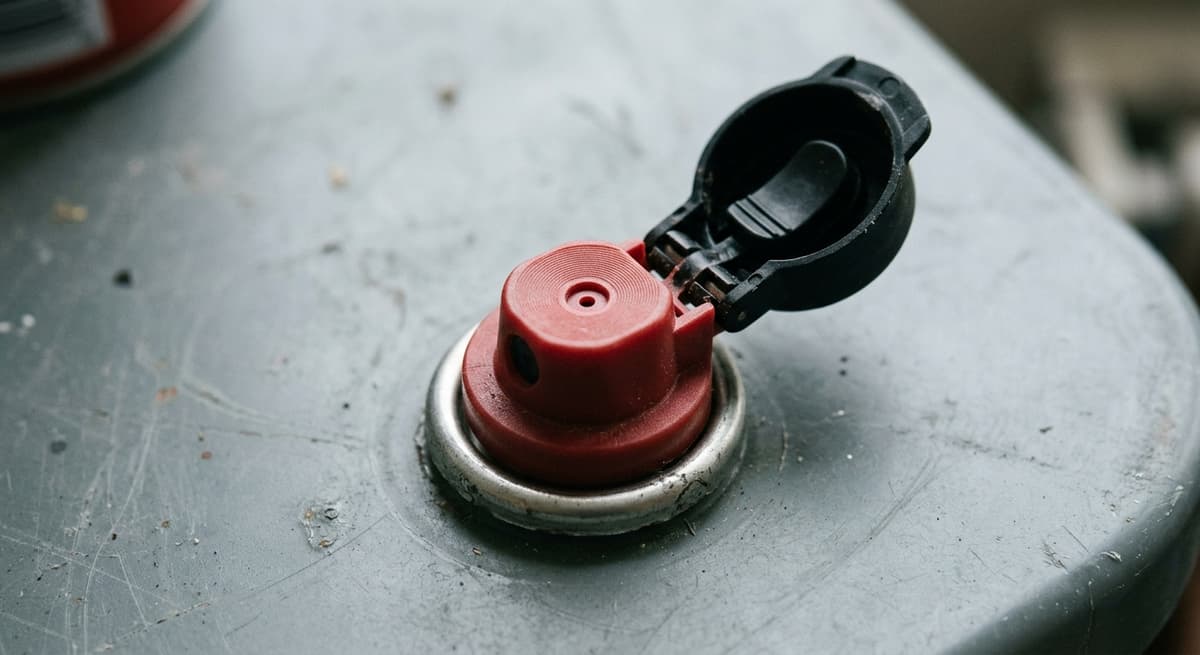
That does not mean Montana law is silent on using pepper spray against someone. Title 45's general definitions section, MCA 45-2-101(79), defines "weapon" broadly for the criminal code as a whole: "an instrument, article, or substance that, regardless of its primary function, is readily capable of being used to produce death or serious bodily injury." MCA 45-5-213, assault with a weapon, uses that general definition: purposely or knowingly causing bodily injury to another with a weapon, or a reasonable apprehension of serious bodily injury by use of a weapon or what reasonably appears to be one, is a felony punishable by imprisonment in the state prison for up to 20 years or a fine of up to $50,000, or both, with a mandatory counseling-assessment requirement added under subsection (2)(b) when the defendant is a partner or family member of the victim. Neither statute's text says whether an ordinary self-defense pepper spray canister meets the "weapon" definition, but if it does, unjustified use of it against another person carries that felony's exposure, not merely a misdemeanor.
Are stun guns legal in Montana?
The same reading largely applies to stun guns and tasers. None of Part 3's roughly 45 sections, covering machine guns, concealed firearms, permits and their denial or revocation, explosives, silencers, sawed-off firearms, firing restrictions, and school weapons, names a stun gun, taser, or electronic or electric weapon by name. As with pepper spray, the part's concealed-weapon framework (MCA 45-8-315, 45-8-316, 45-8-321, and the prohibited-place offense in MCA 45-8-328) is scoped to "concealed weapon" as defined in 45-8-315, a firearm-only definition, so it does not reach a stun gun either. No age minimum, permit requirement, or prohibited-persons list specific to stun guns appears in the part's text, and MCA 45-5-213's felony assault-with-a-weapon exposure applies to an unjustified use of a stun gun on another person the same way it could apply to pepper spray.

More than one place in Part 3 raises the question of a stun gun by an open catchall rather than a firearm-only definition, though the answer differs by section. MCA 45-8-318 makes it a felony, punishable by imprisonment in the state prison for 5 to 15 years or a fine of up to $50,000, or both, for a person committed to a state prison or incarcerated in a jail, or a youth in a detention or correctional facility, to possess a "dirk, dagger, pistol, revolver, slingshot, sword cane, billy, knuckles made of any metal or hard substance, knife, razor not including a safety razor, or other deadly weapon" without lawful authority while in custody. That closing "or other deadly weapon" phrase is open-ended, but Montana's code defines "weapon" in MCA 45-2-101(79) and never defines "deadly weapon" anywhere in the criminal code, so whether a stun gun or a spray canister smuggled into a Montana jail or youth facility falls within it is an open question the statute's wording raises rather than settles, even though neither device is named. Separately, MCA 45-8-332(1)'s "destructive device" definition, which governs the whole chapter rather than one section, opens with "includes but is not limited to" before five listed categories: a projectile containing an explosive or incendiary material or similar chemical substance, whose illustrative content is "that which is commonly known as tracer or incendiary ammunition", so the similar chemical substances the subdivision reaches are those similar to explosive or incendiary material; a bomb or similar explosive device; a weapon over .60 caliber; a rocket or rocket-propelled projectile over 0.60 inch in diameter; and a wick-equipped container of flammable liquid. Every category describes ordnance rather than a handheld aerosol canister or an electronic device, so neither pepper spray nor a stun gun qualifies, and MCA 45-8-334's separate felony for possessing a destructive device with the purpose to commit a felony, possessed in a public place, punishable by up to 10 years in the state prison or a fine of up to $50,000, or both, does not reach either device.
Local ordinances and preemption
Montana's local-preemption clause reaches further than a firearms-only reading of its title would suggest, and it also gives local governments back more authority than a first read of subsection (1) alone would suggest. MCA 45-8-351(1) states that, except as provided in subsection (2), "a county, city, town, consolidated local government, or other local government unit may not prohibit, register, tax, license, or regulate the purchase, sale or other transfer... ownership, possession, transportation, use, or unconcealed carrying of any weapon, including a rifle, shotgun, handgun, or concealed handgun." The examples that follow "any weapon" are introduced by "including," language that does not narrow the preemption to only those listed firearm types. Part 3 does not separately define "weapon" for this section, so whether "any weapon" in 45-8-351 reaches pepper spray or a stun gun turns on Title 45's general definition in MCA 45-2-101(79), "an instrument, article, or substance that, regardless of its primary function, is readily capable of being used to produce death or serious bodily injury."
Subsection (2) is where the exception lives, and it is broader than a firearms carve-out too. MCA 45-8-351(2)(a) allows a city or town to "regulate the discharge of rifles, shotguns, and handguns" for public safety, and separately gives "a county, city, town, consolidated local government, or other local government unit" the power "to prevent and suppress the carrying of unpermitted concealed weapons or the carrying of unconcealed weapons to a publicly owned and occupied building under its jurisdiction." That second grant of power is not limited to firearms, so on the same "any weapon" reading that makes the preemption clause reach pepper spray and stun guns, this exception lets a Montana city or county bar carrying either device, concealed or unconcealed, into a publicly owned and occupied building it controls, such as a city hall, courthouse, or public library. Subsection (2)(b) preserves the right to display firearms at shows and to transport firearms through a jurisdiction, a protection limited to firearms by its own text.
Where you can't carry either device
Montana's school-weapons statute, MCA 45-8-361, makes it an offense, punishable by a fine of up to $500 or up to 6 months in county jail, or both, to purposely and knowingly possess, carry, or store a "weapon" in a school building, and makes it a separate offense for a parent or guardian to knowingly permit a minor to do so. The statute defines "weapon" for this section only: "any type of firearm, a knife with a blade 4 or more inches in length, a sword, a straight razor, a throwing star, nun-chucks, or brass or other metal knuckles. The term also includes any other article or instrument possessed with the purpose to commit a criminal offense." Pepper spray and stun guns do not appear on the enumerated list, but that closing catchall clause means either device could still be reached in a school building if it were possessed for the purpose of committing a crime there, as opposed to ordinary self-defense carry. The offense does not apply to law enforcement personnel or a contracted school marshal, and district trustees may grant advance permission to possess, carry, or store a weapon in a school building. A weapon involved in a violation may be seized and, on conviction, forfeited to the state or returned to its lawful owner. "School building" is defined narrowly too: buildings owned or leased by a local school district used for instruction or student activities, expressly excluding a home school.
Separately, MCA 45-8-328 makes it an offense, punishable by up to 6 months in the county jail or a fine of up to $500, or both, for anyone other than a permit holder under 45-8-321 or 45-8-312, or a person recognized under 45-8-329, to purposely or knowingly carry a concealed weapon, defined by 45-8-315 as a firearm, into restricted state or local government office space. That offense reaches only a firearm, so it does not reach pepper spray or a stun gun. MCA 45-8-356 works differently: it is not itself a crime and sets no penalty. It is a statewide protection for a current, valid concealed-weapon permit holder, providing that such a person "may not be prohibited or restricted from exercising that permit anywhere in the state" except at eight listed categories of places, among them a correctional or detention facility, a TSA security checkpoint at a commercial airport, a federal building, a military reservation, private property whose owner or tenant prohibits firearms, a courtroom or courthouse area under a judge's order, and a school building under 45-8-361. Because it protects a firearm permit rather than prohibiting anything, it never applied to a spray or stun gun carrier in the first place; there was no permit for either device to lose. As discussed above, a jail or youth detention facility carries its own, broader exposure under MCA 45-8-318, which is not limited to firearms.
Federal law: what it does and does not reach
No federal statute regulates a civilian's purchase or possession of pepper spray or a stun gun. Federal law matters in three places.
Federal buildings. Under 18 U.S.C. § 930(a), whoever knowingly possesses or causes to be present "a firearm or other dangerous weapon in a Federal facility (other than a Federal court facility)" faces a fine, imprisonment of up to 1 year, or both. Subsection (e) sets up to 2 years for a federal court facility, and subsection (b) up to 5 years where the weapon is intended to be used in a crime. Section 930(g)(2) defines the term:
The term "dangerous weapon" means a weapon, device, instrument, material, or substance, animate or inanimate, that is used for, or is readily capable of, causing death or serious bodily injury, except that such term does not include a pocket knife with a blade of less than 2½ inches in length.
The definition names neither device. Whether a particular spray or stun gun is "readily capable of" causing serious bodily injury is a question of fact the statute does not answer. Subsection (d)(3) exempts "the lawful carrying of firearms or other dangerous weapons in a Federal facility incident to hunting or other lawful purposes," and subsection (h) requires notice of the ban to be posted at each public entrance. A "Federal facility" is "a building or part thereof owned or leased by the Federal Government, where Federal employees are regularly present for the purpose of performing their official duties."
Air travel. The Transportation Security Administration's screening rules, which are agency policy rather than statute, bar both devices from carry-on bags. One 4 fl. oz. (118 ml) container of mace or pepper spray is permitted in checked baggage if it has a safety mechanism to prevent accidental discharge, and sprays containing more than 2 percent by mass of tear gas (CS or CN) are prohibited in checked baggage. Tasers, stun guns and other electro-shock weapons may travel in checked baggage only if transported so the device cannot discharge accidentally. Airlines may set stricter rules.
National parks. National Park Service regulations prohibit possessing, carrying or using a "weapon" in a park area except as the regulations provide (36 CFR 2.4(b)(1)). 36 CFR 1.4 defines "weapon" to include an "irritant gas device" and any "weapon the possession of which is prohibited under the laws of the State in which the park area or portion thereof is located."
Disclaimer: This article provides general legal information about Montana's pepper spray and stun gun laws as of September 2026. It is not legal advice. Consult a lawyer licensed in Montana for advice about a specific situation.
For a state-by-state comparison, see pepper spray and stun gun laws by state. Montana's self-defense statutes are covered separately on the Montana self-defense laws page.
Statutes cited reflect their in-force version as of 2026-09-18. Last updated: 2026-09-18.
Frequently Asked Questions
Is pepper spray legal to carry in Montana?
No section in MCA Title 45, chapter 8, part 3 names pepper spray, and the part's 'concealed weapon' definition in MCA 45-8-315 is limited to a firearm, so the state's concealed-carry and permit statutes do not reach it. Using it to injure or threaten someone, however, can trigger the general assault-with-a-weapon felony in MCA 45-5-213 if a court treats it as a 'weapon' under MCA 45-2-101(79).
Do you need a permit for a stun gun in Montana?
No permit requirement specific to stun guns appears in Part 3. The part's concealed-weapon permit system, MCA 45-8-321, is scoped to the firearm-only definition of 'concealed weapon' in MCA 45-8-315. A stun gun possessed in a jail, prison, or youth detention facility is a separate matter: MCA 45-8-318's open 'or other deadly weapon' catchall could reach it there, since Montana's code defines 'weapon' but never defines 'deadly weapon,' punishable by imprisonment in the state prison for 5 to 15 years or a fine of up to $50,000, or both.
Can a Montana city ban pepper spray or stun guns?
Not generally, but a city can still keep either device out of its own buildings, on the same reading of the statute's wording. Montana's local-preemption statute, MCA 45-8-351(1), bars local regulation of 'any weapon,' language introduced by 'including' before a list of firearm examples that does not limit the preemption to firearms; whether it reaches pepper spray or a stun gun turns on Title 45's general 'weapon' definition, MCA 45-2-101(79), since Part 3 does not separately define the term for this section. Subsection (2)(a), however, gives a county, city, or town the power to prevent carrying unpermitted concealed weapons, or carrying unconcealed weapons at all, into a publicly owned and occupied building under its jurisdiction, a grant that is not limited to firearms either. So, on that reading, a city cannot ban owning or selling pepper spray or a stun gun, but it can bar carrying either one into a public building it controls.
Can you bring pepper spray or a stun gun into a Montana school?
MCA 45-8-361 defines 'weapon' for the school-building offense as an enumerated list, firearms, certain knives, swords, straight razors, throwing stars, and knuckles, plus 'any other article or instrument possessed with the purpose to commit a criminal offense.' Neither device is named on the list, but the catchall clause could reach either one if carried into a school building to commit a crime. The offense does not apply to law enforcement or a contracted school marshal, and district trustees may grant advance permission.
Updates
Independently fact-checked against the cited primary sources
The Law Behind This Article
This article rests on the statutory provisions below, held in our own legal record and retrieved from the official source. Tap a section to read the operative text.
Montana Code Annotated, Title 45
§ 45-2-101General DefinitionsIn forcecited in 9 of our articles
45-2-101. General definitions. Unless otherwise specified in the statute, all words must be taken in the objective standard rather than in the subjective, and unless a different meaning plainly is required, the following definitions apply in this title: (1) "Acts" has its usual and ordinary meaning and includes any bodily movement, any form of communication, and when relevant, a failure or omission to take action. (2) "Administrative proceeding" means a proceeding the outcome of which is required to be based on a record or documentation prescribed by law or in which a law or a regulation is particularized in its application to an individual. (3) "Another" means a person or persons other than the offender. (4) (a) "Benefit" means gain or advantage or anything regarded by the beneficiary as gain or advantage, including benefit to another person or entity in whose welfare the beneficiary is interested. (b) Benefit does not include an advantage promised generally to a group or class of voters as a consequence of public measures that a candidate engages to support or oppose.
Official text (excerpt) · last checked 2026-07-29 · Read the full text in our law library · Verify at mca.legmt.gov
Cited in 54 court opinions in our collectionLatest citing opinion in our collection: 2026
Opinions citing this section in our collection:
- State v. Smith (Montana Supreme Court 2004, 322 Mont. 206)“…n the intended victim of the serious bodily injury. ¶34 Section 45-2-101, MCA, defines “another” as, simply, “a perso…”
- State v. Haser (Montana Supreme Court 2001, 304 Mont. 63)“…other person." Under the general definitions provided under § 45-2-101, MCA, "sexual intercourse" includes "penetra…”
- State v. Stevens (Montana Supreme Court 2002, 311 Mont. 52)“…ingness to act, pursuant to §§ 45-5-501(1)(b)(ii) and 45-2-101, MCA, which defines “physically helpless.” H…”
Identified automatically from the court opinions citing this section — not a ranking of which case controls.
Also relied on in: Montana Self-Defense Laws: Stand Your Ground & Castle Doctrine (2026), Stand Your Ground States: Rules in All 50 States and DC, Castle Doctrine States: Rules in All 50 States and DC
§ 45-5-213Assault With WeaponIn force
45-5-213. Assault with weapon. (1) A person commits the offense of assault with a weapon if the person purposely or knowingly causes: (a) bodily injury to another with a weapon; or (b) reasonable apprehension of serious bodily injury in another by use of a weapon or what reasonably appears to be a weapon. (2) (a) Subject to the provisions of subsection (2)(b), a person convicted of assault with a weapon shall be imprisoned in the state prison for a term not to exceed 20 years or be fined not more than $50,000, or both. (b) In addition to any sentence imposed under subsection (2)(a), if the person convicted of assault with a weapon is a partner or family member of the victim, as defined in 45-5-206, the person is required to pay for and complete a counseling assessment as required in 45-5-206(4).
Official text (excerpt) · last checked 2026-07-29 · Read the full text in our law library · Verify at mca.legmt.gov
Cited in 54 court opinions in our collectionLatest citing opinion in our collection: 2025
Opinions citing this section in our collection:
- State v. Smith (Montana Supreme Court 2004, 322 Mont. 206)“…him with the offense of assault with a weapon, pursuant to § 45-5-213, MCA, rather than the offense of privacy in…”
- State v. Pingree (Montana Supreme Court 2015, 379 Mont. 521)“…Pingree with felony Assault with a Weapon, in violation of § 45-5-213, MCA, and misdemeanor Partner or Family Memb…”
- State v. Finerfrock (Montana Supreme Court 2014, 377 Mont. 81)“…r Count I: Assault with a Weapon, a felony, in violation of Section 45-5-213, MCA, sentenced to the Department of Correct…”
Identified automatically from the court opinions citing this section — not a ranking of which case controls.
§ 45-8-315DefinitionIn forcecited in 4 of our articles
45-8-315. Definition. "Concealed weapon" means a firearm that is wholly or partially covered by the clothing or wearing apparel of the person carrying or bearing the weapon.
Official text (excerpt) · last checked 2026-07-29 · Read the full text in our law library · Verify at mca.legmt.gov
Also relied on in: Montana Restraining Order Laws (2026): How to Get an Order of Protection, Pepper Spray and Stun Gun Laws by State (2026), Montana Knife Laws (2026): Preemption and the Firearm-Only Definition
§ 45-8-316Carrying Concealed Firearms -- ExemptionIn forcecited in 2 of our articles
45-8-316. Carrying concealed firearms -- exemption. (1) A person who carries or bears concealed upon the individual's person a firearm shall be punished by a fine not exceeding $500 or by imprisonment in the county jail for a period not exceeding 6 months, or both. (2) A person who has previously been convicted of an offense, committed on a different occasion than the offense under this section, in this state or any other jurisdiction for which a sentence to a term of imprisonment in excess of 1 year could have been imposed and who carries or bears concealed upon the individual's person a firearm shall be punished by a fine not exceeding $1,000 or be imprisoned in the state prison for a period not exceeding 5 years, or both. (3) This section does not apply to a person eligible to possess a firearm under state or federal law.
Official text (excerpt) · last checked 2026-07-29 · Read the full text in our law library · Verify at mca.legmt.gov
Cited in 5 court opinions in our collectionLatest citing opinion in our collection: 2004
Opinions citing this section in our collection:
- State v. Sanders (Montana Supreme Court 1984, 208 Mont. 283)“…felony in terms of the sentence that he received. I view Section 45-8-316, MCA, as creating two offenses, one a misdem…”
- State v. Bar-Jonah (Montana Supreme Court 2004, 324 Mont. 278)“…Carrying a Concealed Weapon (the toy gun), in violation of § 45-8-316, MCA. ¶14 On December 15, 1999, Bellusci…”
- State v. Meeks (Montana Supreme Court 2002, 312 Mont. 126)“…and carrying a concealed weapon, a felony, in violation of § 45-8-316, MCA (1997). The incidents relating to thes…”
Identified automatically from the court opinions citing this section — not a ranking of which case controls.
§ 45-8-318Possession Of Deadly Weapon By Prisoner Or Youth In FacilityIn forcecited in 2 of our articles
45-8-318. Possession of deadly weapon by prisoner or youth in facility. (1) A person commits the offense of possession of a deadly weapon by a prisoner if the person purposely or knowingly possesses or carries or has under the person's custody or control without lawful authority a dirk, dagger, pistol, revolver, slingshot, sword cane, billy, knuckles made of any metal or hard substance, knife, razor not including a safety razor, or other deadly weapon while the person is: (a) a person committed to a state prison or incarcerated in a county jail, city jail, or regional jail and is: (i) at a state prison, a state prison farm or ranch, or jail; (ii) being conveyed to or from a place listed in this subsection (1)(a); or (iii) under the custody of prison or jail officials, officers, or employees; or (b) a person in a youth detention facility, secure detention facility, regional detention facility, short-term detention center, correctional facility, or shelter care facility, as those terms are defined in 41-5-103, and is at the facility, being conveyed to or from the facility, or under the custody of the facility officials, officers, or employees.
Official text (excerpt) · last checked 2026-07-29 · Read the full text in our law library · Verify at mca.legmt.gov
Cited in 7 court opinions in our collectionLatest citing opinion in our collection: 2024
Opinions citing this section in our collection:
- State v. Perry (Montana Supreme Court 1979, 180 Mont. 364)“…94-8-213, R.C.M. 1947, now s e c t i o n 45-8-318 MCA, i s u n c o n s t i t u t i o n a…”
- State v. Birthmark (Montana Supreme Court 1992, 253 Mont. 526)“…ession of a deadly weapon while in prison, pursuant to § 45-8-318, MCA, following a jury trial in the Third J…”
- State v. Cobell (Montana Supreme Court 2004, 320 Mont. 122)“…apon by a prisoner in a facility, a felony, in violation of § 45-8-318, MCA (1999), and was sentenced to five year…”
Identified automatically from the court opinions citing this section — not a ranking of which case controls.
§ 45-8-321Permit To Carry Concealed WeaponIn force
45-8-321. Permit to carry concealed weapon. (1) A county sheriff shall, within 60 days after the filing of an application, issue a permit to carry a concealed weapon to the applicant. The permit is valid for 5 years from the date of issuance. An applicant must be a United States citizen or permanent lawful resident who is 18 years of age or older and who holds a valid Montana driver's license or other form of identification issued by the state that has a picture of the person identified. An applicant must have been a resident of the state for at least 6 months.
Official text (excerpt) · last checked 2026-07-29 · Read the full text in our law library · Verify at mca.legmt.gov
Cited in 8 court opinions in our collectionLatest citing opinion in our collection: 2025
Opinions citing this section in our collection:
- Smith v. County of Missoula (Montana Supreme Court 1999, 297 Mont. 368)“…criminal justice information? ¶19 The legislature enacted § 45-8-321, MCA, to permit qualified individuals to car…”
- Van Der Hule v. Mukasey (Montana Supreme Court 2009, 349 Mont. 88)“…ion to this Court pursuant to M. R. App. P. 15: Does § 45-8-321, MCA, prohibit a county sheriff from issuing…”
- HULE v. Mukasey (Montana Supreme Court 2009, 2009 MT 20)“…on to this Court pursuant to M. R. App. P. 15: Does § 45-8-321, MCA, prohibit a county sheriff from issuing…”
Identified automatically from the court opinions citing this section — not a ranking of which case controls.
§ 45-8-328Carrying Concealed Weapon In Prohibited Place -- PenaltyIn forcecited in 2 of our articles
45-8-328. Carrying concealed weapon in prohibited place -- penalty. (1) Except for a person issued a permit pursuant to 45-8-321 or 45-8-312 or a person recognized pursuant to 45-8-329, a person commits the offense of carrying a concealed weapon in a prohibited place if the person purposely or knowingly carries a concealed weapon in portions of a building used for state or local government offices and related areas in the building that have been restricted. (2) A person convicted of the offense shall be imprisoned in the county jail for a term not to exceed 6 months or fined an amount not to exceed $500, or both.
Official text (excerpt) · last checked 2026-07-29 · Read the full text in our law library · Verify at mca.legmt.gov
§ 45-8-332DefinitionsIn force
45-8-332. Definitions. (1) "Destructive device", as used in this chapter, includes but is not limited to the following weapons: (a) a projectile containing an explosive or incendiary material or any other similar chemical substance, including but not limited to that which is commonly known as tracer or incendiary ammunition, except tracer ammunition manufactured for use in shotguns; (b) a bomb, grenade, explosive missile, or similar device or a launching device therefor; (c) a weapon of a caliber greater than .60 caliber which fires fixed ammunition or any ammunition therefor, other than a shotgun or shotgun ammunition; (d) a rocket, rocket-propelled projectile, or similar device of a diameter greater than 0.60 inch or a launching device therefor and a rocket, rocket-propelled projectile, or similar device containing an explosive or incendiary material or any other similar chemical substance other than the propellant for the device, except devices designed primarily for emergency or distress signaling purposes; (e) a breakable container which contains a flammable liquid with a flashpoint of 150 degrees Fahrenheit or less and which has a wick or similar device capable of being…
Official text (excerpt) · last checked 2026-07-29 · Read the full text in our law library · Verify at mca.legmt.gov
§ 45-8-334Possession Of Destructive DeviceIn force
45-8-334. Possession of destructive device. (1) A person who, with the purpose to commit a felony, has in the person's possession any destructive device on a public street or highway, in or near any theater, hall, school, college, church, hotel, other public building, or private habitation, in, on, or near any aircraft, railway passenger train, car, vessel engaged in carrying passengers for hire, or other public place ordinarily passed by human beings is guilty of the offense of possession of a destructive device. (2) A person convicted of the offense of possession of a destructive device shall be imprisoned in the state prison for a period of not more than 10 years or be fined an amount of not more than $50,000, or both.
Official text (excerpt) · last checked 2026-07-29 · Read the full text in our law library · Verify at mca.legmt.gov
Cited in 1 court opinions in our collectionLatest citing opinion in our collection: 2000
Opinions citing this section in our collection:
- State v. Dixon (Montana Supreme Court 2000, 299 Mont. 165)“…ssession of a Destructive Device, a felony, in violation of § 45-8-334, MCA; and (3) Criminal Mischief, a misdemean…”
Identified automatically from the court opinions citing this section — not a ranking of which case controls.
§ 45-8-351Restriction On Local Government Regulation Of FirearmsIn forcecited in 2 of our articles
45-8-351. Restriction on local government regulation of firearms. (1) Except as provided in subsection (2), a county, city, town, consolidated local government, or other local government unit may not prohibit, register, tax, license, or regulate the purchase, sale or other transfer (including delay in purchase, sale, or other transfer), ownership, possession, transportation, use, or unconcealed carrying of any weapon, including a rifle, shotgun, handgun, or concealed handgun. (2) (a) For public safety purposes, a city or town may regulate the discharge of rifles, shotguns, and handguns. A county, city, town, consolidated local government, or other local government unit has power to prevent and suppress the carrying of unpermitted concealed weapons or the carrying of unconcealed weapons to a publicly owned and occupied building under its jurisdiction. (b) Nothing contained in this section allows any government to prohibit the legitimate display of firearms at shows or other public occasions by collectors and others or to prohibit the legitimate transportation of firearms through any jurisdiction, whether in airports or otherwise.
Official text (excerpt) · last checked 2026-07-29 · Read the full text in our law library · Verify at mca.legmt.gov
§ 45-8-356Where Concealed Weapon May Be Carried -- ExceptionsIn force
45-8-356. Where concealed weapon may be carried -- exceptions. A person with a current and valid permit issued pursuant to 45-8-321 or 45-8-312 or recognized pursuant to 45-8-329 may not be prohibited or restricted from exercising that permit anywhere in the state, except: (1) in a correctional, detention, or treatment facility operated by or contracted with the department of corrections or a secure treatment facility operated by the department of public health and human services; (2) in a detention facility or secure area of a law enforcement facility owned and operated by a city or county; (3) at or beyond a security screening checkpoint regulated by the transportation security administration in a publicly owned, commercial airport; (4) in a building owned and occupied by the United States; (5) on a military reservation owned and managed by the United States; (6) on private property where the owner of the property or the person who possesses or is in control of the property, including a tenant or lessee of the property, expressly prohibits firearms; (7) within a courtroom or an area of a courthouse in use by court personnel pursuant to an order of a justice of the peace…
Official text (excerpt) · last checked 2026-07-29 · Read the full text in our law library · Verify at mca.legmt.gov
§ 45-8-361Possession Or Allowing Possession Of Weapon In School Building -- Exceptions -- Penalties -- Seizure And Forfeiture Or Return Authorized -- DefinitionsIn forcecited in 2 of our articles
45-8-361. Possession or allowing possession of weapon in school building -- exceptions -- penalties -- seizure and forfeiture or return authorized -- definitions. (1) A person commits the offense of possession of a weapon in a school building if the person purposely and knowingly possesses, carries, or stores a weapon in a school building. (2) A parent or guardian of a minor commits the offense of allowing possession of a weapon in a school building if the parent or guardian purposely and knowingly permits the minor to possess, carry, or store a weapon in a school building. (3) (a) Subsection (1) does not apply to law enforcement personnel or to a school marshal in the school district where the school marshal is contracted or employed. (b) The trustees of a district may grant persons and entities advance permission to possess, carry, or store a weapon in a school building. (4) (a) A person convicted under this section shall be fined an amount not to exceed $500, imprisoned in the county jail for a term not to exceed 6 months, or both. The court shall consider alternatives to incarceration that are available in the community.
Official text (excerpt) · last checked 2026-07-29 · Read the full text in our law library · Verify at mca.legmt.gov
Code of Federal Regulations Title 36
§ 1.4What terms do I need to know?In forcecited in 53 of our articles
(a) The following definitions shall apply to this chapter, unless modified by the definitions for a specific part or regulation: Abandonment means the voluntary relinquishment of property with no intent to retain possession. Administrative activities means those activities conducted under the authority of the National Park Service for the purpose of safeguarding persons or property, implementing management plans and policies developed in accordance and consistent with the regulations in this chapter, or repairing or maintaining government facilities. Airboat means a vessel that is supported by the buoyancy of its hull and powered by a propeller or fan above the waterline. This definition should not be construed to mean a “hovercraft,” that is supported by a fan-generated air cushion. Aircraft means a device that is used or intended to be used for human flight in the air, including powerless flight. Archeological resource means material remains of past human life or activities that are of archeological interest and are at least 50 years of age.
Official text (excerpt) · last checked 2026-07-28 · Read the full text in our law library · Verify at ecfr.gov
Cited in 34 court opinions in our collectionLatest citing opinion in our collection: 2026
Opinions citing this section in our collection:
- WildEarth Guardians v. National Park Service (Court of Appeals for the Tenth Circuit 2013, 703 F.3d 1178)“…collect, kill, wound, or attempt to do any of the above.” 36 C.F.R. § 1.4(a). WildEarth argues that because NPS…”
- Nature v. United States (District Court, E.D. California 2017, 250 F. Supp. 3d 634)“…ent, historic, parkway, recreational, or other purposes. 36 C.F.R. § 1.4 . Nature argues that the El Portal Admi…”
- United States v. Knauer (District Court, E.D. New York 2010, 707 F. Supp. 2d 379)“…ng or attempting to take wildlife, except trapping. 36 C.F.R. § 1.4 (a) (in relevant part, reordered for cl…”
Identified automatically from the court opinions citing this section — not a ranking of which case controls.
Also relied on in: Knife Laws by State (2026): Carry Rules, Blade Limits, Penalties, Alabama Pepper Spray and Stun Gun Laws (2026), Alaska Pepper Spray and Stun Gun Laws (2026)
§ 2.4Weapons, traps and nets.In forcecited in 53 of our articles
(a) None of the provisions in this section or any regulation in this chapter may be enforced to prohibit an individual from possessing a firearm, including an assembled or functional firearm, in any National Park System unit if: (1) The individual is not otherwise prohibited by law from possessing the firearm; and (2) The possession of the firearm is in compliance with the law of the State in which the National Park System unit is located. (b)(1) Except as otherwise provided in this section and parts 7 (special regulations) and 13 (Alaska regulations), the following are prohibited: (i) Possessing a weapon, trap or net (ii) Carrying a weapon, trap or net (iii) Using a weapon, trap or net (2) Weapons, traps or nets may be carried, possessed or used: (i) At designated times and locations in park areas where: (A) The taking of wildlife is authorized by law in accordance with § 2.2 of this chapter; (B) The taking of fish is authorized by law in accordance with § 2.3 of this part. (ii) When used for target practice at designated times and at facilities or locations designed and constructed specifically for this purpose and designated pursuant to special regulations.
Official text (excerpt) · last checked 2026-07-28 · Read the full text in our law library · Verify at ecfr.gov
Cited in 26 court opinions in our collectionLatest citing opinion in our collection: 2024
Opinions citing this section in our collection:
- United States v. Masciandaro (Court of Appeals for the Fourth Circuit 2011, 638 F.3d 458)“…motor vehicle within a national park area, in violation of 36 C.F.R. § 2.4(b). He challenges his con- viction on t…”
- Brady Campaign to Prevent Gun Violence v. Salazar (District Court, District of Columbia 2009, 612 F. Supp. 2d 1)“…eady use.” 48 Fed.Reg. 30,252 (June 30, 1983), codified at 36 C.F.R. § 2.4 (a)(2). A similar regulation applied to…”
- United States v. Otis Lofton, United States of America v. Otis Lofton (Court of Appeals for the Fourth Circuit 2000, 233 F.3d 313)“…l Park Service. See 36 C.F.R. § 1.2 (2000); 36 C.F.R. § 2.4 (2000). Lofton’s conviction was affirm…”
Identified automatically from the court opinions citing this section — not a ranking of which case controls.
Also relied on in: Pennsylvania Pepper Spray and Stun Gun Laws (2026), Arizona Pepper Spray and Stun Gun Laws (2026), Arkansas Pepper Spray and Stun Gun Laws (2026)
United States Code Title 18
§ 930Possession of firearms and dangerous weapons in Federal facilitiesIn forcecited in 55 of our articles
Except as provided in subsection (d), whoever knowingly possesses or causes to be present a firearm or other dangerous weapon in a Federal facility (other than a Federal court facility), or attempts to do so, shall be fined under this title or imprisoned not more than 1 year, or both. Whoever, with intent that a firearm or other dangerous weapon be used in the commission of a crime, knowingly possesses or causes to be present such firearm or dangerous weapon in a Federal facility, or attempts to do so, shall be fined under this title or imprisoned not more than 5 years, or both. A person who kills any person in the course of a violation of subsection (a) or (b), or in the course of an attack on a Federal facility involving the use of a firearm or other dangerous weapon, or attempts or conspires to do such an act, shall be punished as provided in sections 1111, 1112, 1113, and 1117.
Official text (excerpt) · last checked 2026-07-28 · Read the full text in our law library · Verify at uscode.house.gov
Cited in 90 court opinions in our collectionLatest citing opinion in our collection: 2026
Opinions citing this section in our collection:
- United States v. Odeh (Court of Appeals for the Second Circuit 2008, 552 F.3d 93)“…f an attack on a U.S. facility in Nairobi, in violation of 18 U.S.C. § 930 (c) (Counts 9-221); murder of U.S. offi…”
- Kawaljeet Tagore v. USA (Court of Appeals for the Fifth Circuit 2013, 735 F.3d 324)“…statutory ban on weapons with blades exceeding 2.5 inches. 18 U.S.C. § 930(a), (g)(2).…”
- Heller v. District of Columbia (Court of Appeals for the D.C. Circuit 2015, 801 F.3d 264)“…universally prohibited from possessing firearms. See, e.g., 18 U.S.C. § 930(a), (g)(1) (unlawful to “knowingly poss…”
Identified automatically from the court opinions citing this section — not a ranking of which case controls.
Also relied on in: Idaho Knife Laws (2026): Carry, Blade Length, Preemption, North Dakota Knife Laws (2026): The 6-Inch Rule and Licensing, California Pepper Spray and Stun Gun Laws (2026)
Search our full record of US law — 2.1 million sections, every state + federal →
Sources and References
- MCA 45-8-315 - Definition ('concealed weapon')(mca.legmt.gov).gov
- MCA 45-8-316 - Carrying concealed firearms, exemption(mca.legmt.gov).gov
- MCA 45-8-321 - Permit to carry concealed weapon(mca.legmt.gov).gov
- MCA 45-8-328 - Carrying concealed weapon in prohibited place, penalty(mca.legmt.gov).gov
- MCA 45-8-332 - Definitions (destructive device)(mca.legmt.gov).gov
- MCA 45-8-334 - Possession of destructive devices(mca.legmt.gov).gov
- MCA 45-8-351 - Restriction on local government regulation of firearms(mca.legmt.gov).gov
- MCA 45-8-318 - Possession of deadly weapon by prisoner or youth in facility(mca.legmt.gov).gov
- MCA 45-5-213 - Assault with weapon(mca.legmt.gov).gov
- MCA 45-8-356 - Where concealed weapon may be carried, exceptions(mca.legmt.gov).gov
- MCA 45-8-361 - Possession or allowing possession of weapon in school building(mca.legmt.gov).gov
- MCA 45-2-101 - General definitions ('weapon')(mca.legmt.gov).gov
- 18 U.S.C. § 930 - Possession of firearms and dangerous weapons in Federal facilities(law.cornell.edu)
- Transportation Security Administration - What Can I Bring? Pepper Spray(tsa.gov).gov
- Transportation Security Administration - What Can I Bring? Stun Guns/Shocking Devices(tsa.gov).gov
- 36 CFR 1.4 - National Park Service definitions (weapon)(ecfr.gov).gov
- 36 CFR 2.4 - Weapons, traps and nets(ecfr.gov).gov