North Dakota
North Dakota Open Container Law (2026): N.D.C.C. 39-08-18
Independently fact-checked against primary sources (last audited September 17, 2026). · 2 primary sources cited on this page. How we verify our legal content
North Dakota bans drinking alcohol in any motor vehicle, and separately bans a person from having an open container on that person's own body while in or on a private motor vehicle, under N.D.C.C. Section 39-08-18. This page reflects the statute as published in the official North Dakota Century Code at ndlegis.gov as of September 2026. North Dakota's rule reaches further than most states: it covers not just the public highway but any area used mainly for public parking, and it treats the glove compartment as part of the banned zone rather than a safe place to stash a container.
Jurisdiction scope: This article covers North Dakota's state open container law, N.D.C.C. Section 39-08-18, and its possession and consumption rules for drivers and passengers. It does not cover North Dakota DUI law. For that, see North Dakota DUI laws.
What North Dakota's Open Container Law Prohibits
Section 39-08-18 bans "a person," driver or passenger, from drinking an alcoholic beverage in or on any motor vehicle while it is on a public highway or in an area used principally for public parking. A separate, narrower clause bans having an open container of one on that person's own body while in or on a private motor vehicle in those same locations. An open container elsewhere in the vehicle, not on anyone's body, falls instead under the owner/driver keeping duty described below.
Where the Law Applies: Beyond the Highway
Most states scope their open container ban to the public highway or its right-of-way, matching the federal floor. North Dakota goes further. Its statute explicitly reaches an area used principally for public parking, not just the roadway itself. Reading that phrase to pull in private lots, such as a store or restaurant parking lot, that are used mainly by the public for parking is this page's application of the statute's wording, not a quotation from the statute itself or from a court ruling construing it.
The Glove Compartment Is Not a Safe Harbor
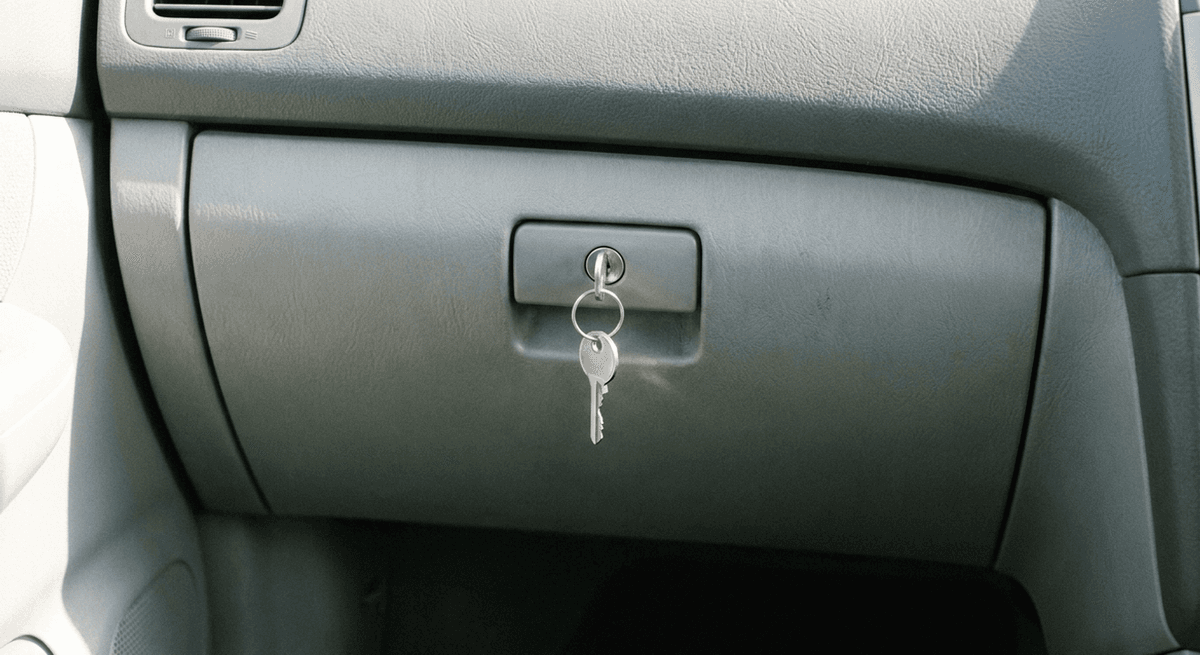
A common assumption in other states is that the glove compartment is a safe place for an open container, the way the trunk is. North Dakota's statute closes that off directly: the utility or glove compartment is expressly deemed to be within the occupied area the law covers, not exempt from it. Moving an open container into the glove box does not take it out of the banned zone.
The statute also puts a separate duty on the vehicle's owner (or the driver, if the owner isn't in the vehicle) not to keep or allow to be kept an open container in the vehicle, on top of the general possession ban.
Exemptions
The trunk carve-out qualifies the owner/driver keeping duty described above, not the whole section: the keeping duty does not reach a container kept in the trunk, or, in a vehicle with no trunk, in another area not normally occupied by the driver or passengers. Section 39-08-18 also exempts, more broadly:
- The living or sleeping quarters of a house car (motorhome), if that area is separated from the driving compartment by a solid partition, door, curtain, or some similar means of separation. Consumption still is not authorized in that area while the vehicle is in motion.
- A public conveyance commercially chartered for group use, a for-hire passenger riding for compensation, and an employee-driven vehicle transporting passengers at the employer's direction. In each of these, the operator of the vehicle is not authorized to possess or consume, even though the passengers may be exempt.
Penalty
A violation carries a flat $50 fee under Section 39-08-18(1). The violation is not recorded against a person's driving record unless that person was the driver of the vehicle at the time of the violation.
Multipassenger Bicycles
A parallel provision in subsection 3 covers the driver of a multipassenger bicycle, a pedal-powered vehicle carrying several riders. That driver may not drink alcoholic beverages, or have an open container on the driver's person, while operating the bicycle on any public street, road, path, or highway or in an area used principally for parking. Subsection 3 does not include the owner/driver keeping duty that applies to motor vehicles.
Federal Compliance
Federal law, 23 U.S.C. Section 154, conditions a share of a state's highway funding on an open container law that bans both possession and consumption, covers the whole passenger area, reaches every occupant, and is primarily enforced (23 CFR 1270.4). A state that falls short has 2.5 percent of certain federal highway apportionments reserved each October 1 and redirected to highway safety programs. North Dakota is not on FHWA's current FY2026 list of non-conforming states (Notice N4510.905, dated October 1, 2025).
Disclaimer: This article provides general information about open container law in North Dakota as of September 2026. It is not legal advice and does not create an attorney-client relationship. Verify the current statutory language before relying on a specific claim, and consult a lawyer licensed in North Dakota for advice about a specific situation.
Related reading: open container laws by state, North Dakota DUI laws, and North Dakota window tint laws.
Statutes cited reflect their in-force version as of 2026-09-16. Last updated: 2026-09-16.
Frequently Asked Questions
Does North Dakota's open container law apply in a parking lot?
Yes. Unlike many states, North Dakota's statute reaches an area used principally for public parking, not just the public highway, which can include a store or restaurant parking lot.
Is the glove compartment a safe place for an open container in North Dakota?
No. North Dakota's statute expressly deems the glove or utility compartment part of the occupied area the ban covers, so storing an open container there does not exempt it.
What is the fine for an open container violation in North Dakota?
A flat $50 fee under N.D.C.C. Section 39-08-18(1). It is not recorded against the driving record unless the person cited was the driver.
Does North Dakota's open container law apply to motorhomes?
The living or sleeping quarters of a house car are exempt if separated from the driving compartment by a solid partition, door, curtain, or some similar means of separation, though consumption is still not authorized there while the vehicle is moving.
Updates
Corrected the owner/driver duty wording, the house-car exemption, and the multipassenger bicycle rule to match the text of N.D.C.C. Section 39-08-18.
Independently fact-checked against the cited primary sources
The Law Behind This Article
This article rests on the statutory provisions below, held in our own legal record and retrieved from the official source. Tap a section to read the operative text.
North Dakota Century Code
§ 39-08-18Open container law - PenaltyIn force
A person may not drink or consume alcoholic beverages, as defined in section 5-01-01, in or on any motor vehicle when the vehicle is upon a public highway or in an area used principally for public parking. A person may not have in that person's possession on that person's person while in or on a private motor vehicle upon a public highway or in an area used principally for public parking, any bottle or receptacle containing alcoholic beverages which has been opened, or the seal broken, or the contents of which have been partially removed.
Official text (excerpt) · last checked 2026-09-24 · Read the full text in our law library · Verify at ndlegis.gov
Code of Federal Regulations Title 23
§ 1270.4Compliance criteria.In forcecited in 20 of our articles
(a) To avoid the reservation of funds specified in § 1270.6, a State must enact and enforce an open container law that prohibits the possession of any open alcoholic beverage container, and the consumption of any alcoholic beverage, in the passenger area of any motor vehicle (including possession or consumption by the driver of the vehicle) located on a public highway, or the right-of-way of a public highway, in the State. (b) The law must apply to: (1) The possession of any open alcoholic beverage container and the consumption of any alcoholic beverage; (2) The passenger area of any motor vehicle; (3) All alcoholic beverages; (4) All occupants of a motor vehicle; and (5) All motor vehicles located on a public highway or the right-of-way of a public highway. (c) The law must provide for primary enforcement. (d) Exceptions.
Official text (excerpt) · last checked 2026-07-28 · Read the full text in our law library · Verify at ecfr.gov
Also relied on in: Maine Open Container Law (2026): Statute and Exemptions, Open Container Laws by State (2026): Passengers, Exemptions, Penalties, Alaska Open Container Law (2026): A Driver-Only Driving Offense
United States Code Title 23
§ 154Open container requirementsIn forcecited in 46 of our articles
In this section, the following definitions apply: The term “alcoholic beverage” has the meaning given the term in section 158(c). The term “motor vehicle” means a vehicle driven or drawn by mechanical power and manufactured primarily for use on public highways, but does not include a vehicle operated exclusively on a rail or rails. The term “open alcoholic beverage container” means any bottle, can, or other receptacle— that contains any amount of alcoholic beverage; and that is open or has a broken seal; or the contents of which are partially removed. The term “passenger area” shall have the meaning given the term by the Secretary by regulation. For the purposes of this section, each State shall have in effect a law that prohibits the possession of any open alcoholic beverage container, or the consumption of any alcoholic beverage, in the passenger area of any motor vehicle (including possession or consumption by the driver of the vehicle) located on a public highway, or the right-of-way of a public highway, in the State.
Official text (excerpt) · last checked 2026-09-23 · Read the full text in our law library · Verify at uscode.house.gov
Cited in 20 court opinions in our collectionLatest citing opinion in our collection: 2004
Opinions citing this section in our collection:
- Foremost Insurance v. Richardson (Supreme Court of the United States 1982, 457 U.S. 668)“…er traffic, just as it has done for some land traffic. See 23 U. S. C. § 154 (55 m.p.h. speed limit). Yet no one su…”
- United States v. Kevin Bishop, United States of America v. Edward Stokes (Court of Appeals for the Third Circuit 1995, 66 F.3d 569)“…nder the Spending Clause, not the Commerce Clause. See 23 U.S.C. § 154 (Supp.1995) (conditioning receipt of f…”
- Mrs. Lizzie Beatrice Easterwood v. Csx Transportation, Inc. (Court of Appeals for the Eleventh Circuit 1991, 933 F.2d 1548)“…ce with the national highway speed limit. See 23 U.S.C.A. § 154 (1990). Easterwood argues that an auto…”
Identified automatically from the court opinions citing this section — not a ranking of which case controls.
Also relied on in: Alabama Open Container Law (2026): The $25 Fine and No-Points Rule, Arkansas Open Container Law (2026): Rules, Exemptions, and Penalty, California Open Container Law (2026): The Full Rule
Search our full record of US law — 2.1 million sections, every state + federal →
Sources and References
- N.D.C.C. Section 39-08-18 - Alcoholic beverages in motor vehicles(ndlegis.gov).gov
- 23 U.S.C. Section 154 - Open container requirements(law.cornell.edu)
- FHWA Notice N4510.905 - FY2026 Apportionment of Federal-Aid Highway Program Funds (open container non-conforming states list)(highways.dot.gov).gov
- N.D.C.C. Chapter 39-08 (includes Section 39-08-18, Open container law - Penalty)(ndlegis.gov)