
Maryland
Maryland Open Container Law (2026): Statute and Penalty
Independently fact-checked against primary sources (last audited September 17, 2026). · 6 primary sources cited on this page. How we verify our legal content
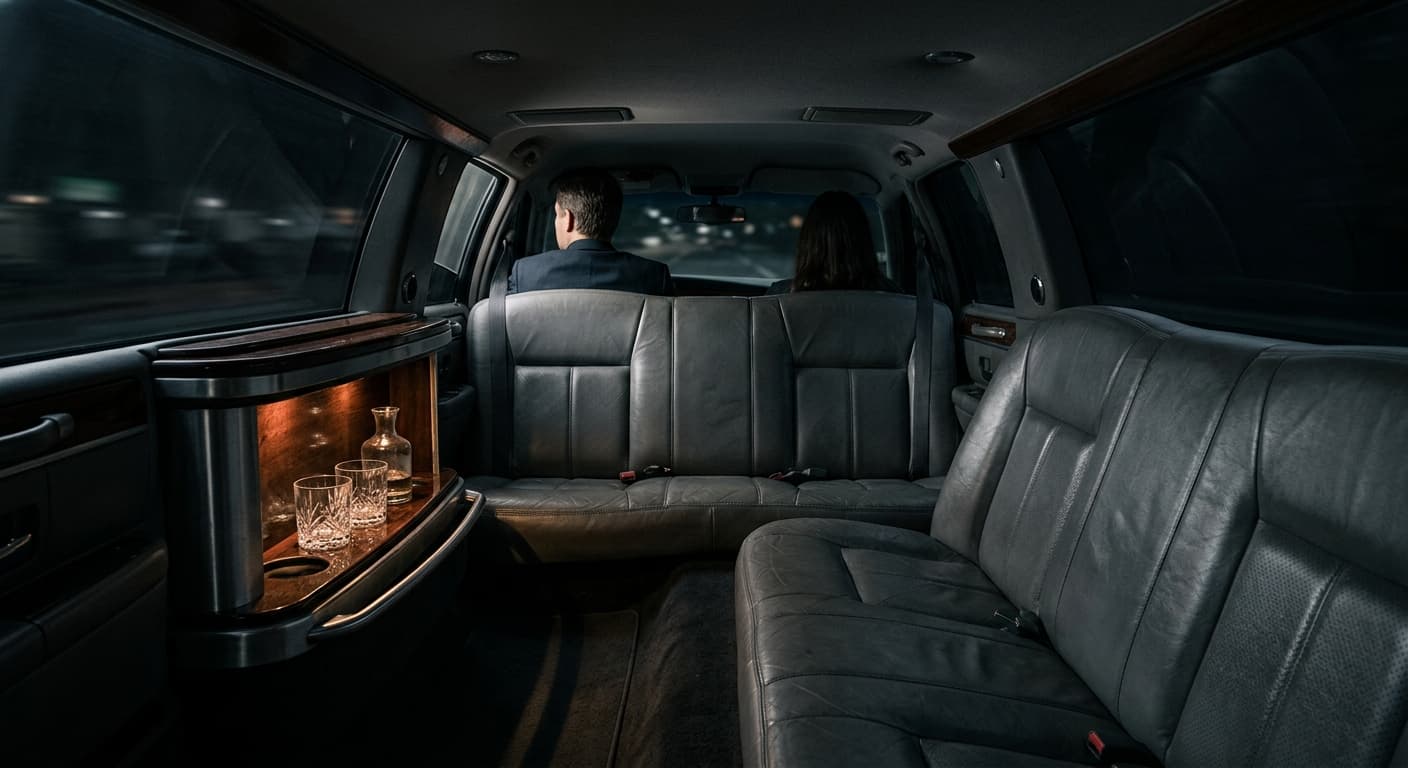
Maryland bans possessing an open alcoholic beverage container in the passenger area of a motor vehicle on a highway for every occupant, including the driver, and separately bans passengers, but not the driver, from drinking there, under Md. Code Ann., Criminal Law § 10-125; a driver's own drinking is banned outright by a parallel provision, Transportation Article § 21-903(c). As of September 2026, that citation was confirmed against Maryland's own official code site.
Jurisdiction scope: This article addresses Maryland's state open container law, covering driver and passenger possession and consumption, under Md. Code Ann., Criminal Law § 10-125. It does not address DUI charges. For Maryland's separate DUI penalties, see Maryland DUI laws.
What Maryland's Open Container Law Prohibits
Maryland's statute splits the ban across two adjoining subsections, and the two subsections do not reach the same people. Subsection (a) prohibits any occupant, including the driver, from possessing an open alcoholic beverage container in the passenger area of a motor vehicle on a highway. Subsection (b) is narrower: (b)(1) states, "This subsection does not apply to the driver of a motor vehicle," and (b)(2) then bans an occupant from consuming an alcoholic beverage in the passenger area. So the possession ban in (a) reaches every occupant, but the drinking ban in (b) reaches passengers only. That does not leave a driver's own drinking unaddressed: Transportation Article § 21-903(c) separately provides, "A driver of a motor vehicle may not consume an alcoholic beverage, or smoke or consume cannabis, in a passenger area of a motor vehicle on a highway," a direct ban that does not depend on proof of impairment and applies independently of Maryland's DUI/DWI statutes. The statute's own text also limits how the possession ban can be enforced against a driver: a driver cannot be prosecuted solely because another occupant, on their own, possessed a container.
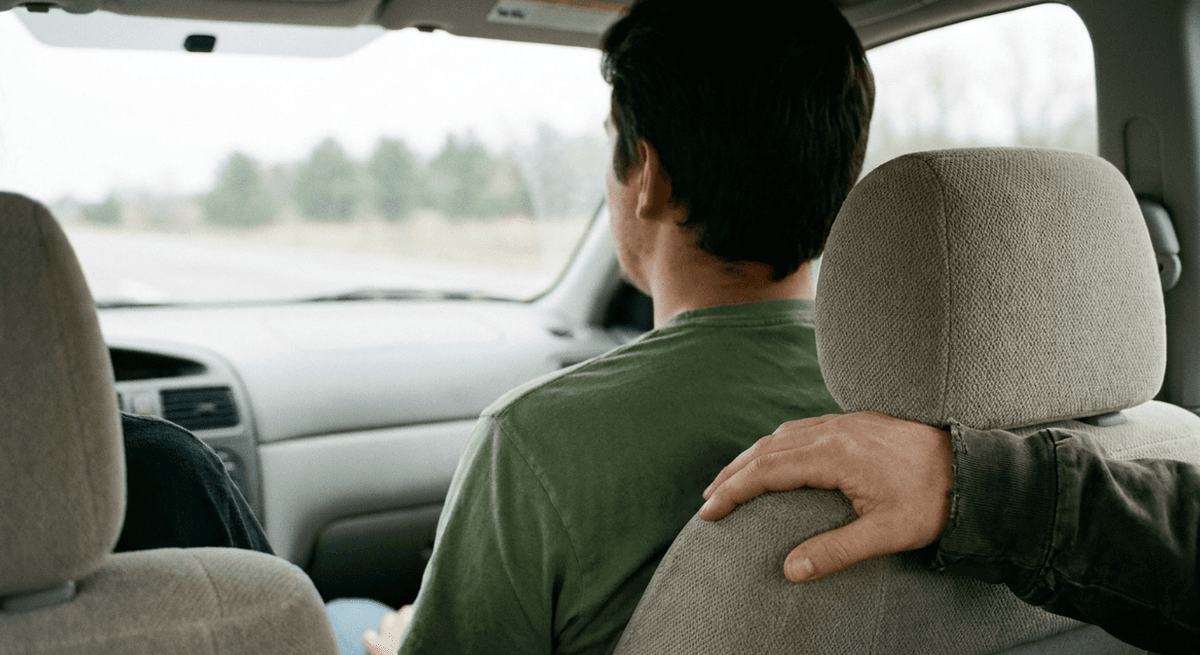
"Passenger area" is defined by cross-reference rather than spelled out in this section: Criminal Law § 10-123(k) states that "'Passenger area' has the meaning stated in Section 21-903 of the Transportation Article," and § 10-123(j) defines "open container" as a receptacle that is open, has a broken seal, or from which the contents are partially removed. Transportation Article § 21-903(a)(4) defines "passenger area" as an area designed to seat the driver or a passenger while the vehicle is in operation, or an area readily accessible to the driver or a passenger while in their seating positions, but it expressly excludes a locked glove compartment, the trunk of the vehicle, and, in a vehicle not equipped with a trunk, the area behind the rearmost upright seat or an area not normally occupied by the driver or a passenger. That means Maryland does recognize a locked-glove-compartment and trunk safe harbor: a container stored in one of those spots is outside the "passenger area" that the possession and drinking bans reach. Both bans apply to a motor vehicle that is driven, stopped, standing, or otherwise located on a highway, under Criminal Law § 10-124(a).
Exemptions
Maryland's statute exempts an occupant, who is not the driver, in two situations, under subsection (c):
- A motor vehicle designed, maintained, AND used primarily for compensated passenger transportation, such as a bus, taxicab, or limousine.
- The living quarters of a motor home, motor coach, or recreational vehicle.
The exemption's test is conjunctive: the vehicle must be designed, maintained, and used primarily for compensated transport, not merely one of the three. And the exemption itself never reaches the driver, only an occupant who is not the driver, so a limousine or taxi driver gets no benefit from it for their own possession or drinking.
Subsection (d) makes this an express statewide rule: "Notwithstanding Section 6-320, Section 6-321, or Section 6-322 of the Alcoholic Beverages and Cannabis Article, or any other provision of law, the prohibitions contained in this section apply throughout the State." Transportation Article § 21-903(d) carries the identical statewide-application clause.
Cannabis in the Passenger Area
Section 10-125(b)(3) separately bans smoking cannabis in the passenger area of a motor vehicle on a highway. Subsection (b)(1) states that "This subsection does not apply to the driver of a motor vehicle," and that carve-out applies to all of subsection (b), including (b)(3): in Maryland Code drafting the lettered level is the subsection and the numbered items are its paragraphs, confirmed within this same section, where (a)(1) refers to "subsection (c) of this section" and (c) refers to "Subsections (a)(1) and (b)(2)." So, like the alcohol drinking ban in (b)(2), the cannabis-smoking ban in (b)(3) reaches passengers only, not the driver. The (c) compensated-transport exemptions do not extend to (b)(3) either, since (c) by its own terms reaches only (a)(1) and (b)(2). A driver's own cannabis use in the passenger area is not left unaddressed, though: Transportation Article § 21-903(c) separately bans a driver from smoking or consuming cannabis there, alongside its parallel ban on a driver consuming alcohol.
Penalty
Subsection (e) of the statute excludes a violation from two other things: (e)(1) states it is not a moving violation for the purposes of Transportation Article § 16-402, and (e)(2) states it is not a traffic violation under Maryland's Vehicle Law. Criminal Law § 10-126(b) is what actually classifies the violation as a civil offense: adjudication "is not a criminal conviction for any purpose" and "does not impose any of the civil disabilities that may result from a criminal conviction." Criminal Law § 10-127 prescribes the form of the verdict, "guilty of a civil violation" or "not guilty of a civil violation." Under § 10-126, the case is tried in the District Court, and prepayment of the fine is allowed. Section 10-126(g) sets that fine: a person found to have committed a violation "is subject to a fine not exceeding $25," and § 10-126(h) adds $5 in court costs.
Federal Compliance
Federal law, 23 U.S.C. § 154, conditions a share of a state's highway funding on having an open container law that bans both possession and consumption, covers the whole passenger area, reaches every occupant, and is primarily enforced. States that fall short have 2.5 percent of certain federal highway apportionments reserved and redirected to highway safety programs, under FHWA's annual apportionment notice. Maryland is not on FHWA's list of non-conforming states for fiscal year 2026 (FHWA Notice N4510.905, dated October 1, 2025).
Disclaimer: This article provides general legal information about open container laws in the United States as of September 2026. It is not legal advice. Open container statutes, exemptions, and penalties change; verify the current text of your state's law before relying on it, and consult a lawyer licensed in your state for advice about a specific situation.
Related articles:
Statutes cited reflect their in-force version as of 2026-09-16. Last updated: 2026-09-16.
Frequently Asked Questions
Can a passenger drink alcohol in a car in Maryland?
No, but only the passenger is banned from drinking under Criminal Law § 10-125(b), not the driver. Md. Code Ann., Criminal Law § 10-125(b)(2) bans an occupant from drinking an alcoholic beverage in the passenger area of a vehicle on a highway, but (b)(1) states, "This subsection does not apply to the driver of a motor vehicle." That does not leave a driver's own drinking unaddressed: Transportation Article § 21-903(c) separately bans a driver from consuming an alcoholic beverage in a passenger area of a motor vehicle on a highway. Possessing an open container, by contrast, is banned for every occupant, including the driver, under (a).
Can a driver be charged in Maryland if only a passenger has an open container?
Not solely for that. The statute's own text prevents charging a driver based only on another occupant's own possession of an open container.
What is the fine for an open container violation in Maryland?
Up to $25, plus $5 in court costs. Criminal Law § 10-126(g) sets a fine not exceeding $25, and § 10-126(h) adds $5 in court costs. The statute labels a violation not a moving violation (Transportation Article § 16-402) and not a traffic violation under Maryland's Vehicle Law, and Criminal Law § 10-126(b) classifies it as a civil offense, adjudicated in the District Court, with prepayment allowed under § 10-126.
Does Maryland exempt taxis and limousines from its open container law?
Only for occupants who are not the driver. A vehicle designed, maintained, AND used primarily for compensated passenger transportation, such as a bus, taxicab, or limousine, is exempt for an occupant who is not the driver, along with the living quarters of a motor home, motor coach, or recreational vehicle; the exemption does not extend to the vehicle's driver.
Where can I legally store an open alcohol container in a car in Maryland?
In a locked glove compartment or the trunk. Transportation Article § 21-903(a)(4) defines "passenger area" to exclude a locked glove compartment and the trunk, and, in a vehicle with no trunk, the area behind the rearmost upright seat or an area not normally occupied by the driver or a passenger; a container stored in one of those spots is not in the passenger area the possession and drinking bans reach.
Updates
Corrected two statute attributions: the highway scope of the open container bans now cites Criminal Law § 10-124(a), and District Court trial and fine prepayment are now credited to § 10-126 instead of § 10-127.
Independently fact-checked against the cited primary sources
The Law Behind This Article
This article rests on the statutory provisions below, held in our own legal record and retrieved from the official source. Tap a section to read the operative text.
Maryland Code, Criminal Law Article
§ 10-125In forcecited in 2 of our articles
§10–125. (a) (1) Except as otherwise provided in subsection (c) of this section, an occupant of a motor vehicle may not possess an open container that contains any amount of an alcoholic beverage in a passenger area of a motor vehicle on a highway. (2) A driver of a motor vehicle may not be subject to prosecution for a violation of this subsection based solely on possession of an open container that contains any amount of an alcoholic beverage by another occupant of the motor vehicle. (b) (1) This subsection does not apply to the driver of a motor vehicle. (2) Except as otherwise provided in subsection (c) of this section, an occupant of a motor vehicle may not consume an alcoholic beverage in a passenger area of a motor vehicle on a highway. (3) An occupant of a motor vehicle may not smoke cannabis in a passenger area of a motor vehicle on a highway.
Official text (excerpt) · last checked 2026-09-23 · Read the full text in our law library · Verify at mgaleg.maryland.gov
Also relied on in: Open Container Laws by State (2026): Passengers, Exemptions, Penalties
§ 10-126In force
§10–126. (a) A police officer may issue a citation to a person who the police officer has probable cause to believe has committed a violation under this part. (b) (1) A violation under this part is a civil offense. (2) Adjudication of a violation under this part: (i) is not a criminal conviction for any purpose; and (ii) does not impose any of the civil disabilities that may result from a criminal conviction. (c) A citation issued under this part shall be signed by the police officer who issues the citation and shall contain: (1) the name and address of the person charged; (2) the statute allegedly violated; (3) the date, location, and time that the violation occurred; (4) the fine that may be imposed; (5) a notice stating that prepayment of the fine is allowed; and (6) a notice that states that the District Court shall promptly send the person a summons to appear for trial. (d) The form of the citation shall be uniform throughout the State and shall be prescribed by the District Court. (e) The Chief Judge of the District Court shall establish a schedule for the prepayment of a fine.
Official text (excerpt) · last checked 2026-07-29 · Read the full text in our law library · Verify at mgaleg.maryland.gov
§ 10-123In force
§10–123. (a) In this part the following words have the meanings indicated. (b) “Alcoholic beverage” has the meaning stated in § 21–903 of the Transportation Article. (c) “Bus” has the meaning stated in § 11–105 of the Transportation Article. (d) “Cannabis” has the meaning stated in § 5–101 of this article. (e) “Highway” has the meaning stated in § 11–127 of the Transportation Article. (f) “Limousine” has the meaning stated in § 11–129.1 of the Transportation Article. (g) “Motor home” has the meaning stated in § 11–134.3 of the Transportation Article. (h) (1) “Motor vehicle” means a vehicle that: (i) is self–propelled or propelled by electric power obtained from overhead electrical wires; and (ii) is not operated on rails. (2) “Motor vehicle” includes: (i) a low speed vehicle, as defined in § 11–130.1 of the Transportation Article; (ii) a moped, as defined in § 11–134.1 of the Transportation Article; and (iii) a motor scooter, as defined in § 11–134.5 of the Transportation Article. (i) “Moving violation” has the meaning stated in § 11–136.1 of the Transportation Article.
Official text (excerpt) · last checked 2026-07-29 · Read the full text in our law library · Verify at mgaleg.maryland.gov
§ 10-127In force
§10–127. (a) In a proceeding for a violation under this part: (1) the State has the burden to prove the guilt of the defendant to the same extent as is required by law in the trial of a criminal case; (2) the court shall apply the evidentiary standards as prescribed by law for the trial of a criminal case; (3) the court shall ensure that the defendant has received a copy of the charges against the defendant and that the defendant understands those charges; (4) the defendant is entitled to: (i) cross-examine each witness who appears against the defendant; (ii) produce evidence and witnesses on the defendant’s own behalf; (iii) testify on the defendant’s own behalf if the defendant chooses to do so; and (iv) be represented by counsel of the defendant’s own selection and expense; (5) the defendant may enter a plea of guilty or not guilty; (6) the verdict shall be: (i) guilty of a civil violation; or (ii) not guilty of a civil violation; and (7) before entering a judgment, a court may place the defendant on probation in the same manner and to the same extent as is permitted by law in a criminal case.
Official text (excerpt) · last checked 2026-07-29 · Read the full text in our law library · Verify at mgaleg.maryland.gov
§ 10-124In force
§10–124. (a) This part applies to a motor vehicle that is driven, stopped, standing, or otherwise located on a highway. (b) This part does not affect the provisions of § 21-903 of the Transportation Article.
Official text (excerpt) · last checked 2026-07-29 · Read the full text in our law library · Verify at mgaleg.maryland.gov
Maryland Code, Transportation Article
§ 21-903In forcecited in 2 of our articles
§21–903. (a) (1) In this section the following words have the meanings indicated. (2) “Alcoholic beverage” means a spirituous, vinous, malt, or fermented liquor, liquid, or compound that contains at least 0.5% alcohol by volume and is fit for beverage purposes. (3) “Cannabis” has the meaning stated in § 5–101 of the Criminal Law Article. (4) (i) “Passenger area” means an area that: 1. Is designed to seat the driver and any passenger of a motor vehicle while the motor vehicle is in operation; or 2. Is readily accessible to the driver or a passenger of a motor vehicle while in their seating positions. (ii) “Passenger area” does not include: 1. A locked glove compartment; 2. The trunk of a motor vehicle; or 3. If a motor vehicle is not equipped with a trunk, the area behind the rearmost upright seat or an area that is not normally occupied by the driver or a passenger of the motor vehicle. (b) This section applies to a motor vehicle that is driven, stopped, standing, or otherwise located on a highway. (c) A driver of a motor vehicle may not consume an alcoholic beverage, or smoke or consume cannabis, in a passenger area of a motor vehicle on a highway.
Official text (excerpt) · last checked 2026-07-29 · Read the full text in our law library · Verify at mgaleg.maryland.gov
United States Code Title 23
§ 154Open container requirementsIn forcecited in 46 of our articles
In this section, the following definitions apply: The term “alcoholic beverage” has the meaning given the term in section 158(c). The term “motor vehicle” means a vehicle driven or drawn by mechanical power and manufactured primarily for use on public highways, but does not include a vehicle operated exclusively on a rail or rails. The term “open alcoholic beverage container” means any bottle, can, or other receptacle— that contains any amount of alcoholic beverage; and that is open or has a broken seal; or the contents of which are partially removed. The term “passenger area” shall have the meaning given the term by the Secretary by regulation. For the purposes of this section, each State shall have in effect a law that prohibits the possession of any open alcoholic beverage container, or the consumption of any alcoholic beverage, in the passenger area of any motor vehicle (including possession or consumption by the driver of the vehicle) located on a public highway, or the right-of-way of a public highway, in the State.
Official text (excerpt) · last checked 2026-09-23 · Read the full text in our law library · Verify at uscode.house.gov
Cited in 20 court opinions in our collectionLatest citing opinion in our collection: 2004
Opinions citing this section in our collection:
- Foremost Insurance v. Richardson (Supreme Court of the United States 1982, 457 U.S. 668)“…er traffic, just as it has done for some land traffic. See 23 U. S. C. § 154 (55 m.p.h. speed limit). Yet no one su…”
- United States v. Kevin Bishop, United States of America v. Edward Stokes (Court of Appeals for the Third Circuit 1995, 66 F.3d 569)“…nder the Spending Clause, not the Commerce Clause. See 23 U.S.C. § 154 (Supp.1995) (conditioning receipt of f…”
- Mrs. Lizzie Beatrice Easterwood v. Csx Transportation, Inc. (Court of Appeals for the Eleventh Circuit 1991, 933 F.2d 1548)“…ce with the national highway speed limit. See 23 U.S.C.A. § 154 (1990). Easterwood argues that an auto…”
Identified automatically from the court opinions citing this section — not a ranking of which case controls.
Also relied on in: Maine Open Container Law (2026): Statute and Exemptions, Alabama Open Container Law (2026): The $25 Fine and No-Points Rule, Arkansas Open Container Law (2026): Rules, Exemptions, and Penalty
Search our full record of US law — 2.1 million sections, every state + federal →
Sources and References
- Md. Code Ann., Criminal Law § 10-125 - Alcoholic beverages in motor vehicles(mgaleg.maryland.gov).gov
- Md. Code Ann., Criminal Law § 10-123(j)-(k) - Definitions: "open container" and "passenger area" (cross-referencing Transportation Article § 21-903)(mgaleg.maryland.gov).gov
- Md. Code Ann., Criminal Law § 10-127 - Civil violation classification and District Court prosecution(mgaleg.maryland.gov).gov
- Md. Code Ann., Criminal Law § 10-126 - Civil offense classification (subsection (b)); fine not exceeding $25 (subsection (g)); $5 court costs (subsection (h))(mgaleg.maryland.gov).gov
- Md. Code Ann., Transportation Article § 21-903 - Driver's separate ban on consuming alcohol or smoking/consuming cannabis in the passenger area (subsection (c)); "passenger area" definition and locked-glove-compartment/trunk exclusion (subsection (a)(4)); applies to a vehicle driven, stopped, standing, or otherwise located on a highway (subsection (b)); statewide-application clause (subsection (d))(mgaleg.maryland.gov).gov
- 23 U.S.C. § 154(a) - Open container requirements(law.cornell.edu)
- FHWA Notice N4510.905 - FY2026 Apportionment of Federal-Aid Highway Program Funds (open container non-conforming states list)(highways.dot.gov).gov
- Md. Code Ann., Criminal Law § 10-124(a) - Scope: applies to a motor vehicle driven, stopped, standing, or otherwise located on a highway(mgaleg.maryland.gov)