
Kansas
Kansas Open Container Law (2026): Statute and Penalty
Independently fact-checked against primary sources (last audited September 17, 2026). · 3 primary sources cited on this page. How we verify our legal content
Kansas bans the driver and passengers from transporting any alcoholic beverage in a vehicle unless it fits one of the statute's enumerated safe-harbor forms, under K.S.A. § 8-1599. As of September 2026, the statute's exemption structure and penalty schedule were confirmed against the state's official revisor of statutes site.
Jurisdiction scope: This article addresses Kansas's state open container law, covering how K.S.A. § 8-1599 treats the driver and passengers of a vehicle on a public roadway. It does not address DUI charges or boating rules. For the full 50-state comparison, see the open container laws hub; for Kansas's separate DUI penalties, see Kansas DUI laws.
What Kansas's Open Container Law Prohibits
Kansas does not write K.S.A. § 8-1599 as a possession ban inside a defined "passenger area," the way many states do. Instead, that section prohibits transporting any alcoholic beverage in a vehicle unless the container falls into one of the statute's listed safe-harbor categories. In practice this reaches the same conduct as a passenger-area possession ban: an open, accessible container anywhere in the vehicle's occupant space is illegal to transport, and it applies to the driver and every passenger. Section 8-1599 itself does not include a separate clause banning the act of drinking while the vehicle is moving; its prohibition is built around unlawful transport of the container itself. But Kansas does separately ban drinking in a vehicle, in a different statute: K.S.A. § 41-719 states, "No alcoholic liquor may be consumed inside vehicles while on public streets, alleys, roads or highways at any time."
The Four Safe-Harbor Exemptions
A container is legal to transport in Kansas only if it fits one of these:
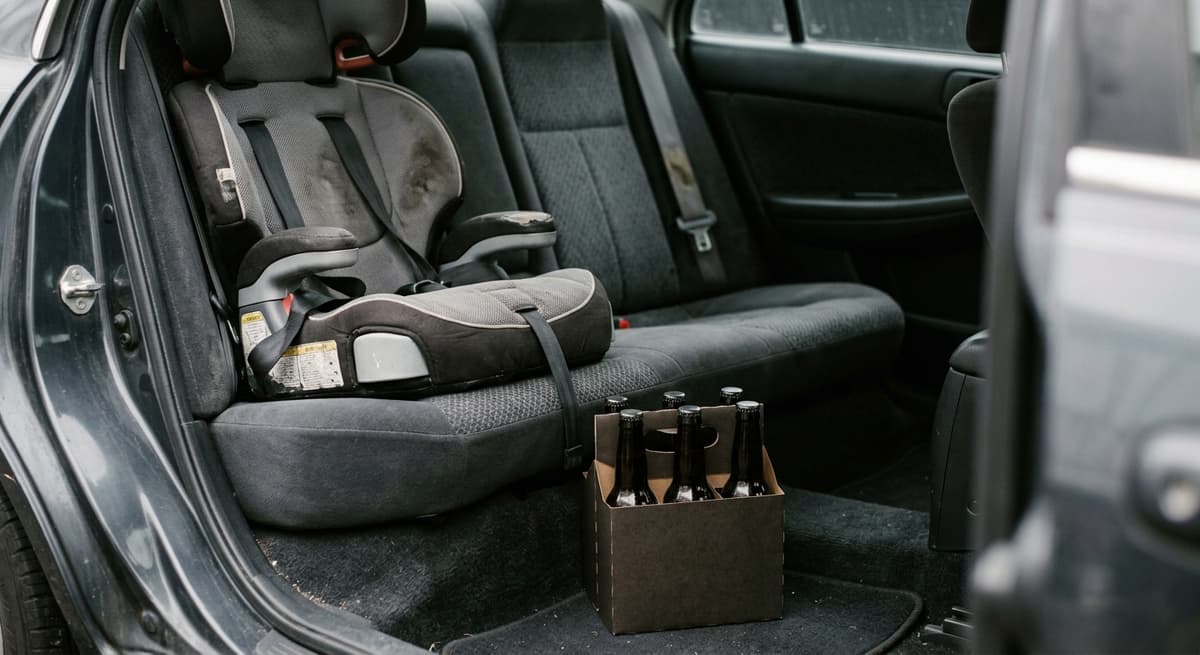
- The original unopened package, with its manufacturer's seal intact.
- A locked rear trunk or compartment, or a locked outside compartment that is not accessible while the vehicle is in motion.
- The area behind the last upright seat, or an area not normally occupied by the driver or passengers, in a vehicle that has no trunk.
- The exclusive possession of a passenger in a recreational vehicle or bus, provided that possession is not in the driving compartment or an area directly accessible from it.
Anything outside those four categories is an unlawful transport under the statute.
Local Ordinances
Kansas cities and counties may adopt their own ordinances or resolutions declaring the same acts unlawful. The statute is written as expressly supplemental to the state's uniform traffic act, and convictions under a local ordinance are reportable back to the state, so a local rule does not operate in isolation from the state record.
Penalty
A first violation of K.S.A. § 8-1599 is a misdemeanor. It carries a fine of up to $200, up to 6 months in jail, or both. The escalation matters here: on a second or subsequent violation, the judge must suspend the driver's license or privilege to operate a motor vehicle in Kansas for one year, in addition to any other penalty imposed; a restricted-license order in place of suspension is capped at one year for a second violation instead. Only convictions from the immediately preceding five years count in deciding whether a violation is a second or subsequent one. This is not a flat-fine offense once a driver has a qualifying prior conviction on record.
It is an affirmative defense to a prosecution under K.S.A. § 8-1599 that an occupant of the vehicle other than the defendant was in exclusive possession of the alcoholic liquor, meaning a driver charged over a passenger's open container has a statutory defense available if that passenger, not the driver, exclusively possessed it.
Federal Compliance
Federal law, 23 U.S.C. § 154, conditions a share of a state's highway funding on having an open container law that bans both possession and consumption, covers the whole passenger area, reaches every occupant, and is primarily enforced. A state that falls short has 2.5 percent of certain federal highway apportionments reserved and redirected to highway safety programs, under FHWA's annual apportionment notice. Kansas is not on FHWA's list of non-conforming states for fiscal year 2026 (FHWA Notice N4510.905, dated October 1, 2025).
Disclaimer: This article provides general legal information about open container laws in the United States as of September 2026. It is not legal advice. Open container statutes, exemptions, and penalties change; verify the current text of your state's law before relying on it, and consult a lawyer licensed in your state for advice about a specific situation.
Related articles:
Statutes cited reflect their in-force version as of 2026-09-16. Last updated: 2026-09-16.
Frequently Asked Questions
Can a passenger in Kansas hold an open beer that isn't in the driver's reach?
Only in limited circumstances. K.S.A. § 8-1599 bans transporting an open container anywhere in the vehicle unless it fits a listed safe-harbor form, such as a locked compartment or, in a recreational vehicle or bus, a passenger's exclusive possession away from the driving compartment. A passenger simply holding an open container in a regular car's cabin is not exempt.
Is a locked glove compartment a safe place for an open container in Kansas?
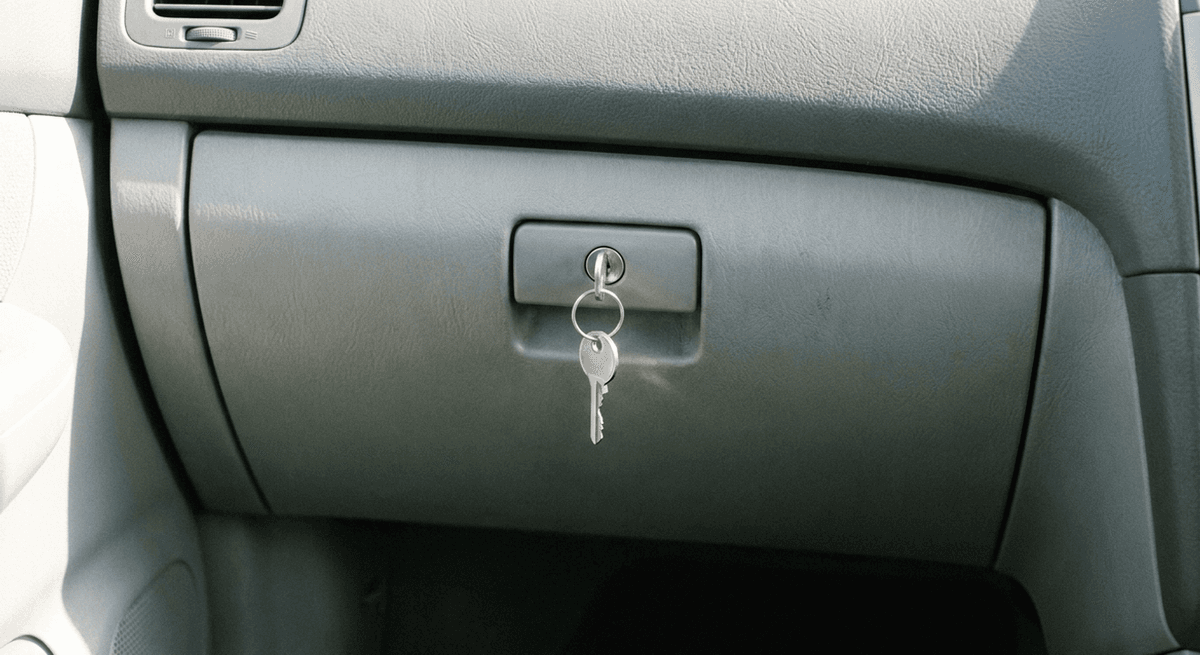
The statute's safe harbor is a locked trunk, a locked outside compartment, or (in a trunkless vehicle) the area behind the last seat; it does not list a locked glove compartment as its own category, so a driver should not assume the glove box qualifies.
What happens on a second open container violation in Kansas?
A first violation is a fine of up to $200, up to 6 months in jail, or both. On a second or subsequent violation, K.S.A. § 8-1599(d) requires the judge to suspend the driver's license for one year, although under K.S.A. § 8-1599(g) the judge may instead enter an order placing conditions on the driving privilege, lasting no more than one year for a second violation; only convictions from the preceding five years count toward making a violation a second or subsequent one.
Can a Kansas city have its own open container ordinance?
Yes. Kansas cities and counties may adopt ordinances declaring the same acts unlawful, and the statute is written as supplemental to the state's uniform traffic act, with local convictions reportable to the state.
Updates
Clarified in the FAQ that on a second Kansas open container violation a judge may impose driving conditions of up to one year in place of the mandatory license suspension, under K.S.A. 8-1599(g).
Independently fact-checked against the cited primary sources
The Law Behind This Article
This article rests on the statutory provisions below, held in our own legal record and retrieved from the official source. Tap a section to read the operative text.
Kansas Statutes Annotated, Chapter 8: AUTOMOBILES AND OTHER VEHICLES
§ 8-1599Transportation of liquor in opened containers unlawful; exceptions; penalty; report of prior convictions; city or county not prohibited from enacting comparable ordinance or resolution, requirements.In forcecited in 2 of our articles
(a) As used in this section, "alcoholic beverage" means any alcoholic liquor, as defined by K.S.A. 41-102, and amendments thereto, or any cereal malt beverage, as defined by K.S.A. 41-2701, and amendments thereto. (b) No person shall transport in any vehicle upon a highway or street any alcoholic beverage unless such beverage is: (1) In the original unopened package or container, the seal of which has not been broken and from which the original cap, cork or other means of closure has not been removed; (2) (A) in the locked rear trunk or rear compartment, or any locked outside compartment which is not accessible to any person in the vehicle while it is in motion; or (B) if a motor vehicle is not equipped with a trunk, behind the last upright seat or in an area not normally occupied by the driver or a passenger; or (3) in the exclusive possession of a passenger in a vehicle which is a recreational vehicle, as defined by K.S.A. 75-1212, and amendments thereto, or a bus, as defined by K.S.A. 8-1406, and amendments thereto, who is not in the driving compartment of such vehicle or who is in a portion of such vehicle from which the driver is not directly accessible.
Official text (excerpt) · last checked 2026-09-23 · Read the full text in our law library · Verify at ksrevisor.gov
Also relied on in: Open Container Laws by State (2026): Passengers, Exemptions, Penalties
Kansas Statutes Annotated, Chapter 41: INTOXICATING LIQUORS AND BEVERAGES
§ 41-719Consumption of alcoholic liquor prohibited in certain places; exemptions.In force
(a) (1) Except as otherwise provided herein and in K.S.A. 8-1599, and amendments thereto, no person shall drink or consume alcoholic liquor on the public streets, alleys, roads or highways or inside vehicles while on the public streets, alleys, roads or highways. (2) Alcoholic liquor may be consumed on public streets, alleys, roads, sidewalks or highways when: (A) A temporary permit has been issued pursuant to K.S.A. 41-1201 or 41-2703, and amendments thereto, for such an event; (B) a caterer's licensee has provided the required notification for a catered event pursuant to K.S.A. 41-2643, and amendments thereto; or (C) a public venue, hotel, hotel caterer, drinking establishment caterer or drinking establishment licensee has been authorized to extend its licensed premises pursuant to K.S.A. 41-2608, and amendments thereto. (3) Consumption of alcoholic liquor on public streets, alleys, roads, sidewalks or highways must be approved, by ordinance or resolution, by the local governing body of any city, county or township where such consumption will occur. No alcoholic liquor may be consumed inside vehicles while on public streets, alleys, roads or highways at any time.
Official text (excerpt) · last checked 2026-07-29 · Read the full text in our law library · Verify at ksrevisor.gov
Cited in 8 court opinions in our collectionLatest citing opinion in our collection: 2007
Opinions citing this section in our collection:
- Attorney General Opinion No. (Kansas Attorney General Reports 2001)“…the exceptions listed in subsections (c)(1) through (11) of K.S.A. 41-719 . Therefore, consumption of alcoholic l…”
- Tri-State Hotel Co. v. Londerholm (Supreme Court of Kansas 1965, 195 Kan. 748)“…iquor” in “places to which the general public has access.” (K. S. A. 41-719.) It is common knowledge that in the ye…”
- Meyers v. Grubaugh (Supreme Court of Kansas 1988, 242 Kan. 716)“…become intoxicated while under its control in violation of K.S.A. 41-719, K.S.A. 75-2949f(m) and (p), and…”
Identified automatically from the court opinions citing this section — not a ranking of which case controls.
United States Code Title 23
§ 154Open container requirementsIn forcecited in 46 of our articles
In this section, the following definitions apply: The term “alcoholic beverage” has the meaning given the term in section 158(c). The term “motor vehicle” means a vehicle driven or drawn by mechanical power and manufactured primarily for use on public highways, but does not include a vehicle operated exclusively on a rail or rails. The term “open alcoholic beverage container” means any bottle, can, or other receptacle— that contains any amount of alcoholic beverage; and that is open or has a broken seal; or the contents of which are partially removed. The term “passenger area” shall have the meaning given the term by the Secretary by regulation. For the purposes of this section, each State shall have in effect a law that prohibits the possession of any open alcoholic beverage container, or the consumption of any alcoholic beverage, in the passenger area of any motor vehicle (including possession or consumption by the driver of the vehicle) located on a public highway, or the right-of-way of a public highway, in the State.
Official text (excerpt) · last checked 2026-09-23 · Read the full text in our law library · Verify at uscode.house.gov
Cited in 20 court opinions in our collectionLatest citing opinion in our collection: 2004
Opinions citing this section in our collection:
- Foremost Insurance v. Richardson (Supreme Court of the United States 1982, 457 U.S. 668)“…er traffic, just as it has done for some land traffic. See 23 U. S. C. § 154 (55 m.p.h. speed limit). Yet no one su…”
- United States v. Kevin Bishop, United States of America v. Edward Stokes (Court of Appeals for the Third Circuit 1995, 66 F.3d 569)“…nder the Spending Clause, not the Commerce Clause. See 23 U.S.C. § 154 (Supp.1995) (conditioning receipt of f…”
- Mrs. Lizzie Beatrice Easterwood v. Csx Transportation, Inc. (Court of Appeals for the Eleventh Circuit 1991, 933 F.2d 1548)“…ce with the national highway speed limit. See 23 U.S.C.A. § 154 (1990). Easterwood argues that an auto…”
Identified automatically from the court opinions citing this section — not a ranking of which case controls.
Also relied on in: Maine Open Container Law (2026): Statute and Exemptions, Alabama Open Container Law (2026): The $25 Fine and No-Points Rule, Arkansas Open Container Law (2026): Rules, Exemptions, and Penalty
Search our full record of US law — 2.1 million sections, every state + federal →
Sources and References
- K.S.A. § 8-1599 - Transportation of liquor in opened containers unlawful; exceptions; penalty; report of prior convictions; city or county not prohibited from enacting comparable ordinance or resolution, requirements(ksrevisor.gov).gov
- K.S.A. § 41-719 - Consumption of alcoholic liquor inside vehicles on public streets, alleys, roads or highways prohibited(ksrevisor.gov).gov
- 23 U.S.C. § 154(a) - Open container requirements(law.cornell.edu)
- FHWA Notice N4510.905 - FY2026 Apportionment of Federal-Aid Highway Program Funds (open container non-conforming states list)(highways.dot.gov).gov