
Florida
Florida Nursing Home Camera Laws (2026): No Statute, Bill Pending
Independently fact-checked against primary sources (last audited August 14, 2026). · 5 primary sources cited on this page. How we verify our legal content
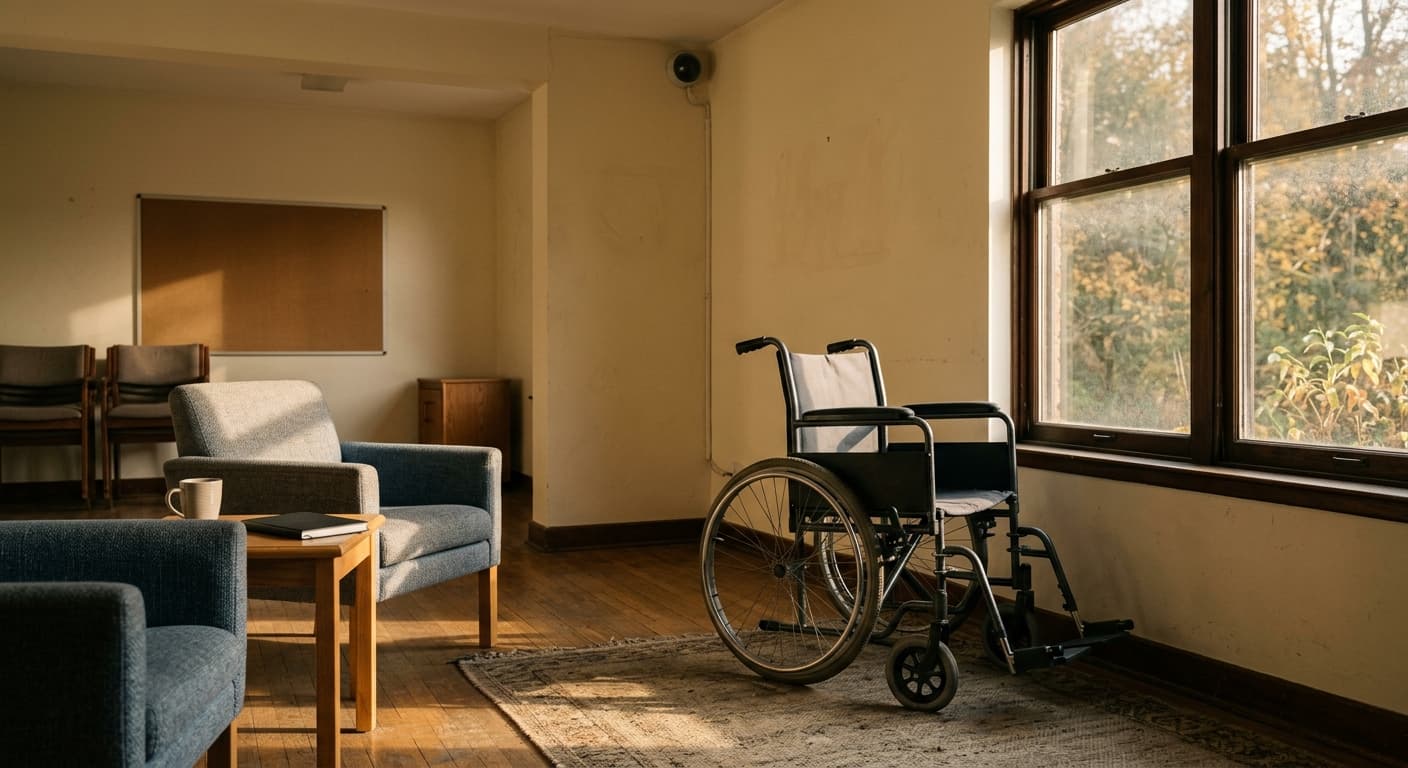
Florida has no law giving a nursing home resident or family a right to install a monitoring camera. A bill that would create one, HB 651, died in its first committee stop in March 2026, the second consecutive year a version of this bill has failed.
Information last verified on 2026-08-14. This article has not yet been reviewed by a licensed lawyer.
This article covers Florida law as it stands today for a nursing home resident or family considering a monitoring camera: the absence of a facility-specific statute, the general recording-consent law that fills the gap, the pending bill and its real status, and the practical and evidentiary questions that follow. It does not address recording law outside a licensed nursing facility; see Florida Recording Laws for the state’s general audio and video recording rules.
Does Florida Have a Nursing Home Camera Law?
No. Florida Statutes Chapter 400, Part II, which governs nursing homes, and Florida Administrative Code Chapter 59A-4, the state’s nursing home licensure rules, contain no section addressing cameras, video surveillance, or electronic monitoring devices in a resident’s room. Fla. Stat. section 400.022, the nursing home residents’ bill of rights, guarantees a resident privacy in personal care and the right to close a door and have staff knock before entering, but it says nothing about a resident’s own recording equipment.
That silence means a Florida nursing home resident or family who wants to install a camera has no statutory procedure to follow, no state-mandated consent form, and no state-imposed anti-retaliation fine if a facility objects. The decision runs entirely on the facility’s own admission agreement and internal policy, layered on top of Florida’s general recording-consent law described below.
Florida's All-Party Consent Law and Why It Matters for Audio
A camera in a nursing home room raises two separate legal questions: whether video alone is a problem, and whether an attached microphone is. Florida answers those questions very differently.

Florida Statute section 934.03(2)(d) makes it lawful to intercept a wire, oral, or electronic communication only when all parties to the communication have given prior consent. There is no general private-citizen exception for recording someone else’s conversation on the theory that only one party consented. Violating the statute is a third-degree felony under section 934.03(4)(a).
That prohibition has a built-in limit worth understanding before assuming every recorded word is a crime. Fla. Stat. section 934.02(2) defines an oral communication as one uttered by a person exhibiting an expectation that the communication is not subject to interception, under circumstances justifying that expectation. Speech carrying no justifiable expectation of privacy, such as staff talking openly in a corridor or a common day room, is not an oral communication at all, and capturing it is not a section 934.03 violation. A resident’s own room is the opposite case: conversations there are exactly where the expectation is strongest, so treat audio inside the room as covered.
A stationary video-only camera that records no sound does not intercept a communication, so it generally falls outside the wiretap statute’s reach. The exposure appears when the device also records audio: a roommate’s phone call, a conversation between staff members, or a visit from another resident’s family, none of whom consented to being recorded. That is precisely why the 2026 version of Florida’s pending bill, HB 651, dropped the audio-recording option the 2025 bill had allowed and now defines an authorized device as video-only. For the general framework governing recorded conversations anywhere in Florida, not just a care facility, see Florida Recording Laws.
The Pending Bill: HB 651 and Its 2025 Predecessor
Florida lawmakers have tried twice to create a nursing home camera right, and both attempts have failed.
2025: SB 64 and HB 223. Sen. Ileana Garcia’s SB 64 and its House companion, HB 223, would have created Fla. Stat. sections 400.025 (nursing homes) and 429.265 (assisted living facilities). Both bills died in committee on June 16, 2025. The 2025 text would have let a resident authorize a device combining video and audio, required roommate consent with the ability to place conditions on it, made the resident responsible for the device’s cost, and fined a facility 500 dollars per violation for retaliating against a resident who installed one. Notice signage at the resident’s door was permissive under this version, something a facility "may" post rather than a mandatory requirement.
2026: HB 651. Rep. Plasencia’s re-file, HB 651, died in its first committee stop on March 13, 2026, without ever reaching a committee vote, and no Senate companion was filed for the 2026 session. The bill differs from its 2025 predecessor in several important ways: it drops audio recording entirely, defining an authorized device as a "fixed-position, non-rotatable video camera" that "may not broadcast or record audio;" it requires the resident or representative to notify the facility in writing on a state-adopted form, rather than the optional consent form the 2025 bill used; it adds a new ban on publishing recorded footage on the internet in a way the public can access; and it makes the roommate’s right to revoke consent explicit and written. The 500-dollar-per-violation anti-retaliation fine and the first-degree-misdemeanor tampering penalty carried over unchanged from 2025, and both nursing homes and assisted living facilities remain covered.
Because this is the second consecutive year a version of the bill has died, and because it keeps being re-filed with modifications rather than abandoned, families should treat this as an active, recurring legislative effort rather than a closed issue. Neither the 2025 nor the 2026 version is current law; nothing in either bill can be relied on as an existing right.
Practical Guidance Under the No-Statute Reality
Until Florida enacts a monitoring statute, whether a resident can install a camera depends on the facility, not the state. Some practical steps that apply regardless of what a future bill might require:
- Read the admission agreement and facility policy first. Many Florida facilities already have written camera policies, sometimes permissive and sometimes prohibitive, and the agreement governs in the absence of a statute.
- Ask the facility in writing before installing anything. A written record of the request and the facility’s response protects both sides and mirrors what the pending bill would eventually require anyway.
- Keep it video-only unless every person the camera could record has consented to audio. This is the single highest-risk area under current Florida law, given the felony exposure described above.
- Get a roommate’s consent in a shared room, even though no statute currently requires it. A roommate’s own privacy interest in a shared room is real and unresolved by any Florida law right now.
Hidden Cameras: The Practical and Legal Risk
Some families consider a hidden or covert camera when a facility has refused a request or when they suspect abuse is already occurring. This carries real risk that a statute like the pending bill is partly designed to remove.

A hidden camera that only records video, placed in a resident’s own room, is less legally fraught than one with audio, for the reasons above. But a facility that discovers an undisclosed camera can treat it as a violation of the admission agreement, and some facilities have responded to discovered hidden cameras with discharge or non-renewal, which carries no statutory anti-retaliation protection in Florida today the way it would under HB 651 if enacted. A hidden camera with audio that captures a staff member’s or another resident’s conversation without their consent risks the felony exposure under section 934.03 described above, regardless of the family’s motive. Families weighing a hidden camera should understand both risks before installing one, not just the risk of being caught.
Using Camera Footage as Evidence of Abuse or Neglect
Camera footage, whether from an open or hidden installation, can support a report to the Florida Long-Term Care Ombudsman Program or a complaint to the Agency for Health Care Administration, and it can support a civil claim for nursing home abuse or neglect. Footage alone typically does not establish a claim on its own; it is usually reviewed alongside medical records, staffing records, and the resident’s care plan. For a broader look at how a nursing home abuse or neglect claim works, see Nursing Home Abuse & Neglect.
Harmed by a product or exposure? Speak with an attorney about your options
If you or a loved one may have been harmed, you can speak with an attorney about your legal options at no cost. Whether you have a claim depends on the specific facts. This is attorney advertising, not a guarantee that you qualify or of any particular outcome.
The Florida Long-Term Care Ombudsman Program
The Florida Long-Term Care Ombudsman Program, operated by the Florida Department of Elder Affairs through 14 district offices, is the state’s established channel for residents and families of nursing homes, assisted living facilities, and other long-term care settings to raise concerns about care, including anything a camera might reveal. The program can be reached statewide at 1-888-831-0404.

Related Resources
- Nursing Home Camera Laws by State covers which states have an enacted electronic monitoring statute and how Florida compares.
- Florida Recording Laws covers the state’s general all-party consent framework for audio and video recording outside a nursing facility.
- Nursing Home Abuse & Neglect covers how an abuse or neglect claim works once evidence, including camera footage, is in hand.
Last updated: 2026-08-14.
Frequently Asked Questions
Is it legal to put a camera in a Florida nursing home room?
Florida has no statute addressing this directly. No law forbids a family from installing a camera in a resident’s own room, but no law creates a right to do so either, so it depends entirely on the facility’s own policy and admission agreement.
Did Florida pass a nursing home camera law in 2026?
No. HB 651, the 2026 bill that would have created a right to install a monitoring device, died in its first committee stop on March 13, 2026, without a committee vote and without a Senate companion bill.
Can I record audio in a Florida nursing home room?
This is the highest-risk area under current law. Florida is an all-party consent state under Fla. Stat. section 934.03, so recording a conversation without every participant’s consent is a third-degree felony where the speakers had a justifiable expectation of not being intercepted, which Fla. Stat. section 934.02(2) makes part of the definition of an oral communication. A resident’s room is where that expectation is strongest, so assume audio there is covered. A video-only camera does not carry this risk; adding a microphone does.
What would HB 651 have done if it passed?
HB 651 would have let a resident or representative install a video-only monitoring camera in their own room, required roommate consent for shared rooms, required written notice to the facility on a state-adopted form, barred publishing footage publicly online, fined a facility 500 dollars per act of retaliation, and made tampering with the device a first-degree misdemeanor.
Why did the 2026 bill remove the audio-recording option that the 2025 bill allowed?
The 2026 version, HB 651, defines an authorized device as video-only and expressly bars it from recording audio, a narrowing from the 2025 bill (SB 64), most likely because audio recording without every party’s consent risks a felony under Florida’s all-party consent wiretap statute.
Where do I report suspected abuse if I see something on a camera?
Contact the Florida Long-Term Care Ombudsman Program at 1-888-831-0404, or the Agency for Health Care Administration. Footage can support a report or a civil claim, though it is generally reviewed alongside the resident’s medical and care records rather than relied on alone.
Updates
Clarified that Florida’s all-party consent felony applies to conversations the speakers justifiably expected would not be intercepted, the element Fla. Stat. 934.02(2) builds into the definition of an oral communication.
Independently fact-checked against the cited primary sources
The Law Behind This Article
This article rests on the statutory provisions below, held in our own legal record and retrieved from the official source. Tap a section to read the operative text.
Florida Statutes
§ 934.03Interception and disclosure of wire, oral, or electronic communications prohibited.In forcecited in 51 of our articles
(1) Except as otherwise specifically provided in this chapter, any person who:(a) Intentionally intercepts, endeavors to intercept, or procures any other person to intercept or endeavor to intercept any wire, oral, or electronic communication; (b) Intentionally uses, endeavors to use, or procures any other person to use or endeavor to use any electronic, mechanical, or other device to intercept any oral communication when:1. Such device is affixed to, or otherwise transmits a signal through, a wire, cable, or other like connection used in wire communication; or 2.
Official text (excerpt) · last checked 2026-08-31 · Read the full text in our law library · Verify at leg.state.fl.us
Cited in 74 court opinions in our collectionLatest citing opinion in our collection: 2026
In the courts (editorial summary, independently checked):State v. Walls (1978) held that recording an in-home oral communication without the consent of all parties violated section 934.03 and required suppression, and State v. Inciarrano (1985) held the statute protects only communications uttered with a reasonable expectation of privacy.
Opinions citing this section in our collection:
- State v. Walls (Supreme Court of Florida 1978, 356 So. 2d 294)✓An extortion victim secretly recorded threats made to him in his own home; the court held that was a protected oral communication, that recording it without every party's consent violated Section 934.03, and that Section 934.06 barred using the tape as evidence.
- SHARRON TASHA FORD v. CITY OF BOYNTON BEACH (District Court of Appeal of Florida 2021)“…ng oral communications in violation of the wiretap statute, section 934.03, Florida Statutes (2009), and for obstructing without vio…”
- State v. Calhoun (Circuit Court for the Judicial Circuits of Florida 1984, 7 Fla. Supp. 2d 3)“…hall not be violated” . . . (emphasis mine) Furthermore, section 934.03, Florida Statutes, makes it unlawful for *6 any person (…”
Identified automatically from the court opinions citing this section — not a ranking of which case controls.
Also relied on in: Florida Recording Laws (2026): All-Party Consent Rules, Florida Dashcam Laws: Rules for Dashboard Cameras (2026), Can an Employer Record Conversations Without Consent? (2026)
§ 400.022Residents’ rights.In force
(1) All licensees of nursing home facilities shall adopt and make public a statement of the rights and responsibilities of the residents of such facilities and shall treat such residents in accordance with the provisions of that statement. The statement shall assure each resident the following:(a) The right to civil and religious liberties, including knowledge of available choices and the right to independent personal decision, which will not be infringed upon, and the right to encouragement and assistance from the staff of the facility in the fullest possible exercise of these rights. (b) The right to private and uncensored communication, including, but not limited to, receiving and sending unopened correspondence, access to a telephone, visiting with any person of the resident’s choice during visiting hours, and overnight visitation outside the facility with family and friends in accordance with facility policies, physician orders, and Title XVIII (Medicare) and Title XIX (Medicaid) of the Social Security Act regulations, without the resident’s losing his or her bed.
Official text (excerpt) · last checked 2026-07-28 · Read the full text in our law library · Verify at leg.state.fl.us
Cited in 35 court opinions in our collectionLatest citing opinion in our collection: 2013
Opinions citing this section in our collection:
- Gainesville Health Care Center, Inc. v. Weston (District Court of Appeal of Florida 2003, 857 So. 2d 278)“…claims based on negligence, wrongful death and violation of section 400.022, Florida Statutes (sometimes referred to as the nursing h…”
- Knowles v. Beverly Enterprises-Florida (Supreme Court of Florida 2004, 898 So. 2d 1)“…ontradictory: Any resident whose rights as specified in [ Fla. Stat. § 400.022 ] are deprived or infringed upon shall…”
- Blankfeld v. Richmond Health Care, Inc. (District Court of Appeal of Florida 2005, 902 So. 2d 296)“…ing that Sunrise had violated Riva's statutory rights under section 400.022, Florida Statutes (2001). In a separate count, it was all…”
Identified automatically from the court opinions citing this section — not a ranking of which case controls.
Search our full record of US law — 2.1 million sections, every state + federal →
Sources and References
- Fla. Stat. § 934.03, interception and disclosure of wire, oral, or electronic communications(leg.state.fl.us).gov
- Fla. Stat. § 400.022, nursing home residents’ rights(leg.state.fl.us).gov
- Florida HB 651 (2026), Electronic Monitoring Devices in Long-term Care Facilities, official bill status(flsenate.gov).gov
- Florida SB 64 (2025), Electronic Monitoring Devices in Long-term Care Facilities, official bill status(flsenate.gov).gov
- Florida Long-Term Care Ombudsman Program, Department of Elder Affairs(elderaffairs.org).gov
- Fla. Stat. § 934.02, definitions, including "oral communication" and its expectation-of-privacy element(leg.state.fl.us)