
Arkansas
Arkansas Nursing Home Camera Laws: SB616 and What Applies Today
Independently fact-checked against primary sources (last audited August 14, 2026). · 3 primary sources cited on this page. How we verify our legal content
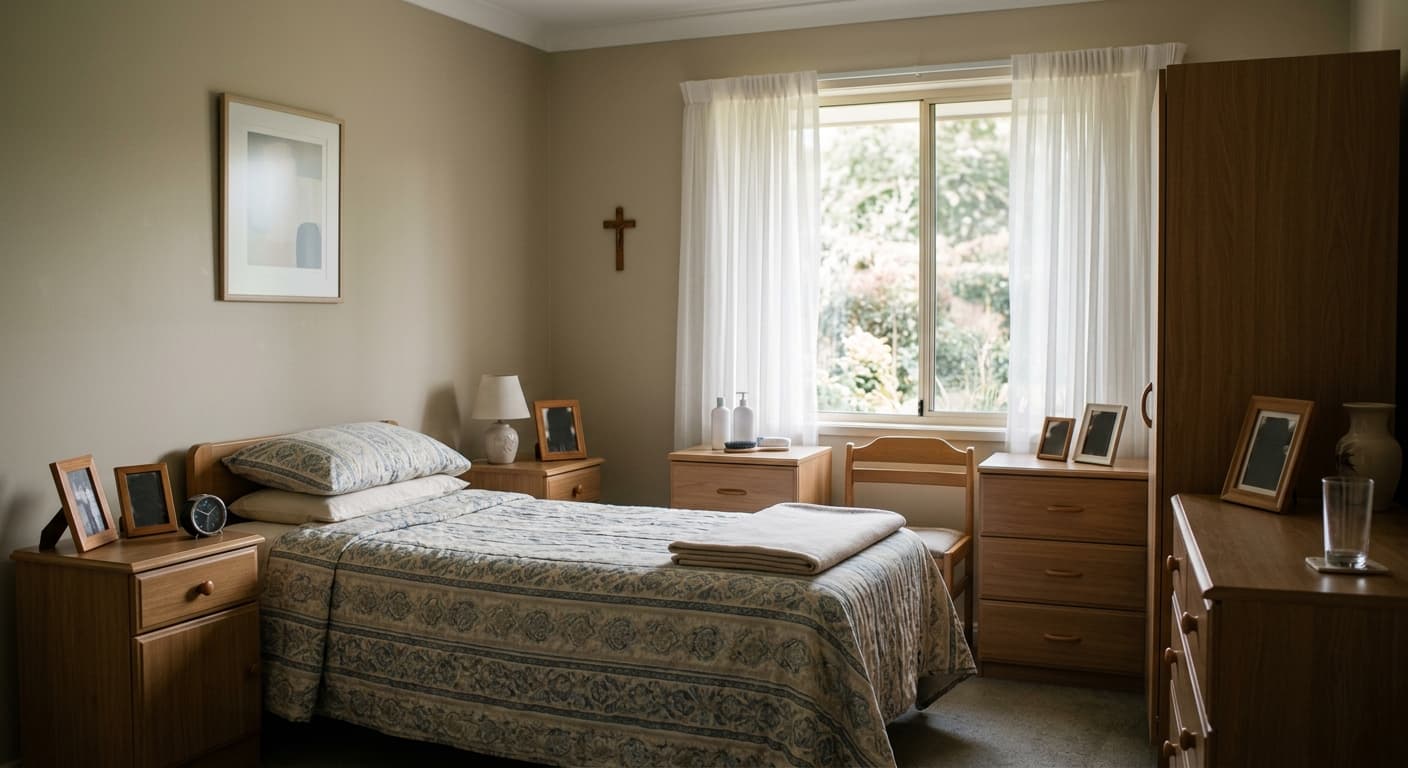
Arkansas has no statute or regulation giving nursing home residents or families a right to install a camera in a resident's room. A 2025 bill that would have created one, SB616, died without a floor vote. Two general Arkansas statutes do still govern what a camera in that room may capture. This page covers what current Arkansas law does and does not say, the bill's history, and the practical and legal risks of installing a camera anyway.
This page is part of our Nursing Home Camera Laws hub, which compares all 50 states, and our national Nursing Home Camera Laws guide covering the states that do have an enacted statute.
Arkansas Has No Statute Granting a Right to a Nursing Home Camera
Arkansas has not enacted a "granny cam" law of the kind roughly 17 other states have passed. There is no Arkansas Code section that grants a resident or their legal representative a right to install a camera or audio recorder in a nursing home room, sets conditions like roommate consent or notice, or bars a facility from retaliating against a resident who wants one installed. The Arkansas Department of Human Services' Office of Long Term Care administers the state's nursing home licensing rules, and a full review of those rules, including the Residents' Rights chapter, found no provision addressing monitoring devices, cameras, or recording equipment of any kind. Whether a resident can have a camera in their room in Arkansas today depends entirely on the individual facility's own admission agreement and internal policy, not on any statewide legal right.
The absence of a camera statute is not the same as an absence of law. Two general Arkansas statutes, one written specifically about photographing long-term care residents and one about secret video, apply to what a camera in that room records. Both are covered below.
SB616: The Bill That Would Have Created a Right, and Why It Failed
The Arkansas Long-Term Care Facility Resident Monitoring and Communications Act, Senate Bill 616, was introduced in the Arkansas Senate on April 3, 2025, by Sen. C. Penzo. It was read and referred to the Senate Public Health, Welfare and Labor Committee the same day. According to the bill's official summary and legislative tracking, it would have established resident rights around electronic monitoring and communication in long-term care facilities, generally allowing a resident or their legal representative to install a camera or audio device in the resident's own room, and delegating consent procedures for residents lacking capacity, device standards, and the broader privacy and liability framework to Arkansas DHS rulemaking rather than spelling those details out in the statute itself.

SB616 never reached a floor vote. On April 16, 2025, the Senate committee withdrew it from committee, placed it on the calendar, and then recommended it for interim study, a procedural move that effectively parks a bill for further review rather than rejecting it outright. The 2025 Regular Session adjourned sine die on May 5, 2025, and the bill died with it. It was never engrossed and never became law. No evidence of a 2026 fiscal session or 2027 reintroduction has surfaced as of this writing, though the absence of a new bill number is not itself proof one won't appear in a future session.
Watch out: Do not treat SB616 as current law. It describes what Arkansas legislators proposed, not what Arkansas law actually permits or requires today. If it is reintroduced and passed in a future session, this page will be updated.
Audio vs. Video: Arkansas's General Recording Law Still Applies
Even without a nursing-home-specific statute, Arkansas's general recording law governs any camera or audio device placed in a resident's room. Arkansas is a one-party consent state under Ark. Code Ann. § 5-60-120: it is lawful to record a conversation if the person recording is a party to it, or if at least one party has consented, and unlawful otherwise. Unlawful interception is a Class A misdemeanor.
That framework covers a resident (or someone recording with the resident's consent) capturing their own conversations. It becomes murkier where a camera with audio also picks up conversations the resident is not part of, such as two staff members talking to each other, or a roommate speaking privately with a visitor. Neither of those parties has consented, and depending on the circumstances, that could implicate Arkansas's eavesdropping law separately from the resident's own right to record their own conversations.
A video-only camera, with no audio capability, avoids that particular problem, because § 5-60-120, like the federal Wiretap Act, reaches communications and not silent video. It does not put a camera outside Arkansas law altogether. Two other statutes reach silent images, and they are the subject of the next section. For the general mechanics of Arkansas's one-party consent rule, see our Arkansas recording law guide and its security camera page.
Two Arkansas Statutes That Do Reach an In-Room Camera
Ark. Code Ann. § 20-10-104, photographing a long-term care resident. This section sits in Title 20, Chapter 10, the same chapter SB616 would have amended, and it is the one Arkansas statute written specifically about capturing images of a nursing home resident. Subsection (a) provides that a resident of a long-term care facility in this state shall not be photographed without obtaining prior written consent from the resident or, in cases of incapacity, from the guardian or legal representative of the resident. Failure to obtain that consent before photographing a resident is a Class B misdemeanor under subsection (c).
Subsection (d) lists exceptions, and the one that matters most here is (d)(4): the section does not prevent a photograph by security cameras or other devices for the safety or security of residents. A camera installed for a resident's own safety has a real argument under that exception, and the resident's own prior written consent answers subsection (a) directly. The harder situations are a shared room, where the roommate is also a resident who has given no written consent, and a resident who lacks capacity where no guardian or legal representative has consented in writing.
Ark. Code Ann. § 5-16-101, video voyeurism. Subsection (a) makes it unlawful to use a camera, videotape, photo-optical, photoelectric, or other image recording device for the purpose of secretly observing, viewing, photographing, filming, or videotaping a person present in a residence, place of business, school, or other structure, or a room or particular location within that structure, if that person is in a private area out of public view, has a reasonable expectation of privacy, and has not consented. A violation of subsection (a) is a Class D felony. Subsection (a) has no sexual or prurient purpose element, and nothing in it turns on whether the device records sound, so a silent camera is squarely within its reach.
Subsection (d) carries its own exceptions, including (d)(2) for security monitoring operated by or at the direction of an occupant of a residence, and (d)(3) for security monitoring operated by or at the direction of the owner or administrator of a place of business, school, or other structure. A camera the resident themselves asks for, in the room that serves as their residence, fits (d)(2) far better than a camera a family member conceals without telling the resident, the roommate, or the facility.
How far these exceptions stretch in a nursing home has not been settled in Arkansas, and the safest path is the one that does not depend on them: obtain the resident's written consent (or the guardian's, if the resident lacks capacity), tell the facility in writing, and resolve a roommate's position before anything is installed.
What This Means in Practice
Because no Arkansas statute grants a resident a right to a camera or bans cameras outright, the facility's own admission agreement controls whether a device may be installed, while §§ 20-10-104, 5-16-101, and 5-60-120 govern what it may lawfully capture. Some Arkansas nursing homes permit family-installed cameras with written notice or a signed waiver; others prohibit them outright, citing roommate privacy, liability, or their own internal policy. Before installing any device:

- Read the admission agreement and ask the administrator directly whether cameras are permitted, and if so, under what conditions. Get any permission in writing.
- Get the resident's written consent, or the guardian's, before the camera goes in. That is what § 20-10-104(a) asks for, and it costs nothing to document.
- Address a shared room separately. With no statutory roommate-consent mechanism in Arkansas, a facility that allows cameras will typically still require the roommate's agreement or offer a room change, as a matter of its own policy rather than legal obligation. A roommate is also a resident under § 20-10-104 and a person with a privacy interest under § 5-16-101, so their position is a legal question as well as a courtesy.
- Consider a video-only device if audio consent from everyone who might be recorded, including staff and a roommate's visitors, cannot realistically be obtained. Dropping audio removes the eavesdropping problem under § 5-60-120, but it does not take the camera outside § 20-10-104 or § 5-16-101.
- Installing a hidden camera without facility knowledge carries both practical and criminal risk. A facility that discovers an undisclosed camera may treat it as a contract or policy violation, which can affect the resident's standing at the facility. Concealment is also the fact pattern § 5-16-101(a) is aimed at, and secretly recording a non-consenting roommate or a resident in a private area can be a Class D felony, silent video included. Any audio the device captures without a consenting party can separately expose the installer to criminal eavesdropping liability under § 5-60-120.
If You Suspect Abuse or Neglect
Camera footage, whether from a facility-installed system or a family device installed with permission, is sometimes the evidence that first reveals abuse or neglect. If footage or another source raises a genuine concern about how a resident is being treated, that is a different question from whether the camera itself was lawfully placed, and it may support a legal claim.
Harmed by a product or exposure? Speak with an attorney about your options
If you or a loved one may have been harmed, you can speak with an attorney about your legal options at no cost. Whether you have a claim depends on the specific facts. This is attorney advertising, not a guarantee that you qualify or of any particular outcome.
Reporting a Concern: The Arkansas Long-Term Care Ombudsman
Arkansas residents, families, and staff can raise complaints, including disputes over cameras, retaliation concerns, or suspected abuse or neglect, with the Arkansas Long-Term Care Ombudsman Program, run through the Department of Human Services' Division of Aging, Adult, and Behavioral Health Services. The ombudsman advocates for residents' rights and investigates complaints at no cost to the resident or family, and its authority under the federal Older Americans Act covers assisted living residents as well as nursing home residents, regardless of whether a state has a camera statute.

Information last verified on 2026-08-31, drawn from Arkansas General Assembly SB616 bill records, the enacting acts for Ark. Code Ann. § 20-10-104 and § 5-16-101, the DHS Office of Long Term Care's nursing home rules, and Ark. Code Ann. § 5-60-120. This article has not yet been reviewed by a licensed lawyer and is not legal advice.
Related Resources
- Nursing Home Camera Laws by State
- Nursing Home Camera Laws: 50-State Comparison
- Arkansas Recording Laws
- Nursing Home Abuse & Neglect Claims
- Arkansas Power of Attorney Laws
Last updated: 2026-08-31.
Frequently Asked Questions
Is it legal to put a camera in a nursing home room in Arkansas?
Arkansas has no statute granting residents a right to a camera or banning cameras outright, so whether a device may be installed depends on the facility's admission agreement and policy. What the camera records is still governed by Ark. Code Ann. § 20-10-104, which requires the resident's prior written consent to photograph a long-term care resident, and § 5-16-101, the video voyeurism statute. A 2025 bill, SB616, would have created a statutory right but died without a vote.
Does Arkansas law limit photographing a nursing home resident?
Yes. Ark. Code Ann. § 20-10-104(a) provides that a long-term care facility resident shall not be photographed without prior written consent from the resident or, in cases of incapacity, from the guardian or legal representative. Failure to obtain that consent is a Class B misdemeanor. Subsection (d)(4) excepts photographs by security cameras or other devices used for the safety or security of residents.
What happened to Arkansas's nursing home camera bill?
SB616, introduced in April 2025, was recommended for interim study by its Senate committee in April 2025 and died when the legislature adjourned sine die on May 5, 2025. It never received a floor vote and is not law. No 2026 or 2027 reintroduction has been confirmed.
Can a nursing home refuse to allow a camera in Arkansas?
Yes. Because no Arkansas statute grants residents a right to install a camera, a facility can lawfully permit, condition, or prohibit cameras as a matter of its own admission agreement and policy.
Is Arkansas a one-party or two-party consent state for recording?
Arkansas is a one-party consent state under Ark. Code Ann. § 5-60-120. A person who is a party to a conversation, or has the consent of at least one party, may lawfully record it. Recording a conversation you are not part of, without any party's consent, can be a Class A misdemeanor.
Who do I contact if I suspect abuse at an Arkansas nursing home?
The Arkansas Long-Term Care Ombudsman Program investigates complaints about nursing home and assisted living residents' care and rights at no cost. Suspected abuse can also be reported to Arkansas Adult Protective Services or local law enforcement.
Does installing a hidden camera without the facility's knowledge break the law in Arkansas?
It can, and silent video is not a safe harbor. Ark. Code Ann. § 5-16-101(a) makes it a Class D felony to use a camera to secretly record a person who is in a private area out of public view, has a reasonable expectation of privacy, and has not consented, with no requirement that the recording be sexual or that it capture sound. Ark. Code Ann. § 20-10-104 separately requires prior written consent to photograph a long-term care resident, a Class B misdemeanor if skipped, subject to an exception for security cameras used for resident safety. A facility that discovers an undisclosed camera may also treat it as a violation of the admission agreement, and audio captured without a consenting party can violate § 5-60-120.
Updates
Corrected the statement that a silent video camera is not a crime in Arkansas and added analysis of Ark. Code Ann. § 20-10-104, which requires prior written consent to photograph a long-term care resident, and § 5-16-101, the video voyeurism statute.
Independently fact-checked against the cited primary sources
The Law Behind This Article
This article rests on the statutory provisions below, held in our own legal record and retrieved from the official source. Tap a section to read the operative text.
Arkansas Code of 1987 Annotated
§ 20-10-104Photographing prohibited — Exceptions.In force
(a) Except as provided in subsection (d) or subsection (e) of this section, a resident of a long-term care facility in this state shall not be photographed without obtaining prior written consent from the resident or, in cases of incapacity, from the guardian or legal representative of the…
Official text (excerpt) · last checked 2020-11-06 · Read the full text in our law library
§ 5-60-120Interception and recording.In forcecited in 17 of our articles
(a) It is unlawful for a person to intercept a wire, landline, oral, telephonic communication, or wireless communication, and to record or possess a recording of the communication unless the person is a party to the communication or one (1) of the parties to the communication has given prior…
Official text (excerpt) · last checked 2026-08-31 · Read the full text in our law library · Verify at arkleg.state.ar.us
Cited in 10 court opinions in our collectionLatest citing opinion in our collection: 2022
In the courts (editorial summary, independently checked):Lewis v. State (1999) applied Section 5-60-120(a) to a man who taped his ex-wife's calls without being a party or having consent, affirming revocation. Elliott v. State (1998) held that while such recording by a private citizen is unlawful, the statute does not bar the tape from evidence.
Opinions citing this section in our collection:
- Lewis v. State (Supreme Court of Arkansas 1999, 336 Ark. 469)✓A man on probation admitted attaching a recorder to the telephone box outside his ex-wife's house and taping her calls; the court found that violated Section 5-60-120(a) because he was not a party and no party consented, and affirmed the revocation.
- Opinion No. (Arkansas Attorney General Reports 1998)“…consented to the recording. This provision is set forth in A.C.A. § 5-60-120 , as follows: 5-60-120 . Interceptio…”
- King v. State (Supreme Court of Arkansas 2019, 571 S.W.3d 476)✓A friend's phone app secretly recorded a murder suspect's call with a detective; the court held that although Section 5-60-120 makes such a recording by a non-party unlawful, it does not bar admissibility, and affirmed the refusal to exclude the tape.
Identified automatically from the court opinions citing this section — not a ranking of which case controls.
Also relied on in: Arkansas Recording Laws (2026): One-Party Consent Rules, Arkansas Audio Recording Laws: One-Party Consent Rules and Penalties (2026), Arkansas Dashcam Laws: Mounting, Audio, and Legal Uses (2026)
Code of Federal Regulations Title 42
§ 483.10Resident rights.In forcecited in 19 of our articles
(a) Residents rights. The resident has a right to a dignified existence, self-determination, and communication with and access to persons and services inside and outside the facility, including those specified in this section. (1) A facility must treat each resident with respect and dignity and care for each resident in a manner and in an environment that promotes maintenance or enhancement of his or her quality of life, recognizing each resident's individuality. The facility must protect and promote the rights of the resident. (2) The facility must provide equal access to quality care regardless of diagnosis, severity of condition, or payment source. A facility must establish and maintain identical policies and practices regarding transfer, discharge, and the provision of services under the State plan for all residents regardless of payment source. (b) Exercise of rights. The resident has the right to exercise his or her rights as a resident of the facility and as a citizen or resident of the United States.
Official text (excerpt) · last checked 2026-07-28 · Read the full text in our law library · Verify at ecfr.gov
Cited in 85 court opinions in our collectionLatest citing opinion in our collection: 2026
In the courts (editorial summary, independently checked):Courts reviewing CMS penalties have applied the notice duty then codified at section 483.10(b)(11). Claiborne-Hughes Health Center v. Sebelius (2010) upheld noncompliance where a facility did not promptly consult the physician or notify family after a resident's decline; Senior Rehabilitation (2010) sustained a similar finding.
Opinions citing this section in our collection:
- Roudachevski v. All-American Care Centers, Inc. (Court of Appeals for the Eighth Circuit 2011, 648 F.3d 701)✓A doctor cut off from his nursing home patients sought an injunction, arguing residents' right under Section 483.10(d)(1) to choose a physician made the public interest favor him; the Eighth Circuit affirmed the denial, finding that interest not presently ascertainable.
- CLAIBORNE-HUGHES HEALTH CENTER v. Sebelius (Court of Appeals for the Sixth Circuit 2010, 609 F.3d 839)✓A resident's food intake fell sharply for three weeks and he lost 18.5 pounds before the nursing home called his doctor or family; the Sixth Circuit upheld findings that it violated Section 483.10(b)(11)'s immediate-notification duty and that the lapse was immediate jeopardy.
- Gray Panthers Advocacy Committee v. Louis W. Sullivan, M.D., Secretary, Department of Health and Human Services (Court of Appeals for the D.C. Circuit 1991, 936 F.2d 1284)“…how to apply for and use Medicare and Medicaid benefits.” 42 C.F.R. § 483.10 (b)(9) (1990). On the topic of property…”
Identified automatically from the court opinions citing this section — not a ranking of which case controls.
Also relied on in: Alabama Nursing Home Camera Laws: No Statute, What Applies, Colorado Nursing Home Camera Laws: No Statute, What Applies, Massachusetts Nursing Home Camera Laws: All-Party Consent Risks
United States Code Title 42
§ 3058gState Long-Term Care Ombudsman programIn forcecited in 12 of our articles
In order to be eligible to receive an allotment under section 3058b of this title from funds appropriated under section 3058a of this title and made available to carry out this subpart, a State agency shall, in accordance with this section— establish and operate an Office of the State Long-Term Care Ombudsman; and carry out through the Office a State Long-Term Care Ombudsman program. The Office shall be headed by an individual, to be known as the State Long-Term Care Ombudsman, who shall be selected from among individuals with expertise and experience in the fields of long-term care and advocacy. The Ombudsman shall be responsible for the management, including the fiscal management, of the Office.
Official text (excerpt) · last checked 2026-07-28 · Read the full text in our law library · Verify at uscode.house.gov
Cited in 18 court opinions in our collectionLatest citing opinion in our collection: 2022
In the courts (editorial summary, independently checked):Rackley v. Fairview Care Centers, Inc. (2001) held 42 U.S.C. 3058g(a)(3) and (5) govern the ombudsman office's duties and do not state a public policy clear enough to support a wrongful discharge claim. Northwestern Illinois Area Agency on Aging v. Basta (2022) applied 3058g(f) to uphold a state conflict of interest form.
Opinions citing this section in our collection:
- Puerto Rico Office of the Ombudsman for the Elderly Ex Rel. Leon v. Puerto Rico (District Court, D. Puerto Rico 2009, 665 F. Supp. 2d 74)“…an enforceable right under § 1983). PROOE also cites 42 U.S.C. § 3058g(j), in support of its proposition that…”
- Newman v. Kelly (District Court, District of Columbia 1994, 848 F. Supp. 228)“…uant to the federal Older Americans Act Amendments of 1992, 42 U.S.C. § 3058g, Pub.L. No. 102-375, § 712 , 106 Stat…”
- Northwestern Illinois Area Agency on Aging v. Basta (Appellate Court of Illinois 2022, 468 Ill. Dec. 773)✓An area agency on aging argued a state ombudsman conflict-of-interest form was a rule needing rulemaking. Reading 42 U.S.C. 3058g(f) as putting the duty to identify conflicts on the state agency, the court held the form merely exercised that duty, so no rulemaking was required.
Identified automatically from the court opinions citing this section — not a ranking of which case controls.
Also relied on in: Nursing Home Camera Laws by State, Hawaii Nursing Home Camera Laws: No Statute, Private-Place Risk, Indiana Nursing Home Camera Laws: No Statute After SB 378 Died
Search our full record of US law — 2.1 million sections, every state + federal →
Sources and References
- Arkansas General Assembly, SB616 (2025 Regular Session) bill status and history(arkleg.state.ar.us).gov
- Reporters Committee for Freedom of the Press, Arkansas recording law guide (Ark. Code Ann. § 5-60-120, one-party consent)(rcfp.org)
- Arkansas Department of Human Services, Office of Long Term Care nursing home rules(humanservices.arkansas.gov).gov
- Arkansas Long-Term Care Ombudsman Program(arombudsman.dhs.arkansas.gov).gov
- 42 CFR § 483.10, Nursing home resident rights (federal)(law.cornell.edu)
- 42 U.S.C. § 3058g, State Long-Term Care Ombudsman program (Older Americans Act)(law.cornell.edu)
- Arkansas General Assembly, Act 568 of 2017 (HB1626), amending Ark. Code Ann. § 20-10-104, photographing prohibited in long-term care facilities(arkleg.state.ar.us)
- Arkansas General Assembly, Act 187 of 2007 (HB1473), Ark. Code Ann. § 5-16-101, crime of video voyeurism(arkleg.state.ar.us)
- Arkansas General Assembly, Act 765 of 2025 (SB555), most recent amendment to Ark. Code Ann. § 5-16-101(arkleg.state.ar.us)